Viśākhā-kuṇḍa (Nandagrāma)
विशाखा-कुण्ड (नन्दग्राम) Hindi name proposed
In short
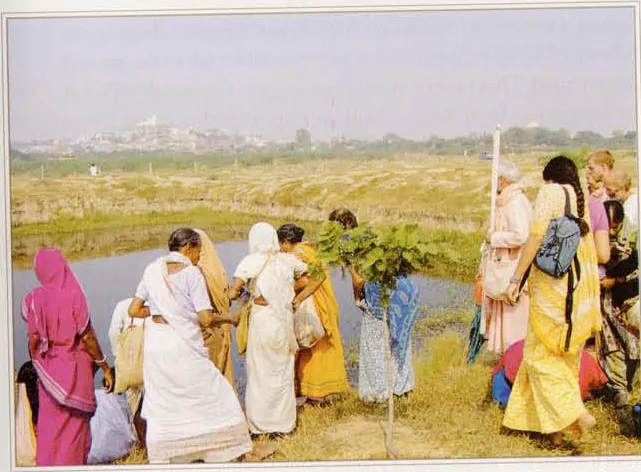
Viśākhā-kuṇḍa is a pond beside Uddhava-kyārī at Nandagrāma, named after the sakhī Viśākhā, Śrī Rādhā's friend. Śrīla Narahari Cakravartī Ṭhākura's Bhakti-ratnākara names a Viśākhā-kuṇḍa at Nandīśvara where Rādhā and Kṛṣṇa meet in great delight, and the Bengali Bhaktamāla of Kṛṣṇadāsa Bābājī (1905) calls Viśākhā's kuṇḍa at Nandagrāma dear to Them and most beautiful.[1 +1] According to the guidebook Śrī Vraja-maṇḍala Parikramā (2007), Viśākhā arranged Their meetings in her kuñja (grove) beside the pond, and the Couple played in its water.[3]
Key facts
| Kind | kuṇḍa |
|---|---|
| Region · area | Nandagrāma · Uddhava-kyārī |
| Ācāryas | Śrīla Narahari Cakravartī Ṭhākura, Śrīla Rāghava Paṇḍita Gosvāmī of Govardhana |
Divine pastimes
Śrīmad-Bhāgavatam (10.29–10.33) tells the rāsa dance on the bank of the Kālindī, the Yamunā, and names no kuñja of Viśākhā.[4 +5] After the dance Kṛṣṇa entered the water with the gopīs to relieve their tiredness and played there; that water is the Yamunā's. The guidebook does not say that its water pastimes at Viśākhā-kuṇḍa are this one.[7 +2] Read more: Where the autumn rāsa took place →
tābhir yutaḥ śramam apohitum aṅga-saṅga- ghṛṣṭa-srajaḥ sa kuca-kuṅkuma-rañjitāyāḥ
gandharva-pālibhir anudruta āviśad vāḥ śrānto gajībhir ibha-rāḍ iva bhinna-setuḥ
Lord Kṛṣṇa’s garland had been crushed during His conjugal dalliance with the gopīs and colored vermilion by the kuṅkuma powder on their breasts. To dispel the fatigue of the gopīs, Kṛṣṇa entered the water of the Yamunā, followed swiftly by bees who were singing like the best of the Gandharvas. He appeared like a lordly elephant entering the water to relax in the company of his consorts. Indeed, the Lord had transgressed all worldly and Vedic morality just as a powerful elephant might break the dikes in a paddy field.
Translation: Śrīla Prabhupāda's disciples (BBT)In the Kṛṣṇa book Śrīla Prabhupāda tells the same water play after the rāsa; the passage is general and names no pond near Nandagrāma.[7 +2]
General teaching (does not name the place)“The gopīs and Kṛṣṇa entered the water of the Yamunā just to relieve their fatigue from the rāsa dance.”
Śrīla Prabhupāda, Kṛṣṇa, the Supreme Personality of Godhead, ch. 33 'Description of the Rāsa Dance' · vedabase.io
Traditional accounts
In the Bhakti-ratnākara, Śrīla Rāghava Paṇḍita Gosvāmī of Govardhana takes Śrīla Śrīnivāsa Ācārya round Nandīśvara and shows him …
In the Bhakti-ratnākara
In the Bhakti-ratnākara, Śrīla Rāghava Paṇḍita Gosvāmī of Govardhana takes Śrīla Śrīnivāsa Ācārya round Nandīśvara and shows him Viśākhā-kuṇḍa between Sūrya-kuṇḍa and the kuṇḍa of Paurṇamāsī. He says: see this Viśākhā-kuṇḍa; here Rāi and Kānu, Rādhā and Kṛṣṇa, meet in great delight (summarised here, not translated). The text tells no particular pastime.[1]
এই যে বিশাখাকুণ্ড করহ দর্শন। এথা মহারঙ্গে রাই কাণুর মিলন ॥
ei ye biśākhākuṇḍa karaha darśana| ethā mahāraṅge rāi kāṇura milana ||
The Bhaktamāla of 1905, a Bengali work in verse, places Viśākhā's kuṇḍa south-east of Sūrya-kuṇḍa at Nandagrāma and praises it as dear to Śrī Rādhā-Kṛṣṇa and most beautiful.[2]
Viśākhā's kuñja
According to Śrī Vraja-maṇḍala Parikramā, the grove of Uddhava-kyārī is really the kuñja of Viśākhā, with Viśākhā-kuṇḍa nearby. Here Viśākhā arranged the meetings of Rādhā and Kṛṣṇa, and here Kṛṣṇa sometimes danced the rāsa with Rādhā and Her friends; a platform recalls it. The book adds that the Couple enjoyed many water pastimes in the kuṇḍa.[3]
Location
| Where it is | near Uddhava-kyārī (Viśākhā-kuñja)[14] |
|---|
Nearby places
Uddhava-kyārī
History
In 1987 the historian A. W. Entwistle noted, near Uddhava-kyārī south of Nandagrāma, a pond named after the sakhī Viśākhā, and he listed the Bhakti-ratnākara among his sources for it.[13]
Where the sources differ
Where Kṛṣṇa danced the rāsa with the gopīs (the Bhāgavatam, the commentators, the Garga-saṁhitā and the guidebooks, which also …
Where Kṛṣṇa danced the rāsa with the gopīs (the Bhāgavatam, the commentators, the Garga-saṁhitā and the guidebooks, which also name Viśākhā's kuñja) is set out on the page of the rāsa-maṇḍala at Ṭer-kadamba.[3 +6]
More on this place
Where the autumn rāsa took place
References
14 references
- Śrīla Narahari Cakravartī, Bhakti-ratnākara, Fifth Wave, 1912 ed. p. 223; Grantha Mandira text v.966, 2nd ed., 1912
- Śrī Śrī Bhaktamāla grantha, Bhaktamāla grantha (1905), parikramā section on Nandagrāma, printed p. 337, left column
- Śrī Vraja-maṇḍala Parikramā (2007), PDF p. 210
- Śrīmad-Bhāgavatam ŚB 10.29.3, GRETIL
- Śrīmad-Bhāgavatam 10.29.4
- Śrīmad-Bhāgavatam ŚB 10.29.45–46, GRETIL
- Śrīmad-Bhāgavatam 10.32.11–12
- Śrīmad-Bhāgavatam 10.33.2
- Śrīla Jīva Gosvāmī, Laghu-vaiṣṇava-toṣaṇī on Śrīmad-Bhāgavatam 10.29.3
- Śrīmad-Bhāgavatam 10.33.22
- Śrīla Prabhupāda, Kṛṣṇa, the Supreme Personality of Godhead, ch. 33 'Description of the Rāsa Dance' · vedabase.io
- Śrīla Narahari Cakravartī, Bhakti-ratnākara, Fifth Wave, 1912 ed. p. 223; Grantha Mandira text v.966, 2nd ed., 1912
- A. W. Entwistle, Entwistle 1987, printed p. 381, Egbert Forsten, Groningen, 1987
- Śrī Vraja-maṇḍala Parikramā (2007), p. 394-395