Where the autumn rāsa took place
The Bhāgavatam, the ācāryas and the guidebooks side by side
In short
Śrīmad-Bhāgavatam tells the rāsa dance, Kṛṣṇa's circle dance with the gopīs, on autumn nights on the sandy bank of the Yamunā, but names no tree or village. The Caitanya-caritāmṛta and Śrīla Prabhupāda's Kṛṣṇa book place the flute call at Vaṁśīvaṭa, and later books and guidebooks add other places of Vṛndāvana.[1–11]
On this page
At a glance
- Scripture: Śrīmad-Bhāgavatam, Tenth Canto, chapters 29 to 33, tells the rāsa night.[1 +5]
- The setting in the Bhāgavatam: a moonlit forest and the cool, sandy bank of the Kālindī, the Yamunā; no place on the bank is named.[1–5]
- The flute call: the Caitanya-caritāmṛta places Gopīnātha, who began the rāsa, on the shore at Vaṁśīvaṭa.[6–9]
- Śrīla Prabhupāda: the gopīs rushed toward the place known as Vaṁśīvaṭa.[10]
- Śrī Caitanya Mahāprabhu fainted in ecstatic love when He saw the place of the rāsa dance.[17, 18]
- The season: the Bhāgavatam speaks of the autumn nights; according to some commentators, the moonlit nights of spring belong to the rāsa too.[19–21]
Does the Bhāgavatam name a place for the rāsa dance?
Śrīmad-Bhāgavatam, the scripture that tells Kṛṣṇa's life, gives the night of the rāsa five chapters, from the flute call to the dance itself. It opens on the autumn nights fragrant with jasmine, when Kṛṣṇa, with the help of His internal potency, turned His mind to these pastimes.[1 +6] Then He saw the full moon rise and the forest lit by its rays, and began to play on His flute:[12]
dṛṣṭvā kumudvantam akhaṇḍa-maṇḍalaṃ
ramānanābhaṃ nava-kuṅkumāruṇam … vanaṃ ca tat-komala-gobhī rañjitaṃ
jagau kalaṃ vāma-dṛśāṃ manoharam
Lord Kṛṣṇa saw the unbroken disk of the full moon glowing with the red effulgence of newly applied vermilion, as if it were the face of the goddess of fortune. He also saw the kumuda lotuses opening in response to the moon’s presence and the forest gently illumined by its rays. Thus the Lord began to play sweetly on His flute, attracting the minds of the beautiful-eyed gopīs.
Translation: Śrīla Prabhupāda's disciples (BBT)The gopīs, the cowherd girls of Vraja, heard the flute and went at once to where their lover waited. The verse does not name the spot.[13] When they arrived, Kṛṣṇa Himself described the meeting place. It was a forest full of flowers, lit by the full moon, its leaves moving in the breeze from the Yamunā.[14] He then went with them to the bank of the river, where the sand was cool and the wind carried the scent of lotuses.[1]
Seeing the gopīs proud of their good fortune, Kṛṣṇa disappeared right there, the Bhāgavatam says, to remove their pride and show them further mercy.[15] The gopīs searched for Him and then came again to the bank of the Kālindī and sang of Him together.[16] He appeared among them, smiling, with a garland and a yellow garment, and led them to the bank where the river's waves had spread soft sand:[2, 22]
The almighty Lord then took the gopīs with Him to the bank of the Kālindī, who with the hands of her waves had scattered piles of soft sand upon the shore. In that auspicious place the breeze, bearing the fragrance of blooming kunda and mandāra flowers, attracted many bees, and the abundant rays of the autumn moon dispelled the darkness of night.
Translation: Śrīla Prabhupāda's disciples (BBT)There the dance began.[3]
tatrārabhata govindo rāsa-krīḍām anuvrataiḥ / strī-ratnair anvitaḥ prītair anyonyābaddha-bāhubhiḥ
There on the Yamunā’s banks Lord Govinda then began the pastime of the rāsa dance in the company of those jewels among women, the faithful gopīs, who joyfully linked their arms together.
Translation: Śrīla Prabhupāda's disciples (BBT)Kṛṣṇa expanded Himself and stood between each pair of gopīs in the circle, while the demigods and their wives crowded the sky to watch.[4] In all these verses the only places named are the forest and the bank of the Yamunā. No tree, village or ghāṭa (a bathing place with steps) is mentioned.[1 +9]
What the commentators add
The commentators are the ācāryas, the great teachers, who explained the Tenth Canto verse by verse. They also name no place, but they keep the scenes on the Yamunā's bank (all summarised here, not translated). Śrīla Sanātana Gosvāmī says that the river of the rāsa is the Kālindī. The Bhāgavatam does not name the river or the forest, he says, because both are well known. Śrīla Jīva Gosvāmī adds that the forest is Vṛndāvana itself.[3 +3]
On the verse of the flute call Śrīla Jīva Gosvāmī gives one name. Kṛṣṇa came, he says, to a part of the Yamunā's bank still known in his day as Rāsaulī. It was a village square set up by Śrī Vajra, and there Kṛṣṇa sang with His flute. He does not say whether this Rāsaulī is the Vaṁśīvaṭa or another place.[26]
Śrīla Viśvanātha Cakravartī Ṭhākura explains why the gopīs came back to the bank. They understood that searching would not bring Kṛṣṇa back, and that only His mercy, won by singing His glories, could. So they returned to the very place where they had been with Him, and Śrīla Śrīdhara Svāmī says the same.[24]
On the verse where Kṛṣṇa leads the gopīs to the bank, Śrīla Sanātana Gosvāmī and Śrīla Jīva Gosvāmī give two readings. Either He took them from the first bank to another bank fit for the rāsa, or He went with them into the middle of the same bank.[25] Śrīla Nārāyaṇa Bhaṭṭa Gosvāmī says that the dance began on the sandbank where Kṛṣṇa had sat and comforted the gopīs.[23 +2]
Why is Vaṁśīvaṭa linked with the flute call?
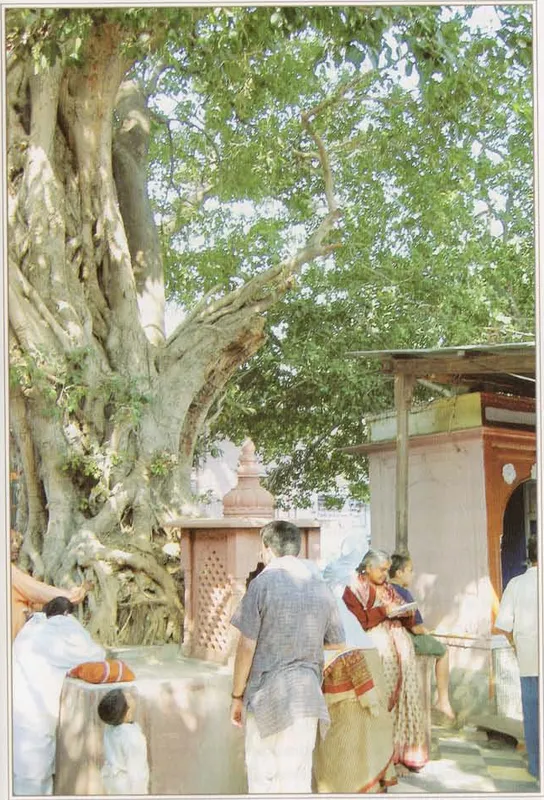
The ācāryas' books place Vaṁśīvaṭa, "the banyan of the flute", on the bank of the Yamunā in Vṛndāvana (Vrindavan), near the Gopīśvara Mahādeva temple.[6 +5] The verse that ties it to the rāsa opens the Caitanya-caritāmṛta of Śrīla Kṛṣṇadāsa Kavirāja Gosvāmī, and the same verse returns at the start of its Madhya-līlā. There Śrīla Prabhupāda translates it:[6–9]
Names this place“May Gopīnāthajī, who attracts all the gopīs with the song of His flute and who has begun the most melodious rāsa dance on the bank of the Yamunā in Vaṁśīvaṭa, be merciful upon us.”
Śrīla Prabhupāda, Śrī Caitanya-caritāmṛta, Madhya-līlā 1.5, translation · vedabase.io
Śrīla Prabhupāda recited the verse among the opening prayers of many of his recorded lectures.[8] In his Kṛṣṇa book, telling the night of the flute call, he names the place to which the gopīs ran:[10, 11]
Names this place“Immediately upon hearing the vibration of the flute, they all left their respective engagements and proceeded to the spot where Kṛṣṇa was standing. While they ran very swiftly, their earrings swung back and forth. They all rushed toward the place known as Vaṁśīvaṭa.”
Śrīla Prabhupāda, Kṛṣṇa, the Supreme Personality of Godhead, Chapter 29, 'The Rāsa Dance: Introduction' · vedabase.io
The Bhāgavatam verse itself names no place. The name Vaṁśīvaṭa comes from the Vaiṣṇava books, the books of Kṛṣṇa's devotees, that Śrīla Prabhupāda follows here.[10 +2]
The Vaṁśīvaṭa in the ācāryas' books
Śrīla Kṛṣṇadāsa Kavirāja Gosvāmī's Govinda-līlāmṛta, a poem of Rādhā and Kṛṣṇa's eternal daily pastimes, puts the tree on the Yamunā's bank north of Gopīśvara. Standing on its raised platform, Kṛṣṇa calls the women of Vraja with His flute. On the poem's rāsa night He comes to the platform with the gopīs and sits looking at the Yamunā. Then He crosses with them to the sandbanks on the far shore for the dance (summarised here, not translated).[6 +3]
Śrīla Viśvanātha Cakravartī Ṭhākura's Vraja-rīti-cintāmaṇi places the Vaṁśīvaṭa on the river's bank, not far north-east of Gopīśvara. At its foot, it says, the holder of the flute plays for His beloveds.[30] The same book says that the wind at nearby Dhīra-samīra stood still when Kṛṣṇa played His flute at the Vaṁśīvaṭa.[31]
The Bhakti-ratnākara of Śrīla Narahari Cakravartī Ṭhākura shows the site to Śrīla Śrīnivāsa Ācārya on his tour of Vṛndāvana. It shows four scenes at one place (summarised here, not translated).[32, 33]
- The gopīs came here, it says, at the sound of the flute and met Kṛṣṇa.[32]
- Here, it says, He tested their love and advised them to go home.[32]
- Here, it says, He disappeared.[32]
- And here, it says, He appeared to them again.[34]
The guide then points to the Yamunā's sandbank shown there as the place where Kṛṣṇa began the great rāsa, and quotes the Bhāgavatam's verses of the dance.[34]
The Garga-saṁhitā, a later text with its own account of these pastimes, also connects its rāsa with the Vaṁśīvaṭa. After the dance, it says, Rādhā and Kṛṣṇa rested on the Yamunā's sandbank beside the tree (summarised here, not translated).[35, 36] Its Aśvamedha-khaṇḍa tells a different rāsa, on a winter full-moon night, in which Kṛṣṇa again stands under the Vaṁśīvaṭa; it is not the Bhāgavatam's autumn night.[37, 38]
Which places in Vṛndāvana are called rāsa-sthalī?
A rāsa-sthalī is a place of the rāsa dance. The books show several places in Vṛndāvana under this name, and they give each of them in their own way.[39–42]
- The rāsa-sthalī at Vaṁśīvaṭa: The Color Guide to Vṛndāvana (2000) prints a photograph of a stepped white platform with this caption. No source gives its date or builder.[28, 39]
- A sandy ground by the river: according to the Bengali Vṛndāvana-kathā (1920), the Vrajavāsīs, the people of Vraja, then showed a stretch of sand called Yamunā-pulina as the rāsa-sthalī. It lay beside the small temple of Jñāna-gudaḍī. The book gives no source, and it may mean another spot.[43]
- The rāsa-sthalī in Nidhuvana: the 2000 guidebook's plan of Nidhuvana marks one inside the garden, though its text names none.[41]
- The rāsa-sthalī in Sevā-kuñja (a kuñja is a grove of bowers): two guidebooks say that one can see a rāsa-sthalī in Sevā-kuñja, commemorating the rāsa dance.[40–42]
- Govinda-ghāṭa: according to the Vṛndāvana-kathā (1920), Śrī Hita Harivaṁśa of the Rādhāvallabha line made a platform called Rāsa-maṇḍala here.[44–47]
The Vraja-rīti-cintāmaṇi places Nidhuvana north of the Vaṁśīvaṭa and names it as the forest where Kṛṣṇa went after leaving the gopīs; it names no rāsa-sthalī there.[30] After the dance, the Bhāgavatam says, Kṛṣṇa entered the Yamunā with the gopīs and then walked with them through a garden by the river. It names no grove.[48–50] The guidebooks' traditions of Nidhuvana and Sevā-kuñja are set out with the other accounts below.[40–42]
Other rāsa places in Vraja
The autumn rāsa of the Bhāgavatam is not the only rāsa the Vaiṣṇava books remember. The Caitanya-caritāmṛta says that Kṛṣṇa held the rāsa at Govardhana in the spring and disappeared from it.[51, 52] Śrīla Raghunātha dāsa Gosvāmī praises Govardhana as the hill where Rādhā dances in the spring rāsa and where that supreme rāsa-sthalī lies.[53, 54] According to the Bhakti-ratnākara, the spring rāsa took place at Parāsauli, and Candra-sarovara is where Kṛṣṇa rested, absorbed in the rāsa.[54]
Some commentators widen the Bhāgavatam's rāsa nights in the same way. The Bṛhat-krama-sandarbha reads them as nights of autumn, spring and summer together. Śrīla Jīva Gosvāmī says on ŚB 10.33.25 that Kṛṣṇa enjoyed the moonlit nights of spring in the same way (summarised here, not translated).[20, 21] The Bhāgavatam says that the moon and the stars were astonished at the sight of the rāsa. Śrīla Śrīdhara Svāmī explains that the moon stopped moving, so the nights became very long.[50 +2] Śrī Vraja-maṇḍala Parikramā (2007) takes the name Candra-sarovara, "the lake of the moon", from that moon.[57]
North of Vṛndāvana, Śrī Vraja-maṇḍala Parikramā (2007) places a village called Rasaulī between Caraṇa-pahāḍī and Koṭvana; whether it is Śrīla Jīva Gosvāmī's Rāsaulī, no source says.[26, 58] Balarāma had a rāsa of His own on a later visit to Vraja. Śrīla Viśvanātha Cakravartī Ṭhākura and the Bhakti-ratnākara place it at Rāma-ghāṭa, far from the place of Kṛṣṇa's rāsa.[59–64] Read more: Balarāma's visit to Vraja →
What did Śrī Caitanya do at the place of the rāsa?
When Śrī Caitanya Mahāprabhu visited Vṛndāvana, He went from Dvādaśāditya to Keśī-tīrtha (Keśī-ghāṭa), a holy bathing place, and the sight of the place of the rāsa overwhelmed Him. In Śrīla Prabhupāda's translation:[17, 18]
‘দ্বাদশ-আদিত্য’ হৈতে ‘কেশীতীর্থে’ আইলা ।
রাস-স্থলী দেখি’ প্রেমে মূর্চ্ছিত হইলা ॥ ৭২ ॥
‘dvādaśa-āditya’ haite ‘keśī-tīrthe’ āilā
rāsa-sthalī dekhi’ preme mūrcchita ha-ilā
After seeing the holy place called Praskandana, Śrī Caitanya Mahāprabhu went to Dvādaśāditya. From there He went to Keśī-tīrtha, and when He saw the place where the rāsa dance had taken place, He immediately lost consciousness due to ecstatic love.
Translation: Śrīla A.C. Bhaktivedanta Swami PrabhupādaThe Caitanya-caritāmṛta does not say where that rāsa-sthalī was, and does not name the Vaṁśīvaṭa.[17, 18] Two other accounts of the same journey do give a place (both summarised here, not translated). In Śrīla Murāri Gupta's Kṛṣṇa-caitanya-caritāmṛta, a brāhmaṇa guides Mahāprabhu. He shows Him the place near the Vaṁśīvaṭa where Govinda sang the song that drew the gopīs, and where He also danced the rāsa.[65] In Śrīla Locana dāsa Ṭhākura's Caitanya-maṅgala, His guide Kṛṣṇadāsa tells Him that Kṛṣṇa danced the rāsa in this Vṛndāvana. He played His flute, the guide says, at the foot of a wish-fulfilling tree, which is not named.[66]
How pilgrims honour the Vaṁśīvaṭa
Śrīla Nārāyaṇa Bhaṭṭa Gosvāmī's Vraja-bhakti-vilāsa is a guide for pilgrims. On its circuit of Vṛndāvana it stops here, after Cīra-ghāṭa. It gives a prayer that greets the Vaṁśīvaṭa as marked by the footprints of the ten-year-old Kṛṣṇa and filled with the sound of the flute.[67]
ततो कृष्णपादचिन्हान्वितवंशीवटप्रार्थनमन्त्रः— दशाब्दकृष्णपादांकलांछिताय नमो नमः । वंशीरवसमाकीर्ण वंशीवट नमोऽस्तु ते ॥
tato kṛṣṇapādacinhānvitavaṁśīvaṭaprārthanamantraḥ— daśābdakṛṣṇapādāṁkalāṁchitāya namo namaḥ
vaṁśīravasamākīrṇa vaṁśīvaṭa namo'stu te ||
Śrīla Rūpa Gosvāmī, in his Ujjvala-nīlamaṇi, counts the place of the rāsa among the things that awaken love of Kṛṣṇa. His example verse names that ground together with the Vaṁśīvaṭa (summarised here, not translated).[69] How the Deity (sacred image) of Gopīnātha appeared here, and how the old banyan was planted again after a flood, is told in its own article.[6–9] Read more: Gopīnātha and the banyan of Vaṁśīvaṭa →
What Śrīla Prabhupāda teaches about the rāsa dance
Śrīla Prabhupāda's Kṛṣṇa book explains the Bhāgavatam's first words on the rāsa, that Kṛṣṇa took the help of His internal potency:[2 +5]
General teaching (does not name the place)“The specific words used in Śrīmad-Bhāgavatam are yogamāyām upāśritaḥ, which mean that this dancing with the gopīs is on the platform of yogamāyā, not mahāmāyā. … The rāsa dance of Kṛṣṇa with the gopīs is on the platform of yogamāyā.”
Śrīla Prabhupāda, Kṛṣṇa, the Supreme Personality of Godhead, Chapter 29, 'The Rāsa Dance: Introduction' · vedabase.io
He returns to the point at the end of the chapters on the dance. In Kṛṣṇa's company with the gopīs, he writes, there was no question of worldly desire.[50] The Bhāgavatam itself, summing up, says that Kṛṣṇa was not internally affected by any mundane sex desire.[71] The meaning of the name Madana-mohana, given to Kṛṣṇa at His return to the gopīs, is explained in its own article.[2 +5] Read more: Madana-mohana: how Kṛṣṇa overcame Cupid in the rāsa night →
Where the sources differ
The Bhāgavatam and its commentators name only the Yamunā's bank, and every later book that names a place gives its own. The accounts are set side by side here, without choosing between them.[1–5]
Śrī Vraja-maṇḍala Parikramā (2007) says that the Vaṁśīvaṭa is the place of the Bhāgavatam's autumn rāsa. There, it says, the gopīs came at the flute-song, and there Kṛṣṇa thanked them after His return.[72, 73] The same book and Vṛndāvana, the Playground of God (2010) say that Kṛṣṇa reappeared before the gopīs at Govinda-ghāṭa.[22 +2] The guidebooks also connect Nidhuvana with the rāsa, and the village of Rasaulī is said by the 2007 book to be the place of the autumn rāsa.[58 +4]
Accounts differ Where Kṛṣṇa's flute call and the rāsa told in Śrīmad-Bhāgavatam 10.29–10.33 took place
- Śrīmad-Bhāgavatam 10.29.3, 10.29.21–22, 10.29.45, 10.30.44, 10.32.11–12, 10.33.2the flute song in 'the forest' lit by the moon; a flowering forest stirred by the breeze from the Yamunā; the sandy bank of 'the river', the Kālindī; the rāsa dance begun 'there' (10.33.2); no tree, no Vaṁśīvaṭa and no other place named
- Śrīla Jīva Gosvāmī, Laghu-vaiṣṇava-toṣaṇī on ŚB 10.29.3Kṛṣṇa sang with the attracting flute at the part of the Yamunā's bank still famous as Rāsaulī, a village square established by Śrī Vajra
- Śrī Caitanya-caritāmṛta Ādi 1.17 = Madhya 1.5 (Śrīla Kṛṣṇadāsa Kavirāja; Śrīla Prabhupāda's translations)Gopīnātha, who began the rāsa, stands on the shore at Vaṁśīvaṭa and draws the gopīs with His flute; Madhya 1.5: He 'has begun the most melodious rāsa dance on the bank of the Yamunā in Vaṁśīvaṭa'
- Govinda-līlāmṛta 21.86, 22.46–49 (Śrīla Kṛṣṇadāsa Kavirāja Gosvāmī)standing on the platform of the Vaṁśīvaṭa, north of Gopīśvara on the bank, Kṛṣṇa calls the women with His flute; on the rāsa night He comes there with the gopīs and then crosses with them to the sandbanks on the far shore for the dance
The wording of these accounts is our summary of the sources, not a published translation.
Where the dance itself began, and whether before or after Kṛṣṇa's disappearance, is answered differently again:
Accounts differ Where the rāsa dance itself (ŚB 10.33) took place, and whether it came before or after Kṛṣṇa's disappearance
- Śrīmad-Bhāgavatam 10.29.45–46, 10.32.11–12, 10.33.2–3before the disappearance Kṛṣṇa sported with the gopīs on the river's cool sandbank; the rāsa dance, with Kṛṣṇa between each two gopīs, began after His reappearance, 'there' on the Kālindī's bank; no place named
- Canto 10 commentators (Śrīla Sanātana Gosvāmī, Śrīla Jīva Gosvāmī, Śrīla Nārāyaṇa Bhaṭṭa, Vaṁśīdhara)the river is the Kālindī, unnamed because well known; Kṛṣṇa led the gopīs to another bank fit for the rāsa, or into the middle of the same bank; the dance began on the sandbank where He had sat and consoled them; 'on the Kālindī's bank'; no place named
- Bhakti-ratnākara, Fifth Wave (1912 ed. p. 328)the reappearance, the seating and the talk 'here' at the Vaṁśīvaṭa site; the great rāsa began on the sandbank of Śrī Yamunā shown there (ŚB 10.33.2 quoted)
- Śrī Caitanya-caritāmṛta Madhya 1.5 (Śrīla Prabhupāda's translation)Gopīnātha 'has begun the most melodious rāsa dance on the bank of the Yamunā in Vaṁśīvaṭa'
The wording of these accounts is our summary of the sources, not a published translation.
Places in this article
Vaṁśīvaṭa (Vṛndāvana)
वंशीवट (वृन्दावन)Vaṁśīvaṭa, "the banyan of the flute", stands on the bank of the Yamunā in Vṛndāvana, near the Gopīśvara Mahādeva temple.
Mohana Ter-ghāṭa
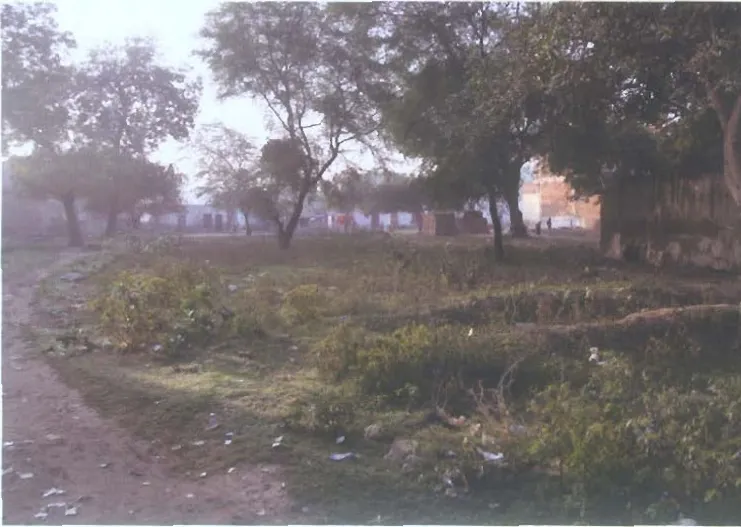
मोहन टेर-घाटMohana Ter-ghāṭa is a former bathing place on the old bank of the Yamunā in Vṛndāvana, which the guidebooks list after Varāha-ghāṭa and Gautama Ṛṣi's āśrama.
Rāsa-sthalī (Vaṁśīvaṭa)
रास-स्थली (वंशीवट)Rāsa-sthalī (Nidhuvana)
रास-स्थली (निधुवन)Rāsa-sthalī (Sevā-kuñja)
रास-स्थली (सेवा-कुंज)The Rāsa-sthalī, "the place of the rāsa", is a spot in the garden of Sevā-kuñja in Vṛndāvana.
Nidhuvana
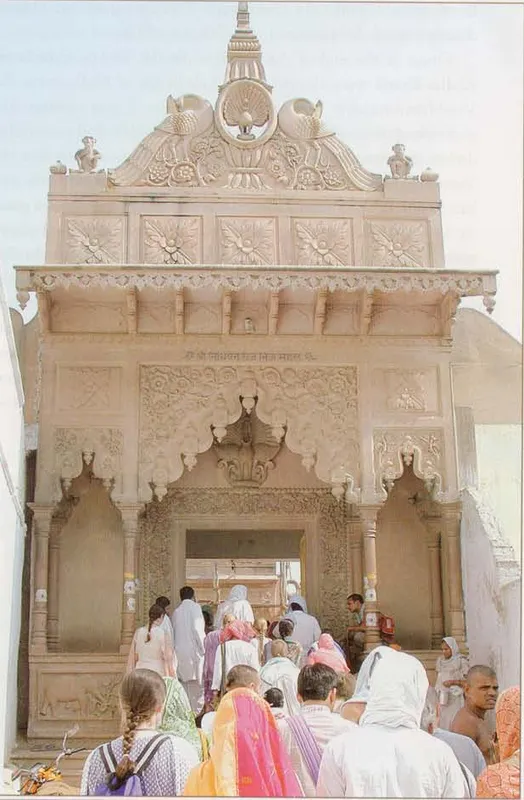
निधुवनNidhuvana is a walled grove in Vṛndāvana town, north of Sevā-kuñja.
Sevā-kuñja
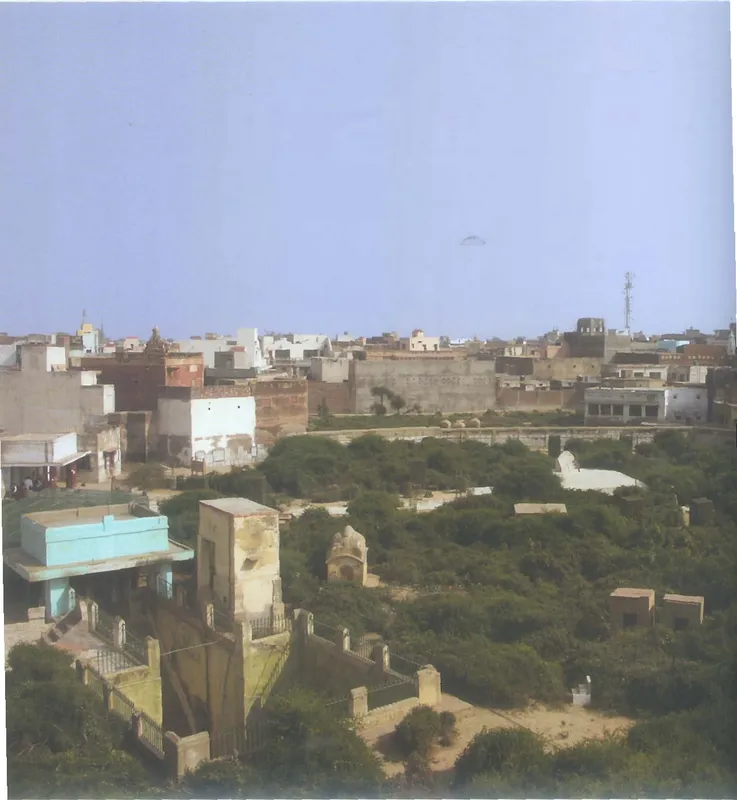
सेवा-कुंजSevā-kuñja, "the grove of service", is a walled garden in the centre of Vṛndāvana.
Govinda-ghāṭa (Vṛndāvana)
गोविन्द-घाट (वृन्दावन)Govinda-ghāṭa is a bathing place on the Yamunā in Vṛndāvana, a little north of Śṛṅgāra-ghāṭa, with an old red-sandstone temple of Kṛṣṇa and Balarāma beside it.
Rasaulī
रासौलीRasaulī is a village of Vraja between Caraṇa-pahāḍī and Koṭvana, according to the guidebook Śrī Vraja-maṇḍala Parikramā (2007).
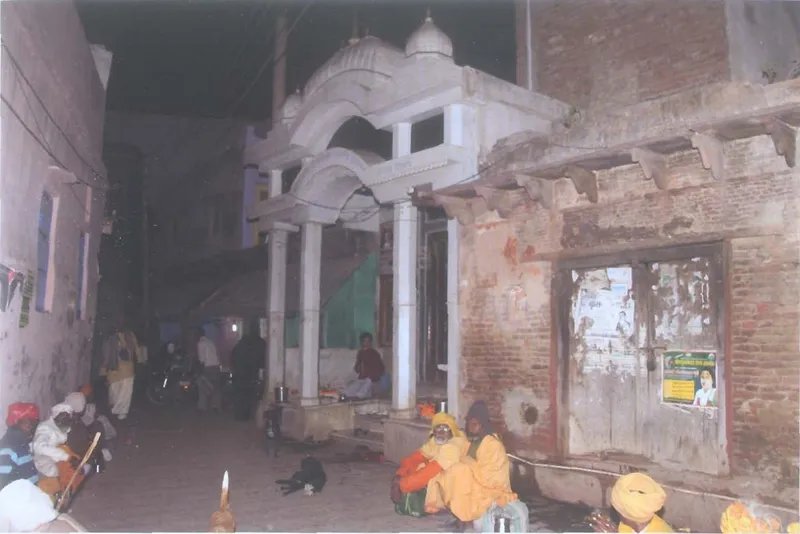
Gopīśvara Mahādeva Mandira (Vṛndāvana)
गोपीश्वर महादेव मन्दिर (वृन्दावन)The Gopīśvara Mahādeva temple is the shrine of Lord Śiva as Gopīśvara, "the lord of the gopīs", near Vaṁśīvaṭa in Vṛndāvana.
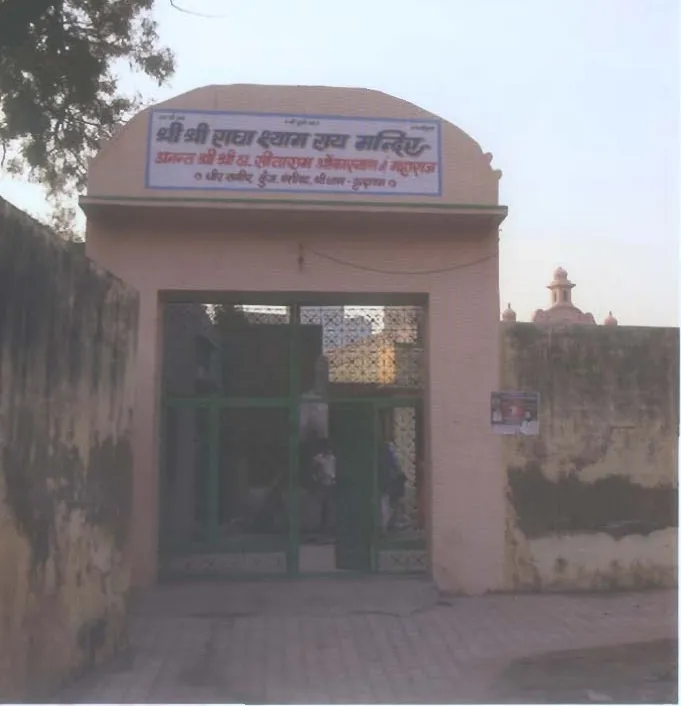
Dhīra-samīra
धीर-समीरDhīra-samīra, "the gentle breeze", is a kuñja (grove) and ghāṭa on the bank of the Yamunā in Vṛndāvana, near Vaṁśīvaṭa and Keśī-ghāṭa.
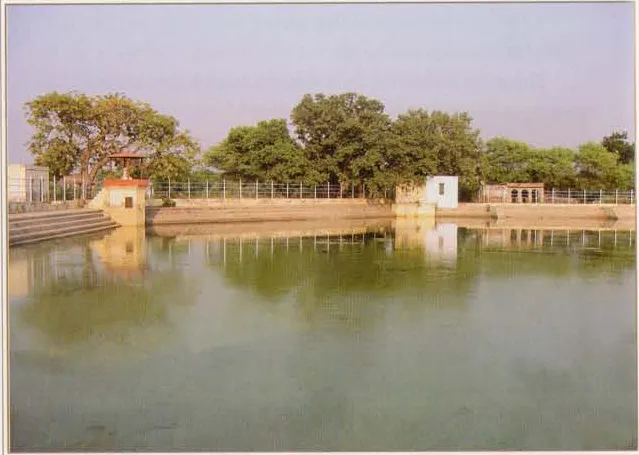
Candra-sarovara
चन्द्र-सरोवरCandra-sarovara, the lake of the moon, is a lake at Pārāsaulī.
Rāsa-sthali (Candra-sarovara)
रास-स्थली (चन्द्र-सरोवर)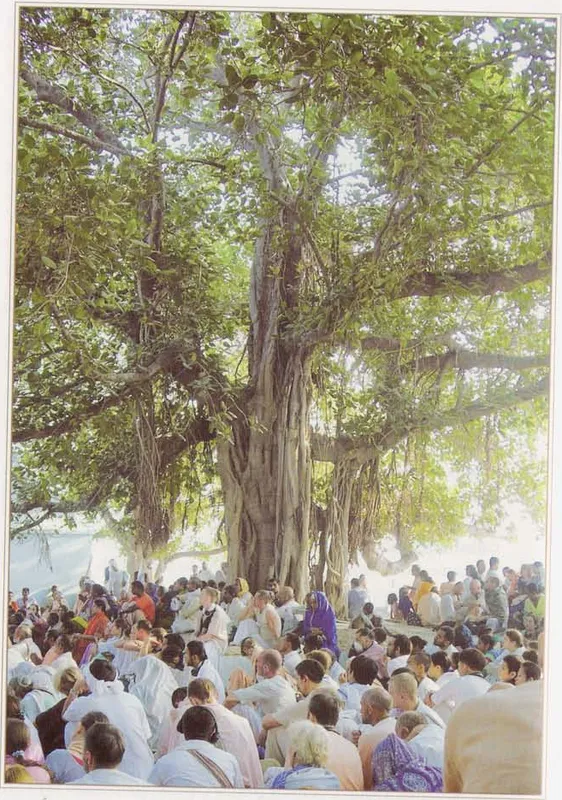
Rāma-ghāṭa
राम-घाटRāma-ghāṭa is a place on the Yamunā near Śergarh, honoured as the place of Balarāma's rāsa dance with the gopīs and of His dragging of the Yamunā with His plough, during …
Questions and answers
According to Śrīmad-Bhāgavatam, on the cool, sandy bank of the Yamunā in the moonlit Vṛndāvana forest. The Caitanya-caritāmṛta and Śrīla Prabhupāda's Kṛṣṇa book place the flute call at Vaṁśīvaṭa, and later books and guidebooks name other places as well.[1–10]
No. It names the forest and the bank of the Kālindī, the Yamunā, but no tree, village or ghāṭa. Śrīla Sanātana Gosvāmī explains that the river and the forest were not named because they were well known.[1 +9]
The Caitanya-caritāmṛta's invocation places Gopīnātha, who began the rāsa, on the shore at Vaṁśīvaṭa, drawing the gopīs with His flute. Śrīla Prabhupāda writes that the gopīs rushed toward the place known as Vaṁśīvaṭa.[6–11]
In Vṛndāvana, the guidebooks show rāsa-sthalīs at Vaṁśīvaṭa, in Nidhuvana and in Sevā-kuñja. The Vṛndāvana-kathā (1920) tells of a platform called Rāsa-maṇḍala at Govinda-ghāṭa. The spring rāsa is remembered at Govardhana, near Parāsauli and Candra-sarovara.[39 +8]
On the autumn nights, at the full moon, according to the Bhāgavatam. Some commentators, among them Śrīla Jīva Gosvāmī, say that Kṛṣṇa also enjoyed the moonlit nights of spring in the same way.[12 +3]
The Caitanya-caritāmṛta says that when He saw the place where the rāsa dance had taken place, He at once lost consciousness in ecstatic love. Śrīla Murāri Gupta's account says that His guide showed Him the place near the Vaṁśīvaṭa.[17 +2]
Sources
- Śrīmad-Bhāgavatam 10.29.45, GRETIL
- Śrīmad-Bhāgavatam 10.32.11-12, GRETIL
- Śrīmad-Bhāgavatam 10.33.2, GRETIL
- Śrīmad-Bhāgavatam 10.33.3, GRETIL
- Śrīla Prabhupāda, Kṛṣṇa, the Supreme Personality of Godhead, Chapter 33, 'Description of the Rāsa Dance' · vedabase.io
- Śrīla Kṛṣṇadāsa Kavirāja Gosvāmī, Śrī Caitanya-caritāmṛta, Ādi-līlā 1.17, online edition · vedabase.io
- Śrīla Kṛṣṇadāsa Kavirāja Gosvāmī, Śrī Caitanya-caritāmṛta, Madhya-līlā 1.5, online edition · vedabase.io
- Śrīla Prabhupāda, Śrī Caitanya-caritāmṛta, Ādi-līlā 1.17, translation (the same verse is Antya-līlā 1.7) · vedabase.io
- Śrīla Prabhupāda, Śrī Caitanya-caritāmṛta, Madhya-līlā 1.5, translation · vedabase.io
- Śrīla Prabhupāda, Kṛṣṇa, the Supreme Personality of Godhead, Chapter 29, 'The Rāsa Dance: Introduction' · vedabase.io
- Vṛndāvana-Dhāma Ki Jaya! (c. 1986), by Dhruva Mahārāja dāsa, PDF p. 83
- Śrīmad-Bhāgavatam 10.29.3, GRETIL
- Śrīmad-Bhāgavatam 10.29.4, GRETIL
- Śrīmad-Bhāgavatam 10.29.21–22 (vedabase prints them together), GRETIL
- Śrīmad-Bhāgavatam 10.29.48, GRETIL
- Śrīmad-Bhāgavatam 10.30.44, GRETIL
- Śrīla Kṛṣṇadāsa Kavirāja Gosvāmī, Śrī Caitanya-caritāmṛta, Madhya-līlā 18.72, online edition · vedabase.io
- Śrīla Prabhupāda, Śrī Caitanya-caritāmṛta, Madhya-līlā 18.72, translation · vedabase.io
- Śrīmad-Bhāgavatam 10.29.1, GRETIL
- Śrīla Jīva Gosvāmī: commentary on ŚB 10.29.1
Show all 79 references
- Śrīla Jīva Gosvāmī: commentary on ŚB 10.33.25
- Śrīmad-Bhāgavatam 10.32.2, GRETIL
- Śrīla Sanātana Gosvāmī: commentary on ŚB 10.29.45
- Śrīla Viśvanātha Cakravartī Ṭhākura: commentary on ŚB 10.30.44
- Śrīla Sanātana Gosvāmī: commentary on ŚB 10.32.11–12
- Śrīla Jīva Gosvāmī: commentary on ŚB 10.29.3
- Śrīla Nārāyaṇa Bhaṭṭa: commentary on ŚB 10.33.2
- Śrīla Kṛṣṇadāsa Kavirāja Gosvāmī, Govinda-līlāmṛta, sarga 21 (ekaviṁśaḥ sargaḥ), v.86, after the editions of Haridas Das and Haridas Shastri
- Śrīla Kṛṣṇadāsa Kavirāja Gosvāmī, Govinda-līlāmṛta, 22.46–47, after the editions of Haridas Das and Haridas Shastri
- Śrīla Viśvanātha Cakravartī, Vraja-rīti-cintāmaṇi, sarga 2 (dvitīyaḥ sargaḥ), vv. 75–76
- Śrīla Viśvanātha Cakravartī, Vraja-rīti-cintāmaṇi, sarga 2 (dvitīyaḥ sargaḥ), v. 83
- Śrīla Narahari Cakravartī, Bhakti-ratnākara, taraṅga 5, printed pp. 327-328, 2nd ed., 1912
- Śrīla Narahari Cakravartī, Bhakti-ratnākara, taraṅga 5, printed p. 326-327, 2nd ed., 1912
- Śrīla Narahari Cakravartī, Bhakti-ratnākara, Fifth Wave (pañcama taraṅga), 1912 ed. p. 328, 2nd ed., 1912
- Garga-saṁhitā, Vṛndāvana-khaṇḍa (2), adhyāya 24 (rāsa-krīḍā, story of Āsuri Muni), verses 4–5, Sanskrit Wikisource
- Garga-saṁhitā, Vṛndāvana-khaṇḍa (2), adhyāya 25 (rāsa-krīḍā), verses 31–32, Sanskrit Wikisource
- Garga-saṁhitā, Aśvamedha-khaṇḍa (10), adhyāya 44 (rāsa-krīḍā), verses 30–31, Sanskrit Wikisource
- Garga-saṁhitā, Aśvamedha-khaṇḍa (10), adhyāya 44 (rāsa-krīḍā), verses 40–42, Sanskrit Wikisource
- The Color Guide to Vṛndāvana (2000), Written and Photographed by Rājaśekhara dāsa Brahmacārī, PDF p. 131
- The Color Guide to Vṛndāvana (2000), Written and Photographed by Rājaśekhara dāsa Brahmacārī, PDF p. 70
- The Color Guide to Vṛndāvana (2000), Written and Photographed by Rājaśekhara dāsa Brahmacārī, PDF p. 165
- the undated parikramā notes Vṛndāvana, ¶111
- Pulinbihārī Datta, ch. 18 (aṣṭādaśa pariccheda), entries 'Jñānagudarī' and 'Yamunā-pulina', printed pp. 208–209
- Vṛndāvana-kathā, account of Harivaṁśa Gosvāmī (Hita Harivaṁśa), printed p. 136
- Vṛndāvana-kathā, ch. 18 (aṣṭādaśa pariccheda), list of ākhaṛās, item 5 'Rādhāvallabhī nirmohī', printed pp. 205–206
- Prabhudayāl Mītal, part 1 ('Braj-yātrā'), entry 'Rāsamaṇḍala' under Vṛndāvana, printed p. 134
- A. W. Entwistle, ch. 8 §66.14 'Ras Mandal', printed p. 406, Egbert Forsten, Groningen, 1987
- Śrīmad-Bhāgavatam 10.33.22
- Śrīmad-Bhāgavatam 10.33.24
- Śrīla Prabhupāda, Kṛṣṇa, the Supreme Personality of Godhead (Kṛṣṇa book), Chapter 33, 'Description of the Rāsa Dance' · vedabase.io
- Śrīla Kṛṣṇadāsa Kavirāja Gosvāmī, Śrī Caitanya-caritāmṛta, CC Ādi-līlā 17.282, online edition · vedabase.io
- Śrīla Prabhupāda, Śrī Caitanya-caritāmṛta, Ādi-līlā 17.282, translation · vedabase.io
- Śrīla Raghunātha dāsa Gosvāmī, Govardhanāśraya-daśaka, verse 7
- Śrīla Narahari Cakravartī, Bhakti-ratnākara, Fifth Wave, 1912 ed. p. 200, 2nd ed., 1912
- Śrīmad-Bhāgavatam 10.33.18, GRETIL
- Śrīdhara Svāmī: commentary on ŚB 10.33.18
- Śrī Vraja-maṇḍala Parikramā (2007), PDF p. 124
- Śrī Vraja-maṇḍala Parikramā (2007), PDF p. 234
- Śrīla Viśvanātha Cakravartī Ṭhākura: commentary on ŚB 10.65.18, Bhagavata Vidya Pith edition, ed. Bhagavata Rishi and Krishna Shankar Shastri, 1996
- Śrīmad-Bhāgavatam 10.65.18, GRETIL
- Śrīla Narahari Cakravartī, Bhakti-ratnākara, Fifth Wave (pañcama taraṅga), printed p. 258, vv.1436-1439 in the Grantha Mandira numbering, 2nd ed., 1912
- Śrīla Narahari Cakravartī, Bhakti-ratnākara, Fifth Wave (pañcama taraṅga), printed p. 258, vv.1440-1445 in the Grantha Mandira numbering, 2nd ed., 1912
- Śrī Vraja-maṇḍala Parikramā (2007), PDF p. 237
- the undated parikramā notes Rāma-ghāṭa, ¶11
- Kṛṣṇa-caitanya-caritāmṛta of Murāri Gupta, prakrama 4, sarga 9, vv. 9–11
- Śrīla Locana dāsa Ṭhākura, Caitanya-maṅgala, Śeṣa-khaṇḍa, 1903 ed. p. 175, left column
- Śrīla Nārāyaṇa Bhaṭṭa, Vraja-bhakti-vilāsa, Vṛndāvana circuit (vana-yātrā), printed p. 227, item 74, 1st ed., publ. Bābā Kṛṣṇadāsa, Kusuma-sarovara, Saṁvat 2008
- Śrīla Nārāyaṇa Bhaṭṭa, Vraja-bhakti-vilāsa, Vṛndāvana circuit (vana-yātrā), printed p. 227, item 74, 1st ed., publ. Bābā Kṛṣṇadāsa, Kusuma-sarovara, Saṁvat 2008
- Śrīla Rūpa Gosvāmī, Ujjvala-nīlamaṇi, 10.99 (uddīpana section; example for rāsa-sthalī), GRETIL
- Śrīmad-Bhāgavatam 10.29.45–46, GRETIL
- Śrīmad-Bhāgavatam 10.33.25, GRETIL
- Śrī Vraja-maṇḍala Parikramā (2007), PDF p. 318
- Śrī Vraja-maṇḍala Parikramā (2007), PDF p. 319
- Śrī Vraja-maṇḍala Parikramā (2007), PDF p. 343
- Vṛndāvana, the Playground of God (2010), Bhakti Caitanya Svāmī, PDF p. 172
- The Color Guide to Vṛndāvana (2000), Written and Photographed by Rājaśekhara dāsa Brahmacārī, PDF p. 94
- The Color Guide to Vṛndāvana (2000), Written and Photographed by Rājaśekhara dāsa Brahmacārī, PDF p. 102
- Vṛndāvana-Dhāma Ki Jaya! (c. 1986), by Dhruva Mahārāja dāsa, PDF p. 69
- Vṛndāvana, the Playground of God (2010), Bhakti Caitanya Svāmī, PDF p. 182
Further sources
- Śrīmad-Bhāgavatam 10.29–10.33, translation by the disciples of Śrīla Prabhupāda (BBT).
- Śrīla Prabhupāda, Kṛṣṇa, the Supreme Personality of Godhead, chapters 29 and 33; Śrī Caitanya-caritāmṛta with his translation (BBT).
- The Canto 10 commentaries of Śrīla Śrīdhara Svāmī, Śrīla Sanātana Gosvāmī, Śrīla Jīva Gosvāmī, Śrīla Viśvanātha Cakravartī Ṭhākura and Śrīla Nārāyaṇa Bhaṭṭa Gosvāmī (Sanskrit), summarised, not translated.
- Govinda-līlāmṛta, Vraja-rīti-cintāmaṇi, Bhakti-ratnākara (1912 edition), Garga-saṁhitā, Vraja-bhakti-vilāsa: summarised from the original languages.