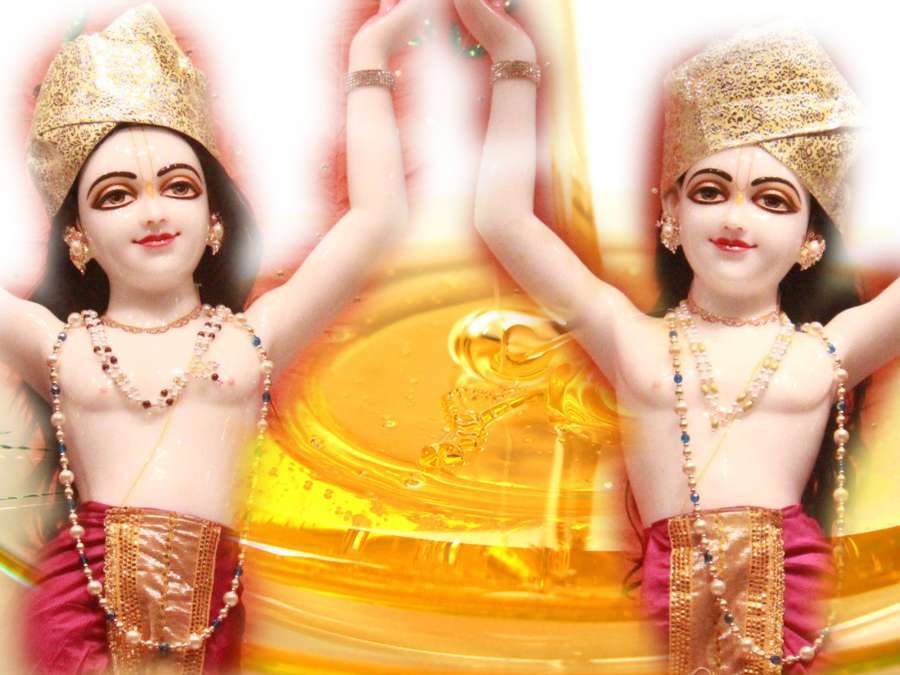
गौड़ीय वैष्णव परम्परा में नरहरि सरकार ठाकुर के श्रीखण्ड के वर्षों की दो लीलाएँ विशेष स्नेह से स्मरण की जाती हैं। दोनों लीलाएँ उनके बारे में एक ही बात दिखाती हैं। बाहर से वे एक बंगाली चिकित्सक के पुत्र की तरह रहते थे, लेकिन व्रज में कृष्ण की लीलाओं में उनकी एक गोपनीय पहचान थी। गौर-गणोद्देश-दीपिका नरहरि को गोपी मधुमती बताती है, जो राधा की अन्तरंग सखियों में से एक हैं। उनकी विशेष सेवा राधा और गोविन्द को मधु देना है।
| विवरण | वर्णन |
|---|---|
| स्थान | श्रीखण्ड, बर्धमान जिला, बंगाल |
| लीला 1 | मधु-पुष्करिणी, नित्यानन्द प्रभु के लिए मधु में परिवर्तित हुआ एक तालाब |
| लीला 2 | स्वप्न-आज्ञा से गढ़े गए गौरांग के तीन विग्रह |
| विग्रह-स्थान | श्रीखण्ड, कटवा तथा गंगानगर |
| आध्यात्मिक पहचान | मधुमती, श्रीमती राधारानी की अन्तरंग गोपी-सखी, गौर-गणोद्देश-दीपिका के अनुसार |
वह तालाब जो मधु बन गया #
गौड़ीय वैष्णव परम्परा के अनुसार, एक बार नित्यानन्द प्रभु श्रीखण्ड में नरहरि के घर पधारे। उन्होंने खेल-भाव में नरहरि से सीधे पूछा कि उनका मधु कहाँ है। यह कृष्ण-लीला में मधुमती के रूप में नरहरि की गोपनीय सेवा की ओर स्पष्ट संकेत था। नरहरि तुरन्त अपने घर के पास के एक तालाब पर गए और उसके साधारण जल से एक घड़ा भरा। वह जल स्वयं अद्भुत मिठास वाले मधु में बदल गया। नित्यानन्द प्रभु और उनके साथ आए पार्षदों ने उसे तृप्त होकर पिया। तभी से यह तालाब मधु-पुष्करिणी, अर्थात् मधु का तालाब, के नाम से जाना जाता है। लोग आज भी श्रीखण्ड में इसे एक पवित्र स्थान के रूप में दिखाते हैं। महाप्रभु के पूरे आन्दोलन की तुलना में यह एक छोटी लीला है। लेकिन यह इसलिए स्मरण की जाती है, क्योंकि यह नरहरि के दो पक्ष दिखाती है। बाहर से वे विनम्र थे, गाँव के एक चिकित्सक के पुत्र, जो भगवान् को चंवर से हवा करते थे। भीतर से कृष्ण की नित्य लीलाओं में उनकी एक बहुत अन्तरंग पहचान थी।
स्वप्न से प्राप्त तीन विग्रह #
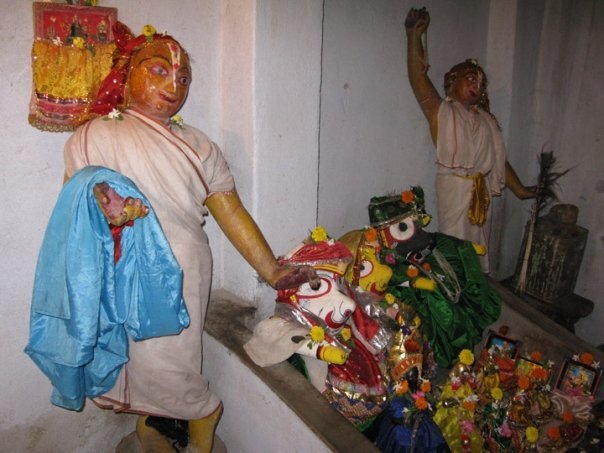
दूसरी लीला किसी एक चमत्कारी घटना के बारे में नहीं, बल्कि विग्रह-सेवा के बारे में है। कहा जाता है कि महाप्रभु ने स्वयं सन्न्यास लेने के बाद स्वप्न में नरहरि को दर्शन दिए। उन्होंने नरहरि को आज्ञा दी कि वे कीर्तन में नाचते हुए उनके भाव-विभोर रूप के विग्रह गढ़ें। नरहरि ने ऐसा ही किया और गौरांग के तीन ऐसे विग्रह बनाए। ये विग्रह उनसे और उनके परिवार से जुड़े तीन अलग-अलग स्थानों पर स्थापित और पूजित हुए: स्वयं श्रीखण्ड, पास का कटवा, और गंगानगर। भक्त आज भी इन विग्रहों की सेवा-पूजा करते हैं। मधु-पुष्करिणी के साथ यह लीला प्रायः यह दिखाने के लिए सुनाई जाती है कि बंगाल छोड़कर जगन्नाथ पुरी जाने के बाद भी महाप्रभु श्रीखण्ड के वैष्णवों के भक्ति-जीवन से कितनी निकटता से जुड़े रहे। नरहरि की परम्परा की बाद की पीढ़ियों को भी उनके और महाप्रभु के सम्मान में और विग्रह स्थापित करने के लिए स्मरण किया जाता है। इसका एक उदाहरण गौर-गदाधर विग्रहों की एक जोड़ी है, जो स्वयं जगन्नाथ पुरी में उनकी परम्परा से जुड़े एक छोटे मठ में आज भी सेवित है। यह मूल तीन विग्रहों से अलग है। लेकिन इससे पता चलता है कि श्रीखण्ड के इस एक चिकित्सक-परिवार का भक्ति-प्रभाव अन्त में कितनी दूर तक पहुँचा।
चमत्कार और साधारण भक्ति साथ-साथ #
दोनों लीलाओं में नरहरि स्वयं इन घटनाओं को बहुत कम महत्त्व देते दिखाई देते हैं। किसी भी स्रोत में यह नहीं मिलता कि उन्होंने मधु-पुष्करिणी या स्वप्न-आज्ञा के कारण अपने लिए किसी विशेष स्थान का दावा किया हो। उनके जीवन के हर दूसरे वृत्तान्त में वे बस वही व्यक्ति हैं, जो भगवान् को चंवर से हवा करते हैं, जो अपने भतीजे रघुनन्दन ठाकुर की देखभाल करते हैं, और जिन्होंने आगे चलकर गुरु के रूप में लोचन दास ठाकुर को श्री चैतन्य-मंगल लिखने की आज्ञा दी। गौड़ीय वैष्णव जीवनियाँ महाप्रभु के अन्तरंग पार्षदों का वर्णन प्रायः इसी प्रकार करती हैं। उनमें एक ओर ठोस और स्पष्ट रूप से बताई गई वास्तविक चमत्कारी लीलाएँ होती हैं, और दूसरी ओर बाहर से बहुत विनम्र जीवन। ये लीलाएँ इसी भाव में सुनाई गई हैं, इस प्रमाण के रूप में नहीं कि नरहरि ने अपने लिए कोई विशेष स्थान होने का दावा किया। श्रीखण्ड के व्यापक मण्डल में उनके स्थान का विस्तृत वर्णन श्रीखण्ड वैष्णवों के नेता में आगे दिया गया है।
