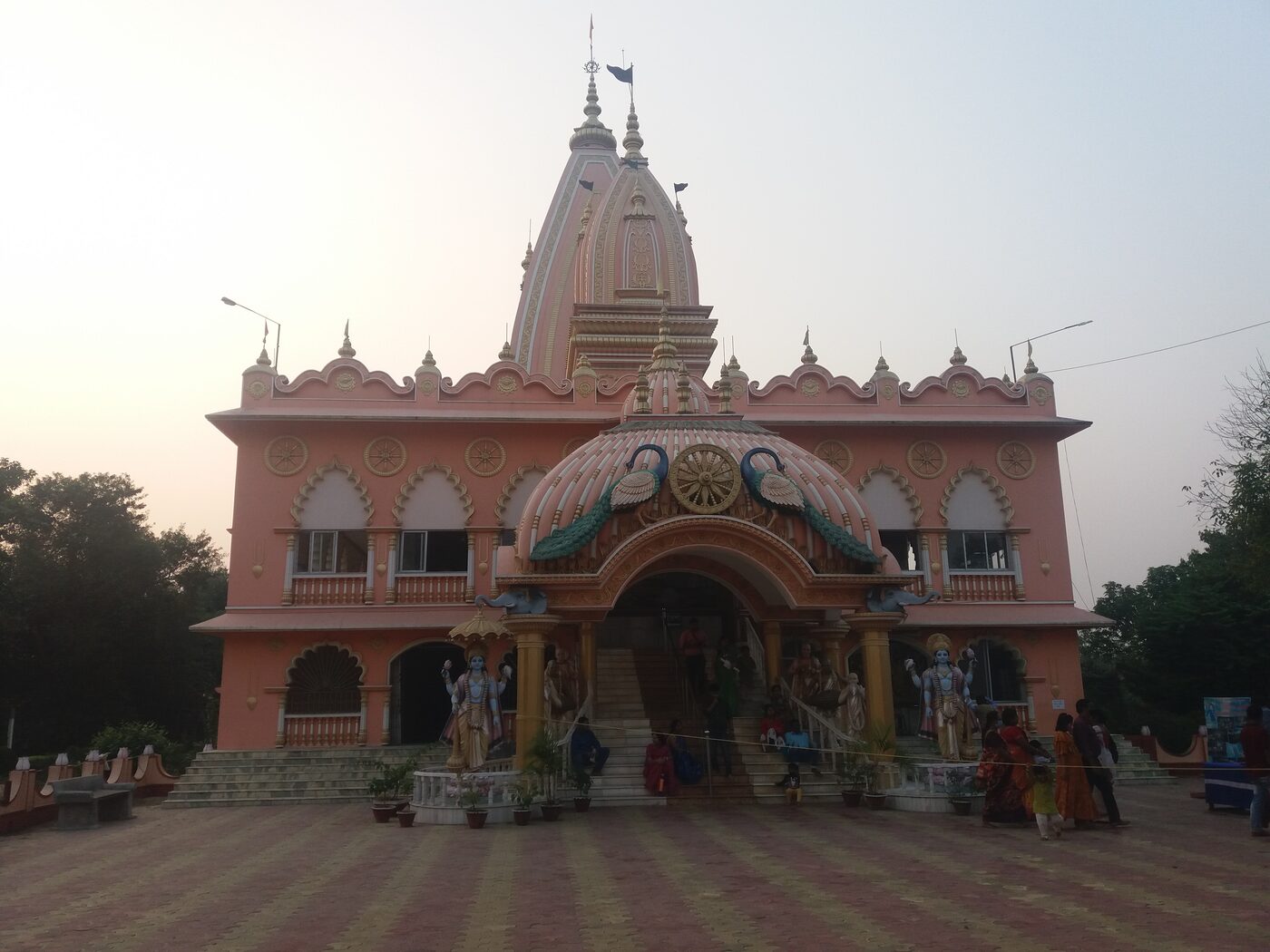
Ekachakra is not the kind of place from which movements are expected to start. It lies in the district of Birbhum, in the part of western Bengal that the old texts call Radhadesha, literally the country where the Ganges is not visible. Nabadwip, some sixty miles to the east, was the most famous centre of Sanskrit learning in the province. It was a town of logicians and grammarians, where a young scholar could make a national reputation. Ekachakra was farmland. Its small hamlets were spread out in a long line. It had a small river called the Maudesvara, which local people treated as their Yamuna. It also had a shrine of Siva, a tamarind tree and a village schoolmaster. Sri Nityananda Prabhu was born in that schoolmaster's house, in about 1474.
| Detail | Description |
|---|---|
| Date | Thirteenth day of the bright fortnight of Magha, Saka 1395, early 1474 |
| Place | Ekachakra, Birbhum district, in Radhadesha |
| Father | Hadai Ojha, also called Hadai Pandita |
| Mother | Padmavati Devi |
| Observed as | Nityananda Trayodasi |
| Identity | Balarama, the elder brother of Krishna |
Hadai Pandita and Padmavati Devi #
His father was Hadai Ojha, also known as Hadai Pandita. The second name simply shows that he was a learned brahmana who taught. According to the family trees, he was the son of Sundaramalla Nakadi Baduri, a brahmana of the Radha clan. He kept a primary school close to his own house, and he maintained the worship of a Siva deity called Bhandisvara on the northern side of the village. His wife was Padmavati Devi. The Vaishnava biographies say almost nothing about the couple's life, except that they were poor, respectable and devoted to God, and that they loved this son more than anything in the world. This detail matters, because it is what makes the next chapter of his life so painful.
The Date of the Advent and Nityananda Trayodasi #
The date given by the tradition is the thirteenth day of the bright fortnight of the month of Magha in the Saka year 1395. This corresponds to the early part of 1474 by the Western calendar, though some authorities give 1473. The day is kept across the Gaudiya world as Nityananda Trayodasi. Fittingly, it falls a few weeks before Gaura Purnima, just as Nityananda Prabhu appeared before Mahaprabhu. He was thus about twelve years older than Sri Chaitanya Mahaprabhu, who was born at Nabadwip in February 1486. The household called him Nitai. The name has stayed so firmly that in Bengal the two of them are still spoken of together as Nitai-Gaura, with the servant's name placed first.
The Signs at the Birth and the Shout at Ekachakra #
Vrindavana Dasa Thakura wrote the Chaitanya-bhagavata, which is the source for almost everything we know of these years. He records that auspicious signs came with the birth and that hardship in the surrounding country lifted. He also says that twelve years later, on the day Mahaprabhu appeared at Nabadwip, the boy at Ekachakra shouted aloud with joy. The sound carried so far that people said a thunderbolt had struck. Nobody understood what had really happened. These things are known only from devotional literature, and the tradition reports them as such. But on one point the tradition is completely firm. It holds that the child born in Hadai Pandita's house was Balarama, the elder brother of Krishna, who had come down to this world first.
Why Balarama Appears Before Krishna #
The fact that Balarama came first carries the theological weight of the whole episode, so it should be explained plainly. A reader new to this may fairly ask why the helper should arrive before the master. Krishnadasa Kaviraja answers this in the fifth chapter of the Adi-lila. He says that Balarama is not a helper at all in the ordinary sense. Krishna is the source of all incarnations. Balarama is His second body, the same identity in a different form, His first expansion. Balarama exists to assist Krishna's pastimes, and in every one of His forms He tastes the bliss of serving Krishna. When that original Krishna appeared at Nabadwip as Chaitanya Mahaprabhu, Balarama appeared with Him as Nityananda. The relation between Them is not about who is higher in rank. It is about the work each one does.
The Sandhini Potency and the Expansions of Sankarshana #
And this work comes first. In Gaudiya theology Balarama is the sandhini potency, the energy of existence. He provides the ground on which anything at all can happen. Krishnadasa Kaviraja works this out through a long chain of expansions, from Balarama as the original Sankarshana, to Maha-sankarshana in the spiritual sky, to the three Vishnu forms who lie on the Causal Ocean, the Garbha Ocean and the ocean of milk, to Ananta Sesa who bears the worlds. The universes rest on Him. So do the living beings, of whom Sankarshana is called the shelter. If the Lord is to appear anywhere, the place, the associates and all the things used in that appearance are extensions of Balarama. That is why, whenever the Lord descends, Balarama comes first. Vraja itself followed this order. In the Bhagavatam the son of Rohini is born before the son of Devaki. When Garga Muni performs the secret name-giving ceremony, he names Him Rama for the joy He gives, Bala for His strength, and Sankarshana because He joins two families together.
The Adi Guru and the Twelve Year Gap #
The tradition gives one more reason, and it belongs to Nityananda in particular, not to Balarama in general. Chaitanya Mahaprabhu came to distribute love of God without conditions. A gift of that kind needs someone to carry it to people's doors. To introduce a soul to the Lord, and to make that soul fit to be introduced, is the work of the spiritual master. Gaudiya Vaishnavism holds that this work belongs originally to Balarama, that He is the adi-guru, and that Nityananda Prabhu is guru-tattva in person. Seen in this way, the twelve years between Ekachakra and Nabadwip are not an accident of the calendar. The teacher is in place before the lesson begins. This teaching is taken up more fully on the page on the mercy of Nitai.
Garbhavasa and the Banka Raya Temple #
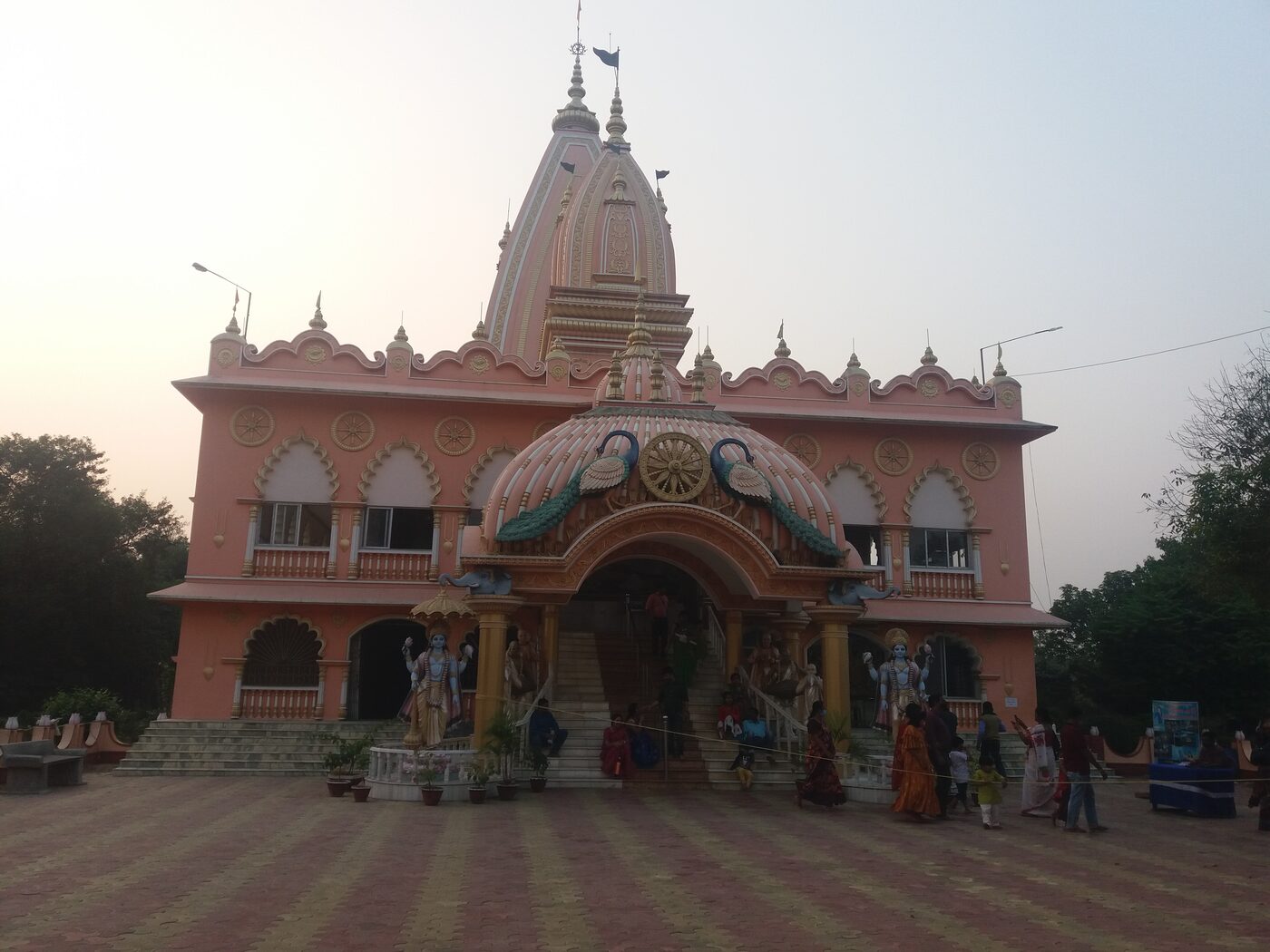
The birthplace itself is still there, and is one of the main pilgrimage sites of the Gaudiya world. The spot where the birth took place is called Garbhavasa. Long ago land was given to support the worship there, and the Maharaja of Dinajpur added a large donation. Half a mile away stands the temple whose central Deity is Banka Raya, also called Bankima Raya, a form of Krishna. According to the priests of Ekachakra, Nityananda Prabhu Himself recovered this Deity from the water at the Kadamba-khandi ghat on the little river and installed Him. A deity of Srimati Radharani found under a nima tree at Bhaddapura, in the neighbouring village of Viracandrapura, was placed at His side. She is still known locally as the mistress of Bhaddapura. Jahnava Mata now stands on Banka Raya's right. The temple was struck by lightning in 1924 and rebuilt. The surrounding villages of Viracandrapura and Virabhadrapura carry the name of Nityananda's son. The verse of the Chaitanya-charitamrita does no more than note that Nityananda Prabhu took birth in Radhadesha. But in his purport to that verse, Srila Prabhupada set down the geography of the whole area. It is one of the longest geographical purports in the book, and a sign of how much the place matters to the tradition.
What the Birthplace Says About the Mission #
For Gaudiya Vaishnavas, the place of this advent shows, in the end, which direction the mission would take. The movement's own story does not begin in the university town. It begins in a village on the wrong side of the river, in the house of a man who taught children their letters. It begins with a boy whose whole later life was spent going to people no one else would go to. Where Nityananda Prabhu chose to be born already points to everything he is remembered for. He preached door to door in Nabadwip. He spent decades in the Bengali countryside, not in Puri with the Lord. He was ready to be struck on the head by a drunkard instead of walking past him.
