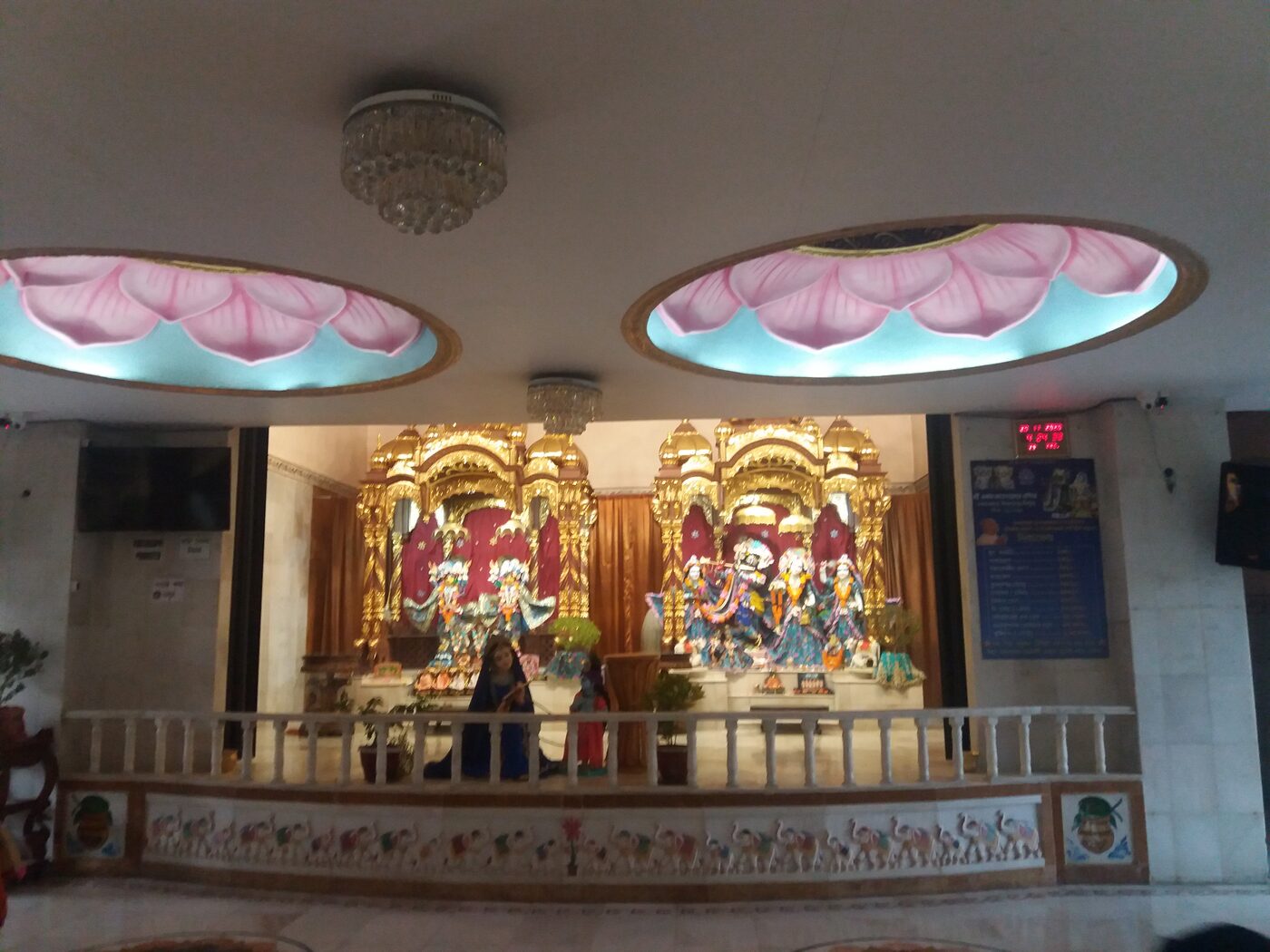
Every account of Nityananda Prabhu's boyhood at Ekachakra agrees on one striking fact: he did not play games. He staged plays. From the time he could organise other children, he gave his whole day to acting out the pastimes of Krishna and of the other descents of Vishnu. The boys of the village took the parts, and the parents and neighbours watched. Vrindavana Dasa Thakura gives the ninth chapter of the Adi-khanda of his Chaitanya-bhagavata to these performances. The detail he records is unusually specific. That is why the episode has stayed alive in the minds of Bengali Vaishnavas for five hundred years. Almost nothing of it appears in the Chaitanya-charitamrita, which was written later and about a different subject. If we know these stories at all, it is only because Vrindavana Dasa thought them worth recording.
How the Plays Were Staged #
The performances had a fixed method. Nityananda would set the scene, assign the roles and coach the lines; the other children knew what to say because he had taught them.
The Assembly of the Demigods #
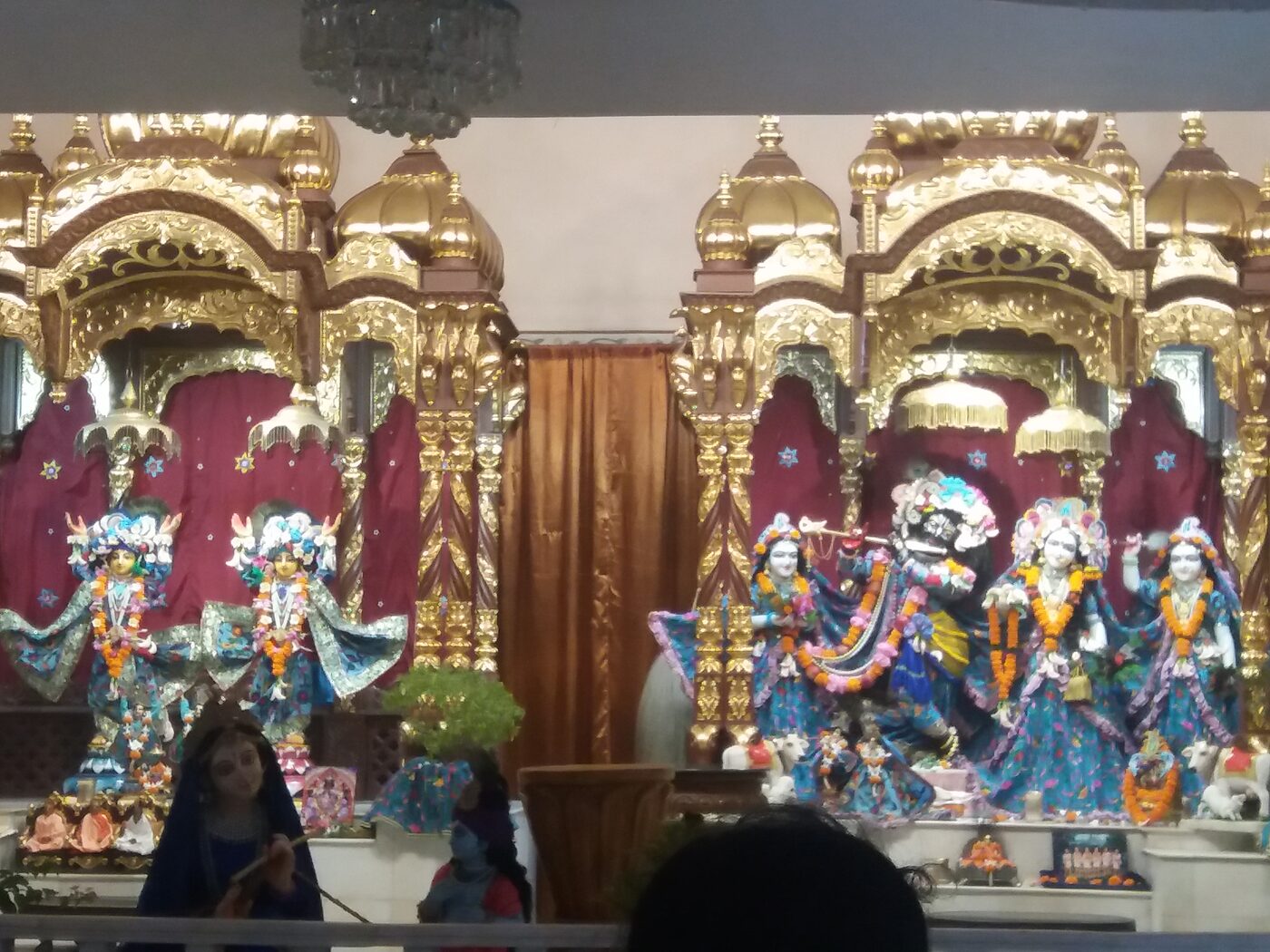
One of the earliest and most often repeated plays was the assembly of the demigods. A boy would be dressed as the Earth, suffering under the burden of wicked kings. The others took the parts of the gods. Then the whole company would walk down to the riverbank to pray to Kshirodakasayi Vishnu, who lies on the ocean of milk. A boy hidden out of sight would then answer in a deep voice that he would soon be born in the cowherd country of Mathura.
The Prison of Kamsa and the Midnight Birth #
From there the cycle ran through the whole of Krishna's life in order: the marriage of Vasudeva and Devaki; the family's playhouse converted into Kamsa's prison; the midnight birth; Vasudeva carrying the child across the Yamuna to Nanda's village and bringing Yogamaya back in his place.
The Vraja Pastimes Enacted in the Village #
Then the Vraja pastimes. A boy dressed as Putana while another climbed up to take her breast. A cart built of reeds, made in order to be broken. Serpents made from the leaves of trees, and a boy who went into the village pond and floated there motionless until Nityananda revived him. A grove of palms, where the demon Dhenuka was killed and the fruit tasted. Toy figures named Baka, Agha and Vatsa, made to be destroyed. The boys raided the village milkman's house for curd and butter, copying Krishna exactly, and the milkman's family seem to have put up with this very patiently. The cows taken out to pasture and brought home in the late afternoon with the boys blowing buffalo horns. The lifting of Govardhana Hill.
The Replica of Mathura and the Death of Kamsa #
A model of Vrindavana was built somewhere in the fields, and later a model of Mathura. It had garland-makers, and one boy was dressed as Kubja. There was also a bow, which Nityananda broke with a great noise. Then he defeated the elephant Kuvalayapida, the wrestlers Chanura and Mustika, and finally Kamsa, who was dragged off by the hair.
Weeping With the Gopis When Akrura Came #
One of these performances is remembered for a different reason. When the boy playing Akrura arrived to take Krishna and Balarama away from Vrindavana to Mathura, Nityananda did not act the part of the departing brother. He wept as the gopis wept, in the mood of those left behind. The biographies say that the tears ran down in streams in full view of the other children, who did not understand what they were looking at. This is the detail that separates the Ekachakra plays from children's imitation. At times, the boy who organised the drama was not acting at all.
The Rama Cycle and the Role of Lakshmana #
The Rama cycle was staged as thoroughly as the Krishna cycle. Verandah plants were chopped down and thrown into the water as boulders while the children, playing monkeys, built the bridge to Lanka and shouted the victory of Raghunatha. All the accounts agree that Nityananda's own favourite role was Lakshmana. The tradition finds this entirely natural. Krishnadasa Kaviraja states that Nityananda Svarupa had earlier appeared as Lakshmana and served Ramachandra as His younger brother. As Lakshmana, He silently bore what He could not prevent. As Lakshmana, Nityananda stormed into Sugriva's palace, bow in hand, to scold him for enjoying himself while Rama grieved on the mountain. As Lakshmana he scolded Parashurama. As Lakshmana he received the frightened monkeys, embraced them, and led them to his master.
The Fall of Lakshmana and the Lotus Flower #
The most famous of all the Ekachakra incidents came out of that cycle, and it very nearly ended badly. In the scene of Lakshmana's fall, a boy playing Ravana threw a lotus flower at him in place of the fatal weapon. Nityananda dropped where he stood and did not move. He had told the children beforehand: when I fall, gather round and weep, and then send Hanuman for the medicine, and I will revive when it is applied. But when it actually happened, the children panicked and completely forgot the instruction. They wept, called out to him to get up, and could find no sign of life anywhere in his body. Hadai Pandita and Padmavati came running, found their son apparently dead, and fainted on the spot. The village gathered. Someone in the crowd remembered that an actor playing Dasaratha had once really died on stage. The biographies are careful to say that this was a bystander, not one of the players. Someone else said that the boy was only acting his part and would recover as soon as Hanuman brought the medicine. That remark reminded the children of their own script.
Hanuman and the Journey for the Medicine #
What followed was a piece of theatre that has been retold in Bengal ever since. The boy playing Hanuman set off. Another boy, dressed as a sage, delayed Hanuman with an offer of fruits and roots, and Hanuman politely refused. At a lake, a third boy, playing a crocodile, caught Hanuman's ankles under the water. The crocodile was dragged out and beaten. A fourth boy, dressed as a demon, threatened to eat Hanuman, and the two fought until Hanuman won. At last Hanuman reached the mountain, defeated a party of Gandharvas, and carried it back on his head. Another child, playing the physician, applied the medicine to Nityananda's nose, and he sat up. The village laughed with relief, and Hadai Pandita took his son into his arms. Everybody asked the question they had been asking for years: where did you learn all this. Nityananda answered that these were his own pastimes, and that he was only repeating what he had said in earlier lives. Nobody took his answer seriously.
Where Did You Learn All This #
That question is, in fact, the point of the whole chapter. These were village children in Radhadesha in the fifteenth century. They had not read the Bhagavatam and their parents mostly could not have read it to them. Nobody had taught Nityananda the sequence of Krishna's pastimes, the names of the demons, or the speeches. The neighbours said openly that they had never seen anything like it and could not explain it. The biographies state that, by the influence of the Lord's own illusory energy, nobody at Ekachakra recognised who was living among them. Gaudiya Vaishnavas see these twelve years as a hidden rehearsal. They see them as preaching done before the mission had begun. They also see them as an early use of the one talent that would mark Nityananda's whole life: the ability to draw ordinary people into Krishna's pastimes without asking them for any qualification first. The children left their homes and their parents to be with him, and the parents did not object. At one point Vrindavana Dasa breaks off his account to offer his obeisances to those boys, whose names nobody knows.
Visramatala Bakulatala and Hantugada #
The places are still shown. A short walk from the Banka Raya temple is a spot called Visramatala, where the tradition says he enacted the rasa-lila and the other Vrindavana pastimes with his friends. Near Garbhavasa is Bakulatala, named for a bakula tree under which the boys played a rough game called jhala-jhapeta. The tree is very old. Its branches and smaller branches are said to look like the hoods of serpents, and local devotees believe this is Ananta, appearing in that form at Nityananda's wish. The story attached to it is that the tree once had two trunks. When his playmates found it awkward to jump from the branches of one to the branches of the other, he is said to have merged the two into one. A little further off is Hantugada, where he is said to have distributed chipped rice and yogurt to the village, kneeling down to take it himself. Forty years later at Panihati, he would make this same dish, and this same posture of a servant, famous. Fairs are still held there on his appearance day and at Goshthashtami.
The Childhood as a Statement of Method #
Seen in the light of what came later, the childhood is not just a charming beginning. It already shows his method. Nityananda Prabhu never, at any point in his life, taught by argument. He set up something that other people could take part in, and he let their taking part do the work. It began with a schoolmaster's son giving the boys of a little-known Birbhum village the parts of the cowherds of Vraja. It ended with a whole province of Bengal singing in the streets.
