Srila Paramananda Puri
Godbrother and Constant Companion of Sri Chaitanya Mahaprabhu at Jagannatha Puri
The complete life, on one page: The main biography and every pastime page, in order, in one place
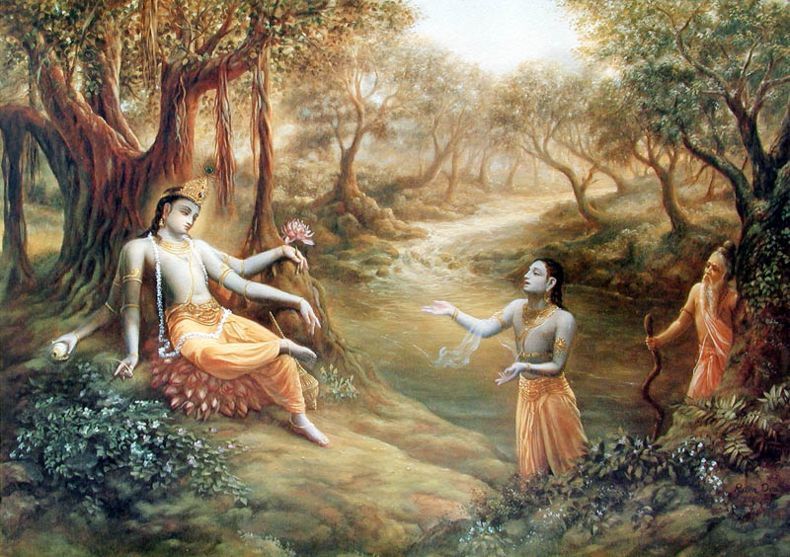
Introduction
Long before Sri Chaitanya Mahaprabhu ever reached Jagannatha Puri, a wandering sannyasi named Paramananda Puri was already living the kind of life that the Gaudiya Vaishnava tradition mostly says little about. He was a brahmana of Trihut who had taken sannyasa. He had sat for years at the feet of Srila Madhavendra Puri, and then walked the length of India as one more unknown sannyasi. Nothing in that description would make him stand out from dozens of other wandering sannyasis of his time. What changed this was a single meeting on a hill in the far south. After that meeting, for the rest of both their lives, Sri Chaitanya Mahaprabhu treated him almost as a second father. Mahaprabhu said openly that Paramananda Puri was the living presence of Madhavendra Puri himself.
| Detail | Description |
|---|---|
| Birthplace | Trihut (Tirhut), a brahmana family, in what is now north Bihar |
| Guru (diksha) | Srila Madhavendra Puri |
| Sannyasi godbrothers | Isvara Puri, Ramachandra Puri, Brahmananda Bharati, Keshava Bharati, and five others |
| Best known for | One of Sri Chaitanya Mahaprabhu's closest sannyasi companions at Jagannatha Puri |
| Identity | Uddhava, Krishna's friend and cousin (Gaura-ganoddesha-dipika 118; Chaitanya-charitamrita Adi 9.13-15 purport) |
| Residence at Puri | A room in Kashi Mishra's house, and his own small matha and well near the Jagannatha temple |
| Disappearance | Not recorded |
Scriptural evidence for the introduction (2)
paramananda puri, ara kesava bharati / brahmananda puri, ara brahmananda bharati / visnu-puri, kesava-puri, puri krsnananda / sri-nrsimhatirtha, ara puri sukhananda / ei nava mula nikasila vrksa-mule / ei nava mule vrksa karila niscale
Paramananda Puri, Keshava Bharati, Brahmananda Puri and Brahmananda Bharati, Sri Vishnu Puri, Keshava Puri, Krishnananda Puri, Sri Nrisimha Tirtha and Sukhananda Puri -- these nine sannyasi roots all sprouted from the trunk of the tree. Thus the tree stood steadfastly on the strength of these nine roots.
From the purport: Purport excerpt: "Paramananda Puri belonged to a brahmana family of the Trihut district... Madhavendra Puri was his spiritual master... Paramananda Puri was very dear to Sri Caitanya Mahaprabhu."
The founding verse naming Paramananda Puri as one of Madhavendra Puri's nine sannyasi disciples, and the source of nearly everything known about his origins.
पुरी परमानन्दो य आसीदुद्धवः पुरा ॥
इन्द्रद्युम्नो महाराजो जगन्नाथार्चकः पुरा ।
जातः प्रतापरुद्रः सन्सम इन्द्रेण सोऽधुना ॥११८॥
purī paramānando ya āsīd uddhavaḥ purā ||
indradyumno mahārājo jagannāthārcakaḥ purā |
jātaḥ pratāparudraḥ san sama indreṇa so’dhunā ||118||
Sri Paramananda Puri had formerly been Uddhava. Maharaja Prataparudra, who was as powerful as Lord Indra, had formerly been Maharaja Indradyumna, who began the worship of Lord Jagannatha.
From the purport: The Gaura-gaṇoddeśa-dīpikā (118) states, purī śrī-paramānando ya āsīd uddhavaḥ purā. “Paramānanda Purī is none other than Uddhava.” Uddhava was Lord Kṛṣṇa’s friend and cousin, and in caitanya-līlā the same Uddhava became the friend of Śrī Caitanya Mahāprabhu and His uncle in terms of their relationship in the disciplic succession.
Kavi Karnapura's verse identifying Paramananda Puri as Uddhava, Krishna's friend and cousin; Srila Prabhupada quotes and explains it in his purport to Chaitanya-charitamrita Adi 9.13-15. Sanskrit: diacritic edition of the Gaura-ganoddesha-dipika; English translation as published at bvmlu.org. Purport excerpt: Srila Prabhupada, Chaitanya-charitamrita Adi 9.13-15.
Chapter 1
Birth and Early Life in Trihut
How little is known of a brahmana boyhood in the Trihut region, and why the sources are silent.
Almost every acharya's biography begins with at least a birth year, a father's name, or a home village. Paramananda Puri's biography does not, and it is only honest to say so plainly at the very start. No source records when he was born, who his parents were, or what his life was like before he appears, already a sannyasi, in the company of Srila Madhavendra Puri.
An Honest Silence #
Srila Prabhupada's purport to Sri Chaitanya-charitamrita Adi-lila 9.13-15 gives the single fact about his origins that every later source repeats. Paramananda Puri belonged to a brahmana family of the Trihut district. That is all that is recorded about his early life. Gaudiya History's own page on him states the same limit directly: "Nothing is known about Paramananda Puri's antecedents nor about his appearance and disappearance dates." Other lives have dramatic events, uncertain details or disputes in their early years. For the first decades of his life, there is nothing at all. There is not even the kind of disputed detail that appears elsewhere among these acharyas, only an absence.
Trihut, Between the Ganges and the Himalayan Foothills #
Trihut, more commonly spelled Tirhut today, is the name of a historical region of north Bihar. It is centered on what are now the districts around Muzaffarpur and Darbhanga, with the Ganges roughly to the south and the Himalayan foothills to the north. It was, and still is, a heartland of Maithili Brahminical culture and Sanskrit scholarship. It is the same broad region that produced Vidyapati and a long line of Nyaya and Mimamsa logicians. A Trihut brahmana in Paramananda Puri's time would have grown up within reach of that scholarly tradition. But nothing in the record says whether he was ever formally trained in it. It also does not say whether he took to Vedic studies as a young man, whether he married, or whether he went straight from a brahmana household into some form of renunciation. Each of these possibilities is only a guess that sounds likely. No text supports any of them.
A Life That Begins, in the Record, Only at Sannyasa #
What can be said with confidence is where his story begins in the record. He appears as a sannyasi, already initiated, in a close and evidently long relationship with Srila Madhavendra Puri. Chaitanya-bhagavata's Antya-khanda groups him with Isvara Puri as one of only two sannyasi disciples whom Madhavendra Puri held to be truly dear. Such closeness had to have been built over years, but the texts never describe those years. By the time Sri Chaitanya-charitamrita and Chaitanya-bhagavata begin to tell his story in detail, he is already an old man travelling alone in the deep south of India. So whatever training, testing or slow growth turned a brahmana boy from Trihut into one of Madhavendra Puri's two most trusted sannyasi disciples had already happened. It happened without being written down, decades before either surviving biography of Sri Chaitanya Mahaprabhu thought to mention him by name.
What the Silence Does Not Mean #
It would be easy to read this absence as evidence that Paramananda Puri was a minor figure, someone the tradition simply never thought worth recording in detail. The rest of his life points to the opposite. Chaitanya-charitamrita and Chaitanya-bhagavata are two of the most detailed devotional biographies produced anywhere in the Bhakti tradition. Their authors had every reason and every opportunity to record a devotee's early life, if that information had reached them. Yet they say nothing at all about Paramananda Puri's youth, while they give real attention to his years at Jagannatha Puri. This suggests only that the information itself had already been lost by the early sixteenth century. That is when he arrives in these texts, as an old man near the end of his own spiritual life, not the beginning. The pages that follow tell what that life looked like once the sources begin to describe it: first as a disciple, then as a wandering sannyasi, and finally as one of Sri Chaitanya Mahaprabhu's closest companions. They begin with Discipleship Under Madhavendra Puri.
Chapter 2
Discipleship Under Madhavendra Puri
How a brahmana of Trihut became one of Madhavendra Puri's most cherished disciples, and how that discipleship led, years later, to a hilltop in the far south.
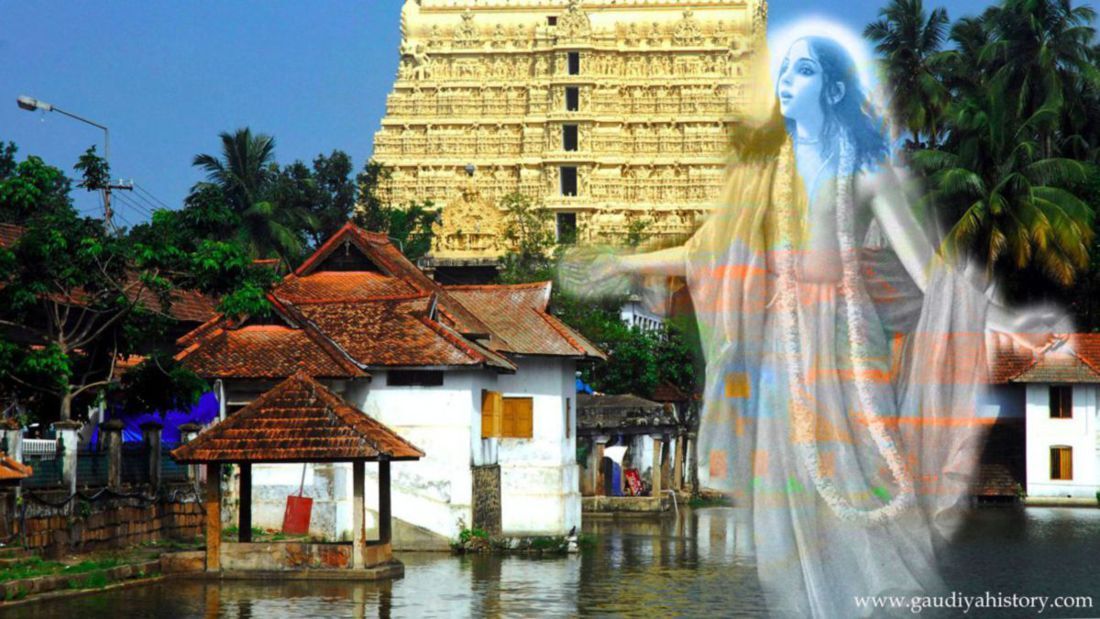
By the time the record says anything definite about Paramananda Puri, he is already a sannyasi. By every account, he is also already one of the two disciples closest to his guru, Srila Madhavendra Puri. What happened between his unrecorded boyhood in Trihut and that mature discipleship is lost. But the fruit of that discipleship is not lost. His spiritual training was so deep that Sri Chaitanya Mahaprabhu would later recognize Madhavendra Puri's presence in this man's face.
| Detail | Description |
|---|---|
| Guru | Srila Madhavendra Puri |
| Closest godbrother | Isvara Puri, Sri Chaitanya Mahaprabhu's own diksha-guru |
| Wider circle of godbrothers | Ramachandra Puri, Brahmananda Bharati, Keshava Bharati, Vishnu Puri, Keshava Puri, Krishnananda Puri, Nrisimha Tirtha, Sukhananda Puri |
| First meeting with Mahaprabhu | Rishabha Hill (Ashabha Parvata), Tamil Nadu, during the South India tour |
| Duration of that first meeting | Three days |
One of the Two Most Dear #
Chaitanya-bhagavata's Antya-khanda states the relationship very plainly. Among all of Madhavendra Puri's sannyasi disciples, only Isvara Puri and Paramananda Puri were counted as truly dear to their guru. Srila Prabhupada quotes this same passage in his purport to Chaitanya-charitamrita Adi 9.13-15. It pairs Paramananda Puri with a very different figure from Mahaprabhu's own later circle, Svarupa Damodara. The verse says that both of them were constantly engaged in the Lord's company, Paramananda Puri absorbed in meditation and Svarupa Damodara in kirtana. It calls them "like two arms" of Mahaprabhu's own sannyasa form. That comparison belongs to his years at Puri, not to his training under Madhavendra Puri. But it shows how consistently the tradition describes him. It does not describe him as a disciple on the edges, but as one of a small number of people trusted at the very center.
The Nine Roots of a Single Tree #
Krishnadasa Kaviraja Goswami uses his own image to explain the origin of the Gaudiya Vaishnava movement. This image is explained at length in the pages about Madhavendra Puri himself. It describes Madhavendra Puri as the seed of a desire tree of devotional service, Isvara Puri as its first sprout, and Sri Chaitanya Mahaprabhu as the trunk the whole tree became. Nine sannyasi disciples then sprang up as roots to hold that already-grown trunk steady. Paramananda Puri is named first among them, followed by Keshava Bharati, Brahmananda Puri, Brahmananda Bharati, Vishnu Puri, Keshava Puri, Krishnananda Puri, Nrisimha Tirtha and Sukhananda Puri (Adi 9.13-15). Gaudiya History's own account of him singles him out as "the central root" of these nine. This is a striking claim, because one of his fellow roots, Keshava Bharati, would later become the very sannyasi who gave Mahaprabhu His sannyasa at Katwa. A Name Attached to the Sannyasa-Danda examines that connection honestly, without forcing a conclusion.
After the Guru's Passing #
Madhavendra Puri's own page tells in full, in its account of Isvara Puri and His Disciples, about his final years and disappearance, and about the very different paths his two dearest disciples took afterward. No surviving text gives details of what happened to Paramananda Puri himself in the years right after. He simply appears again, years later, as an elderly wandering sannyasi, already deep in the south of India. He is observing the four-month rainy-season vow at a hill called Rishabha Parvata (identified by Gaudiya History with the modern Palni Hills of Tamil Nadu). At that very time, Sri Chaitanya Mahaprabhu happened to be passing through on His own tour of the south.
A Wanderer at Rishabha Hill #
Sri Chaitanya-charitamrita records the meeting in very few words, and this makes its feeling even stronger: "Paramananda Puri had stayed at Rishabha Hill during the four months of the rainy season, and when Sri Chaitanya Mahaprabhu heard this, He immediately went to see him" (Madhya 9.167). What followed was not a formal exchange between an already-famous preacher and an elder ascetic. It was closer to a family reunion that neither man could have planned for. "Upon meeting Paramananda Puri, Sri Chaitanya Mahaprabhu offered him all respects, touching his lotus feet, and Paramananda Puri embraced the Lord in ecstasy" (Madhya 9.168). Gaudiya History gives a fuller account of the same meeting, drawn from the same chapter. In it, Mahaprabhu cries out on seeing him, as if He were seeing Madhavendra Puri appear again in bodily form. This is the clearest single statement anywhere in these sources of exactly what this godbrother of His own guru meant to Him.
Three Days of Krishna-katha #
The two men then spent three days together doing nothing but discussing Krishna. One was the old sannyasi. The other was the young one, who by then had already begun to be recognized across India as far more than an ordinary renunciate. Yet neither treated the meeting as anything more than two godbrothers, one generation removed, meeting warmly for the first time. Paramananda Puri mentioned his plan to go on to Puri and then to Bengal to bathe in the Ganges. Then Mahaprabhu made him a direct request, not just a suggestion: come back to Puri, and stay. "It is My wish to stay with you," He said, "so please be kind to Me and come and take up permanent residence in Puri" (Chaitanya-charitamrita, Madhya-lila 9). Paramananda Puri agreed. Life at Jagannatha Puri tells what that residence at Puri actually looked like: the room he was given, the well that became his own small legend, and the honors Mahaprabhu paid him for the rest of both their lives.
Scriptural evidence for this chapter (2)
Quoted in the text above:
- Madhya 9.167 Sri Chaitanya-charitamrita
- Madhya 9.168 Sri Chaitanya-charitamrita
Chapter 3
A Name Attached to the Sannyasa-Danda
What Chaitanya-charitamrita and Chaitanya-bhagavata each say about who gave Sri Chaitanya Mahaprabhu His sannyasa order, and why the two accounts are hard to fit together.
Every source agrees that Sri Chaitanya Mahaprabhu accepted the sannyasa order of life at Katwa, on the banks of the Ganges, in the month of Magha. Almost every source also agrees on who performed the ceremony. It was the sannyasi Keshava Bharati, who shaved His head, gave Him the danda and kamandalu, and gave Him the name Sri Krishna Chaitanya. But one detail does not fit easily with that account. It should be reported plainly, not smoothed over.
The Account Most Widely Told #
Sri Chaitanya Mahaprabhu's own biography tells the sannyasa story plainly. At Katwa, Nimai Pandita approached Keshava Bharati and asked for initiation into the renounced order. After some hesitation, Keshava Bharati performed the entire ceremony himself. It ended with the sannyasa name by which the Lord would be known ever after. Nothing in that account gives Paramananda Puri any role at Katwa at all. Nothing in Sri Chaitanya-charitamrita's own story of that day places him there either.
A Different Line in Chaitanya-bhagavata #
Yet Srila Prabhupada's purport to Chaitanya-charitamrita Adi-lila 9.13-15 draws directly on Vrindavana Dasa Thakura's Chaitanya-bhagavata (Antya-khanda). It states as a matter of fact: "When Lord Chaitanya accepted the renounced order, Paramananda Puri offered Him the danda." Quoting the same text, the same purport names Paramananda Puri and Svarupa Damodara together as the two sannyasi associates who "remained constantly in the Lord's company, taking the staff (danda) in renunciation for the Lord," and this reads more like a statement about their shared, lifelong closeness to Mahaprabhu's renounced life. It reads less like a literal claim that both men personally performed His sannyasa. Does the danda-offering line describe an act performed at Katwa itself? Or does it describe a later, more symbolic gesture, once Paramananda Puri had entered Mahaprabhu's circle? Chaitanya-bhagavata, as reported in this purport, does not make this clear.
Nine Roots, Including the Officiant Himself #
One detail makes it harder to set the puzzle aside as simple confusion. As already told, Keshava Bharati was the sannyasi who performed the ceremony at Katwa. He is himself named as one of Madhavendra Puri's nine sannyasi "roots" alongside Paramananda Puri (Adi 9.13-15). Srila Prabhupada's purport notes that "some say he took sannyasa from Madhavendra Puri" as well. That would make him and Paramananda Puri godbrothers under the very same guru. If that tradition is correct, then the two men most closely connected with Mahaprabhu's sannyasa belonged to the same small circle of Madhavendra Puri's disciples. One of them is agreed to have performed the ceremony. The other is the one whom Chaitanya-bhagavata separately credits with the danda. This at least makes it easier to see how the same event could be remembered slightly differently by two different storytelling traditions.
A Timeline That Resists Tidying #
Any attempt to place Paramananda Puri physically at Katwa meets a harder problem. Sri Chaitanya-charitamrita's own narrative states clearly that Mahaprabhu and Paramananda Puri first met each other at Rishabha Hill in the deep south of India. This was well into the South India tour, which began only months after the Katwa sannyasa (Madhya 9.167-168). The meeting is recorded, on both sides, as an overwhelming first encounter between two men who had never stood face to face before. If that is the actual first meeting, it is difficult to see how Paramananda Puri could also have been physically present at Katwa handing over a danda a year or more earlier. No source settles this difficulty.
Two Accounts, Neither Dismissed #
Neither conclusion is drawn here. We do not say that Keshava Bharati was not the sannyasa-guru, and we do not say that Chaitanya-bhagavata's tradition about the danda is mistaken. Both accounts stand side by side, because both come from texts Gaudiya Vaishnavas treat as authoritative. Inventing a way of fitting them together that neither text actually offers would replace an honest gap with a false certainty. But what came after is not in dispute. Paramananda Puri's role in Mahaprabhu's acceptance of sannyasa may have been formal or symbolic, early or late. Whatever it was, the two men's later years together at Jagannatha Puri leave no doubt at all about how closely that renunciation eventually bound them together.
Scriptural evidence for this chapter (1)
From the purport: Purport excerpt: "When Lord Caitanya accepted the renounced order, Paramananda Puri offered Him the danda."
The single line, drawn by Srila Prabhupada from Chaitanya-bhagavata, that stands in tension with the more widely told account of Keshava Bharati administering the sannyasa ceremony at Katwa -- reported here honestly rather than resolved.
Chapter 4
Life at Jagannatha Puri
The years Paramananda Puri spent as one of Sri Chaitanya Mahaprabhu's closest resident companions at Nilachala.
After three days of Krishna-katha at Rishabha Hill, and a direct personal request from Sri Chaitanya Mahaprabhu to come and stay, Paramananda Puri did not go straight to Puri. He went first to Bengal. There, on an unexpected side journey through the home of a grieving mother, the next chapter of his life actually began.
| Detail | Description |
|---|---|
| Residence | A private room in Kashi Mishra's house, near the Lord's own quarters |
| Notable landmark | His own small matha and well, west of the Jagannatha temple |
| Closest companions in Mahaprabhu's circle | Svarupa Damodara Goswami, Brahmananda Bharati |
| Honors received | First to receive sandalwood pulp and garlands from the Lord's own hand at Ratha-yatra |
| One recorded appeal | Pleaded for Chota Haridasa's forgiveness, with only partial success |
Arriving by Way of Sachi Devi's House #
While travelling through Navadwip, Paramananda Puri took lodging at the house of Sachi Devi, Sri Chaitanya Mahaprabhu's own mother. She had not seen her son in years. In the words the tradition preserves, she received the visiting sannyasi "very respectfully." In her house, news reached him that Mahaprabhu had returned to Jagannatha Puri from the South India tour. He set out from her house at once to rejoin Him. This detail matters for more than its charm. Chaitanya-charitamrita later records that Mahaprabhu began sending His mother cloth and prasadam offered to Lord Jagannatha every year, and that He did this specifically on Paramananda Puri's own order (Antya 19.12). So the sannyasi who had briefly stayed in Sachi Devi's house became the reason her son always kept up that connection.
A Room in Kashi Mishra's House #
At Puri, Mahaprabhu gave Paramananda Puri a private room in the house of Kashi Mishra, the same residence that held the Lord's own quarters, the Gambhira. Sri Chaitanya-charitamrita's own summary list of the Lord's permanent resident companions at Puri names him directly among the small number who stayed for the rest of Mahaprabhu's manifest life: "Jagadananda, Bhagavan, Govinda, Kashishvara, Paramananda Puri and Svarupa Damodara" (Madhya 1.253). Ramananda Raya himself finally arrived at Puri after giving up his post as governor. The first four people he went to pay his respects to were Paramananda Puri, Brahmananda Bharati, Svarupa Damodara Goswami and Nityananda Prabhu. Paramananda Puri is named first of all. Jagadananda Pandit arrived separately and paid his own respects to nearly the same circle. By his own account, he came to Paramananda Puri last of everyone, evidently out of respect for his seniority.
The Well That Ran With Ganges Water #
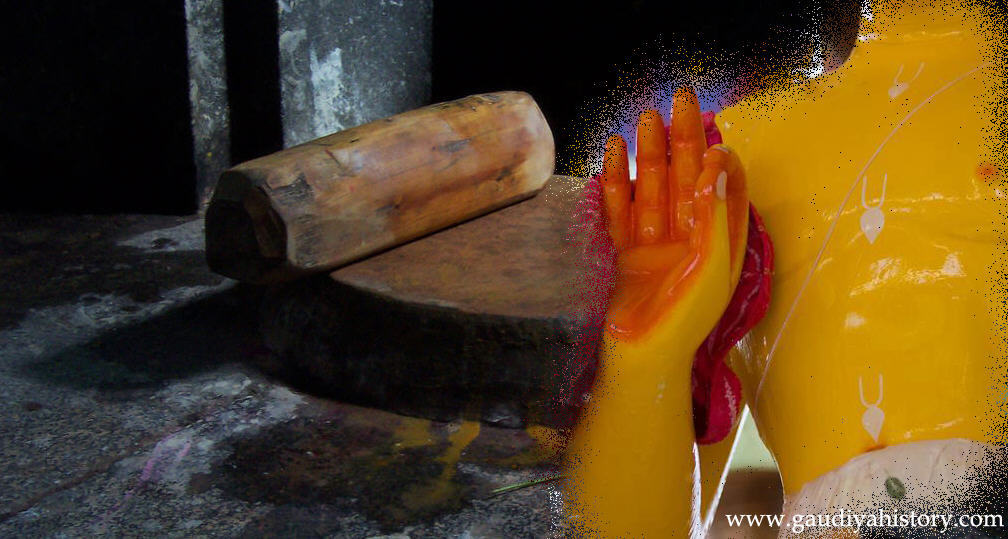
Paramananda Puri dug a well behind his small matha on the western side of the Jagannatha temple. Chaitanya-bhagavata records that its water came up bitter. Sri Chaitanya Mahaprabhu knew through His own perception that the water was undrinkable, even before Paramananda Puri told Him so directly. He stood with His arms raised and prayed to Lord Jagannatha: "Grant Me this boon: let the Ganges river enter into this well" (Chaitanya-bhagavata, Antya-khanda 3.235-236). By the next morning the water ran clear and sweet, and the devotees present declared it equal, ever after, to bathing in the Ganges itself. On this occasion Mahaprabhu made one of the most direct statements recorded anywhere in the tradition of what He owed to another person. He said that He remained in the world at all only on account of Paramananda Puri's own excellent conduct. He also said that anyone who even saw Paramananda Puri would receive love of Krishna (Chaitanya-bhagavata, Antya-khanda 3.255-257). Bhaktisiddhanta Sarasvati Thakura's own commentary on Chaitanya-bhagavata notes that the well had been pointed out earlier by Bhaktivinoda Thakura. It notes that, generations later, the well could still be found near the old police station on the road running west from the temple.
Honored Above Nearly Everyone Else #
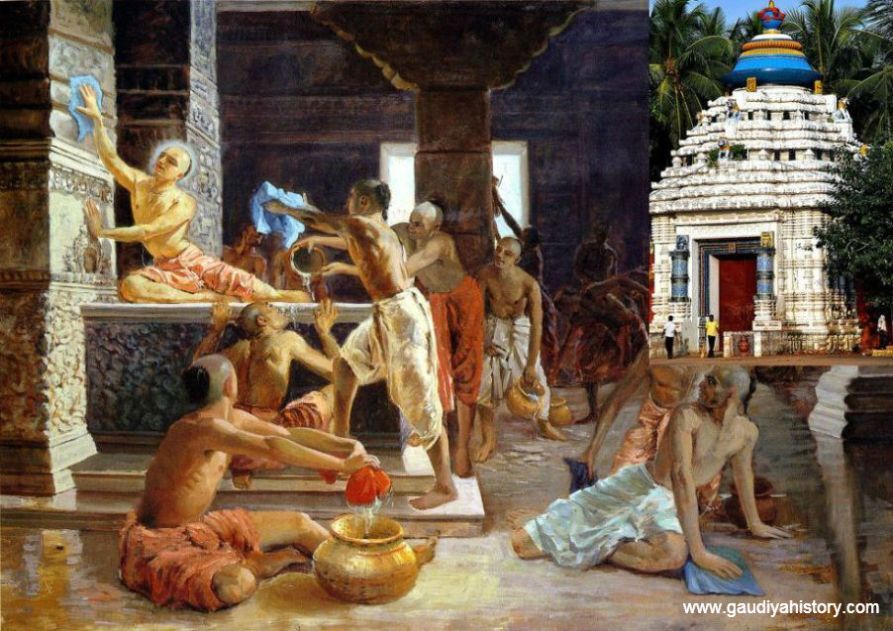
The Puri community showed its regard for Paramananda Puri in small gestures, again and again. Sri Chaitanya-charitamrita records them almost in passing, as though the pattern were too well known to need explaining. At the Ratha-yatra festival, Mahaprabhu personally placed sandalwood pulp and garlands on Paramananda Puri and Brahmananda Bharati before turning to anyone else, "which increased their transcendental pleasure" (Madhya 13.30). During the annual cleaning of the Gundicha temple, every other devotee carried water in buckets from the well. Only Nityananda Prabhu, Advaita Acharya, Svarupa Damodara, Brahmananda Bharati and Paramananda Puri were excused from that labor. Instead they worked alongside the Lord with water others had already brought (Madhya 12.109). These were not empty courtesies. The community was built entirely around service. In such a community, being spared physical labor while still standing at the center of the activity was itself a form of honor that few others received.
Pleading for Chota Haridasa #
His position gave him real influence, though not unlimited influence, as one episode from Antya-lila makes clear. Mahaprabhu banished the young devotee Chota Haridasa from His presence for an improper conversation with a woman. The wider community of devotees could not move Him to change His mind. So, as a last resort, they turned to Paramananda Puri. He went alone to the Lord's residence, was seated beside Him with full respect, and made his appeal directly: "please show favor to Junior Haridasa" (Antya 2.130). Mahaprabhu's answer was not the reversal the devotees had hoped for. He offered to let Chota Haridasa remain, but announced that He Himself would leave for Alalanath instead of staying (Antya 2.131-132). It took Paramananda Puri's own urgent and humble pleading to get Him to sit back down at all (Antya 2.134). Even then, Paramananda Puri himself admitted the deeper point: "You are the independent Personality of Godhead. You can do whatever You like. Who can say anything above You?" (Antya 2.135). He left without having softened anything in the underlying judgment. He had only kept the Lord from leaving Puri altogether. It was a small, human-sized success, but it still needed all the goodwill that his years of closeness had earned him.
A Presence, Not Just a Guest #
Taken together, these episodes do not show a lesser figure who was honored only because of whom he stood beside. They show something closer to what Chaitanya-bhagavata calls him outright: one of the two arms of Mahaprabhu's own sannyasa life. For as long as the record mentions him, he was present at the Ratha-yatra, the Gundicha cleaning, the Hari Dasa Thakura festivities, and the quiet daily routine of the Gambhira. By every account available, he was treated as family, precisely because Mahaprabhu Himself regarded him that way. He was the godbrother of Mahaprabhu's own guru. And in the Gaura-ganoddesha-dipika's own understanding, he was an old friend from another life entirely. Disappearance and Legacy tells what became of that closeness at the very end of Paramananda Puri's own life.
Scriptural evidence for this chapter (7)
jagadananda, bhagavan, govinda, kasisvara / paramananda-puri, ara svarupa-damodara
Jagadananda, Bhagavan, Govinda, Kashishvara, Paramananda Puri and Svarupa Damodara were other devotees who also lived with the Lord.
Confirms Paramananda Puri as one of Sri Chaitanya Mahaprabhu's small circle of permanent resident companions at Jagannatha Puri.
With the exception of Nityananda Prabhu, Advaita Acharya, Svarupa Damodara, Brahmananda Bharati and Paramananda Puri, everyone was engaged in filling the waterpots and bringing them there.
During the annual cleaning of the Gundicha temple, Paramananda Puri was one of only five devotees exempted from carrying water -- a mark of his standing among the Lord's associates.
Paramananda Puri and Brahmananda Bharati were both personally given garlands and sandalwood pulp from the very hands of Sri Chaitanya Mahaprabhu. This increased their transcendental pleasure.
Records the honor Mahaprabhu paid Paramananda Puri and Brahmananda Bharati ahead of all other devotees during the Ratha-yatra festival.
The Lord inquired, "What is your order? For what purpose have you come here?" Paramananda Puri then submitted his prayer that the Lord show favor to Junior Haridasa.
Paramananda Puri's direct intercession with Sri Chaitanya Mahaprabhu on behalf of Chota (Junior) Haridasa.
Paramananda Puri said, "My dear Lord Caitanya, You are the independent Personality of Godhead. You can do whatever You like. Who can say anything above You?"
Even Paramananda Puri, having persuaded the Lord not to leave Puri outright, conceded that his own influence had limits -- a telling moment about the boundary of even a guru's godbrother's authority.
Following the order of Paramananda Puri, Sri Caitanya Mahaprabhu sent His mother the prasada clothing left by Lord Jagannatha after His pastimes as a cowherd boy.
Shows Paramananda Puri's direct, ongoing influence on how Sri Chaitanya Mahaprabhu cared for His mother, Sachi Devi, from Puri.
Paramananda Puri offered respects at the feet of Ramachandra Puri, and Ramachandra Puri strongly embraced him.
Records Paramananda Puri's own courteous reception of his godbrother Ramachandra Puri at Puri, before Ramachandra Puri's criticisms of the Lord's eating began.
Chapter 5
Disappearance and Legacy
What outlived Paramananda Puri when no text recorded the day he left.
No text records the day, the year, or even the approximate decade in which Paramananda Puri disappeared. This silence matches the silence that opens his story in Trihut. It should be accepted honestly, not covered over, because what he left behind is considerable, even without a recorded ending.
No Recorded End #
Sri Chaitanya-charitamrita follows several of Sri Chaitanya Mahaprabhu's closest associates to the end of their lives in real detail. Haridasa Thakura's passing fills an entire chapter. Isvara Puri's final days are told more briefly, but they are at least given a place and an approximate date. Paramananda Puri simply stops appearing in the narrative once the Antya-lila's account of the Puri years moves on to other subjects. Gaudiya History's own biography states the limitation just as plainly: "Nothing is known about Paramananda Puri's antecedents nor about his appearance and disappearance dates." The last thing the record tells us for certain is that he was still living at Jagannatha Puri, still honored and still close to Mahaprabhu, at the point where the sources last mention him.
A Well Still Pointed Out #
What outlived him was a physical place. He had dug his own small well behind the matha he kept west of the Jagannatha temple. In answer to Mahaprabhu's prayer, Lord Jagannatha Himself arranged for its water to become sweet. Generations later, the well was still being identified by name. Bhaktivinoda Thakura pointed it out in his own time. Bhaktisiddhanta Sarasvati Thakura's commentary on Chaitanya-bhagavata gives its exact place, next to the old police station on the road running west from the temple. A well is a modest kind of monument. But it is a more solid trace than most of Mahaprabhu's associates left behind. It survived into the twentieth century. This says something about how steadily the local Vaishnava community kept his memory alive at the exact spot of the best-known miracle connected with him.
A Book Named, Not Found #
One further claim about him survives, and it is more uncertain. The Gaudiya Vaishnava Abhidhana, a later reference book, credits Paramananda Puri with writing a work called Govinda-vijaya. No copy of any such text has been found. No earlier or independent source confirms that he wrote it, and nothing about its contents can be described with any confidence. It is recorded here only because an honest account of what is claimed about him should not leave it out. But it should be equally clear that the claim itself has not been confirmed.
Two Men Sharing One Name #
One point should be made plainly, because the two men are easily confused. Sridhara Swami was the great commentator on Srimad-Bhagavatam whose Bhavartha-dipika Sri Chaitanya Mahaprabhu Himself relied on. In the opening verse of his commentary, Sridhara Swami names his own teacher as a sadhu called Paramananda. That Paramananda Swami lived generations before Sri Chaitanya Mahaprabhu was born. Nothing survives about him beyond his name and a single invocation verse. He is not this Paramananda Puri, the Trihut brahmana and disciple of Madhavendra Puri whose life is told here. The two men are separated by roughly two centuries and belong to entirely different lines. They share nothing but a name, which was evidently a common one among renunciate Vaishnavas in India in earlier times.
What Mahaprabhu's Own Words Preserve #
In the end, the fullest legacy Paramananda Puri left is not a text or a well. It is not even the fixed identity the Gaura-ganoddesha-dipika gives him. It is a handful of sentences that Sri Chaitanya Mahaprabhu Himself is recorded as having spoken about him. The record tells that He wept and cried out on first seeing him at Rishabha Hill, as though Madhavendra Puri had appeared again in the flesh. It tells that He personally handed him sandalwood and garlands before anyone else at Ratha-yatra, year after year. It tells that He would not let a request from him go entirely unanswered, even when He would not reverse His own judgment. And it tells that He said plainly, at the well behind Paramananda Puri's own small matha, that He remained in this world at all only on account of this one godbrother of His guru. A brahmana from Trihut, whose birth no record kept, became by his own Lord's account someone Krishna Chaitanya could not imagine being without.
Closing
A Brahmana of Trihut #
Srila Prabhupada's purport to Sri Chaitanya-charitamrita states the one fact about Paramananda Puri's origins that every source agrees on. He belonged to a brahmana family of the Trihut district, the region around modern Muzaffarpur and Darbhanga in north Bihar. Nothing else about his birth has come down to us. There is no year, no father's name, and no account of his boyhood or of what led him to renunciation. His godbrother Isvara Puri, a disciple of the same guru, at least has a known birthplace, a father's name and a devotional poem written by him. Paramananda Puri has none of these. This gap is reported here as it is, not filled in with guesses, because Chaitanya-charitamrita, Chaitanya-bhagavata and the later Gaudiya histories give nothing more specific.
Uddhava Come Again #
Gaudiya Vaishnava tradition does not see this closeness as a coincidence. The Gaura-ganoddesha-dipika is the traditional key to the spiritual identities behind Sri Chaitanya Mahaprabhu's associates. It states that Paramananda Puri is Uddhava, come again. Uddhava was Krishna's dearest friend and cousin in Vrindavana and Dvaraka, and he was now present again at the side of Krishna appearing as Gaura. Srila Prabhupada's own purport takes the identification a step further. It notes that the relationship carries into this life too. Paramananda Puri was a godbrother of Mahaprabhu's own guru, Isvara Puri. So Mahaprabhu gave him the respect owed to an elder relative, almost an uncle, even while their hearts were as close and easy as the hearts of friends. The tradition holds that Uddhava, the trusted friend of Krishna, and Paramananda Puri, the trusted friend of Gaura, are quite literally the same soul.
Srila Prabhupada quotes the line of Srila Kavi Karnapura's Gaura-ganoddesha-dipika (verse 118) that gives this identity:
purī paramānando ya āsīd uddhavaḥ purā
"Paramānanda Purī is none other than Uddhava." (Gaura-ganoddesha-dipika 118, as translated in Srila Prabhupada's purport to Chaitanya-charitamrita Adi 9.13-15)
He then explains: "Uddhava was Lord Kṛṣṇa’s friend and cousin, and in caitanya-līlā the same Uddhava became the friend of Śrī Caitanya Mahāprabhu and His uncle in terms of their relationship in the disciplic succession."
A Life the Record Leaves Unfinished #
No source names a year, a place or even a season for Paramananda Puri's disappearance. Only a few things can be said. He stayed on at Jagannatha Puri for as long as the records mention him. Centuries later, Srila Bhaktivinoda Thakura and Srila Bhaktisiddhanta Sarasvati Thakura were still pointing out his own small well near the Jagannatha temple to pilgrims. And in Chaitanya-bhagavata, Sri Chaitanya Mahaprabhu Himself left behind a statement of what He owed to another human being that is about as direct as any the tradition records. He said that He remained in this world only because of Paramananda Puri. Judged by these words, a brahmana from Trihut, whose birth year no one thought to write down, became one of the people Sri Chaitanya Mahaprabhu Himself considered most necessary to His own presence on earth.
