Srila Raghunatha Bhatta Goswami
The Goswami Whose Voice Made Srimad-Bhagavatam Sing
The complete life, on one page: The main biography and every pastime page, in order, in one place
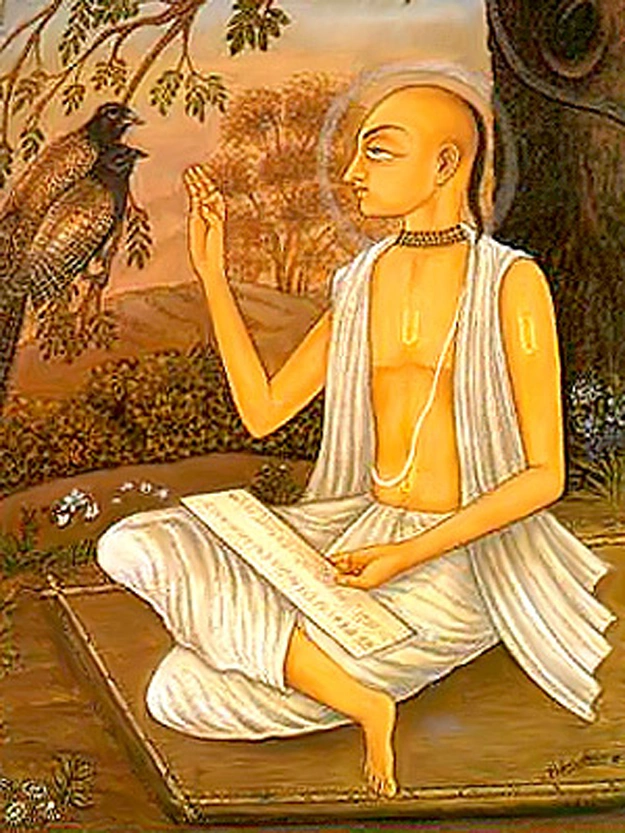
Introduction
raghunāthākhyako bhaṭṭaḥ purā yā rāga-mañjarī
kṛta-śrī-rādhikā-kuṇḍa-kuṭīra-vasatiḥ sa tu
"Raga-manjari appeared as Srila Raghunatha bhatta Gosvami, who lived in a cottage by the shore of Radha-kunda." (Gaura-ganoddesha-dipika 185)
Srila Raghunatha Bhatta Goswami is remembered among the Six Goswamis of Vrindavana for one gift above all others: a voice. When he recited Srimad-Bhagavatam, Sri Chaitanya-charitamrita says, his tone was as sweet as a cuckoo's, and he would carry a single verse through three or four different tunes before moving on. People who heard him could not help but weep. Born in Varanasi as the son of Sri Chaitanya Mahaprabhu's devotee Tapana Mishra, he spent his boyhood in the Lord's own presence, was personally forbidden by Him to marry, and was sent at last to Vrindavana to spend the rest of his life reciting the Bhagavatam beside Radha-kunda.
| Detail | Description |
|---|---|
| Full name | Raghunatha Bhattacharya, later Raghunatha Bhatta Gosvami |
| Born | c. 1503-1505 (sources vary), Varanasi (Kashi) |
| Father | Tapana Mishra, a brahmana devotee of Sri Chaitanya Mahaprabhu |
| Identity | In Krishna-lila: Raga-manjari, a gopi (Gaura-ganoddesha-dipika 185; Chaitanya-charitamrita Adi 10.158 purport) |
| Sent to study under | Rupa Gosvami and Sanatana Gosvami, Vrindavana |
| Known for | Reciting Srimad-Bhagavatam in a voice "as sweet as a cuckoo's" |
| Deity served | Govinda, at the temple he inspired his disciples to build |
| Disappeared | c. 1579, at Radha-kunda, Vrindavana |
Scriptural evidence for the introduction (3)
Quoted in the text above:
- Verse 185 Gaura-ganoddesha-dipika
Further verses:
শ্রীরূপ, সনাতন, ভট্ট–রঘুনাথ ।
শ্রীজীব, গোপালভট্ট, দাস–রঘুনাথ ॥
sri-rupa, sanatana, bhatta-raghunatha
sri-jiva, gopala-bhatta, dasa-raghunatha
Word for word
sri-rupa - Srila Rupa Gosvami; sanatana - Sanatana Gosvami; bhatta-raghunatha - Raghunatha Bhatta Gosvami; sri-jiva - Srila Jiva Gosvami; gopala-bhatta - Gopala Bhatta Gosvami; dasa-raghunatha - Srila Raghunatha dasa Gosvami.
My instructing spiritual masters are Sri Rupa Gosvami, Sri Sanatana Gosvami, Sri Bhatta Raghunatha, Sri Jiva Gosvami, Sri Gopala Bhatta Gosvami and Srila Raghunatha dasa Gosvami.
Krishnadasa Kaviraja Goswami names Raghunatha Bhatta Goswami among his six instructing (siksha) spiritual masters in the opening invocation of Sri Chaitanya-charitamrita.
তাঁর স্থানে রূপ–গোসাঞি শুনেন ভাগবত ।
প্রভুর কৃপায় তেঁহো কৃষ্ণপ্রেমে মত্ত ॥
tāṅra sthāne rūpa-gosāñi śunena bhāgavata
prabhura kṛpāya teṅho kṛṣṇa-preme matta
While he stayed with Śrīla Rūpa Gosvāmī, his engagement was to recite Śrīmad-Bhāgavatam for him to hear. As a result of this Bhāgavatam recitation, he attained perfectional love of Kṛṣṇa, by which he remained always maddened.
From the purport: Later Raghunātha Bhaṭṭa Gosvāmī lived by Rādhā-kuṇḍa in a small cottage. In the Gaura-gaṇoddeśa-dīpikā (185) it is said that Raghunātha Bhaṭṭa Gosvāmī was formerly the gopī named Rāga-mañjarī. (Srila Prabhupada, purport purport)
Raghunatha Bhatta's service of reciting Srimad-Bhagavatam for Rupa Gosvami; the purport gives his identity from the Gaura-ganoddesha-dipika. Verse text, translation and purport: Srila Prabhupada, Sri Chaitanya-charitamrita (vedabase.io).
Chapter 1
Birth and Early Life in Varanasi
How a devout brahmana's dream of Sri Chaitanya Mahaprabhu shaped a household in Kashi before his son was even born
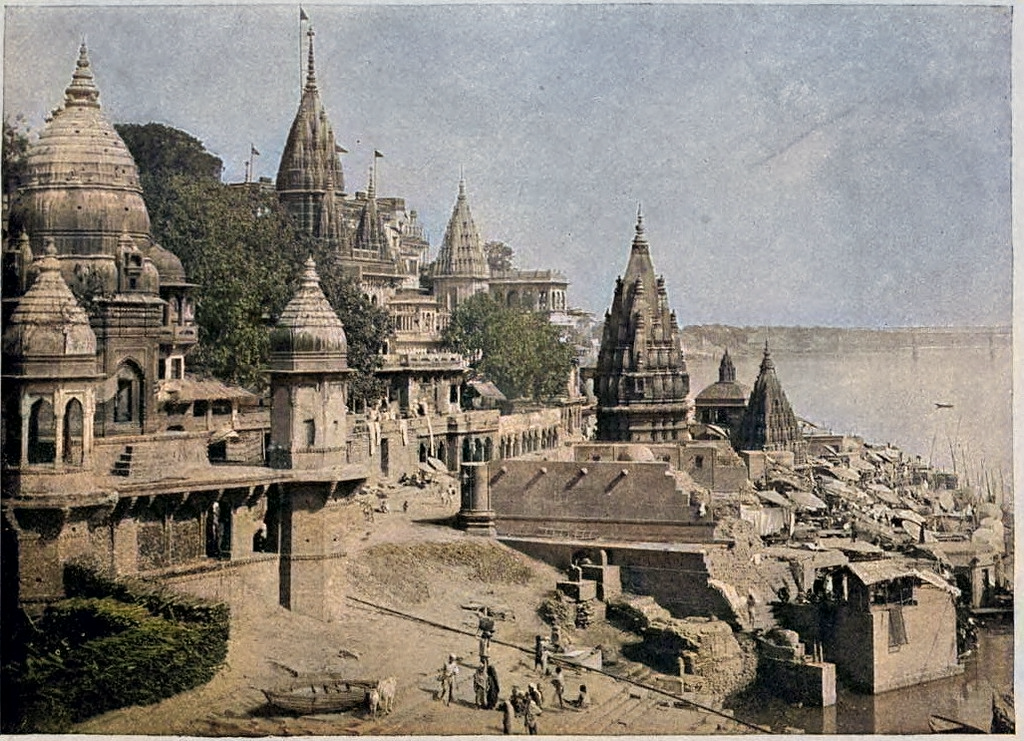
Long before Raghunatha Bhatta was born, his father Tapana Mishra had already been drawn to Sri Chaitanya Mahaprabhu. Chaitanya-charitamrita and the older Chaitanya-bhagavata both preserve the story. Tapana Mishra was a learned brahmana who had studied scripture for years. But he had never settled the question that mattered most to him: what was life really for, and how could that goal be reached? Tradition says the answer came to him in a dream. In the dream he was told that a young teacher named Nimai Pandita was coming, and that he should go and ask him directly. Nimai Pandita was, of course, Sri Chaitanya Mahaprabhu before His sannyasa.
| Detail | Description |
|---|---|
| Father | Tapana Mishra, a learned brahmana |
| Father's native region | East Bengal, on the Padma river (by tradition, the village of Ramapura) |
| Where the family settled | Varanasi (Kashi), by Sri Chaitanya Mahaprabhu's own instruction |
| Other Varanasi devotee | Chandrasekhara Vaidya, a physician |
| Raghunatha's early training | Sanskrit grammar, rhetoric, and the scriptures |
A Dream, and a Question Answered #
Tradition, as later Vaishnava writers retell it, adds a vivid detail about how that meeting came about. A divine figure appeared to Tapana Mishra in the night. The figure told him plainly that Nimai Pandita was no ordinary human being. Nimai Pandita was an incarnation of Narayana Himself, who had come into the world to perform pastimes, and Tapana Mishra should go to Him without delay. In the morning, after his bath, Tapana Mishra found the young Pandita seated among His own students. His body was so bright that it seemed to light the room, and His eyes were like the petals of a full-blown lotus. This description appears again and again in accounts of Mahaprabhu's early years, before His sannyasa changed His appearance for good. Falling at His feet, Tapana Mishra asked what a human being's real business in life was. As Chaitanya-bhagavata records it, Mahaprabhu answered that every age has its own means of God-realization (meditation, sacrifice, temple worship). But in the present age, Kali-yuga, the one process that actually works is congregational chanting of the Lord's names, sankirtana. Nothing else, He said, comes close. Tapana Mishra never forgot it.
Sent to Kashi to Wait #
Tapana Mishra wanted to move to Nabadwipa and stay near the Lord permanently. But Mahaprabhu told him instead to go to Varanasi, and promised that they would meet there again one day. Tapana Mishra obeyed. He took his wife with him and built his household in the holy city sacred to Lord Shiva. Sri Chaitanya-charitamrita names him as one of only three devotees whom the Lord kept in Varanasi some years later. They were Tapana Mishra himself, the physician Chandrasekhara Vaidya, and, once he was born, Tapana Mishra's own son, Raghunatha Bhattacharya.
Exactly when that birth took place is not settled. English-language sources most often give a year around 1503 to 1505. A widely used Vaishnava calendar tradition places it on the twelfth day of the bright fortnight of the month of Ashvina. None of this comes from a document written in Raghunatha Bhatta's own lifetime. So readers should take the date only as a rough guide, as the birth years of the other Six Goswamis are generally taken.
Raised Between Two Households #
So Raghunatha grew up in a home that had already received Sri Chaitanya Mahaprabhu's personal attention. This was a rare inheritance, and it shaped him from the very beginning. His formal education followed the ordinary path expected of a brahmana's son: Sanskrit grammar, the rules of rhetoric and poetics, and a thorough grounding in scripture. What made his household different was not what he studied but the people around him. Chandrasekhara Vaidya, the physician named with Tapana Mishra as one of Mahaprabhu's three Varanasi devotees, lived nearby and shared the same devotion. Between the two households, Raghunatha grew up among adults for whom Sri Chaitanya Mahaprabhu was not a distant figure of legend. He was a guest they knew personally and remembered.
This meant that when the Lord visited Varanasi again, years later, He would not come as a stranger at all. It would be like a homecoming for the whole family. That visit also gave the boy Raghunatha his own unforgettable place in Sri Chaitanya Mahaprabhu's company. That meeting, and the affection Mahaprabhu showed him even as a child, are the subject of Childhood With Sri Chaitanya Mahaprabhu.
Scriptural evidence for this chapter (1)
বারাণসী–মধ্যে প্রভুর ভক্ত তিন জন । চন্দ্রশেখর বৈদ্য, আর মিশ্র তপন ॥ রঘুনাথ ভট্টাচার্য—মিশ্রের নন্দন । প্রভু যবে কাশী আইলা দেখি' বৃন্দাবন ॥ চন্দ্রশেখর–গৃহে কৈল দুই মাস বাস । তপন–মিশ্রের ঘরে ভিক্ষা দুই মাস ॥
varanasi-madhye prabhura bhakta tina jana
candrasekhara vaidya, ara misra tapana
raghunatha bhattacarya - misrera nandana
prabhu yabe kasi aila dekhi' vrndavana
candrasekhara-grhe kaila dui masa vasa
tapana-misrera ghare bhiksa dui masa
Word for word
varanasi-madhye - at Varanasi; prabhura bhakta tina jana - three devotees of the Lord; candrasekhara vaidya - the physician Candrasekhara; misra tapana - Tapana Misra; raghunatha bhattacarya - Raghunatha Bhattacarya; misrera nandana - the son of Tapana Misra.
The prominent devotees at Varanasi were the physician Candrasekhara, Tapana Misra and Raghunatha Bhattacarya, Tapana Misra's son. When Lord Caitanya came to Varanasi after seeing Vrndavana, for two months He lived at the residence of Candrasekhara Vaidya and accepted prasadam at the house of Tapana Misra.
From the purport: Purport excerpt: "When Sri Caitanya Mahaprabhu was in Bengal, Tapana Misra approached Him to discuss spiritual advancement. Thus he was favored by Lord Caitanya Mahaprabhu and received hari-nama initiation."
This verse establishes Raghunatha Bhatta Goswami's household at Varanasi and his father Tapana Mishra's earlier initiation by Sri Chaitanya Mahaprabhu in Bengal.
Chapter 2
Childhood With Sri Chaitanya Mahaprabhu
Two months at the family table, and a boy's small service to the Lord's tired feet
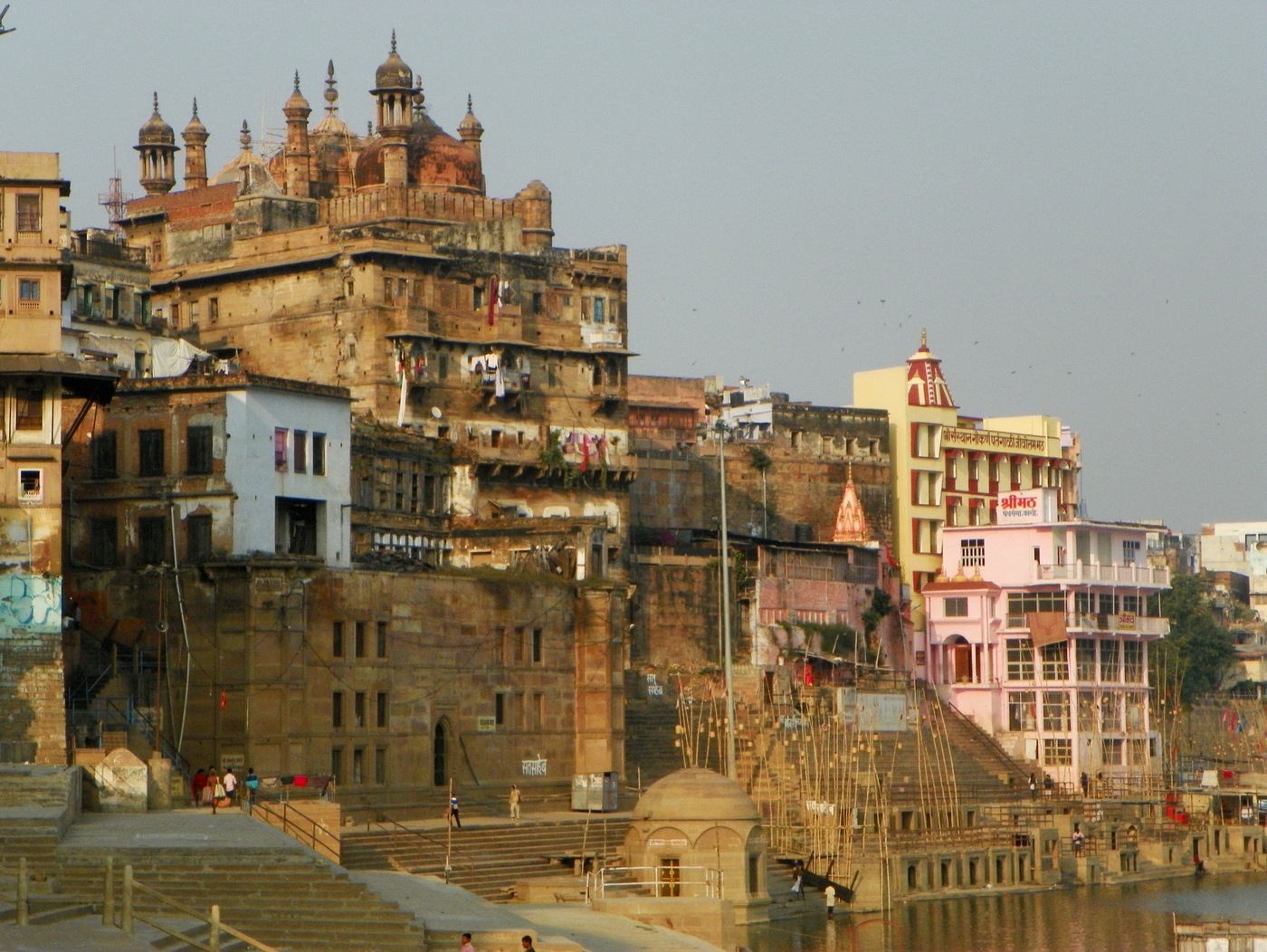
Years after Tapana Mishra settled in Varanasi, Sri Chaitanya Mahaprabhu kept His promise. Chaitanya-charitamrita places the meeting on His return journey from Vrindavana. He was now a sannyasi, passing through Kashi, and around Him were other men of the renounced order chanting "Hari bol!" at the bathing ghats. Tapana Mishra recognized Him and fell at His feet in tears. Mahaprabhu lifted him up and embraced him. From then on He made Tapana Mishra's home His own whenever He was in the city.
| Detail | Description |
|---|---|
| Where Mahaprabhu stayed | Two months at Chandrasekhara Vaidya's house |
| Where Mahaprabhu ate | Two months, daily, at Tapana Mishra's house |
| Raghunatha's task | Massaging the Lord's feet after His afternoon rest |
| Devotees named together | Chandrasekhara Vaidya, Tapana Mishra, and Tapana Mishra's son Raghunatha Bhattacharya |
Two Months at the Family Table #
Sri Chaitanya-charitamrita describes the arrangement exactly. Mahaprabhu stayed at Chandrasekhara Vaidya's house for two months, but He took His meals every day at Tapana Mishra's house. This means that Raghunatha's own household fed the Lord daily for the whole of that stay. For a boy in that house, this was not a single visit or a special occasion. It was two months of the Supreme Lord's ordinary daily presence at the family table. Tapana Mishra himself washed the Lord's feet on His arrival. Tradition says that he then drank that water together with his family in a state of open ecstasy. This was the household service in which Raghunatha, still a child, was about to be given his own small part.
A Boy's Small, Enormous Service #
One detail survives in the text itself, brief but exact. After finishing His lunch each day, Sri Chaitanya Mahaprabhu would lie down to rest, and Raghunatha would massage His legs. The verse names him simply as "Raghu, the son of Tapana Mishra". Chaitanya-charitamrita records nothing more dramatic than this about the boy's part in those two months, and it does not need to. The boy was given the ordinary task of serving a guest's tired legs, and that guest was Sri Chaitanya Mahaprabhu Himself. So even as a child he had already received a mercy that most people spend a lifetime seeking.
Some later devotional retellings add that Raghunatha, once he grew older, worried whether the Lord would even remember a boy He had known so briefly. Years afterward, walking the long road to Puri, he wondered aloud whether Mahaprabhu, surrounded by so many devotees by then, would still recognize "such a worthless wretch" as himself. According to this same tradition, Mahaprabhu answered this doubt before Raghunatha could even complete his obeisances. He called out his name and embraced him at once. Then He told him plainly that He remembered the affection Raghunatha's own mother and father had shown Him, life after life, and how lovingly his mother had fed Him every day at Kashi. Sri Chaitanya-charitamrita itself does not describe this later exchange in quite those words. But the warmth it describes fits well with the way the text treats Raghunatha throughout. He is never a minor character. He is a young man whom the Lord had chosen from boyhood.
An Education Completed, and a Pull That Would Not Fade #
After Mahaprabhu's stay ended and He continued on toward Bengal and Nilachala, Raghunatha returned to ordinary life: studies, scripture, the routines of a brahmana household. But something in those two months had already settled the direction of his life, even if years would pass before he acted on it. Once his formal education was complete, Chaitanya-charitamrita says, he gave up all his duties and set out to see the Lord again, on foot, without waiting for anyone's permission. That journey, and what happened on the road to Jagannatha Puri, is told in The Journey to Jagannatha Puri.
Scriptural evidence for this chapter (1)
ভিক্ষা করি' মহাপ্রভু করিলা শয়ন । মিশ্রপুত্র রঘু করে পাদ-সম্বাহন ॥
bhiksa kari' mahaprabhu karila sayana
misra-putra raghu kare pada-samvahana
Word for word
bhiksa kari' - after finishing His lunch; mahaprabhu karila sayana - Mahaprabhu took rest; misra-putra raghu - Raghu, the son of Tapana Misra; kare pada-samvahana - massages His legs.
When Sri Caitanya Mahaprabhu took His rest after lunch, the son of Tapana Misra, named Raghu, used to massage His legs.
The single verse in Chaitanya-charitamrita that records the boy Raghunatha's personal service to Sri Chaitanya Mahaprabhu during His stay in Varanasi.
Chapter 3
The Journey to Jagannatha Puri
A servant's baggage, an unlikely companion on the road, and an order that would shape the rest of his life
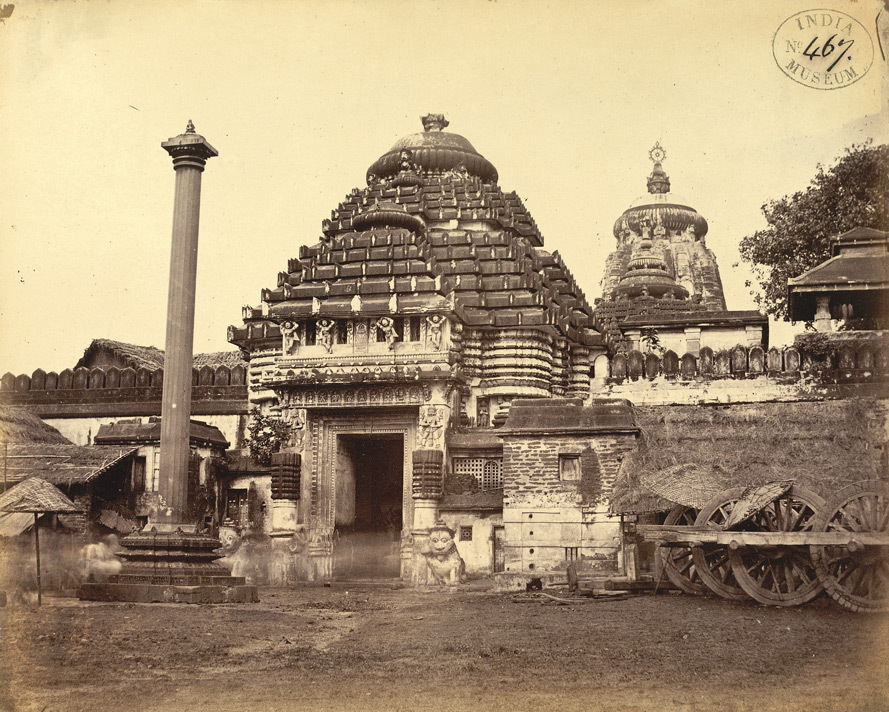
Once his education was finished, Raghunatha Bhattacharya did something no dutiful brahmana son was expected to do: he simply left. Sri Chaitanya-charitamrita says it almost bluntly. He gave up all his duties and set out for Jagannatha Puri, taking only a servant to carry his baggage. He wanted to see Sri Chaitanya Mahaprabhu again.
| Detail | Description |
|---|---|
| Reason for the journey | To see Sri Chaitanya Mahaprabhu again after completing his education |
| Companion met on the road | Ramadasa Vishvasa, a kayastha official and devotee of Lord Ramachandra |
| Length of first stay at Puri | Eight months |
| Service performed | Cooking for the Lord; taking His remnants afterward |
| The Lord's instruction on departure | Do not marry; serve your aged parents; study Srimad-Bhagavatam from a realized Vaishnava |
An Unlikely Companion on the Road #
Somewhere in Bengal, Raghunatha met Ramadasa Vishvasa. Ramadasa was a high-ranking government secretary of the kayastha caste, learned in Sanskrit poetics, who had chanted the holy name of Lord Ramachandra all his life. Ramadasa was travelling the same road for the same reason. He wanted to renounce his household and see Lord Jagannatha. When he learned that Raghunatha was a brahmana, he insisted on serving him for the rest of the way. He carried Raghunatha's baggage on his own head and even massaged his feet. Raghunatha was embarrassed that a man of Ramadasa's standing and learning should serve him so humbly, and he tried to refuse. Ramadasa's reply has survived in the text almost word for word: "I am a shudra, a fallen soul. To serve a brahmana is my duty and religious principle." He continued chanting the holy name of Rama the entire way.
Recognized at Once #
When Raghunatha finally reached Jagannatha Puri, he fell flat before Sri Chaitanya Mahaprabhu like a fallen rod: full obeisance, without holding anything back. The Lord, Chaitanya-charitamrita says, embraced him at once, "knowing well who he was." Raghunatha conveyed the respects of his father Tapana Mishra and of Chandrasekhara Vaidya from Varanasi, and Mahaprabhu asked eagerly after them both. Govinda, the Lord's personal servant, was told to arrange lodging for him, and Mahaprabhu Himself introduced the young man to His inner circle of devotees, headed by Svarupa Damodara Gosvami.
Nectar From His Own Hands #
For eight months Raghunatha remained at Puri. Here a second gift of his came to light: by every account, he was an extraordinary cook. Whatever he prepared, Chaitanya-charitamrita says, tasted like nectar. Sri Chaitanya Mahaprabhu accepted his offerings with real satisfaction, and afterwards Raghunatha would take the Lord's own remnants, prasadam already touched by Mahaprabhu's mouth. Ramadasa Vishvasa's experience during these same months was very different. Despite his learning and his renunciation, Mahaprabhu showed him no special mercy. As the text explains, this was because Ramadasa privately held the desire to merge into an impersonal Absolute and lose his separate existence. Sri Chaitanya Mahaprabhu never encouraged this philosophical position in anyone. Ramadasa settled at Puri afterward and taught poetics to a local family. His story is only a side note beside Raghunatha's own far warmer reception.
Sent Home With an Order #
After eight months, Mahaprabhu said farewell to Raghunatha and gave him instructions that would shape the rest of his life. He forbade him outright to marry. He told him to return to Varanasi and serve his aged parents, who were themselves devotees. He also told him to study Srimad-Bhagavatam only under a truly self-realized Vaishnava, never from a professional or non-devotee reciter, however learned. He then removed His own neck beads and placed them on Raghunatha's neck with His own hands, telling him to come back to Nilachala again. Raghunatha was overwhelmed and wept at the thought of the coming separation. He took leave of Svarupa Damodara and the assembled devotees and made the long walk back to Kashi. He carried with him an instruction that would soon draw him away from home for good. What happened when he returned to Puri a second time, and where Mahaprabhu finally sent him, is told in Sent to Vrindavana by the Lord's Order.
Scriptural evidence for this chapter (2)
এথা তপনমিশ্র-পুত্র রঘুনাথ-ভট্টাচার্য । প্রভুরে দেখিতে চলিলা ছাড়ি' সর্ব কার্য ॥
etha tapana-misra-putra raghunatha-bhattacarya
prabhure dekhite calila chadi' sarva karya
Word for word
etha - on the other hand; tapana-misra-putra - the son of Tapana Misra; raghunatha-bhattacarya - Raghunatha Bhatta; prabhure dekhite - to meet Sri Caitanya Mahaprabhu; calila chadi' sarva karya - proceeded, giving up all duties.
During this time, Raghunatha Bhattacarya, the son of Tapana Misra, gave up all his duties and left home, intending to meet Sri Caitanya Mahaprabhu.
The verse opening the account, within Chaitanya-charitamrita's chapter devoted partly to him, of Raghunatha Bhatta's decision as a young man to leave home for Jagannatha Puri.
ghare giya vrddha mata-pitara kariha sevana
sad-vaisnava-thani sikha bhagavata-vyakhyana
Word for word
ghare giya - returning home; vrddha mata-pitara - your aged mother and father; kariha sevana - render service; sad-vaisnava-thani - from a genuine Vaishnava; sikha bhagavata-vyakhyana - learn the explanation of Srimad-Bhagavatam.
Sri Caitanya Mahaprabhu said to Raghunatha Bhatta, "When you return home, serve your aged father and mother, who are devotees, and try to study Srimad-Bhagavatam from a pure Vaishnava who has realized God."
From the purport: Purport excerpt: "Concerning the study of Srimad-Bhagavatam, Sri Caitanya Mahaprabhu clearly advises that one avoid hearing from a non-Vaisnava professional reciter."
Sri Chaitanya Mahaprabhu's personal instruction to Raghunatha Bhatta, which set the entire course of his later devotion to Srimad-Bhagavatam.
Chapter 4
Sent to Vrindavana by the Lord's Order
A second stay at Puri, a fourteen-cubit garland, and the order that finally sent him to Vraja
Back in Varanasi, Raghunatha did exactly as he had been told. He served his aging father and mother for the rest of their lives (by one account, roughly four more years). In that time he also carried out the Lord's other instruction. He studied Srimad-Bhagavatam under a genuine Vaishnava, not a professional reciter. Only after both his parents had passed away did he return to Jagannatha Puri to be with Sri Chaitanya Mahaprabhu once more.
| Detail | Description |
|---|---|
| Between the two Puri visits | Served his aged, devotee parents at Varanasi until their passing |
| Length of second stay at Puri | Eight months |
| Gifts from Mahaprabhu | A tulasi garland worn by Lord Jagannatha (traditionally described as fourteen cubits long) and unspiced betel nut (pan) offered to Jagannatha |
| Final instruction | Go to Vrindavana; live under the care of Rupa Gosvami and Sanatana Gosvami |
| How Raghunatha treated the gifts | Preserved them as worshipable, bound together and worn close to his heart |
A Second Eight Months #
As before, Raghunatha remained continuously at Sri Chaitanya Mahaprabhu's side for eight months, and as before the Lord eventually gave him an order that would move him again. This time there was no talk of going home. "My dear Raghunatha," Mahaprabhu said, "on My order go to Vrindavana and live there under the care of Rupa and Sanatana Gosvamis." It was, in effect, a graduation: Raghunatha had proven himself through two long stays at Puri, through years of quiet service to his parents, and through serious study of the Bhagavatam. Now he was being sent to the source.
A Garland Fourteen Cubits Long #
Before Raghunatha departed, Mahaprabhu gave him two treasures He had personally kept. One was unspiced betel that had been offered to the Jagannatha Deity. The other was a tulasi garland that Lord Jagannatha Himself had worn, by tradition some fourteen cubits in length. Chaitanya-charitamrita says Raghunatha accepted these as his own worshipable object and took the greatest care to preserve them. He bound the garland and the prasadam together and wore them close to his body whenever he was absorbed in remembering Krishna. Embracing him one last time, Mahaprabhu enlivened him with ecstatic love before letting him go.
This gift was not a small thing. Every other instruction Mahaprabhu had given Raghunatha up to this point was about discipline: celibacy, service to his parents, and careful study under a genuine Vaishnava. This final gift was different. It was a physical object, touched by Krishna's own Deity form. Mahaprabhu handed it over at the exact moment when Raghunatha was being sent away from the Lord's personal company for good. It gave him something to carry into a life that would otherwise be mostly separation. Chaitanya-charitamrita says that he treated it as his worshipable Deity. This language suggests that Raghunatha understood the gift in just this way.
Arriving Where the Goswamis Had Already Begun #
Taking leave of Sri Chaitanya Mahaprabhu and the devotees gathered around Svarupa Damodara Gosvami, Raghunatha Bhatta set out for Vrindavana. On arriving, he placed himself under the direct care of Rupa Gosvami and Sanatana Gosvami. By the time he reached them, the two brothers had already spent years there doing the work Mahaprabhu had given them. They were recovering Krishna's lost pastime-places and giving Gaudiya theology its first orderly foundation in scripture. Sri Chaitanya-charitamrita also names two more Goswamis in the Vrindavana circle that Raghunatha now joined: Gopala Bhatta Gosvami and Lokanatha dasa Gosvami. It also names a fellow disciple, Raghunatha Dasa Goswami, who would one day become his close companion. The two are often named together as the two Raghunathas, but they were not related, either by family or as guru and disciple. Raghunatha Dasa Goswami arrived at Vrindavana separately and, like Raghunatha Bhatta, settled beside Radha-kunda.
At Vrindavana, Raghunatha was given a service that was simple to describe. Every day he recited Srimad-Bhagavatam for Rupa Gosvami and Sanatana Gosvami to hear. This service could not be separated from who he was. What that recitation actually sounded like, and why it became the single thing Raghunatha Bhatta Goswami is remembered for above everything else, is told in The Voice That Recited Srimad-Bhagavatam.
Scriptural evidence for this chapter (1)
bhala raghunatha, amara ajnaya vrndavana giya
rupa-sanatana-sthane rahaha vasiya
Word for word
bhala raghunatha - My dear Raghunatha; amara ajnaya - on My order; vrndavana giya - going to Vrndavana; rupa-sanatana-sthane - in the care of Rupa and Sanatana Gosvamis; rahaha vasiya - remain living.
"My dear Raghunatha, on My order go to Vrndavana and live there under the care of Rupa and Sanatana Gosvamis."
Sri Chaitanya Mahaprabhu's final order sending Raghunatha Bhatta from Jagannatha Puri to Vrindavana, where he would spend the rest of his life.
Chapter 5
The Voice That Recited Srimad-Bhagavatam
A voice sweet as a cuckoo's, a verse sung in four tunes, and a devotion that never had room for criticism
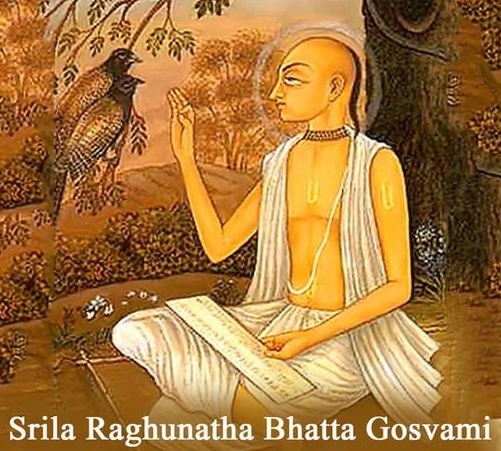
Every account of Raghunatha Bhatta Goswami's life at Vrindavana comes back to the same fact: when he recited Srimad-Bhagavatam, people stopped what they were doing to listen. Sri Chaitanya-charitamrita was written by Krishnadasa Kaviraja Goswami, who lived in Raghunatha Bhatta's own time. It gives the reason in a single, often-quoted line. His voice was pika-svara, as sweet as a cuckoo's, and he would carry one verse through three or four different tunes before moving to the next.
| Detail | Description |
|---|---|
| Recitation style | Each verse of Srimad-Bhagavatam recited in three or four different tunes |
| Voice quality | Described in Chaitanya-charitamrita as "sweet as a cuckoo's" |
| Regular audience | Rupa Gosvami and Sanatana Gosvami, and the Vaishnavas of Vrindavana |
| Title earned at Jagannatha Puri | Kirtana-acharya, for his cooking and his kirtana performances |
| Temperament | Never criticized any Vaishnava, however faulty their outward conduct |
Overcome Mid-Verse #
Chaitanya-charitamrita says that reciting for Rupa Gosvami and Sanatana Gosvami was the service through which Raghunatha "attained perfectional love of Krishna, by which he remained always maddened." The ecstasy was not a figure of speech. The text describes real physical symptoms coming over him as he read: tears, trembling, and a voice that began to falter. At last his throat closed with emotion and he simply could not continue. Whenever he read or heard about Krishna's beauty and sweetness in particular, he would forget everything around him. Tradition says his tears often fell onto the very pages of the Bhagavatam he was reading, wetting them as he sang.
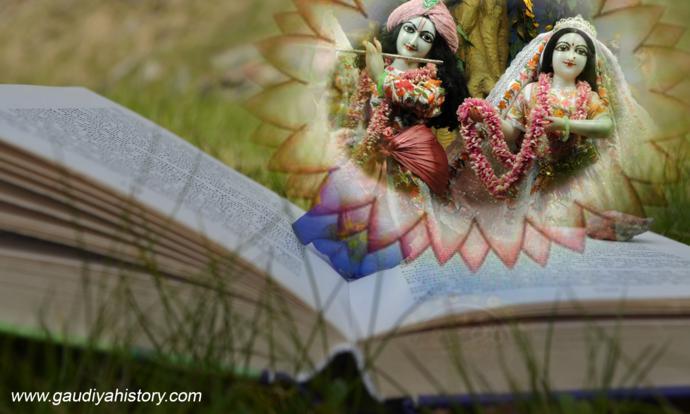
Word of this spread well beyond Vrindavana. Even at Jagannatha Puri, during his earlier years of cooking for and serving Sri Chaitanya Mahaprabhu, he had already earned the title kirtana-acharya, a master of chanting. He earned it through his kirtana performances as well as his cooking. The biographical tradition given on the Gaudiya History website adds one more line. It says that even Vyasadeva, the sage credited with compiling the Bhagavatam itself, would have been delighted to hear Raghunatha Bhatta recite it. This may be read as a literal claim or as loving devotional exaggeration. Either way, it shows how unmatched his recitation was considered to be.
A Life With No Room for Criticism #
What made Raghunatha Bhatta special was more than his voice. He also refused to let anything interrupt his absorption in Krishna, including gossip about other devotees. Sources describe him as a man who would neither hear nor speak of ordinary worldly matters at all. Day and night, he engaged in nothing but discussion of Krishna and worship of the Lord. Even when a Vaishnava's conduct gave real grounds for criticism, he would not join in. In his view, every Vaishnava was sincerely serving the Lord according to their own level of realization. So he preferred to overlook the fault, not dwell on it. This small detail says a lot about him, and it fits naturally with everything else remembered about him. The only thing worth his attention was the Bhagavatam's own subject, not the failings of the people around him.
Reciting the Book Later Worshipped in His Memory #
This devotion to the text itself, and not only to a worshipable image, runs through everything remembered about Raghunatha Bhatta Goswami. Later Vrindavana tradition holds that a copy of Srimad-Bhagavatam connected to him is still preserved and worshipped today. It is kept, along with the tulasi garland and wooden sandals associated with his memory, at a site in Vrindavana known as Raghunatha Bhatta Goswami's Peeth. The surviving Chaitanya-charitamrita account describes his personal worship as centering on the tulasi garland and Jagannatha-prasadam that Mahaprabhu gave him, along with his service to a separate Deity of Govinda. We cannot be sure whether the Bhagavatam was a literal worshipable Deity for him during his own lifetime. Either way, the reverence for the book as something closer to a living presence than a text fits well with a man remembered chiefly for the way he spoke it aloud.
That service to Govinda, and the years he spent building a community of devotion around both the Deity and the text, are the subject of Life and Service at Radha-kunda.
Scriptural evidence for this chapter (2)
পিকস্বর-কণ্ঠ, তাতে রাগের বিভাগ । একশ্লোক পড়িতে ফিরায় তিন-চারি রাগ ॥
pika-svara-kantha, tate ragera vibhaga
eka-sloka padite phiraya tina-cari raga
Word for word
pika-svara-kantha - a very sweet voice like a cuckoo's; tate ragera vibhaga - divided among different tunes; eka-sloka padite - while reciting a single verse; phiraya tina-cari raga - he would turn it through three or four tunes.
His voice was as sweet as a cuckoo's, and he would recite each verse of Srimad-Bhagavatam in three or four tunes. Thus his recitations were very sweet to hear.
The single most quoted verse describing Raghunatha Bhatta Goswami's distinctive manner of reciting Srimad-Bhagavatam.
তাঁর স্থানে রূপ–গোসাঞি শুনেন ভাগবত । প্রভুর কৃপায় তেঁহো কৃষ্ণপ্রেমে মত্ত ॥
tanra sthane rupa-gosani sunena bhagavata
prabhura krpaya tenho krsna-preme matta
Word for word
tanra sthane - in his place; rupa-gosani sunena bhagavata - Srila Rupa Gosvami heard the recitation of Srimad-Bhagavatam; prabhura krpaya - by the mercy of Lord Caitanya; tenho krsna-preme matta - he remained always maddened in love of Krsna.
While he stayed with Srila Rupa Gosvami, his engagement was to recite Srimad-Bhagavatam for him to hear. As a result of this Bhagavatam recitation, he attained perfectional love of Krsna, by which he remained always maddened.
From the purport: Purport excerpt: "He was so expert in reciting Srimad-Bhagavatam that he would recite each and every verse in three melodious tunes... In the Gaura-ganoddesa-dipika (185) it is said that Raghunatha Bhatta Gosvami was formerly the gopi named Raga-manjari."
Srila Prabhupada's purport here is the fullest single-verse biography of Raghunatha Bhatta Goswami in Chaitanya-charitamrita, including his traditional identity as Raga-manjari.
Chapter 6
Life and Service at Radha-kunda
Forty years of service to Govinda, a cottage beside a sacred lake, and a gopi's name behind the Goswami's robes
Raghunatha Bhatta Goswami's devotion at Vrindavana was never only about recitation. Chaitanya-charitamrita says plainly that he surrendered himself fully to Govinda's lotus feet, and that those feet became, in the most literal sense, his life and soul. What followed from that surrender was decades of active service: to a Deity, to a temple, and eventually to a community of devotees who looked to him for guidance.
| Detail | Description |
|---|---|
| Deity served | Sri Govinda, at the temple built under his direction |
| Ornaments he personally made | A flute and shark-shaped earrings, among others |
| Years of service to Govinda | About forty, by tradition |
| Eventual residence | A cottage near Radha-kunda |
| Traditional eternal identity | Raga-manjari, a gopi-associate of Radha and Krishna, per the Gaura-ganoddesha-dipika |
Building a Home for Govinda #
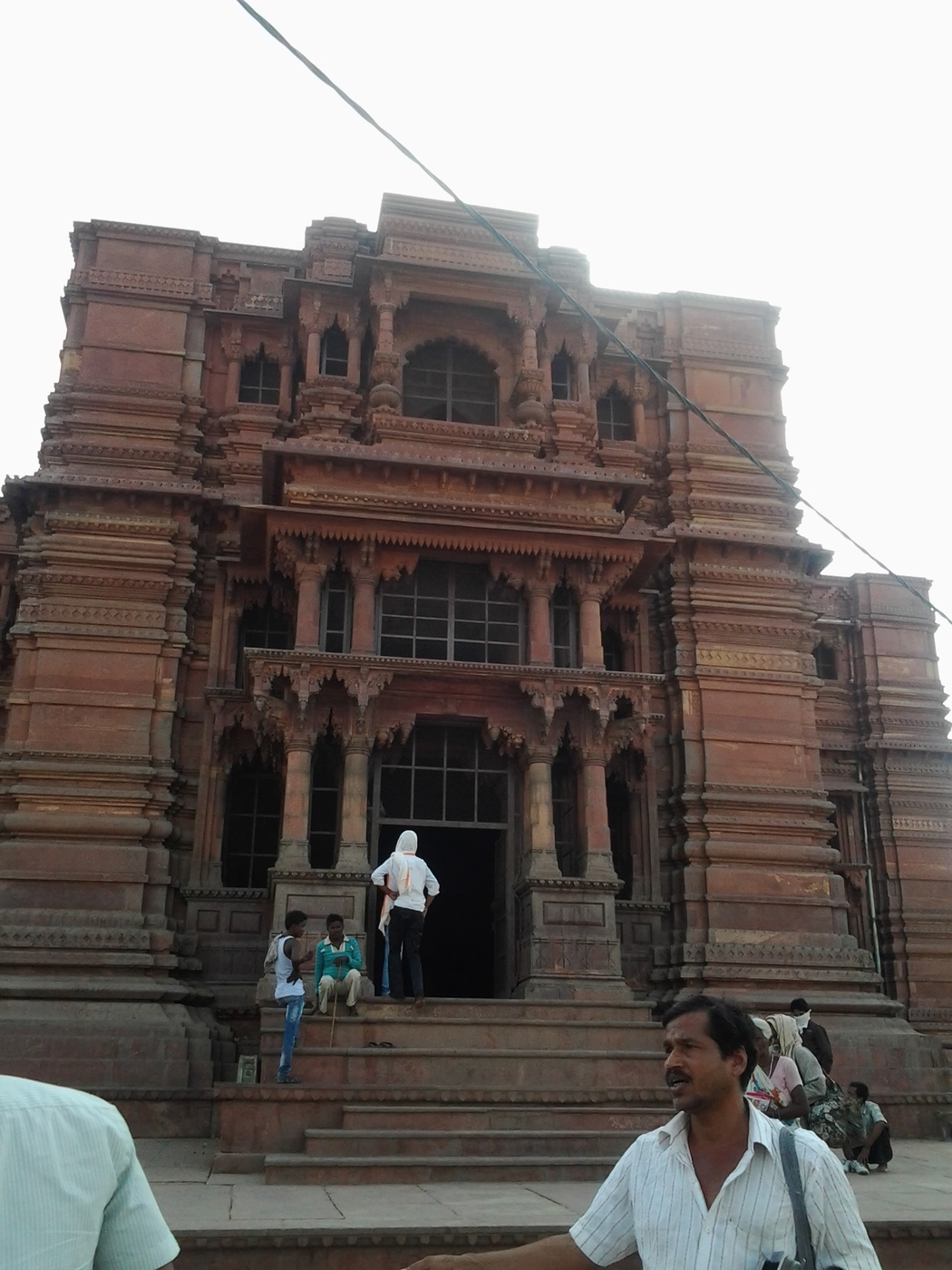
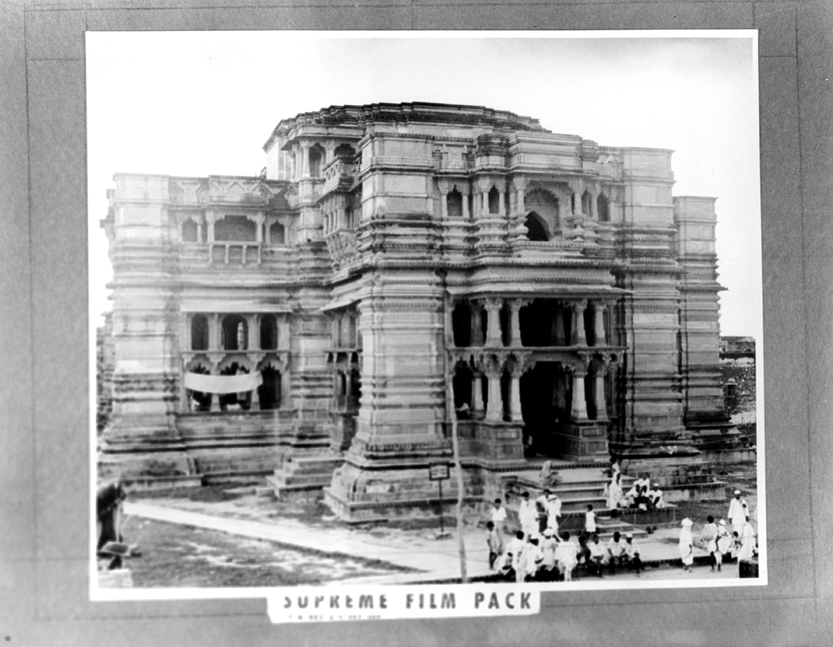
Chaitanya-charitamrita records that under Raghunatha Bhatta's own order, one of his disciples took on the construction of a temple for Govinda in Vrindavana. This was the same Deity whose worship Rupa Gosvami had earlier helped re-establish in the town. Another devotional account names that disciple directly as Raja Man Singh of Amber. This is the same Man Singh remembered elsewhere in Vrindavana's history as a patron of temple-building in this era. The account says Raghunatha Bhatta asked him to oversee the work himself. Raghunatha Bhatta personally supplied ornaments for the Deity, making a flute and a pair of shark-shaped earrings among other adornments. Later devotional tradition adds a well-known detail to this story. It says that the temple's wealthy donor and builder was inspired directly by Raghunatha Bhatta. It also says that this same red sandstone temple, among the most admired in all of northern India, still stands in Vrindavana today, more than four centuries later. Wikipedia's summary says the temple was built by his disciples only after his passing. But the Chaitanya-charitamrita purport tradition places its construction under his own direction during his lifetime. So the two accounts do not fully agree on the timing. What is not disputed is that Raghunatha Bhatta gave roughly forty years of his life to Govinda's service.
A Teacher for Devotees From Bengal #
Later Gaudiya Vaishnava tradition remembers Raghunatha Bhatta Goswami as more than a reciter and a temple's inspiration. It also remembers him as a guide to other devotees. One account holds that he accepted disciples from the eastern regions of Bengal (Gauda) specifically. In much the same way, his Vrindavana companion Gopala Bhatta Gosvami is said to have guided devotees arriving from the west and south of India. This detail rests on a single devotional source, not on Chaitanya-charitamrita itself. So it should be read as a later tradition about his role, not as a settled historical fact. But it fits naturally with everything else remembered about him. By that point his whole life was open to anyone who wanted to hear the Bhagavatam properly recited.
Neighbors at Radha-kunda #
Raghunatha Bhatta eventually made his own home beside Radha-kunda. Radha-kunda is the small lake in Vraja that Sri Chaitanya Mahaprabhu Himself is said to have identified during His own visit as the place where Radha and Krishna once bathed together. This placed him close to Raghunatha Dasa Goswami. Raghunatha Dasa Goswami had settled at the same kunda after his own arrival from Jagannatha Puri, and he spent roughly four decades there in extreme austerity. Sources describe the two Raghunathas as close companions in this Radha-kunda community of Goswamis. They were not guru and disciple to one another. Theirs was a friendship of shared devotion, not a formal spiritual relationship. Their names are still linked together in Krishnadasa Kaviraja Goswami's own repeated prayer at "the feet of Sri Rupa and Sri Raghunatha," a line traditionally understood to honor both Raghunathas at once.
A Gopi's Name Behind the Goswami's Robes #
Gaudiya Vaishnava theology holds that every one of the Six Goswamis carries a second, eternal identity within Krishna's own pastimes in Vraja, hidden behind their outward life as renounced scholars and preachers. For Raghunatha Bhatta Goswami, the Gaura-ganoddesha-dipika names that identity as Raga-manjari, one of Radha's own intimate gopi attendants, said to reside eternally in a cottage beside Radha-kunda in her spiritual form just as Raghunatha Bhatta did in his physical one. Some sources give the name slightly differently, as Rasa-manjari, though Raga-manjari is the form recorded in Srila Prabhupada's own purport to Chaitanya-charitamrita.
By the time of his final years, Raghunatha Bhatta Goswami had become, in his own quiet way, as central to the spiritual life of Vrindavana as any of his more famous companions. How that life came to its end, and what still remains of it at Vrindavana, is told in Disappearance and Legacy.
Scriptural evidence for this chapter (1)
eve raghunatha bhatta govinda-carane
sampurna sarila atma, jivana ye tane
pache raghunatha bhatta sisya-dvara kari
govindera mandira karaila nirmana
Word for word
govinda-carane - at the lotus feet of Govinda; sampurna sarila atma - surrendered himself completely; sisya-dvara - through his disciples; mandira karaila nirmana - had a temple constructed.
Thus Raghunatha Bhatta surrendered fully at the lotus feet of Lord Govinda, and those lotus feet became his life and soul. Subsequently Raghunatha Bhatta ordered his disciples to construct a temple for Govinda. He prepared various ornaments for Govinda, including a flute and shark-shaped earrings.
Describes Raghunatha Bhatta Goswami's personal surrender to the Govinda Deity and the temple built under his direction in Vrindavana.
Chapter 7
Disappearance and Legacy
No books, a living samadhi, and a place at the head of a lineage still chanting his name
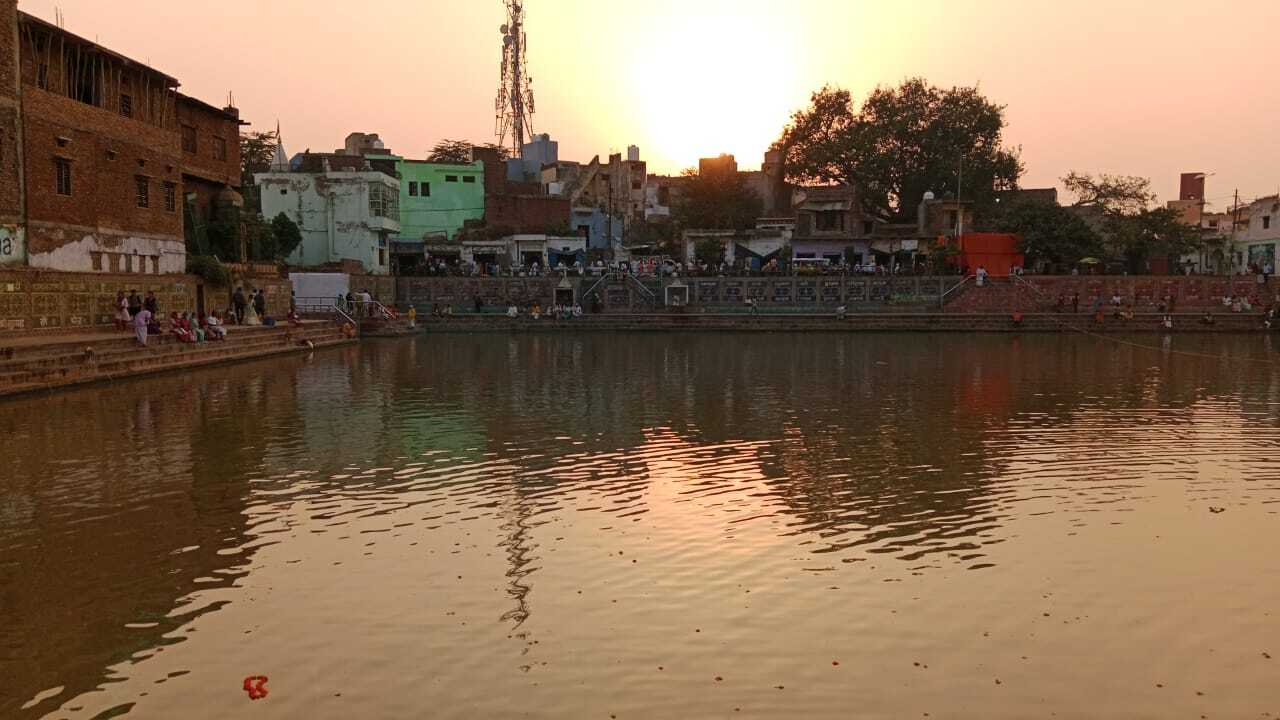
Raghunatha Bhatta Goswami is generally said to have disappeared from this world around 1579, though a few sources place it a year or so later. As with several of the Six Goswamis, modern accounts do not fully agree on any single date. One detail is recorded consistently, and it is stranger and more specific than most disappearance stories in this tradition. It is said that Jiva Gosvami feared that hostile hands might dishonor Raghunatha Bhatta's body after death, and so had it cremated instead of buried in the usual Vaishnava manner. The ashes, it is said, were then divided between two samadhi sites. One is at Radha-kunda itself. The other is in the area of Vrindavana known today as the Chaurasi, or Eighty-Four, Samadhis. Another devotional account of the same tradition gives the second site a different figure, calling it simply the Sixty-Four Samadhis area near the Govindaji temple. The two counts do not agree, so readers should not treat the exact number as certain.
| Detail | Description |
|---|---|
| Disappearance | c. 1579 (a small number of sources give 1580) |
| Body's fate | Cremated, by tradition on the order of Jiva Gosvami, to protect it from desecration |
| Samadhi sites | Radha-kunda, and a second Vrindavana samadhi cluster near the Govindaji temple |
| Preserved relics | A Srimad-Bhagavatam volume, tulasi garland, and wooden sandals (paduka), still honored at Raghunatha Bhatta Goswami's Peeth, Vrindavana |
| Literary output | None: unlike the other Goswamis, he wrote no books, having "learned everything simply by hearing shastra" |
No Books, and No Need of Them #
There is one thing Raghunatha Bhatta Goswami did not do. Every other member of the Six Goswamis, such as Rupa Gosvami, Sanatana Gosvami, Jiva Gosvami and Raghunatha Dasa Goswami, left behind written works that shaped Gaudiya Vaishnava theology for centuries. Raghunatha Bhatta Goswami wrote nothing. The biographical tradition on the Gaudiya History website explains this simply. He was a scholar in every subject, but he had learned it all directly by hearing scripture, and his genius showed itself in his voice, not in writing. In a movement that produced an entire cartload of handwritten books from Vrindavana, as Srila Prabhupada once described it, Raghunatha Bhatta Goswami's contribution was the sound of the Bhagavatam itself. He carried it, in one unforgettable voice, into the ears of everyone who heard him.
What Srila Prabhupada Taught About Him #
Srila Prabhupada returned often to the invocation that Gaudiya Vaishnavas recite daily in praise of the Six Goswamis. He made a point of explaining who "the other Raghunatha" actually was. In a 1968 lecture in Los Angeles on the Sri Sad-gosvamy-ashtaka, he told his students plainly: "There are two Raghus: one Raghunatha dasa Gosvami and one Raghunatha Bhatta Gosvami." He went on to explain that Raghunatha Dasa Gosvami carried the title dasa on account of his family's social standing. But in spiritual terms, both men belonged equally among the six who "picked up Lord Caitanya's eight verses and wrote so many books". For Raghunatha Bhatta specifically, this description applies more to what he preached aloud than to what he wrote down. Elsewhere, Prabhupada taught from Narottama Dasa Thakura's own verse in praise of the Six Goswamis. There he insisted that no one can rightly call themselves a follower of this line, a rupanuga Vaishnava, without following the standard the Goswamis themselves set. Raghunatha Bhatta Goswami met that standard not through books, as Narottama Dasa Thakura himself did, but through a lifetime devoted entirely to the Bhagavatam's own words.
A Heart Breaking at the Samadhi #
Narahari Chakravarti's Bhakti-ratnakara preserves a scene of devotees actually standing before Raghunatha Bhatta Goswami's samadhi, generations after his disappearance, and hearing his glories sung by Srinivasa Acharya:
"As I look upon the samadhi tomb of Raghunatha Bhatta, my heart breaks and my eyes are awash with tears. But who is not overjoyed as soon as he hears Raghunatha Bhatta Gosvami's glories? He was such an expert teacher of all the scriptures that even Brihaspati would joyfully cheer upon hearing his explanations of Vaishnava doctrine. There is nothing to which his discourses on the Bhagavatam can be compared. Even Vyasa himself wishes to sit and listen to him speak, knowing that this will bring him happiness. Even the gods were astonished when they observed his devotional practices."
Hearing this, the Bhakti-ratnakara says, the assembled devotees fell to the ground in respect before continuing on together to the Govindaji temple, the very temple whose construction Raghunatha Bhatta Goswami had once inspired.
A Living Address in Vrindavana #
Raghunatha Bhatta Goswami is not only a name in old texts. He still has a physical address in Vrindavana. Tradition holds that several things connected with him are preserved and still worshipped at a site known as Raghunatha Bhatta Goswami's Peeth, near the historic Bhatt-ji-ki-Haveli in Vrindavana. They are the tulasi garland and betel that Sri Chaitanya Mahaprabhu once placed in his hands, a Srimad-Bhagavatam volume connected to his memory, and his own wooden sandals. Pilgrims visiting the wider Vraja circuit today can still walk to his samadhi near Radha-kunda, not far from where Raghunatha Dasa Goswami himself is buried. They can also visit the Govinda temple whose construction Raghunatha Bhatta once inspired.
His Place Among the Six #
Raghunatha Bhatta Goswami's legacy was never meant to stand alone. He belongs to a set of six names that Gaudiya Vaishnavas have chanted together for five centuries: Rupa Gosvami, Sanatana Gosvami, Raghunatha Bhatta Gosvami, Jiva Gosvami, Gopala Bhatta Gosvami, and Raghunatha Dasa Gosvami. This lineage runs forward through Krishnadasa Kaviraja Goswami, who named Raghunatha Bhatta as one of his own instructing spiritual masters. It continues through Narottama Dasa Thakura, Vishvanatha Chakravarti Thakura and Baladeva Vidyabhusana, down to Srila Prabhupada and the worldwide movement he founded. Of all six, Raghunatha Bhatta Goswami left the fewest written records. Yet in a real sense, his influence is the most alive. Every time the Bhagavatam is read aloud with feeling in a Gaudiya Vaishnava temple anywhere in the world, something of the standard he set five hundred years ago at Vrindavana is still being followed.
- Sri Chaitanya-charitamrita, Adi-lila 10.152-154 (Bhaktivedanta VedaBase)
- Sri Chaitanya-charitamrita, Adi-lila 10.158 (Bhaktivedanta VedaBase)
- Sri Chaitanya-charitamrita, Antya-lila, Chapter 13 (Bhaktivedanta VedaBase)
- Srila Prabhupada, Six Gosvamis Lecture (Sri Sri Sad-gosvamy-ashtaka), Los Angeles, November 18 1968
- Raghunatha Bhatta Goswami - Gaudiya History
- Srila Raghunatha Bhatta Goswami - Official Blog of ISKCON Bangalore
- Srila Raghunatha Bhatta Goswami - Shyam Das Baba (excerpted from Bhakti Ballabh Tirtha Maharaja, Sri Chaitanya: His Life & Associates)
