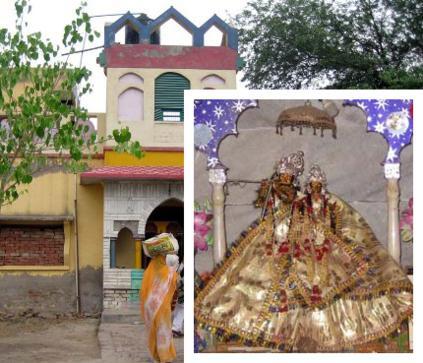
Srila Sadashiva Kaviraja
Vaidya Physician-Poet Among Nityananda Prabhu's Listed Associates
Also known as Sadasiva Kaviraja, Sadashiva Kaviraj, Sadasiva Kabiraj
“Chandravali-gopi, who had been very dear to Lord Krishna in Vrajabhumi, appeared in Bengal as Sadashiva Kaviraja.”
Kavi Karnapura, Sri Gaura-ganoddesha-dipika, verse 156, English as published at bvmlu.org
Srila Sadashiva Kaviraja appears in Sri Chaitanya-charitamrita as one name among many. Krishnadasa Kaviraja Goswami lists him as the twenty-third of the devotees who make up what the text calls the branches of Nityananda Prabhu's own tree of associates. That chapter is given entirely to naming the men and women closest to Nityananda Prabhu in early sixteenth-century Bengal, one devotee at a time. Almost everything reliably known about him comes from that single verse and from a family record carried forward across four generations. His was a Vaidya-caste physician's household. Its sons and grandsons went on to become recognized devotees of Sri Chaitanya Mahaprabhu and Nityananda Prabhu, long after the record stops speaking of Sadashiva Kaviraja himself.
One point must be made clear at once, because a second, unrelated devotee has an almost identical name. Sadashiva Pandit, not Kaviraja, is a separate associate named in an entirely different chapter of Chaitanya-charitamrita. He is the twelfth branch of Sri Chaitanya Mahaprabhu's own tree, a Navadwip householder whose house was Nityananda Prabhu's first residence there. The two men share a first name and a generation, but Krishnadasa Kaviraja Goswami keeps them in separate lists under separate titles. Sadashiva Pandit belongs among Mahaprabhu's own close Navadwip devotees. Sadashiva Kaviraja belongs among Nityananda Prabhu's own listed associates. He carries a different title, Kaviraja. It marks a family of hereditary physician-poets, while Pandit is a Sanskrit scholar's title. What follows is only about Sadashiva Kaviraja.
| Detail | Description |
|---|---|
| Standing in the text | Twenty-third of Nityananda Prabhu's listed devotees, per Sri Chaitanya-charitamrita, Adi-lila 11.38 |
| Family | Vaidya (physician) caste; father Kamsari Sen; son Purushottama Dasa Thakura; grandson Kanu Thakura |
| Title "Kaviraja" | A hereditary title meaning both "king of poets" and, among Bengal's Vaidya families, a physician; shared with Krishnadasa Kaviraja Goswami and Govinda Dasa Kaviraja, though the three belonged to unrelated families |
| Identity | Chandravali, a gopi most dear to Krishna in Vraja (Gaura-ganoddesha-dipika 156; Chaitanya-charitamrita Adi 11.39 purport) |
| Primary sources | Sri Chaitanya-charitamrita, Adi-lila 11.38; Sri Chaitanya-bhagavata, Antya-khanda 5.741 (cited via secondary compilation) |
| Birth / disappearance | Neither is recorded in the surviving sources |
The Twenty-Third Branch of Nityananda Prabhu's Tree #
Sri Chaitanya-charitamrita's eleventh chapter of Adi-lila opens with Krishnadasa Kaviraja Goswami offering obeisances to all the devotees of Nityananda Prabhu. He compares them to bumblebees drawn to the honey of His lotus feet. Then he names, one by one, those he calls the most prominent among them. Reaching the twenty-third name, he writes simply: "Sri Sadashiva Kaviraja, a great and respectable gentleman; his son Sri Purushottama dasa." The very next line describes both father and son together. Everything known about him from the text rests on this line: "The twenty-third and twenty-fourth prominent devotees of Nityananda Prabhu were Sadashiva Kaviraja and his son Purushottama dasa, who was the tenth gopala." No further description of Sadashiva Kaviraja himself follows in the verse. The text moves straight on to his son Purushottama dasa, then his grandson Kanu Thakura, before continuing down the list to other devotees such as Uddharana Datta Thakura. The title "tenth gopala" given to Purushottama dasa points to a separate traditional count of twelve cowherd companions among Nityananda Prabhu's devotees. That count is not explained here, and we leave the gap open instead of guessing.
A Vaidya Family and the Title Kaviraja #
Gaudiya Vaishnava sources describe Sadashiva Kaviraja's household as belonging to Bengal's Vaidya community, the traditional caste of hereditary physicians. They name his father as Kamsari Sen, a man the Gaura-ganoddesha-dipika separately identifies with the gopi Ratnavali. The title Kaviraja itself, literally "king of poets," was also carried within Vaidya families as a mark of the physician's learning. That is why the same word is used for three quite different Gaudiya Vaishnava figures. The first is Sadashiva Kaviraja. The second is Krishnadasa Kaviraja Goswami, who wrote Sri Chaitanya-charitamrita a generation or two later. The third is the Bengali padavali poet Govinda Dasa Kaviraja, honored with the same title by Srila Jiva Goswami for his devotional songs. None of the three belonged to the same family or the same branch of the movement. The title marks a class of learned men, not a lineage. Gaudiya Vaishnava memory holds that four generations of Sadashiva Kaviraja's own family were each personally recognized as devotees of Mahaprabhu's movement: his father, himself, his son, and his grandson. This long line of devotion is the most remarkable thing we can report about the family.
Chandravali-Gopi in the Gaura-Ganoddesha-Dipika #
Gaudiya Vaishnava tradition holds that Sri Chaitanya Mahaprabhu's leading devotees were, in their eternal spiritual identity, associates of Krishna's own Vraja pastimes. The poet-scholar Kavi Karnapura recorded these identities in his Sri Gaura-ganoddesha-dipika. Its 156th verse names Sadashiva Kaviraja directly: "Chandravali-gopi, who had been very dear to Lord Krishna in Vrajabhumi, appeared in Bengal as Sadashiva Kaviraja." Chandravali is remembered in Krishna-lila as a leading gopi. In some tellings she is also a rival to Srimati Radharani's own circle for Krishna's attention. Almost nothing else about Sadashiva Kaviraja's outer life survives, but this identity gives him a specific place among these eternal associates. Separately, Srila Bhaktisiddhanta Sarasvati Thakura's Anubhasya describes Sadashiva Kaviraja and his son as "maha-bhagyavan, greatly fortunate," and notes their Vaidya caste. This comment is reproduced within Srila Prabhupada's own purport to Sri Chaitanya-charitamrita, Adi-lila 11.39. Both gaudiyahistory.iskcondesiretree.com and dandavats.com attribute this same description to Srila Prabhupada without giving the exact verse. It is found at Adi-lila 11.39, next to the verses 11.38 and 11.40, which name Sadashiva Kaviraja and Kanu Thakura's family Deity.
In Kavi Karnapura's Sanskrit, the verse quoted above (Gaura-ganoddesha-dipika 156) reads:
purā candrāvalī yāsīd vraje kṛṣṇa-priyā parā
adhunā gauḍa-deśe sā kavirājaḥ sadāśivaḥ
The same Anubhasya passage in Srila Prabhupada's purport to Chaitanya-charitamrita Adi 11.39 also gives this identity: "...text 156 of the Gaura-gaṇoddeśa-dīpikā says that Candrāvalī, a most beloved gopī of Kṛṣṇa’s, later took birth as Sadāśiva Kavirāja."
A Family the Record Remembers, A Man It Barely Describes #
Sadashiva Kaviraja's name is carried forward almost entirely by his descendants. His son, Purushottama Dasa Thakura, is remembered as a devotee so absorbed in Nityananda Prabhu that Chaitanya-bhagavata says he had no awareness of his own body. His grandson Kanu Thakura was taken in personally by Nityananda Prabhu as an infant after the boy's mother died. A fuller story is told on Purushottama Dasa Thakura's own pages. Gaudiya Vaishnava sources also state that present-day Goswami families in places such as Bodhakhana and Bhajanghat trace their descent back to Sadashiva Kaviraja himself. This claim of a living family line is stated, but it has not been independently checked. Beyond his name, his father, his son, his grandson, his caste, and his Vraja identity as Chandravali-gopi, no source records anything else. There is no birth year, no birthplace, no marriage, and no date or place of disappearance. In the text he appears as little more than a name and a title. That is truly very little to know, and we report only that much instead of filling the silence with invention.
Scriptural evidence
Quoted in the text above:
Further verses:
ājanma nimagna nityānandera caraṇe
nirantara bālya-līlā kare kṛṣṇa-sane
From birth, Puruṣottama dāsa was merged in the service of the lotus feet of Lord Nityānanda Prabhu, and he always engaged in childish play with Lord Kṛṣṇa.
From the purport: Sadāśiva Kavirāja and Nāgara Puruṣottama, who were father and son, are described in the Caitanya-bhāgavata as mahā-bhāgyavān, greatly fortunate. They belonged to the vaidya caste of physicians.
Srila Prabhupada's purport to this verse quotes Srila Bhaktisiddhanta Sarasvati Thakura's Anubhasya on Sadashiva Kaviraja and his son: their good fortune, their Vaidya caste, and their identities from Gaura-ganoddesha-dipika. Verified on vedabase.io.
- Sri Chaitanya-charitamrita, Adi-lila 11.1 (vedabase.io)
- Sri Chaitanya-charitamrita, Adi-lila 11.38 (vedabase.io)
- Sri Chaitanya-charitamrita, Adi-lila 11.39-40, with purport (vedabase.io)
- Sadashiva Kaviraja — Gaudiya History (ISKCON Desire Tree)
- Purushottama Dasa Thakura — Biography, Gaudiya History (ISKCON Desire Tree)
- Sri Gaura Ganoddesha Dipika, verse 156 — Gaudiya History (ISKCON Desire Tree)
- Purushottama Dasa was the son of Sadashiva Kaviraja — Dandavats.com
Frequently asked
When was Srila Sadashiva Kaviraja born?
Srila Sadashiva Kaviraja appeared Not recorded in Bengal (the sources we found do not record the exact village).
When and where did Srila Sadashiva Kaviraja disappear?
Srila Sadashiva Kaviraja disappeared Not recorded at Not recorded.
What are the main pastimes of Srila Sadashiva Kaviraja?
The pastimes covered here include: The Vaidya Family and the Title Kaviraja.