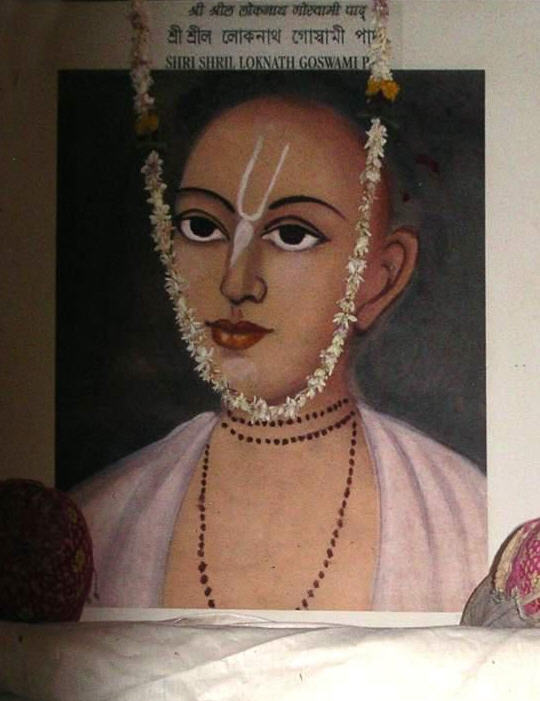
Sri Shankara Pandita
The Devotee Whose Body Became the Lord's Own Pillow
Also known as Sankara Pandita, Shankara Pandit, Sankara Pandit, Shankar Pandit
“Keep your younger brother Sankara with you, because he is connected to Me by pure, unalloyed love.”
Sri Chaitanya Mahaprabhu, speaking to Damodara Pandita about Shankara Pandita at Jagannatha Puri (Sri Chaitanya-charitamrita, Madhya-lila 11.147). These are not Shankara's own words. They are what the Lord Himself said about him.
Sri Shankara Pandita was one of the closest personal attendants of Sri Chaitanya Mahaprabhu during the Lord's years at Jagannatha Puri. He was so close that the Lord rested against Shankara's own body through the night, when Mahaprabhu's ecstatic love for Krishna grew violent enough to injure Him. Sri Chaitanya-charitamrita names him the eleventh branch of the great tree of Mahaprabhu's associates, and the younger brother of Damodara Pandita. It also gives him a title that no other devotee in the text shares: prabhu-padopadhana, "the resting place for the Lord's feet." His name is easy to confuse with two very different figures, so that point is explained first.
| Detail | Description |
|---|---|
| Era | Contemporary of Chaitanya Mahaprabhu, early sixteenth century |
| Documented as | Eleventh branch of the Chaitanya tree (Chaitanya-charitamrita, Adi-lila 10.33) |
| Elder brother | Damodara Pandita, the tenth branch |
| Best known as | Prabhu-padopadhana, "the Lord's foot-pillow," for his nightly service at Jagannatha Puri |
| Role among devotees | Personal night attendant to Mahaprabhu during His most intense years of ecstasy at Puri |
| Identity | The gopi Shri Bhadra, on whose chest Krishna slept in Vrindavana (Gaura-ganoddesha-dipika 157) |
| Birth and disappearance | Not recorded |
Not to Be Confused With Two Other Shankaras #
Adi Shankaracharya, the eighth-century philosopher who founded Advaita Vedanta, is an entirely different person from an entirely different tradition centuries earlier. The shared name is coincidence, nothing more. A second Shankara is closer to Shankara Pandita's own world, and easier to mix up: Shankararanya. This was the sannyasa name taken by Vishvarupa, the elder brother of Sri Chaitanya Mahaprabhu. Vishvarupa left home for the renounced order in his youth and passed away at Pandarapura. Sri Ranga Puri brought this news to Mahaprabhu (Chaitanya-charitamrita, Adi-lila 9.300 and Madhya-lila 9.299). Shankararanya belonged to the Panca-dravida sannyasa order. He has no recorded family or service connection at all to Shankara Pandita. Krishnadasa Kaviraja Goswami keeps the two figures completely separate in his text, and never uses one name in place of the other. None of the three Shankaras has his own Wikipedia article. So a reader who goes only by the name has nothing else to tell them apart, and that is why this difference matters so much.
The Eleventh Branch of the Chaitanya Tree #
In the tenth chapter of Chaitanya-charitamrita's Adi-lila, Krishnadasa Kaviraja Goswami names, branch by branch, the devotees who gathered around Mahaprabhu in Nadia and at Jagannatha Puri. Directly after describing Damodara Pandita as the tenth branch, he adds a single verse for the eleventh: "the younger brother of Damodara Pandita, was known as Sankara Pandita. He was celebrated as the shoes of the Lord" (Adi 10.33). That one line already sums up his whole reputation. From the very first time the text mentions him, he is known for being physically close to the Lord and for humble service. He is not known for learning, speaking skill or renunciation.
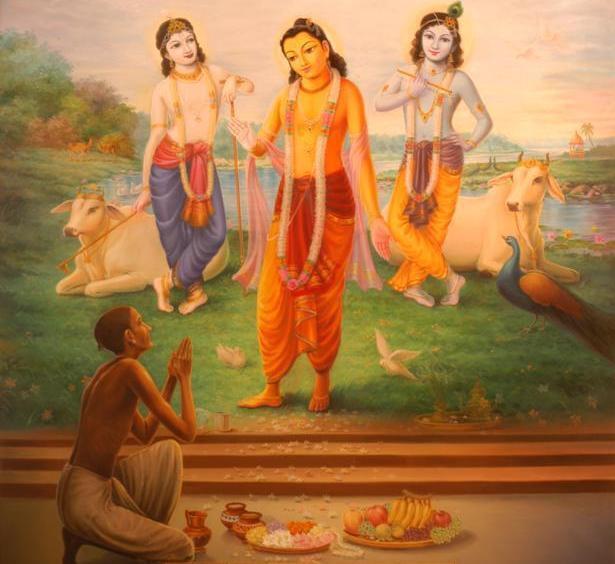
The tradition goes further still. Gaura-ganoddesha-dipika is Kavi Karnapura's traditional key that links Mahaprabhu's associates to figures from Krishna's earlier pastimes in Vraja. It identifies Shankara Pandita as the former Shri Bhadra-gopi. She was the gopi on whose chest Krishna would sometimes rest while sleeping in Vrindavana (verse 157). The parallel is exact and easy to remember. The same soul who once cushioned Krishna's sleep in Vraja later cushioned Chaitanya Mahaprabhu's restless nights at Puri.
Kavi Karnapura's verse reads:
yasyā vakṣasi suṣvāpa kṛṣṇo vṛndāvane purā
sā śrī-bhadrādya gaurāṅga priyaḥ śaṅkara-paṇḍitaḥ
"During Lord Krsna's Vrndavana pastimes He would sometimes sleep peacefully on the chest of Sribhadra-gopi. This same Sribhadra-gopi later appeared as Sankara Pandita, who was very dear to Lord Caitanya Mahaprabhu." (Gaura-ganoddesha-dipika 157)
A Love Called Pure and Unalloyed #
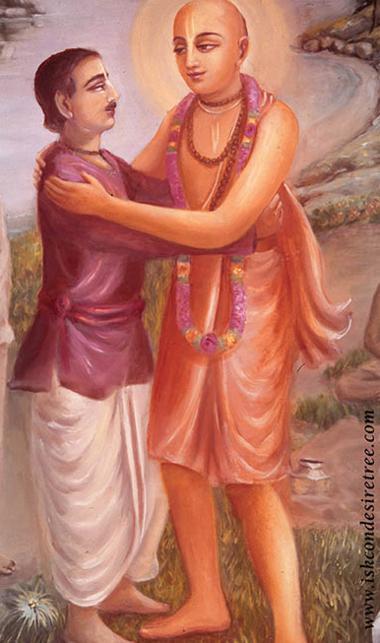
The devotees of Bengal came to Jagannatha Puri every year. On one of these visits, Sri Chaitanya Mahaprabhu greeted many of them by name and said something special to each. He spoke to Srivasa Thakura and his brothers, to Vasudeva Datta, and, most importantly, to Shankara Pandita and his elder brother Damodara. After seeing Shankara, the Lord turned to Damodara and pointed out a clear difference between the two brothers' love for Him. Because of this, He placed Shankara in his brother's care. The full exchange, and what it shows about the kind of devotion Mahaprabhu valued most, is told on The Love Called Pure and Unalloyed.
Prabhu-Padopadhana, the Lord's Own Pillow #
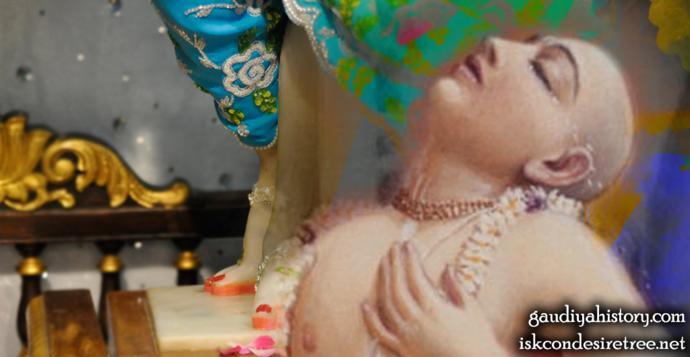
The episode that gave Shankara Pandita his lasting title took place later, in Mahaprabhu's final years at Puri. At that time His ecstatic separation from Krishna grew so severe that He began injuring His own face against the walls of His room at night. Svarupa Damodara Goswami and the other devotees feared for the Lord's life. So they asked Shankara Pandita to sleep in the same room. From this came one of the most tender and most quoted pictures in the whole of Chaitanya-charitamrita. Krishnadasa Kaviraja Goswami even compares Shankara to Vidura, the submissive resting place of Lord Krishna's own feet in Srimad-Bhagavatam. The full account is told on Prabhu-Padopadhana, the Lord's Own Pillow.
What the Record Does Not Say #
No surviving source gives a year of birth or disappearance for Shankara Pandita. No source names any independent literary work by him, or any place connected with him beyond Jagannatha Puri itself. He does not appear to have been the subject of any dedicated lecture or class by Srila Prabhupada. Everything we know about him comes from a handful of verses in Sri Chaitanya-charitamrita and the single identifying verse of Gaura-ganoddesha-dipika. That is not much, compared with some of Mahaprabhu's better-known associates. But it is consistent. Every detail comes from one of those verses, not from guesswork.
Scriptural evidence
Quoted in the text above:
- Verse 157 Gaura-ganoddesha-dipika
Further verses:
The eleventh branch, the younger brother of Damodara Pandita, was known as Sankara Pandita. He was celebrated as the shoes of the Lord.
The founding reference for Shankara Pandita's place among Mahaprabhu's associates: his family relation to Damodara Pandita and his earliest epithet, "the shoes of the Lord."
- Shankara Pandita (Gaudiya History biography)
- Shankararanya (Gaudiya History biography, consulted for disambiguation)
- Sri Gaura-ganoddesha-dipika (Gaudiya History)
- Sri Chaitanya-charitamrita, Adi-lila, Chapter 10 (the branches of the Chaitanya tree)
- Sri Chaitanya-charitamrita, Madhya-lila, Chapter 11 ("The Beda-kirtana Pastimes of Sri Caitanya Mahaprabhu")
- Sri Chaitanya-charitamrita, Antya-lila, Chapter 19 ("The Inconceivable Behavior of Lord Sri Caitanya Mahaprabhu")
Frequently asked
When was Sri Shankara Pandita born?
Sri Shankara Pandita appeared Not recorded in Not recorded.
When and where did Sri Shankara Pandita disappear?
Sri Shankara Pandita disappeared Not recorded at Not recorded.
What are the main pastimes of Sri Shankara Pandita?
The pastimes covered here include: The Love Called Pure and Unalloyed, Prabhu-Padopadhana, the Lord's Own Pillow.