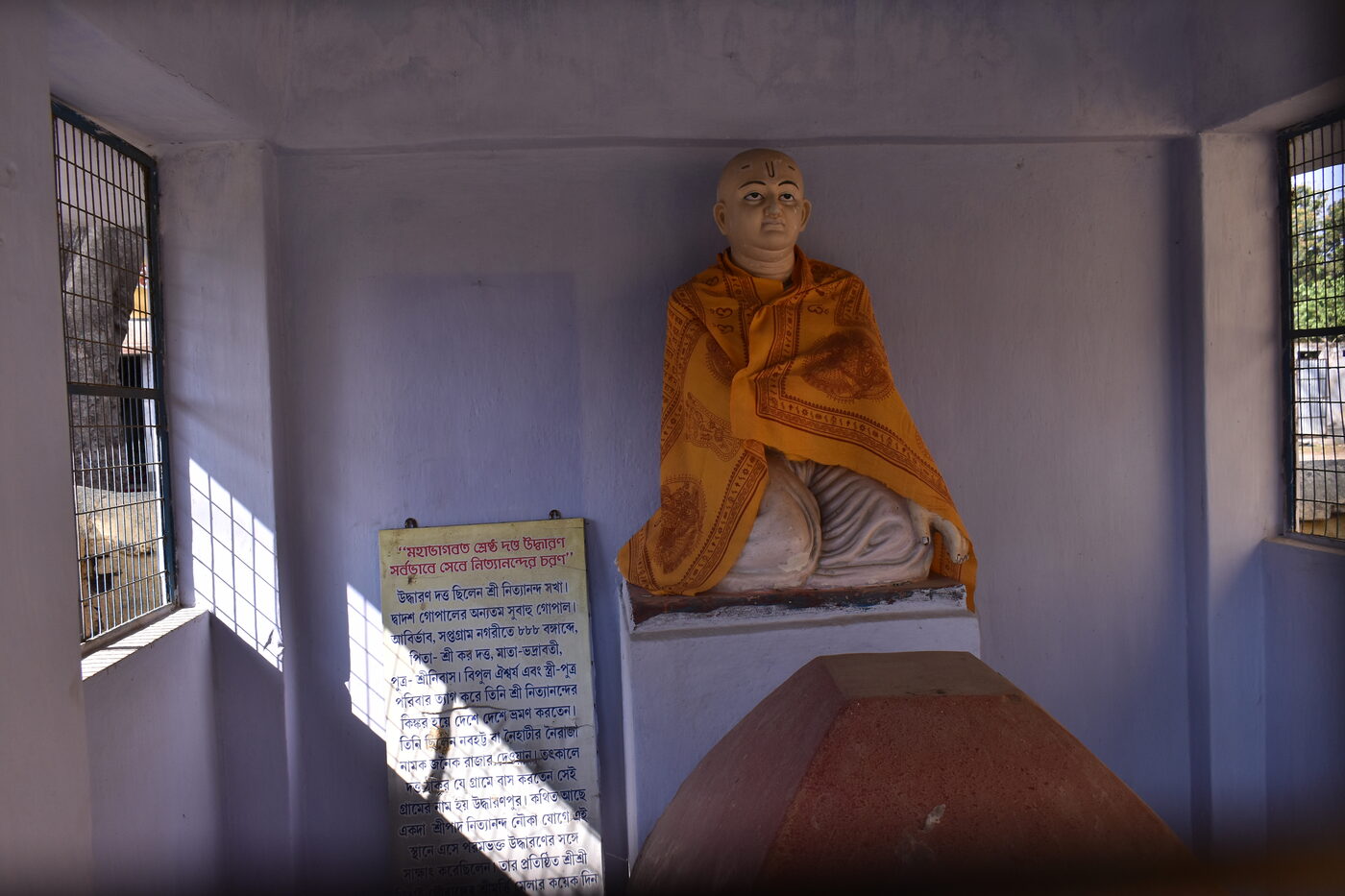
Srila Uddharana Datta Thakura
The Gold Merchant Who Cooked for Nityananda Prabhu
Also known as Divakara Datta, Uddharana Datta, Sri Uddharana Thakura
“Uddharana Datta Thakura, the eleventh among the twelve cowherd boys, was an exalted devotee of Lord Nityananda Prabhu. He worshiped the lotus feet of Lord Nityananda in all respects.”
Sri Chaitanya-charitamrita, Adi-lila 11.41
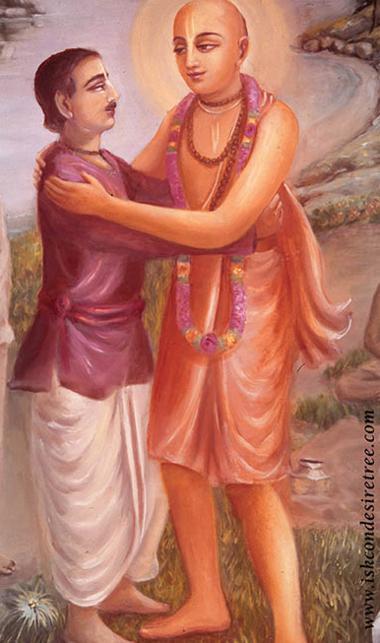
Srila Uddharana Datta Thakura was a wealthy merchant of the suvarna-vanik, or gold-trading, caste of Bengal who became one of the closest personal associates of Nityananda Prabhu. Sri Chaitanya-charitamrita calls him "maha-bhagavata-shrestha," the best among great devotees, who worshiped Nityananda Prabhu's lotus feet in every possible way. He is remembered above all as the devotee in whose house Nityananda Prabhu lived for months, and whose cooking Nityananda Prabhu Himself preferred to eat.
| Detail | Description |
|---|---|
| Other names | Divakara Datta (name before his association with Nityananda Prabhu, per some accounts) |
| Birth | c. 1481, Saptagrama, Hooghly district, Bengal |
| Family | Father Srikara Datta, mother Bhadravati; son Srinivasa Datta |
| Caste / community | Suvarna-vanik (gold merchant and banking community) |
| Occupation | Estate manager (diwan) for a zamindar at Naihati, near Katwa |
| Identity | Subahu, Krishna's cowherd friend in Vraja; eleventh of the twelve gopalas (Gaura-ganoddesha-dipika 129; Chaitanya-charitamrita Adi 11.41) |
| Disappearance | Krishna Trayodashi, month of Pausha, Shaka 1463 |
A Gold Merchant of Saptagrama #
He was born around 1481 in Saptagrama, a prosperous river-port town in the Hooghly district of Bengal that in his time had grown to include several adjoining villages: Vasudevapura, Bansabediya, Krishnapura, Nityanandapura, Shivapura and Shankhanagara, besides Saptagrama itself. His father, Srikara Datta, and mother, Bhadravati, belonged to the suvarna-vanik community, Bengali bankers and dealers in gold whose very name joins suvarna, gold, to vanik, merchant. By the time Srila Prabhupada wrote his purport to this verse, suvarna-vanik families like the Mulliks and Sils had built much of Calcutta, and Srila Prabhupada noted that his own paternal family came from this same district and community.
The suvarna-vaniks had long suffered from an old wrong. Generations earlier, king Ballala Sena had borrowed heavily from a suvarna-vanik banker named Gauri Sena and spent extravagantly. When Gauri Sena stopped lending him more money, Ballala Sena took revenge. He had the entire community declared outcaste, cut off from the brahmana, kshatriya and vaishya orders they had belonged to before. Chaitanya-bhagavata states plainly that Nityananda Prabhu's grace reversed this: "there is no doubt that all the community members of the suvarna-vanik society were again purified by Sri Nityananda Prabhu." Uddharana Datta Thakura was a member of that same suffering community. He is remembered as the very person through whom this purification happened.
As an adult he worked as manager of a zamindar's estate at Naihati, about a mile and a half north of Katwa. The place from which he managed the estate is still called Uddharanapura, Uddharana's town, after him. This is one of the few places anywhere in the Gaudiya Vaishnava world where a whole town takes a devotee's given name, not his title.
The Twelve Gopalas and Subahu of Vraja #
Gaudiya Vaishnava theology holds that Nityananda Prabhu is Krishna's elder brother Balarama in the mood of a devotee. It also holds that a circle of eternal associates came with Him from Vraja to help carry out the sankirtana mission in Bengal, much as Sri Chaitanya Mahaprabhu brought His own associates. This circle is remembered as the dvadasha-gopala, the twelve cowherd-boy companions of Nityananda Prabhu. The Gaura-ganoddesha-dipika (verse 129) identifies Uddharana Datta as the cowherd boy Subahu in Krishna's pastimes in Vrindavana. Srila Prabhupada's translation of Sri Chaitanya-charitamrita (Adi 11.41) counts him as the eleventh of these twelve, and the verse describes him in a single line: he was an exalted devotee of Nityananda Prabhu who served the Lord's feet sarva-bhave, in every possible way.
Srila Kavi Karnapura's Gaura-ganoddesha-dipika (verse 129) names him in its list of Krishna's cowherd friends who appeared again in Lord Chaitanya's pastimes:
subāhur yo vraje gopo datta uddhāraṇākhyakaḥ
"The devotee who had been the cowherd boy Subahu in Vrajabhumi appeared in Lord Caitanya's pastimes as Uddharana Datta." (Gaura-ganoddesha-dipika 129)
Srila Prabhupada's purport to Chaitanya-charitamrita Adi 11.41 opens with the same point, quoting Srila Bhaktisiddhanta Sarasvati Thakura's Anubhashya: "The Gaura-gaṇoddeśa-dīpikā (129) states that Uddhāraṇa Datta Ṭhākura was formerly the cowherd boy of Vṛndāvana named Subāhu."
Nityananda Prabhu's Host and Cook #
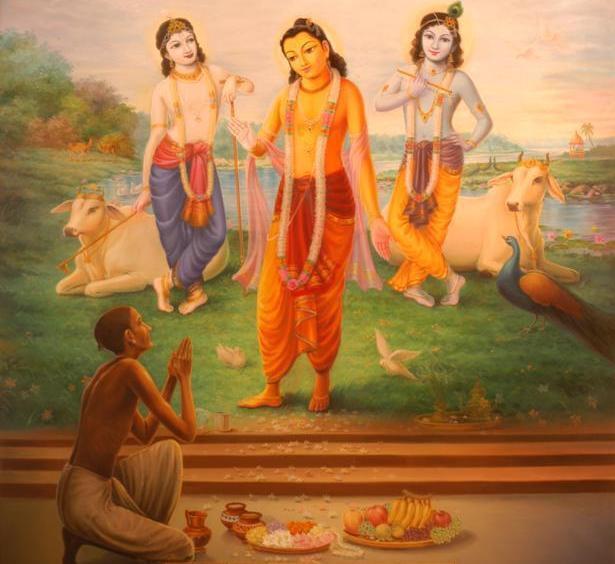
After some time at Khardaha, Nityananda Prabhu came with His associates to Saptagrama and made Uddharana Datta's house His home for a long stay. In Chaitanya-bhagavata, Vrindavana Dasa Thakura describes Uddharana Datta receiving Him with mind, body and words free of pretense. Vrindavana Dasa Thakura calls him a great and generous Vaishnava who, in effect, had from birth the right to worship Nityananda Prabhu. Nityananda Prabhu accepted food cooked by Uddharana Datta's own hand. Every biographical source repeats this detail. The reason is that society at that time was still rigidly organized around who might cook for whom. In such a society, the Lord's open preference for a suvarna-vanik's kitchen was itself a public statement that devotion, not birth, decides a devotee's standing. This point is shown more fully in the Madhavi tree pastime. There, an orthodox brahmana's discomfort at eating food Uddharana Datta had cooked leads to one of Nityananda Prabhu's best-known miracles.
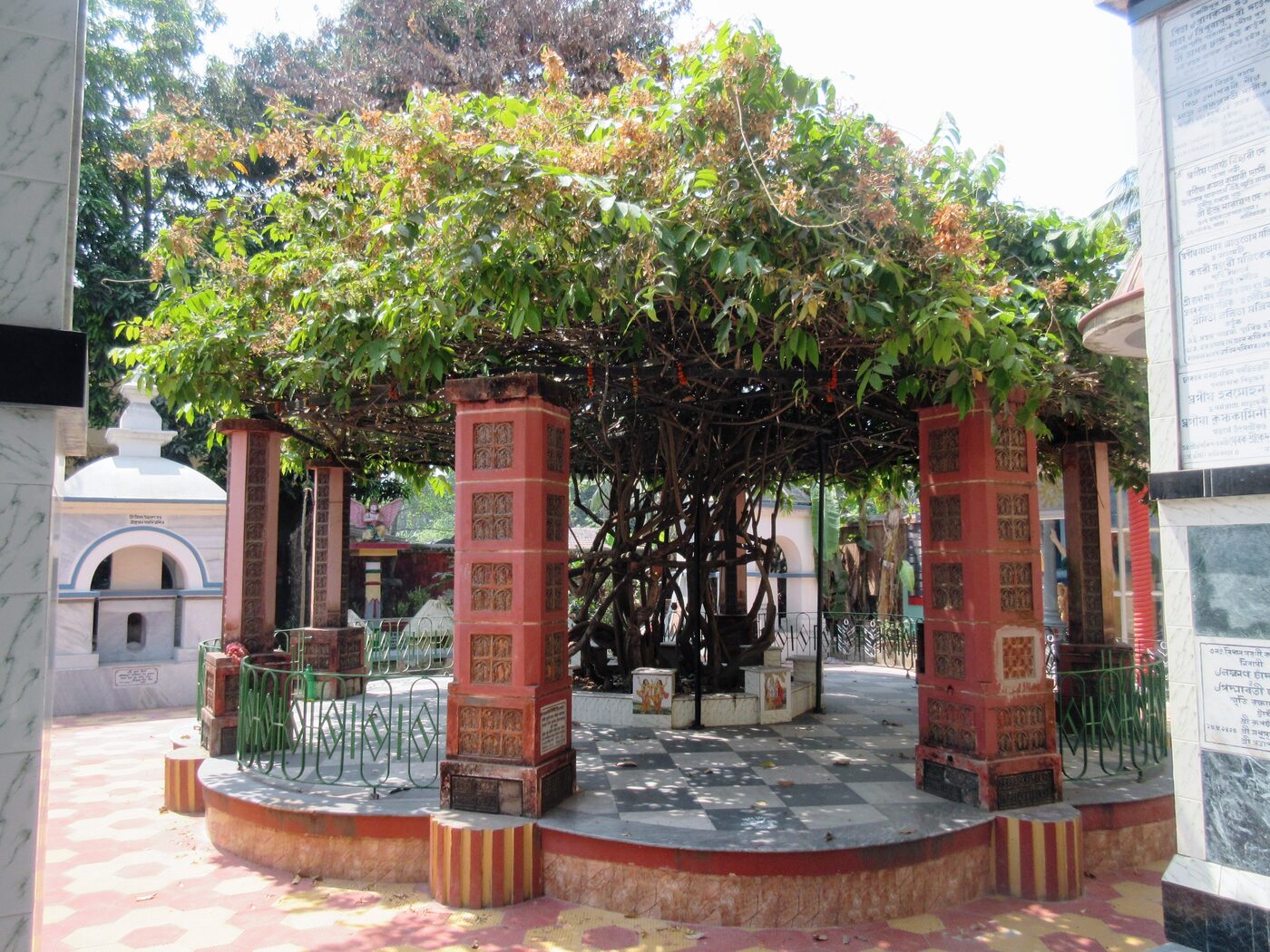
That same closeness put Uddharana Datta at Nityananda Prabhu's side for one of the most important decisions of the Bengal mission. Sri Chaitanya Mahaprabhu asked Nityananda Prabhu to give up the wandering life of an avadhuta and marry, so that householders would have a living example to follow. At that time, Uddharana Datta Thakura was the associate who went with Nityananda Prabhu to Suryadasa Sarakhela's house to ask for the hand of his daughter Vasudha. The episode is recorded on Nityananda Prabhu's own page. This shows how completely Uddharana Datta had given his life to Nityananda Prabhu. He stood beside Him even for this most personal errand.
Sri Chaitanya-charitamrita places him at Nityananda Prabhu's side again at Panihati. There, at the festival of chipped rice and yogurt, he was seated among the Lord's associates on a raised platform. This was when Raghunatha Dasa Goswami came to meet Nityananda Prabhu before his final flight from home. It is only a short mention. But it proves that Uddharana Datta's place in Nityananda Prabhu's circle was not limited to Saptagrama.
Deity Worship and a Temple That Still Stands #
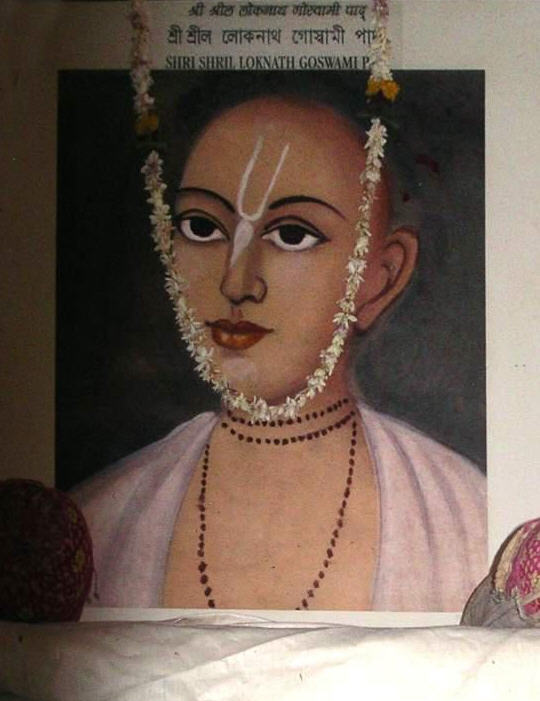
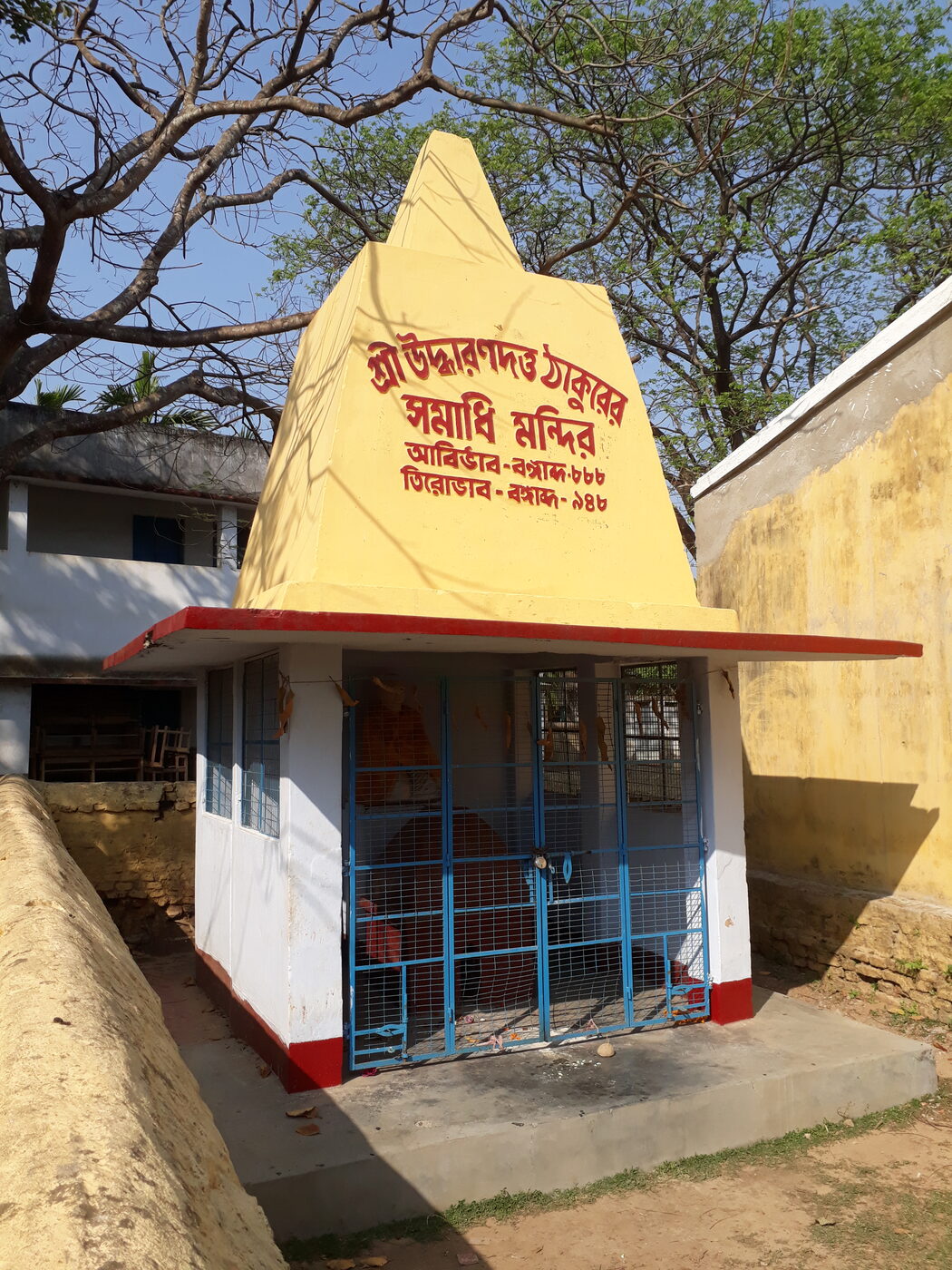
Uddharana Datta Thakura personally installed and worshiped a six-armed (sad-bhuja) Deity of Sri Chaitanya Mahaprabhu, with Nityananda Prabhu on His right and Gadadhara Pandit on His left. He also worshiped a Radha-Govinda murti and a shalagrama-shila. In his purport to Chaitanya-charitamrita, Srila Prabhupada describes visiting this same temple at Saptagrama as a child with his parents. He also describes a second visit in 1967, soon after returning from America, when the temple committee invited him back with some of his first American students. He notes that suvarna-vanik families had always taken a special interest in the temple, because Uddharana Datta was their own. A wooden Deity of Uddharana Datta himself once stood there. It was later removed, and a picture of him is worshiped in its place today. More about his full life and this temple's upkeep is told in the pastime of his disappearance.
A Householder's Legacy #
Uddharana Datta Thakura remained a householder all his life and had one son, Srinivasa Datta, from whom later generations of the family descended. No song or composition by him is listed in any known catalogue. His legacy lives only in two things. One is what others wrote about him: Krishnadasa Kaviraja Goswami, Vrindavana Dasa Thakura, Bhaktisiddhanta Sarasvati Thakura and Srila Prabhupada himself. The other is the temple and the town that still bear his name.
Scriptural evidence
Quoted in the text above:
- Verse 129 Gaura-ganoddesha-dipika
Further verses:
মহাভাগবত–শ্রেষ্ঠ দত্ত উদ্ধারণ ।
সর্বভাবে সেবে নিত্যানন্দের চরণ ॥ ৪১ ॥
maha-bhagavata-shrestha datta uddharana
sarva-bhave seve nityanandera carana
Word for word
maha-bhagavata: great devotee; shrestha: chief; datta: the surname Datta; uddharana: Uddharana; sarva-bhave: in all respects; seve: worships; nityanandera: of Lord Nityananda; carana: lotus feet.
Uddharana Datta Thakura, the eleventh among the twelve cowherd boys, was an exalted devotee of Lord Nityananda Prabhu. He worshiped the lotus feet of Lord Nityananda in all respects.
From the purport: Purport excerpt: "The Gaura-ganoddesa-dipika (129) states that Uddharana Datta Thakura was formerly the cowherd boy of Vrindavana named Subahu."
This is the single verse in Chaitanya-charitamrita that names Uddharana Datta directly and gives his identity in Krishna's Vraja-lila; Prabhupada's purport here is the fullest primary-source biography of him available.
- Sri Chaitanya-charitamrita, Adi-lila 11.41 (Bhaktivedanta purport)
- Sri Chaitanya-charitamrita, Antya-lila 6.63
- Uddharana Datta Thakura - Biography, Gaudiya History (ISKCON Desire Tree)
- Uddharana Datta Thakura - Biography 2, Gaudiya History (ISKCON Desire Tree)
- Sri Uddharana Datta Thakura: The Devoted Servant of Lord Nityananda, ISKCON Bangalore
- Sri Uddharana Datta Thakura - Disappearance, ISKCON Desire Tree
- Uddharana Datta Thakura, Stephen Knapp (Sri Nandanandana Dasa)
Frequently asked
When was Srila Uddharana Datta Thakura born?
Srila Uddharana Datta Thakura appeared c. 1481 in Saptagrama, Hooghly district, Bengal.
Who was the guru of Srila Uddharana Datta Thakura?
The spiritual master of Srila Uddharana Datta Thakura was Sri Nityananda Prabhu.
When and where did Srila Uddharana Datta Thakura disappear?
Srila Uddharana Datta Thakura disappeared Krishna Trayodashi, month of Pausha, Shaka 1463 (usually given as c. 1541; one account often copied online gives 1552) at Saptagrama or Uddharanpur, Bengal (a separate, less well-supported tradition places his final years in Vrindavana).
What are the main pastimes of Srila Uddharana Datta Thakura?
The pastimes covered here include: The Merchant of Saptagrama, Nityananda's Arrival in Saptagrama, The Miracle of the Madhavi Tree, Disappearance and the Uddharanpur Legacy.