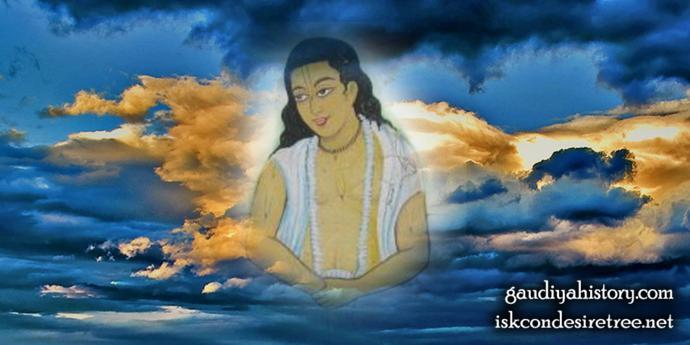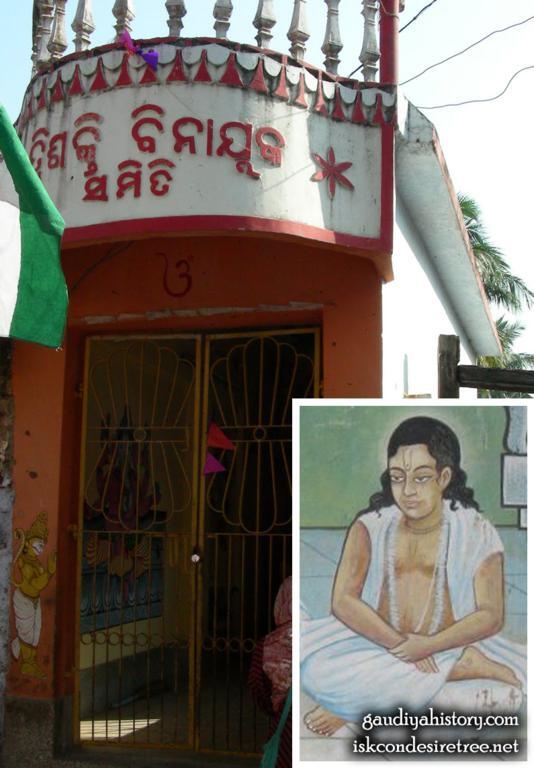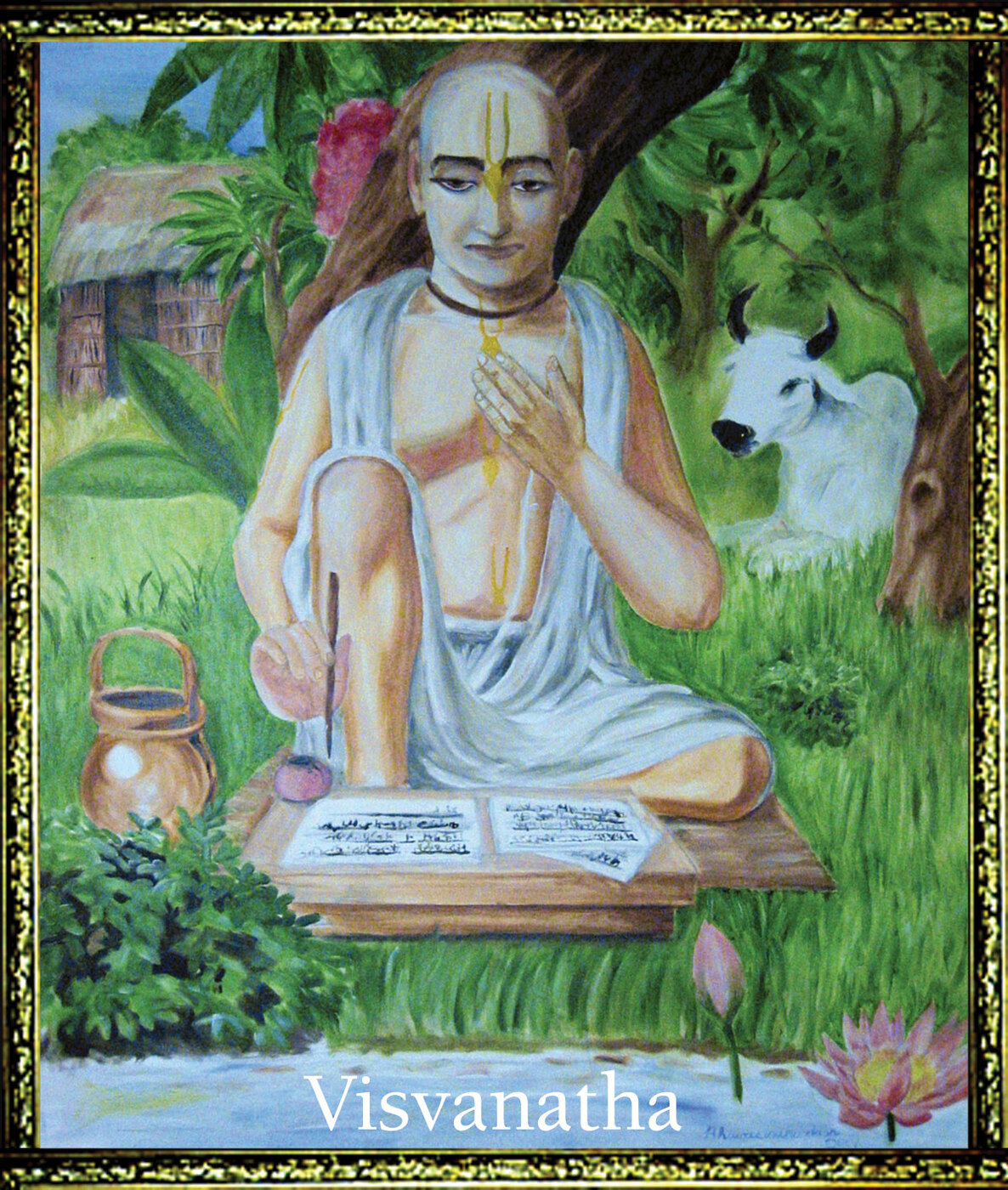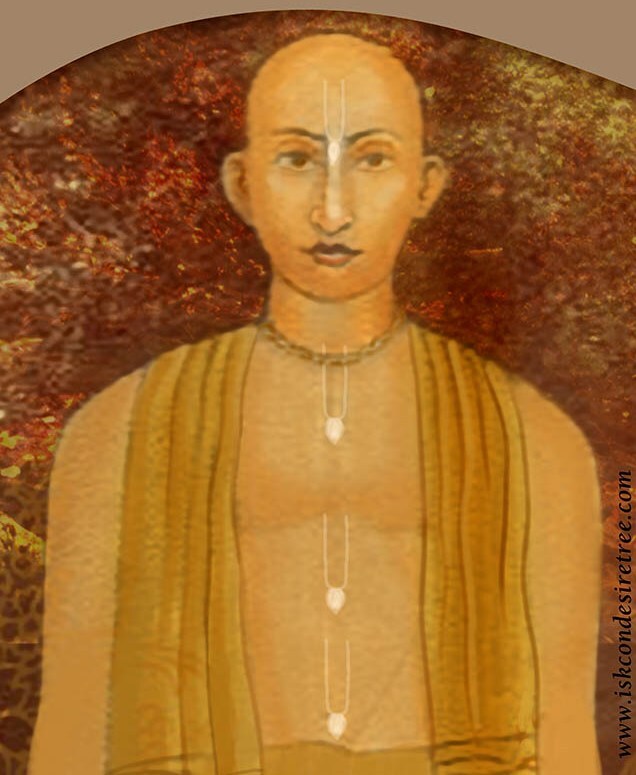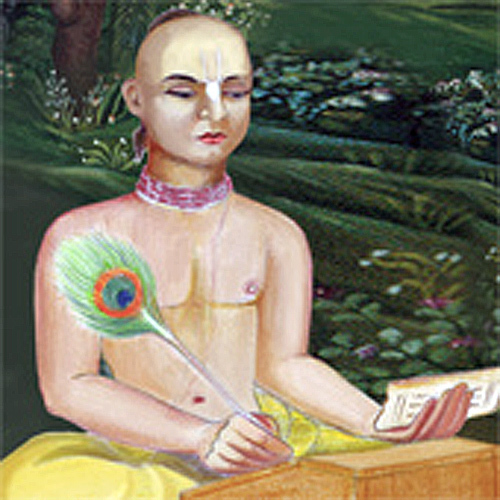
Srila Govinda Dasa Kaviraja
Bengali Padavali Poet, Author of Bhajahu Re Mana
Also known as Govinda Das Kaviraj, Govindadasa, Govinda Kaviraja
“O mind, just worship the lotus feet of the son of Nanda, which make one fearless. Having obtained this rare human birth, cross over this ocean of worldly existence by associating with saintly persons.”
Opening lines of Bhajahu Re Mana, Govinda Dasa Kaviraja's best-known pada, in the translation Srila Prabhupada gave in his purports on the song
Srila Govinda Dasa Kaviraja was a Bengali Vaishnava poet of the generation after Sri Chaitanya Mahaprabhu's own associates. He is remembered chiefly for a body of devotional padas (songs) on Radha and Krishna and on Chaitanya Mahaprabhu Himself. Of everything he wrote, one song has outlasted the rest: Bhajahu Re Mana. It is still sung in Gaudiya Vaishnava kirtana today, and Srila Prabhupada explained it at length in more than one purport. Sri Chaitanya-charitamrita names him directly as "the famous Vaishnava poet," and he is remembered by the title Kaviraja. Srila Jiva Goswami gave him this title after reading his verse.
| Detail | Description |
|---|---|
| Traditional dates | c. 1535-c. 1613 (commonly repeated in secondary sources; Sri Chaitanya-charitamrita itself gives no dates) |
| Family home | Srikhanda, near Katwa, Bardhaman district, Bengal |
| Parents | Chiranjiva (father) and Sunanda (mother) |
| Guru | Shrinivasa Acharya |
| Elder brother | Ramachandra Kaviraja, also a disciple of Shrinivasa Acharya and a close associate of Narottama Dasa Thakura |
| Major works | Sangita-Madhava and Gitamrta |
| Title "Kaviraja" | Conferred by Srila Jiva Goswami in recognition of his poetry |
A Vaidya Family of Srikhanda #
Sri Chaitanya-charitamrita is unusually specific about Govinda Dasa Kaviraja's family. In his account of Chaitanya Mahaprabhu's many followers, Krishnadasa Kaviraja Goswami pauses to record exactly who this household was. The family's home was Srikhanda, a village near Katwa that had already become one of Bengal's most important Vaishnava centers. Devotees of the same village appear elsewhere through Lochana Dasa Thakura's account of Narahari Sarkara Thakura's circle there, and through Raghunandana Thakura, a descendant of the Srikhanda elder Mukunda Dasa. Govinda Dasa's father was Chiranjiva and his mother was Sunanda. Her own father, Damodara Sena Kaviraja, was also a poet and the author of a work called Sangita-Damodara. So a gift for poetry already ran in his mother's family. Some accounts describe the family as belonging to Bengal's Vaidya community, the traditional caste of hereditary physicians. This fits a separate verse elsewhere in Chaitanya-charitamrita. That verse groups a "Govinda" together with two other men as "kavirajas, or physicians" among the followers of Nityananda Prabhu. But the text does not make clear whether that verse names our poet directly or a relative who shared his name and family trade. That gap is left open here, not guessed at. Chaitanya-charitamrita does state two things clearly. Chiranjiva's elder son was Ramachandra Kaviraja, remembered as the closest companion of Narottama Dasa Thakura. The younger son was Govinda Dasa Kaviraja, "the famous Vaishnava poet."
Before either brother turned to Krishna bhakti, Govinda Dasa Kaviraja had been a shakta, a worshiper of the goddess Durga. He was not a Vaishnava by upbringing. That changed when both brothers took diksha from Shrinivasa Acharya. Shrinivasa Acharya was one of the preachers whom Chaitanya Mahaprabhu's own associates had entrusted with carrying the Six Goswamis' teaching from Vrindavana back into Bengal. Afterward Govinda Dasa lived in a few villages, one after another: first Srikhanda, then Kumaranagara on the bank of the Ganges, and finally Teliya Budhari on the southern bank of the river Padma. Chaitanya-charitamrita records these moves without giving dates or reasons. The fuller family record, including the uncertainty around the word Kaviraja in this household, is told on Srikhanda, Family, and the Turn to Vaishnavism.
The Song That Reached Jiva Goswami #
Gaudiya Vaishnavas often retell one simple episode. Govinda Dasa Kaviraja wrote a pada beginning bhajahu re mana, sri nanda-nandana abhaya-caranaravinda re, "O mind, just worship the lotus feet of the son of Nanda, which make one fearless," and sent it to Jiva Goswami in Vrindavana. Jiva Goswami was pleased with what he read, and he wrote back urging Govinda Dasa to keep composing kirtanas of the same standard. Tradition holds that this exchange, and Jiva Goswami's clear regard for his skill, earned Govinda Dasa the title Kaviraja. The song itself pictures a mind worn out by chasing passing pleasures through sleepless nights of heat, cold and rain. Again and again, it calls that mind back to the shelter of Krishna's fearless feet. Srila Prabhupada plainly loved it. He gave a purport on it in San Francisco in 1967 and returned to it again in Los Angeles in 1972. He treated Govinda Dasa's very name, "Govinda, Krishna, and dasa means servant," as a lesson in itself. The fuller story of the song, its meaning, and Srila Prabhupada's two purports is told on The Song That Reached Jiva Goswami.
Sangita-Madhava, Gitamrta, and a Place Among the Padavali Poets #
Beyond that one famous pada, Govinda Dasa Kaviraja left behind two named works, Sangita-Madhava and Gitamrta. He also left a wider scattering of individual padas that Bengali anthologists have preserved under his name for four centuries. His verse belongs to the Vaishnava padavali tradition (devotional Bengali and Brajabuli lyric poetry built around the Radha-Krishna love story). Literary historians count him among the finest poets of this tradition. They often name him alongside Vidyapati, Chandidasa and Jnanadasa Thakura. He is sometimes called Bengal's "second Vidyapati" because his verse so closely took on the skill of that earlier poet. However, not every pada signed "Govinda Dasa" can safely be credited to him. The bhanita is the closing line in which a poet names himself. More than one Vaishnava poet of this era used his name, or a name very close to it, in the bhanita. So the devotional song collection here keeps the few songs that can be safely credited to him, Bhajahu Re Mana among them, separate from a much larger set of Chaitanya-themed padas. Those padas are credited to a different poet who also signed himself Govinda Dasa. Readers should also take care not to confuse him with two other people. One is Krishnadasa Kaviraja Goswami, author of Sri Chaitanya-charitamrita. He carried the same honorific title, but he belonged to a different generation and he wrote a very different kind of work. The other is Govinda Ghosh, one of the hereditary kirtan-singing Ghosh brothers who personally accompanied Chaitanya Mahaprabhu's sankirtana. The fuller account of his literary standing, and of this same naming difficulty, is told on A Padavali Poet Among Giants.
At a Glance
- Born into a Vaidya family at Srikhanda, Bengal; his maternal grandfather Damodara Sena Kaviraja was himself a poet.
- Initiated into Vaishnavism, along with his elder brother Ramachandra Kaviraja, by Shrinivasa Acharya.
- Wrote Bhajahu Re Mana, praised so highly by Jiva Goswami that it earned him the title Kaviraja.
- Author of Sangita-Madhava and Gitamrta, and one of the padavali tradition's most respected poets alongside Vidyapati, Chandidasa and Jnanadasa.
- Srila Prabhupada gave purports on Bhajahu Re Mana in both 1967 and 1972, a measure of the song's lasting place in Gaudiya Vaishnava kirtana.
Songs in the Vaishnava Song Book #
The Vaishnava Song Book carries 2 songs attributed to Srila Govinda Dasa Kaviraja; see the full author page here.
- Sri Chaitanya-charitamrita, Adi-lila 10.78-79, purport
- Sri Chaitanya-charitamrita, Adi-lila 11.51, purport
- Govinda Dasa Kaviraja | Gaudiya History
- Govinda Das Kaviraj - Vaishnav Songs | ISKCON Desire Tree
- Purport to Bhajahu Re Mana, San Francisco, 16 March 1967
- Purport to Bhajahu Re Mana, Los Angeles, 27 May 1972
Frequently asked
When was Srila Govinda Dasa Kaviraja born?
Srila Govinda Dasa Kaviraja appeared c. 1535 (traditional dating found in secondary sources; not stated in Sri Chaitanya-charitamrita itself) in Srikhanda, near Katwa, Bardhaman district, Bengal (his family's home village).
Who was the guru of Srila Govinda Dasa Kaviraja?
The spiritual master of Srila Govinda Dasa Kaviraja was Srila Srinivasa Acharya.
When and where did Srila Govinda Dasa Kaviraja disappear?
Srila Govinda Dasa Kaviraja disappeared c. 1613 (traditional date; not confirmed by any original source we found) at Not established by the available sources.
What are the main pastimes of Srila Govinda Dasa Kaviraja?
The pastimes covered here include: Srikhanda, Family, and the Turn to Vaishnavism, The Song That Reached Jiva Goswami, A Padavali Poet Among Giants.