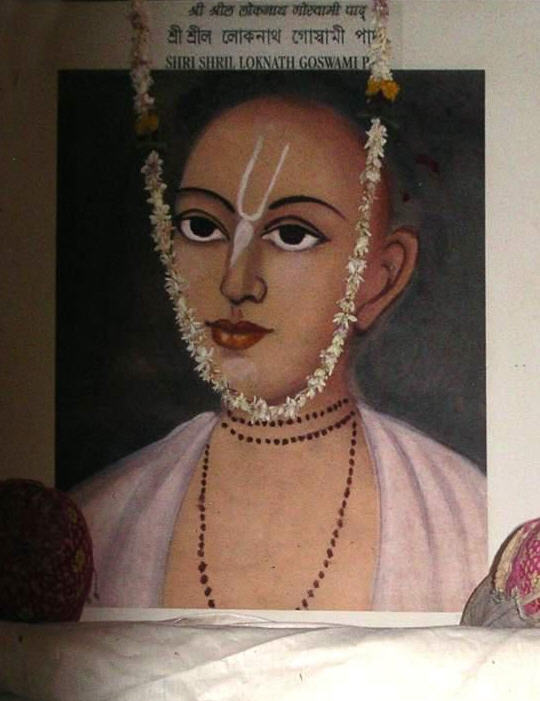
Srila Raghupati Upadhyaya
Whose Verses Melted Mahaprabhu's Composure
Also known as Raghupati Upadhyay, Raghupati Upādhyāya, Raghupati Upadhyaya of Tiruhita
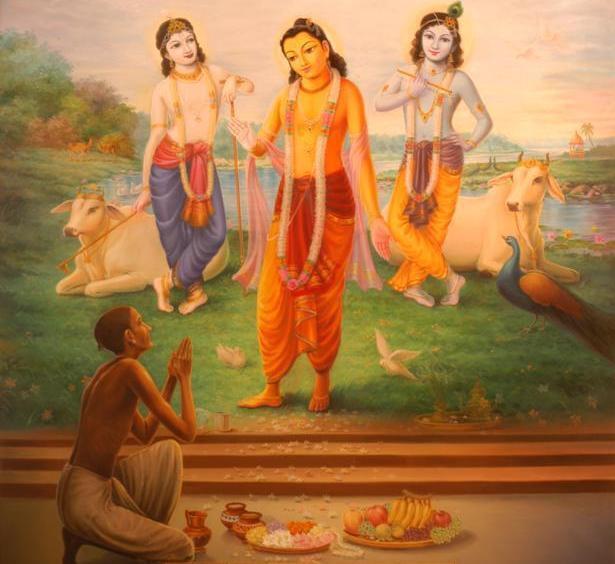
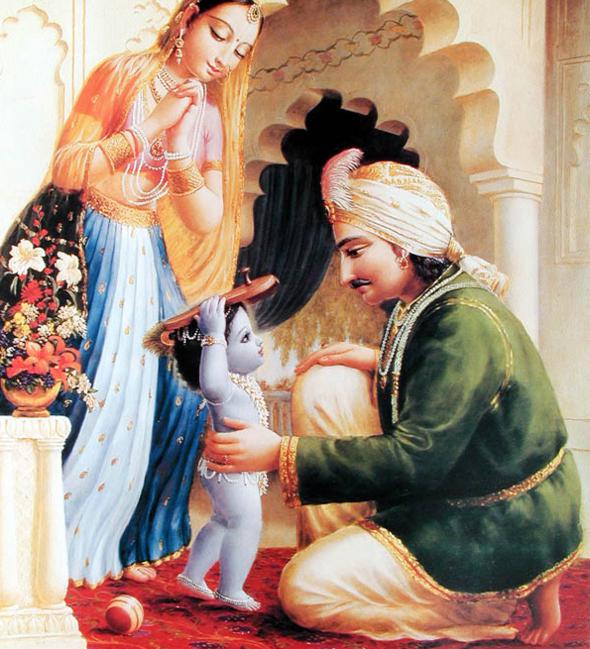
“Those who are afraid of material existence worship the Vedic literature. Some worship smriti, the corollaries to the Vedic literature, and others worship the Mahabharata. As far as I am concerned, I worship Krishna's father, Maharaja Nanda, in whose courtyard the Supreme Personality of Godhead, the Absolute Truth, is playing.”
Recited to Sri Chaitanya Mahaprabhu at Adaila, near Prayag, c. 1512-1513 CE; recorded in Sri Chaitanya-charitamrita, Madhya-lila 19.96, and later gathered into Sri Rupa Gosvami's Padyavali as verse 126.
Raghupati Upadhyaya was a Vaishnava scholar and poet from Tirhut, in the Mithila region of northern Bihar. Today he is remembered for one evening that is vividly recorded. He visited the home of Vallabha Bhattacharya near Prayag, and there his own Sanskrit verses on Krishna moved Sri Chaitanya Mahaprabhu to uncontrollable ecstatic love. Krishnadasa Kaviraja Goswami gives the meeting nearly twenty full verses in Sri Chaitanya-charitamrita. Sri Rupa Gosvami later preserved three of Raghupati Upadhyaya's own compositions in his anthology of devotional Sanskrit poetry, the Padyavali. Apart from that one episode, and a single sentence naming his guru, almost nothing else about his life survives in any available source.
| Detail | Description |
|---|---|
| Home | Tirhut (Tirabhukti), Mithila region, northern Bihar |
| Background | Brahmana scholar, poet and householder Vaishnava |
| Guru | Disciple of Madhavendra Puri, per the Gaudiya-bhasya commentary on Sri Chaitanya-bhagavata |
| Known chiefly from | Sri Chaitanya-charitamrita, Madhya-lila 19.92-110; Sri Chaitanya-bhagavata, Adi-khanda 2.31 |
| Literary legacy | Three Sanskrit verses preserved in Sri Rupa Gosvami's Padyavali (verses 82, 99 and 126) |
| Birth / disappearance | Not recorded in any source |
A Disciple of Madhavendra Puri From Tirhut #
Tirhut, called Tirabhukti in Sanskrit, is today spread across several districts of northern Bihar, among them Darbhanga, Muzaffarpur, Champaran and Saran. Sri Chaitanya-charitamrita itself says very little about Raghupati Upadhyaya's origin. It says only that he arrived from "the Tiruhita district," and calls him a pandita, a "great vaishnava," and a mahashaya, "a respectable gentleman." A fuller sentence survives in Sri Chaitanya-bhagavata, in the Gaudiya-bhasya commentary written by Bhaktisiddhanta Sarasvati Thakura. Vrindavana Dasa Thakura has a verse naming the home districts of Mahaprabhu's devotees. Commenting on it, the Gaudiya-bhasya names Tirhut as the birthplace of two of them, Raghupati Upadhyaya and Paramananda Puri. It states plainly: "They were both disciples of Srila Madhavendra Puripada and very intimate associates of Sriman Mahaprabhu." That single line is the only source that names a guru for Raghupati Upadhyaya. It places him, through initiation, in the same spiritual family as Ishvara Puri, Mahaprabhu's own diksha-guru. But no source describes Raghupati Upadhyaya taking sannyasa, as most of Madhavendra Puri's better-known disciples did. In every account he remains a householder scholar, not a renunciate.
An Evening at Adaila #
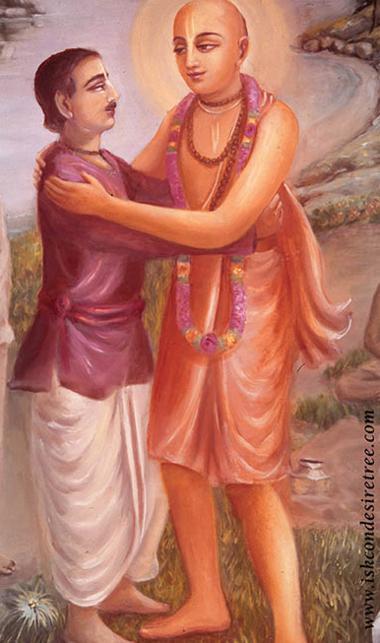
The one meeting between Raghupati Upadhyaya and Mahaprabhu recorded in any detail took place at Adaila, a village near Prayag (modern Allahabad), during Mahaprabhu's first journey toward Vrindavana. It was probably in 1512 or 1513 CE. Mahaprabhu was staying as Vallabha Bhattacharya's guest. During this same stay He gave Rupa Gosvami his first private instruction in devotional service. Then Raghupati Upadhyaya arrived, offered his respects, and was asked to speak about Krishna. First came two spontaneous verses that plunged Mahaprabhu into prema. Then the scholar privately concluded that the man before him was Krishna Himself. Last came a rapid set of four questions on the Lord's supreme form, abode, age and mood. All of this is told in full on two pastime pages: Arrival at Adaila and What Raghupati Taught the Lord.
Verses Kept Alive in the Padyavali #
Raghupati Upadhyaya left no independent literary work that survives under his own name. What remains of his writing are individual Sanskrit verses recited that evening at Adaila. Sri Rupa Gosvami later gathered them into the Padyavali, alongside verses by dozens of other Vaishnava poets. Krishnadasa Kaviraja Goswami quotes three of them directly inside Chaitanya-charitamrita. This is the only reason they survive at all outside the Padyavali manuscripts. The best known of the three puts aside even the authority of scripture and turns instead to a single scene from Krishna's childhood: "Those who are afraid of material existence worship the Vedic literature... As far as I am concerned, I worship Krishna's father, Maharaja Nanda, in whose courtyard the Supreme Personality of Godhead, the Absolute Truth, is playing." A second verse describes Krishna "hunting the gopis in the bushes by the banks of the river Yamuna," and a third sums up an entire teaching on worship, covering form, place, age and mood, in a single four-line Sanskrit verse. That verse is examined on the pastime pages.
What the Sources Do Not Say #
No source gives Raghupati Upadhyaya's birth year, the year or place of his disappearance, or his age at the time of the Adaila meeting. Sri Gaura-ganoddesha-dipika is Kavi Karnapura's traditional list that identifies many of Mahaprabhu's associates with a role in Krishna's own Vrindavana pastimes. It does not appear to have an entry for him. By contrast, Ramananda Raya and Murari Gupta, for instance, both receive such identifications elsewhere in the same text. No available source records whether Raghupati Upadhyaya ever met Mahaprabhu again after that evening, what he did with the rest of his life, or when he passed from this world. What survives is one evening, three verses, and a single sentence naming his guru.
Scriptural evidence
कारो जन्म नवद्वीपे, कारो चाटिग्रामे
केह राढे, ओढ्र-देशे, श्रीहट्टे, पश्चिमे ॥ ३१ ॥
kāro janma navadvīpe, kāro cāṭigrāme
keha rāḍhe, oḍhra-deśe, śrīhaṭṭe, paścime
Word for word
kāro janma: someone's birth; navadvīpe: in Navadvīpa; kāro: someone's; cāṭigrāme: in Chattagrama; keha: someone; rāḍhe: in Radha-desha; oḍhra-deśe: in Orissa; śrīhaṭṭe: in Shrihatta; paścime: in the west.
Some of the Lord's devotees were born in Navadvipa, some in Chattagrama, some in Radha-desha, some in Orissa, some in Shrihatta, and some in the west — meaning Tirhut.
From the purport: Gaudiya-bhasya excerpt (Bhaktisiddhanta Sarasvati Thakura): "Shripada Paramananda Puri and Sri Raghupati Upadhyaya appeared at this place [Tirhut]. They were both disciples of Srila Madhavendra Puripada and very intimate associates of Sriman Mahaprabhu."
The only source found that names Raghupati Upadhyaya's guru (Madhavendra Puri) and identifies his home district by its Sanskrit name, Tirabhukti (Tirhut).
- Sri Chaitanya-charitamrita, Madhya-lila 19.92-110 (verse, translation and purport)
- Sri Chaitanya-bhagavata, Adi-khanda 2.31, with Gaudiya-bhasya commentary of Bhaktisiddhanta Sarasvati Thakura (trans. Bhumipati Dasa, 2008)
- Raghupati Upadhyaya - biography, Gaudiya History (ISKCON Desire Tree)
- Sri Raghupati Upadhyaya - Shyam Das Baba (associates of Mahaprabhu)
Frequently asked
When was Srila Raghupati Upadhyaya born?
Srila Raghupati Upadhyaya appeared Not recorded in the available sources in Tirhut (Tirabhukti), Mithila region, northern Bihar.
Who was the guru of Srila Raghupati Upadhyaya?
The spiritual master of Srila Raghupati Upadhyaya was Srila Madhavendra Puri.
When and where did Srila Raghupati Upadhyaya disappear?
Srila Raghupati Upadhyaya disappeared Not recorded in the available sources at Not recorded in the available sources.
What are the main pastimes of Srila Raghupati Upadhyaya?
The pastimes covered here include: Arrival at Adaila, What Raghupati Taught the Lord.