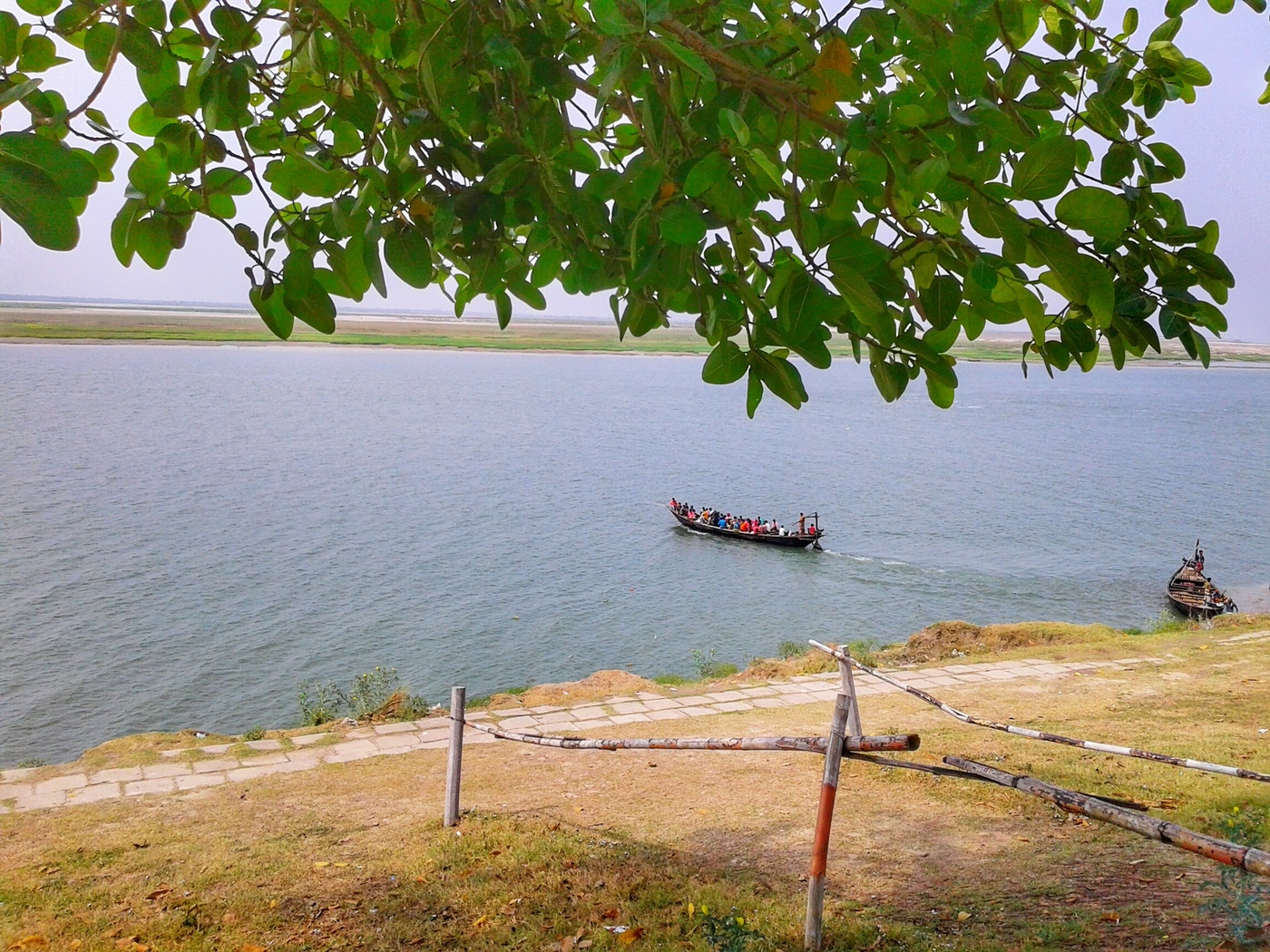
Santosha Datta
Raja of Kheturi Who Hosted the Kheturi Mahotsava
Also known as Santosh Datta, Santosa Datta, Raja Santosh Dutta, King Santosh Datta
Santosha Datta was a Bengal zamindar, the raja of the pargana of Kheturi on the Padma river. He is remembered today for one thing above all. He was the wealthy relative and disciple who built the temple, paid all the costs and welcomed the guests at the Kheturi Mahotsava. This festival gathered the scattered followers of Sri Chaitanya Mahaprabhu together in one place for the first time since the Lord's own disappearance. Almost everything known about him comes from his family's connection to Narottama Dasa Thakura. Santosha inherited Narottama's childhood home, and he helped make Narottama's life's mission possible.
| Detail | Description |
|---|---|
| Other names | Santosh Datta, Santosa Datta, Raja Santosh Dutta |
| Family | Son of Purushottama Datta; cousin of Narottama Dasa Thakura (some accounts instead call him Narottama's brother) |
| Role | Raja of Kheturi; disciple and patron of Narottama Dasa Thakura |
| Best-known deed | Built the temple and funded the Kheturi Mahotsava, traditionally dated to 1574 |
| Birth / disappearance | Not recorded in any surviving source |
Heir to a Bengal Zamindari #
The ruling family of Kheturi was the family of Raja Krishnananda Datta, the zamindar of the Gopalpur pargana in what is now Rajshahi district, Bangladesh. Krishnananda was the father of Narottama Dasa Thakura. Krishnananda had a younger brother, Purushottama Datta, and Purushottama's son was Santosha. As a young man, Narottama slipped away from Kheturi to seek Chaitanya Mahaprabhu's mercy in Vrindavana. This departure is told in full on Narottama's own page. By the time he came back years later, both Krishnananda and Purushottama had already died. The family's estate passed to Santosha, and he became the new raja of Kheturi. He was simply "the foremost of saintly persons in the village," according to Gaudiya History's brief account of him. The same account adds that he was "an erudite scholar as well as expert in the royal administration," and this fits a man raised to govern, not to renounce the world. The fuller family story is told on Raja of Kheturi, Disciple of Narottama.
Sources agree on this much, but English retellings do not agree on how to describe the way the two men were related. Several careful accounts, including Narottama's own biography, call Santosha his first cousin. This is because Santosha's father Purushottama was Krishnananda's brother, not Krishnananda himself. Other retellings simply call him "Narottama's brother," and this may reflect Bengali family usage, not a claim of a different family line. In Bengali families a close cousin on the father's side is often called a brother. No source suggests he was Narottama's brother by blood. The two were first cousins.
Disciple of Narottama Dasa Thakura #
Narottama returned to Bengal after years of study in Vrindavana under Jiva Goswami and after initiation from Lokanatha Gosvami. The people of Kheturi welcomed him home with celebration. By then Santosha was the head of his own household, and he went further. He took diksha from his own cousin and became Narottama's disciple. He set himself to help Narottama's preaching with whatever a man of land, wealth and training in administration could offer. Soon this devotion took a practical form. Santosha made a vow to build a temple worthy of the Deities Narottama wished to install.
Funding and Hosting the Kheturi Mahotsava #
Once Narottama gave his approval, Santosha had a large temple complex built at Kheturi within a matter of months: a storehouse for food, a kirtana hall, a residence hall and ashram for visiting devotees, a bathing pond and a flower garden. Messengers went out for miles to invite kings, landowners, poets, pandits and Vaishnavas. On the full-moon day of Phalguna, Mahaprabhu's own appearance day, six Deities were installed at what became known as the Gaurangabari temple: Sri Gauranga, Vallabhi Kanta, Vraja Mohana, Krishna, Radha Kanta and Radha Ramana. Shrinivasa Acharya performed the installation, and Jahnava Devi, Nityananda Prabhu's consort, presided as chief guest. Santosha arranged boats to carry devotees across the Padma, bullock carts and palanquins for the roads, and food and lodging for everyone who came. The gathering is traditionally dated to 1574. It is remembered as the largest single assembly of Gaudiya Vaishnavas since Mahaprabhu's own lifetime. Among those who came were Shyamananda Pandit, Ramachandra Kaviraja and Vrindavana Dasa Thakura (author of Sri Chaitanya-bhagavata). Hundreds of others are named in three separate chronicles: Prema-vilasa, Narottama-vilasa and Bhaktiratnakara. The full story of the festival, and of what it did for a divided Gaudiya community, is told on Host of the Kheturi Mahotsava.
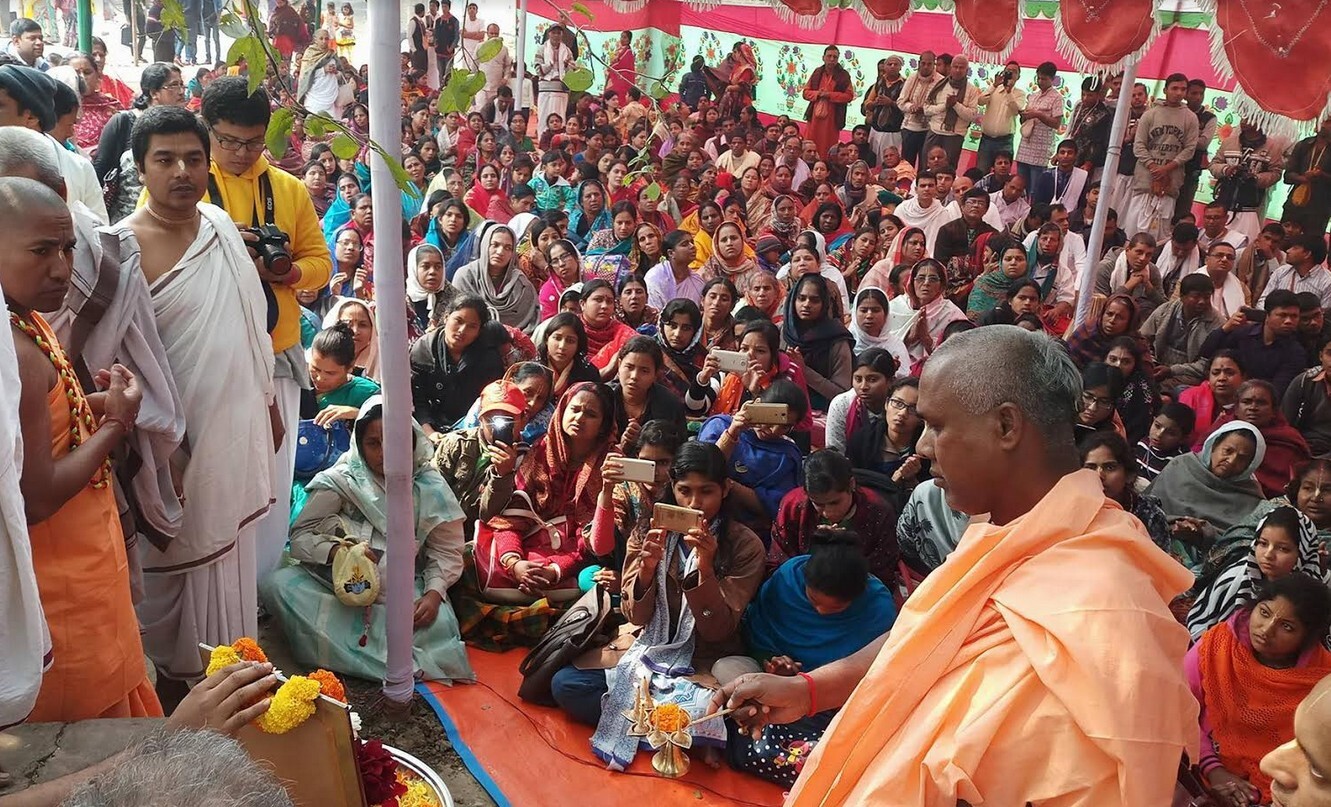
Kavi Karnapura Goswami was also present at Kheturi. He was the author of Sri Gaura-ganoddesha-dipika, the text that gives many of Mahaprabhu's associates their identities in Krishna's own pastimes, and he wrote that book afterward. Gaura-ganoddesha-dipika lists the associates of Mahaprabhu's own lifetime, not the generation that followed him. So it records no separate identity for Santosha Datta himself. He belongs to Narottama's generation, not to Mahaprabhu's own circle, and no source claims otherwise.
What Remains of Kheturi Today #
The temple Santosha built at Kheturi is still standing. But the original Deities Narottama installed there were lost during the wars that swept through Bangladesh in the 1970s. A few of his worshipable shalagram-shilas are reportedly still preserved on the site. In recent years ISKCON Bangladesh has revived an annual Narottama Purnima festival at Kheturi Dham. It draws devotees back to the same ground Santosha once prepared for a very different, much larger crowd. No portrait or painting of Santosha Datta himself is known to survive. Unlike Narottama, he left no songs, and there is no separate devotional biography of him. He is remembered today almost entirely through the place he built and the festival he made possible.
- Santosha Datta - Video, Gaudiya History
- Narottama Dasa Thakura - Biography, Gaudiya History
- Jahnava Mata, Stephen Knapp
- Srila Narottama Dasa Thakura, Bhaktivedanta Vidyapitha (BVML)
- Spiritual Successors of the Six Goswamis, Sri Chaitanya Saraswat Math (comp. Muralidhar Das)
- ISKCON Bangladesh arranged 'Narottama Purnima' festival for the first time in Kheturi Dham, Dandavats.com
Frequently asked
When was Santosha Datta born?
Santosha Datta appeared Not recorded in Probably Kheturi, Gopalpur pargana, Rajshahi district (present-day Bangladesh).
Who was the guru of Santosha Datta?
The spiritual master of Santosha Datta was Srila Narottama Dasa Thakura.
When and where did Santosha Datta disappear?
Santosha Datta disappeared Not recorded at Not recorded.
What are the main pastimes of Santosha Datta?
The pastimes covered here include: Raja of Kheturi, Disciple of Narottama, Host of the Kheturi Mahotsava.