Satyaraja Khan
The Kulina-grama householder entrusted with Jagannatha's Ratha-yatra ropes
The complete life, on one page: The main biography and every pastime page, in order, in one place
Introduction
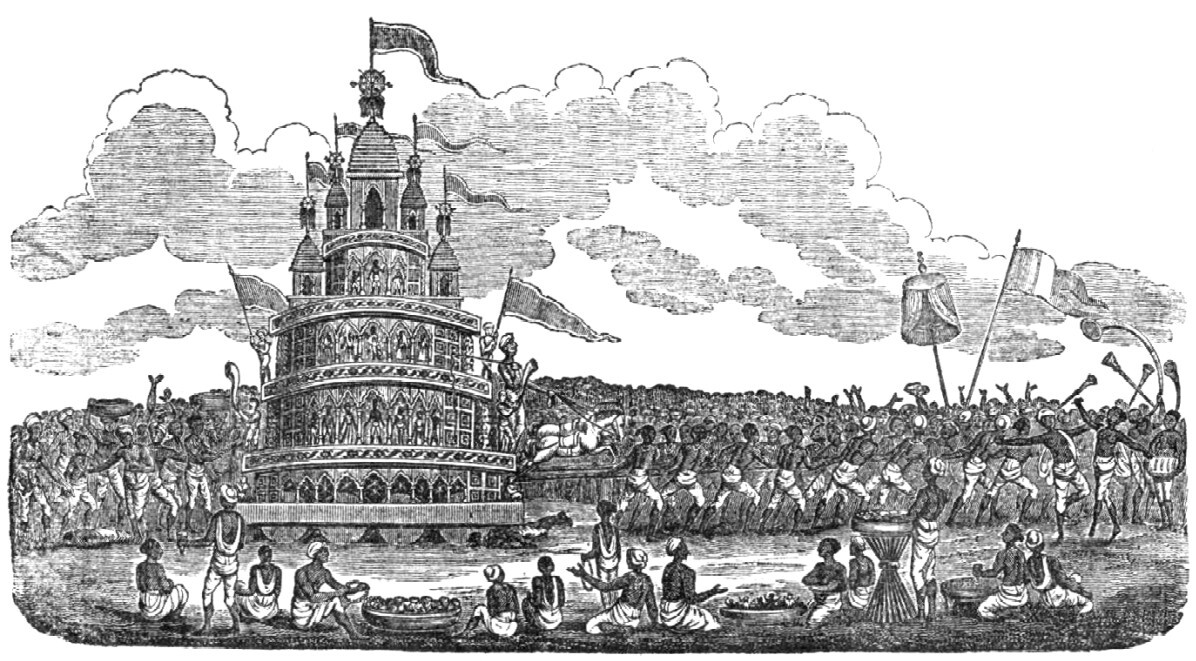
Satyaraja Khan was a householder devotee of Sri Chaitanya Mahaprabhu from the Bengali village of Kulina-grama. Sri Chaitanya-charitamrita remembers him for two things. The first is a family service to the Deity of Jagannatha that Mahaprabhu Himself assigned to his household. The second is a personal question that he asked, as a plain, practical householder, about how to advance in devotional life. His name has an unusual detail for a Vaishnava saint. "Khan" was not a spiritual title but an official one, given to his family by Bengal's Muslim rulers. It reminds us how ordinary and worldly the starting point of bhakti can be.
| Detail | Description |
|---|---|
| Birth name | Lakshminatha Vasu |
| Title | Satyaraja Khan, a court title, not a religious one |
| Native place | Kulina-grama, Bengal |
| Father | Shri Gunaraja Khan (born Maladhara Vasu), author of Sri Krishna-vijaya |
| Son | Ramananda Vasu (not to be confused with Srila Ramananda Raya) |
| Identity | Sukantha-devi, one of the two Gandharva dancers of Vraja (Gaura-ganoddesha-dipika 173) |
| Best-known service | Hereditary supplier of the silk ropes for Lord Jagannatha's Ratha-yatra chariot |
| Community | Kayastha, a family that traced its move to Bengal from Kanyakubja (Kanauj) |
Scriptural evidence for the introduction (2)
tanra upasakha—yata kulina-grami jana
satyaraja-adi—tanra krpara bhajana
Word for word
tanra upasakha: his subbranch; yata: all; kulina-grami jana: the inhabitants of Kulina-grama; satyaraja: Satyaraja; adi: heading the list; tanra: his; krpara: of mercy; bhajana: recipient.
One subbranch of Haridasa Thakura consisted of the residents of Kulina-grama. The most important among them was Satyaraja Khan, or Satyaraja Vasu, who was a recipient of all the mercy of Haridasa Thakura.
From the purport: Purport excerpt: "Satyaraja Khan was the son of Gunaraja Khan and father of Ramananda Vasu... Satyaraja Khan was allotted the service of supplying silk ropes for the Jagannatha Deity during the Ratha-yatra festival."
The single verse that establishes Satyaraja Khan's family lineage (son of Gunaraja Khan, father of Ramananda Vasu) and his connection to Haridasa Thakura, cited here as the foundation for the biography's genealogy section.
कलकण्ठीसुकण्ठ्यौ ये व्रजे गान्धर्वनाटिके ।
रामानन्दवसुसत्यराजाश्चापि यथायथम् ॥१७३॥
kalakaṇṭhī-sukaṇṭhyau ye vraje gāndharva-nāṭike |
rāmānanda-vasu-satyarājāś cāpi yathāyatham ||173||
Kalakantha-devi and Sukantha-devi, the two Gandharva-dancers who appeared in Vrajabhumi, also appeared as Ramananda Vasu and Satyaraja.
Kavi Karnapura identifies the two Gandharva dancers of Vraja, Kalakanthi and Sukanthi, with Ramananda Vasu and his father Satyaraja Khan; the word yathayatham (in the same order) pairs Sukanthi with Satyaraja. Sanskrit: diacritic edition of the Gaura-ganoddesha-dipika; English translation as published at bvmlu.org.
Chapter 1
The Sankirtana Dancer Of Kulina-Grama
Chosen, alongside Ramananda Vasu, to lead his village's own kirtana party before Sri Chaitanya Mahaprabhu.
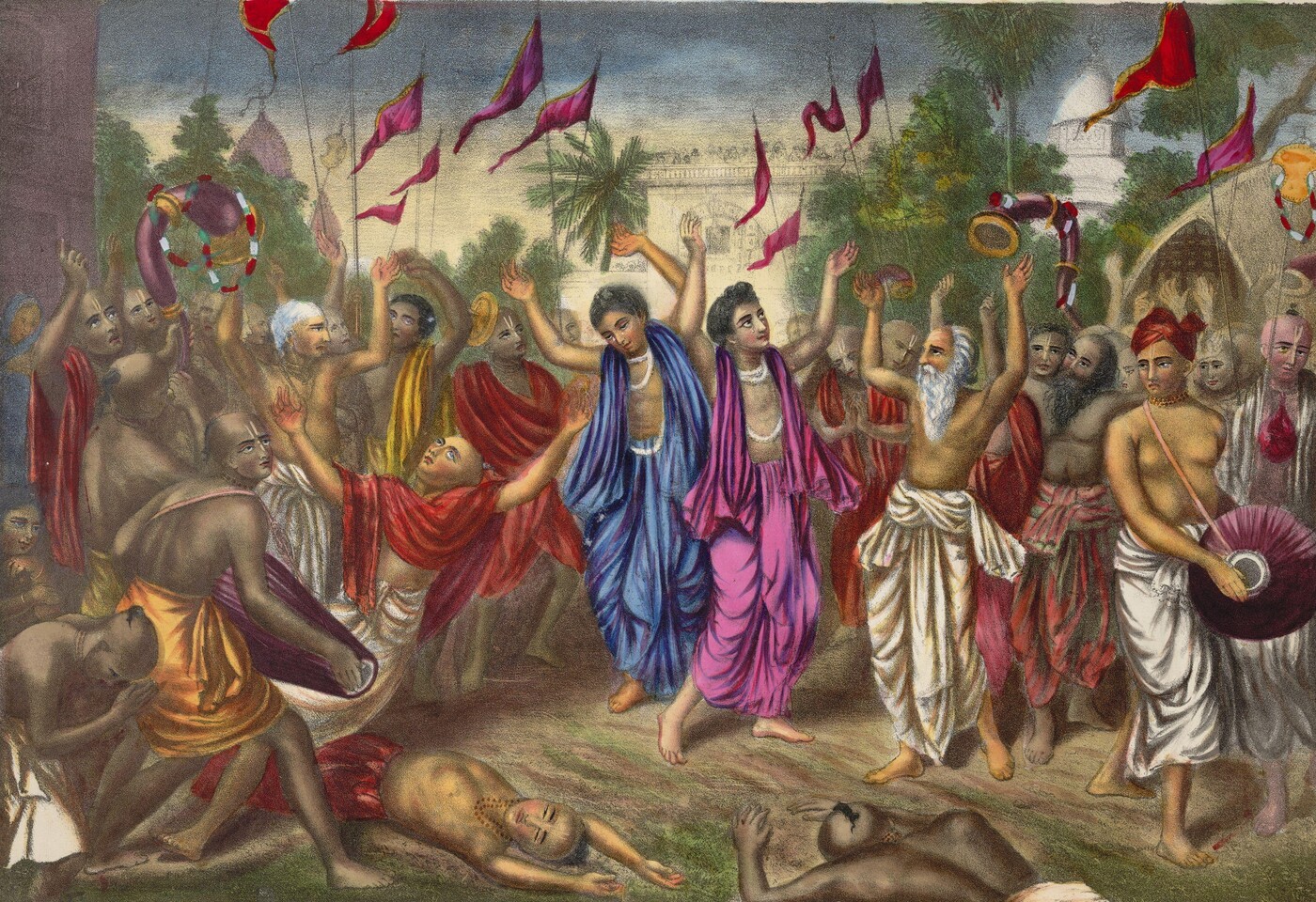
Kulina-grama sent more than devotees to Jagannatha Puri. It sent a whole sankirtana party, and Satyaraja Khan was one of the two men chosen to dance at its head. Sri Chaitanya-charitamrita records it plainly: "There was a sankirtana party from the village known as Kulina-grama, and Ramananda and Satyaraja were appointed the dancers in this group." It is a small detail, but an important one. Being named a dancer in a sankirtana party meant standing at the front of a group of singing devotees and setting the movements the rest would follow. And this was in the middle of one of the largest public festivals in India.
Seven Parties, One Devotee Among Them #
Years later, at another Ratha-yatra, Mahaprabhu organized His Puri devotees into seven separate sankirtana groups so that the chanting could fill the whole road to the Gundicha temple at once. Two of the Lord's own most intimate associates, Sri Advaita Acharya and Sri Nityananda Prabhu, led the first two parties as their principal dancers. Satyaraja Khan danced in one of the remaining five groups. He is named in the same verse along with Vakresvara Pandita, Acyutananda, Pandita Srivasa and Narahari dasa. This places him, even if only briefly, among devotees whose names are central to whole chapters of Gaudiya Vaishnava history. Mahaprabhu walked from party to party, watching the kirtana. Chaitanya-charitamrita says that each group of devotees felt certain the Lord was dancing in their own group alone. This detail tells us as much about the ecstasy of the occasion as about the seven separate dancers who were leading it.
Recognized Among The Pilgrims At Puri #
Satyaraja Khan was noticed by name at Puri on at least one more occasion. This was during the well-known Bera-kirtana pastime. King Prataparudra asked to be shown Mahaprabhu's devotees from a hidden place where he could watch. Gopinatha Acharya pointed each group out to him in turn: Raghava Pandita, Vasudeva Datta, the residents of Khanda headed by Mukunda dasa and Narahari, and many others by name. When he came to the Bengali pilgrims from Satyaraja's own village, Gopinatha Acharya said: "And here are all the residents of Kulina-grama, such as Satyaraja Khan and Ramananda. Indeed, all of them are present here." The moment is brief, but it confirms something the sankirtana-party verse only suggests. Hundreds of devotees gathered at Puri each year, yet Satyaraja Khan was well known enough to be named individually, not lost in an unnamed crowd of pilgrims. In return for that recognition, Mahaprabhu asked his family for a specific, hereditary service to the Deity of Jagannatha. That story is told at keeper of the silken ropes.
A Village Of High Birth, A Branch Of Its Own #
The name Kulina-grama itself means, roughly, "village of high-born families," and Krishnadasa Kaviraja Goswami's own arrangement of Mahaprabhu's associates treats it in just that way. He treats it as a community, not just a scattering of individuals. One verse of Adi-lila names Satyaraja together with Ramananda, Yadunatha, Purushottama, Shankara and Vidyananda as heading a branch of their own on the tree of Mahaprabhu's devotees. A following verse adds that the whole village, under Vaninatha Vasu, served Mahaprabhu as "their only life and wealth." Satyaraja was also a sankirtana dancer. Taken together with this, these details describe a specific, recognizable community of devotees, not an unnamed group of Bengali pilgrims. Six or more householders from one village are named. Krishnadasa Kaviraja places each one individually in his careful record of exactly who surrounded Sri Chaitanya Mahaprabhu.
A Gopi Of Vraja, Remembered By Name #
Gaudiya Vaishnava tradition goes a step further than Chaitanya-charitamrita itself in identifying who Satyaraja Khan really was. Shivananda Sena's own son, Kavi-karnapura, lists the eternal identities of Mahaprabhu's associates in his Gaura-ganoddesha-dipika. There he names Satyaraja Khan as Sukantha-devi, one of the two Gandharva dancers of Vraja in Krishna's original pastimes. He identifies Ramananda Vasu in turn as her companion Kalakantha-devi. We should be clear about what kind of source this is. Gaura-ganoddesha-dipika is an identification recorded by Kavi Karnapura in 1576, not a scene told in Chaitanya-charitamrita itself. But it is a real and specific claim, made by name. Its author's own father organized the very pilgrimages that brought Kulina-grama's devotees to Puri each year. So it is one more link between a fairly little-known householder and the wider, well-recorded circle of Sri Chaitanya Mahaprabhu's associates.
Scriptural evidence for this chapter (5)
Quoted in the text above:
- Madhya 11.91 Sri Chaitanya-charitamrita
- Madhya 13.44 Sri Chaitanya-charitamrita
Further verses:
Satyaraja, Ramananda, Yadunatha, Purushottama, Shankara and Vidyananda all belonged to the twentieth branch. They were inhabitants of the village known as Kulina-grama.
Shows Satyaraja Khan named alongside five other specific Kulina-grama householders in Krishnadasa Kaviraja Goswami's structured catalogue of Mahaprabhu's associates.
All the inhabitants of Kulina-grama village, headed by Vaninatha Vasu, were servants of Lord Chaitanya, who was their only life and wealth.
Confirms Kulina-grama functioned as a recognized devotee community with its own head (Vaninatha Vasu), not simply a collection of unrelated individuals.
The dancers in the other groups were Vakresvara Pandita, Acyutananda, Pandita Srivasa, Satyaraja Khan and Narahari dasa.
In a later, larger Ratha-yatra when Mahaprabhu formed seven separate sankirtana parties, Satyaraja Khan is again named as one of the designated dancers, alongside several better-known associates.
Chapter 2
Keeper Of The Silken Ropes
A hereditary service Sri Chaitanya Mahaprabhu Himself assigned to Satyaraja Khan's family for the Jagannatha Ratha-yatra.
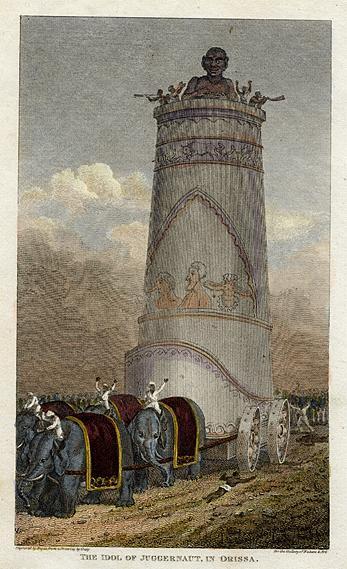
Not every devotee at Puri received a personal assignment from Sri Chaitanya Mahaprabhu. Satyaraja Khan's family did. Chaitanya-charitamrita records that Ramananda Vasu and Satyaraja Khan were present from Kulina-grama, and that "Sri Caitanya Mahaprabhu, with great respect, gave them the following orders": to become the worshipers of the ropes used to pull Lord Jagannatha's chariot, and to bring silken rope from their own village every single year for the festival. It was not a ceremonial gesture. Making silk rope was apparently a real trade of Kulina-grama's residents. Mahaprabhu turned that ordinary village craft into an annual act of Deity service. In this way He tied His two Bengali householder-devotees permanently to Nandighosa and to the largest festival held in Puri. Nandighosa is the great chariot that carries Lord Jagannatha through the streets of Puri every year at Ratha-yatra.
Sold To The Descendants Of Gunaraja Khan #
The depth of Mahaprabhu's feeling for this family shows in the same conversation. He first spoke to the Kulina-grama devotees about Gunaraja Khan's Sri Krishna-vijaya. This is a Bengali retelling of Krishna's pastimes from the Tenth and Eleventh Cantos of Srimad-Bhagavatam, written so plainly that even ordinary readers with little education could follow it. Mahaprabhu told them that it contained a line revealing its author's own ecstatic love for Krishna. Then He recited a verse about His own attachment to Krishna, the son of Nanda Maharaja. Speaking of Himself, He added one of the most quoted single lines connected with this family: "By this statement I am sold into the hands of the descendants of Gunaraja Khan." It is an extraordinary thing for the Lord to say about anyone, and even more so about a family remembered mainly for its silk-rope service. And Mahaprabhu did not stop there. He told them directly, "even a dog living in your village is very dear to Me. What, then, to speak of others?" He praised the father's book and then made this declaration about the son's household, one after the other in the same conversation. The two belong together as parts of one and the same affection. Kulina-grama's devotion was expressed quietly, through poetry, rope-making and yearly journeys. But it had reached Mahaprabhu completely.
An Ordinary Service, Repeated Every Year #
Mahaprabhu's words are dramatic. But this episode is worth telling on its own because the actual service was so ordinary. Rope for a chariot is not a scripture, a poem or a philosophical argument. It is simply rope. It was made by hand in a Bengali village and carried several hundred miles to Orissa, year after year, so that a wooden Deity's cart could be pulled through the streets of Puri. Sri Chaitanya Mahaprabhu's own attention to this detail is a small but clear example of an idea that this whole family's history returns to again and again. In Gaudiya Vaishnavism, a very plain, physical act of service, taken up without complaint and repeated faithfully, can be exactly as important as any achievement that looks more spiritual. Satyaraja Khan seems to have taken this lesson to heart, not only received it as an instruction. He then asked Mahaprabhu, in his own words, what a householder like himself should actually do with his life. That story is told at how to recognize a Vaishnava.
Scriptural evidence for this chapter (5)
kulina-grami ramananda, satyaraja khanna
tanre ajna dila prabhu kariya sammana
Word for word
kulina-grami: the inhabitants of the village known as Kulina-grama; ramananda: Ramananda; satyaraja khanna: Satyaraja Khan; tanre: to them; ajna dila: gave an order; prabhu: Sri Chaitanya Mahaprabhu; kariya sammana: showing great respect.
Ramananda Vasu and Satyaraja Khan were present from Kulina-grama, and Sri Chaitanya Mahaprabhu, with great respect, gave them the following orders.
Introduces the specific hereditary order Mahaprabhu gave this family, detailed in the following verse.
Sri Chaitanya Mahaprabhu ordered Ramananda and Satyaraja Khan to become the worshipers of these ropes and every year bring silken ropes from their village for the Ratha-yatra festival.
The exact hereditary service assigned to Satyaraja Khan's family: supplying and ritually worshiping the silk ropes used to pull Lord Jagannatha's chariot.
Sri Chaitanya Mahaprabhu then said, "Gunaraja Khan of Kulina-grama compiled a book named Sri Krishna-vijaya, in which there is a sentence revealing the author's ecstatic love of Krishna."
Mahaprabhu's own praise of Satyaraja Khan's father's Bengali devotional work, spoken in the same conversation as His declaration of being "sold" to this family.
"nandanandana krsna—mora prana-natha"
ei vakye vikainu tanra vamsera hata
Word for word
nanda-nandana krsna: Krishna, the son of Nanda Maharaja; mora prana-natha: my life and soul; ei vakye: because of this statement; vikainu: I became sold; tanra: of him; vamsera hata: in the hands of the descendants.
Sri Chaitanya Mahaprabhu said, "'Krishna, the son of Nanda Maharaja, is my life and soul.' By this statement I am sold into the hands of the descendants of Gunaraja Khan.
From the purport: Purport excerpt: "The full verse referred to here is: eka-bhave vanda hari yoda kari' hata / nandanandana krsna—mora prana-natha."
One of the most striking single lines connecting Mahaprabhu to this family: He calls Himself "sold" to Satyaraja Khan's household because of their devotion.
"To say nothing of you, even a dog living in your village is very dear to Me. What, then, to speak of others?"
Mahaprabhu's further declaration of affection for Kulina-grama, spoken directly after calling Himself "sold" to the descendants of Gunaraja Khan.
Chapter 3
How To Recognize A Vaishnava
A householder's plain question to Sri Chaitanya Mahaprabhu, and an answer repeated for Kulina-grama year after year.
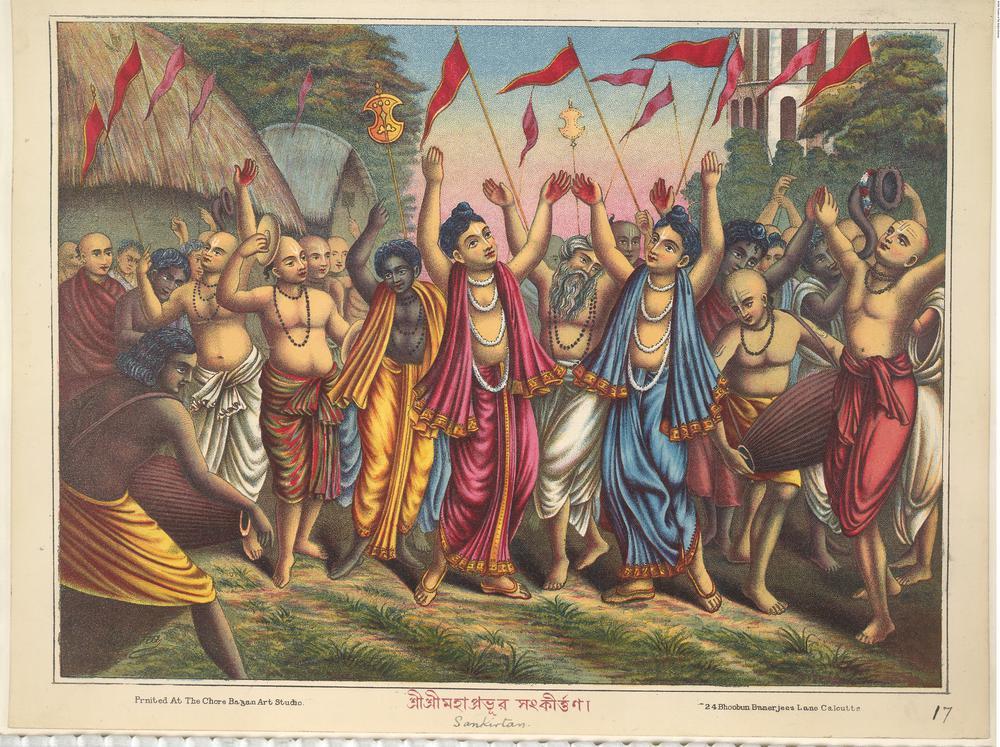
This entire exchange took place during Mahaprabhu's stay at the house of Sarvabhauma Bhattacharya in Puri, where several of His closest householder devotees came to Him with personal questions. Here, after his family had been given the service of the Ratha-yatra ropes, Satyaraja Khan asked Sri Chaitanya Mahaprabhu a much more personal question of his own. Chaitanya-charitamrita records his exact words: "My dear Lord, being a householder and a materialistic man, I do not know the process of advancing in spiritual life. I therefore submit myself unto Your lotus feet and request You to give me orders." These are very humble words for him to use about himself. Mahaprabhu had just declared in public that his family was so dear to Him that even a dog of their village was loved. Mahaprabhu's reply matched the humility of the question. Continue chanting the holy name of Krishna without stopping, He said, and serve Krishna's devotees whenever possible. Nothing more elaborate than that.
What Makes A Vaishnava #
Satyaraja was satisfied but curious, and he asked a further question: how could he actually recognize a Vaishnava when he saw one? Mahaprabhu's answer became one of Chaitanya-charitamrita's most quoted teachings on the subject. Whoever chants the holy name of Krishna even once, He said, is worshipable and should be counted the topmost of human beings. Such chanting alone relieves a person of the reactions of a sinful life, with no need for elaborate rites of initiation beforehand: "one simply has to vibrate the holy name with his lips," Mahaprabhu said. Even a man of the lowest class can be delivered by it. He closed with a direct instruction: "One who is chanting the Hare Krishna mantra is understood to be a Vaishnava; therefore you should offer all respects to him." Satyaraja had just called himself materialistic and ignorant of spiritual advancement. For such a householder, it was a very generous and simple answer. It measured devotion by what one's tongue does, not by birth, learning or formal qualification. Srila Prabhupada, commenting on this exchange, connects it directly to how initiation is actually practiced. He explains that chanting the holy name does not itself wait for initiation or any first qualification. But a candidate for formal initiation is still expected first to show steadiness in chanting and in following the regulative principles.
The Same Question, Asked Again #
This exchange was more than a single conversation, because it did not stay in the past. Chaitanya-charitamrita records that in a following year, one of the inhabitants of Kulina-grama again asked the very same question. He asked what his duty was and how a Vaishnava could be recognized. Mahaprabhu understood their sincerity and patiently taught them once more the differences between the grades of Vaishnava. This time He explained that a first-class Vaishnava is one whose very presence makes others chant the holy name. Such a Vaishnava is different in degree from a Vaishnava and a Vaishnavatara, who are also truly advancing but whose devotion does not yet spread to others so strongly. The text does not say by name whether it was Satyaraja Khan asking a second time or another villager. So we should not claim to know more than Chaitanya-charitamrita itself tells us here. But it is clear that, whoever exactly asked it, Kulina-grama's devotees did not treat this question as settled after one answer. They carried it back to Mahaprabhu year after year, on the same journeys that men like Shivananda Sena organized from Bengal to Puri, alongside the very ropes Satyaraja Khan's own family brought for the Lord's chariot.
Scriptural evidence for this chapter (8)
After this, Ramananda Vasu and Satyaraja Khan both submitted questions at the lotus feet of Sri Chaitanya Mahaprabhu.
Introduces the personal dialogue between Satyaraja Khan and Mahaprabhu on how a householder can advance in spiritual life.
grhastha visayi ami, ki mora sadhane
sri-mukhe ajna kara prabhu—nivedi carane
Word for word
grhastha: householder; visayi: materialistic man; ami: I; ki: what; mora sadhane: the process of my advancement in spiritual life; sri-mukhe: from Your own mouth; ajna kara: please order; prabhu: my Lord; nivedi carane: I submit unto Your lotus feet.
Satyaraja Khan said, "My dear Lord, being a householder and a materialistic man, I do not know the process of advancing in spiritual life. I therefore submit myself unto Your lotus feet and request You to give me orders."
Satyaraja Khan's own words, quoted directly as the page's pull-quote, a householder's humble, specific question about spiritual advancement.
Sri Chaitanya Mahaprabhu replied, "Without cessation continue chanting the holy name of Lord Krishna. Whenever possible, serve Him and His devotees, the Vaishnavas."
Mahaprabhu's direct answer to Satyaraja's question: chanting and service, nothing more elaborate.
Sri Chaitanya Mahaprabhu replied, "Whoever chants the holy name of Krishna just once is worshipable and is the topmost human being.
The core of Mahaprabhu's teaching on how to recognize a Vaishnava: by the chanting itself, not by external qualification.
diksa-puraścarya-vidhi apeksa na kare
jihva-sparse a-candala sabare uddhare
Word for word
diksa: initiation; puraścarya: activities before initiation; vidhi: regulative principles; apeksa: reliance on; na: not; kare: does; jihva: the tongue; sparse: by touching; a-candala: even the lowest of men, the candala; sabare: everyone; uddhare: delivers.
"One does not have to undergo initiation or execute the activities required before initiation. One simply has to vibrate the holy name with his lips. Thus even a man in the lowest class [candala] can be delivered.
From the purport: Purport excerpt: "Due to the necessity of these activities, we do not immediately initiate disciples in the International Society for Krishna Consciousness. For six months, a candidate for initiation must first attend arati and classes in the sastras, practice the regulative principles and associate with other devotees."
Prabhupada's own purport here directly connects this teaching to ISKCON's initiation practice, making this verse especially relevant for a devotee readership.
"ataeva yanra mukhe eka krsna-nama
sei ta' vaisnava, kariha tanhara sammana"
Word for word
ataeva: therefore; yanra mukhe: in whose mouth; eka: one; krsna-nama: the holy name of Krishna; sei ta' vaisnava: he is a Vaishnava; kariha: offer; tanhara: to him; sammana: respect.
Sri Chaitanya Mahaprabhu then finally advised, "One who is chanting the Hare Krishna mantra is understood to be a Vaishnava; therefore you should offer all respects to him."
Mahaprabhu's closing instruction to Satyaraja Khan in this dialogue, summarizing how to recognize and treat a Vaishnava.
The following year, the inhabitants of Kulina-grama again asked the Lord the same question. Hearing this question, Sri Chaitanya Mahaprabhu again taught them about the different types of Vaishnavas.
Shows this was a recurring exchange in subsequent years, though Chaitanya-charitamrita does not specify by name whether Satyaraja Khan himself asked again.
Sri Chaitanya Mahaprabhu said, "A first-class Vaishnava is he whose very presence makes others chant the holy name of Krishna."
The three-tier distinction (Vaishnava, Vaishnavatara, Vaishnavatama) Mahaprabhu taught when the same question about recognizing a Vaishnava was asked again in a later year.
Closing
A Kayastha Family With A Court Title #
Satyaraja Khan's father was Shri Gunaraja Khan, whose birth name was Maladhara Vasu. He was the thirteenth generation of a Kayastha family descended from a man named Dasharatha Vasu. Dasharatha Vasu is said to have come to Bengal from Kanyakubja among the attendants of an early Bengali king. Gunaraja Khan was himself a celebrated Vaishnava. He wrote Sri Krishna-vijaya, a Bengali poetic retelling of the Tenth and Eleventh Cantos of Srimad-Bhagavatam. Chaitanya-charitamrita records that it was written so plainly that even half-educated readers could follow it. Sri Chaitanya Mahaprabhu Himself praised the book directly. The reigning emperor gave Gunaraja Khan the title "Khan". It was a mark of standing under Bengal's Muslim government and had nothing to do with caste or religion. His own sons received titles in the same way. Of his fourteen sons, the second, Lakshminatha Vasu, received his own title of Satyaraja Khan. Lakshminatha's own son was Ramananda Vasu. This was the family into which Satyaraja Khan was born. It was wealthy and literate, and it was settled in the village of Kulina-grama. It had been devoted to Krishna for at least two generations before Mahaprabhu's own appearance.
Srila Haridasa Thakura once spent a Chaturmasya period in Kulina-grama, chanting the holy name. Chaitanya-charitamrita says that he distributed his mercy to the Vasu family living there. Among them, Satyaraja Khan is named as the one who received the most of that mercy. It was not a formally recorded initiation. But it was a real blessing, specially remembered, from one of Mahaprabhu's own most confidential associates.
A Life Told Only Through These Chapters #
Sri Chaitanya-charitamrita gives no birth or disappearance date for Satyaraja Khan, and no account of his life outside Kulina-grama and these meetings at Puri. But what it does record is exact. It gives a family line, a named service, and his own words asking to be taught. Kulina-grama's devotees, together with those of Khanda, were among the Bengali communities who joined the pilgrimage to Jagannatha Puri that Shivananda Sena organized and paid for each year. The text does not describe the two men speaking to each other, but it places Satyaraja Khan's own community clearly inside the pilgrimage Shivananda led. There is also a more personal link between the two families. Shivananda Sena's own son, Kavi-karnapura, wrote the Gaura-ganoddesha-dipika. In it he identifies Satyaraja Khan as the reincarnation of the gopi-friend Sukantha-devi from Krishna's pastimes in Vraja, and Ramananda Vasu as Kalakantha-devi. This is a later devotional tradition of identification, not a scene from Chaitanya-charitamrita itself.
The verse is number 173 of the Gaura-ganoddesha-dipika, and it names father and son together:
kalakaṇṭhī-sukaṇṭhyau ye vraje gāndharva-nāṭike
rāmānanda-vasu-satyarājāś cāpi yathāyatham
"Kalakantha-devi and Sukantha-devi, the two Gandharva-dancers who appeared in Vrajabhumi, also appeared as Ramananda Vasu and Satyaraja." (Gaura-ganoddesha-dipika 173)
The Sanskrit word yathayatham, meaning in the same order, pairs the names one by one: Kalakantha with Ramananda Vasu, and Sukantha with Satyaraja Khan.
- Sri Chaitanya-charitamrita, Adi-lila 10.48, 10.80-81 (translation and purport)
- Sri Chaitanya-charitamrita, Madhya-lila 11.91; 13.44; 14.248-249; 15.98-111; 16.69-75
- Sri Chaitanya-charitamrita, Antya-lila 10.58-61
- Satyaraja Khan - Gaudiya History (ISKCON Desire Tree)
- Shivananda Sena biography - this site
