Durvāsā Āśrama (across from Mathurā)
दुर्वासा आश्रम (मथुरा के सामने)
Also called Durvāsā Āśrama
- What it is
- Durvāsā Āśrama is the hermitage of the sage Durvāsā on the far bank of the Yamunā, across from Mathurā.
- Visiting
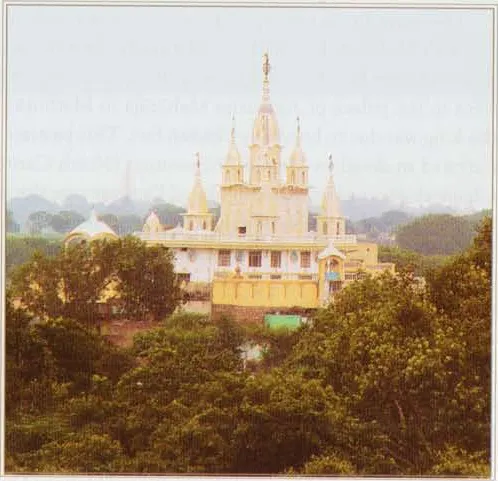
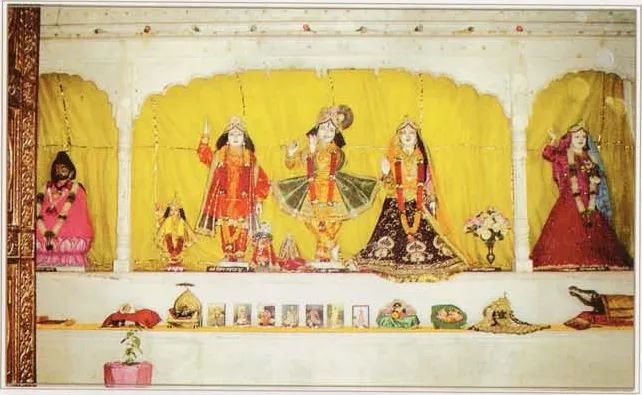
- Śrī Vraja-maṇḍala Parikramā (2007) says that a large temple has been built at the āśrama, with deities of Maharṣi Durvāsā, Śrī Caitanya Mahāprabhu, Śrī Rādhā-Kṛṣṇa and Śrī Yamunā-devī.
- Places here
- Āśrama of Maharṣi Parāśara
In short
Durvāsā Āśrama is the hermitage of the sage Durvāsā on the far bank of the Yamunā, across from Mathurā. The guidebook Śrī Vraja-maṇḍala Parikramā (2007) places it one mile north of Viśrāma-ghāṭa, across the river; Vṛndāvana-Dhāma Ki Jaya! (c. 1986) places it opposite the ghāṭa.[1 +1] According to the 2007 guidebook, Durvāsā performed austerities here and went from here to King Ambarīṣa, and a large temple now stands at the āśrama.[2 +2] Śrīmad-Bhāgavatam tells the story of Durvāsā and Ambarīṣa but mentions no āśrama of Durvāsā across the river.[5 +3]
Key facts
| Kind | āśrama |
|---|---|
| Region · area | Bhāṇḍīravana |
| Also part of | Yamunā |
Divine pastimes
Durvāsā and King Ambarīṣa
Śrīmad-Bhāgavatam (9.4) tells how King Ambarīṣa, at the end of a year-long vow, bathed in the Yamunā and worshipped the Lord in Madhuvana. Durvāsā arrived as his guest just as the king was about to break his fast, went to the Yamunā for his midday rites, and came back from its bank.[5 +3]
vratānte kārtike māsi trirātraṃ samupoṣitaḥ / snātaḥ kadācit kālindyāṃ hariṃ madhuvane 'rcayat
In the month of Kārtika, after observing that vow for one year, after observing a fast for three nights and after bathing in the Yamunā, Mahārāja Ambarīṣa worshiped the Supreme Personality of Godhead, Hari, in Madhuvana.
Translation: Śrīla A.C. Bhaktivedanta Swami PrabhupādaAccording to Śrī Vraja-maṇḍala Parikramā (2007), this place was Durvāsā's place of austerities, and on that Dvādaśī (the day after Ekādaśī) he crossed the Yamunā from here to Ambarīṣa's palace in Mathurā. The book cites the Bhāgavatam's Ninth Canto for the story, but the Bhāgavatam does not name the āśrama.[2 +4] The sources differ on where Ambarīṣa received the sage; see Ambarīṣa-ṭīlā and the accounts below.
Durvāsā and Śrī Rādhā
The Caitanya-caritāmṛta says that Śrīmatī Rādhārāṇī received from Durvāsā Muni the blessing that whatever She cooks is sweeter than nectar, and Śrīla Kṛṣṇadāsa Kavirāja Gosvāmī's Govinda-līlāmṛta adds that whoever eats it will be long-lived (summarised here, not translated). Neither says where the blessing was given.[9 +1]
durvāsāra ṭhāñi teṅho pāñāchena vara / amṛta ha-ite pāka tāṅra adhika madhura
Śrīmatī Rādhārāṇī received from Durvāsā Muni the benediction that whatever She cooked would be sweeter than nectar. That is the special feature of Her cooking.
Translation: Śrīla A.C. Bhaktivedanta Swami PrabhupādaThe Garga-saṁhitā tells how the gopīs crossed the Yamunā to feed Durvāsā, but sets the meeting at Bhāṇḍīravana. The gopīs cross by saying that Kṛṣṇa is a celibate, and return by Durvāsā's vow of living only on the juice of dūrvā grass. The guidebooks set this pastime at several places, this āśrama among them; the fuller story is told on the page of Pānī-ghāṭa.[11 +3] Read more: The gopīs cross the Yamunā to feed Durvāsā →
Traditional accounts
According to Śrī Vraja-maṇḍala Parikramā (2007), the āśrama of Maharṣi Parāśara, the āśrama of Dattātreya and the island where …
According to Śrī Vraja-maṇḍala Parikramā (2007), the āśrama of Maharṣi Parāśara, the āśrama of Dattātreya and the island where Śrīla Vyāsadeva was born are near Durvāsā Āśrama, and Satyavatī, Vyāsadeva's mother, lived here with the boatman who raised her.[2]
Parāśara, Dattātreya and the island of Vyāsa's birth
Śrī Vraja-maṇḍala Parikramā (2007) says that Śrī Vyāsa and other sages visited Parāśara at his āśrama here, that the āśrama of Dattātreya was on the bank of the Yamunā close by, and that the island where Vyāsa was born is nearby in the river, where his mother Satyavatī stayed with the boatman who had raised her. The book gives no source, and these placings are not certain.[2] The same book also places Vyāsa's birth on an island near Kṛṣṇa-gaṅgā-ghāṭa in Mathurā, without saying whether the two islands are one, so neither identification is certain.[2 +2] Śrīmad-Bhāgavatam names Vyāsa's parents, Parāśara and Satyavatī, and calls Dattātreya an incarnation of the Lord and a brother of Durvāsā, but it names no place for any of them.[17 +8] Other Purāṇas call Vyāsa island-born without naming a river near Mathurā.[26 +2]
Śrīla Prabhupāda
Under its heading for this āśrama, Vṛndāvana-Dhāma Ki Jaya!
Under its heading for this āśrama, Vṛndāvana-Dhāma Ki Jaya! (c. 1986) quotes Śrīla Prabhupāda's description of Durvāsā from his purport to Śrīmad-Bhāgavatam 1.15.11. The purport describes the sage and does not mention an āśrama.[1 +1]
General teaching (does not name the place)“Durvāsā Muni: A powerful mystic brāhmaṇa determined to observe the principles of religion with great vows and under strict austerities. His name is associated with many historical events, and it appears that the great mystic could be both easily satisfied and easily annoyed, like Lord Śiva.”
Śrīla Prabhupāda, Śrīmad-Bhāgavatam, 1.15.11, purport · vedabase.io
Visiting today
Śrī Vraja-maṇḍala Parikramā (2007) says that a large temple has been built at the āśrama, with deities of Maharṣi Durvāsā, Śrī Caitanya Mahāprabhu, Śrī Rādhā-Kṛṣṇa and Śrī Yamunā-devī. It gives no year.[2 +2] Vṛndāvana-Dhāma Ki Jaya! (c. 1986) shows a photograph of deities of Durvāsā Muni and Kṛṣṇa.[1 +1]
Location
| Where it is | across the Yamunā 1 mile north of Viśrāma-ghāṭa in Mathurā[31] east of the Yamunā[32] |
|---|
Places at Durvāsā Āśrama (across from Mathurā)
3 places
Also listed here
- Island of Vyāsadeva's birth
- Āśrama of Dattātreya āśrama
Nearby places
Viśrāma-ghāṭa
Pictures
1 pictures
History
The historian A. W. Entwistle (1987) described a mound named after Durvāsā across the Yamunā, opposite Svāmī Ghāṭ in Mathurā. In his day it had a temple with an image of Durvāsā standing beside a smaller image of Kṛṣṇa, the āśrama was held by ascetics of the Nimbārka line, and a Durvāsā fair was held there on five days of the month of Māgha. Whether this is the same site as the guidebooks' āśrama is not settled.[1 +1]
Where the sources differ
Position of the āśrama across from Mathurā
Accounts differ Position of the āśrama across from Mathurā
- Śrī Vraja-maṇḍala Parikramā (2007)Across the Yamunā one mile north of Viśrāma-ghāṭa.
- Vṛndāvana-Dhāma Ki Jaya! (c. 1986)On the Yamunā bank opposite Viśrāma-ghāṭa (the map labels 'Durvāsā Muni's Āśrama').
- Entwistle 1987, p. 331A mound named after Durvāsā opposite Svāmī Ghāṭ.
Accounts differ Where Ambarīṣa received Durvāsā on Dvādaśī
- Śrīmad-Bhāgavatam 9.4.30-42Ambarīṣa worshipped Hari in Madhuvana after bathing in the Yamunā; Durvāsā came as his guest and went to the Yamunā to bathe.
- Śrī Vraja-maṇḍala Parikramā (2007)Durvāsā crossed the Yamunā from this āśrama to Ambarīṣa's palace in Mathurā.
- Vṛndāvana-Dhāma Ki Jaya! (c. 1986)The place of Ambarīṣa's sacrificial performance is in Mathurā City, known as Ambarīṣa-ṭilā or Cakra-tīrtha.
Accounts differ Where the gopīs fed Durvāsā
- Garga-saṁhitā, Mādhurya-khaṇḍa 1.12, 1.26At Bhāṇḍīra (Bhāṇḍīravana), across the Yamunā.
- Śrī Vraja-maṇḍala Parikramā (2007) (printed p. 503)At this Durvāsā Āśrama across the Yamunā, one mile north of Viśrāma-ghāṭa.
- Śrī Vraja-maṇḍala Parikramā (2007) (printed pp. 490-491)At Durvāsā's hermitage near Pānī-gaon, across the Yamunā from Vṛndāvana.
- The Color Guide to Vṛndāvana (2000) entry 80At Durvāsā's āśrama, which the gopīs reached by crossing the Yamunā from Pāni-ghāṭa in Vṛndāvana.
Where Durvāsā gave Śrī Rādhā the blessing on Her cooking: Vṛndāvana-Dhāma Ki Jaya! (c. 1986) tells it under this āśrama, while the Caitanya-caritāmṛta and the Govinda-līlāmṛta give no place. The accounts, with the other places the guidebooks and the Bhakti-ratnākara name, are set side by side on the Pānī-ghāṭa page.[9 +1]
Where Parāśara met Satyavatī and where Śrīla Vyāsadeva was born.[26 +2]
Accounts differ Where Parāśara met Satyavatī and where Vyāsa was born.
- Śrī Vraja-maṇḍala Parikramā (2007) (printed p. 503)Across the Yamunā from Mathurā: Parāśara's āśrama was just near Durvāsā Āśrama, Satyavatī stayed 'here' with her boatman father, and the island of Vyāsa's birth is nearby in the Yamunā.
- Śrī Vraja-maṇḍala Parikramā (2007) (printed pp. 56, 120)Vyāsa was born on an island in the Yamunā near Kṛṣṇa-gaṅgā-ghāṭa in Mathurā; Satyavatī lived in a fisherman's house across the Yamunā opposite Mathurā.
- Skanda Purāṇa, Revā-khaṇḍa 97.10-16, 97.72-74Parāśara did austerities in the water of the Gaṅgā and met the girl at a boat; Vyāsa was born 'on the bank of the Gaṅgā' and named Dvaipāyana as island-born.
- Harivaṁśa (opening invocation); Padma Purāṇa, Sṛṣṭi-khaṇḍa 1.9.26Born in the middle of an island / on an island full of badarī trees; no river named.
The wording of these accounts is our summary of the sources, not a published translation.
More on this place
The gopīs cross the Yamunā to feed Durvāsā
References
32 references
- Vṛndāvana-Dhāma Ki Jaya! (c. 1986), by Dhruva Mahārāja dāsa, PDF p. 20
- Śrī Vraja-maṇḍala Parikramā (2007), PDF p. 264
- Śrī Vraja-maṇḍala Parikramā (2007), PDF p. 265
- Śrī Vraja-maṇḍala Parikramā (2007), PDF p. 267
- Śrīmad-Bhāgavatam 9.4.30, GRETIL
- Śrīmad-Bhāgavatam 9.4.33-35, GRETIL
- Śrīmad-Bhāgavatam 9.4.37, GRETIL
- Śrīmad-Bhāgavatam 9.4.42, GRETIL
- Śrīla Kṛṣṇadāsa Kavirāja Gosvāmī, Śrī Caitanya-caritāmṛta, Antya-līlā 6.116, online edition · vedabase.io
- Śrīla Kṛṣṇadāsa Kavirāja Gosvāmī, Govinda-līlāmṛta, sarga 3 v.14, after the editions of Haridas Das and Haridas Shastri
- Garga-saṁhitā, Mādhurya-khaṇḍa (4), adhyāya 1, verse 12, Sanskrit Wikisource
- Garga-saṁhitā, Mādhurya-khaṇḍa (4), adhyāya 1, verse 22, Sanskrit Wikisource
- Garga-saṁhitā, Mādhurya-khaṇḍa (4), adhyāya 1, verses 26-27, Sanskrit Wikisource
- Garga-saṁhitā, Mādhurya-khaṇḍa (4), adhyāya 1, verses 37-38, Sanskrit Wikisource
- Śrī Vraja-maṇḍala Parikramā (2007), PDF p. 41
- Śrī Vraja-maṇḍala Parikramā (2007), PDF p. 73
- Śrīmad-Bhāgavatam 1.3.21, GRETIL
- Śrīmad-Bhāgavatam 1.4.14, GRETIL
- Śrīmad-Bhāgavatam 9.22.21-22, GRETIL
- Śrīla Prabhupāda, Śrīmad-Bhāgavatam, 1.4.14, purport · vedabase.io
Show all 32 references
- Śrīla Prabhupāda, Śrīmad-Bhāgavatam, 9.22.20, purport · vedabase.io
- Śrīla Prabhupāda, Lecture on Śrīmad-Bhāgavatam 1.3.21, Los Angeles, 26 September 1972 · vedabase.io
- Śrīmad-Bhāgavatam 1.3.11, GRETIL
- Śrīmad-Bhāgavatam 4.1.15, GRETIL
- Śrīla Prabhupāda, Śrīmad-Bhāgavatam, 1.3.11, purport · vedabase.io
- Harivaṁśa, HV_1.1, GRETIL
- Padma Purāṇa, Sṛṣṭi-khaṇḍa 1.9.24-26, Sanskrit Wikisource
- Skanda Purāṇa, V.iii.97.72-74, Sanskrit Wikisource
- A. W. Entwistle, ch. 8 §1.33 'Durvasa Tila', printed p. 331, Egbert Forsten, Groningen, 1987
- Śrīla Prabhupāda, Śrīmad-Bhāgavatam, 1.15.11, purport · vedabase.io
- Śrī Vraja-maṇḍala Parikramā (2007), p. 502-503
- Śrī Vraja-maṇḍala Parikramā (2007), p. 36-37