The gopīs cross the Yamunā to feed Durvāsā
पानी-घाट: गोपियाँ यमुना पार करके दुर्वासा को भोजन कराती हैं
In short
According to the Gopāla-tāpanī Upaniṣad, Kṛṣṇa sent the gopīs, the cowherd girls of Vraja, with food for the sage Durvāsā across the Yamunā. The river let them pass when they said that Kṛṣṇa is a brahmacārī, a celibate. Durvāsā explained the riddle. Guidebooks set the crossing at Pānī-ghāṭa, a Yamunā bathing place. Śrī Rādhā's cooking also received his blessing.[1–11]
On this page
At a glance
- The oldest source: the Gopāla-tāpanī Upaniṣad, Uttara-vibhāga; the Bhāgavatam does not tell this pastime.[1 +7]
- A second telling: the Garga-saṁhitā, Mādhurya-khaṇḍa, chapter 1, with Durvāsā at Bhāṇḍīravana.[14–18]
- The teaching: Kṛṣṇa is called a brahmacārī because He is not a material enjoyer; He is the gopīs' lord.[3, 5, 6]
- The blessing: Śrīmatī Rādhārāṇī received from Durvāsā Muni the benediction that whatever She cooked would be sweeter than nectar.[11]
- Śrīla Rūpa Gosvāmī names Śrī Rādhā "She who satisfied Durvāsā with food".[19, 20]
- The place: Pānī-ghāṭa, with Durvāsā's āśrama (hermitage) across the river, according to the guidebooks.[4, 7–10]
Who was Durvāsā Muni?
Durvāsā is one of the great sages of the Purāṇas, the old scriptures, known for his severe vows and his quick temper. Śrīla Prabhupāda describes him in his purport, his explanation, to Śrīmad-Bhāgavatam 1.15.11:[21]
General teaching (does not name the place)“Durvāsā Muni: A powerful mystic brāhmaṇa determined to observe the principles of religion with great vows and under strict austerities. His name is associated with many historical events, and it appears that the great mystic could be both easily satisfied and easily annoyed, like Lord Śiva.”
Śrīla Prabhupāda, Śrīmad-Bhāgavatam, 1.15.11, purport · vedabase.io
In the same note Śrīla Prabhupāda calls him a plenary incarnation of Lord Śiva and recalls his long flight during his quarrel with King Ambarīṣa.[21] The Tenth Canto of the Bhāgavatam does not name Durvāsā, and the gopīs' visit to him appears in its commentaries only through quotations of the Gopāla-tāpanī Upaniṣad.[12, 13] The Garga-saṁhitā calls him Kṛṣṇa's guru in its telling.[14–18] Durvāsā also appears in a story that the guidebooks set at Kāmyavana: Śrīla Prabhupāda tells the story in the same purport. Duryodhana sent Durvāsā with his many disciples to the exiled Yudhiṣṭhira after Draupadī had eaten. Kṛṣṇa ate one bit of vegetable from her pot, and the sages, bathing in the river, all felt fed.[21] Read more: The Pāṇḍavas in Kāmyavana: the Yakṣa's questions and the Pāṇḍava sites →
Why did the gopīs go to feed Durvāsā?
The Gopāla-tāpanī Upaniṣad tells the pastime in a few lines (summarised here, not translated). Once the women of Vraja spoke to Kṛṣṇa, and He told them that alms should be given to the sage Durvāsā. They asked how they could cross the Yamunā. He answered that they should say "Kṛṣṇa is a brahmacārī", and the river would give them a path. By remembering Him, He said, even a very deep river becomes easy to cross.[1]
They crossed, gave the sage foods made of milk and ghee at his holy āśrama on the far bank, and asked how they could return. He told them to remember him, Durvāsana, and the river would again give them a path.[1–6, 13] Then the best among them, Gāndharvī, asked him two things. How could Kṛṣṇa be a brahmacārī? And how could Durvāsā be a muni, a sage of fasting, when he had just eaten? The others fell silent and made her their leader.[2]
What does "Kṛṣṇa is a brahmacārī" mean?
Durvāsā's answer is the teaching of the pastime. He explained that he himself, the self, is not the enjoyer of what the senses take in, and that Kṛṣṇa is not a material enjoyer either.[3] Kṛṣṇa, he said, is free from birth and old age, unchanging and indestructible. He dwells in the sun and among the cows, protects the cowherds and sustains all beings. And He is the gopīs' lord.[3, 5, 6]
The Gosvāmīs, Śrī Caitanya's leading followers in Vṛndāvana, and the teachers after them return to these words. Śrīla Jīva Gosvāmī, in his commentary on the Tenth Canto and in his Kṛṣṇa-sandarbha, quotes Durvāsā's answer to the gopīs from the Gopāla-uttara-tāpanī; he names no crossing place.[1, 22] Śrīla Viśvanātha Cakravartī Ṭhākura explains Kṛṣṇa's words to the gopīs at the start of the rāsa dance, Kṛṣṇa's circle dance with them. Kṛṣṇa hinted, he says, that He is a brahmacārī, on the authority of this śruti, this Vedic text.[1, 12]
Because you are all very chaste and I am a brahmacārī, as confirmed by the words kṛṣṇo brahmacārī in the śruti [Gopāla-tāpanī Upaniṣad], there should be no fault in our being in the same place. Nonetheless, the mind can never be trusted — neither yours nor My own.
Translation: Śrīla Prabhupāda's disciples (BBT)The English above is by Śrīla Prabhupāda's disciples, and the Bhāgavatam itself does not tell the visit to Durvāsā.[1 +2]
How did the gopīs cross the Yamunā in the Garga-saṁhitā?
The Garga-saṁhitā tells the crossing in another way (summarised here, not translated). Durvāsā, whom it calls Kṛṣṇa's guru, had come to Bhāṇḍīravana, across the Yamunā, and the gopīs wished to see him but had no boat. Kṛṣṇa told them to ask the river for a path if He was a faultless child-celibate, and the Yamunā at once gave them a path.[14–18] They carried fifty-six kinds of food in large pots, circumambulated the sage and bowed to him at Bhāṇḍīravana.[15] Read more: The Bhāṇḍīra banyan →
For the return Durvāsā gave them words of his own. If he lived only on the juice of dūrvā grass, under a vow, the river should give them a path. So they crossed back to Kṛṣṇa.[16] In this telling it is Kṛṣṇa Himself, not Durvāsā, who explains the riddle afterwards. The sage, He says, had eaten the great feast for the gopīs' sake, without any desire to eat. When they heard this, their doubts were cut.[18] The two tellings differ in the words that opened the way, in how the river let them pass, in what they offered and in who explained the mystery.[1 +10]
What blessing did Durvāsā give Śrī Rādhā?
The Caitanya-caritāmṛta mentions the blessing in passing, when it tells how Śrī Rādhā's cooking is remembered at Pānihāṭi. In Śrīla Prabhupāda's translation:[11]
দুর্বাসার ঠাঞি তেঁহো পাঞাছেন বর ।
অমৃত হইতে পাক তাঁর অধিক মধুর ॥ ১১৬ ॥
durvāsāra ṭhāñi teṅho pāñāchena vara
amṛta ha-ite pāka tāṅra adhika madhura
Śrīmatī Rādhārāṇī received from Durvāsā Muni the benediction that whatever She cooked would be sweeter than nectar. That is the special feature of Her cooking.
Translation: Śrīla A.C. Bhaktivedanta Swami PrabhupādaThe Padma Purāṇa adds that Her food would also give long life to whoever eats it. For this reason, it says, Yaśodā calls Śrī Rādhā every day to cook, so that her son may live long.[11 +3] The Gauḍīya ācāryas, the teachers of Śrī Caitanya's line, repeat it. Śrīla Rūpa Gosvāmī does so in his Lalita-mādhava and Śrīla Raghunātha dāsa Gosvāmī in a prayer to Viśākhā. Śrīla Kṛṣṇadāsa Kavirāja Gosvāmī does so in the Govinda-līlāmṛta and Śrīla Viśvanātha Cakravartī Ṭhākura in the Kṛṣṇa-bhāvanāmṛta. None of them names the place where the blessing was given.[27–30]
Śrīla Rūpa Gosvāmī, among the 108 names of Śrī Rādhā in his Prema-sudhā-satra, calls Her "She who satisfied Durvāsā with food" and "Gāndharvā, famed in the śruti". Śrīla Baladeva Vidyābhūṣaṇa's commentary explains the names by the Gopāla-tāpanī's story: Durvāsā ate the food She gave and, asked by Her, explained the truth about Kṛṣṇa (both summarised here, not translated).[19, 20] Śrīla Jīva Gosvāmī's Gopāla-campū speaks of the dishes cooked by Śrī Rādhā and the other gopīs as those which, according to the Uttara-tāpanī, Durvāsā once tasted.[1, 31] The Bhakti-ratnākara tells of Nārada-kuṇḍa, a sacred pond at Yāvaṭa. There, it says, a sage whom it does not name gave Rādhikā a boon, and She became amṛta-hastā, one whose hand makes nectar.[32] Śrī Vraja-maṇḍala Parikramā (2007), citing the Padma Purāṇa, names Nārada-kuṇḍa as the landmark near which Durvāsā gave the boon.[33] Where and on what occasion the blessing was given, the sources tell differently:
Accounts differ Where and on what occasion Durvāsā gave Rādhā the boon on Her cooking (and why Yaśodā has Her cook for Kṛṣṇa).
- The Color Guide to Vṛndāvana (2000) and the the undated parikramā notes VṛndāvanaAfter the gopīs crossed the Yamunā at Pānī-ghāṭa and fed him, Durvāsā blessed them and gave Rādhārāṇī the boon that whatever She cooks will taste like nectar and give a long life without disease; for this reason Yaśodā asked Her to cook for Kṛṣṇa every day.
- Śrī Vraja-maṇḍala Parikramā (2007), citing the Padma PurāṇaDurvāsā Ṛṣi gave Śrīmatī Rādhikā the boon near Nārada-kuṇḍa at Jāvaṭa; whoever ate what She cooked would become immortal, invincible and greatly valiant.
- Bhakti-ratnākara, Fifth Wave (1912 ed. p. 233)At Nārada-kuṇḍa in Yāvaṭa a sage (muni), not named, gave Rādhikā a boon, and She became amṛta-hastā.
- Padma Purāṇa, Pātāla-khaṇḍa 83.31–33; Śrīla Rūpa Gosvāmī, Lalita-mādhava Act 1; Śrīla Kṛṣṇadāsa Kavirāja, Govinda-līlāmṛta 3.14; Śrīla Raghunātha dāsa Gosvāmī, Viśākhānandābhidha-stotra 24Durvāsā gave Rādhā the boon (Her food sweet as nectar and giving long life to the eater), and for this reason Yaśodā calls Her to cook for Kṛṣṇa; no place or occasion is given.
Where is Pānī-ghāṭa?
Neither the Gopāla-tāpanī Upaniṣad nor the Garga-saṁhitā names a ghāṭa or a forest for the crossing.[1, 15] The name Pānī-ghāṭa comes from the guidebooks, which say that the gopīs set out from here across the Yamunā to Durvāsā's āśrama on the other bank.[4, 7–10] Vṛndāvana, the Playground of God (2010) shows Pāṇī-ghāṭa as a village street of low whitewashed buildings under a large tree, with no river in view.[6, 34]
The Bengali Bhaktamāla of Kṛṣṇadāsa Bābājī (1905) names a Pāni-ghāṭa among the holy places of Vṛndāvana, at a distance east of Rādhā-bāga, and tells no pastime there.[35] Across the river, Śrī Vraja-maṇḍala Parikramā (2007) places Durvāsā's āśrama near the village of Pānī-gaon, where, it says, the sage stayed at the time of Kṛṣṇa's pastimes.[7, 36] Three other guidebooks say only that Durvāsā lived on the other side of the Yamunā from Vṛndāvana's Pānī-ghāṭa.[4 +2] Śrīla Prabhupāda notes, from the Gaura-gaṇoddeśa-dīpikā, that Jagannātha Ācārya, an associate of Śrī Caitanya Mahāprabhu, was formerly a Durvāsā of Nidhuvana in Kṛṣṇa's pastimes.[37, 38]
In Śrīla Locana dāsa Ṭhākura's Caitanya-maṅgala, Śrī Caitanya Mahāprabhu's guide Kṛṣṇadāsa shows Him a Durvāsā-āśrama, a hermitage of Durvāsā. It lies near Mahāvana and Lohavana, before they come to Bilvavana (summarised here, not translated).[39]
Do the sources agree?
They do not, and each is given here as its own. The guidebooks disagree on where Pānī-ghāṭa is: Śrī Vraja-maṇḍala Parikramā (2007) places it in Gahvaravana, one of Vṛndāvana's own forests, in one chapter. In another it describes the village of Pānī-gaon across the river, which, it says, is also known as Pānī-ghāṭa; this may not be certain. The other guidebooks keep it on the Vṛndāvana side.[7 +2] They also tell the crossing in different ways: by the words that opened the way, by how the river let the gopīs cross, and by who explained the mystery afterwards.[1 +5]
Accounts differ Where 'Pānī-ghāṭa', the place connected with the gopīs' crossing to Durvāsā, is: a village across the Yamunā from Vṛndāvana, or a ghāṭa of Vṛndāvana town.
- Śrī Vraja-maṇḍala Parikramā (2007), Māṭavana chapterPānī-gaon, 'also known as Pānī-ghāṭa', is a village of Māṭavana on the Yamunā bank, two miles south of Māna-sarovara and a quarter of a mile south-east of Vṛndāvana, across the river; Durvāsā's hermitage was near it; 'that place where the gopīs crossed the Yamunā is called Pānī-gaon or Pānī-ghāṭa'.
- Śrī Vraja-maṇḍala Parikramā (2007), Vṛndāvana chapter'The famous Pānī-ghāṭa' lies in Gahvaravana, one of Vṛndāvana's own forests; the gopīs crossed the Yamunā on foot from this ghāṭa; it is listed among Vṛndāvana's ghāṭas.
- Vṛndāvana, the Playground of God (2010), The Color Guide to Vṛndāvana (2000), the undated parikramā notes VṛndāvanaPāṇī-ghāṭa / Pani Ghāṭa is a ghāṭa of Vṛndāvana, where the gopīs came down to the Yamunā; Durvāsā's āśrama was on the other side.
- the Bengali Bhaktamāla of Kṛṣṇadāsa Bābājī (1905), 26th mālāIn its round of the places of Vṛndāvana, a Pāṇi-ghāṭa lies east of (or after) Rādhā-bāga, at a distance; no bank is named.
Accounts differ Details of the gopīs' crossing to Durvāsā.
- Gopāla-tāpanī Upaniṣad, Uttara (opening)Kṛṣṇa sends them; they say Kṛṣṇa is a brahmacārī and the river becomes fordable; they give milk and ghee foods; they return by remembering 'Durvāsana' (not explained in the text; Vṛndāvana, the Playground of God (2010): a sage who eats only dūrvā grass); Gāndharvī asks the riddle and Durvāsā explains it.
- Garga-saṁhitā, Mādhurya-khaṇḍa 1.12-53Durvāsā, Kṛṣṇa's guru, is at Bhāṇḍīravana; at night the gopīs say 'if Kṛṣṇa is a faultless child-celibate (bāla-yati), give us a path' and the Yamunā at once gives a path; they bring fifty-six pots of food, which Durvāsā eats; they return with 'if Durvāsā lives only on dūrvā-grass juice …'; later at the rāsa Kṛṣṇa explains the riddle.
- Śrī Vraja-maṇḍala Parikramā (2007)In the monsoon flood no boatman would cross; Kṛṣṇa tells them to say 'If Kṛṣṇa has not seen the face of any woman …'; they walk across; Durvāsā tells them to say 'If Durvāsā has not eaten any cooked food during his whole life …'; afterwards Kṛṣṇa explains the mystery; elsewhere they feed Durvāsā fifty-six kinds of preparations.
- Vṛndāvana, the Playground of God (2010)Follows the Upaniṣad, but the Yamunā 'parted' to let them cross both ways.
The wording of these accounts is our summary of the sources, not a published translation.
Places in this article
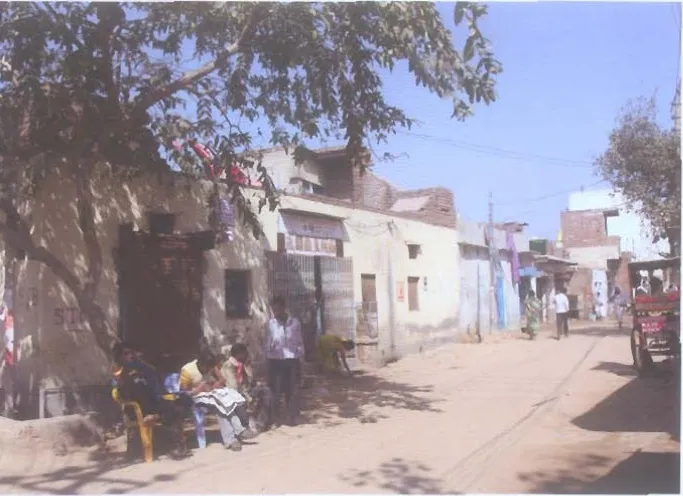
Pānī-ghāṭa (Vṛndāvana)
पानी-घाट (वृन्दावन)Pānī-ghāṭa is a place on the Yamunā at Vṛndāvana, which Śrī Vraja-maṇḍala Parikramā (2007) places in the forest of Gahvaravana.
Nārada-kuṇḍa (Jāvaṭa)
नारद-कुण्ड (जावट)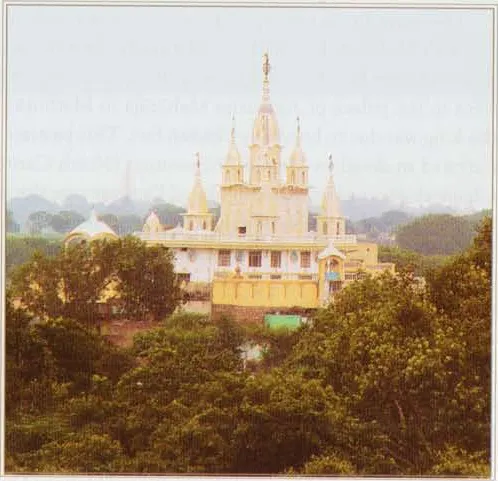
Durvāsā Āśrama (across from Mathurā)
दुर्वासा आश्रम (मथुरा के सामने)Durvāsā Āśrama is the hermitage of the sage Durvāsā on the far bank of the Yamunā, across from Mathurā.
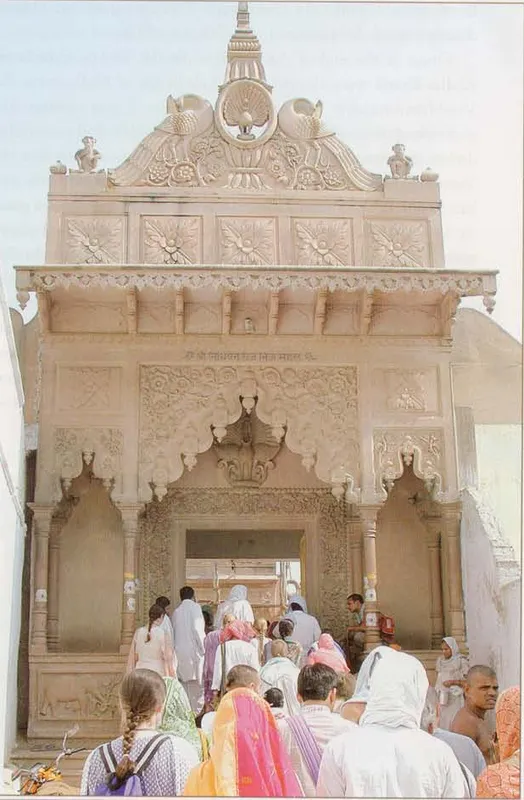
Nidhuvana
निधुवनNidhuvana is a walled grove in Vṛndāvana town, north of Sevā-kuñja.
Pānī-gaon
पानी-गाँवPānī-gaon, also known as Pānī-ghāṭa, is a village on the bank of the Yamunā across the river from Vṛndāvana, two miles south of Māna-sarovara, in the forest of Māṭavana, …
Durvāsā Āśrama (near Pānī-gaon)
दुर्वासा आश्रम (पानी-गाँव के पास)Gahvaravana (Vṛndāvana)
गह्वरवन (वृन्दावन)Gahvaravana is a forest in the east of Vṛndāvana town, south of Jhūlanavana.
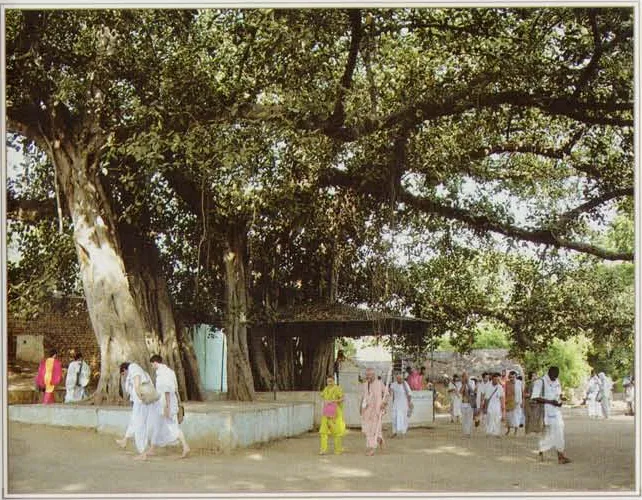
Bhāṇḍīravana
भाण्डीरवनBhāṇḍīravana, the forest of the Bhāṇḍīra banyan, is one of the twelve forests of Vraja, and Śrīla Prabhupāda counts it among the five forests on the eastern bank of the Y …
Questions and answers
According to the Gopāla-tāpanī Upaniṣad, Kṛṣṇa told them that alms should be given to the sage Durvāsā, who lived across the Yamunā. So they carried foods of milk and ghee to his āśrama.[1–6, 13]
By saying that Kṛṣṇa is a brahmacārī, as He had told them; the river gave them a path. They returned by remembering Durvāsā. In the Garga-saṁhitā the words are that Kṛṣṇa is a faultless child-celibate.[1 +10]
Durvāsā explained that the self is not the enjoyer of what the senses take in, and that Kṛṣṇa is not a material enjoyer; He sustains all beings and is the gopīs' lord.[3, 5, 6]
That whatever She cooked would be sweeter than nectar, as the Caitanya-caritāmṛta says. The Padma Purāṇa adds that Her food gives long life. That is why Yaśodā has Her cook for Kṛṣṇa.[11 +3]
The guidebooks place it on the Yamunā in Vṛndāvana, with Durvāsā's āśrama across the river near the village of Pānī-gaon.[4 +5]
No. The Gopāla-tāpanī Upaniṣad and the Garga-saṁhitā differ on the words, the offering and who explained the riddle, and neither names a ghāṭa; the guidebooks differ on where Pānī-ghāṭa is.[1 +5]
Sources
- Gopāla-tāpanī Upaniṣad, Uttara-tāpanī, opening section (the gopīs and Durvāsā, going)
- Gopāla-tāpanī Upaniṣad, Uttara-tāpanī, opening section (the return and Gāndharvī's question)
- Gopāla-tāpanī Upaniṣad, Uttara-tāpanī, Durvāsā's answer about Kṛṣṇa (end)
- Vṛndāvana, the Playground of God (2010), Bhakti Caitanya Svāmī, PDF p. 234
- Vṛndāvana, the Playground of God (2010), Bhakti Caitanya Svāmī, PDF p. 235
- Vṛndāvana, the Playground of God (2010), Bhakti Caitanya Svāmī, PDF p. 236
- Śrī Vraja-maṇḍala Parikramā (2007), PDF p. 342
- Śrī Vraja-maṇḍala Parikramā (2007), PDF p. 343
- The Color Guide to Vṛndāvana (2000), Written and Photographed by Rājaśekhara dāsa Brahmacārī, PDF p. 151
- the undated parikramā notes Vṛndāvana, ¶289
- Śrīla Kṛṣṇadāsa Kavirāja Gosvāmī, Śrī Caitanya-caritāmṛta, Antya-līlā 6.116, online edition · vedabase.io
- Śrīla Viśvanātha Cakravartī Ṭhākura: commentary on ŚB 10.29.19
- Śrīla Jīva Gosvāmī: commentary Kṛṣṇa-sandarbha 99, under ŚB 10.47.62, Bhagavata Vidya Pith edition, ed. Bhagavata Rishi and Krishna Shankar Shastri, 1996
- Garga-saṁhitā, Mādhurya-khaṇḍa (4) 1.20–23, Sanskrit Wikisource
- Garga-saṁhitā, Mādhurya-khaṇḍa (4) 1.24–26, Sanskrit Wikisource
- Garga-saṁhitā, Mādhurya-khaṇḍa (4) 1.36–39, Sanskrit Wikisource
- Garga-saṁhitā, Mādhurya-khaṇḍa (4) 1.43–44, Sanskrit Wikisource
- Garga-saṁhitā, Mādhurya-khaṇḍa (4) 1.52–53, Sanskrit Wikisource
- Prema-sudhā-satra 15
- Śrīla Rūpa Gosvāmī, Stava-mālā, Grantha Mandira text part 17 (Prema-sudhā-satra), ṭīkā after v.15, after the edition of Bhakti Saranga Goswami and Purushottam Das, Vrindavan, 1959
Show all 39 references
- Śrīla Prabhupāda, Śrīmad-Bhāgavatam, 1.15.11, purport · vedabase.io
- Śrīla Jīva Gosvāmī: commentary Kṛṣṇa-sandarbha 178 as labelled in the Grantha Mandira text (part 4/4), printed under ŚB 10.33.37
- Śrīla Viśvanātha Cakravartī Ṭhākura: commentary on ŚB 10.29.19
- Śrīla Prabhupāda, Śrī Caitanya-caritāmṛta, Antya-līlā 6.116, translation · vedabase.io
- Padma Purāṇa, Pātāla-khaṇḍa (5), adhyāya 83, vv.30-32, Sanskrit Wikisource
- Padma Purāṇa, Pātāla-khaṇḍa (5), adhyāya 83, v.33, Sanskrit Wikisource
- Śrīla Rūpa Gosvāmī, Lalita-mādhava, Act 1, prose after v.43
- Raghunātha dāsa Gosvāmī, Stavāvalī (23) Viśākhānanda-stotra v.24
- Śrīla Kṛṣṇadāsa Kavirāja Gosvāmī, Govinda-līlāmṛta, sarga 3 v.14, after the editions of Haridas Das and Haridas Shastri
- Śrīla Viśvanātha Cakravartī Ṭhākura, Kṛṣṇa-bhāvanāmṛta, sarga 5 (pañcamaḥ sargaḥ, preyo-geha-gamanānumodana) v.9 with its ṭīkā; the index labels it '(5) caturthaḥ sargaḥ'), after the edition of Radhikanath Goswami, Vrindavan, 1906
- Gopāla-campū, Pūrva-campū, pūraṇa 2, ¶[50]
- Śrīla Narahari Cakravartī, Bhakti-ratnākara, Fifth Wave (pañcama taraṅga) vv.1089-1090, printed p. 233: Nārada-kuṇḍa at Yāvaṭa, 2nd ed., 1912
- Śrī Vraja-maṇḍala Parikramā (2007), PDF p. 219
- Śrī Vraja-maṇḍala Parikramā (2007), PDF p. 344
- Śrī Śrī Bhaktamāla grantha of Kṛṣṇadāsa, verse description of Vṛndāvana's holy places near the end of the book, right column, printed p. 349
- Śrī Vraja-maṇḍala Parikramā (2007), PDF p. 258
- Śrīla Prabhupāda, Śrī Caitanya-caritāmṛta, Ādi-līlā 10.108, purport · vedabase.io
- Gaura-gaṇoddeśa-dīpikā, v.111
- Caitanya-maṅgala, Śeṣa-khaṇḍa, printed p. 172, right column
Further sources
- Gopāla-tāpanī Upaniṣad, Uttara-vibhāga (Sanskrit), summarised, not translated.
- Garga-saṁhitā, Mādhurya-khaṇḍa 1 (Sanskrit), summarised, not translated.
- Śrīla Prabhupāda, Śrī Caitanya-caritāmṛta, Antya-līlā 6.116, and Śrīmad-Bhāgavatam 1.15.11 purport (BBT); Śrīmad-Bhāgavatam 10.29.19, translation by his disciples.
- Śrīla Rūpa Gosvāmī's Stava-mālā with Śrīla Baladeva Vidyābhūṣaṇa's ṭīkā; Śrīla Jīva Gosvāmī's Kṛṣṇa-sandarbha and Gopāla-campū; Padma Purāṇa: summarised from the Sanskrit.