Gopāla Prakata Sthali
गोपाल प्रकट स्थली Hindi name proposed
Also called Place of Nāthajī's appearance, Śrīngara Sthali
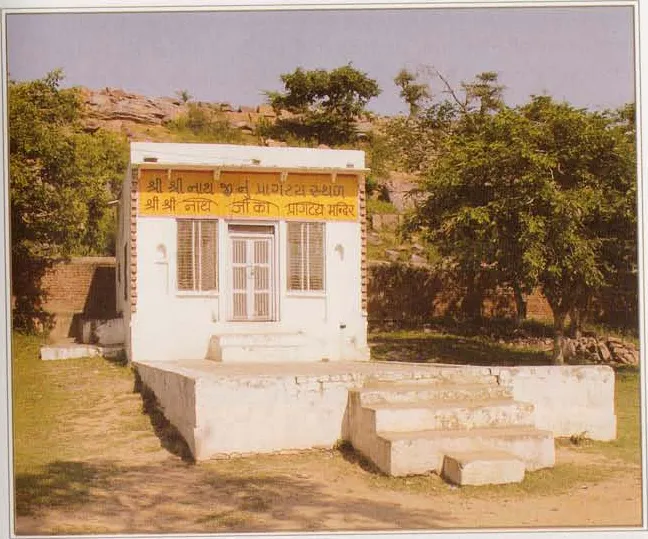
- What it is
- The Gopāla Prakaṭa Sthalī, the place where Gopāla appeared, is a small shrine at Govardhana Hill that two guidebooks show as the spot where Śrīla Mādhavendra Purī found the Deity of Gopāla.
- Visiting
- Govardhana Hill (2001) and Śrī Vraja-maṇḍala Parikramā (2007) print photographs of the small shrine that marks the place; the later one shows a signboard in Gujarati and Devanāgarī.
- Parikramā
- Govardhana parikramā, station 27
In short
The Gopāla Prakaṭa Sthalī, the place where Gopāla appeared, is a small shrine at Govardhana Hill that two guidebooks show as the spot where Śrīla Mādhavendra Purī found the Deity of Gopāla.[1 +1] Śrīla Prabhupāda identifies this Gopāla with Śrī Nāthajī, now at Nāthadvāra.[3 +5] The Caitanya-caritāmṛta tells how Gopāla, hidden by His priest in a bush in the jungle, showed Himself to Śrīla Mādhavendra Purī in a dream near Govinda-kuṇḍa and was taken out by the villagers, but it does not name the spot.[9 +2] The Bhakti-ratnākara points to a dense forest near the kuṇḍa, beyond Aniyora.[12 +1] The sources differ on the village, Aniyora or Jatīpurā, and on how the Deity lay hidden.
Key facts
| Kind | pastime site |
|---|---|
| Region · area | Govardhana · Aniyora |
| On the parikramā | Govardhana parikramā, station 27 · the route |
| Ācāryas | Śrīla Mādhavendra Purī, Śrīla Rāghava Paṇḍita Gosvāmī of Govardhana |
Divine pastimes
How Śrīla Mādhavendra Purī found Gopāla
The Caitanya-caritāmṛta (Madhya 4) tells that Śrīla Mādhavendra Purī walked around Govardhana Hill, bathed in Govinda-kuṇḍa and sat under a tree to rest in the evening, where a cowherd boy brought him milk.[9 +2]
śaila parikramā kari’ govinda-kuṇḍe āsi’
snāna kari, vṛkṣa-tale āche sandhyāya vasi’
After circumambulating the hill, Mādhavendra Purī went to Govinda-kuṇḍa and took his bath. He then sat beneath a tree to take his evening rest.
Translation: Śrīla A.C. Bhaktivedanta Swami PrabhupādaIn a dream the boy asked to be taken out of a bush and placed on top of the hill. His priest, He said, had hidden Him there when the Muslims attacked; His name was Gopāla, the lifter of Govardhana Hill, and Vajra had installed Him.[9 +5]
śaila-upari haite āmā kuñje lukāñā
mleccha-bhaye sevaka mora gela palāñā
“When the Muslims attacked, the priest who was serving Me hid Me in this bush in the jungle. Then he ran away out of fear of the attack.
Translation: Śrīla A.C. Bhaktivedanta Swami PrabhupādaThe villagers took Him out of the bush, and Śrīla Mādhavendra Purī installed Him on top of the hill. The book names neither the village nor the spot of the bush.[4 +3]
Śṛṅgāra-maṇḍala in the Garga-saṁhitā
The Garga-saṁhitā names a place on Govardhana called Śṛṅgāra-maṇḍala, where Rādhā was decorated during the rāsa dance, Kṛṣṇa's dance with the gopīs. It says that the form in which Kṛṣṇa held up the hill is present there, and foretells that in the age of Kali this self-manifest form will come out of a cave of the hill there, before everyone's eyes, and that saintly people will call Him Śrīnātha.[17 +3]
The guidebooks give the shrine the other name Śrīngara Sthali, but no source says that it is the Garga-saṁhitā's Śṛṅgāra-maṇḍala, and these verses name no discoverer; they are told here as a text about Śrīnātha, not as the scripture of this shrine.[17 +3]
Traditional accounts
According to the Bhakti-ratnākara, Śrīla Rāghava Paṇḍita, guiding Śrīla Śrīnivāsa Ācārya through the places beyond Aniyora, after …
According to the Bhakti-ratnākara, Śrīla Rāghava Paṇḍita, guiding Śrīla Śrīnivāsa Ācārya through the places beyond Aniyora, after Govinda-kuṇḍa, showed him the dense forest near the kuṇḍa where Gopāla had stayed hidden. Śrīla Prabhupāda translates the line in his purport on Annakūṭa-grāma:[12 +2]
তথাহি আদিবারাহে ॥ অন্নকূটস্য সান্নিধ্যে তীর্থং শক্রবিনির্ম্মিতং । তস্মিন্ স্নানে তর্পণে চ শতক্রতুফলং লভেৎ ॥ কুণ্ডের নিকট দেখ নিবিড় কানন । এথাই গোপাল ছিলা হৈয়া সঙ্গোপন ॥
tathāhi ādibārāhe
annakūṭasya sānnidhye tīrthaṁ śakrabinirmmitaṁ
tasmin snāne tarpaṇe ca śatakratuphalaṁ labhet
kuṇḍera nikaṭa dekha nibiṛa kānana
ethāi gopāla chilā haiẏā saṅgopana ||
“Look at the dense forest near the kuṇḍa. It was there that Gopāla was concealed.”
Translation: Śrīla A.C. Bhaktivedanta Swami PrabhupādaTwo couplets later the guide points out Dāna-nivartana-kuṇḍa and says that Śrīla Mādhavendra Purī stayed "here" under a tree, where Gopāla came to him on the pretext of giving milk; the text does not make clear which spot "here" means.[21]
The Bengali Vṛndāvana-kathā (1920) says that Śrīla Mādhavendra Purī brought out the Gopāla Deity at Annakūṭa-grāma, whose present name it gives as Ānior, on the bank of Govinda-kuṇḍa.[23]
Śrīla Prabhupāda
In his purport to the chapter of the Caitanya-caritāmṛta on Gopāla, Śrīla Prabhupāda gives the Deity's history in a few lines …
In his purport to the chapter of the Caitanya-caritāmṛta on Gopāla, Śrīla Prabhupāda gives the Deity's history in a few lines:[4 +4]
Names this place“Bhaktivinoda Ṭhākura annotates that this Gopāla Deity was originally installed by Vajra, the great-grandson of Kṛṣṇa. Mādhavendra Purī rediscovered Gopāla and established Him on top of Govardhana Hill. This Gopāla Deity is now situated at Nāthadvāra and is under the management of descendants of Vallabhācārya.”
Śrīla Prabhupāda, Śrī Caitanya-caritāmṛta, Madhya-līlā 4.1, purport · vedabase.io
In a conversation in New York in 1976 he said that Śrī Nāthajī is the Gopāla whom Śrīla Mādhavendra Purī discovered at Govardhana.[3]
Visiting today
Govardhana Hill (2001) and Śrī Vraja-maṇḍala Parikramā (2007) print photographs of the small shrine that marks the place; the later one shows a signboard in Gujarati and Devanāgarī.[1 +1]
Location
| Where it is | In Aniyora[28] in Mādhavendra's dream the boy led him 'to a bushy area in the jungle next to Govardhana Hill'[29] |
|---|---|
| On the numbered Govardhana chart | 41 (printed as “Gopala Prakata Sthall”)[30] |
Nearby places
Govardhana · Bajanī-śilā (Aniyora)
Pictures
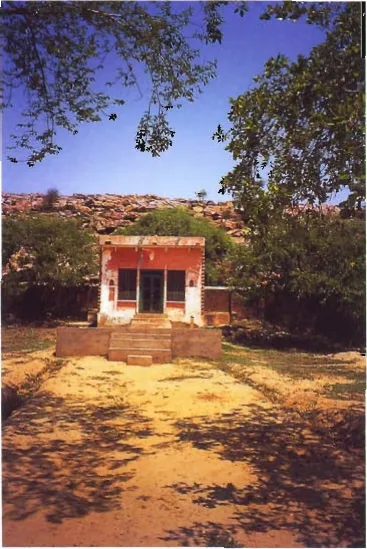
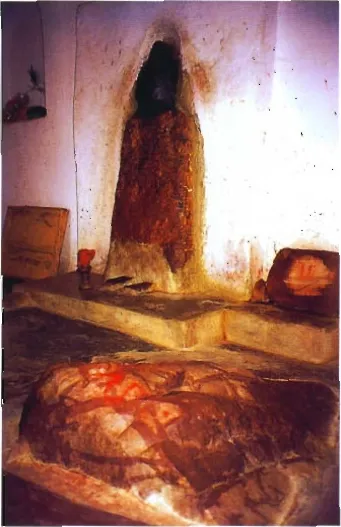
2 pictures
History
When the Caitanya-caritāmṛta was written, the Deity found by Śrīla Mādhavendra Purī was still worshipped at Govardhana. Today He is at Nāthadvāra in Rājasthān, in the care of the descendants of Śrī Vallabhācārya, as Śrīla Prabhupāda writes after Śrīla Bhaktivinoda Ṭhākura. The Deity's history is told on the page of the Gopāla Rāya Mandira.[4 +4]
Two guidebooks date Śrīla Mādhavendra Purī's installation of Gopāla to 1479, and one dates the Deity's move to Nāthadvāra to around 1670, in Aurangzeb's reign. The Caitanya-caritāmṛta gives no year, so these dates are not certain.[6 +4] Read more: The Gopāla Deity of Govardhana →
Where the sources differ
How the Gopāla Deity lay before Śrīla Mādhavendra Purī found Him
Accounts differ How the Gopāla Deity lay before Śrīla Mādhavendra Purī found Him
- Caitanya-caritāmṛta Madhya 4.35-51His priest hid Him, from the top of the hill, in a bush (kuñja) in the jungle; the villagers cut the bushes and found Him covered with dirt and grass
- Bhakti-ratnākara (Fifth Wave), 1912 ed. p. 202, quoted in CC Madhya 18.26 purportnear the kuṇḍa (after Govinda-kuṇḍa and the Śakra-tīrtha) is a dense forest where Gopāla stayed hidden; two couplets later, after Dāna-nirvartana-kuṇḍa, Śrīla Mādhavendra Purī stayed 'here' under a tree and Gopāla came to him on the pretext of giving milk
- Garga-saṁhitā 3.7.29-30a self-manifest form will emerge from within a cave of Girirāja at Śṛṅgāra-maṇḍala, before everyone's eyes (no hiding or discoverer mentioned)
- Govardhana Hill: India's Most Sacred Mountain (2001)led 'to a bushy area in the jungle', found 'covered in long grass and smeared with dirt'; but the boy 'showed the spot where Lord Gopāla was buried in the ground', 'first excavated'
Accounts differ Where the place of Gopāla's appearance is (which village: Annakūṭa-grāma / Āniyora or Jatīpurā), where the boy said He lived, and where Śrīla Mādhavendra Purī stayed
- Caitanya-caritāmṛta Madhya 4.23-38Śrīla Mādhavendra Purī bathed in Govinda-kuṇḍa and sat under a tree (4.23); the boy lives 'in this village' (4.28, unnamed); the bush is not located further; the Deity is to be installed on top of the hill (4.37-38)
- Govardhana Hill: India's Most Sacred Mountain (2001)the prakaṭa-sthāli (appearance place) of the Gopāla Deity is in the village of Aniyora, and the boy says 'I am from the nearby village of Aniyora'; Jetipura is named after Śrīla Mādhavendra Purī, 'who stayed here during the time he was worshiping the Gopāla Deity', and the temple is on top of the hill 'and on the other side is the village of Aniyora'
- Śrī Vraja-maṇḍala Parikramā (2007)the place of Śrī Nāthajī's appearance is near the bajanī-śilā in the Ānyora section, and 'This village is currently named Jatīpurā after him'; elsewhere 'Jatīpurā, or Gopālapurā, lies to the west of Ānyora, on the other side of Govardhana Hill', and 'Jatīpurā is where Śrī Mādhavendra Purī lived and performed bhajana'
- the undated parikramā notes Govardhanaheads Gopāla's appearance place 'Jatipura (Sringar Sthali)'; of Śrīla Mādhavendra Purī's bhajana kuṭīr: 'That famous pastime happened here only'; 'Jatipura where Madhavendra Puri resided … above is the place where the Gopal temple was built'
More on this place
The Gopāla Deity of Govardhana
References
30 references
- Govardhana Hill: India's Most Sacred Mountain (2001), Rajasekhara dasa Brahmacari, PDF p. 97
- Śrī Vraja-maṇḍala Parikramā (2007), PDF p. 128
- Śrīla Prabhupāda, Room Conversation, New York, 17 July 1976 · vedabase.io
- Śrīla Prabhupāda, Śrī Caitanya-caritāmṛta, Madhya-līlā 4.1, purport · vedabase.io
- Śrīla Kṛṣṇadāsa Kavirāja Gosvāmī, Śrī Caitanya-caritāmṛta, CC Madhya-līlā 17.168, online edition · vedabase.io
- The Colour Guide to Rādhā-kuṇḍa (1999), Rājaśekhara dāsa Brahmacārī, PDF p. 140
- Vṛndāvana-Dhāma Ki Jaya! (c. 1986), by Dhruva Mahārāja dāsa, PDF p. 42
- Śrī Vraja-maṇḍala Parikramā (2007), PDF p. 129
- Śrīla Kṛṣṇadāsa Kavirāja Gosvāmī, Śrī Caitanya-caritāmṛta, CC Madhya-līlā 4.23, online edition · vedabase.io
- Śrīla Kṛṣṇadāsa Kavirāja Gosvāmī, Śrī Caitanya-caritāmṛta, CC Madhya-līlā 4.37, online edition · vedabase.io
- Śrīla Kṛṣṇadāsa Kavirāja Gosvāmī, Śrī Caitanya-caritāmṛta, CC Madhya-līlā 4.42, online edition · vedabase.io
- Śrīla Narahari Cakravartī, Bhakti-ratnākara, Fifth Wave, 1912 ed. p. 202, 2nd ed., 1912
- Śrīla Prabhupāda, Śrī Caitanya-caritāmṛta, Madhya-līlā 18.26, purport (quoting Bhakti-ratnākara) · vedabase.io
- Śrīla Kṛṣṇadāsa Kavirāja Gosvāmī, Śrī Caitanya-caritāmṛta, CC Madhya-līlā 4.41, online edition · vedabase.io
- The Colour Guide to Rādhā-kuṇḍa (1999), Rājaśekhara dāsa Brahmacārī, PDF p. 35
- Śrī Vraja-maṇḍala Parikramā (2007), PDF p. 127
- Garga-saṁhitā, Girirāja-khaṇḍa (3), adhyāya 7, verse 27, Sanskrit Wikisource
- Garga-saṁhitā, Girirāja-khaṇḍa (3), adhyāya 7, verse 28, Sanskrit Wikisource
- Garga-saṁhitā, Girirāja-khaṇḍa (3), adhyāya 7, verses 29-30, Sanskrit Wikisource
- Garga-saṁhitā, Girirāja-khaṇḍa (3), adhyāya 7, verse 31, Sanskrit Wikisource
Show all 30 references
- Śrīla Narahari Cakravartī, Bhakti-ratnākara, Fifth Wave, 1912 ed. pp. 202-203, 2nd ed., 1912
- Śrīla Narahari Cakravartī, Bhakti-ratnākara, Fifth Wave, 1912 ed. p. 202, 2nd ed., 1912
- Vṛndāvana-kathā, printed p. 122, section on Govardhana
- Govardhana Hill: India's Most Sacred Mountain (2001), Rajasekhara dasa Brahmacari, PDF p. 98
- The Colour Guide to Rādhā-kuṇḍa (1999), Rājaśekhara dāsa Brahmacārī, PDF p. 172
- Govardhana Hill: India's Most Sacred Mountain (2001), Rajasekhara dasa Brahmacari, PDF p. 99
- the undated parikramā notes Govardhana, ¶103
- Govardhana Hill: India's Most Sacred Mountain (2001), Rajasekhara dasa Brahmacari, p. 83
- Govardhana Hill: India's Most Sacred Mountain (2001), Rajasekhara dasa Brahmacari, p. 84
- Numbered list of the Govardhana sites (key of the Govardhana chart)