The Gopāla Deity of Govardhana
From Śrīla Mādhavendra Purī to Nāthadvāra
In short
Gopāla, today's Śrīnāthajī of Nāthadvāra, is the Deity (sacred form) whom Śrīla Mādhavendra Purī found hidden in a bush at Govardhana. A cowherd boy had brought him milk and appeared to him in a dream. He installed Gopāla on top of the hill. Śrīla Prabhupāda writes that the Deity is now at Nāthadvāra, managed by Śrī Vallabhācārya's descendants.[1–7]
On this page
At a glance
- The main account: Śrī Caitanya-caritāmṛta, Madhya-līlā 4.21–109, in Śrīla Prabhupāda's translation.[1–6]
- Before the finding: the Deity says that Vajra, Kṛṣṇa's great-grandson, installed Him.[3, 8, 9]
- The installation: on top of the hill, on a stone throne, followed by an Annakūṭa that the villages repeated day after day.[6 +3]
- Śrī Caitanya Mahāprabhu would not climb the hill; Gopāla came down to Gāṅṭholī, where He saw Him for three days.[13–18]
- The service passed to the family of Śrī Vallabhācārya; the Bhakti-ratnākara says Śrīla Raghunātha dāsa Gosvāmī and others gave it to Śrī Viṭhṭhaleśvara.[17–19]
- The move: two historians date the Deity's removal from Govardhana to 1669, in Aurangzeb's reign.[20–22]
Who installed Gopāla before Śrīla Mādhavendra Purī?
The Deity whom Śrīla Mādhavendra Purī found at Govardhana introduced Himself in a dream, in Śrīla Prabhupāda's translation.[3]
‘śrī-gopāla’ nāma mora, — govardhana-dhārī
vajrera sthāpita, āmi ihāṅ adhikārī
“My name is Gopāla. I am the lifter of Govardhana Hill. I was installed by Vajra, and here I am the authority.
Translation: Śrīla A.C. Bhaktivedanta Swami PrabhupādaAs the sources tell it, His story passes through several hands.[1 +17]
- Vajra, Kṛṣṇa's great-grandson, who, the Deity says, first installed Him.[3, 8, 9]
- Śrīla Mādhavendra Purī, who, according to the Caitanya-caritāmṛta, found and served Him.[1–6]
- Śrī Caitanya Mahāprabhu and the Gosvāmīs, who saw Him without climbing the hill.[13 +9]
- The line of Śrī Vallabhācārya, in whose care He is worshipped today at Nāthadvāra.[7 +5]
Each stage is told in its own sources, and they are not all of the same weight, so the stages are kept apart here.[1 +17]
Śrīla Prabhupāda's purport to Madhya 4.1 repeats from Śrīla Bhaktivinoda Ṭhākura's notes that this Gopāla was originally installed by Vajra, the great-grandson of Kṛṣṇa.[7–9, 26] The Skanda Purāṇa's Bhāgavata-māhātmya has the sage Śāṇḍilya tell Vajranābha to set up his royal seats at Govardhana and five other places of Vraja. But that verse speaks of no Deity (summarised here, not translated).[31]
The Garga-saṁhitā adds a prediction. It names a place on Govardhana called Śṛṅgāra-maṇḍala, where, in the rāsa dance, Rādhā was adorned. The form in which Kṛṣṇa held up the hill, it says, is present there.[32, 33] After a number of years of the Kali age, it says, this self-revealed form will come out of a cave of the hill before everyone's eyes. Saintly people will call Him Śrīnātha, who always plays on Govardhana (3.7.27–31, summarised here, not translated).[32–35] The Garga-saṁhitā names no one who finds this form and does not mention Śrīla Mādhavendra Purī.[34]
How did Śrīla Mādhavendra Purī find Gopāla?
The Caitanya-caritāmṛta (Madhya 4.21–109) tells the finding at length. Śrīla Mādhavendra Purī walked around Govardhana, bathed in Govinda-kuṇḍa (a sacred pond) and sat under a tree for the evening. There a cowherd boy brought him a pot of milk and went away.[1–6]
That night the same boy came in a dream, led him to a bush and said that He lived there. His servant had brought Him down from the top of the hill and hidden Him in the bush for fear of the mlecchas (foreign invaders), and had then run away.[2, 4] He asked to be taken out by the people of the village and seated on top of the hill, in a temple built there.[36–38]
In the morning the villagers cut through the bushes and found the Deity, and strong men carried Him up the hill. A big stone became His throne and another stone was set behind Him as a backrest.[5, 10] He was bathed with nine hundred pots of water from Govinda-kuṇḍa. After an oil massage He was bathed with pañca-gavya and pañcāmṛta (two sacred mixtures of milk products), and at last with ghee and water from a hundred pots.[10–12]
Then came the Annakūṭa, a great offering of food to Him, and the nearby villages went on holding one for Gopāla, day after day. The people saw in it the Annakūṭa of Kṛṣṇa's own time taking place again.[1–6] That first Annakūṭa is told in “The first Govardhana-pūjā and the Annakūṭa”. Śrīla Prabhupāda draws a lesson from this for his own followers.[39]
General teaching (does not name the place)“we must carefully follow in the footsteps of Śrī Mādhavendra Purī and observe how he installed the Gopāla Deity on top of Govardhana Hill, how he arranged and performed the Annakūṭa ceremony in only one day, and so forth.”
Śrīla Prabhupāda, Śrī Caitanya-caritāmṛta, Madhya-līlā 4.87, purport · vedabase.io
The first temple and the first servants
Gopāla's first shelter on the hill was His bed, screened on all sides and roofed with straw. Later a very rich kṣatriya had a temple built for Him, and others gave cooking vessels and a boundary wall. The book names none of them and gives no year.[40, 41]
Śrīla Mādhavendra Purī initiated two renounced brāhmaṇas from Bengal and gave them the daily service.[42, 43] After two years Gopāla asked him in another dream to bring sandalwood, and before leaving for Bengal on that errand he arranged for the worship to go on.[23 +5]
How did Śrī Caitanya Mahāprabhu see Gopāla?
When Śrī Caitanya Mahāprabhu came to Govardhana, He stayed the night in the temple of Harideva and resolved that He would never climb the hill. He wondered how He would then see Gopāla Rāya, as the book calls the Deity.[8 +3] Read more: Harideva of Govardhana: the Deity, Śrī Caitanya's visit and the temple →
Gopāla was living at that time in a village called Annakūṭa-grāma, whose people came mostly from Rajasthan. Śrīla Prabhupāda's purport says this village is Āniyora.[14, 47] One night a man warned the villagers that Turkish soldiers were about to attack. They carried Gopāla down to the village of Gāṅṭholī and kept Him in a brāhmaṇa's house.[15 +5] Mahāprabhu heard of it while bathing at Govinda-kuṇḍa on His walk around the hill.[53–55] The Caitanya-caritāmṛta sums it up in a Sanskrit verse.[49]
anārurukṣave śailaṁ
svasmai bhaktābhimānine
avaruhya gireḥ kṛṣṇo
gaurāya svam adarśayat
Coming down from Govardhana Hill, Lord Gopāla granted an interview to Lord Śrī Caitanya Mahāprabhu, who was unwilling to climb the hill, thinking Himself a devotee of Lord Kṛṣṇa.
Translation: Śrīla A.C. Bhaktivedanta Swami PrabhupādaMahāprabhu saw Gopāla for three days, chanting and dancing in ecstatic love. On the fourth day Gopāla went back to His temple. Mahāprabhu walked with Him singing kīrtana (songs of the holy names), and then stayed at the foot of the hill.[16 +2] The book adds that, for fear of the Muslims, Gopāla often left His temple in those years and stayed sometimes in a bush and sometimes in one village after another.[58]
Śrīla Rūpa Gosvāmī and Śrīla Sanātana Gosvāmī did not climb the hill either, and Gopāla gave them darśana in the same way. When Śrīla Rūpa Gosvāmī was old and could not go to Govardhana, Gopāla came to Mathurā for a month. He stayed in the house of Śrī Viṭhṭhaleśvara, where Śrīla Rūpa Gosvāmī and his companions saw Him, and then He returned to His own place (Madhya 18.45–54).[18 +4] Śrīla Prabhupāda explains why they stayed below.[18]
Names this place“Following Śrī Caitanya Mahāprabhu’s example, they did not climb the hill because they considered it nondifferent from Kṛṣṇa, the Supreme Personality of Godhead.”
Śrīla Prabhupāda, Śrī Caitanya-caritāmṛta, Madhya-līlā 18.47, purport · vedabase.io
Two other lives of Śrī Caitanya know the Deity by the same name. In Śrīla Murāri Gupta's Kṛṣṇa-caitanya-caritāmṛta (4.8.13) and in Śrīla Locana dāsa Ṭhākura's Caitanya-maṅgala, Mahāprabhu's guide points out the Deity named Gopāla-rāya. He stands on the southern part of the hill (summarised here, not translated). Neither speaks of a temple.[13 +2]
Which hymns praise the Gopāla Deity?
When Śrīla Kṛṣṇadāsa Kavirāja Gosvāmī wrote the Caitanya-caritāmṛta, Gopāla was still worshipped at Govardhana.[61]
gopāla prakaṭa kari’ sevā kaila ‘mahāśaya’
adyāpiha tāṅhāra sevā ‘govardhane’ haya
“After installing the Deity of Gopāla, Śrīla Mādhavendra Purī rendered Him service. That very Deity is still being worshiped at Govardhana Hill.”
Translation: Śrīla A.C. Bhaktivedanta Swami PrabhupādaTwo hymns of the Gauḍīya ācāryas sing of Him (both summarised here, not translated). The Gopālarāja-stotra, which the printed Stavāvalī credits to Śrīla Raghunātha dāsa Gosvāmī, ends fourteen verses with the same line: Gopālarāja shines on the seat of the hill. Its first verse pictures Him with one arm raised, holding up the best of hills.[62, 63] Two later verses speak of the love and friendship of a Śrī Viṭṭhala, without saying who he is.[62, 63]
The Gopāladevāṣṭaka, which the Stavāmṛta-laharī text credits to Śrīla Viśvanātha Cakravartī Ṭhākura, prays to Gopāladeva. He spreads Śrīla Mādhavendra Purī's love and shows His power through the devotion of Śrī Vallabhācārya. His worship, the hymn says, is seen every day even now (verses 7–8). The hymn names no place; the two names it gives belong to this Deity's history.[64]
How did the service pass to Śrī Vallabhācārya's line?
The Bhakti-ratnākara says that in Mahāprabhu's time the two Bengali brāhmaṇas whom Śrīla Mādhavendra Purī had initiated were in charge of Gopāla's service. After they passed away, someone else served for some days. Then Śrīla Raghunātha dāsa Gosvāmī and others talked it over and put Śrī Viṭhṭhaleśvara, the son of Śrī Vallabhācārya, in charge of the service (summarised here, not translated).[17 +4] Śrīla Prabhupāda quotes the lines on this appointment, in Bengali, in his purport to Madhya 18.47, and gives Śrī Viṭhṭhaleśvara the years 1515 to 1585.[18, 66]
Śrīla Prabhupāda also spoke of it. In a lecture in Bombay in December 1974 he said that the Nāthadvāra Gopāla had belonged to Śrīla Mādhavendra Purī and was then given to the Viṣṇu Svāmī sampradāya.[67]
Names this place“it was owned by Mādhavendra Purī. Then it was delivered, the Deity was delivered, to the Viṣṇu Svāmī–sampradāya.”
Śrīla Prabhupāda, Śrīmad-Bhāgavatam 3.26.10, Bombay, 22 December 1974 · vedabase.io
In New York in July 1976 he said that this Gopāla was given to Śrī Vallabhācārya.[68–73] On a morning walk in Bombay in August 1976 he said that Śrīla Mādhavendra Purī or somebody had delivered the Deity to Śrī Vallabhācārya. Then he said that it could not have been Śrīla Mādhavendra Purī but somebody else.[71] In a biographical note on Śrī Vallabhācārya, Śrīla Prabhupāda writes that he established a Deity in the valley near Govardhana Hill; the note does not name the Deity.[74]
The Vallabha tradition tells the Deity's appearance and service in its own works, the vārtā literature. Their account is not retold here; the two historians named below report from them.[75]
When did Gopāla go from Govardhana to Nāthadvāra?
Śrīla Prabhupāda's purport to the chapter of the Caitanya-caritāmṛta on Gopāla says where He is now.[7 +5]
Names this place“Mādhavendra Purī rediscovered Gopāla and established Him on top of Govardhana Hill. This Gopāla Deity is now situated at Nāthadvāra and is under the management of descendants of Vallabhācārya.”
Śrīla Prabhupāda, Śrī Caitanya-caritāmṛta, Madhya-līlā 4.1, purport · vedabase.io
The earliest known dated documents are imperial orders. Mughal farmans (royal decrees), printed with English translations by K. M. Jhaveri in 1928, speak of a temple of Gordhan Nath at Jatipura, next to Govardhana. Akbar's farman of 1593 says that a Gosvāmī of Gokula, whom the translation calls Vithalrai, bought land there. He put up buildings, gardens, cowsheds and workshops for that temple, and the farman gives him the village free of tax. Farmans of 1633 and 1658 grant lands for the temple's expenses and grazing for its cows.[76]
The name Vithalrai can be read in two ways. It may mean Śrī Viṭhṭhaleśvara. Or, since Śrīla Prabhupāda's purport gives 1585 as the year of his passing, it may mean a later member of his family. The farmans say nothing of Śrīla Mādhavendra Purī or of who first built the temple.[18 +2]
Two historians, A. W. Entwistle (1987) and Prabhudayāl Mītal (1966), date the removal of the Deity from Govardhana to 1669, in the reign of Aurangzeb; Mītal gives the day as the full moon of Āśvina (September–October), Saṁvat 1726 of the Indian Vikrama calendar.[20–22] According to Entwistle, the keepers of the Deity decided to move Him. He was taken first to Agra and then, by way of other towns, to Siṁhāḍa, north of Udaipur. There He was installed, and the town of Nāthadvāra grew up around Him.[21, 75] Entwistle reports from the Vallabha records that the journey took two years, four months and seven days.[20–22] The guidebooks give the date less exactly: about 1670, or simply the time of Aurangzeb.[23 +2]
Which places at Govardhana remember Gopāla?
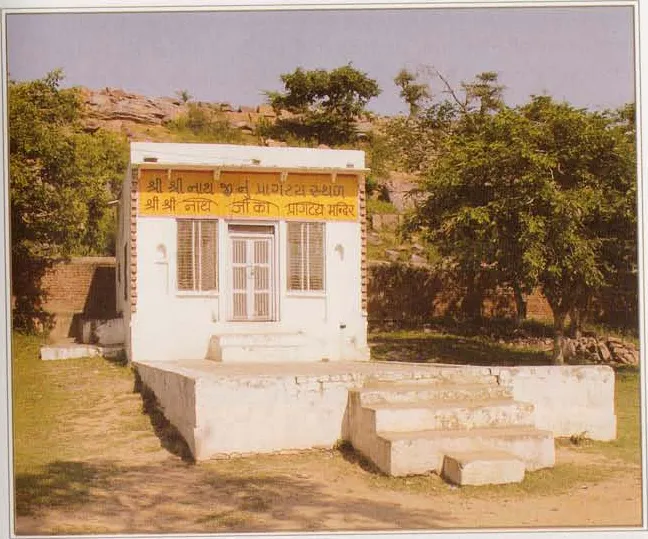
Several places at Govardhana remember Gopāla. The guidebooks show the Gopāla Rāya temple on the ridge between Āniyora and Jatīpurā as the place of the installation, which the Caitanya-caritāmṛta sets only on top of the hill.[23 +5] A small shrine, the Gopāla Prakaṭa Sthalī, is shown in photographs of 2001 and 2007 as the place where He was found.[80, 81] Entwistle (1987) places the temple where Śrīnāthajī lived until the move on the top of the hill above Jatīpurā. The ruins of the old temple, he writes, stand behind a newer one.[20] Gāṅṭholī is the village where Mahāprabhu saw Him.[13–18]
Where the sources differ
How the Deity lay before He was found is told in more than one way. The Caitanya-caritāmṛta speaks of a bush, where the villagers found Him covered with dirt and grass; some guidebooks say the Deity was buried in the earth and dug out. This article follows the Caitanya-caritāmṛta, which tells the story first and in full.[2, 4]
Accounts differ How the Gopāla Deity lay before Śrīla Mādhavendra Purī found Him
- Caitanya-caritāmṛta Madhya 4.35-51His priest hid Him, from the top of the hill, in a bush (kuñja) in the jungle; the villagers cut the bushes and found Him covered with dirt and grass
- Bhakti-ratnākara (Fifth Wave), 1912 ed. p. 202, quoted in CC Madhya 18.26 purportnear the kuṇḍa (after Govinda-kuṇḍa and the Śakra-tīrtha) is a dense forest where Gopāla stayed hidden; two couplets later, after Dāna-nirvartana-kuṇḍa, Śrīla Mādhavendra Purī stayed 'here' under a tree and Gopāla came to him on the pretext of giving milk
- Garga-saṁhitā 3.7.29-30a self-manifest form will emerge from within a cave of Girirāja at Śṛṅgāra-maṇḍala, before everyone's eyes (no hiding or discoverer mentioned)
- Govardhana Hill: India's Most Sacred Mountain (2001)led 'to a bushy area in the jungle', found 'covered in long grass and smeared with dirt'; but the boy 'showed the spot where Lord Gopāla was buried in the ground', 'first excavated'
The places differ too. The Bhakti-ratnākara of Śrīla Narahari Cakravartī Ṭhākura sets the tree where Gopāla brought the milk near Dāna-nivartana-kuṇḍa, while the Caitanya-caritāmṛta places it by Govinda-kuṇḍa. The sources also do not agree on which village was Gopāla's own, Āniyora or Jatīpurā.[1, 82]
Accounts differ Which village belonged to Gopāla and Śrīla Mādhavendra Purī: Annakūṭa-grāma / Āniyora or Jatīpurā
- Caitanya-caritāmṛta Madhya 4.23-38Śrīla Mādhavendra Purī bathed in Govinda-kuṇḍa and sat under a tree (4.23); the boy lives 'in this village' (4.28, unnamed); the bush is not located further; the Deity is to be installed on top of the hill (4.37-38)
- Caitanya-caritāmṛta Madhya 18.26in Mahāprabhu's time Gopāla stayed in a village on Govardhana called Annakūṭa-grāma
- Śrīla Prabhupāda, CC Madhya 18.26 purport (quoting the Bhakti-ratnākara)Annakūṭa-grāma is Āniyora, the Annakūṭa place where Gopāla was concealed in a forest near the kuṇḍa
- Govardhana Hill: India's Most Sacred Mountain (2001)the prakaṭa-sthāli (appearance place) of the Gopāla Deity is in the village of Aniyora, and the boy says 'I am from the nearby village of Aniyora'; Jetipura is named after Śrīla Mādhavendra Purī, 'who stayed here during the time he was worshiping the Gopāla Deity', and the temple is on top of the hill 'and on the other side is the village of Aniyora'
The guidebooks date the installation to 1479; the Caitanya-caritāmṛta gives no year, and the date is recorded here only as the guidebooks' own, which may not be exact.[37 +2]
The accounts differ on who gave Gopāla's service to the Vallabha line. The Bhakti-ratnākara says Śrīla Raghunātha dāsa Gosvāmī and others. The 2001 guidebook says Śrīla Raghunātha dāsa Gosvāmī alone, and the 2007 guidebook the six Gosvāmīs together. They are given side by side, not reconciled.[17 +5]
Accounts differ Who gave Gopāla's (Śrī Nāthajī's) service to the Vallabha line
- Caitanya-caritāmṛta Madhya 4.103-104Śrīla Mādhavendra Purī gave Gopāla's daily service to two Bengali brāhmaṇas whom he initiated
- Bhakti-ratnākara (Fifth Wave), 1912 ed. p. 213after those two brāhmaṇas were gone and someone served for some days, Śrī Dāsa Gosvāmī and others after consultation made Viṭṭhaleśvara the servitor (quoted in CC Madhya 18.47 purport)
- Govardhana Hill: India's Most Sacred Mountain (2001)Śrīla Raghunātha dāsa Gosvāmī was consulted and appointed Vitthalanātha, son of Vallabhācārya, head priest
- Śrī Vraja-maṇḍala Parikramā (2007)the six Gosvāmīs entrusted Śrī Nāthajī's worship to the sons of Vallabhācārya
The wording of these accounts is our summary of the sources, not a published translation.
Both historians report from the vārtā literature that a merchant of Ambālā named Pūranamala Khatrī had a large temple built for Śrīnāthajī on the hill. It was finished, they say, in 1519. They give different years, 1499 and about 1502, for the start of the work. Neither says whether this is the temple of the rich kṣatriya in the Caitanya-caritāmṛta.[20 +2]
Accounts differ In which year the building of Puranmal Khatri's temple for Śrīnāthajī on the hill began
- Entwistle (1987), p. 142 (his note 33: the dates are given in the Pushṭimārga's Śrīgovardhannāthjī ke prākaṭya kī vārtā, pp. 18-19)The foundations were laid in 1499; the temple was completed in 1519, when the Deity was installed on Akṣaya-tṛtīyā.
- Mītal (1966), p. 112The building was begun on Akṣaya-tṛtīyā (Vaiśākha śukla 3) of Saṁvat 1559 (about 1502 CE, our conversion) and finished in Saṁvat 1576 (about 1519 CE).
- Mītal (1966), part 2 p. 155 ('from the vārtā literature'; his note: Śrī Govardhananāthajī ke prākaṭya kī vārtā, pp. 17-19)The building was begun on Vaiśākha śukla 3 (Akṣaya-tṛtīyā) of Saṁvat 1559.
Timeline
- 1479
The guidebooks date the installation to 1479; the Caitanya-caritāmṛta gives no year, and the date is recorded here only as the guidebooks' own, which may not be exact.
Read in the article: Where the sources differ → - 1499
They give different years, 1499 and about 1502, for the start of the work.
Read in the article: Where the sources differ → - 1515
Śrīla Prabhupāda quotes the lines on this appointment, in Bengali, in his purport to Madhya 18.47, and gives Śrī Viṭhṭhaleśvara the years 1515 to 1585.
Read in the article: How did the service pass to Śrī Vallabhācārya's line? → - 1519
It was finished, they say, in 1519.
Read in the article: Where the sources differ → - 1593
Akbar's farman of 1593 says that a Gosvāmī of Gokula, whom the translation calls Vithalrai, bought land there.
Read in the article: When did Gopāla go from Govardhana to Nāthadvāra? → - 1669
Entwistle (1987) and Prabhudayāl Mītal (1966), date the removal of the Deity from Govardhana to 1669, in the reign of Aurangzeb; Mītal gives the day as the full moon of Āśvina (September–October), Saṁvat 1726 of the …
Read in the article: When did Gopāla go from Govardhana to Nāthadvāra? → - 1670
The guidebooks give the date less exactly: about 1670, or simply the time of Aurangzeb.
Read in the article: When did Gopāla go from Govardhana to Nāthadvāra? → - 2001
A small shrine, the Gopāla Prakaṭa Sthalī, is shown in photographs of 2001 and 2007 as the place where He was found.
Read in the article: Which places at Govardhana remember Gopāla? →
Places in this article
Govardhana
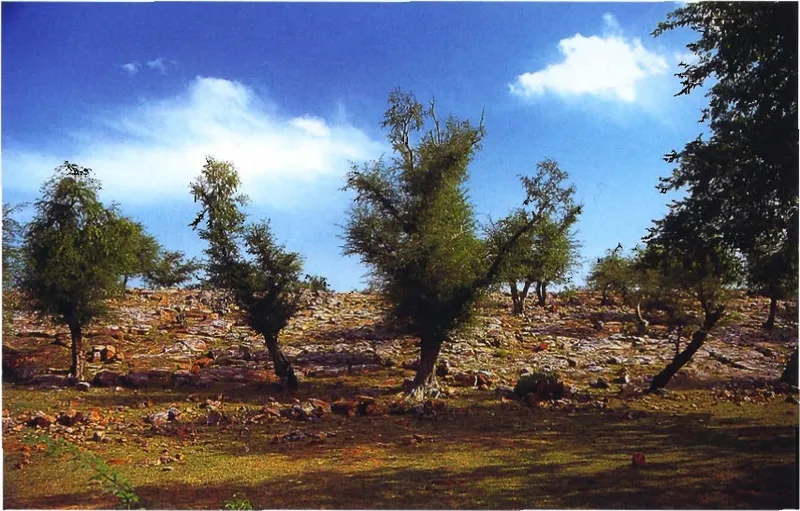
गोवर्धनGovardhana is the hill that Kṛṣṇa lifted with one hand and held up for seven days, so that the people and cows of Vraja could shelter under it from Indra's rain.
Gopāla Rāya Mandira
गोपाल राय मन्दिरThe Gopāla Rāya Mandira stands on the ridge of Govardhana Hill between Aniyora and Jatīpurā.
Gopāla Prakata Sthali
गोपाल प्रकट स्थलीThe Gopāla Prakaṭa Sthalī, the place where Gopāla appeared, is a small shrine at Govardhana Hill that two guidebooks show as the spot where Śrīla Mādhavendra Purī found t …
Jatīpurā
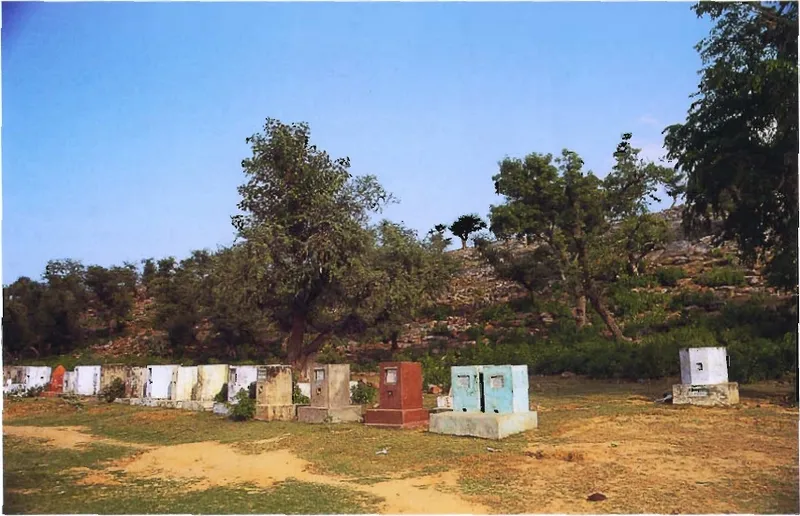
जतीपुराJatīpurā is a village on the west side of Govardhana Hill, across the hill from Aniyora; the Gopāla temple stands on the hilltop above it.
Aniyora
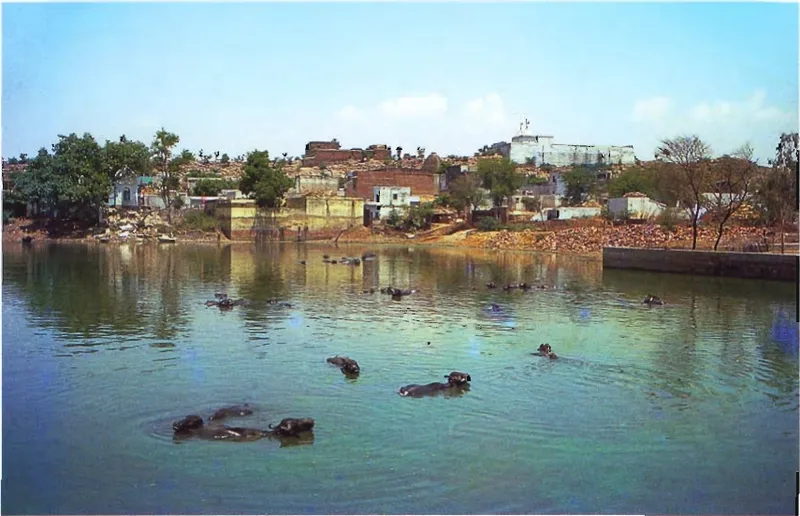
आन्यौरAniyora is a village near Govardhana Hill that present-day guides place on the parikramā path, the walk around the hill, about two miles south of the town of Govardhana.
Gāṅṭholī
गाँठोलीGāṅṭholī is a village west of Govardhana Hill, on the road from Govardhana to Ḍīg.
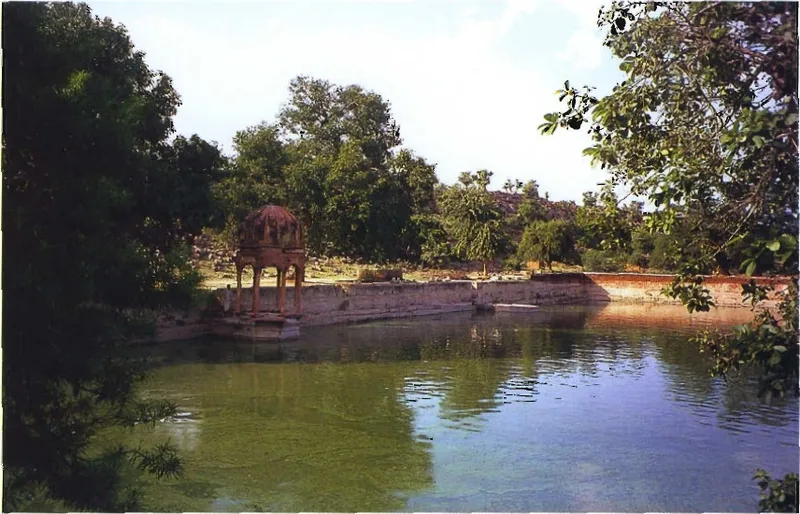
Govinda-kuṇḍa (Govardhana)
गोविन्द-कुण्ड (गोवर्धन)Govinda-kuṇḍa is a kuṇḍa (sacred pond) near the village of Aniyora on Govardhana Hill.
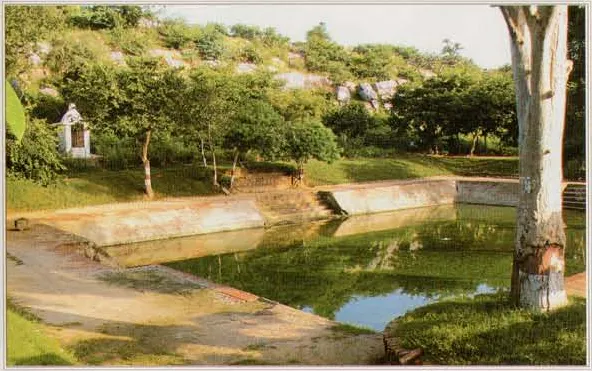
Dāna-nivartana-kuṇḍa
दान-निवर्तन-कुण्डDāna-nivartana-kuṇḍa is a lake (kuṇḍa) of Govardhana, some distance from Dāna-ghāṭī, where, according to the guidebook Govardhana Hill (2001), the stretch of the hill cal …
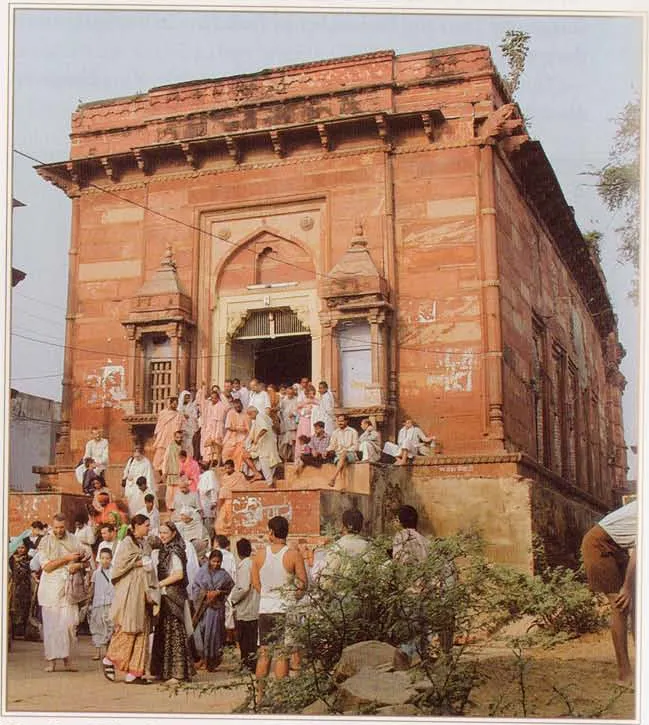
Harideva Mandira
हरिदेव मन्दिरHarideva, Kṛṣṇa as the lifter of Govardhana Hill, is the Deity of Govardhana town, worshipped in His temple on the southern bank of Mānasī-gaṅgā; Śrī Vraja-maṇḍala Parikr …
Questions and answers
Śrīla Mādhavendra Purī, according to the Caitanya-caritāmṛta. A cowherd boy brought him milk and then, in a dream, showed him the bush where the Deity had been hidden. The villagers took Him out, and Śrīla Mādhavendra Purī installed Him on top of the hill.[1–6]
Yes, according to Śrīla Prabhupāda: the Gopāla Deity that Śrīla Mādhavendra Purī established on Govardhana is now at Nāthadvāra, managed by the descendants of Śrī Vallabhācārya.[7 +5]
Vajra, Kṛṣṇa's great-grandson, according to the Deity's own words in the Caitanya-caritāmṛta and Śrīla Bhaktivinoda Ṭhākura's note in Śrīla Prabhupāda's purport.[3, 7–9]
On a warning of an attack by Turkish soldiers the villagers took Him to Gāṅṭholī. There Śrī Caitanya Mahāprabhu, who would not climb the hill, saw Him for three days.[13 +6]
Two renounced brāhmaṇas from Bengal whom he initiated. The Bhakti-ratnākara says that after they passed away Śrīla Raghunātha dāsa Gosvāmī and others gave the service to Śrī Viṭhṭhaleśvara, son of Śrī Vallabhācārya.[17 +7]
The historians Entwistle and Mītal date the removal from Govardhana to 1669, in Aurangzeb's reign; Entwistle reports that the journey took over two years.[20–22]
On top of the hill, says the Caitanya-caritāmṛta. The guidebooks show it as the Gopāla Rāya temple on the ridge between Āniyora and Jatīpurā, and Entwistle places the old temple above Jatīpurā.[20 +6]
Sources
- Śrīla Kṛṣṇadāsa Kavirāja Gosvāmī, Śrī Caitanya-caritāmṛta, CC Madhya-līlā 4.23, online edition · vedabase.io
- Śrīla Kṛṣṇadāsa Kavirāja Gosvāmī, Śrī Caitanya-caritāmṛta, CC Madhya-līlā 4.37, online edition · vedabase.io
- Śrīla Kṛṣṇadāsa Kavirāja Gosvāmī, Śrī Caitanya-caritāmṛta, CC Madhya-līlā 4.41, online edition · vedabase.io
- Śrīla Kṛṣṇadāsa Kavirāja Gosvāmī, Śrī Caitanya-caritāmṛta, CC Madhya-līlā 4.42, online edition · vedabase.io
- Śrīla Kṛṣṇadāsa Kavirāja Gosvāmī, Śrī Caitanya-caritāmṛta, CC Madhya-līlā 4.53, online edition · vedabase.io
- Śrīla Kṛṣṇadāsa Kavirāja Gosvāmī, Śrī Caitanya-caritāmṛta, CC Madhya-līlā 4.86, online edition · vedabase.io
- Śrīla Prabhupāda, Śrī Caitanya-caritāmṛta, Madhya-līlā 4.1, purport · vedabase.io
- The Colour Guide to Rādhā-kuṇḍa (1999), Rājaśekhara dāsa Brahmacārī, PDF p. 35
- Śrī Vraja-maṇḍala Parikramā (2007), PDF p. 127
- Śrīla Kṛṣṇadāsa Kavirāja Gosvāmī, Śrī Caitanya-caritāmṛta, CC Madhya-līlā 4.54, online edition · vedabase.io
- Śrīla Kṛṣṇadāsa Kavirāja Gosvāmī, Śrī Caitanya-caritāmṛta, CC Madhya-līlā 4.56, online edition · vedabase.io
- Śrīla Kṛṣṇadāsa Kavirāja Gosvāmī, Śrī Caitanya-caritāmṛta, CC Madhya-līlā 4.61, online edition · vedabase.io
- Śrīla Kṛṣṇadāsa Kavirāja Gosvāmī, Śrī Caitanya-caritāmṛta, CC Madhya-līlā 18.23, online edition · vedabase.io
- Śrīla Kṛṣṇadāsa Kavirāja Gosvāmī, Śrī Caitanya-caritāmṛta, CC Madhya-līlā 18.26, online edition · vedabase.io
- Śrīla Kṛṣṇadāsa Kavirāja Gosvāmī, Śrī Caitanya-caritāmṛta, CC Madhya-līlā 18.27, online edition · vedabase.io
- Śrīla Kṛṣṇadāsa Kavirāja Gosvāmī, Śrī Caitanya-caritāmṛta, CC Madhya-līlā 18.41, online edition · vedabase.io
- Śrīla Narahari Cakravartī, Bhakti-ratnākara, Fifth Wave, 1912 ed. p. 213, 2nd ed., 1912
- Śrīla Prabhupāda, Śrī Caitanya-caritāmṛta, Madhya-līlā 18.47, purport · vedabase.io
- Śrīla Kṛṣṇadāsa Kavirāja Gosvāmī, Śrī Caitanya-caritāmṛta, CC Madhya-līlā 18.47, online edition · vedabase.io
- A. W. Entwistle, ch. 8 §22.7 'Shrinathji ka Mandir', printed p. 356, Egbert Forsten, Groningen, 1987
Show all 86 references
- A. W. Entwistle, ch. 5 §25 'The exodus of deities from Braj', printed p. 184, Egbert Forsten, Groningen, 1987
- Prabhudayāl Mītal, part 2 ('Braj kā itihās'), 'Mugal kāl': 'Dev-mūrtiyoṁ kā sthānāntaraṇ', printed p. 221
- Govardhana Hill: India's Most Sacred Mountain (2001), Rajasekhara dasa Brahmacari, PDF p. 99
- Śrī Vraja-maṇḍala Parikramā (2007), PDF p. 129
- The Colour Guide to Rādhā-kuṇḍa (1999), Rājaśekhara dāsa Brahmacārī, PDF p. 140
- Vṛndāvana-Dhāma Ki Jaya! (c. 1986), by Dhruva Mahārāja dāsa, PDF p. 42
- the undated parikramā notes Govardhana, ¶103
- Śrīla Kṛṣṇadāsa Kavirāja Gosvāmī, Śrī Caitanya-caritāmṛta, CC Madhya-līlā 18.45, online edition · vedabase.io
- Śrīla Kṛṣṇadāsa Kavirāja Gosvāmī, Śrī Caitanya-caritāmṛta, CC Madhya-līlā 18.54, online edition · vedabase.io
- Śrī Vraja-maṇḍala Parikramā (2007), PDF p. 134
- Skanda Purāṇa, 2.6.1.38, Sanskrit Wikisource
- Garga-saṁhitā, Girirāja-khaṇḍa (3), adhyāya 7, verse 27, Sanskrit Wikisource
- Garga-saṁhitā, Girirāja-khaṇḍa (3), adhyāya 7, verse 28, Sanskrit Wikisource
- Garga-saṁhitā, Girirāja-khaṇḍa (3), adhyāya 7, verses 29-30, Sanskrit Wikisource
- Garga-saṁhitā, Girirāja-khaṇḍa (3), adhyāya 7, verse 31, Sanskrit Wikisource
- Śrīla Kṛṣṇadāsa Kavirāja Gosvāmī, Śrī Caitanya-caritāmṛta, CC Madhya-līlā 4.38, online edition · vedabase.io
- Govardhana Hill: India's Most Sacred Mountain (2001), Rajasekhara dasa Brahmacari, PDF p. 98
- Vṛndāvana-Dhāma Ki Jaya! (c. 1986), by Dhruva Mahārāja dāsa, PDF p. 41
- Śrīla Prabhupāda, Śrī Caitanya-caritāmṛta, Madhya-līlā 4.87, purport · vedabase.io
- Śrīla Kṛṣṇadāsa Kavirāja Gosvāmī, Śrī Caitanya-caritāmṛta, CC Madhya-līlā 4.82, online edition · vedabase.io
- Śrīla Kṛṣṇadāsa Kavirāja Gosvāmī, Śrī Caitanya-caritāmṛta, CC Madhya-līlā 4.101, online edition · vedabase.io
- Śrīla Kṛṣṇadāsa Kavirāja Gosvāmī, Śrī Caitanya-caritāmṛta, CC Madhya-līlā 4.103, online edition · vedabase.io
- Śrīla Kṛṣṇadāsa Kavirāja Gosvāmī, Śrī Caitanya-caritāmṛta, CC Madhya-līlā 4.104, online edition · vedabase.io
- Śrīla Kṛṣṇadāsa Kavirāja Gosvāmī, Śrī Caitanya-caritāmṛta, CC Madhya-līlā 4.105, online edition · vedabase.io
- Śrīla Kṛṣṇadāsa Kavirāja Gosvāmī, Śrī Caitanya-caritāmṛta, CC Madhya-līlā 4.109, online edition · vedabase.io
- Govardhana Hill: India's Most Sacred Mountain (2001), Rajasekhara dasa Brahmacari, PDF p. 22
- Śrīla Prabhupāda, Śrī Caitanya-caritāmṛta, Madhya-līlā 18.26, purport (quoting Bhakti-ratnākara, Fifth Wave) · vedabase.io
- Śrīla Kṛṣṇadāsa Kavirāja Gosvāmī, Śrī Caitanya-caritāmṛta, Madhya-līlā 18.24, online edition · vedabase.io
- Śrīla Kṛṣṇadāsa Kavirāja Gosvāmī, Śrī Caitanya-caritāmṛta, CC Madhya-līlā 18.25, online edition · vedabase.io
- Śrīla Kṛṣṇadāsa Kavirāja Gosvāmī, Śrī Caitanya-caritāmṛta, Madhya-līlā 18.29, online edition · vedabase.io
- Śrīla Kṛṣṇadāsa Kavirāja Gosvāmī, Śrī Caitanya-caritāmṛta, Madhya-līlā 18.30, online edition · vedabase.io
- Śrīla Prabhupāda, Śrī Caitanya-caritāmṛta, Madhya-līlā 18, chapter summary (given, as the book says, by Śrīla Bhaktivinoda Ṭhākura in his Amṛta-pravāha-bhāṣya) · vedabase.io
- Śrīla Kṛṣṇadāsa Kavirāja Gosvāmī, Śrī Caitanya-caritāmṛta, CC Madhya-līlā 18.35, online edition · vedabase.io
- Śrīla Kṛṣṇadāsa Kavirāja Gosvāmī, Śrī Caitanya-caritāmṛta, CC Madhya-līlā 18.36, online edition · vedabase.io
- Śrīla Kṛṣṇadāsa Kavirāja Gosvāmī, Śrī Caitanya-caritāmṛta, Madhya-līlā 18.37, online edition · vedabase.io
- Śrīla Kṛṣṇadāsa Kavirāja Gosvāmī, Śrī Caitanya-caritāmṛta, Madhya-līlā 18.39, online edition · vedabase.io
- Śrīla Kṛṣṇadāsa Kavirāja Gosvāmī, Śrī Caitanya-caritāmṛta, Madhya-līlā 18.40, online edition · vedabase.io
- Śrīla Kṛṣṇadāsa Kavirāja Gosvāmī, Śrī Caitanya-caritāmṛta, CC Madhya-līlā 18.31, online edition · vedabase.io
- Kṛṣṇa-caitanya-caritāmṛta of Murāri Gupta, prakrama 4, sarga 8, v.13
- Śrīla Locana dāsa Ṭhākura, Caitanya-maṅgala, Śeṣa-khaṇḍa, 1903 ed. printed p. 174, right column, the couplet after Hari-rāya
- Śrīla Kṛṣṇadāsa Kavirāja Gosvāmī, Śrī Caitanya-caritāmṛta, CC Madhya-līlā 17.168, online edition · vedabase.io
- Śrīla Raghunātha dāsa Gosvāmī, Śrī Gopālarāja-stotra, verses 1 and 15
- Śrīla Raghunātha dāsa Gosvāmī, Śrī Gopālarāja-stotra, verses 13-14
- Śrīla Viśvanātha Cakravartī Ṭhākura, Śrī Gopāladevāṣṭakam, verses 7-8
- The Colour Guide to Rādhā-kuṇḍa (1999), Rājaśekhara dāsa Brahmacārī, PDF p. 107
- Govardhana Hill: India's Most Sacred Mountain (2001), Rajasekhara dasa Brahmacari, PDF p. 143
- Śrīla Prabhupāda, Śrīmad-Bhāgavatam 3.26.10 lecture, Bombay, 22 December 1974 · vedabase.io
- Śrīla Prabhupāda, Room Conversation, New York, 17 July 1976 · vedabase.io
- Śrīla Prabhupāda, Conversation with Devotees, Māyāpur, 31 March 1975 · vedabase.io
- Śrīla Prabhupāda, Room Conversation, New York, 17 July 1976 · vedabase.io
- Śrīla Prabhupāda, Morning Walk, Bombay, 15 August 1976 · vedabase.io
- Śrīla Prabhupāda, Morning Walk, Māyāpur, 6 March 1974 · vedabase.io
- Śrīla Prabhupāda, Śrīmad-Bhāgavatam 3.26.10, Bombay, 22 December 1974 · vedabase.io
- Śrīla Prabhupāda, Śrī Caitanya-caritāmṛta, Madhya-līlā 19.61, purport · vedabase.io
- A. W. Entwistle, ch. 5, printed p. 184, Egbert Forsten, Groningen, 1987
- K. M. Jhaveri, Farman IV (Jalāl-ud-dīn Muḥammad Akbar), English translation, scan pages 48-49 (unnumbered plates); dated 9 Khordād, Ilāhī year 38 (A.H. 1001; 20 May O.S. / 31 May N.S. 1593; Saṁvat 1651, as Jhaveri gives it)
- Govardhana Hill: India's Most Sacred Mountain (2001), Rajasekhara dasa Brahmacari, PDF p. 140
- the undated parikramā notes Govardhana, ¶148
- Śrī Vraja-maṇḍala Parikramā (2007), PDF p. 133
- Govardhana Hill: India's Most Sacred Mountain (2001), Rajasekhara dasa Brahmacari, PDF p. 97
- Śrī Vraja-maṇḍala Parikramā (2007), PDF p. 128
- Śrīla Narahari Cakravartī, Bhakti-ratnākara, Fifth Wave, 1912 ed. pp. 202-203, 2nd ed., 1912
- Govardhana Hill: India's Most Sacred Mountain (2001), Rajasekhara dasa Brahmacari, PDF p. 160
- The Colour Guide to Rādhā-kuṇḍa (1999), Rājaśekhara dāsa Brahmacārī, PDF p. 172
- A. W. Entwistle, ch. 5 §4 'Vallabha' (the first temple of Shrinathji), printed p. 142, Egbert Forsten, Groningen, 1987
- Prabhudayāl Mītal, 'Braj-yātrā', Jatīpurā: 'Śrīnātha jī kā purānā mandir', printed p. 112
Further sources
- Śrī Caitanya-caritāmṛta, Madhya-līlā 4, 17.168, 18.17–54 and 19.61, translation and purports by Śrīla Prabhupāda (BBT); his lecture of 22 December 1974 and conversations of July and August 1976 (Bhaktivedanta VedaBase).
- Skanda Purāṇa, Bhāgavata-māhātmya; Garga-saṁhitā, Girirāja-khaṇḍa 3.7; Bhakti-ratnākara, Fifth Wave; Śrīla Murāri Gupta, Kṛṣṇa-caitanya-caritāmṛta; Śrīla Locana dāsa Ṭhākura, Caitanya-maṅgala; the Gopālarāja-stotra and the Gopāladevāṣṭaka (summarised here, not translated).
- K. M. Jhaveri, Imperial Farmans (1928); A. W. Entwistle, Braj: Centre of Krishna Pilgrimage (1987); Prabhudayāl Mītal, Braj kā sāṁskṛtik itihās (1966): paraphrased for dated history only.
- Guidebooks: Govardhana Hill: India's Most Sacred Mountain (2001), Śrī Vraja-maṇḍala Parikramā (2007).