Gaurī-kuṇḍa (Govardhana)
गौरी-कुण्ड (गोवर्धन) Hindi name proposed
Also called Gauri Tīrtha, Gauri Kunda
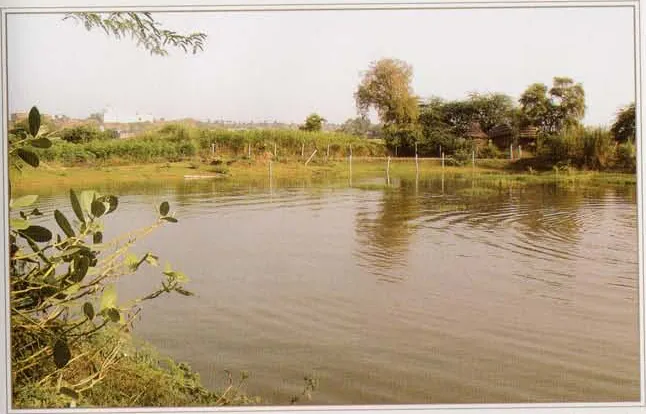
- What it is
- Gaurī-kuṇḍa, also called Gaurī-tīrtha, is a pond on the circuit of Govardhana Hill, near Saṅkarṣaṇa-kuṇḍa and the village of Aniyora.
- Visiting
- Govardhana Hill (2001) places Gaurī-kuṇḍa just off the parikramā path near Saṅkarṣaṇa-kuṇḍa; Śrī Vraja-maṇḍala Parikramā (2007) a little east of the village of Aniyora, among kadamba trees and green …
- Parikramā
- Govardhana parikramā, station 28
- Places here
- Gaurī Mandira (Gaurī-kuṇḍa)
In short
Gaurī-kuṇḍa, also called Gaurī-tīrtha, is a pond on the circuit of Govardhana Hill, near Saṅkarṣaṇa-kuṇḍa and the village of Aniyora.[1 +2] Śrīla Rūpa Gosvāmī's play Vidagdha-mādhava sets two pastimes at a Gaurī-tīrtha beside Govardhana Hill: Candrāvalī meets Kṛṣṇa there on her way to worship the goddess, and Kṛṣṇa, dressed as a woman and taken for the goddess Gaurī in her temple, saves Rādhā from being taken away to Mathurā.[4 +3] According to the Bhakti-ratnākara, wonderful pastimes take place at Gaurī-tīrtha.[2 +1] The Bhāgavatam does not tell these pastimes.[9 +1]
Key facts
| Kind | kuṇḍa |
|---|---|
| Region · area | Govardhana |
| On the parikramā | Govardhana parikramā, station 28 · the route |
| Ācāryas | Śrīla Raghunātha dāsa Gosvāmī, Śrīla Rūpa Gosvāmī, Śrīla Śrīnivāsa Ācārya, Śrīla Narahari Cakravartī Ṭhākura, Śrīla Kṛṣṇadāsa Kavirāja Gosvāmī |
Divine pastimes
Gaurī-tīrtha in the Vidagdha-mādhava
The Bhāgavatam has no account of Gaurī-tīrtha. Its one story of the gopīs, the cowherd girls of Vraja, worshipping the goddess for Kṛṣṇa's sake is their vow to Kātyāyanī, kept on the bank of the Yamunā in the first month of winter.[9 +2] Śrīla Sanātana Gosvāmī identifies Kātyāyanī as Pārvatī, the beloved of Śiva, and Śrīla Jīva Gosvāmī sets that worship at a bathing place of the Yamunā named after the goddess Ghaṭṭa-vāsinī; neither connects it with Govardhana.[12]
The seventh act of Śrīla Rūpa Gosvāmī's Vidagdha-mādhava, called Gaurī-vihāra, is set at Gaurī-tīrtha, right beside Govardhana Hill, as one of its characters says, and near Saṅkarṣaṇa-kuṇḍa. The act tells two pastimes there (summarised here, not translated).[4 +3]
In the first, Candrāvalī comes to Gaurī-tīrtha with her friend Padmā. Kṛṣṇa blocks her way, and she tells Him that she is going to Gaurī-tīrtha to worship Kātyāyanī.[2 +5]
In the second, Rādhā worships the goddess Gaurī in Gaurī's temple. Kṛṣṇa, who has dressed as a woman, stays in the inner room of Gaurī's house as Vṛndā's sister, under the name Nikuñja-vidyā. When Jaṭilā and Abhimanyu come to take Rādhā to Mathurā, they take Kṛṣṇa for the goddess. Through Vṛndā He frightens them with a plan of Kaṁsa's to offer Abhimanyu to Bhairava, a form of Śiva, and Abhimanyu promises never to take Rādhā towards Mathurā.[4 +3]
Śrīla Viśvanātha Cakravartī Ṭhākura's Vraja-rīti-cintāmaṇi places Gaurī-tīrtha east of Saṅkarṣaṇa's lake, on the south-eastern side of Govardhana, and alludes there to Kṛṣṇa's disguise as Nikuñja-vidyā; it mentions no temple.[6 +2] In Śrīla Kṛṣṇadāsa Kavirāja Gosvāmī's Govinda-līlāmṛta, Gaurī-tīrtha is the place to which Kṛṣṇa sends Candrāvalī on the pretext of the goddess's worship, so that He is free to meet Rādhā; the book calls it a place where the elders can be deceived, but does not say where it is.[16 +1]
What the guidebooks tell
Each guidebook tells only one of the two pastimes, and gives it as Śrīla Rūpa Gosvāmī's. Govardhana Hill (2001) and the undated parikramā notes Govardhana tell Kṛṣṇa's disguise in Gaurī's temple; Śrī Vraja-maṇḍala Parikramā (2007) tells Candrāvalī's meeting with Kṛṣṇa on the pretext of worshipping Gaurī with her friends.[1 +5]
The Gosvāmīs and ācāryas
- Śrīla Raghunātha dāsa Gosvāmī names the lake of Gaurī among the lakes all around Govardhana in his Govardhanāśraya-daśaka, and a Gaurikā lake in his Vraja-vilāsa-stava; neither verse says where it lies.[26 +3]
- In his Muktā-carita, Kṛṣṇa, joking with Lalitā, says that while He was looking for cows that had strayed He came to a Gaurī-tīrtha with a temple of Gaurī; the text does not say where it is.[29]
- According to the Bhakti-ratnākara, Śrīla Rāghava Paṇḍita, guiding Śrīla Śrīnivāsa Ācārya round Govardhana, turned back from Paiṭhā to Gaurī-tīrtha, where, he told him, wonderful pastimes take place and the charming kadamba (nīpa), the king of trees, stands; then they went on to Nīpa-kuṇḍa and Aniyora.[2 +1]
Songs
Śrīla Raghunātha dāsa Gosvāmī's Govardhanāśraya-daśaka: the verse below names the lake of Gaurī among the lakes, streams and …
Śrīla Raghunātha dāsa Gosvāmī's Govardhanāśraya-daśaka: the verse below names the lake of Gaurī among the lakes, streams and places of Hari's pastimes that shine all around Govardhana.[26]
jyotsnāmokṣaṇa-mālya-hāra-sumano-gaurī-balāri-dhvaja
gāndharvādi-sarāṁsi nirjhara-giriḥ śṛṅgāra-siṁhāsanam
gopālo 'pi hari-sthalaṁ harir api sphūrjanti yat-sarvataḥ
kas taṁ go-mṛga-pakṣi-vṛkṣa-lalitaṁ govardhanaṁ nāśrayet
Visiting today
Govardhana Hill (2001) places Gaurī-kuṇḍa just off the parikramā path near Saṅkarṣaṇa-kuṇḍa; Śrī Vraja-maṇḍala Parikramā (2007) a little east of the village of Aniyora, among kadamba trees and green bowers.[1 +2]
Location
| Where it is | 'just off the parikramā path near Saṅkarṣaṅa-kuṇḍa'[30] a little further east of Ānyora-grāma[31] |
|---|---|
| On the numbered Govardhana chart | 35 (printed as “Gauri Kund”)[32] |
Places at Gaurī-kuṇḍa (Govardhana)
1 places
Nearby places
Saṅkarṣaṇa-kuṇḍa (Aniyora) · Aniyora
Pictures
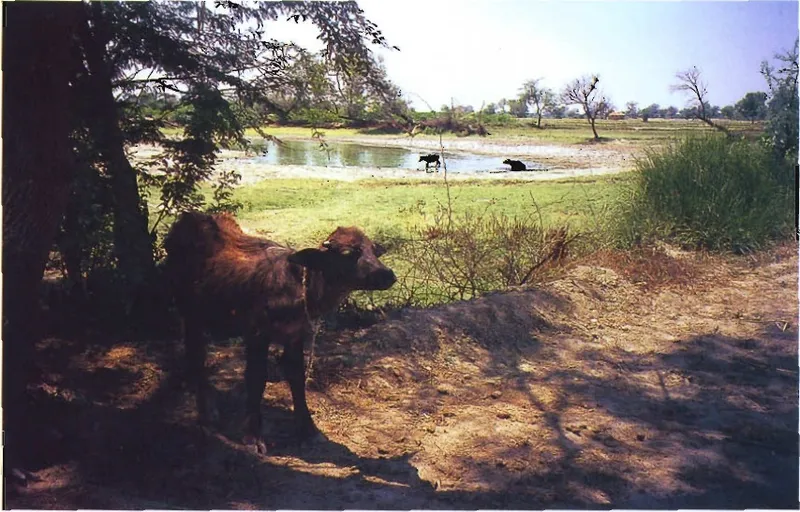
1 pictures
History
The guidebook Govardhana Hill (2001) says that a temple of the goddess Gaurī, the wife of Śiva, the Gaurī Mandira, used to stand at the kuṇḍa but has disappeared. It gives no date or other evidence, so this is not certain.[1]
The Gaurī Mandira
The Gaurī Mandira was a temple of the goddess Gaurī at Gaurī-kuṇḍa, near Saṅkarṣaṇa-kuṇḍa on the circuit of Govardhana Hill. The guidebook Govardhana Hill (2001) says that it has disappeared; no other record of it was found, so this is not certain.[1] The same book tells here a pastime from Śrīla Rūpa Gosvāmī's play Vidagdha-mādhava: Kṛṣṇa, disguised in the goddess's temple, is taken for Gaurī herself and saves Rādhā from being taken away to Mathurā.[1 +5] The play does set that pastime in "Gaurī's house" at Gaurī-tīrtha beside Govardhana; that this house is the temple of Gaurī-kuṇḍa is the guidebook's identification.[1 +4]
The seventh and last act of the Vidagdha-mādhava, called Gaurī-vihāra, sets the pastime of Kṛṣṇa's disguise in Gaurī's house at Gaurī-tīrtha (summarised here, not translated). To win back the angry Rādhā, Kṛṣṇa takes a woman's costume kept in Gaurī's house and waits in its inner room as Nikuñja-vidyā, as Vṛndā names Him. Rādhā and Her friends come to the house to meet Nikuñja-vidyā. Jaṭilā, told that Rādhā is worshipping Gaurī at Gaurī-tīrtha, fetches her son Abhimanyu, who means to take Rādhā to Mathurā; they burst in and take the disguised Kṛṣṇa for the goddess come out of her image.[7 +2]
Vṛndā then announces that Kaṁsa will offer Abhimanyu to Bhairava, a form of Śiva. "Gaurī" grants Rādhā's prayer on condition that She stay in Gokula, and Abhimanyu vows never to take Her to Mathurā.[7 +2]
The Bhāgavatam has neither pastime. Explaining the verse that closes the rāsa dance (ŚB 10.33.25), Śrīla Sanātana Gosvāmī counts the pastimes of the kind told in the Gīta-govinda and the Vidagdha-mādhava among those that the verse covers; he names no place (summarised here, not translated).[24]
Govardhana Hill (2001) tells the pastime in the temple and gives the Vidagdha-mādhava as its source. In its telling, Abhimanyu plans to take Rādhā to Mathurā and asks Paurṇamāsī to initiate Her into the worship of Gaurī; Kṛṣṇa dresses as the Deity of Gaurī and stands in the temple; and through Vṛndā Devī "Gaurī" frightens Abhimanyu with news of a plan of Kaṁsa against him and grants Rādhā's prayer on condition that She never leave Vraja.[1 +5] The undated parikramā notes Govardhana tell it without naming a work, and the play itself tells the disguise differently:
Accounts differ How Kṛṣṇa came to be taken for Gaurī in her house at Gaurī-tīrtha
- Śrīla Rūpa Gosvāmī, Vidagdha-mādhava, Act 7to win back the angry Rādhā, Kṛṣṇa puts on a woman's costume kept in Gaurī's house and waits in its inner room as 'Nikuñja-vidyā'; Rādhā and Her friends come to meet 'Nikuñja-vidyā'; when Abhimanyu bursts in, he and Jaṭilā take Kṛṣṇa for Gaurī come out of her image
- Govardhana Hill: India's Most Sacred Mountain (2001)realizing that Abhimanyu and Jaṭilā were coming to catch Him with Rādhā, Kṛṣṇa went inside the Gaurī temple, dressed Himself in the Deity's dresses and stood in front of Gaurī Devī; Rādhā then entered and began to worship
- the undated parikramā notes GovardhanaKṛṣṇa asked Vṛndā Devī for Gaurī's clothes, made Himself golden, put on the clothes and crown of Gaurī and stood in front of the Deity 'just like a deity'; Abhimanyu and Jaṭilā found Rādhā worshipping
Śrīla Raghunātha dāsa Gosvāmī's Muktā-carita mentions a Gaurī-mandira at a Gaurī-tīrtha in Vraja, in an episode that has nothing to do with Kṛṣṇa's disguise, and does not say where that tīrtha is.[25]
Śrīla Prabhupāda does not speak of the temple by name. In a purport that gives Śrīla Bhaktisiddhānta Sarasvatī Ṭhākura's description of Śrīla Rūpa Gosvāmī's books, he names the last part of the play in which this pastime is told (a general statement):[23]
General teaching (does not name the place)“The Vidagdha-mādhava is a drama of Lord Kṛṣṇa’s pastimes in Vṛndāvana. Śrīla Rūpa Gosvāmī finished this book in the year 1454 Śakābda (A.D. 1532). … the sixth part śarad-vihāra, and the seventh and last part gaurī-vihāra.”
Śrīla Prabhupāda, Śrī Caitanya-caritāmṛta, Madhya-līlā 1.41, purport · vedabase.io
The guides also differ on which pastime they set at Gaurī-kuṇḍa and its temple, and which pastime of the Vidagdha-mādhava each of them means; their accounts are set side by side at the end of this page.[1 +8]
Where the sources differ
Which pastime of Śrīla Rūpa Gosvāmī's Vidagdha-mādhava took place at Gaurī-kuṇḍa
Accounts differ Which pastime of Śrīla Rūpa Gosvāmī's Vidagdha-mādhava took place at Gaurī-kuṇḍa
- Govardhana Hill: India's Most Sacred Mountain (2001), citing Vidagdha-mādhavaRādhārāṇī, sent by Purṇamāsī at Abhimanyu's request to worship the goddess Gaurī, met Kṛṣṇa here; when Abhimanyu and Jaṭilā came to catch Them, Kṛṣṇa stood in the temple dressed as the goddess, and 'Gaurī' and Vṛndā Devī frightened Abhimanyu into promising never to take Rādhā to Mathurā.
- the undated parikramā notes Govardhana, 'Rupa Goswami writes' (work not named)The same story: Purṇamāsī has Rādhā worship Gaurī; Kṛṣṇa has Vṛndā Devī bring Gaurī's clothes, makes Himself golden, puts on the goddess's clothes and crown and stands as the Deity and speaking as Gaurī makes Abhimanyu and Jaṭilā promise never to take Rādhā from Vraja.
- Śrī Vraja-maṇḍala Parikramā (2007), citing Vidagdha-mādhavaCandrāvalī, on the pretext of worshipping Gaurī with her sakhīs, met Kṛṣṇa here; the book adds that Kṛṣṇa then went on to Rādhā at Rādhā-kuṇḍa.
- Śrīla Rūpa Gosvāmī, Vidagdha-mādhava, Act 7 'Gaurī-vihāra'both: Candrāvalī meets Kṛṣṇa at Gaurī-tīrtha, 'right beside Govardhana Hill', on her way to worship Kātyāyanī; and Rādhā worships Gaurī in Gaurī's temple there while Kṛṣṇa, disguised as a woman ('Nikuñja-vidyā') and taken for the goddess, makes Abhimanyu promise never to take Rādhā toward Mathurā
The wording of these accounts is our summary of the sources, not a published translation.
References
32 references
- Govardhana Hill: India's Most Sacred Mountain (2001), Rajasekhara dasa Brahmacari, PDF p. 103
- Śrī Vraja-maṇḍala Parikramā (2007), PDF p. 129
- the key of the numbered Govardhana chart, ¶38
- Śrīla Rūpa Gosvāmī, Vidagdha-mādhava, Act 7, v.7 with the dialogue before it
- Śrīla Rūpa Gosvāmī, Vidagdha-mādhava, Act 7, before v.9 to after v.11
- Śrīla Rūpa Gosvāmī, Vidagdha-mādhava, Act 7, v.51 and after v.52
- Śrīla Rūpa Gosvāmī, Vidagdha-mādhava, Act 7, v.57 with the dialogue before it, and v.58
- Śrīla Narahari Cakravartī, Bhakti-ratnākara, Fifth Wave, 1912 ed. p. 201, 2nd ed., 1912
- Śrīmad-Bhāgavatam 10.22.4, GRETIL
- Śrīla Prabhupāda, Kṛṣṇa, the Supreme Personality of Godhead (Kṛṣṇa book), Chapter 22, 'Stealing the Garments of the Unmarried Gopī Girls' · vedabase.io
- Śrīmad-Bhāgavatam 10.22.1–2, 10.22.4, GRETIL
- Śrīla Sanātana Gosvāmī: commentary on ŚB 10.22.1-2, Bhagavata Vidya Pith edition, ed. Bhagavata Rishi and Krishna Shankar Shastri, 1996
- Śrīla Rūpa Gosvāmī, Vidagdha-mādhava, Act 7 ('gaurī-vihāra'), the dialogue from before v.7 to after v.10
- Śrīla Viśvanātha Cakravartī Ṭhākura, Vraja-rīti-cintāmaṇi, third sarga, verses 18-19
- Śrīla Rūpa Gosvāmī, Vidagdha-mādhava, Act 7, v.51 to after v.52
- Śrīla Kṛṣṇadāsa Kavirāja Gosvāmī, Govinda-līlāmṛta, sarga 6, verses 79-81, after the editions of Haridas Das and Haridas Shastri
- Śrīla Kṛṣṇadāsa Kavirāja Gosvāmī, Govinda-līlāmṛta, sarga 8, verse 79, after the editions of Haridas Das and Haridas Shastri
- the undated parikramā notes Govardhana, ¶77
- Govardhana Hill: India's Most Sacred Mountain (2001), Rajasekhara dasa Brahmacari, PDF p. 106
- Govardhana Hill: India's Most Sacred Mountain (2001), Rajasekhara dasa Brahmacari, PDF p. 107
Show all 32 references
- the undated parikramā notes Govardhana, ¶82
- the undated parikramā notes Govardhana, ¶84
- Śrīla Prabhupāda, Śrī Caitanya-caritāmṛta, Madhya-līlā 1.41, purport · vedabase.io
- Śrīla Sanātana Gosvāmī: commentary on ŚB 10.33.25
- Śrīla Raghunātha dāsa Gosvāmī, Muktā-carita, prose paragraph 258 of the, GRETIL
- Śrīla Raghunātha dāsa Gosvāmī, Govardhanāśraya-daśaka, verse 4
- Śrīla Raghunātha dāsa Gosvāmī, Vraja-vilāsa-stava, verse 79
- Govardhana Hill: India's Most Sacred Mountain (2001), Rajasekhara dasa Brahmacari, PDF p. 81
- Śrīla Raghunātha dāsa Gosvāmī, Muktā-carita, paragraph 258, GRETIL
- Govardhana Hill: India's Most Sacred Mountain (2001), Rajasekhara dasa Brahmacari, p. 89
- Śrī Vraja-maṇḍala Parikramā (2007), p. 232-233
- Numbered list of the Govardhana sites (key of the Govardhana chart)