Madhuvana, Dhruva and the founding of Mathurā
मधुवन, ध्रुव और मथुरा की स्थापना
In short
Madhuvana, the forest of Madhu, is where the boy Dhruva worshipped the Lord on Nārada's instruction. It is also where Śatrughna founded the city of Mathurā, after killing the demon Lavaṇa. The scriptures use the name for the forest in which Mathurā stands. Śrīla Prabhupāda writes that Madhuvana still exists in the district of Mathurā.[1–10]
On this page
At a glance
- Scripture: the Śrīmad-Bhāgavatam tells of Dhruva's journey to Madhuvana in its Fourth Canto, chapters 8 and 9. The Ninth Canto tells of the founding of Mathurā.[1 +4]
- The founder: Śatrughna, Śrī Rāma's brother. He killed Lavaṇa, son of the demon Madhu, and built Mathurā in Madhuvana.[4–9]
- Dhruva's mantra: oṁ namo bhagavate vāsudevāya, given by Nārada before Dhruva reached Madhuvana.[13]
- Dhruva-tīrtha: the Varāha Purāṇa, an old scripture, names a ghāṭa (bathing place) of Mathurā as the place of Dhruva's austerity.[14–18]
- Madhuvana in the guidebooks: they call the place Maholī, south-west of Mathurā, with a Dhruva-ṭīlā (Dhruva's hill) and a temple of Śatrughna.[19–22]
- Two uses of the name: the forest in which the city stands, and the forest that still exists outside it. Both uses are found in the sources.[10, 23]
What is Madhuvana?
The Bhāgavatam tells the history of Śrī Rāma's dynasty. It says that His brother Śatrughna killed the Rākṣasa (demon) Lavaṇa, son of Madhu, and built the town of Mathurā in the great forest of Madhuvana.[4–9]
śatrughnaśca madhoḥ putraṃ lavaṇaṃ nāma rākṣasam / hatvā madhuvane cakre mathurāṃ nāma vai purīm
Śatrughna also killed a Rākṣasa named Lavaṇa, who was the son of Madhu Rākṣasa. Thus He established in the great forest known as Madhuvana the town known as Mathurā.
Translation: Śrīla A.C. Bhaktivedanta Swami PrabhupādaOther texts use the name for the land of Mathurā itself. In the First Canto the Bhāgavatam praises madhor vanam, the forest of Madhu. Śrīla Prabhupāda translates it as the land of Mathurā, where the Lord took His birth and wandered in His childhood.[24] The Garga-saṁhitā bows to Śrī Mathurā in Madhuvana, the queen of cities (summarised here, not translated).[25] Śrīla Rūpa Gosvāmī quotes a verse of the Skanda Purāṇa: first is the forest of Madhu, where the city of Mathurā stands. The Bhakti-ratnākara writes that Mathurā-purī lies within Madhuvana (both summarised here, not translated).[23, 26]
Śrīla Prabhupāda also speaks of a Madhuvana outside the city. In his purport (his explanation) on Nārada's words to Dhruva, he writes that Madhuvana still exists in the Vṛndāvana area, in the district of Mathurā. Many saintly persons, he adds, still live there.[10]
Names this place“According to the statement of Nārada Muni, Madhuvana, which is still existing in the Vṛndāvana area, in the district of Mathurā, is a most sacred place. Many saintly persons still live there and engage in the devotional service of the Lord.”
Śrīla Prabhupāda, Śrīmad-Bhāgavatam, 4.8.42, purport · vedabase.io
The guidebooks give that forest's present name as Maholī. It is a village about two and a half miles from Bhūteśvara, south-west of Mathurā, with a parikramā (a walk round the holy place) of about five kilometres.[19–22] No source decides whether the scriptures' Madhuvana of Dhruva and Śatrughna means the whole land of Mathurā or the forest at Maholī. The uses are set side by side here:
Accounts differ What 'Madhuvana' denotes: the forest in which Mathurā city stands (a name of Mathurā), or the separate forest at Maholī south-west of Mathurā.
- Śrīmad-Bhāgavatam 9.11.14; Viṣṇu Purāṇa 1.12.4; Harivaṁśa 44.53; Brahmāṇḍa 2.63.186Śatrughna built the city of Mathurā in Madhuvana
- Śrīmad-Bhāgavatam 1.10.26 with Śrīla Prabhupāda's translation'madhor vanam' = the land of Mathurā
- Skanda 'Mathurā-khaṇḍa' as quoted by Śrīla Rūpa Gosvāmī (v.194) and the Bhakti-ratnākara (printed p.164)first is the forest of Madhu, where the city of Mathurā is; the Bhakti-ratnākara: Mathurā-purī lies within Madhuvana, and the Madhu-killing gives the name
- Śrīla Śrīdhara Svāmī on ŚB 10.1.1 and Vaṁśīdhara's sub-commentarythe Mathurā chapters tell the pastimes done in Madhuvana ('līlā madhuvane kṛtā') in the text's reading; Vaṁśīdhara read 'madhupure' and explains Madhupura, Mathurā, as the city founded in Madhu's forest
Who was the demon Madhu?
The Harivaṁśa says that there was a great Dānava (demon) named Madhu, hard to defeat in battle. His terrible forest, thick with great trees, was called Madhuvana, and his son was the mighty Lavaṇa (summarised here, not translated).[6] The Viṣṇu Purāṇa explains that the place is known on earth as Madhuvana because the Daitya (demon) Madhu lived there (summarised here, not translated).[5]
Other texts speak of the Lord killing a Madhu in this forest. The Skanda verse quoted by Śrīla Rūpa Gosvāmī and the Bhakti-ratnākara says that Hari killed the demon Madhu there. The Garga-saṁhitā says that the asura Madhu, made strong by austerities in Madhuvana, fought Madhusūdana in the month of Mādhava.[19 +5] The Bhāgavatam, the Viṣṇu Purāṇa and the Harivaṁśa name Madhu only as Lavaṇa's father. They do not say who killed him.[19 +5]
The sources do not say whether these are one Madhu or two:
Accounts differ Who Madhu was and who killed him: the demon killed by the Lord (Madhusūdana) in Madhuvana, and the father of Lavaṇa — one person or two?
- Skanda 'Mathurā-khaṇḍa' as quoted (MM v.194; BR p.164)the demon Madhu was killed here by Hari
- Garga-saṁhitā, Mathurā-khaṇḍa 25.20the asura Madhu, strengthened by austerities in Madhuvana, fought Madhusūdana in the month of Mādhava
- Vraja-bhakti-vilāsa, 'Skānda' (printed p.54)at the end of a Kṛta-yuga Viṣṇu killed Madhu, the asura king of Madhupurī, after ten years' fighting
- Bhāgavatam 9.11.14; Viṣṇu Purāṇa 1.12.3-4; Harivaṁśa 44.22-23Madhu was the father of Lavaṇa, whom Śatrughna killed; no one is said to have killed Madhu
Who founded the city of Mathurā?
All the older texts give the same founder. The Bhāgavatam, the Viṣṇu Purāṇa, the Harivaṁśa and the Brahmāṇḍa Purāṇa agree that Śatrughna killed Madhu's son Lavaṇa and founded the city of Mathurā in Madhuvana.[4–9]
The Harivaṁśa tells of the fight. Lavaṇa was caught without his trident. Śatrughna pressed him with arrows and cut off his head with his sword. Then he cut down the demon's forest and founded Mathurā on the site of Madhuvana (summarised here, not translated).[30] The Brahmāṇḍa Purāṇa says in one verse that after killing Lavaṇa, Śatrughna went to Madhuvana and settled the city there.[8]
The Varāha Purāṇa keeps the memory of the deed in the calendar. It teaches a vow on the Dvādaśī (twelfth day) of the month Mārgaśīrṣa (November–December) in memory of Śatrughna's killing of Lavaṇa. It also tells of a festival for Śatrughna at Viśrānti in Mathurā on the Ekādaśī (eleventh day) of the bright half of that month.[31] According to the Varāha Purāṇa and the Garga-saṁhitā, Śatrughna also brought to Mathurā the Varāha Deity that Śrī Rāma had worshipped in Ayodhyā.[20 +4] Read more: The Varāha Deity of Mathurā and its journey from Kapila to Śatrughna →
At Maholī the guidebooks show a temple with a Deity of Śrī Śatrughna near Kṛṣṇa-kuṇḍa, and a cave of Lavaṇāsura.[19 +5]
Where did Dhruva perform his austerities?
The Bhāgavatam tells Dhruva's story in the Fourth Canto. The boy prince left his father's house. The sage Nārada heard what he meant to do, came to him and touched his head. The Bhāgavatam does not name the place of that meeting.[38] Nārada then sent him to the bank of the Yamunā:
tat tāta gaccha bhadraṃ te yamunāyās taṭaṃ śuci / puṇyaṃ madhuvanaṃ yatra sānnidhyaṃ nityadā hareḥ
My dear boy, I therefore wish all good fortune for you. You should go to the bank of the Yamunā, where there is a virtuous forest named Madhuvana, and there be purified. Just by going there, one draws nearer to the Supreme Personality of Godhead, who always lives there.
Translation: Śrīla A.C. Bhaktivedanta Swami PrabhupādaHe told Dhruva to bathe three times a day in the waters of the Yamunā, also called the Kālindī, and then sit for meditation.[2] Dhruva walked round Nārada, his spiritual master, in respect and set out for Madhuvana. Śrīla Prabhupāda's translation calls Madhuvana always marked with the lotus footprints of Lord Kṛṣṇa.[39] There Dhruva bathed in the Yamunā, fasted that night and began his worship as Nārada had taught.[3]
In another purport Śrīla Prabhupāda adds a detail about his mother. While Dhruva performed severe austerities in the forest of Madhuvana, she prayed at home to the Lord for his safety.[40]
Who appeared to Dhruva?
The Lord came on Garuḍa to Madhuvana to see His servant.[1 +3] He touched the boy with His conch, which Śrīla Prabhupāda explains as a touch on the forehead. He promised him the polestar planet, which survives the end of the universe, and rule over the whole world for 36,000 years.[41–43]
According to Śrīla Rūpa Gosvāmī's Laghu-bhāgavatāmṛta, the form of the Lord dear to Dhruva is called Pṛśnigarbha. Śrīla Prabhupāda writes that the Lord who appeared to Dhruva was Pṛśnigarbha, the Personality of Godhead with four hands.[44–46] Śrīla Jīva Gosvāmī explains in his Kṛṣṇa-sandarbha that the Hari always present in Madhuvana is Śrī Kṛṣṇa. Dhruva's worshipful Lord, he says, came to Madhuvana from elsewhere (summarised here, not translated).[11 +2]
What mantra did Nārada give Dhruva?
Among his instructions, Nārada gave the boy the twelve-syllable mantra for worshipping Lord Kṛṣṇa.[13]
oṃ namo bhagavate vāsudevāya mantreṇānena devasya kuryād dravyamayīṃ budhaḥ / saparyāṃ vividhair dravyair deśa-kāla-vibhāgavit
Oṁ namo bhagavate vāsudevāya. This is the twelve-syllable mantra for worshiping Lord Kṛṣṇa.
Translation: Śrīla A.C. Bhaktivedanta Swami PrabhupādaThe Viṣṇu Purāṇa tells of the instruction differently. There the sages headed by Marīci taught Dhruva before he went to Madhuvana. In Madhuvana he meditated on Viṣṇu at the sin-removing tīrtha (holy bathing place) where the Lord is present (summarised here, not translated).[48] The Garga-saṁhitā counts Dhruva among those who reached their goal by austerity in Madhuvana: he attained the abode of Viṣṇu.[49]
What are Dhruva-tīrtha and Dhruva-ṭīlā?
The Purāṇas also name a bathing place after Dhruva on Mathurā's bank of the Yamunā. In the Varāha Purāṇa's list of Mathurā's tīrthas, Dhruva-tīrtha is the place where Dhruva performed the highest austerity. Bathing there gives honour in Dhruvaloka, and dying there brings one to the Lord's world.[14–18] Śrāddha (offerings for the ancestors) made there delivers all the forefathers, especially in the fortnight of the forefathers. A whole chapter of the Purāṇa tells how they gather there in the month of Āśvina (September–October).[14 +5]
Śrīla Rūpa Gosvāmī and the Bhakti-ratnākara quote more verses. A Skanda verse says that piṇḍa (food offered for the ancestors) given at Dhruva-tīrtha brings a hundred times the fruit of piṇḍa at Gayā. A Saura Purāṇa verse calls it a chief tīrtha where liberation is certain for one who bathes (both summarised here, not translated).[18 +2] The Bhakti-ratnākara calls Dhruva-tīrtha the place of Dhruva's austerity.[15] Read more: The twenty-four ghāṭas of Mathurā →
Śrīla Prabhupāda describes Dhruva-ghāṭa in his list of the bathing places:
General teaching (does not name the place)“(9) Dhruva-ghāṭa (Dhruva-ghāṭa, where there are many nice trees of fruits and flowers, is famous because Dhruva Mahārāja meditated and underwent severe penances and austerities there in an elevated spot)”
Śrīla Prabhupāda, Śrīmad-Bhāgavatam, 4.8.42, purport · vedabase.io
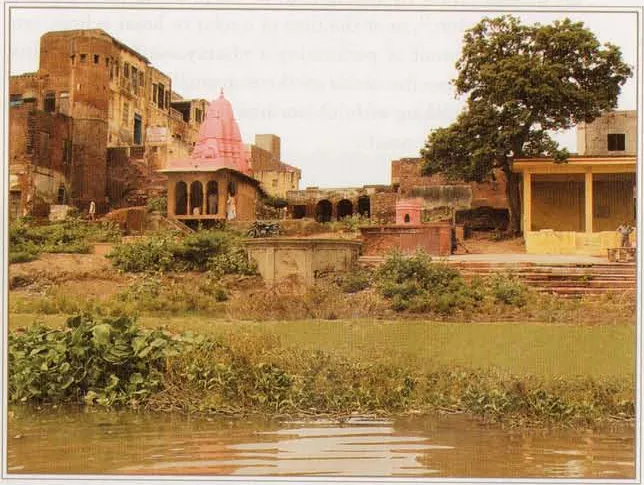
Behind the ghāṭa is a hill, the Dhruva-ṭīlā of Mathurā. According to F. S. Growse (1883), a small temple to Dhruva Jī was built on it in 1837, in place of an older shrine whose ruins remained close by. A. W. Entwistle (1987) gives the same year.[54, 55]
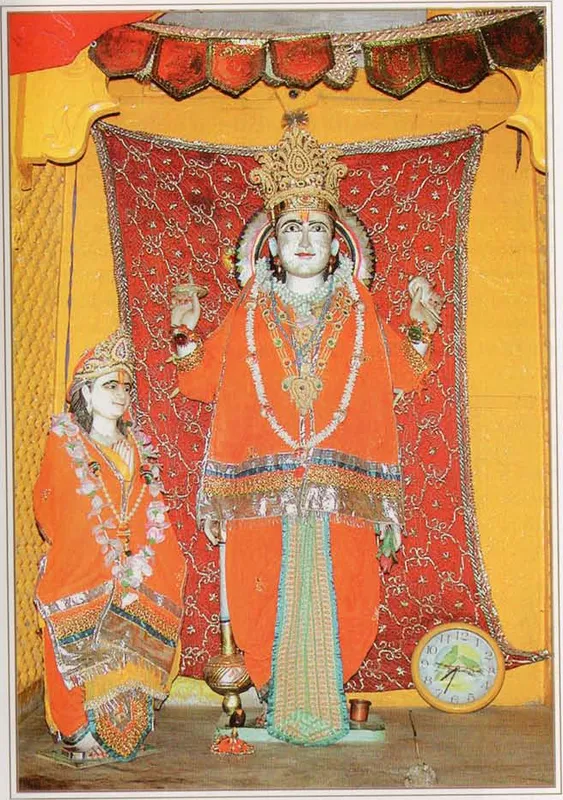
A second Dhruva-ṭīlā stands at Maholī. According to Śrī Vraja-maṇḍala Parikramā (2007), Dhruva performed his austerity there with the mantra Nārada gave him. The book says that the Deities of the child Dhruva and his four-armed Lord Nārāyaṇa live in the Dhruva-Nārāyaṇa temple on the hill.[19 +5] The name is older than the guidebook. Entwistle cites a parikramā book of the late nineteenth century for a Dhruva-ṭīlā at Madhuvana. The Vṛndāvana-kathā (1920) names the ṭīlā of the child Dhruva's austerity half a krośa (an old measure of distance) from Madhuvana.[59, 60]
Where the sources differ
The sources link Dhruva's austerity to more than one place. They are set side by side here without choosing between them. The Varāha Purāṇa and the Bhakti-ratnākara name Dhruva-tīrtha at Mathurā. The Bhāgavatam, the Viṣṇu Purāṇa and the Garga-saṁhitā name Madhuvana on the Yamunā. The 2007 guidebook says that at Dhruva-tīrtha Dhruva only met Nārada, bathed and received the mantra, and that he performed his austerity at the Dhruva-ṭīlā of Maholī.[16 +3]
Accounts differ Where Dhruva performed his austerities.
- Varāha Purāṇa 152.59 and the Bhakti-ratnākara (printed p. 173)At Dhruva-tīrtha in Mathurā: where Dhruva performed the highest austerity; 'this Dhruva-tīrtha is the place of Dhruva's austerity'.
- Śrīla Prabhupāda, ŚB 4.8.42 purportAt Dhruva-ghāṭa, 'in an elevated spot'.
- Śrīmad-Bhāgavatam 4.8.42, 4.8.71; Viṣṇu Purāṇa 1.12.2-5; Garga-saṁhitā 5.25.18In Madhuvana on the Yamunā (the Viṣṇu Purāṇa adds: where Mathurā was later built).
- Śrī Vraja-maṇḍala Parikramā (2007) and the undated parikramā notes MathurāHe only bathed and received the mantra at Dhruva-tīrtha, then performed his austerities in the isolated highlands of Madhuvana, at Dhruva-ṭīlā east of Maholī.
The wording of these accounts is our summary of the sources, not a published translation.
Where Dhruva met his teacher, and who taught him, is also told differently.[16 +3]
Accounts differ Where Dhruva met his instructor and who instructed him.
- Śrī Vraja-maṇḍala Parikramā (2007) and the undated parikramā notes MathurāHe met Devarṣi Nārada at this ghāṭa, was told to bathe here and received the twelve-syllable mantra here.
- Śrīmad-Bhāgavatam 4.8.25, 4.8.42-54, 4.8.71Nārada met him after he left his father's house (place not named), gave the mantra and sent him to Madhuvana, where he bathed on arrival.
- Viṣṇu Purāṇa 1.12.1, 1.12.6The sages headed by Marīci instructed him before he went to Madhuvana; Nārada is not named.
Places in this article
Madhuvana
मधुवनMadhuvana, the forest of the demon Madhu, is one of the twelve forests of Vraja.
Dhruva-tīrtha
ध्रुव-तीर्थDhruva-tīrtha, also called Dhruva-ghāṭa, is one of the twelve ghāṭas (bathing places) of Mathurā south of Viśrāma-ghāṭa, on the Yamunā.
Mathurā
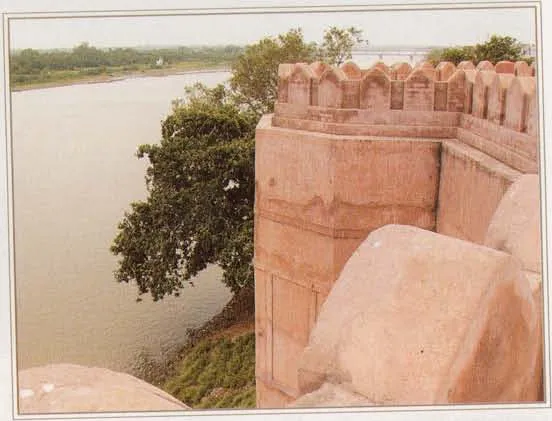
मथुराMathurā is the city on the Yamunā where Śrī Kṛṣṇa appeared from Devakī in the prison of King Kaṁsa.
Dhruva-ṭīlā (Mathurā)
ध्रुव-टीला (मथुरा)Dhruva-Nārāyaṇa Mandira (Madhuvana)
ध्रुव-नारायण मन्दिर (मधुवन)The Dhruva-Nārāyaṇa Mandira is the small temple on top of Dhruva-ṭīlā, the hill at Maholī in Madhuvana where, according to the guidebooks, the child Dhruva performed his …
Dhruva-ṭīlā (Madhuvana)
ध्रुव-टीला (मधुवन)Dhruva-ṭīlā (ṭīlā, a mound or low hill) is a hill at Maholī, the present village of Madhuvana.
Lavaṇāsura's cave
लवणासुर की गुफाLavaṇāsura's cave is a cave in Madhuvana connected with the demon Lavaṇa, the son of Madhu, whom Śatrughna, the brother of Lord Rāmacandra, killed before founding the tow …
Śatrughna Mandira (Madhuvana)
शत्रुघ्न मन्दिर (मधुवन)The Śatrughna Mandira is a temple with a small Deity of Śrī Śatrughna, the brother of Lord Rāmacandra, near Kṛṣṇa-kuṇḍa in Madhuvana, according to the guidebooks.
Bhūteśvara Mahādeva
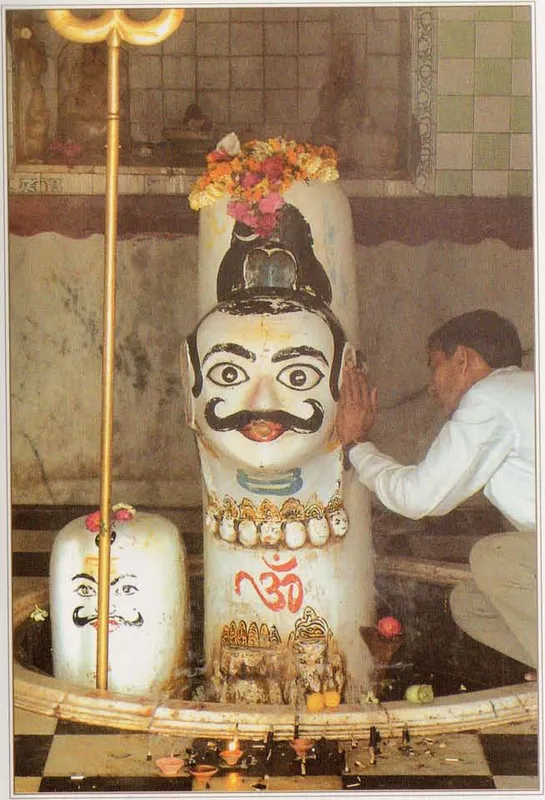
भूतेश्वर महादेवBhūteśvara Mahādeva is the Śiva who guards Mathurā.
Viśrāma-ghāṭa
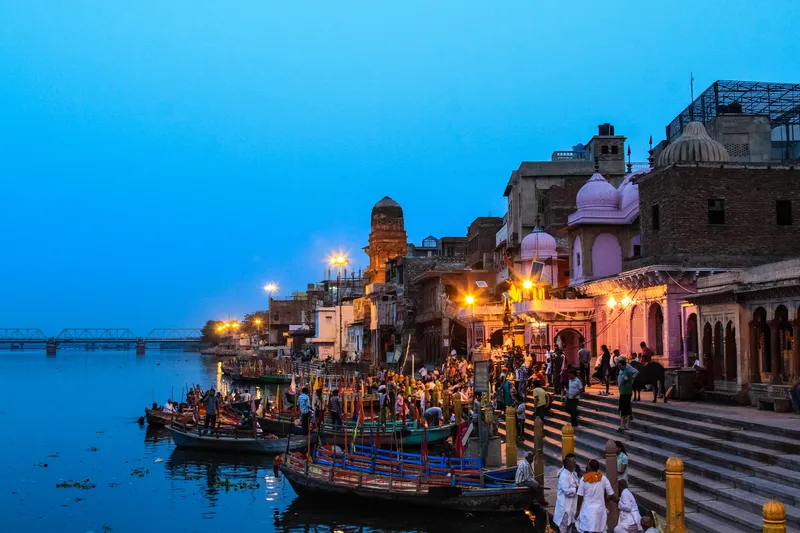
विश्राम-घाटViśrāma-ghāṭa is the bathing place on the Yamunā that the 2007 guidebook calls the principal ghāṭa of Mathurā.
Questions and answers
The Bhāgavatam says in Madhuvana on the bank of the Yamunā, where Nārada sent him. The Varāha Purāṇa names Dhruva-tīrtha at Mathurā, and the guidebooks show a Dhruva-ṭīlā at Maholī.[1 +13]
The forest of Madhu. The scriptures use the name for the forest in which Śatrughna founded Mathurā. Śrīla Prabhupāda writes that Madhuvana still exists in the district of Mathurā.[4–10]
Śatrughna, Śrī Rāma's brother. According to the Bhāgavatam and the Purāṇas, he killed Lavaṇa, son of Madhu, and built Mathurā in Madhuvana.[4–9]
In the Harivaṁśa and the Viṣṇu Purāṇa, he is the Dānava who owned the forest and was Lavaṇa's father. Other texts speak of a Madhu killed there by the Lord; they do not say whether he is the same.[6 +6]
In many texts the name covers the land of Mathurā, and Śrīla Prabhupāda translates the Bhāgavatam's forest of Madhu as the land of Mathurā. He also writes of a Madhuvana that still exists outside the city.[10, 24]
There are two. One is a hill behind Dhruva-ghāṭa in Mathurā, with a small temple of 1837. The other is at Maholī, where the guidebooks show the Dhruva-Nārāyaṇa temple.[22 +2]
The twelve-syllable mantra oṁ namo bhagavate vāsudevāya, for worshipping Lord Kṛṣṇa.[13]
Sources
- Śrīmad-Bhāgavatam 4.8.42, GRETIL
- Śrīmad-Bhāgavatam 4.8.43, GRETIL
- Śrīmad-Bhāgavatam 4.8.71, GRETIL
- Śrīmad-Bhāgavatam 9.11.13-14, GRETIL
- Viṣṇu Purāṇa, 1.12.2-5, GRETIL
- Harivaṁśa, 44.22-23, GRETIL
- Harivaṁśa, 44.51-53, GRETIL
- Brahmāṇḍa Purāṇa, 2.63.186, GRETIL
- Śrīla Prabhupāda, Śrīmad-Bhāgavatam, 9.11.13-14, translation · vedabase.io
- Śrīla Prabhupāda, Śrīmad-Bhāgavatam, 4.8.42, purport · vedabase.io
- Śrīmad-Bhāgavatam 4.8.62, GRETIL
- Śrīmad-Bhāgavatam 4.9.1, GRETIL
- Śrīmad-Bhāgavatam 4.8.54, GRETIL
- Varāha Purāṇa, adhyāya 152, verses 59-61, Sanskrit Wikisource
- Śrīla Narahari Cakravartī, Bhakti-ratnākara, Fifth Wave (pañcama taraṅga), printed p. 173 (1912 ed.), 2nd ed., 1912
- Śrī Vraja-maṇḍala Parikramā (2007), PDF p. 39
- Śrī Vraja-maṇḍala Parikramā (2007), PDF p. 58
- Śrīla Rūpa Gosvāmī, Mathurā-māhātmya, v.251-253 ('ādi-vārāhe'; v.253 'saura-purāṇe')
- Śrī Vraja-maṇḍala Parikramā (2007), PDF p. 61
- Śrī Vraja-maṇḍala Parikramā (2007), PDF p. 63
Show all 61 references
- the undated parikramā notes Madhuvana, ¶8-¶9
- Vṛndāvana-Dhāma Ki Jaya! (c. 1986), by Dhruva Mahārāja dāsa, PDF p. 27
- Śrīla Rūpa Gosvāmī, Mathurā-māhātmya v.194 ('atha mathurā-vanāntargata-madhupurī-māhātmyam')
- Śrīla Prabhupāda, Śrīmad-Bhāgavatam, 1.10.26, translation · vedabase.io
- Garga-saṁhitā, Mathurā-khaṇḍa (5) 25.34, Sanskrit Wikisource
- Śrīla Narahari Cakravartī, Bhakti-ratnākara, Fifth Wave, printed p.164 (1912 ed.): Mathurā-purī and the name Madhuvana, 2nd ed., 1912
- Garga-saṁhitā, Mathurā-khaṇḍa (5) 25.18-20 ('śrī-mathurā-māhātmya-varṇana'), Sanskrit Wikisource
- Śrīla Nārāyaṇa Bhaṭṭa, Vraja-bhakti-vilāsa, chapter 3 (tṛtīyo 'dhyāyaḥ), beginning; printed p. 54, 1st ed., publ. Bābā Kṛṣṇadāsa, Kusuma-sarovara, Saṁvat 2008
- the undated parikramā notes Madhuvana, ¶4
- Harivaṁśa, 44.49-53 (critical edition), GRETIL
- Varāha Purāṇa, 178.5-6, Sanskrit Wikisource
- Varāha Purāṇa, 163.63-64, Sanskrit Wikisource
- Varāha Purāṇa, 163.52-54, Sanskrit Wikisource
- Garga-saṁhitā, Mathurā-khaṇḍa (5) 25.6-7, Sanskrit Wikisource
- Śrī Vraja-maṇḍala Parikramā (2007), PDF p. 62
- the undated parikramā notes Madhuvana, ¶42
- the undated parikramā notes Madhuvana, ¶63
- Śrīmad-Bhāgavatam 4.8.25, GRETIL
- Śrīla Prabhupāda, Śrīmad-Bhāgavatam, 4.8.62, translation · vedabase.io
- Śrīla Prabhupāda, Śrīmad-Bhāgavatam, 4.9.52, purport · vedabase.io
- Śrīmad-Bhāgavatam 4.9.4, GRETIL
- Śrīmad-Bhāgavatam 4.9.20-21, GRETIL
- Śrīmad-Bhāgavatam 4.9.22, GRETIL
- Śrīla Rūpa Gosvāmī, Laghu-bhāgavatāmṛta, 1.3.53-54: 'śrī-dhruva-priyaḥ', GRETIL
- Śrīla Prabhupāda, Śrīmad-Bhāgavatam, 4.9.1, purport · vedabase.io
- Śrīla Prabhupāda, Śrīmad-Bhāgavatam, 2.7.8, purport · vedabase.io
- Śrīla Jīva Gosvāmī, Kṛṣṇa-sandarbha, anuccheda 113, GRETIL
- Viṣṇu Purāṇa, 1.12.4-6, GRETIL
- Garga-saṁhitā, Mathurā-khaṇḍa (5) 25.18, Sanskrit Wikisource
- Varāha Purāṇa, adhyāya 180 (colophon: Mathurā-varṇana), verses 1-2, Sanskrit Wikisource
- Varāha Purāṇa, adhyāya 180, verses 121-123, Sanskrit Wikisource
- Śrīla Rūpa Gosvāmī, Mathurā-māhātmya, v.254-256 ('skānde mathurā-khaṇḍe'; v.256 'ādi-vārāha-purāṇe')
- Śrīla Narahari Cakravartī, Bhakti-ratnākara, Fifth Wave, printed p. 174 (1912 ed.), 2nd ed., 1912
- Mathurá (1883), F. S. Growse, B.C.S., M.A. Oxon., C.I.E. (as the title page gives him, p. 147
- A. W. Entwistle, ch. 8 ('The pilgrimage itinerary'), §1.10a 'Dhruv and Narad Tilas', printed p. 316, Egbert Forsten, Groningen, 1987
- the undated parikramā notes Madhuvana, ¶39
- the undated parikramā notes Madhuvana, ¶52
- the undated parikramā notes Madhuvana, ¶18
- A. W. Entwistle, ch. 8 §2 'Madhuban (Maholi)', printed p. 332, Egbert Forsten, Groningen, 1987
- Vṛndāvana-kathā, chapter 8 (aṣṭama pariccheda), the twelve forests: Madhuvana, printed p.120
- Śrī Vraja-maṇḍala Parikramā (2007), PDF p. 43
Further sources
- Śrīmad-Bhāgavatam, First Canto 10.26, Fourth Canto 8-9 and Ninth Canto 11.13-14, translations and purports by Śrīla Prabhupāda.
- Viṣṇu Purāṇa 1.12, Harivaṁśa 44, Brahmāṇḍa Purāṇa, Garga-saṁhitā, Mathurā-khaṇḍa 25, and the Varāha Purāṇa: summarised from the Sanskrit.
- Śrīla Rūpa Gosvāmī, Mathurā-māhātmya and Laghu-bhāgavatāmṛta; Śrīla Jīva Gosvāmī, Kṛṣṇa-sandarbha; Bhakti-ratnākara: summarised.
- F. S. Growse, Mathurá (1883), and A. W. Entwistle, Braj (1987), for the dated temple only; guidebooks for Maholī as they describe it.