Śrī Caitanya Mahāprabhu in the forests of Vraja
The cows, the deer and the parrots
In short
After bathing at the ghāṭas (bathing places) of Mathurā, Śrī Caitanya Mahāprabhu walked through the forests of Vraja. Madhuvana, Tālavana, Kumudavana and Bahulāvana were among them, and He bathed at each place in ecstatic love. The Caitanya-caritāmṛta tells how herds of cows surrounded Him in one of these forests, and how deer and two singing parrots followed.[1–6]
On this page
At a glance
- Scripture: Śrī Caitanya-caritāmṛta, Madhya-līlā 17.193-230, by Śrīla Kṛṣṇadāsa Kavirāja Gosvāmī, in Śrīla Prabhupāda's translation.[5–7]
- The forests named: according to the Caitanya-caritāmṛta, He visited Madhuvana, Tālavana, Kumudavana and Bahulāvana, and bathed in each with great ecstatic love.[1–4]
- His love: it grew a thousand times on seeing Mathurā, and a hundred thousand times in the forests.[8]
- The place of the cows and the parrots: the Caitanya-caritāmṛta says only "in one of the places". The Bhakti-ratnākara puts the cows, deer and birds at Bahulāvana.[5, 6, 9]
- The parrot's verse: the verse the male parrot sings comes from Śrīla Kṛṣṇadāsa Kavirāja Gosvāmī's own Govinda-līlāmṛta.[7]
- Bahulāvana in the guidebooks: they place it at the village of Bāṭī, about seven miles west of Mathurā.[10–13]
How did Śrī Caitanya come to the forests?
Śrī Caitanya Mahāprabhu came to Mathurā on His journey to Vraja. On seeing the city He fell to the ground in ecstatic love. He bathed at Viśrāma-ghāṭa and visited Kṛṣṇa's birthplace.[14, 15] People came by the hundreds of thousands to the house of the brāhmaṇa who guided Him, and He came out of the house to meet them.[16]
With that brāhmaṇa He bathed in the twenty-four ghāṭas (bathing places) of the Yamunā at Mathurā. He also saw the holy places of the city, Bhūteśvara among them.[17, 18] Read more: The twenty-four ghāṭas of Mathurā → Then He set out for the forests.[1]
Which forests of Vraja did Śrī Caitanya visit?
The Caitanya-caritāmṛta names four of them in one verse:
madhu-vana, tāla, kumuda, bahulā-vana gelā
tāhāṅ tāhāṅ snāna kari’ premāviṣṭa hailā
Śrī Caitanya Mahāprabhu visited the different forests, including Madhuvana, Tālavana, Kumudavana and Bahulāvana. Wherever He went, He took His bath with great ecstatic love.
Translation: Śrīla A.C. Bhaktivedanta Swami PrabhupādaIn his purport (his explanation of the verse), Śrīla Prabhupāda explains that there are twelve such forests in the Vṛndāvana area. Some are on the western side of the Yamunā and some on the eastern.[2]
Names this place“There are twelve such vanas in Vṛndāvana. Some are located on the western side of the Yamunā, and others are on the eastern side. The forests situated on the eastern side are Bhadravana, Bilvavana, Lauhavana, Bhāṇḍīravana and Mahāvana. On the western side are Madhuvana, Tālavana, Kumudavana, Bahulāvana, Kāmyavana, Khadiravana and Vṛndāvana. These are the twelve forests of the Vṛndāvana area.”
Śrīla Prabhupāda, Śrī Caitanya-caritāmṛta, Madhya-līlā 17.193, purport · vedabase.io
In another purport he writes about the inner forests of Vṛndāvana, the twelve forests such as Tālavana, Madhuvana and Bahulāvana. They are known for the Lord's pastimes, he says, and are considered higher than Mathurā.[19]
The Purāṇas, the old scriptures, give the forests in a fixed order. The Varāha Purāṇa counts Madhuvana first, Tāla second, Kumuda third and Bahulā fifth. It says that those who see the twelve forests do not suffer hell. It promises Indra's world to those who go round them in order with their senses controlled (summarised here, not translated).[20] The historian A. W. Entwistle (1987) points to an older list. The Jain Vividha-tīrtha-kalpa of Jinaprabha Sūri, completed in 1332, already names these four among twelve forests at Mathurā.[21]
The four forests of the verse are the first of the western seven. Madhuvana is the forest where, the Bhāgavatam says, Dhruva worshipped the Lord and Śatrughna later founded Mathurā.[22–27] Śrīla Prabhupāda writes that it still exists in the district of Mathurā and that many saintly persons still live there. The guidebooks give its present name as Maholī.[3 +4] Tālavana is the palm forest where Balarāma killed the ass-demon Dhenuka.[32] The commentators on the Tenth Canto place it within four krośas (an old measure of distance) of Govardhana. The guidebooks show it at the village of Tarsi, about six miles south of Mathurā.[33–39] Read more: The killing of Dhenuka at Tālavana →
Kumudavana, the forest of water lilies, is the third forest in the Varāha Purāṇa's list. In the verse that Śrīla Rūpa Gosvāmī quotes, going there makes a person fulfilled.[20 +4] According to the Vraja-bhakti-vilāsa, pilgrims bathe there in Padma-kuṇḍa and walk round the forest in half a krośa. The guidebooks describe it as the smallest of the twelve, now the village of Kudaravana, two miles west of Tālavana.[43–51] According to the Bhakti-ratnākara, Śrīla Rāghava Paṇḍita Gosvāmī showed Kumudavana to Śrīla Śrīnivāsa Ācārya as most wonderful: merely by coming here, one is honoured in Viṣṇuloka, the world of Viṣṇu.[42]
Bahulāvana is the fifth of the twelve in the same lists. The Varāha Purāṇa calls it the best of forests; going there, one reaches the abode of Agni, the fire-god. The Nārada Purāṇa says that it destroys sins, and that a person who bathes there gets all he desires.[20 +5]
The verse does not give the order of the visits. The Vraja-bhakti-vilāsa gives the pilgrims' order for the same forests. Madhuvana, Tālavana and Kumudavana are walked round on one Ekādaśī (eleventh day) of the dark fortnight of Bhādrapada (August–September). Bahulāvana follows at dawn on the Dvādaśī (twelfth day) (summarised here, not translated).[45] Śrīla Murāri Gupta and Śrīla Locana dāsa Ṭhākura also tell of the tour. In their accounts the guide Kṛṣṇadāsa shows Him Kumudavana, and describes the forests with their directions before the tour begins (both summarised here, not translated).[57–60]
What happened with the cows?
The Caitanya-caritāmṛta goes straight on from the four forests to the scene that pilgrims remember:
pathe gābhī-ghaṭā care prabhure dekhiyā
prabhuke beḍaya āsi’ huṅkāra kariyā
When Śrī Caitanya Mahāprabhu passed through Vṛndāvana, herds of grazing cows saw Him pass and, immediately surrounding Him, began to moo very loudly.
Translation: Śrīla A.C. Bhaktivedanta Swami PrabhupādaThe verses that follow tell how the cows, the deer, the birds and the trees of the forest responded to Him as He passed.[5] The Bhakti-ratnākara describes the same meeting in its own words. Śrīla Rāghava Paṇḍita Gosvāmī is showing Śrīla Śrīnivāsa Ācārya the path through Bahulāvana. He tells him that hundreds of thousands of cows ran there with raised tails, surrounded Gauracandra (Śrī Caitanya) and gazed at Him. He touched them as He had done long ago in His cowherding (summarised here, not translated).[5, 6, 9]
The guidebooks set Kṛṣṇa's cowherding in these forests. The Bhāgavatam's own account of it describes Him calling by name, in a voice deep as the clouds, the cows that had strayed far.[61]
Why did the deer and birds follow Him?
According to the Bhakti-ratnākara, deer, peacocks and cuckoos gathered round Him, and the trees showered flowers. The people who saw it said that He was the son of the king of Vraja in disguise.[5, 6, 9]
The Caitanya-caritāmṛta gives the measure of His love in these forests. Its author writes that the Lord's ecstatic love grew a thousand times when He saw Mathurā, and a hundred thousand times when He wandered in the forests.[8]
সহস্রগুণ প্রেম বাড়ে মথুরা দরশনে ।
লক্ষগুণ প্রেম বাড়ে, ভ্রমেন যবে বনে ॥ ২২৭ ॥
sahasra-guṇa prema bāḍe mathurā daraśane
lakṣa-guṇa prema bāḍe, bhramena yabe vane
The Lord’s ecstatic love increased a thousand times when He visited Mathurā, but it increased a hundred thousand times when He wandered in the forests of Vṛndāvana.
Translation: Śrīla A.C. Bhaktivedanta Swami PrabhupādaWhat did the two parrots sing?
In the Caitanya-caritāmṛta's account, two parrots came and sang to Him. The male parrot sings a verse in praise of Kṛṣṇa. It is taken from the Govinda-līlāmṛta, a work by the same author, Śrīla Kṛṣṇadāsa Kavirāja Gosvāmī.[5–7] The verse glorifies Kṛṣṇa's beauty and pastimes. The guidebook Śrī Vraja-maṇḍala Parikramā (2007) prints it in its chapter on Bahulāvana. The verses are only identified here, not explained.[7]
Where did this happen?
The author himself says that he has described what happened in only one place.[6]
ei-mata prema — yāvat bhramila ‘bāra’ vana
ekatra likhiluṅ, sarvatra nā yāya varṇana
Thus I have written a description of the ecstatic love Lord Caitanya manifested in one of the places He visited while walking through the twelve forests of Vṛndāvana. To describe what He experienced everywhere would be impossible.
Translation: Śrīla A.C. Bhaktivedanta Swami PrabhupādaHe does not say which place it was. The Bhakti-ratnākara sets the cows, deer and birds at Bahulāvana, without the parrots. The modern guidebooks set the whole scene at Bahulāvana, parrots included. The accounts are given side by side here:
Accounts differ Where Śrī Caitanya's episode with the cows, deer and parrots took place.
- Caitanya-caritāmṛta, Madhya 17.194 and 17.230while He passed through Vṛndāvana, in one of the places of the twelve forests; not named
- Bhakti-ratnākara (printed p.189)the cows, deer and birds at Bahulāvana (no parrots)
- Śrī Vraja-maṇḍala Parikramā (2007) and the undated parikramā notes Bahulāvanathe whole episode, parrots included, at Bahulāvana
What do the texts say about Bahulāvana?
Śrīla Rūpa Gosvāmī and the Bhakti-ratnākara quote Skanda verses about it. Bahulā, the consort of Śrī Hari (Viṣṇu), always stays at Bahulāvana. It is a lotus forest of great merit where Viṣṇu sports with Lakṣmī, and it has a Saṅkarṣaṇa-kuṇḍa and a Māna-sarovara (both sacred ponds) (summarised here, not translated).[10 +4] The Varāha Purāṇa names a great tīrtha (holy bathing place) in the forest called Bahula. Bathing there on the Dvādaśī of the bright fortnight of Caitra (March–April) takes one to the Lord's own world.[64] The Garga-saṁhitā tells of Kṛṣṇa coming to Bāhulavana, full of flowering creepers. On His flute He played megha-mallāra, a rāga (melody) of the rains. At once the clouds rained fine drops, and a cool, fragrant breeze refreshed the gopīs (summarised here, not translated).[65–67]
According to the Vraja-bhakti-vilāsa of Śrīla Nārāyaṇa Bhaṭṭa Gosvāmī, pilgrims visit Bahulāvana on the Dvādaśī of the dark fortnight of Bhādrapada. They pray to it as the forest of the Lord Padmanābha, and bathe in its Saṅkarṣaṇa-kuṇḍa and Kṛṣṇa-kuṇḍa.[44 +3] According to the Bhakti-ratnākara, Śrī Jāhnavā-devī later toured the twelve forests with her companions, Bahulā among them.[69–71]
The guidebooks give Bahulāvana's present name as Bāṭī, about seven miles west of Mathurā, between Rādhā-kuṇḍa and Vṛndāvana. One guide says that the forest has disappeared and a large village stands there.[10–13] According to Pulinbihārī Datta's Vṛndāvana-kathā (1920), Kṛṣṇa saved a cow named Bahulā from the mouth of a tiger here. The book adds that the name may be a changed form of Bakulavana, the reading found in the Varāha and Padma Purāṇas.[20 +4] One guidebook says that Bahulāvana, one of the largest of the twelve forests, is where Kṛṣṇa and Balarāma grazed Their cows every day.[12 +3]
Places in this article
Bahulāvana
बहुलावनBahulāvana is one of the twelve forests of Vraja and one of the seven on the western side of the Yamunā.
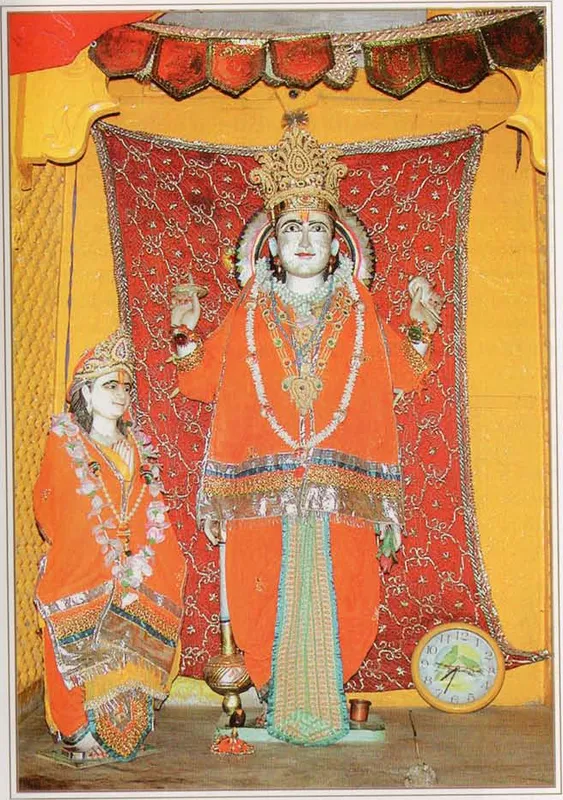
Madhuvana
मधुवनMadhuvana, the forest of the demon Madhu, is one of the twelve forests of Vraja.
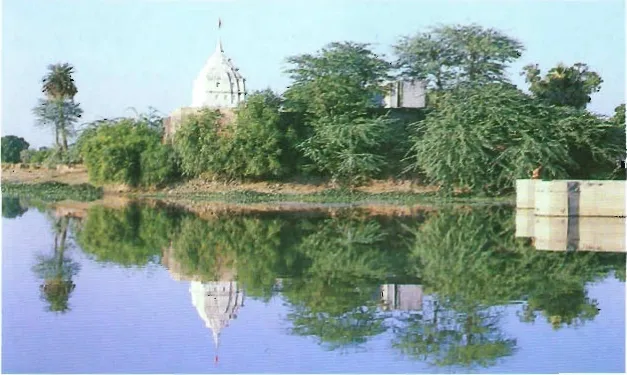
Tālavana
तालवनTālavana, the forest of tāla (palm) trees, is one of the twelve forests of Vraja and one of the seven on the western side of the Yamunā.
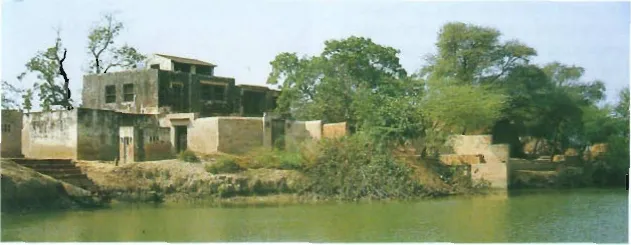
Kumudavana
कुमुदवनKumudavana, the forest of the kumuda, the white water lily, is one of the twelve forests of Vraja and one of the seven on the western side of the Yamunā.
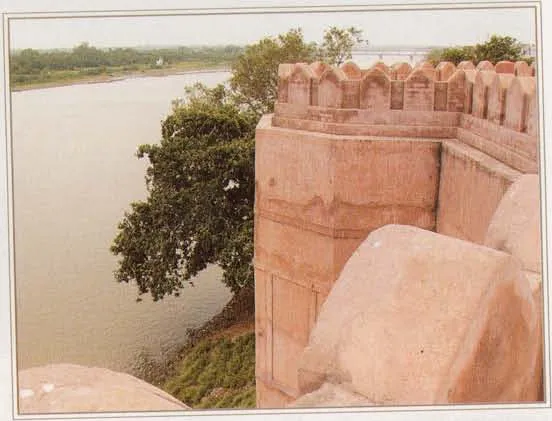
Mathurā
मथुराMathurā is the city on the Yamunā where Śrī Kṛṣṇa appeared from Devakī in the prison of King Kaṁsa.
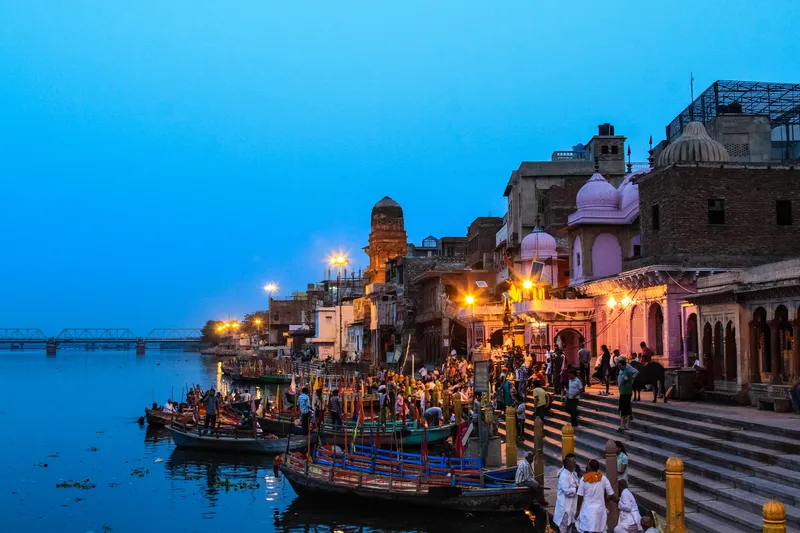
Viśrāma-ghāṭa
विश्राम-घाटViśrāma-ghāṭa is the bathing place on the Yamunā that the 2007 guidebook calls the principal ghāṭa of Mathurā.
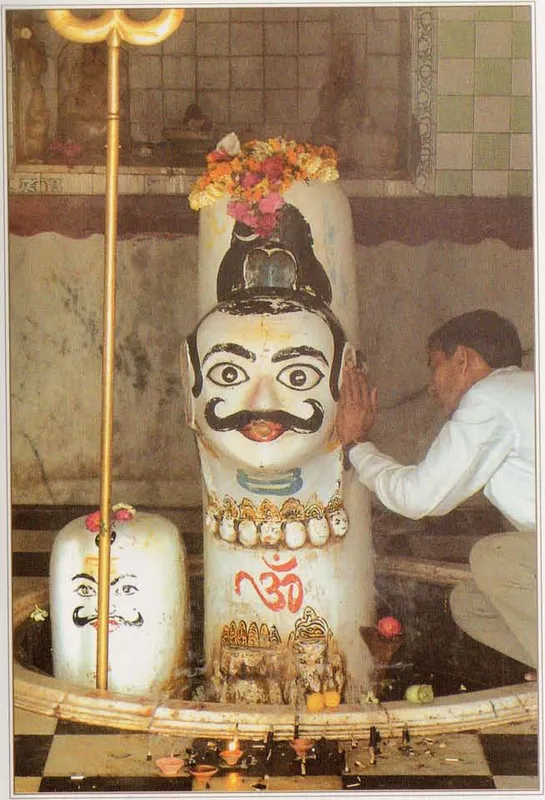
Bhūteśvara Mahādeva
भूतेश्वर महादेवBhūteśvara Mahādeva is the Śiva who guards Mathurā.
Questions and answers
The Caitanya-caritāmṛta names Madhuvana, Tālavana, Kumudavana and Bahulāvana. It says that He walked through the twelve forests of Vṛndāvana.[1–4, 6]
Herds of grazing cows saw Him pass and surrounded Him. The Bhakti-ratnākara says that hundreds of thousands of cows gathered round Him at Bahulāvana, and that He touched them as in His cowherding.[5, 6, 9]
The Bhakti-ratnākara says that deer, peacocks and cuckoos gathered round Him, while the people said that He was the son of the king of Vraja in disguise. The Caitanya-caritāmṛta tells the scene as part of His ecstatic love in the forests.[5 +3]
They sang verses in praise of Kṛṣṇa. The male parrot's verse is from Śrīla Kṛṣṇadāsa Kavirāja Gosvāmī's own Govinda-līlāmṛta.[7]
The Caitanya-caritāmṛta says only "in one of the places" of the twelve forests. The Bhakti-ratnākara and the guidebooks set it at Bahulāvana.[5, 6, 9]
Śrīla Kṛṣṇadāsa Kavirāja Gosvāmī, in the Caitanya-caritāmṛta, Madhya-līlā 17. Śrīla Prabhupāda translated it with purports.[5–7]
Sources
- Śrīla Kṛṣṇadāsa Kavirāja Gosvāmī, Śrī Caitanya-caritāmṛta, CC Madhya-līlā 17.193, online edition · vedabase.io
- Śrīla Prabhupāda, Śrī Caitanya-caritāmṛta, Madhya-līlā 17.193, purport · vedabase.io
- Śrī Vraja-maṇḍala Parikramā (2007), PDF p. 63
- the undated parikramā notes Kumudavana, ¶3
- Śrīla Kṛṣṇadāsa Kavirāja Gosvāmī, Śrī Caitanya-caritāmṛta, CC Madhya-līlā 17.194, online edition · vedabase.io
- Śrīla Kṛṣṇadāsa Kavirāja Gosvāmī, Śrī Caitanya-caritāmṛta, CC Madhya-līlā 17.230, online edition · vedabase.io
- Śrīla Kṛṣṇadāsa Kavirāja Gosvāmī, Govinda-līlāmṛta, 13.29, after the editions of Haridas Das and Haridas Shastri
- Śrīla Kṛṣṇadāsa Kavirāja Gosvāmī, Śrī Caitanya-caritāmṛta, Madhya-līlā 17.227, online edition · vedabase.io
- Śrīla Narahari Cakravartī, Bhakti-ratnākara, Fifth Wave, printed p.189 (1912 ed.): Bahulāvana and Śrī Caitanya's visit, 2nd ed., 1912
- Śrī Vraja-maṇḍala Parikramā (2007), PDF p. 75
- Śrī Vraja-maṇḍala Parikramā (2007), PDF p. 76
- the undated parikramā notes Bahulāvana, ¶2
- the undated parikramā notes Bahulāvana, ¶5
- Śrīla Kṛṣṇadāsa Kavirāja Gosvāmī, Śrī Caitanya-caritāmṛta, Madhya-līlā 17.155, online edition · vedabase.io
- Śrīla Kṛṣṇadāsa Kavirāja Gosvāmī, Śrī Caitanya-caritāmṛta, Madhya-līlā 17.156, online edition · vedabase.io
- Śrīla Kṛṣṇadāsa Kavirāja Gosvāmī, Śrī Caitanya-caritāmṛta, Madhya-līlā 17.188, online edition · vedabase.io
- Śrīla Kṛṣṇadāsa Kavirāja Gosvāmī, Śrī Caitanya-caritāmṛta, Madhya-līlā 17.190, online edition · vedabase.io
- Śrīla Kṛṣṇadāsa Kavirāja Gosvāmī, Śrī Caitanya-caritāmṛta, Madhya-līlā 17.191, online edition · vedabase.io
- Śrīla Prabhupāda, The Nectar of Instruction, Text 9, purport · vedabase.io
- Varāha Purāṇa, adhyāya 161, verses 6-10, Sanskrit Wikisource
Show all 73 references
- A. W. Entwistle, ch. 6 §3 'Jinaprabha Suri (VTK)', printed p.231, Egbert Forsten, Groningen, 1987
- Śrīmad-Bhāgavatam 9.11.13-14, GRETIL
- Viṣṇu Purāṇa, 1.12.2-5, GRETIL
- Harivaṁśa, 44.22-23, GRETIL
- Harivaṁśa, 44.51-53, GRETIL
- Brahmāṇḍa Purāṇa, 2.63.186, GRETIL
- Śrīla Prabhupāda, Śrīmad-Bhāgavatam, 9.11.13-14, translation · vedabase.io
- Śrīla Prabhupāda, Śrīmad-Bhāgavatam, 4.8.42, purport · vedabase.io
- Śrī Vraja-maṇḍala Parikramā (2007), PDF p. 61
- the undated parikramā notes Madhuvana, ¶8-¶9
- Vṛndāvana-Dhāma Ki Jaya! (c. 1986), by Dhruva Mahārāja dāsa, PDF p. 27
- Padma Purāṇa, Vṛndāvana-māhātmya (1) vv.44-45 (= Padma Pātāla-khaṇḍa 69.44-45)
- Śrīla Sanātana Gosvāmī: commentary on ŚB 10.15.21, Bhagavata Vidya Pith edition, ed. Bhagavata Rishi and Krishna Shankar Shastri, 1996
- Śrī Vraja-maṇḍala Parikramā (2007), PDF p. 66
- Śrī Vraja-maṇḍala Parikramā (2007), PDF p. 67
- Vṛndāvana-Dhāma Ki Jaya! (c. 1986), by Dhruva Mahārāja dāsa, PDF p. 28
- the undated parikramā notes Tālavana, ¶3
- the undated parikramā notes Tālavana, ¶15-¶19
- Vṛndāvana-kathā, chapter 8 (aṣṭama pariccheda), the twelve forests: Tālavana, printed p.120
- Varāha Purāṇa, adhyāya 153, vv.35-36, Sanskrit Wikisource
- Śrīla Rūpa Gosvāmī, Mathurā-māhātmya v.336
- Śrīla Narahari Cakravartī, Bhakti-ratnākara, Fifth Wave, printed p.186 (1912 ed.): 'the third' forest, Kumudavana, 2nd ed., 1912
- Śrīla Nārāyaṇa Bhaṭṭa, Vraja-bhakti-vilāsa, chapter 9, vv.72-73: 'kumudavana-mahātmya-pradakṣiṇā', 1st ed., publ. Bābā Kṛṣṇadāsa, Kusuma-sarovara, Saṁvat 2008
- Śrīla Nārāyaṇa Bhaṭṭa, Vraja-bhakti-vilāsa, printed p.5, the presiding deities of the twelve forests, 1st ed., publ. Bābā Kṛṣṇadāsa, Kusuma-sarovara, Saṁvat 2008
- Śrīla Nārāyaṇa Bhaṭṭa, Vraja-bhakti-vilāsa, printed p.178, within the verse the print numbers 6 (finding aid Vraja-bhakti-vilāsa chapter (7) v.7): the pilgrimage of the dark Ekādaśī and Dvādaśī of Bhādrapada, 1st ed., publ. Bābā Kṛṣṇadāsa, Kusuma-sarovara, Saṁvat 2008
- Śrīla Nārāyaṇa Bhaṭṭa, Vraja-bhakti-vilāsa, first chapter, v.93 (the print closes the passage '॥ ९३ ॥'): Vraja-maṇḍala and its forests as the limbs of the Lord, quoted under the label 'viṣṇu-rahasye'; printed p. 14, 1st ed., publ. Bābā Kṛṣṇadāsa, Kusuma-sarovara, Saṁvat 2008
- Prabhudayāl Mītal, 'Braj-yātrā', Kumudavana (visited from the first halt), printed p.102
- Śrī Vraja-maṇḍala Parikramā (2007), PDF p. 70
- Vṛndāvana-Dhāma Ki Jaya! (c. 1986), by Dhruva Mahārāja dāsa, PDF p. 29
- the undated parikramā notes Kumudavana, ¶3-¶5
- the undated parikramā notes Kumudavana, ¶19
- Varāha Purāṇa, adhyāya 153, v.39, Sanskrit Wikisource
- Śrīla Rūpa Gosvāmī, Mathurā-māhātmya vv.341-344
- Śrīla Narahari Cakravartī, Bhakti-ratnākara, Fifth Wave, printed p.189 (1912 ed.): Bahulāvana's kuṇḍas and the Ādi-vārāha and Skanda verses, 2nd ed., 1912
- Vṛndāvana-kathā, chapter 8 (aṣṭama pariccheda), Bahulāvana, printed p.121
- Nārada Purāṇa, Uttara-bhāga 79.11
- Kṛṣṇa-caitanya-caritāmṛta of Śrī Murāri Gupta, prakrama 4, sarga 10, v.7
- Śrī Locana dāsa Ṭhākura, Caitanya-maṅgala, Śeṣa-khaṇḍa, printed p. 177, left column, lines 16-17 (lines 18-22 summarised)
- Kṛṣṇa-caitanya-caritāmṛta of Śrī Murāri Gupta, prakrama 4, sarga 3, v.10
- Śrī Locana dāsa Ṭhākura, Caitanya-maṅgala, Śeṣa-khaṇḍa, printed p. 170, left column, line 7 (line 8 summarised)
- Śrīmad-Bhāgavatam 10.15.12, GRETIL
- the undated parikramā notes Bahulāvana, ¶2-¶3
- the undated parikramā notes Bahulāvana, ¶19
- Varāha Purāṇa, adhyāya 157, vv.8-10, Sanskrit Wikisource
- Garga-saṁhitā, Vṛndāvana-khaṇḍa (2) 20.19-21 (chapter 'rāsa-krīḍā'), Sanskrit Wikisource
- Garga-saṁhitā, Vṛndāvana-khaṇḍa (2) 10.18, Sanskrit Wikisource
- Śrīmad-Bhāgavatam 10.29.1, GRETIL
- Śrīla Nārāyaṇa Bhaṭṭa, Vraja-bhakti-vilāsa, chapter 10, vv.14-16: 'bahulāvana-pradakṣiṇā', 1st ed., publ. Bābā Kṛṣṇadāsa, Kusuma-sarovara, Saṁvat 2008
- Śrīla Narahari Cakravartī, Bhakti-ratnākara, Eleventh Wave, printed p.670 (1912 ed.): Jāhnavā Īśvarī's tour of the twelve forests, 2nd ed., 1912
- Vṛndāvana-Dhāma Ki Jaya! (c. 1986), by Dhruva Mahārāja dāsa, PDF p. 30
- the undated parikramā notes Bahulāvana, ¶34
- Śrīmad-Bhāgavatam 10.15.1, Bhagavata Vidya Pith edition, ed. Bhagavata Rishi and Krishna Shankar Shastri, 1996
- Śrīla Prabhupāda, Kṛṣṇa, the Supreme Personality of Godhead (Kṛṣṇa book), Chapter 15, 'The Killing of Dhenukāsura' · vedabase.io
Further sources
- Śrī Caitanya-caritāmṛta, Madhya-līlā 17.155-230, translation and purports by Śrīla Prabhupāda.
- Bhakti-ratnākara of Śrīla Narahari Cakravartī Ṭhākura, Fifth and Eleventh Waves (1912 edition), summarised.
- Varāha, Skanda (as quoted) and Nārada Purāṇas; Śrīla Rūpa Gosvāmī's Mathurā-māhātmya; Vraja-bhakti-vilāsa; Śrīla Murāri Gupta and Śrīla Locana dāsa Ṭhākura: summarised, not translated.