How Nanda and Yaśodā prayed for Kṛṣṇa's protection
The Nārāyaṇa and Nṛsiṁha shrines of Nandagrāma, from the Bhāgavatam to the guidebooks
In short
Nanda and Yaśodā prayed for Kṛṣṇa's safety because they loved their child. The Bhāgavatam tells that Nanda worshipped Viṣṇu at Kṛṣṇa's birth festival for his son's welfare. After the demoness Pūtanā, Yaśodā and the gopīs (cowherd women) protected Him with the Lord's names. Śrīla Viśvanātha Cakravartī Ṭhākura places Nanda's Nārāyaṇa shrine in the east of his palace at Nandagrāma.[1–8]
On this page
At a glance
- At the birth festival, Nanda gave cows, clothes and ornaments in charity. He did it to please Lord Viṣṇu and for his son's welfare.[1, 2]
- After Pūtanā's death, Yaśodā, Rohiṇī and the elder gopīs (cowherd women) protected the child limb by limb with the names of the Lord. Nṛsiṁha is not among those names in the Bhāgavatam.[3–5]
- Garga Muni told Nanda that his son was as good as Nārāyaṇa. Śrīla Prabhupāda explains that Nārāyaṇa was Nanda's worshipable Deity, the form of the Lord he worshipped.[9–11]
- In Śrīla Viśvanātha Cakravartī Ṭhākura's plan of Nanda's palace, Nanda serves Nārāyaṇa in a shrine in the east for his son's welfare.[6–8]
- In the Gosvāmīs' accounts of the daily pastimes, Yaśodā protects Kṛṣṇa with Nṛsiṁha's names every morning as He goes to the forest.[12–14]
- The 2007 guidebook places a Nṛsiṁhadeva temple on the bank of Yaśodā-kuṇḍa (Yaśodā's pond). No older source mentions it.[15]
Nanda's worship of Viṣṇu at the birth festival
The Bhāgavatam first speaks of this worship at Kṛṣṇa's birth. When the child was born, Nanda held a great festival in Gokula, the cowherd village of Kṛṣṇa's infancy. He gave in charity to please Lord Viṣṇu and for the welfare of his own son.[1, 2]
The great-minded Mahārāja Nanda gave clothing, ornaments and cows in charity to the cowherd men in order to please Lord Viṣṇu, and thus he improved the condition of his own son in all respects. He distributed charity to the sūtas, the māgadhas, the vandīs, and men of all other professions, according to their educational qualifications, and satisfied everyone’s desires.
Translation: Śrīla A.C. Bhaktivedanta Swami PrabhupādaIn the Kṛṣṇa book, his retelling of the Tenth Canto, Śrīla Prabhupāda explains what was in Nanda's heart. While Nanda worshipped Lord Viṣṇu, his only desire was that the newborn child would be happy. He did not know that the child was the origin of Viṣṇu, so he prayed to Viṣṇu to protect Him.[2]
General teaching (does not name the place)“While Nanda Mahārāja was worshiping Lord Viṣṇu on this occasion and was trying to satisfy all the people there, his only desire was that the newborn child Kṛṣṇa would be happy. Nanda Mahārāja had no knowledge that this child was the origin of Viṣṇu; he was praying to Lord Viṣṇu to protect Him.”
Śrīla Prabhupāda, Kṛṣṇa, the Supreme Personality of Godhead, ch. 5 'The Meeting of Nanda and Vasudeva' · vedabase.io
The Bhāgavatam shows the same devotion later in Nanda's life. Nanda fasted on Ekādaśī, the eleventh day of the moon, and worshipped Lord Janārdana, a name of Viṣṇu. Then, on the Dvādaśī, the twelfth day, he went to bathe in the Yamunā.[17–22]
Śrī Bādarāyaṇi said: Having worshiped Lord Janārdana and fasted on the Ekādaśī day, Nanda Mahārāja entered the water of the Kālindī on the Dvādaśī to take his bath.
Translation: Śrīla Prabhupāda's disciples (BBT)Yaśodā and the gopīs protect the child after Pūtanā
The second scene comes after the deliverance of Pūtanā. Mother Yaśodā and Rohiṇī, with the elder gopīs, waved a cow's switch (the cow's tail) around the child. They used cow urine, dust and cow dung. Then they protected each of His limbs and each of His activities with a name of the Lord.[3–5] Read more: The deliverance of Pūtanā: the Bhāgavatam and the other accounts →
yaśodā-rohiṇībhyāṃ tāḥ samaṃ bālasya sarvataḥ / rakṣāṃ vidadhire samyag go-puccha-bhramaṇādibhiḥ
Thereafter, mother Yaśodā and Rohiṇī, along with the other elderly gopīs, waved about the switch of a cow to give full protection to the child Śrī Kṛṣṇa.
Translation: Śrīla A.C. Bhaktivedanta Swami PrabhupādaAmong the names they used are Aja, Maṇimān, Yajña, Acyuta, Hayagrīva and Keśava. He is Govinda while He plays and Mādhava while He sleeps, and there are many more. Nṛsiṁha is not among them, and the scene is set in Gokula.[3–5] Śrīla Prabhupāda tells it in the Kṛṣṇa book. The gopīs, led by Mother Yaśodā and Rohiṇī, chanted the names of Viṣṇu to give Kṛṣṇa's body full protection.[4] In his purport (his explanation of the verse) he draws a lesson for every devotee:
General teaching (does not name the place)“While decorating the body with tilaka, we give protection to the body by chanting twelve names of Viṣṇu.”
Śrīla Prabhupāda, Śrīmad-Bhāgavatam, Canto 10, Chapter 6, Texts 27–29, purport · vedabase.io
The Kṛṣṇa-kavaca of the Garga-saṁhitā
The Garga-saṁhitā tells the same moment with a set prayer of protection, called a kavaca ("armour"). Its account is summarised here, not translated. After Pūtanā's death, Yaśodā, Rohiṇī and the gopīs recite a Kṛṣṇa-kavaca. It gives each of the baby's limbs to a form of the Lord. Among many others, Nṛsiṁha is to protect His eyes.[24, 25] The book adds that the kavaca passed from the Lord to Brahmā, from Brahmā to Śiva, and from Śiva to Durvāsā. Durvāsā gave it to Yaśodā in Nanda's palace, which at that time was in Gokula.[24, 26]
Garga Muni's words: as good as Nārāyaṇa
Garga Muni came to Nanda's house to name the two boys. He ended his words to Nanda with a warning.[9–11]
tasmān nandātmajo 'yaṃ te nārāyaṇa-samo guṇaiḥ / śriyā kīrtyānubhāvena gopāyasva samāhitaḥ
In conclusion, therefore, O Nanda Mahārāja, this child of yours is as good as Nārāyaṇa. In His transcendental qualities, opulence, name, fame and influence, He is exactly like Nārāyaṇa. You should all raise this child very carefully and cautiously.
Translation: Śrīla A.C. Bhaktivedanta Swami PrabhupādaŚrīla Prabhupāda explains this in his purport. Garga Muni wanted Nanda to understand that his worshipable Deity, Nārāyaṇa, was very pleased with him. So Nārāyaṇa had sent him a son almost equal to Himself. Nanda should protect the child very carefully, as Nārāyaṇa protects him.[10]
General teaching (does not name the place)Garga Muni wanted to impress upon the mind of Nanda Mahārāja, “Your worshipable Deity, Nārāyaṇa, is so pleased with you that He has sent you a son almost equal to Him in qualifications. … If you can protect this child very cautiously, as Nārāyaṇa always protects you, the child will be as good as Nārāyaṇa.”
Śrīla Prabhupāda, Śrīmad-Bhāgavatam, 10.8.19, purport · vedabase.io
In the Kṛṣṇa book he adds that Garga Muni gave a hint: many demons would disturb this son, so Nanda should be careful and protect Him.[11] The same book shows Nanda at his daily worship of Nārāyaṇa at home. He asks the child Kṛṣṇa to bring his wooden slippers, and Kṛṣṇa carries them to him on His head.[21]
General teaching (does not name the place)“Sometimes His father, while worshiping Nārāyaṇa, would ask Him to bring his wooden slippers, and Kṛṣṇa, with great difficulty, would put the slippers on His head and bring them to His father.”
Śrīla Prabhupāda, Kṛṣṇa, the Supreme Personality of Godhead, ch. 11 'Killing the Demons Vatsāsura and Bakāsura' · vedabase.io
Nanda's Nārāyaṇa shrine in the palace at Nandīśvara
The Bhāgavatam names no shrine in Nanda's house. The Gosvāmīs who describe Kṛṣṇa's daily life at Nandīśvara, the hill of Nandagrāma, do. Śrīla Viśvanātha Cakravartī Ṭhākura sets out the plan of Nanda's palace in his Vraja-rīti-cintāmaṇi. The treasury is in the west of the main courtyard. Kṛṣṇa lives in the south and Balarāma in the north. In the east is a shrine where Nanda serves his chosen Deity Nārāyaṇa for his son's welfare. This is summarised here, not translated.[6 +4] His Kṛṣṇa-bhāvanāmṛta gives the same plan. There Hari (a name of Viṣṇu), Nanda's chosen Deity, is worshipped by the best of brāhmaṇas (priests) in a jewelled house in the east.[6–8]
In his commentary on ŚB 10.26.15, he also gives Nanda's own thought. Nanda says to himself that his chosen Deity, Śrī Nārāyaṇa, has entered this boy of his out of mercy, to destroy his dangers.[17–22]
The daily pastimes show the same worship from the mother's side. In the Kṛṣṇa-bhāvanāmṛta, when Kṛṣṇa wakes, Yaśodā protects Him with the Bhāgavatam's mantra of the Lord's names. Looking toward the place of Nārāyaṇa, she prays that the God who gave her this son will protect Him by His mercy. In the Govinda-līlāmṛta of Śrīla Kṛṣṇadāsa Kavirāja Gosvāmī, Nanda and Yaśodā bathe, worship the Lord and give to the brāhmaṇas every day for Kṛṣṇa's welfare.[17–22] Read more: The morning in Nanda's house at Nandīśvara →
Nṛsiṁha in the daily pastimes
The Gosvāmīs' accounts of the daily pastimes also bring in Lord Nṛsiṁha, the Lord's half-man, half-lion form. He appears at the moment Kṛṣṇa leaves home with the cows.[12–14] In the Govinda-līlāmṛta, His mother touches His limbs and protects Him with the Lord's names and Nṛsiṁha's seed-syllables (short sacred sounds). She ties a protective jewel on His hand. His parents bless Him that Śrī Nṛsiṁha may protect Him on the path and in the forest.[12 +2]
In Śrīla Viśvanātha Cakravartī Ṭhākura's Kṛṣṇa-bhāvanāmṛta, Yaśodā is very anxious. She protects her son's limbs with the names of Nṛsiṁha and speaks to Balarāma and the other boys who stand before her.[12 +2] Śrīla Raghunātha dāsa Gosvāmī prays to Kṛṣṇa in his Abhīṣṭa-sūcana as He goes out with the cows. In that prayer the queen of Vraja, in tears, entrusts Him to Nṛsiṁha, to Balarāma and to His friends.[12–14] None of these texts names a Nṛsiṁha Deity or a temple. The worship is the mother's prayer at home.[12 +3]
The shrines the guidebooks describe
The shrines at Nandagrāma that recall this worship are known from the guidebooks. The guidebook Vṛndāvana-Dhāma Ki Jaya! (c. 1986) speaks of the Nṛsiṁha-Varāha Mandira, a small house in the village. It says that Nanda's original Nṛsiṁha Deity was worshipped there with Varāha, the Lord's boar form. It reports that his original Nārāyaṇa Deity was kept there too, off the altar. It is the only source for these Deities, and its report may not be accurate.[29]
According to the guidebook Śrī Vraja-maṇḍala Parikramā (2007), Yaśodā-kuṇḍa lies south of Nanda-bhavana (Nanda's house), with a temple of Nṛsiṁhadeva on its bank.[15 +2] The same book says that Mother Yaśodā bathed here daily. Sometimes she brought Kṛṣṇa and Balarāma and watched Their games. After her bath she prayed to Nṛsiṁhadeva in that temple for Kṛṣṇa's well-being.[15]
The daily bath has an older witness. The Vraja-bhakti-vilāsa of Śrīla Nārāyaṇa Bhaṭṭa Gosvāmī names the pond after Yaśodā, who bathed there every day. It says that bathing in it makes a woman rich in milk and a man a master of cows.[32, 33] No book before the 2007 guidebook is known to mention the temple or Yaśodā's prayer there.[15]
The historians add only what they saw. Entwistle (1987) records a small Narasiṁha temple on the north-west side of Madhusūdana-kuṇḍa, north of Yaśodā-kuṇḍa. Growse (1883) lists a Nar-sinha temple among the village's temples. Neither links it with Nanda's Deity or with the guidebooks' shrines, and it is not certain which temple they mean.[34–36]
Where the sources differ
The sources differ on why Nanda's household turned to Nṛsiṁha, and on whose advice. The guidebook Vṛndāvana-Dhāma Ki Jaya! says that Nanda began Nṛsiṁha worship on Garga Muni's advice, because demons were disturbing Vṛndāvana. In the Bhāgavatam, Garga Muni asks Nanda to protect the child who is as good as Nārāyaṇa, and he advises no Nṛsiṁha worship. In the Garga-saṁhitā, the Nṛsiṁha line of the kavaca comes to Yaśodā from Durvāsā.[9 +5]
Accounts differ Why Nanda's household turned to Nṛsiṁha for Kṛṣṇa's protection, and on whose advice.
- Vṛndāvana-Dhāma Ki Jaya! (c. 1986)Because demons were disturbing Vṛndāvana, Nanda took Garga Muni's advice and started the worship of Lord Nṛsiṁhadeva; his original Nṛsiṁha Deity (with Varāha) is in a small house in Nandagrāma.
- Śrīmad-Bhāgavatam 10.8.18–19; Śrīla Prabhupāda's purport and Kṛṣṇa book ch. 8Garga Muni tells Nanda that the child is as good as Nārāyaṇa and must be raised and protected very carefully; Nanda's worshipable Deity is Nārāyaṇa; no Nṛsiṁha worship is advised.
- Garga-saṁhitā 1.13.15–24After Pūtanā's death Yaśodā, Rohiṇī and the gopīs protect the baby with a Kṛṣṇa-kavaca in which Nṛsiṁha guards His eyes; the kavaca came from the Lord through Brahmā, Śiva and Durvāsā, who gave it to Yaśodā in Nanda's palace (in Gokula).
- Govinda-līlāmṛta 5.34–36; Kṛṣṇa-bhāvanāmṛta 7.50; Abhīṣṭa-sūcana 8In the daily pastimes Yaśodā (and Nanda) protect Kṛṣṇa with Nṛsiṁha's names or seed-syllables as He goes to the forest; no Garga, no Deity.
They also differ on whether Nṛsiṁha was among the names that protected the infant after Pūtanā. He is not in the Bhāgavatam's list, but He is in the Garga-saṁhitā's kavaca. Each account is given with its source.[3 +4]
Accounts differ Whether Nṛsiṁha is among the forms of the Lord invoked when Yaśodā and the gopīs protected the infant Kṛṣṇa after Pūtanā's death.
- Śrīmad-Bhāgavatam 10.6.19–29 and Kṛṣṇa book ch. 6The gopīs protect each limb and activity with the names Aja, Maṇimān, Yajña, Acyuta, Hayagrīva, Keśava, Īśa, the sun-god, Viṣṇu, Urukrama, Īśvara, Cakrī, Hari, Madhuhā, Ajana, Urugāya, Upendra, Garuḍa, Haladhara, Hṛṣīkeśa, Nārāyaṇa, the Lord of Śvetadvīpa, Yogeśvara, Pṛśnigarbha, Govinda, Mādhava, Vaikuṇṭha, the husband of Śrī and Yajñabhuk; Nṛsiṁha is not named.
- Garga-saṁhitā, Goloka-khaṇḍa 13.15–24The gopīs recite the Śrī Kṛṣṇa-kavaca, in which 'Lord Nṛsiṁha' is to protect His eyes; Durvāsā had given the kavaca to Yaśodā in Nanda's palace.
Places in this article
Nārāyaṇa Mandira (Nanda-bhavana, Nandagrāma)
नारायण मन्दिर (नन्द-भवन, नन्दग्राम)The Nārāyaṇa Mandira is the shrine in the eastern part of Nanda's palace, Nanda-bhavana on Nandīśvara Hill, where Nanda serves his chosen deity, Nārāyaṇa, for the welfare …
Nṛsiṁha-Varāha Mandira
नृसिंह-वराह मन्दिरNṛsiṁhadeva Mandira (Yaśodā-kuṇḍa, Nandagrāma)
नृसिंहदेव मन्दिर (यशोदा-कुण्ड, नन्दग्राम)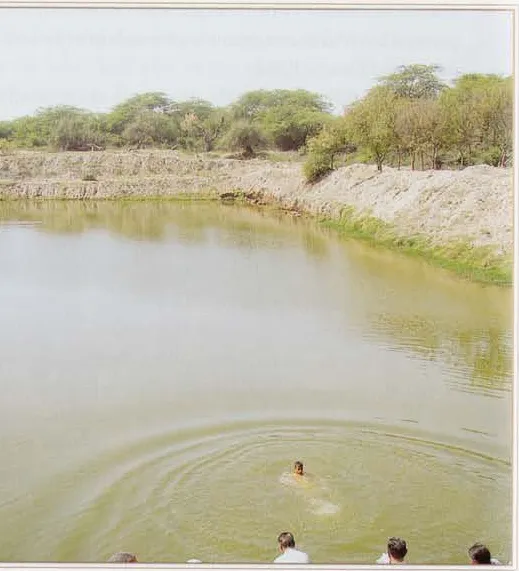
Yaśodā-kuṇḍa (Nandagrāma)
यशोदा-कुण्ड (नन्दग्राम)Yaśodā-kuṇḍa is the pond of Mother Yaśodā, south of Nanda-bhavana at Nandagrāma.
Nanda-bhavana (Nandagrāma)
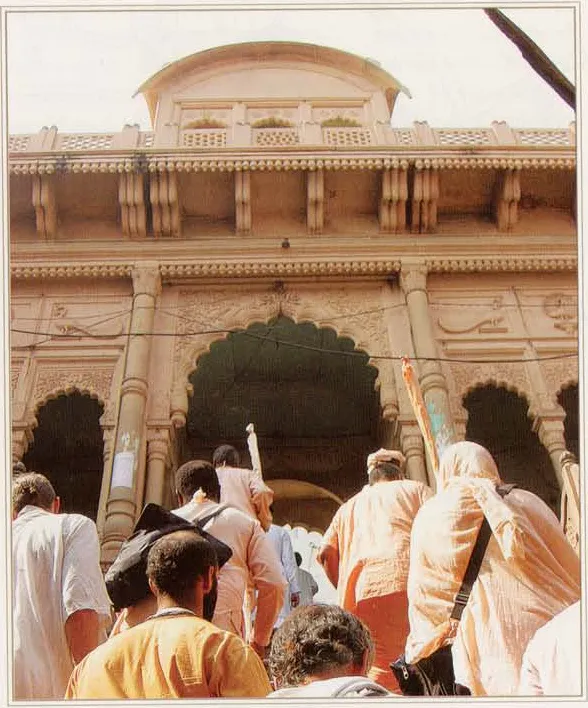
नन्द-भवन (नन्दग्राम)Nanda-bhavana is the home of Nanda Mahārāja, Kṛṣṇa's father, at Nandīśvara Hill in Nandagrāma.
Nandagrāma
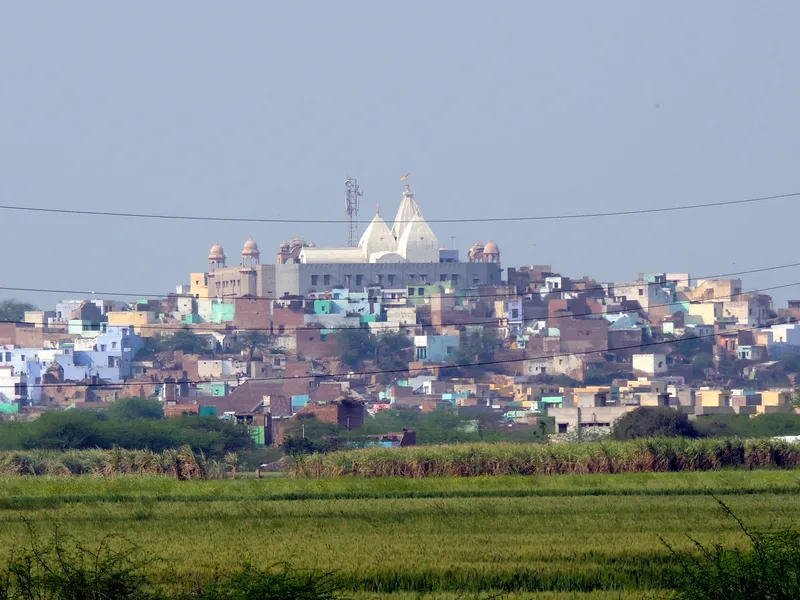
नन्दग्रामNandagrāma, today Nandagaon, is the village of Nanda Mahārāja, Kṛṣṇa's father in Vraja, on and around Nandīśvara Hill.
Questions and answers
Out of love for their child. Śrīla Prabhupāda writes that Nanda's only desire was that the newborn Kṛṣṇa would be happy, so he prayed to Lord Viṣṇu to protect Him. Garga Muni had also warned that many demons would disturb the boy.[2, 11]
Nārāyaṇa, Nanda's worshipable Deity, according to Śrīla Prabhupāda and Śrīla Viśvanātha Cakravartī Ṭhākura. In the Gosvāmīs' daily pastimes, Yaśodā also protects Kṛṣṇa with the names of Nṛsiṁha.[6–14]
It is a prayer of protection in the Garga-saṁhitā. It gives each of the baby Kṛṣṇa's limbs to a form of the Lord, with Nṛsiṁha guarding His eyes. The book says Durvāsā gave it to Yaśodā in Nanda's palace.[24–26]
In Śrīla Viśvanātha Cakravartī Ṭhākura's plan of Nanda's palace at Nandīśvara, the shrine where Nanda serves Nārāyaṇa stands in the east.[6–8, 27]
The 2007 guidebook says that Yaśodā prayed to Nṛsiṁhadeva in a temple on the bank after her daily bath. No older text mentions that temple. The Gosvāmīs do describe her protecting Kṛṣṇa with Nṛsiṁha's names at home.[15]
He gave clothing, ornaments and cows to the cowherd men. He also gave charity to the sūtas, māgadhas and vandīs (court reciters and singers of praise) and others. He did this to please Lord Viṣṇu and for his son's welfare.[1, 2]
Sources
- Śrīmad-Bhāgavatam 10.5.15–16, Bhagavata Vidya Pith edition, ed. Bhagavata Rishi and Krishna Shankar Shastri, 1996
- Śrīla Prabhupāda, Kṛṣṇa, the Supreme Personality of Godhead, ch. 5 'The Meeting of Nanda and Vasudeva' · vedabase.io
- Śrīmad-Bhāgavatam ŚB 10.6.19, GRETIL
- Śrīla Prabhupāda, Kṛṣṇa, the Supreme Personality of Godhead, Chapter 6 (Pūtanā Killed) · vedabase.io
- Śrīla Prabhupāda, Śrīmad-Bhāgavatam, Canto 10, Chapter 6, Texts 27–29, purport · vedabase.io
- Śrīla Viśvanātha Cakravartī, Vraja-rīti-cintāmaṇi, sarga 1 vv.19–20
- Śrīla Viśvanātha Cakravartī, Kṛṣṇa-bhāvanāmṛta, sarga 5 (pañcamaḥ sargaḥ, preyo-geha-gamanānumodana) vv.50–51 (text section (5), which the index labels 'caturthaḥ sargaḥ'); the commentary printed with the text explains the directions, after the edition of Radhikanath Goswami, Vrindavan, 1906
- the undated parikramā notes Nandagrāma, ¶9
- Śrīmad-Bhāgavatam ŚB 10.8.19, GRETIL
- Śrīla Prabhupāda, Śrīmad-Bhāgavatam, 10.8.19, purport · vedabase.io
- Śrīla Prabhupāda, Kṛṣṇa, the Supreme Personality of Godhead, ch. 8 'Vision of the Universal Form' · vedabase.io
- Śrīla Kṛṣṇadāsa Kavirāja Gosvāmī, Govinda-līlāmṛta 5.34 and 5.36, after the editions of Haridas Das and Haridas Shastri
- Śrīla Viśvanātha Cakravartī, Kṛṣṇa-bhāvanāmṛta, sarga 7 ('kānana-prayāṇānumodana', the setting out for the forest) v.50 (text section (7); the index locator labels it 'ṣaṣṭhaḥ sargaḥ'), after the edition of Radhikanath Goswami, Vrindavan, 1906
- Śrīla Raghunātha dāsa Gosvāmī, Abhīṣṭa-sūcana, Stavāvalī (30) Śrī Abhīṣṭa-sūcana 8
- Śrī Vraja-maṇḍala Parikramā (2007), PDF p. 199
- Śrīmad-Bhāgavatam 10.5.15–16, Bhagavata Vidya Pith edition, ed. Bhagavata Rishi and Krishna Shankar Shastri, 1996
- Śrīla Kṛṣṇadāsa Kavirāja Gosvāmī, Govinda-līlāmṛta, 6.33–6.34, after the editions of Haridas Das and Haridas Shastri
- Śrīla Viśvanātha Cakravartī, Kṛṣṇa-bhāvanāmṛta, sarga 3: the commentary on vv.34–35 (a yugmaka) and v.36 (text section (3); index label 'dvitīyaḥ sargaḥ'), after the edition of Radhikanath Goswami, Vrindavan, 1906
- Śrīla Viśvanātha Cakravartī: commentary on 10.26.15, Bhagavata Vidya Pith edition, ed. Bhagavata Rishi and Krishna Shankar Shastri, 1996
- Śrīmad-Bhāgavatam 10.28.1, Bhagavata Vidya Pith edition, ed. Bhagavata Rishi and Krishna Shankar Shastri, 1996
Show all 36 references
- Śrīla Prabhupāda, Kṛṣṇa, the Supreme Personality of Godhead, ch. 11 'Killing the Demons Vatsāsura and Bakāsura' · vedabase.io
- Śrīla Prabhupāda, Kṛṣṇa, the Supreme Personality of Godhead, ch. 28 'Releasing Nanda Mahārāja from the Clutches of Varuṇa' · vedabase.io
- Śrīmad-Bhāgavatam 10.28.1, Bhagavata Vidya Pith edition, ed. Bhagavata Rishi and Krishna Shankar Shastri, 1996
- Garga-saṁhitā, Goloka-khaṇḍa (1) 13.16, Sanskrit Wikisource
- Garga-saṁhitā, Goloka-khaṇḍa (1) 13.23–24, Sanskrit Wikisource
- Garga-saṁhitā, Goloka-khaṇḍa (1) 13.23, Sanskrit Wikisource
- Śrīla Viśvanātha Cakravartī, Vraja-rīti-cintāmaṇi, sarga 1 vv.21–22
- Viśvanātha Cakravartī, sarga 7 (saptamaḥ sargaḥ, kānana-prayāṇānumodana; text section (7), which the index labels 'ṣaṣṭhaḥ sargaḥ') v.50 with ṭīkā, after the edition of Radhikanath Goswami, Vrindavan, 1906
- Vṛndāvana-Dhāma Ki Jaya! (c. 1986), by Dhruva Mahārāja dāsa, PDF p. 53
- Śrī Vraja-maṇḍala Parikramā (2007), PDF p. 194
- Śrī Vraja-maṇḍala Parikramā (2007), PDF p. 200
- Śrīla Nārāyaṇa Bhaṭṭa, Vraja-bhakti-vilāsa, ch. 2 v.44) v.44, 1st ed., publ. Bābā Kṛṣṇadāsa, Kusuma-sarovara, Saṁvat 2008
- Śrīla Nārāyaṇa Bhaṭṭa, Vraja-bhakti-vilāsa, ch. 4 v.14) v.14, 1st ed., publ. Bābā Kṛṣṇadāsa, Kusuma-sarovara, Saṁvat 2008
- A. W. Entwistle, §40 Nandgaon, 5 'Tanks and ponds to the south-west and west of Nandgaon', printed p. 381, Egbert Forsten, Groningen, 1987
- Mathurá (1883), F. S. Growse, B.C.S., M.A. Oxon., C.I.E. (as the title page gives him, p. 315
- Muttra (1911), D. L. Drake-Brockman, I.C.S. (edited and compiled), p. 314
Further sources
- Śrīmad-Bhāgavatam, Tenth Canto, chapters 5, 6 and 8 (translation and purports by Śrīla Prabhupāda) and 28 (translation by his disciples, BBT); Śrīla Prabhupāda, Kṛṣṇa, chapters 5, 6, 8 and 11.
- Vraja-rīti-cintāmaṇi, Kṛṣṇa-bhāvanāmṛta, Govinda-līlāmṛta, Abhīṣṭa-sūcana, Garga-saṁhitā (Goloka-khaṇḍa 13): summarised here, not translated.