Vṛndā-devī, the goddess of the Vṛndāvana forest
वृन्दा देवी: वृन्दावन की वन-देवी कौन हैं
In short
Vṛndā-devī is the goddess of the Vṛndāvana forest, and Vṛndāvana is named after her. Śrīla Rūpa Gosvāmī calls her the best of Kṛṣṇa's messengers, who prepares the kuñjas, the forest bowers, for Rādhā and Kṛṣṇa. Śrīla Prabhupāda explains that Vṛndā-devī is Tulasī. The guidebooks name places of her worship in Kāmyavana, in Vṛndāvana and near Nandagrāma.[1–13]
On this page
At a glance
- Her name: Vṛndāvana means "the forest of Vṛndā", according to the Canto 10 commentators.[1, 2]
- Her service: Śrīla Rūpa Gosvāmī calls her the best of Kṛṣṇa's messengers, expert in preparing the kuñjas.[3, 4]
- Tulasī: Śrīla Prabhupāda writes of "Śrīmatī Vṛndādevī (Tulasīdevī)".[5–7]
- Her prayer: Śrīla Viśvanātha Cakravartī Ṭhākura's Vṛndā-devy-aṣṭaka, eight verses in her praise.[14]
- Her Deity (sacred image): manifested by Śrīla Rūpa Gosvāmī at Brahma-kuṇḍa in Vṛndāvana, according to the Sādhana-dīpikā. The guidebooks place it at Kāmyavana.[8 +6]
- Near Nandagrāma: her kuñja and her kuṇḍa (sacred pond), according to the guidebooks, which may differ on where they lie.[7 +6]
Who is Vṛndā-devī?
Vṛndā-devī is the goddess of the forest who serves Rādhā and Kṛṣṇa, according to the Gosvāmīs. Śrīla Rūpa Gosvāmī, in his Rādhā-Kṛṣṇa-gaṇoddeśa-dīpikā, a book that lists Their companions, names her among Kṛṣṇa's messengers. Of them all, he says, Vṛndā is the best: skilled in many arrangements and expert in preparing the kuñjas (summarised here, not translated).[3, 4]
He also describes her. Her complexion is like molten gold, she wears blue cloth and is adorned with pearls and flowers. Her father is Candrabhānu and her mother Phullarā. She always lives in Vṛndāvana, full of love for the Divine Couple.[4]
Other works show her in the same role. In the Padma Purāṇa, one of the old scriptures called Purāṇas, Lord Śiva tells Nārada that Vṛndā-devī, Govinda's attendant, lives with her friends near Keśī-tīrtha (Keśī-ghāṭa). Nārada goes to her there to hear of Rādhā and Kṛṣṇa's daily pastimes.[22] A verse from the Skanda Purāṇa that Śrīla Jīva Gosvāmī quotes has Nārada call Vṛndāvana Govinda's Vaikuṇṭha, His spiritual world, on earth, where Vṛndā and His other servants long for Him.[23–25] In Śrīla Jīva Gosvāmī's Gopāla-campū, his poetic retelling of Kṛṣṇa's life, Paurṇamāsī speaks of Vṛndā as having the form of the pastime-potency, the līlā-śakti. This is the Lord's own power that arranges His pastimes.[26, 27]
Her service in the pastimes
The ācāryas, the great teachers, describe her service in a few simple images (summarised here, not translated).[14, 28]
- Śrīla Raghunātha dāsa Gosvāmī, in his Vraja-vilāsa-stava, takes shelter of Vṛndā, who decorates each new kuñja with fragrant flowers and arranges there the festival of Rādhā and Kṛṣṇa's pastimes.[28]
- In Śrīla Viśvanātha Cakravartī Ṭhākura's Vṛndā-devy-aṣṭaka, Mādhava's (Kṛṣṇa's) groves are adorned with leaves, flowers, bees, deer and honey by her order.[14]
- In the Nārada Purāṇa, it is Vṛndā who sends Nārada, with her friend Mādhavī, to bathe in her lake, Kusuma-sarovara. Then she has him practise austerity there, living on fruits she sends. Nārada's story is told in its own article.[29, 30] Read more: How Nārada became a gopī: the accounts side by side →
- In Śrīla Kṛṣṇadāsa Kavirāja Gosvāmī's Govinda-līlāmṛta, at the end of each night she sends the birds to wake the Divine Couple, so that They can return home.[31]
Why is Vṛndāvana named after her?
The name of Vṛndāvana comes from Vṛndā. The Canto 10 commentators explain it in their own words (summarised here, not translated). Śrīla Sanātana Gosvāmī calls it the forest of Śrī Vṛndā, the chaste lady favoured by the Lord. Śrīla Jīva Gosvāmī calls it the forest prepared by Vṛndā, its presiding goddess. Śrīla Baladeva Vidyābhūṣaṇa says that it is protected by the goddess Vṛndā.[1, 2]
Śrīla Rūpa Gosvāmī's Mathurā-māhātmya, a collection of Purāṇa verses on the holy land, says the same. Quoting the Ādi-varāha Purāṇa, it calls Vṛndāvana the twelfth forest, protected by Vṛndā, where the Lord plays with the gopīs (cowherd girls) and the cowherds. It also quotes a verse that calls Vṛndāvana the refuge of Vṛndā-devī and Govinda's Vaikuṇṭha on earth.[25, 32]
Śrīla Prabhupāda gives the name a second, simple meaning, in his purport, his explanation, to Caitanya-caritāmṛta Madhya 17.193:[5–7]
General teaching (does not name the place)“Vṛndāvana is the name given to the forest where Śrīmatī Vṛndādevī (Tulasīdevī) grows profusely.”
Śrīla Prabhupāda, Śrī Caitanya-caritāmṛta, Madhya-līlā 17.193, purport · vedabase.io
Śrī Vraja-maṇḍala Parikramā (2007) adds that Vṛndā-devī has given her kingdom to Śrī Rādhā, who is therefore called Vṛndāvaneśvarī, the queen of Vṛndāvana.[33, 34] In Śrīla Rūpa Gosvāmī's play Dāna-keli-kaumudī, it is Vṛndā who calls Śrī Rādhā by that name.[35, 36]
Is Vṛndā-devī the same as Tulasī?
Yes, according to Śrīla Prabhupāda and Śrīla Viśvanātha Cakravartī Ṭhākura. When Śrīla Prabhupāda gave a disciple the name Vṛndā-devī dāsī in 1972, he explained it in one line:[5–7]
General teaching (does not name the place)“Vṛndā-devī is another name of tulasī.”
Śrīla Prabhupāda, Śrīmad-Bhāgavatam 1.2.21 and Initiations, Los Angeles, 24 August 1972 · vedabase.io
Śrīla Viśvanātha Cakravartī Ṭhākura says the same in the seventh verse of his Vṛndā-devy-aṣṭaka. Those who know the scriptures, he says, call her Kṛṣṇa's potency named Līlā, and in this world of men her form is Tulasī.[14] The song book gives the verse with its English:[37]
tvaṁ kīrtyase sātvata-tantra-vidbhir
līlābhidhānā kila kṛṣṇa-śaktiḥ
tavaiva mūrtis tulasī nṛ-loke
vṛnde! namas te caraṇāravindam
Śrī Vraja-maṇḍala Parikramā (2007) also calls Tulasī the worshipable form of the original Vṛndā-devī.[7, 16]
Where is Vṛndā-devī worshipped?
Vṛndā-devī is honoured at several places in Vraja, and the books tell their history in different ways. Each place is given here with its source.[7 +11]
In Vṛndāvana
The Sādhana-dīpikā of Śrī Rādhā-kṛṣṇa Gosvāmī says that Śrī Rūpa Gosvāmī, by Śrī Caitanya Mahāprabhu's order, manifested Vṛndā-devī from near the bank of Brahma-kuṇḍa in Vṛndāvana.[15] The Bhakti-ratnākara, quoting it, says that she first made herself known to him in a dream.[11 +5] Śrīla Nārāyaṇa Bhaṭṭa Gosvāmī's Vraja-bhakti-vilāsa gives the pilgrim, on the Vṛndāvana circuit, the darśana (sight) of Govinda together with Vṛndā-devī, with a prayer and nine obeisances.[42, 43] According to The Colour Guide to Rādhā-Kuṇḍa (1999), King Vajranābha is said to have installed Vṛndā-devī in Vṛndāvana along with Madana-mohana, Govindajī, Gopīnātha and other Deities. No older source for this is given.[44, 45]
Śrī Vraja-maṇḍala Parikramā (2007) describes an altar with Śrī Vṛndā-devī in the Rūpa-Sanātana Gauḍīya Maṭha of Vṛndāvana. In 2007 it said that in Vṛndāvana her darśana was available only in that temple.[46, 47]
In Kāmyavana
Śrī Vraja-maṇḍala Parikramā (2007) names one other prominent Deity of Vṛndā-devī, in Kāmyavana, in the temple of Govindadeva (Vṛndā-devī with Govindajī and other Deities).[46, 47] Several guidebooks say that she came from Vṛndāvana with Govinda and stayed in Kāmyavana when the other Deities went on.[8–13] The historians give dated reports of the same: Mītal (1966) writes that the image was brought from Vṛndāvana in the period of the Muslim invasions. Entwistle (1987) writes that it was left behind in the temple at Kaman, where it still was in 1987.[48, 49] The Bengali Vṛndāvana-kathā (1920) says that the Gauḍīya Deities of Vṛndāvana were probably taken to Jaipur in 1670.[50]
The Vraja-bhakti-vilāsa already counts Govinda with Vṛndā among the eighty-four Deities of Kāmyavana, each with a prayer for the pilgrim.[51–53] According to Śrī Vraja-maṇḍala Parikramā (2007), the Viṣṇu-siṁhāsana, which it calls the throne of Śrī Kṛṣṇa, lies near the temple of Śrī Vṛndā-devī and Śrī Govindadeva, with Caraṇa-kuṇḍa close by.[8] How Śrī Govinda Himself went on to Jaipur is told in its own article.[50] Read more: The great temple of Śrī Govinda →
Near Nandagrāma
The Bhakti-ratnākara tells that, a little way from Nanda's home at Nandīśvara, in a solitary place, Vṛndā-devī plans how to bring Rādhā and Kṛṣṇa together. The book quotes Śrīla Raghunātha dāsa Gosvāmī's verse on her there.[28, 54] The guidebooks show two places nearby, which may in fact be one.[7 +6]
- Vṛndā-devī's kuñja: Śrī Vraja-maṇḍala Parikramā (2007) places it some distance north of Caraṇa-pahāḍī and says that she lived there during Kṛṣṇa's pastimes on earth.[7 +4]
- Vṛndā-kuṇḍa: one set of notes places it about a kilometre west of Nandīśvara Hill, with a small temple of Vṛndā-devī. The historian Entwistle (1987) mentions a shrine of Vṛndā-devī west of Pānihārī-kuṇḍa, on the way to Belban; it may be the same place.[17 +2]
Vṛndāvana, the Playground of God (2010) says that, it is said, five persons in Vṛndāvana are especially merciful in giving love for Kṛṣṇa: Govardhana, Vṛndā-devī, the Yamunā, the dust of Vṛndāvana and Gopīśvara.[55]
Śrīla Prabhupāda's purport to Caitanya-caritāmṛta Madhya 21.29 shows why Nandagrāma belongs to her forest: the special forest called Vṛndāvana stretches from the town of Vṛndāvana to Nandagrāma.[56]
General teaching (does not name the place)“Of these, the special forest known as Vṛndāvana is located from the present municipal city of Vṛndāvana to the village called Nanda-grāma.”
Śrīla Prabhupāda, Śrī Caitanya-caritāmṛta, Madhya-līlā 21.29, purport · vedabase.io
What is the Vṛndā-devy-aṣṭaka?
It is a prayer of eight verses by Śrīla Viśvanātha Cakravartī Ṭhākura, in his Stavāmṛta-laharī. It praises Vṛndā-devī for adorning the pastime groves and for her service as the Couple's messenger. It also praises her as Kṛṣṇa's potency named Līlā, whose form in this world is Tulasī (summarised here, not translated).[14] The song book gives its verses with English.[37]
Where the sources differ
On one small point the books differ: the parrot Dakṣa. Śrīla Rūpa Gosvāmī counts Dakṣa among Kṛṣṇa's animals, as one of His two parrots. One set of notes calls Dakṣa Vṛndā-devī's own pet parrot, who sits on her left hand in her temple. It is said there that he gathers news for her.[20 +2]
Accounts differ Whose parrot Dakṣa is.
- Śrīla Rūpa Gosvāmī, Rādhā-Kṛṣṇa-gaṇoddeśa-dīpikā 2.111–113Among Kṛṣṇa's animals: the two parrots Dakṣa and Vicakṣaṇa.
- Śrīla Viśvanātha Cakravartī, Kṛṣṇa-bhāvanāmṛta 1.28, with Kṛṣṇadeva Sārvabhauma's ṭīkāThe clever parrot who understands Vṛndā's signs wakes Kṛṣṇa at the end of night; the ṭīkā reads Dakṣa with Vicakṣaṇa, citing the Gaṇoddeśa.
- the undated parikramā notes NandagrāmaDakṣa is Vṛndā-devī's pet parrot, who sits on her left hand in her temple, flies around Vraja gathering information, and 'it's said' had a hundred thousand disciples.
The wording of these accounts is our summary of the sources, not a published translation.
Places in this article
Vṛndā-devī Kuñja (Nandagrāma)
वृन्दा देवी कुंज (नन्दग्राम)The kuñja (grove) of Vṛndā-devī lies some distance north of Caraṇa-pahāḍī at Nandagrāma, with her pond, Vṛndā-kuṇḍa.
Vṛndā-devī Mandira (Nandagrāma)
वृन्दा देवी मन्दिर (नन्दग्राम)Vṛndā-kuṇḍa (Nandagrāma)
वृन्दा-कुण्ड (नन्दग्राम)Vṛndā-kuṇḍa is the pond of Vṛndā-devī at her kuñja, on the western side of Nandīśvara Hill at Nandagrāma, about a kilometre from it.
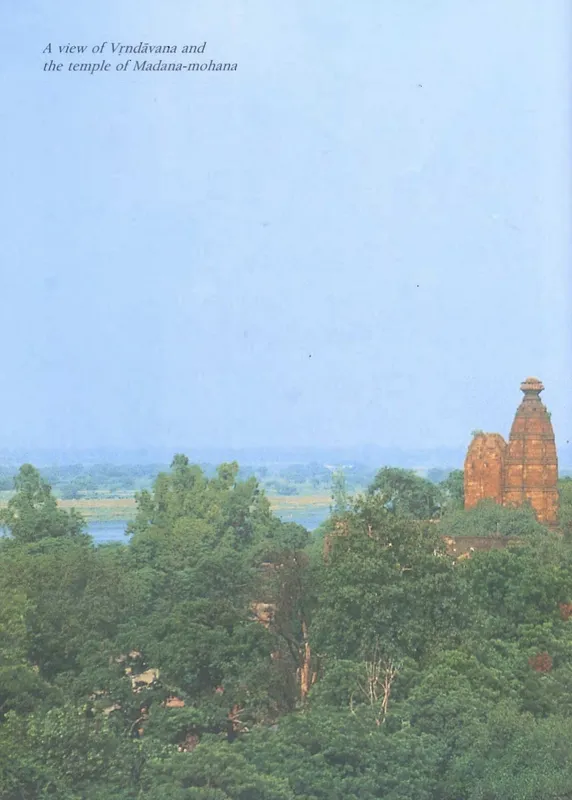
Vṛndāvana
वृन्दावनVṛndāvana is the forest on the bank of the Yamunā where Kṛṣṇa spent His childhood and youth, and the town of temples that stands in that forest today.
Vṛndāvana (forest)
वृन्दावन (वन)Vṛndā-devī with Govindajī and other deities (Kāmyavana list)
गोविन्दजी सहित वृन्दा देवी तथा अन्य विग्रह (काम्यवन की सूची)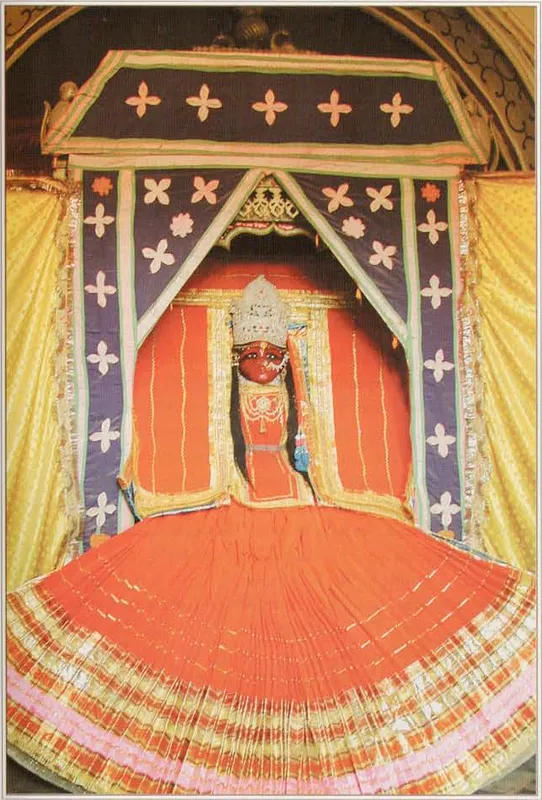
Govindadeva Mandira (Kāmyavana)
गोविन्ददेव मन्दिर (काम्यवन)The temple of Śrī Govindadeva and Vṛndā-devī stands in the town of Kāmā, the old Kāmyavana.
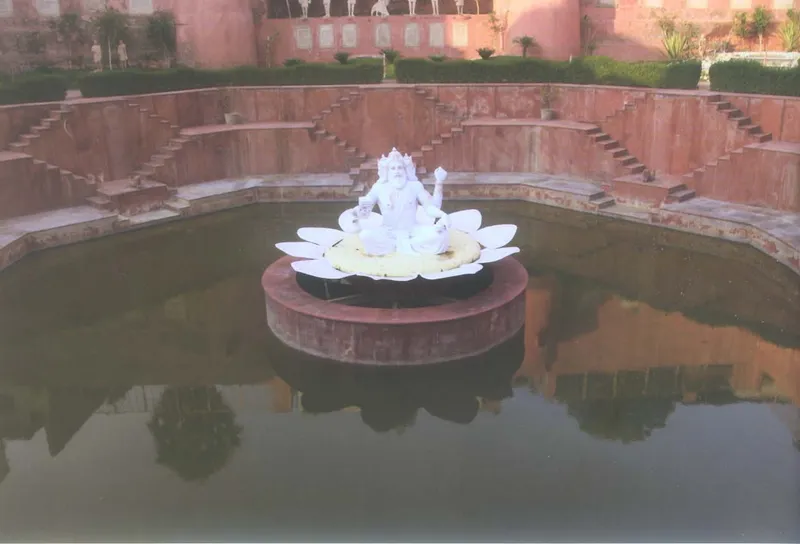
Brahma-kuṇḍa (Vṛndāvana)
ब्रह्म-कुण्ड (वृन्दावन)Brahma-kuṇḍa is a tank in Vṛndāvana, north of the Raṅgajī temple.
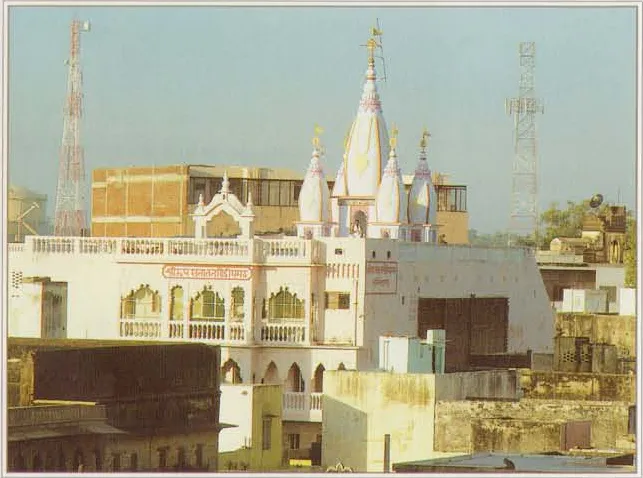
Rūpa-Sanātana Gauḍīya Maṭha
रूप-सनातन गौड़ीय मठThe Rūpa-Sanātana Gauḍīya Maṭha, also called Śrī Vinoda-kuñja, is a modern maṭha (temple and monastery) on Dāna-galī in Vṛndāvana, very close to Sevā-kuñja.
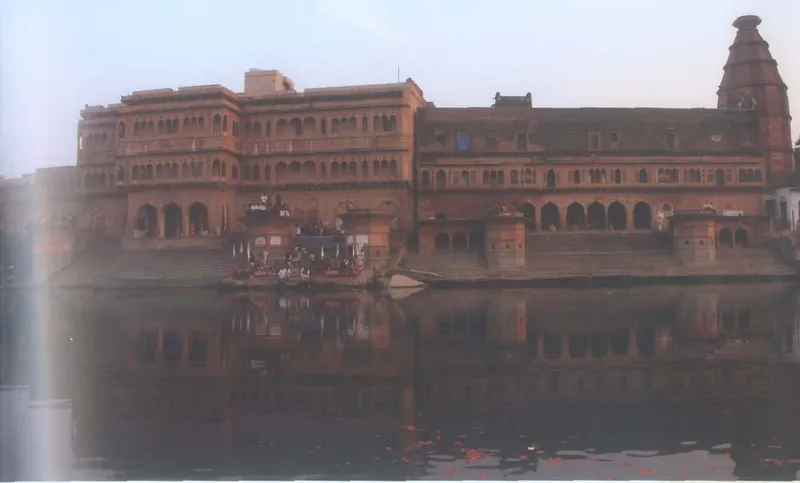
Keśī-ghāṭa
केशी-घाटKeśī-ghāṭa, also called Keśī-tīrtha, is a bathing place on the Yamunā in the north-west of Vṛndāvana, close to Cīra-ghāṭa.
Questions and answers
The goddess of the Vṛndāvana forest. Śrīla Rūpa Gosvāmī calls her the best of Kṛṣṇa's messengers, who prepares the kuñjas for Rādhā and Kṛṣṇa and always lives in Vṛndāvana.[3, 4]
Yes. Śrīla Prabhupāda said that Vṛndā-devī is another name of tulasī, and Śrīla Viśvanātha Cakravartī Ṭhākura says that Tulasī is her form in this world.[5–7, 14]
Because it is her forest. The commentators explain Vṛndāvana as the forest of Vṛndā, prepared and protected by her, and Śrīla Prabhupāda writes that it is the forest where Vṛndādevī, Tulasī, grows abundantly.[1, 2, 6]
Several guidebooks name the Govindadeva temple of Kāmyavana, where they say she stayed when Śrī Govinda went on. They also name a temple in Vṛndāvana, and her kuñja and kuṇḍa near Nandagrāma, though these may not be certain.[7 +14]
That Vṛndā-devī is another name of tulasī, and that Vṛndāvana is the name of the forest where Śrīmatī Vṛndādevī (Tulasīdevī) grows profusely.[5, 6]
A prayer of eight verses by Śrīla Viśvanātha Cakravartī Ṭhākura in praise of Vṛndā-devī, her service in the pastime groves, and her form as Tulasī.[14]
Sources
- Śrīla Sanātana Gosvāmī (Bṛhad-vaiṣṇava-toṣaṇī) and Śrīla Jīva Gosvāmī (Laghu-vaiṣṇava-toṣaṇī): commentaries on Śrīmad-Bhāgavatam: commentary on ŚB 10.11.28, Bhagavata Vidya Pith edition, ed. Bhagavata Rishi and Krishna Shankar Shastri, 1996
- Śrīmad-Bhāgavatam 10.21.5, Bhagavata Vidya Pith edition, ed. Bhagavata Rishi and Krishna Shankar Shastri, 1996
- Śrīla Rūpa Gosvāmī, Rādhā-Kṛṣṇa-gaṇoddeśa-dīpikā, part 2, vv.88–89
- Śrīla Rūpa Gosvāmī, Rādhā-Kṛṣṇa-gaṇoddeśa-dīpikā, part 2, vv.97–99
- Śrīla Prabhupāda, Śrīmad-Bhāgavatam 1.2.21 and Initiations, Los Angeles, 24 August 1972 · vedabase.io
- Śrīla Prabhupāda, Śrī Caitanya-caritāmṛta, Madhya-līlā 17.193, purport · vedabase.io
- Śrī Vraja-maṇḍala Parikramā (2007), PDF p. 201
- Śrī Vraja-maṇḍala Parikramā (2007), PDF p. 147
- Śrī Vraja-maṇḍala Parikramā (2007), PDF p. 148
- Vṛndāvana, the Playground of God (2010), Bhakti Caitanya Svāmī, PDF p. 35
- Vṛndāvana, the Playground of God (2010), Bhakti Caitanya Svāmī, PDF p. 198
- The Color Guide to Vṛndāvana (2000), Written and Photographed by Rājaśekhara dāsa Brahmacārī, PDF p. 89
- Vṛndāvana-Dhāma Ki Jaya! (c. 1986), by Dhruva Mahārāja dāsa, PDF p. 44
- Śrī Vṛndā-devy-aṣṭaka of Śrīla Viśvanātha Cakravartī Ṭhākura, Vṛndā-devy-aṣṭaka vv.4-5, 7
- Śrīla Rādhā-kṛṣṇa Gosvāmī, Sādhana-dīpikā, section (8) ('yāṅhāra prasāde haya abhīṣṭa-pūraṇa'), after v.7
- Śrī Vraja-maṇḍala Parikramā (2007), PDF p. 200
- the undated parikramā notes Nandagrāma, ¶31
- the undated parikramā notes Nandagrāma, ¶38
- The Color Guide to Vṛndāvana (2000), Written and Photographed by Rājaśekhara dāsa Brahmacārī, PDF p. 75
- the undated parikramā notes Nandagrāma, ¶32
Show all 58 references
- A. W. Entwistle, §40 'Nandgaon', part 5, printed p. 382, Egbert Forsten, Groningen, 1987
- Padma Purāṇa, Pātāla-khaṇḍa, adhyāya 83, verses 12–15, Sanskrit Wikisource
- Śrīla Jīva Gosvāmī, Kṛṣṇa-sandarbha, anuccheda 172 (on ŚB 10.15) ('skānde śrī-nārada-vākyam'), GRETIL
- Śrī Vraja-maṇḍala Parikramā (2007), PDF p. 346
- Śrīla Rūpa Gosvāmī, Mathurā-māhātmya v.372-375
- Śrīla Kṛṣṇadāsa Kavirāja Gosvāmī, Govinda-līlāmṛta 2.2, Vṛndāvana Cakravartī's Sad-ānanda-vidhāyinī ṭīkā
- Gopāla-campū, Uttara 29.[5]–[6]
- Śrīla Raghunātha dāsa Gosvāmī, Vraja-vilāsa-stava, Stavāvalī (9) Vraja-vilāsa-stava v.31
- Nārada Purāṇa, उत्तरार्धः/अध्यायः 80 v.80-22 to 80-26
- Nārada Purāṇa, उत्तरार्धः/अध्यायः 80 v.80-32 to 80-35
- Śrīla Kṛṣṇadāsa Kavirāja Gosvāmī, Govinda-līlāmṛta, sarga 1, vv. 10–12, after the editions of Haridas Das and Haridas Shastri
- Śrīla Rūpa Gosvāmī, Mathurā-māhātmya v.357-361
- Śrī Vraja-maṇḍala Parikramā (2007), PDF p. 291
- Śrī Vraja-maṇḍala Parikramā (2007), PDF p. 292
- Śrīla Rūpa Gosvāmī, Dāna-keli-kaumudī, opening scene, part 1 after v.12, after the undated edition published by Krishna Das of Kusum Sarovar
- Śrīla Rūpa Gosvāmī, Dāna-keli-kaumudī, part 1 v.84, after the undated edition published by Krishna Das of Kusum Sarovar
- Gangeya Campeya (Śrī Śrī Vṛndādevy-aṣṭakam) (Viśvanātha Cakravartī Ṭhākura (as the song book credits it)) · song book
- Śrīla Narahari Cakravartī, Bhakti-ratnākara, Second Wave (dvitīya taraṅga), printed p. 92 (1912 edition); Sādhana-dīpikā verse 2 as numbered there, 2nd ed., 1912
- Vṛndāvana-Dhāma Ki Jaya! (c. 1986), by Dhruva Mahārāja dāsa, PDF p. 79
- the undated parikramā notes Nandagrāma, ¶57
- the undated parikramā notes Kāmyavana, ¶20
- Śrīla Nārāyaṇa Bhaṭṭa, Vraja-bhakti-vilāsa, printed p. 228, item 76, 1st ed., publ. Bābā Kṛṣṇadāsa, Kusuma-sarovara, Saṁvat 2008
- Śrī Vraja-maṇḍala Parikramā (2007), PDF p. 324
- The Colour Guide to Rādhā-kuṇḍa (1999), Rājaśekhara dāsa Brahmacārī, PDF p. 35
- Śrī Vraja-maṇḍala Parikramā (2007), PDF p. 325
- Śrī Vraja-maṇḍala Parikramā (2007), PDF p. 306
- Śrī Vraja-maṇḍala Parikramā (2007), PDF p. 339
- Prabhudayāl Mītal, Kāmavana section, printed p. ११७ (117)
- A. W. Entwistle, printed p. 185, Egbert Forsten, Groningen, 1987
- Vṛndāvana-kathā, chapter 19 (ūnaviṁśa pariccheda), printed p. 218
- Śrīla Nārāyaṇa Bhaṭṭa Gosvāmī, Vraja-bhakti-vilāsa, ch. 2, list of the marks of Kāmavana, the items after Kuśasthalī (finding aid '(2) [part 13] v.53', after v.69), printed p. 50, 1st ed., publ. Bābā Kṛṣṇadāsa, Kusuma-sarovara, Saṁvat 2008
- Śrīla Nārāyaṇa Bhaṭṭa Gosvāmī, Vraja-bhakti-vilāsa, ch. 9 vv.59, 60, 62 and 63 (beginning), printed p. 201; Grantha Mandira text (9) vv.59-63, 1st ed., publ. Bābā Kṛṣṇadāsa, Kusuma-sarovara, Saṁvat 2008
- Śrīla Nārāyaṇa Bhaṭṭa Gosvāmī, Vraja-bhakti-vilāsa, ch. 9 v.64, printed p. 202; Grantha Mandira text (9) v.64, 1st ed., publ. Bābā Kṛṣṇadāsa, Kusuma-sarovara, Saṁvat 2008
- Śrīla Narahari Cakravartī, Bhakti-ratnākara, Fifth Wave, 1912 ed. p. 229; Grantha Mandira text v.1028–1029, 2nd ed., 1912
- Vṛndāvana, the Playground of God (2010), Bhakti Caitanya Svāmī, PDF p. 200
- Śrīla Prabhupāda, Śrī Caitanya-caritāmṛta, Madhya-līlā 21.29, purport · vedabase.io
- Rūpa Gosvāmī, part 2 vv.112–113 (Kṛṣṇa's animals, paśavaḥ)
- the undated parikramā notes Nandagrāma, ¶35
Further sources
- Śrīla Prabhupāda, Śrī Caitanya-caritāmṛta, Madhya-līlā 17.193 and 21.29, purports; initiation lecture of 24 August 1972 (BBT).
- Śrīla Rūpa Gosvāmī, Rādhā-Kṛṣṇa-gaṇoddeśa-dīpikā and Mathurā-māhātmya; Śrīla Raghunātha dāsa Gosvāmī, Vraja-vilāsa-stava; Śrīla Viśvanātha Cakravartī Ṭhākura, Vṛndā-devy-aṣṭaka; Padma Purāṇa; Sādhana-dīpikā; Bhakti-ratnākara; Vraja-bhakti-vilāsa: summarised from the Sanskrit and Bengali.
- The historians Mītal (1966) and Entwistle (1987), and the Vṛndāvana-kathā (1920), for dated reports only.