The morning in Nanda's house at Nandīśvara
नन्दीश्वर पर नन्द-भवन की सुबह
In short
Nanda-bhavana is Nanda's house on Nandīśvara Hill at Nandagrāma. The Gosvāmīs set Kṛṣṇa's mornings here. Their books describe the visit of Paurṇamāsī, an elderly lady of Vraja, at daybreak and Śrī Rādhā coming at Yaśodā's request to cook with Rohiṇī. Then come the meal and the rest. Last, Yaśodā sends Rāma and Kṛṣṇa out to graze the cows.[1–17]
On this page
At a glance
- Nandīśvara as Nanda's home: Śrīla Rūpa Gosvāmī, Śrīla Raghunātha dāsa Gosvāmī, Śrīla Viśvanātha Cakravartī Ṭhākura and others name it so. The Bhāgavatam's commentators place Nanda's house there.[1 +11]
- The palace plan is given by Śrīla Viśvanātha Cakravartī Ṭhākura. The treasury is in the west, Kṛṣṇa's rooms in the south, Balarāma's in the north and Nārāyaṇa's shrine in the east.[24–27]
- At daybreak Paurṇamāsī comes to see Kṛṣṇa, in the Govinda-līlāmṛta and the Kṛṣṇa-bhāvanāmṛta.[7–9]
- The cooking: Yaśodā calls Śrī Rādhā to cook for Kṛṣṇa with Rohiṇī, because of a boon of Durvāsā Muni.[11 +5]
- Śrīla Prabhupāda said, as his disciple's biography reports, that Mother Yaśodā would personally ask Śrīmatī Rādhārāṇī to come and cook for Kṛṣṇa.[31]
- The Bhakti-ratnākara shows each stop of the morning at the house in order: the kitchen, the dining place and the beds a hundred steps away. Then come the paths, the farewell place and the churning place.[16 +5]
Nandīśvara, Nanda's home
The Bhāgavatam does not name Nandīśvara, but its commentators place Nanda's house there. Śrīla Sanātana Gosvāmī says that King Nanda's main home was beside the Nandīśvara hill. Śrīla Jīva Gosvāmī says that Nanda's home was near that hill when Kṛṣṇa left for Mathurā.[18–23] The Gosvāmīs say the same in their prayers. Śrīla Rūpa Gosvāmī calls the hill named Nandīśvara Kṛṣṇa's home. Śrīla Raghunātha dāsa Gosvāmī calls it the home of the lord of Vraja, where Kṛṣṇa plays under His parents' protection.[1 +7] The Padma Purāṇa places Nanda's home in the forest of Nandīśvara, one petal of the lotus of Vraja.[37]
Śrīla Viśvanātha Cakravartī Ṭhākura describes the house in his Vraja-rīti-cintāmaṇi. This is summarised here, not translated. King Nanda's city stands on the ridge of Nandīśvara. His palace has a main courtyard with the treasury in the west. Kṛṣṇa lives in the south and Balarāma in the north. In the east is a shrine where Nanda serves his chosen Deity Nārāyaṇa for his son's welfare.[5 +6] The kitchen lies south of the treasury and west of Kṛṣṇa's rooms. South of both is a quiet garden with a lake and many small houses and platforms.[25–27] The shrine and its worship are told in their own article.[24 +2] Read more: How Nanda and Yaśodā prayed for Kṛṣṇa's protection →
Śrīla Viśvanātha Cakravartī Ṭhākura says that he describes the eternal Vraja. So the morning below is the daily pastime (līlā), not a single day in history.[24–27] Śrīla Prabhupāda warned that Kṛṣṇa's dealings with Śrī Rādhā are very confidential and must never be presented as an ordinary thing. So the morning is given here simply, as the books describe it.[39]
Daybreak: Paurṇamāsī and the churning
The morning begins with the work of the household. The Govinda-līlāmṛta of Śrīla Kṛṣṇadāsa Kavirāja Gosvāmī describes the courtyard of the house of the lord of Vraja at dawn. It is strewn with drops of milk products thrown up by the churning rods.[7] The Bhāgavatam itself describes Yaśodā churning yoghurt while singing of her son's deeds. It also describes the women of Nanda's Vraja churning at dawn, their singing mixed with the sound of the churning.[40–45]
General teaching (does not name the place)“Once upon a time, seeing that her maidservant was engaged in different household duties, Mother Yaśodā personally took charge of churning butter. And while she churned butter, she sang the childhood pastimes of Kṛṣṇa and enjoyed thinking of her son.”
Śrīla Prabhupāda, Kṛṣṇa, the Supreme Personality of Godhead, ch. 9 'Mother Yaśodā Binds Lord Kṛṣṇa' · vedabase.io
Into this courtyard comes Paurṇamāsī. In the Govinda-līlāmṛta, she finishes her own duties at daybreak and hurries to the house of the king of Vraja to see Kṛṣṇa. In the Kṛṣṇa-bhāvanāmṛta she arrives with Rohiṇī and others, eager to see Him.[7 +6] Śrīla Prabhupāda says that Paurṇamāsī is the grandmother of Madhumaṅgala. She is also the mother of Sāndīpani Muni, who later became the teacher of Kṛṣṇa and Balarāma.[47, 48] The Bhakti-ratnākara shows the path by which she goes home again after speaking with Yaśodā.[16 +5]
Śrī Rādhā comes to cook
Next comes the cooking. The Gosvāmīs tell that Śrī Rādhā came every morning, called by Yaśodā, to cook for Kṛṣṇa in Nanda's house with Rohiṇī.[10–15] The Govinda-līlāmṛta gives the reason. The sage Durvāsā gave Śrī Rādhā a boon: whatever She cooks will be like nectar and will give long life to the one who eats it. Yaśodā knows of this boon, so she calls Her to cook for her son.[11] The Caitanya-caritāmṛta also tells of this boon. The Padma Purāṇa says that for this reason Yaśodā calls Her every day.[49–56]
Śrīla Prabhupāda spoke of it to his disciples, as his biography reports:
From his biography“Śrīmatī Rādhārāṇī’s excellence was Her cooking,” Prabhupāda said. “She could also sing and dance, but Her great service was Her cooking for Kṛṣṇa. Mother Yaśodā would ask Her personally to come and cook for Kṛṣṇa and the cowherd boys.”
Satsvarūpa dāsa Gosvāmī, Śrīla Prabhupāda-līlāmṛta, vol. 1, ch. 33 · vedabase.io
The Gosvāmīs place the cooking in the kitchen of Nanda's house. In the Govinda-līlāmṛta, She bows to Rohiṇī and enters the kitchen. In the Kṛṣṇa-bhāvanāmṛta, Yaśodā herself leads Her there.[12 +4] Śrīla Raghunātha dāsa Gosvāmī prays in his Vilāpa-kusumāñjali to see Her reach Nandīśvara, the great home of the king of Vraja. He prays to see Her wash Her feet, bow to the queen of Vraja and the elders, and prepare the dishes.[2 +3] The Bengali Bhaktamāla of Kṛṣṇadāsa Bābājī tells the same welcome. Yaśodā greets Her with affection and sends Her to cook. A maidservant washes Her feet, and Mother Rohiṇī gives Her what She needs.[12 +3]
The meal, the rest and Nanda's gifts
When the cooking is done, Kṛṣṇa eats with His friends. In the Bhakti-ratnākara, Śrīla Rāghava Paṇḍita shows Śrīla Śrīnivāsa Ācārya the kitchen where Rādhā cooks with Rohiṇī. He shows the place where Kṛṣṇa eats with His friends and, a hundred steps away, the place where He comes to rest.[16 +5]
এই যে রন্ধনাগার দেখ শ্রীনিবাস। রোহিণী সহিতে রাধার রন্ধনে উল্লাস॥ এই খানে সখাসহ কৃষ্ণের ভোজন। শতপাদ আসি এথা করয়ে শয়ন॥
ei ye randhanāgāra dekha śrīnibāsa| rohiṇī sahite rādhāra randhane ullāsa|| ei khāne sakhāsaha kṛṣṇera bhojana| śatapāda āsi ethā karaẏe śaẏana||
The two Gosvāmī accounts give the same distance. In the Govinda-līlāmṛta, the household chews betel after the meal. They rest on broad couches in the house a hundred steps away, fanned by servants. In the Kṛṣṇa-bhāvanāmṛta, they walk a hundred steps and sleep on their own beds.[10–15]
Nanda's part in the morning is his worship and his gifts. Śrīla Raghunātha dāsa Gosvāmī worships the lord of Gokula in a prayer. Every day, for his son's welfare, Nanda satisfies crowds of brāhmaṇas (priests) with food, drink and gifts of cows adorned with jewels. He keeps asking for news of Kṛṣṇa's well-being.[2 +3]
Kṛṣṇa leaves with the cows
Then the cows must go to the pasture. The Bhāgavatam says that at the paugaṇḍa age, the second stage of childhood, Rāma and Kṛṣṇa were allowed to tend the cows. Grazing them with Their friends, They made Vṛndāvana auspicious with Their footprints.[60–64] At Nanda's house, the Bhakti-ratnākara shows the place where Yaśodā dresses Rāma and Kṛṣṇa and sends Them to the forest with a breaking heart. It also shows the path by which They go out among Their friends to graze the cows.[16, 17]
In the Govinda-līlāmṛta, Kṛṣṇa's servants dress Him, and He goes out of the house with His friends. His parents follow Him with the people of Vraja to the edge of the forest, their eyes full of tears.[65, 66] In the Bengali Bhaktamāla, He goes out when ten daṇḍas of the day have passed (a daṇḍa is an old unit of time). Before that, His mother, pained by affection, has dressed Him.[16, 67] As He sets out, the Gosvāmīs say, His mother protects Him with the names of Lord Nṛsiṁha.[68–70]
Yaśodā's farewell to Śrī Rādhā
The last stop of the morning is a farewell. According to the Bhakti-ratnākara, at this place Yaśodā takes Śrī Rādhā on her lap. Floating in tears, she bids Her farewell to Yāvaṭa. After Rādhikā and Her friends have gone, Yaśodā and Rohiṇī cannot become calm.[17, 35]
এই খানে যশোদা রাধায় করি কোলে। যাবটে বিদায় দিতে ভাসে নেত্রজলে॥ ললিতাদি সখীগণ প্রতি স্নেহ যত। এক মুখে তাহা কহিবেক কেবা কত॥ যশোদা রোহিণী সখী সহ রাধিকারে। করিয়া বিদায় স্থির হইবারে নারে॥
ei khāne yaśodā rādhāẏa kari kole| yābaṭe bidāẏa dite bhāse netrajale|| lalitādi sakhīgaṇa prati sneha yata| eka mukhe tāhā kahibeka kebā kata|| yaśodā rohiṇī sakhī saha rādhikāre| kariẏā bidāẏa sthira haibāre nāre||
The Bengali Bhaktamāla tells the farewell without the lap and the tears. After the meal, Mother Yaśomatī dresses Śrī Rādhā in jewelled ornaments and clothes and sends Her home with Kundalatā.[35, 67] The Govinda-līlāmṛta has Yaśodā honour Her with ornaments after the meal, but it tells no farewell. The books differ in these details, and they are given here side by side.[17 +2]
What the guidebooks describe at Nanda-bhavana
The guidebook Śrī Vraja-maṇḍala Parikramā (2007) describes Nanda's home as extensive. It has separate rooms for the family, a kitchen, a store-room and a dining hall, and resting rooms for Rādhikā and Kṛṣṇa. The guidebook shows the stops of the morning in the order of the Bhakti-ratnākara.[16 +8] The guidebook does not say where on the hill most of these stops are.[16 +5]
Some places are named. According to the Bhakti-ratnākara and the Vraja-bhakti-vilāsa, the place of Yaśodā's churning is shown at Nanda's house. The guidebook (2007) says that an enormous yoghurt pot could be seen there. The historian Entwistle (1987) describes two large clay pots on the north side of Madhusūdana-kuṇḍa (a kuṇḍa is a sacred pond).[17 +5] Growse (1883) records the flight of 114 steps of Bharatpur stone that leads up to the temple. The steps were built at the cost of Bābu Gaur Prasād of Calcutta in 1818.[72, 78]
Śrīla Prabhupāda came to the temple with his disciples on 28 November 1971. He told them that Nanda Mahārāja had left Gokula and come here because the demons were disturbing Kṛṣṇa.[79] Read more: Nanda's family at Nandagrāma →
Places in this article
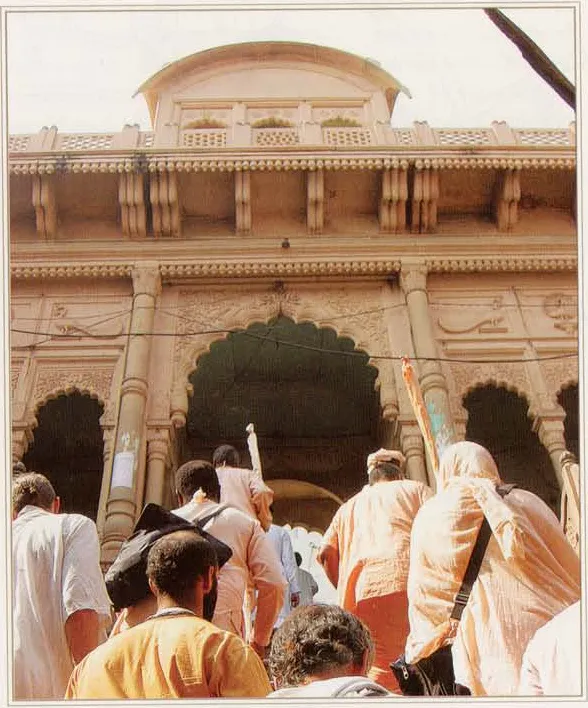
Nanda-bhavana (Nandagrāma)
नन्द-भवन (नन्दग्राम)Nanda-bhavana is the home of Nanda Mahārāja, Kṛṣṇa's father, at Nandīśvara Hill in Nandagrāma.
Kitchen (Nanda-bhavana, Nandagrāma)
रसोई (नन्द-भवन, नन्दग्राम)The kitchen of Nanda's palace, Nanda-bhavana on Nandīśvara Hill, is where Śrī Rādhā cooks for Kṛṣṇa.
Path to the forest (Nandagrāma)
वनगमन मार्ग (नन्दग्राम)Path to go cow grazing (Nandagrāma)
गोचारण गमन मार्ग (नन्दग्राम)Pūrṇamāsī's arrival path (Nandagrāma)
पौर्णमासी का आगमन मार्ग (नन्दग्राम)Pūrṇamāsī's path is a place within Nanda-bhavana, Nanda's house at Nandagrāma.
Place where Rādhikā was bidden farewell (Nandagrāma)
राधिका विदा स्थल (नन्दग्राम)Place where yoghurt was churned (Nandagrāma)
दधिमन्थन का स्थान (नन्दग्राम)The place where yoghurt was churned is a place within Nanda-bhavana, Nanda's house at Nandagrāma, that recalls mother Yaśodā's daily churning.
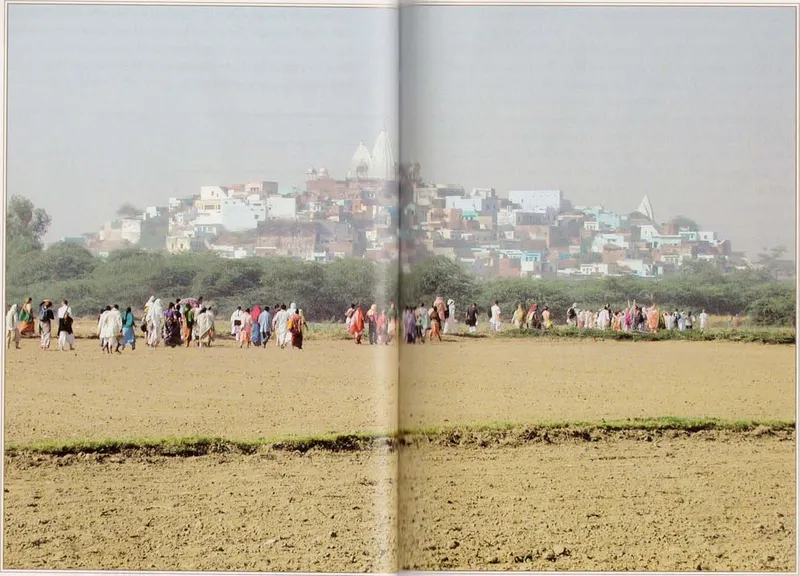
Nandīśvara Hill
नन्दीश्वर पर्वतNandīśvara is the hill of Nandagrāma, also called Rudra-parvata, "Rudra's hill".
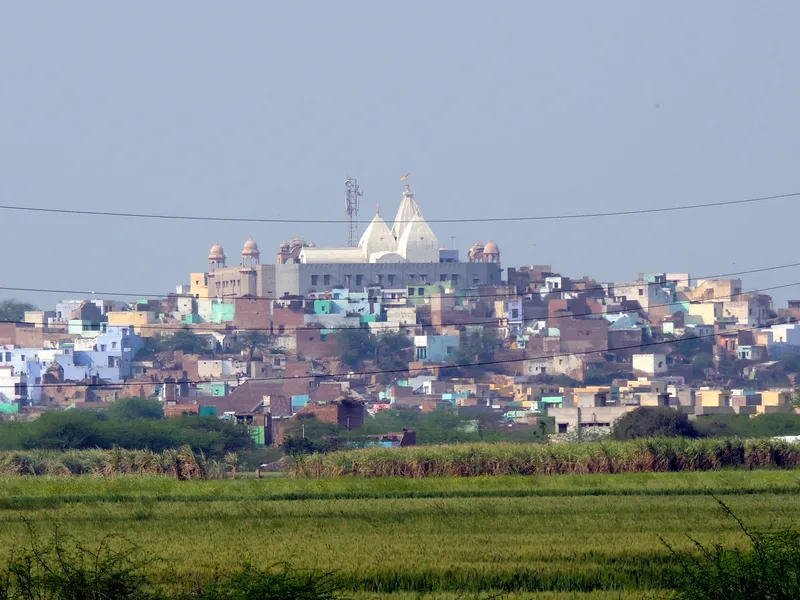
Nandagrāma
नन्दग्रामNandagrāma, today Nandagaon, is the village of Nanda Mahārāja, Kṛṣṇa's father in Vraja, on and around Nandīśvara Hill.
Questions and answers
The Gosvāmīs' books describe the morning. The women churn and Paurṇamāsī comes to see Kṛṣṇa. Śrī Rādhā cooks with Rohiṇī, and Kṛṣṇa eats with His friends and rests. Then Yaśodā sends Rāma and Kṛṣṇa out with the cows.[7–17]
Durvāsā Muni gave Her the boon that whatever She cooks is like nectar and gives long life. So Yaśodā calls Her every day to cook for her son, according to the Govinda-līlāmṛta and the Padma Purāṇa.[11 +4]
She is an elderly lady of Vraja who comes to see Kṛṣṇa every morning in the Gosvāmīs' books. Śrīla Prabhupāda says she is the grandmother of Madhumaṅgala and the mother of Sāndīpani Muni.[7–9, 47]
A hundred steps from the dining place, according to the Govinda-līlāmṛta, the Kṛṣṇa-bhāvanāmṛta and the Bhakti-ratnākara.[10–15]
His disciple's biography reports him saying that Śrīmatī Rādhārāṇī's great service was Her cooking for Kṛṣṇa. Mother Yaśodā would personally ask Her to come and cook for Kṛṣṇa and the cowherd boys.[31]
The guidebooks show the stops of the morning on the hill, among them the churning place with its yoghurt pot. Growse (1883) records a stairway of 114 steps built in 1818. The guidebook does not say where on the hill most of the stops are.[16 +12]
Sources
- Śrīla Rūpa Gosvāmī, Rādhā-Kṛṣṇa-gaṇoddeśa-dīpikā, part 2, vv.116–117 (sthāna-vivaraṇa)
- Śrīla Raghunātha dāsa Gosvāmī, Vraja-vilāsa-stava, Stavāvalī (9) Vraja-vilāsa-stava 8
- Śrīla Raghunātha dāsa Gosvāmī, Vilāpa-kusumāñjali vv.61–62 (yugmaka; Stavāvalī text section (8))
- Gopāla-campū, Pūrva-campū 33 ¶[321]
- Śrīla Viśvanātha Cakravartī, Vraja-rīti-cintāmaṇi, sarga 1 vv.15–16 (the sarga is titled "nandīśvaroddeśa", v.87)
- Śrīla Rūpa Gosvāmī, Stava-mālā part 7 v.15 (a list of Kṛṣṇa's names) and the ṭīkā, after the edition of Bhakti Saranga Goswami and Purushottam Das, Vrindavan, 1959
- Śrīla Kṛṣṇadāsa Kavirāja Gosvāmī, Govinda-līlāmṛta, 2.2–2.3, after the editions of Haridas Das and Haridas Shastri
- Śrīla Viśvanātha Cakravartī, Kṛṣṇa-bhāvanāmṛta, sarga 3 v.37 with the commentary on v.38 (text section (3); index label 'dvitīyaḥ sargaḥ'), after the edition of Radhikanath Goswami, Vrindavan, 1906
- Śrī Vraja-maṇḍala Parikramā (2007), PDF p. 212
- Śrīla Kṛṣṇadāsa Kavirāja Gosvāmī, Govinda-līlāmṛta, 2.1 (summary verse of the sarga on the morning pastimes), after the editions of Haridas Das and Haridas Shastri
- Śrīla Kṛṣṇadāsa Kavirāja Gosvāmī, Govinda-līlāmṛta, 3.14–3.15 (Yaśodā to Kundalatā), after the editions of Haridas Das and Haridas Shastri
- Śrīla Kṛṣṇadāsa Kavirāja Gosvāmī, Govinda-līlāmṛta, 3.62, after the editions of Haridas Das and Haridas Shastri
- Śrīla Kṛṣṇadāsa Kavirāja Gosvāmī, Govinda-līlāmṛta, 4.62, after the editions of Haridas Das and Haridas Shastri
- Śrīla Viśvanātha Cakravartī, Kṛṣṇa-bhāvanāmṛta, sarga 5 vv.53, 55 (text section (5); index label 'caturthaḥ sargaḥ'), after the edition of Radhikanath Goswami, Vrindavan, 1906
- Śrīla Viśvanātha Cakravartī, Kṛṣṇa-bhāvanāmṛta, sarga 6 v.103 (text section (6); index label 'pañcamaḥ sargaḥ'), after the edition of Radhikanath Goswami, Vrindavan, 1906
- Śrīla Narahari Cakravartī, Bhakti-ratnākara, Fifth Wave, 1912 ed. p. 228; Grantha Mandira text vv.1021–1022, 2nd ed., 1912
- Śrī Vraja-maṇḍala Parikramā (2007), PDF p. 196
- Śrīmad-Bhāgavatam 10.11.35, GRETIL
- Bṛhad-vaiṣṇava-toṣaṇī on Śrīmad-Bhāgavatam 10.11.35 (Śrīla Sanātana Gosvāmī): commentary on ŚB 10.11.35 (Bṛhad-vaiṣṇava-toṣaṇī), Bhagavata Vidya Pith edition, ed. Bhagavata Rishi and Krishna Shankar Shastri, 1996
- Śrīla Jīva Gosvāmī: commentary on 10.11.35 (text label "v.10.11.34, jīva-gosvāmī (laghu-vaiṣṇava-toṣaṇī)"), Bhagavata Vidya Pith edition, ed. Bhagavata Rishi and Krishna Shankar Shastri, 1996
Show all 79 references
- Śrīmad-Bhāgavatam 10.38.24, Bhagavata Vidya Pith edition, ed. Bhagavata Rishi and Krishna Shankar Shastri, 1996
- Śrīla Sanātana Gosvāmī: commentary on ŚB 10.38.24, Bhagavata Vidya Pith edition, ed. Bhagavata Rishi and Krishna Shankar Shastri, 1996
- Śrīla Jīva Gosvāmī: commentary on 10.39.38, Bhagavata Vidya Pith edition, ed. Bhagavata Rishi and Krishna Shankar Shastri, 1996
- Śrīla Viśvanātha Cakravartī, Vraja-rīti-cintāmaṇi, sarga 1 vv.19–20
- Śrīla Viśvanātha Cakravartī, Vraja-rīti-cintāmaṇi, sarga 1 vv.21–22
- Śrīla Viśvanātha Cakravartī, Kṛṣṇa-bhāvanāmṛta, sarga 5 (pañcamaḥ sargaḥ, preyo-geha-gamanānumodana) vv.50–51 (text section (5), which the index labels 'caturthaḥ sargaḥ'); the commentary printed with the text explains the directions, after the edition of Radhikanath Goswami, Vrindavan, 1906
- the undated parikramā notes Nandagrāma, ¶9
- Śrīla Raghunātha dāsa Gosvāmī, Rādhikāṣṭottara-śata-nāma-stotra, Stavāvalī section (13), vv.10–11
- Śrīla Narahari Cakravartī, Bhakti-ratnākara, Fifth Wave, 1912 ed. p. 228; Grantha Mandira text v.1017–1018, 2nd ed., 1912
- Śrīla Raghunātha dāsa Gosvāmī, Vraja-vilāsa-stava vv.32–33 (Stavāvalī text section (9))
- Satsvarūpa dāsa Gosvāmī, Śrīla Prabhupāda-līlāmṛta, vol. 1, ch. 33 · vedabase.io
- Śrīla Narahari Cakravartī, Bhakti-ratnākara, Fifth Wave, 1912 ed. p. 221; Grantha Mandira text v.931, 2nd ed., 1912
- Śrīla Narahari Cakravartī, Bhakti-ratnākara, Fifth Wave, 1912 ed. p. 221; Grantha Mandira text vv.933–934, 2nd ed., 1912
- Śrīla Narahari Cakravartī, Bhakti-ratnākara, Fifth Wave, 1912 ed. p. 228; Grantha Mandira text vv.1019–1020, 2nd ed., 1912
- Śrīla Narahari Cakravartī, Bhakti-ratnākara, Fifth Wave, 1912 ed. p. 228; Grantha Mandira text vv.1023–1025, 2nd ed., 1912
- Śrīla Raghunātha dāsa Gosvāmī, Vraja-vilāsa-stava v.9 (Stavāvalī text section (9))
- Padma Purāṇa, Pātāla-khaṇḍa (5) 69.41–42, Sanskrit Wikisource
- Śrīla Viśvanātha Cakravartī: commentary on 10.38.1–2, Bhagavata Vidya Pith edition, ed. Bhagavata Rishi and Krishna Shankar Shastri, 1996
- Śrīla Prabhupāda, Room Conversation with Film Producer about Kṛṣṇa Lila, Bhubaneswar, 22 January 1977 · vedabase.io
- Śrīmad-Bhāgavatam 10.9.1, Bhagavata Vidya Pith edition, ed. Bhagavata Rishi and Krishna Shankar Shastri, 1996
- Śrīmad-Bhāgavatam 10.9.2, Bhagavata Vidya Pith edition, ed. Bhagavata Rishi and Krishna Shankar Shastri, 1996
- Śrīmad-Bhāgavatam 10.46.44, Bhagavata Vidya Pith edition, ed. Bhagavata Rishi and Krishna Shankar Shastri, 1996
- Śrīmad-Bhāgavatam 10.46.46, Bhagavata Vidya Pith edition, ed. Bhagavata Rishi and Krishna Shankar Shastri, 1996
- Śrīla Prabhupāda, Kṛṣṇa, the Supreme Personality of Godhead, ch. 9 'Mother Yaśodā Binds Lord Kṛṣṇa' · vedabase.io
- Śrīla Prabhupāda, Kṛṣṇa, the Supreme Personality of Godhead, ch. 46 'Uddhava Visits Vṛndāvana' · vedabase.io
- Śrīla Prabhupāda, Śrī Caitanya-caritāmṛta, Madhya-līlā 18.57, purport · vedabase.io
- Śrīla Prabhupāda, Śrī Caitanya-caritāmṛta, Antya-līlā 1.150, purport · vedabase.io
- Śrīla Prabhupāda, Kṛṣṇa, the Supreme Personality of Godhead, ch. 45 'Kṛṣṇa Recovers the Son of His Teacher' · vedabase.io
- Śrīla Kṛṣṇadāsa Kavirāja Gosvāmī, Śrī Caitanya-caritāmṛta, Antya-līlā 6.116, online edition · vedabase.io
- Śrīla Prabhupāda, Śrī Caitanya-caritāmṛta, Antya-līlā 6.116, translation · vedabase.io
- Padma Purāṇa, Pātāla-khaṇḍa (5), adhyāya 83, vv.30-32, Sanskrit Wikisource
- Padma Purāṇa, Pātāla-khaṇḍa (5), adhyāya 83, v.33, Sanskrit Wikisource
- Śrīla Rūpa Gosvāmī, Lalita-mādhava, Act 1, prose after v.43
- Raghunātha dāsa Gosvāmī, Stavāvalī (23) Viśākhānanda-stotra v.24
- Śrīla Kṛṣṇadāsa Kavirāja Gosvāmī, Govinda-līlāmṛta, sarga 3 v.14, after the editions of Haridas Das and Haridas Shastri
- Śrīla Viśvanātha Cakravartī Ṭhākura, Kṛṣṇa-bhāvanāmṛta, sarga 5 (pañcamaḥ sargaḥ, preyo-geha-gamanānumodana) v.9 with its ṭīkā; the index labels it '(5) caturthaḥ sargaḥ'), after the edition of Radhikanath Goswami, Vrindavan, 1906
- Śrī Śrī Bhaktamāla grantha, twenty-sixth mālā ('śrī-kṛṣṇa-līlā-saha śrī-vṛndāvana-mahimā-kathanam'), the section on Nandīśvara; Kolkata 1905 print, printed p. 320
- Śrī Śrī Bhaktamāla grantha, twenty-sixth mālā, the section on Nandīśvara (continued); printed p. 321
- Śrīla Narahari Cakravartī, Bhakti-ratnākara, Fifth Wave, 1912 ed. p. 228; Grantha Mandira text v.1017–1018, 2nd ed., 1912
- Śrīmad-Bhāgavatam 10.15.1, Bhagavata Vidya Pith edition, ed. Bhagavata Rishi and Krishna Shankar Shastri, 1996
- Śrīmad-Bhāgavatam 10.21.5, Bhagavata Vidya Pith edition, ed. Bhagavata Rishi and Krishna Shankar Shastri, 1996
- Śrīmad-Bhāgavatam 10.21.8, Bhagavata Vidya Pith edition, ed. Bhagavata Rishi and Krishna Shankar Shastri, 1996
- Śrīla Prabhupāda, Kṛṣṇa, the Supreme Personality of Godhead, ch. 15 'Killing of Dhenukāsura' · vedabase.io
- Śrīla Prabhupāda, Kṛṣṇa, the Supreme Personality of Godhead, ch. 21 'The Gopīs Attracted by the Flute' · vedabase.io
- Śrīla Kṛṣṇadāsa Kavirāja Gosvāmī, Govinda-līlāmṛta, 4.77, after the editions of Haridas Das and Haridas Shastri
- Śrīla Kṛṣṇadāsa Kavirāja Gosvāmī, Govinda-līlāmṛta, 5.19–5.20, after the editions of Haridas Das and Haridas Shastri
- Śrī Śrī Bhaktamāla grantha, twenty-sixth mālā, the section on Nandīśvara (continued); printed p. 322
- Śrīla Kṛṣṇadāsa Kavirāja Gosvāmī, Govinda-līlāmṛta 5.34 and 5.36, after the editions of Haridas Das and Haridas Shastri
- Śrīla Viśvanātha Cakravartī, Kṛṣṇa-bhāvanāmṛta, sarga 7 ('kānana-prayāṇānumodana', the setting out for the forest) v.50 (text section (7); the index locator labels it 'ṣaṣṭhaḥ sargaḥ'), after the edition of Radhikanath Goswami, Vrindavan, 1906
- Śrīla Raghunātha dāsa Gosvāmī, Abhīṣṭa-sūcana, Stavāvalī (30) Śrī Abhīṣṭa-sūcana 8
- Śrīla Narahari Cakravartī, Bhakti-ratnākara, Fifth Wave, 1912 ed. p. 228; Grantha Mandira text vv.1023–1025, 2nd ed., 1912
- Śrī Vraja-maṇḍala Parikramā (2007), PDF p. 195
- Śrīla Narahari Cakravartī, Bhakti-ratnākara, Fifth Wave, 1912 ed. p. 229; Grantha Mandira text vv.1026–1027, 2nd ed., 1912
- Śrīla Nārāyaṇa Bhaṭṭa, Vraja-bhakti-vilāsa, ch. 2 v.44 (list of the tīrthas and deities of Nandagrāma, under the label "vārāhe"), printed p. 45, 1st ed., publ. Bābā Kṛṣṇadāsa, Kusuma-sarovara, Saṁvat 2008
- Śrīla Nārāyaṇa Bhaṭṭa, Vraja-bhakti-vilāsa, ch. 4 v.24 (Nandagrāma section of the vana-yātrā), printed p. 91, 1st ed., publ. Bābā Kṛṣṇadāsa, Kusuma-sarovara, Saṁvat 2008
- Śrī Vraja-maṇḍala Parikramā (2007), PDF p. 194
- A. W. Entwistle, §40 'Nandgaon', part 5 'Tanks and ponds to the south-west and west of Nandgaon', printed p. 381, Egbert Forsten, Groningen, 1987
- Mathurá (1883), F. S. Growse, B.C.S., M.A. Oxon., C.I.E. (as the title page gives him, p. 315
- Śrīla Prabhupāda, Parikramā on the Way to Gokula, Vṛndāvana, 28 November 1971 · vedabase.io
Further sources
- Śrīmad-Bhāgavatam, Tenth Canto (translation and purports by Śrīla Prabhupāda and his disciples, BBT); Śrīla Prabhupāda-līlāmṛta, vol. 1, chapter 33.
- Govinda-līlāmṛta, Kṛṣṇa-bhāvanāmṛta, Vraja-rīti-cintāmaṇi, Vraja-vilāsa-stava, Vilāpa-kusumāñjali, Bhakti-ratnākara (Fifth Wave) and the Bengali Bhaktamāla: summarised here, not translated.