Navala-kuṇḍa
नवल-कुण्ड Hindi name proposed
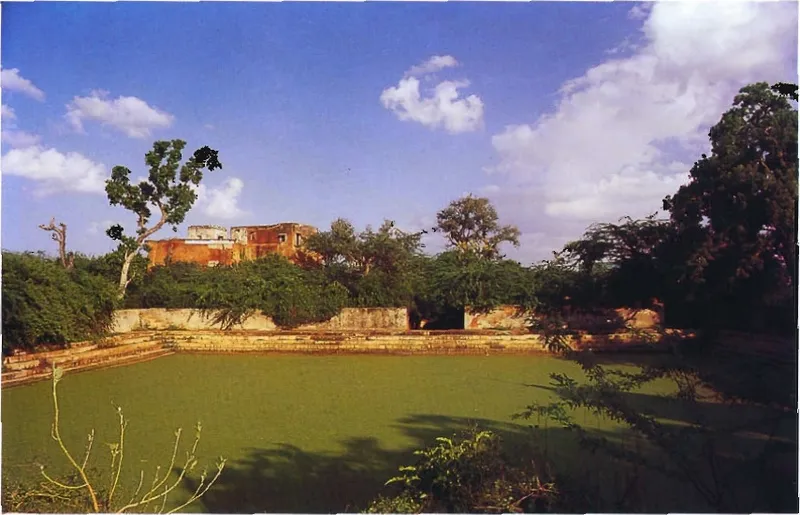
- What it is
- Navala-kuṇḍa is a pond just beside Apsarā-kuṇḍa at Pūñcharī, and a temple of Lord Narasiṁha stands on a small hill near its banks.
- Places here
- Narasiṁha Mandira (Govardhana), Place of rāsa (Apsarā-kuṇḍa and Navala-kuṇḍa)
In short
Navala-kuṇḍa is a pond just beside Apsarā-kuṇḍa at Pūñcharī, and a temple of Lord Narasiṁha stands on a small hill near its banks.[1 +3] Two guidebooks explain navala as ever-youthful, and one of them says that the ever-youthful Kṛṣṇa is present here as the kuṇḍa; Govardhana Hill (2001) also calls it Punchari-kuṇḍa, the kuṇḍa near the tail of the hill.[2 +5] According to them, Rādhā and Kṛṣṇa melted in love during a rāsa dance here, Kṛṣṇa becoming this kuṇḍa and Rādhā the neighbouring Apsarā-kuṇḍa.[1 +3] Śrīmad-Bhāgavatam tells the rāsa dance on the bank of the Yamunā and does not name this kuṇḍa.[9 +5]
Key facts
| Kind | kuṇḍa |
|---|---|
| Region · area | Govardhana · Pūñcharī |
Divine pastimes
The rāsa dance
Śrīmad-Bhāgavatam (10.29–10.33) tells the rāsa dance. On autumn nights Kṛṣṇa, by His internal potency, resolved to enjoy; He went with the gopīs to the cool, sandy bank of the river, the Yamunā in the translation, began the dance there and enjoyed all those moonlit nights. It does not name Navala-kuṇḍa, Apsarā-kuṇḍa or Govardhana, does not name Rādhā, and tells of no melting of the lovers into water.[9 +5]
nadyāḥ pulinam āviśya gopībhir hima-vālukam / juṣṭaṃ tat-taralānandi kumudāmoda-vāyunā
Śrī Kṛṣṇa went with the gopīs to the bank of the Yamunā, where the sand was cooling and the wind, enlivened by the river’s waves, bore the fragrance of lotuses.
Translation: Śrīla Prabhupāda's disciples (BBT)The commentators teach that the rāsa was not limited to that autumn night (summarised here, not translated). Śrīla Jīva Gosvāmī says that it was danced in the same way elsewhere too, and on the moonlit nights of spring and the other seasons; Śrīla Viśvanātha Cakravartī Ṭhākura says that Kṛṣṇa enjoyed the nights of all twelve months in Śrī Vṛndāvana; and Śrīla Baladeva Vidyābhūṣaṇa calls the bank of the Yamunā the arena of the rāsa. These comments name no place of Govardhana and no kuṇḍa.[10 +2]
The Bhāgavatam says that the bull demon Ariṣṭa came to the cowherd village "then", without saying when that was or mentioning a rāsa.[16] The commentators explain that he came at nightfall, when Kṛṣṇa was absorbed in a rāsa, and Vaṁśīdhara and Śrīla Jīva Gosvāmī say that this rāsa at Govardhana took place in the middle of spring. They name no spot of the hill, and the Purāṇic verses that Śrīla Viśvanātha Cakravartī Ṭhākura quotes hold that night's rāsa at the newly made Rādhā-kuṇḍa.[17 +2] Read more: The spring rāsa at Govardhana: Pārāsaulī, Candra-sarovara and Paiṭhā →
Kṛṣṇa's bath after the lifting of the hill
Śrīmad-Bhāgavatam (10.27) tells that after the lifting of Govardhana, Surabhi bathed Kṛṣṇa with her milk and Indra with heavenly Gaṅgā water from the trunk of Airāvata, naming Him Govinda, while the Gandharvas and others sang and the wives of the demigods danced. It names no kuṇḍa or place for the ceremony.[20 +2] The commentators place the singing and dancing at the place of the bath in the Govardhana region, known as Śakra-kuṇḍa or Govinda-kuṇḍa, and none of them names Pūñcharī or its kuṇḍas (summarised here, not translated).[23]
According to the guidebook Vṛndāvana-Dhāma Ki Jaya! (c. 1986), many Gandharvas and Apsarās danced and bathed in the two kuṇḍas at Pūñcharī when Indra bathed Kṛṣṇa. That book does not name the two kuṇḍas; Śrī Vraja-maṇḍala Parikramā (2007) names the kuṇḍas of Pūñcharī as Apsarā-kuṇḍa and Navala-kuṇḍa, so Navala-kuṇḍa would be one of them, though neither book says so of this bath.[2 +2]
Traditional accounts
Śrī Vraja-maṇḍala Parikramā (2007) says that the eternally youthful (navala) Nanda-nandana, Kṛṣṇa the son of Nanda, is present …
The name
Śrī Vraja-maṇḍala Parikramā (2007) says that the eternally youthful (navala) Nanda-nandana, Kṛṣṇa the son of Nanda, is present here as Navala-kuṇḍa, and Govardhana Hill (2001) explains naval as ever-youthful or ever-fresh.[2 +1] The second book also calls the kuṇḍa Punchari-kuṇḍa, because it lies near the tail (pūñch) of Govardhana, and makes it the end of the peacock's tail, the shape that it gives the hill.[3 +3]
The Garga-saṁhitā names a Puccha-kuṇḍa, a tail kuṇḍa, as the tail of Govardhana's body, and says that one bath in Puccha-kuṇḍa on Govardhana gives the result of ten million yajñas (sacrifices) (summarised here, not translated). It does not say where on the hill Puccha-kuṇḍa lies, and no scripture or ācārya text says that it is Navala-kuṇḍa.[25 +1] Read more: The body of Govardhana: mouth, eyes, neck and the peacock →
The sources explain the kuṇḍa's name in different ways:
Accounts differ What the kuṇḍa beside Apsarā-kuṇḍa is called, and why
- Śrī Vraja-maṇḍala Parikramā (2007)Navala-kuṇḍa: 'the eternally youthful (navala) Nanda-nandana Śrī Kṛṣṇa is present here as Navala-kuṇḍa'
- Govardhana Hill: India's Most Sacred Mountain (2001)Naval-kuṇḍa, 'Naval means ever-youthful or ever-fresh'; 'also known as Punchari-kuṇḍa because it is situated near the tail (punch) of Govardhana Hill'
- Devakīnandan Kumheriyā, Śrī Govardhan darśan (Hindi, 1977), as reported by A. W. Entwistle (1987), p. 353the tank, now called Nawal Kund, was called Pucch Kund until Rānī Nawal Kishor of Bharatpur restored it (no date; Entwistle does not say whether the present name comes from hers)
- Garga-saṁhitā 3.8.11, 3.10.25names a Puccha-kuṇḍa, the hill's 'tail', and praises bathing in it 'on Govardhana'; it does not say where on the hill it lies
The melting of the Divine Couple
Śrī Vraja-maṇḍala Parikramā (2007) says that the Divine Couple, Śrī Rādhā and Kṛṣṇa, melted in prema, pure love, while dancing the rāsa here, and that Apsarā-kuṇḍa and Navala-kuṇḍa are Their melted forms. Govardhana Hill (2001) and the undated parikramā notes Govardhana say instead that Kṛṣṇa became Navala-kuṇḍa while Rādhā and the gopīs became Apsarā-kuṇḍa.[1 +3] Śrī Vraja-maṇḍala Parikramā names no source for the pastime. The one ācārya's text found that tells of Rādhā and Kṛṣṇa melting into two lakes, Śrīla Viśvanātha Cakravartī Ṭhākura's Vraja-rīti-cintāmaṇi (3.34–35), speaks of Rādhā-kuṇḍa and Kṛṣṇa's kuṇḍa, not of these two.[1 +3]
Śrīla Prabhupāda
Śrīla Prabhupāda does not speak of the kuṇḍa by name.
Śrīla Prabhupāda does not speak of the kuṇḍa by name. His Kṛṣṇa book follows the Bhāgavatam and sets the rāsa by the Yamunā in the moonlight of autumn; this is a general description, not one of this place:[14]
General teaching (does not name the place)“After this, the Supreme Personality of Godhead began His rāsa dance. A dance in the midst of many girls is called a rāsa dance. … He thus enjoyed the company of the gopīs in the soothing moonlight of autumn.”
Śrīla Prabhupāda, Kṛṣṇa, the Supreme Personality of Godhead (Kṛṣṇa book), Chapter 33, 'Description of the Rāsa Dance' · vedabase.io
Location
| Where it is | 'near the tail (punch) of Govardhana Hill'[28] near Apsarā-kuṇḍa, at Pūñcharī[29] |
|---|---|
| On the numbered Govardhana chart | 48 (printed as “Navala Kunda”)[30] |
Places at Navala-kuṇḍa
2 places
Nearby places
Apsarā-kuṇḍa
Pictures
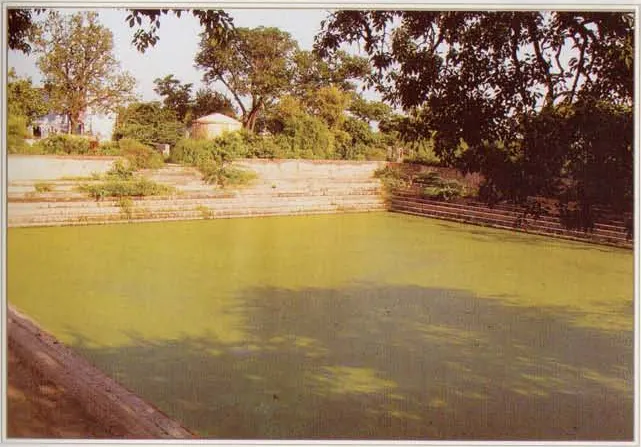
1 pictures
History
According to the historian A. W. Entwistle (1987), a Hindi guidebook to Govardhana by Devakīnandan Kumheriyā (1977) says that the tank was called Pucch Kund until Rānī Nawal Kishor of Bharatpur restored it. Neither gives a date or names a document, so the report is not certain.[27]
Where the sources differ
Where and when the rāsa took place, and whether the lovers melted into the kuṇḍas
Accounts differ Where and when the rāsa took place, and whether the lovers melted into the kuṇḍas
- Śrīmad-Bhāgavatam 10.29.1, 10.29.45, 10.33.2, 10.33.25 (translations by Śrīla Prabhupāda's disciples)on autumn nights Kṛṣṇa went with the gopīs to the sandy bank of the river (the Yamunā in the translation) and began the rāsa there; He enjoyed all those moonlit nights; no kuṇḍa, no Govardhana, no Rādhā by name, no melting
- Śrīla Jīva Gosvāmī, Śrīla Viśvanātha Cakravartī, Śrīla Baladeva Vidyābhūṣaṇa on ŚB 10.33.25; Baladeva on 10.29.45the rāsa was danced also on other nights and in other seasons (Jīva: also 'elsewhere'; Viśvanātha: the nights of the year in Śrī Vṛndāvana); Baladeva calls the Yamunā's bank the arena of the rāsa; no place at Govardhana is named
- Vaṁśīdhara and Śrīla Jīva Gosvāmī on ŚB 10.36.6 and 10.36.16 (with Śrīla Sanātana, Śrīla Jīva and Viśvanātha on 10.36.1); Purāṇic verses quoted by Viśvanātha on 10.36.15Ariṣṭa came at nightfall when Kṛṣṇa was absorbed in the rāsa (Viṣṇu Purāṇa 5.14.1); Kṛṣṇa came from the rāsa-place at Govardhana; this rāsa at Govardhana was in the middle of spring; no spot named. The Purāṇic verses have Kṛṣṇa hold that night's rāsa at the new Rādhā-kuṇḍa
- Śrīla Prabhupāda, Kṛṣṇa book ch. 29 and 33the cool, sandy bank of the Yamunā; the soothing moonlight of autumn
The wording of these accounts is our summary of the sources, not a published translation.
More on this place
The spring rāsa at Govardhana: Pārāsaulī, Candra-sarovara and Paiṭhā · The body of Govardhana: mouth, eyes, neck and the peacock
References
30 references
- the undated parikramā notes Govardhana, ¶122
- Śrī Vraja-maṇḍala Parikramā (2007), PDF p. 131
- Govardhana Hill: India's Most Sacred Mountain (2001), Rajasekhara dasa Brahmacari, PDF p. 123
- Śrī Vraja-maṇḍala Parikramā (2007), PDF p. 110
- Govardhana Hill: India's Most Sacred Mountain (2001), Rajasekhara dasa Brahmacari, PDF p. 122
- Govardhana Hill: India's Most Sacred Mountain (2001), Rajasekhara dasa Brahmacari, PDF p. 26
- Govardhana Hill: India's Most Sacred Mountain (2001), Rajasekhara dasa Brahmacari, PDF p. 11
- Govardhana Hill: India's Most Sacred Mountain (2001), Rajasekhara dasa Brahmacari, PDF p. 165
- Śrīmad-Bhāgavatam 10.29.1, GRETIL
- Śrīmad-Bhāgavatam 10.29.45, GRETIL
- Śrīmad-Bhāgavatam 10.33.2, GRETIL
- Śrīmad-Bhāgavatam 10.33.25, GRETIL
- Śrīla Prabhupāda, Kṛṣṇa, the Supreme Personality of Godhead (Kṛṣṇa book), Chapter 29, 'The Rāsa Dance: Introduction' · vedabase.io
- Śrīla Prabhupāda, Kṛṣṇa, the Supreme Personality of Godhead (Kṛṣṇa book), Chapter 33, 'Description of the Rāsa Dance' · vedabase.io
- Śrīla Jīva Gosvāmī: commentary on ŚB 10.33.25
- Śrīmad-Bhāgavatam 10.36.1, GRETIL
- Śrīla Sanātana Gosvāmī, Śrīla Jīva Gosvāmī: commentary on ŚB 10.36.1, Bhagavata Vidya Pith edition, ed. Bhagavata Rishi and Krishna Shankar Shastri, 1996
- Vaṁśīdhara, Śrīla Jīva Gosvāmī: commentary on ŚB 10.36.6, Bhagavata Vidya Pith edition, ed. Bhagavata Rishi and Krishna Shankar Shastri, 1996
- Vaṁśīdhara, Śrīla Jīva Gosvāmī: commentary on ŚB 10.36.16, Bhagavata Vidya Pith edition, ed. Bhagavata Rishi and Krishna Shankar Shastri, 1996
- Śrīmad-Bhāgavatam 10.27.22-23, GRETIL
Show all 30 references
- Śrīmad-Bhāgavatam 10.27.24, GRETIL
- Śrīla Prabhupāda, Kṛṣṇa, the Supreme Personality of Godhead (Kṛṣṇa book), Chapter 27, 'Prayers by Indra, the King of Heaven' · vedabase.io
- Vaṁśīdhara, Śrīla Sanātana Gosvāmī, Śrīla Jīva Gosvāmī: commentary on ŚB 10.27.24, Bhagavata Vidya Pith edition, ed. Bhagavata Rishi and Krishna Shankar Shastri, 1996
- Vṛndāvana-Dhāma Ki Jaya! (c. 1986), by Dhruva Mahārāja dāsa, PDF p. 43
- Garga-saṁhitā, Girirāja-khaṇḍa (3), adhyāya 8, verse 11, Sanskrit Wikisource
- Garga-saṁhitā, Girirāja-khaṇḍa (3), adhyāya 10, verses 24-25, Sanskrit Wikisource
- A. W. Entwistle, Govardhan entries, '20a Apsarakund', printed p. 353, Egbert Forsten, Groningen, 1987
- Govardhana Hill: India's Most Sacred Mountain (2001), Rajasekhara dasa Brahmacari, p. 108
- Śrī Vraja-maṇḍala Parikramā (2007), p. 236-237
- Numbered list of the Govardhana sites (key of the Govardhana chart)