The body of Govardhana: mouth, eyes, neck and the peacock
गोवर्धन का श्रीअंग: मुख, नेत्र, ग्रीवा और मयूर-आकृति
In short
Govardhana is seen as a living body because Kṛṣṇa, at the first Govardhana-pūjā, said that He was the hill. The Garga-saṁhitā names its kuṇḍas (sacred ponds) and stones as its limbs. According to Śrīla Viśvanātha Cakravartī Ṭhākura it is shaped like a peacock, and the guidebooks place its lotus mouth, the Mukhāravinda, at Mānasī-gaṅgā.[1–11]
On this page
At a glance
- The Bhāgavatam: Kṛṣṇa took a huge form, said He was the hill and ate the offerings; it names no spot and no mouth.[1 +3]
- Śrīla Prabhupāda: Kṛṣṇa did this to show that Govardhana Hill and He are identical.[12]
- The Garga-saṁhitā: the mouth lies below Śṛṅgāra-maṇḍala, Mānasī-gaṅgā is the eyes, Rādhā-kuṇḍa the tongue, Puccha-kuṇḍa the tail.[2–4, 15]
- The peacock: so the hill is described in Śrīla Viśvanātha Cakravartī Ṭhākura's Vraja-rīti-cintāmaṇi, with Mānasī-gaṅgā as the neck and the two kuṇḍas as the eyes.[6 +2]
- The Mukhāravinda: a śilā (sacred stone) in a temple on Mānasī-gaṅgā, worshipped as the hill's lotus mouth with milk, sweets and a daily abhiṣeka (bathing).[8–11]
- Gauḍīya Vaiṣṇavas do not climb the hill, because, as Śrīla Prabhupāda writes, it is identical with Gopāla.[18–23]
Why is Govardhana seen as a body?
The guidebooks to Govardhan Hill describe it as a living body. One place is its mouth, two lakes are its eyes, a narrow stretch is its neck, and the village of Pūñcharī is its tail. The books differ on which place is which limb. Behind this way of speaking stands the Bhāgavatam's account of the first Govardhana-pūjā.[1, 5–11]
When the cowherds had made their offerings and walked round the hill, Kṛṣṇa took another, huge form. He said that He was the hill, and ate the many offerings. Then He bowed down to that form together with the people of Vraja, and said that the hill had appeared in person and shown them mercy.[1 +3]
kṛṣṇas tv anyatamaṃ rūpaṃ gopa-viśrambhaṇaṃ gataḥ / śailo 'smīti bruvan bhūri balim ādad bṛhad-vapuḥ
Kṛṣṇa then assumed an unprecedented, huge form to instill faith in the cowherd men. Declaring “I am Govardhana Mountain!” He ate the abundant offerings.
Translation: Śrīla Prabhupāda's disciples (BBT)Śrīla Prabhupāda explains why Kṛṣṇa said it.[12]
Names this place“When everything was complete, Kṛṣṇa assumed a great transcendental form and declared to the inhabitants of Vṛndāvana that He was Himself Govardhana Hill in order to convince the devotees that Govardhana Hill and Kṛṣṇa Himself are identical.”
Śrīla Prabhupāda, Kṛṣṇa, the Supreme Personality of Godhead (Kṛṣṇa book), Chapter 24, Worshiping Govardhana Hill · vedabase.io
In his purport to Caitanya-caritāmṛta Madhya 4.86 he tells the same moment in a single sentence: Kṛṣṇa expanded Himself, declared that He was the hill, and accepted all the food offered to it.[13] The Garga-saṁhitā says the same in its own words. Govardhana, king among the hills, is the very form of Kṛṣṇa, and by seeing it a person reaches the goal of life (summarised here, not translated).[1 +5]
The best of the Lord's servants
The same hill is also the best of Kṛṣṇa's servants. In the Tenth Canto the gopīs praise it for supplying Kṛṣṇa, Balarāma, their calves, cows and friends with water, soft grass, caves, fruits and flowers. It rejoices, they say, at the touch of their feet.[1 +5] Śrīla Prabhupāda translates the verse in Caitanya-caritāmṛta Madhya 18.34:[27]
hantāyam adrir abalā hari-dāsa-varyo
yad rāma-kṛṣṇa-caraṇa-sparaśa-pramodaḥ
mānaṃ tanoti saha-go-gaṇayos tayor yat
pānīya-sūyavasa-kandara-kandamūlaiḥ
Of all the devotees, this Govardhana Hill is the best! O my friends, this hill supplies Kṛṣṇa and Balarāma, as well as Their calves, cows and cowherd friends, with all kinds of necessities — water for drinking, very soft grass, caves, fruits, flowers and vegetables. In this way the hill offers respect to the Lord. Being touched by the lotus feet of Kṛṣṇa and Balarāma, Govardhana Hill appears very jubilant.
Translation: Śrīla A.C. Bhaktivedanta Swami PrabhupādaSo the sources hold two truths together: the hill is one with Kṛṣṇa, and it is also His best servant.[1 +5]
Why pilgrims do not climb the hill
Because the hill is a living form of the Lord, Gauḍīya Vaiṣṇavas, the followers of Śrī Caitanya, do not climb it. Śrī Caitanya Mahāprabhu did not go up the hill. He told Śrī Jagadānanda Paṇḍita not to climb it to see the Deity Gopāla, and Śrīla Rūpa Gosvāmī and Śrīla Sanātana Gosvāmī did not climb it either.[18–23] Śrīla Prabhupāda gives the reason in his purport to Caitanya-caritāmṛta Antya 13.39, following Śrīla Bhaktivinoda Ṭhākura.[22]
Names this place“One should also avoid climbing Govardhana Hill to see the Gopāla Deity. Since Govardhana Hill itself is identical with Gopāla, one should not step on the hill or touch it with his feet. One may see Gopāla when He goes elsewhere.”
Śrīla Prabhupāda, Śrī Caitanya-caritāmṛta, Antya-līlā 13.39, purport · vedabase.io
The stones of the hill share its nature. In his purport (explanation) to Caitanya-caritāmṛta Antya 6.294, Śrīla Prabhupāda quotes Śrīla Bhaktisiddhānta Sarasvatī Ṭhākura's Anubhāṣya. In Śrī Caitanya Mahāprabhu's view, a stone from Govardhana Hill was directly the form of Kṛṣṇa, the son of Nanda Mahārāja. The Lord used such a stone for three years and then gave it to Śrīla Raghunātha dāsa Gosvāmī.[29]
How does the Garga-saṁhitā describe the limbs of Girirāja?
The fullest list is in the Girirāja-khaṇḍa of the Garga-saṁhitā (3.8.4–13). There Nārada describes the limbs of the hill to the king of Mithilā. We quote only the translations of the Bhaktivedanta Book Trust (BBT), so it is summarised here, not translated.[2–4]
- The mouth is below Śṛṅgāra-maṇḍala, where the Lord held the Annakūṭa, the hill of food, with the residents of Vraja (3.8.4).[4]
- Mānasī-gaṅgā is the hill's eyes, Candra-sarovara its nose, Govinda-kuṇḍa its lips and Kṛṣṇa-kuṇḍa its chin (3.8.5).[2]
- Rādhā-kuṇḍa is its tongue and Lalitā-saras its cheeks; its ears are Gopāla-kuṇḍa, and the tip of an ear is Kusumākara (3.8.6).[2 +2]
- Three stones are named: the stone marked by Kṛṣṇa's crown is the forehead, the painted stone (citra-śilā) is the head, and the neck is the sounding stone (vādanī-śilā) (3.8.7).[30]
- Kṛṣṇa's handprint is the hill's intelligence, Airāvata's footprint its foot, and the hoofprints of Surabhi its wings (3.8.10).[3]
- Puccha-kuṇḍa is its tail, which completes the list of the hill's limbs (3.8.11).[2–4]
The list is not quite a human body. It gives the hill wings and a tail, yet it names no bird or animal.[2–4] Two of its choices differ from the guidebooks described below: the eyes are Mānasī-gaṅgā, not Rādhā-kuṇḍa and Śyāma-kuṇḍa, and Rādhā-kuṇḍa is the tongue.[2 +2] In the chapter before, the same work lists the main tīrthas (holy places) on Girirāja in nearly the same order: Mānasī-gaṅgā, Govinda-kuṇḍa, Candra-sarovara, Rādhā-kuṇḍa, Kṛṣṇa-kuṇḍa, Lalitā-kuṇḍa, Gopāla-kuṇḍa and Kusumākara.[2–4]
Is Govardhana shaped like a peacock?
Many guides describe the hill as a peacock. Of the books cited here, the oldest source for this is the Vraja-rīti-cintāmaṇi of Śrīla Viśvanātha Cakravartī Ṭhākura. Its third chapter goes round Govardhana and calls the hill peacock-shaped (mayūrākṛti). The points below are summarised here, not translated, from the Sanskrit.[5 +3]
- He says that the middle of its chest is where the two kuṇḍas Saṅkarṣaṇa and Dāna-nivartana lie, and there Nanda holds the great Annakūṭa festival (3.20).[31]
- Its neck (gala-sthalī) is the Mānasa-jāhnavī, Mānasī-gaṅgā, where Rādhā and Kṛṣṇa always enjoy Their boat pastime (3.23). The first line of this verse seems to place the peacock's tail south of Govinda-kuṇḍa, but the text is unclear here.[16]
- Of the lotus lake Kusumākara, Kusuma-sarovara, bright with countless flowers and groves of bowers, he asks whether it is the face of the best of mountains (3.26).[17]
- Its eyes are the two lakes of Śrī Rādhikā and of Kṛṣṇa, full of Their love (3.29).[6]
The poem names no mouth of the hill.[6 +2]
In his Govinda-līlāmṛta (7.109), Śrīla Kṛṣṇadāsa Kavirāja Gosvāmī gives the eyes without the bird. At midday Kṛṣṇa sees the two lakes at the bowed head of the hill, their lotuses whirling and their waves raised by the wind. He takes them for the hill's own eyes, rolling and full of tears, as its body sways with love (summarised here, not translated). The verse does not call the hill a peacock.[7]
Two guidebooks say the peacock comes from the Govinda-līlāmṛta. That work has the two lakes as the hill's eyes, but no peacock. Of the books cited here, the peacock is Śrīla Viśvanātha Cakravartī Ṭhākura's.[5 +4]
Where did the hill eat the offerings?
The mouth matters more than the other limbs, because it touches the story of the Annakūṭa and the place where the hill ate what the cowherds offered. The Bhāgavatam says that Kṛṣṇa, in another, huge form, ate the abundant offerings, and that the cowherds bowed to that form with Him (10.24.35–36). It names no spot and no mouth.[1 +4]
The commentators on the Tenth Canto place that form on the top of the hill or above it (summarised here, not translated).[33]
- Śrīla Sanātana Gosvāmī and Śrīla Jīva Gosvāmī quote the Harivaṁśa for a form standing on the summit.[33]
- Śrīla Viśvanātha Cakravartī Ṭhākura pictures it as a second mountain standing on Govardhana, taking the offerings of the people of Vraja, near and far, with very long outstretched hands.[33]
- Śrīla Baladeva Vidyābhūṣaṇa describes a huge form with a thousand arms, risen above the hill.[33]
None of them names a spot.[33] The commentators' descriptions are given more fully in “The first Govardhana-pūjā and the Annakūṭa”.[1, 33]
None of them speaks of a mouth of the hill. The only remark about a mouth of Govardhana in these commentaries is Śrīla Sanātana Gosvāmī's on ŚB 10.24.27. There Kṛṣṇa tells the cowherds to have offerings poured into the sacred fires.[34] Those words, he says, show that Govardhana, like the other deities, has fire for its mouth (agni-mukha), and so that the hill too is a deity. The mouth here is the sacrificial fire, not a place on the hill.[34]
The Garga-saṁhitā, as seen above, puts the mouth below Śṛṅgāra-maṇḍala, where the Annakūṭa was made, and does not name a village.[4] Śrīla Viśvanātha Cakravartī Ṭhākura himself sets Nanda's great Annakūṭa festival not at Mānasī-gaṅgā but at the hill's chest, where the Saṅkarṣaṇa and Dāna-nivartana kuṇḍas are (3.20).[31]
How do the guidebooks describe the worship at the Mukhāravinda?
The guidebooks put the mouth at the Mukhāravinda, the lotus mouth. It is a śilā in a sandstone temple on the bank of Mānasī-gaṅgā, the Mukhāravinda Mandira.[8–11] Govardhana Hill: India's Most Sacred Mountain (2001) describes pilgrims feeding the śilā milk and sweets and pouring much milk over it every day. Śrī Vraja-maṇḍala Parikramā (2007) says that it receives a daily bath, worship and bhoga (food offerings), with festivals at Annakūṭa and Dīpāvalī. These are the practices as the books printed them in those years.[8 +4]
Behind the śilā stands the Mukuṭa-śilā, marked with the outline of Kṛṣṇa's crown, according to the same 2001 guidebook and the undated notes Govardhana Hill.[8, 35] The 2001 guidebook also says that the Vrajavāsīs, the people of Vraja, traditionally end their parikramā (the walk round the hill) at the Mukhāravinda temple. There they take darśana, a respectful seeing of the Deity, and a last dip in Mānasī-gaṅgā.[8]
The same book says that local people point to other stones as well. It reports, without naming a book or a date, that Śrīla Bhaktisiddhānta Sarasvatī Ṭhākura confirmed the stone at Mānasī-gaṅgā as the real Mukhāravinda.[8 +2] It records too that the followers of Śrī Vallabhācārya accept another Mukhāravinda śilā at Jatīpurā, which it photographs beside the samādhi of Śrī Viṭṭhalanātha.[8 +2] The walk round the hill is told in “Govardhana parikramā”.[8]
Where the sources differ
According to the modern guides, the hill has more than one shape. They follow the older pictures but add to them, and they do not agree with one another. Govardhana Hill: India's Most Sacred Mountain (2001) draws a peacock with its head tucked into its side: Kusuma-sarovara the face, Mānasī-gaṅgā the neck, the Mukhāravinda the mouth, Rādhā-kuṇḍa and Śyāma-kuṇḍa the eyes, the tail from Balarāma-sthalī to Pūñcharī. The undated notes Govardhana Hill also draw a peacock, credited to the Govinda-līlāmṛta, with Dāna-ghāṭī as the long neck. Śrī Vraja-maṇḍala Parikramā (2007) draws a sitting cow whose lotus face, on the northern bank of Mānasī-gaṅgā, lies near its stomach, the town of Govardhana.[2 +6]
Accounts differ The form ('body') of the hill and which kuṇḍa is which limb
- Garga-saṁhitā, Girirāja-khaṇḍa 3.8.4-11mouth below Śṛṅgāra-maṇḍala (where the Annakūṭa was done); eyes Mānasī-gaṅgā; lips Govinda-kuṇḍa; chin Kṛṣṇa-kuṇḍa; tongue Rādhā-kuṇḍa; cheeks Lalitā-saras; Airāvata's footprint his foot; Surabhi's hoofprints his wings; Puccha-kuṇḍa his tail (no animal named)
- Śrīla Viśvanātha Cakravartī, Vraja-rīti-cintāmaṇi 3.23, 3.26, 3.29peacock-shaped (mayūrākṛti); its neck is the Mānasa-jāhnavī (Mānasī-gaṅgā); 3.26 asks whether the lotus lake Kusumākara (Kusuma-sarovara) is the face of the best of mountains; 3.29 the lakes of Śrī Rādhikā and Kṛṣṇa are its eyes
- Śrīla Kṛṣṇadāsa Kavirāja Gosvāmī, Govinda-līlāmṛta 7.109the two lakes at the bowed head of the hill are its two eyes (no animal named)
- Govardhana Hill: India's Most Sacred Mountain (2001)a peacock with its head tucked into its side: face Kuṣuma-sarovara, neck Mānasī-gaṅgā, mouth Mukharavinda, eyes Rādhā-kuṇḍa and Śyāma-kuṇḍa, tail Balarāma Sthali to Punchari
The neck shows how far the pictures can differ. The Garga-saṁhitā makes it the musical stone, the Vādanī-śilā; Śrīla Viśvanātha Cakravartī Ṭhākura makes it Mānasī-gaṅgā, and the 2001 guidebook agrees with him; the undated notes make it Dāna-ghāṭī. Each answer has its own source.[14 +3]
Accounts differ Which place is Govardhana's neck
- the undated parikramā notes Govardhana'Dan Ghati is its long neck' (with Rādhā-kuṇḍa and Śyāma-kuṇḍa as the eyes and Mukhāravinda as the mouth).
- Govardhana Hill: India's Most Sacred Mountain (2001)'its neck Mānasī-gaṅgā' (face Kusuma-sarovara, mouth Mukhāravinda, eyes Rādhā-kuṇḍa and Śyāma-kuṇḍa).
- Garga-saṁhitā, Girirāja-khaṇḍa 3.8.7 (limbs of Girirāja)'grīvā vai vādanī śilā': the neck (throat, in Danavir Goswami's English) is the Vādanī-śilā; in the same list the eyes are Mānasī-gaṅgā.
The mouth itself is placed in three ways. The Garga-saṁhitā puts it below Śṛṅgāra-maṇḍala and the Gauḍīya guidebooks at Mānasī-gaṅgā. The followers of Śrī Vallabhācārya put it at Jatīpurā, as the 2001 guidebook reports. The guidebooks' peacock has a mouth, which Śrīla Viśvanātha Cakravartī Ṭhākura's poem does not mention.[2 +6]
Accounts differ Where Govardhana's mouth (Mukharavinda) is, and the shape of the hill
- Garga-saṁhitā, Girirāja-khaṇḍa 3.8.4-5The mouth is below Śṛṅgāra-maṇḍala, where the Annakūṭa was made; Mānasī-gaṅgā is the hill's eyes.
- Govardhana Hill: India's Most Sacred Mountain (2001), p. 66The lotus mouth is in the temple on the banks of Mānasī-gaṅgā; local people claim other śilās; Śrīla Bhaktisiddhānta Sarasvatī confirmed this one.
- Govardhana Hill: India's Most Sacred Mountain (2001), p. 128The Vallabha sampradāya, who manage the Gopālajī temple, accept another Mukharāvinda śilā at Jetipurā (photographed beside the samādhi of Viṭṭhalanātha); the Gauḍīya one is at Mānasī-gaṅgā.
- Govardhana Hill: India's Most Sacred Mountain (2001), p. 12A peacock: face Kusuma-sarovara, neck Mānasī-gaṅgā, mouth Mukharavinda, eyes Rādhā-kuṇḍa and Śyāma-kuṇḍa.
Places in this article
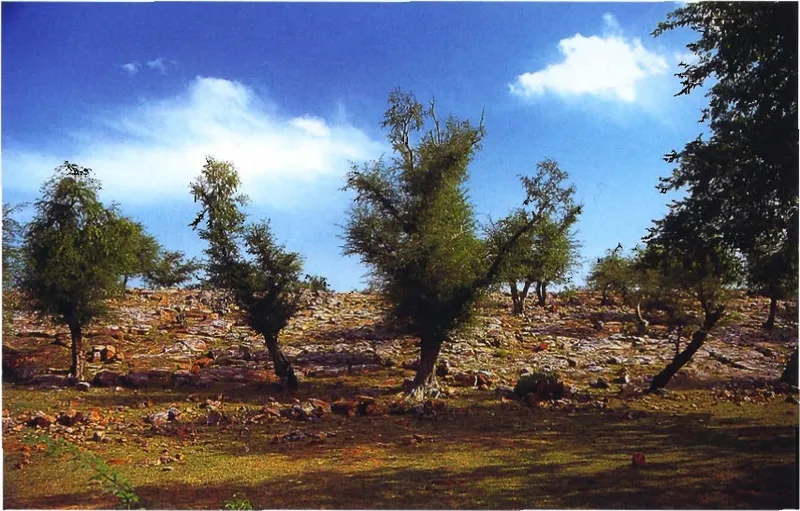
Govardhana
गोवर्धनGovardhana is the hill that Kṛṣṇa lifted with one hand and held up for seven days, so that the people and cows of Vraja could shelter under it from Indra's rain.
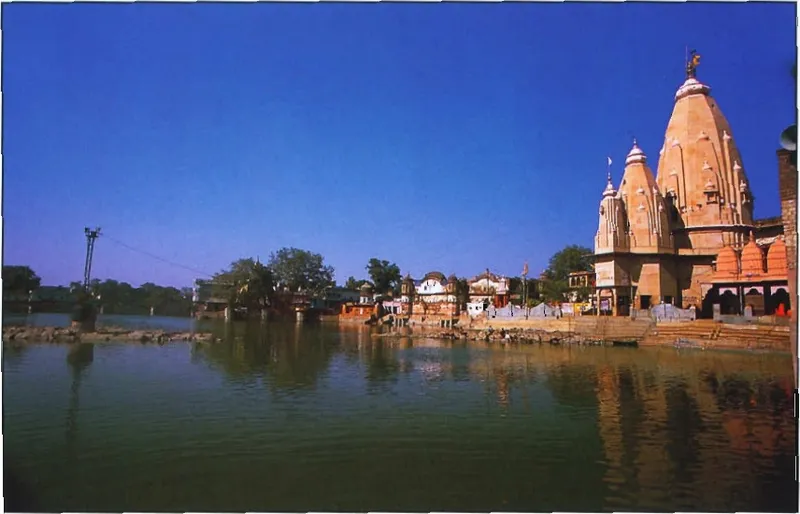
Mukhāravinda Mandira
मुखारविन्द मन्दिरThe Mukhāravinda Mandira is a sandstone temple on Mānasī-gaṅgā in Govardhana town.
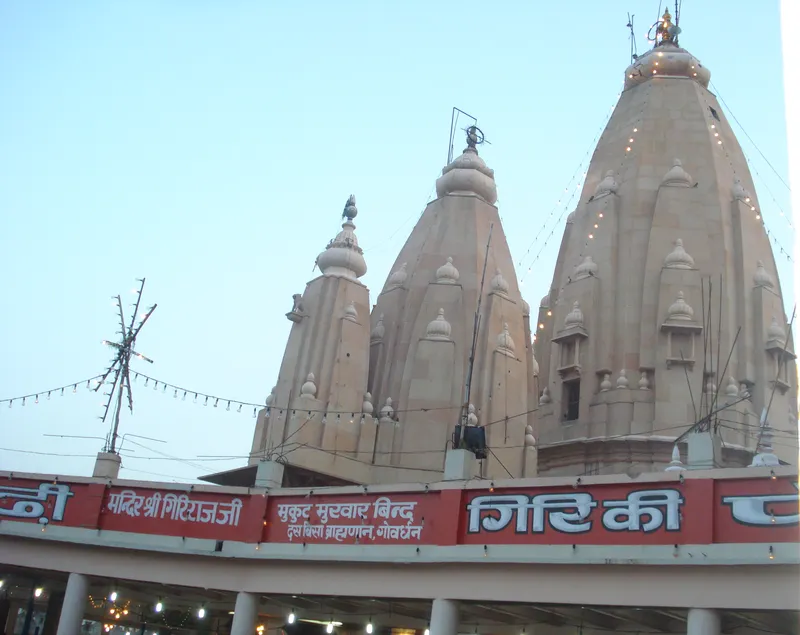
Mukhāravinda-śilā (Mānasī-gaṅgā)
मुखारविन्द-शिला (मानसी-गंगा)The Mukhāravinda-śilā is a stone of Govardhana in the Mukhāravinda temple on Mānasī-gaṅgā, worshipped as the hill's mukhāravinda, its lotus mouth.
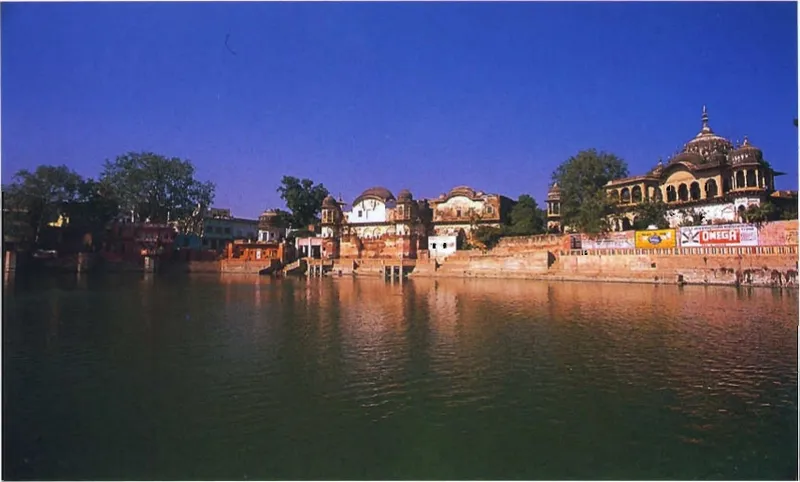
Mānasī-gaṅgā
मानसी-गंगाMānasī-gaṅgā is the large lake in the middle of Govardhana town, on Govardhana Hill.
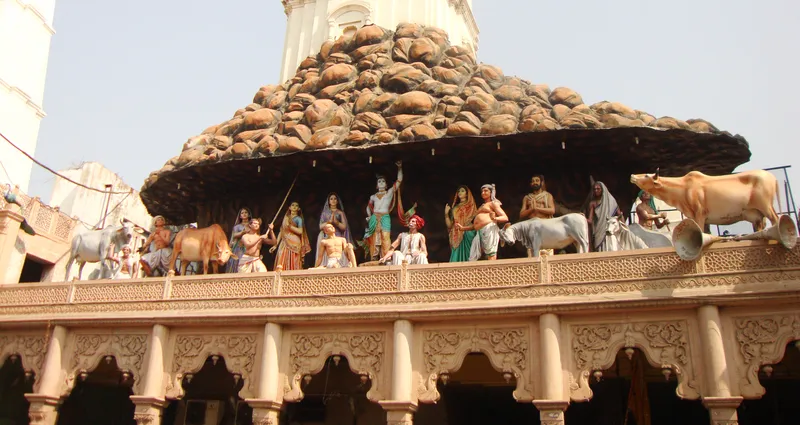
Dāna-ghāṭī
दान-घाटीDāna-ghāṭī, the pass (ghāṭī) of the toll (dāna), is the place where the road from Mathurā crosses Govardhana Hill, as the guidebooks describe it.
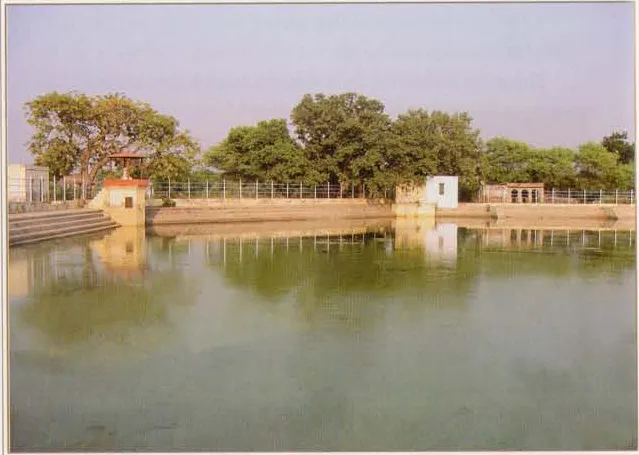
Candra-sarovara
चन्द्र-सरोवरCandra-sarovara, the lake of the moon, is a lake at Pārāsaulī.
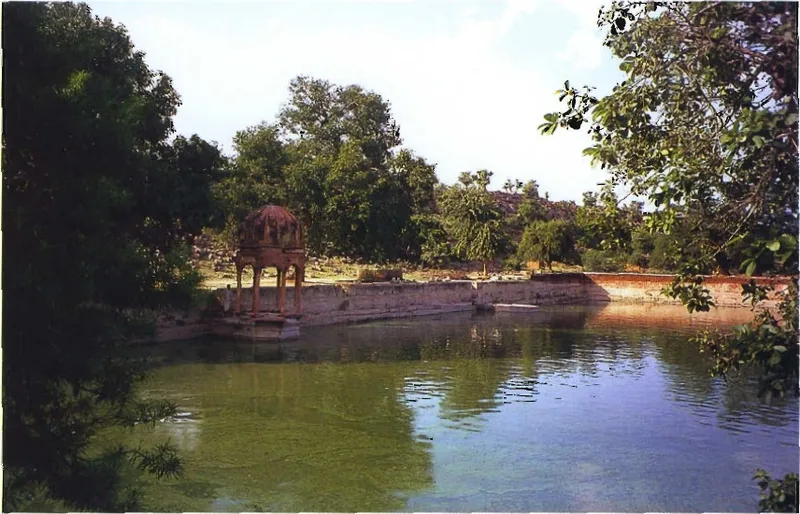
Govinda-kuṇḍa (Govardhana)
गोविन्द-कुण्ड (गोवर्धन)Govinda-kuṇḍa is a kuṇḍa (sacred pond) near the village of Aniyora on Govardhana Hill.
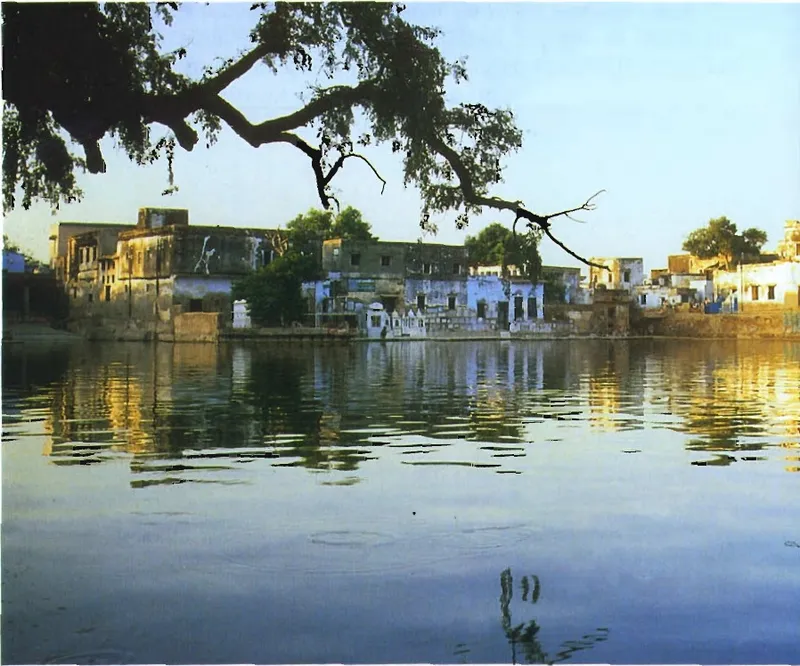
Rādhā-kuṇḍa
राधा-कुण्डRādhā-kuṇḍa is the lake of Śrī Rādhā at the foot of Govardhana Hill, in the village of Āriṭa.
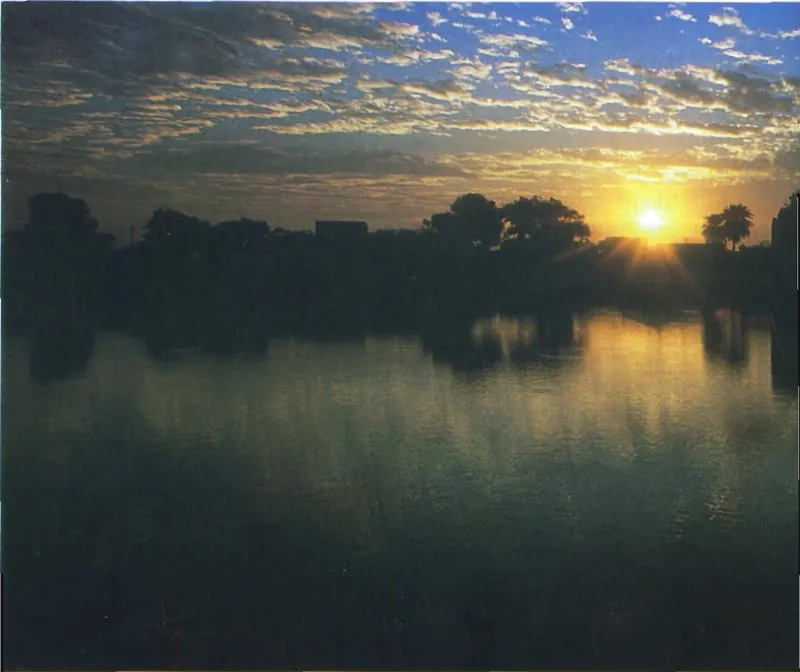
Śyāma-kuṇḍa (Rādhā-kuṇḍa)
श्याम-कुण्ड (राधा-कुण्ड)Śyāma-kuṇḍa, also called Kṛṣṇa-kuṇḍa, is Kṛṣṇa's lake beside Rādhā-kuṇḍa at the foot of Govardhana Hill.
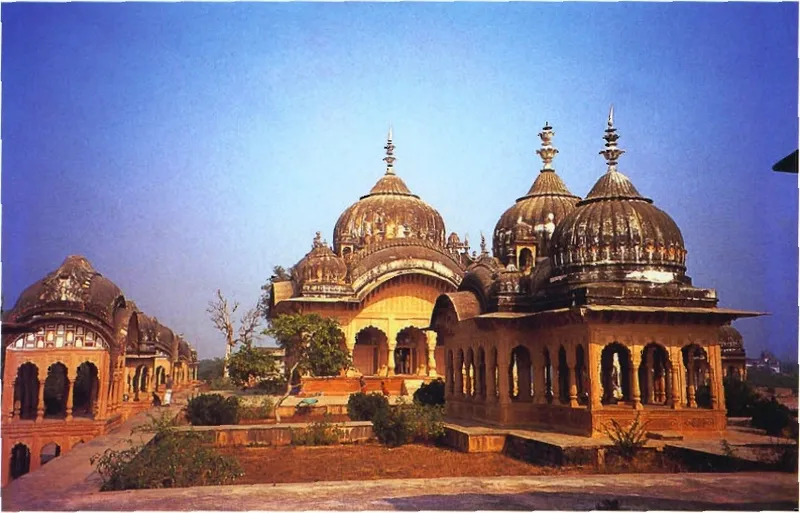
Kusuma-sarovara
कुसुम-सरोवरKusuma-sarovara lies on the right of the Govardhana parikramā path, about one and a half miles south-west of Rādhā-kuṇḍa, according to Śrī Vraja-maṇḍala Parikramā (2007).
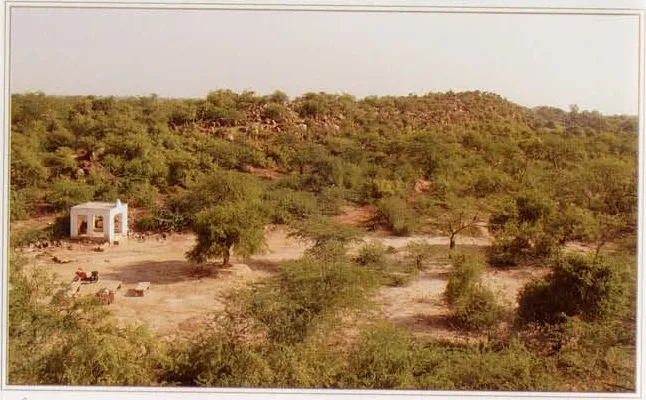
Pūñcharī
पूँछरीPūñcharī is the village at the southern end of Govardhana Hill, at the opposite end of the hill from Rādhā-kuṇḍa.
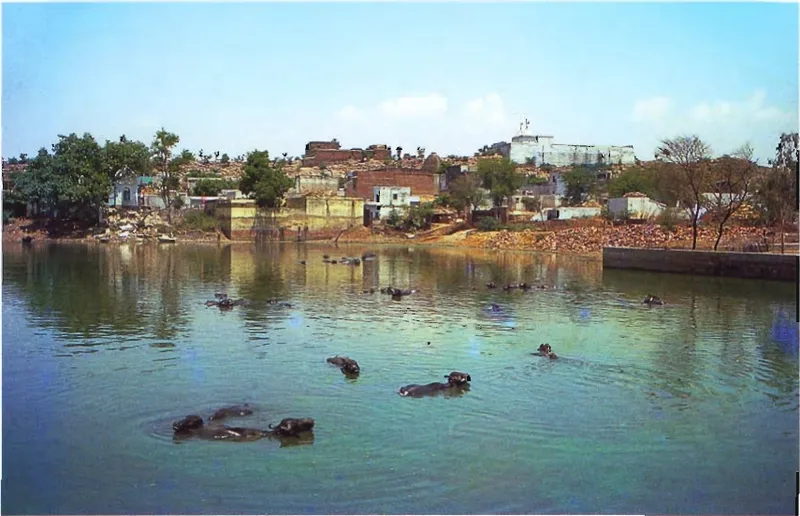
Saṅkarṣaṇa-kuṇḍa (Aniyora)
संकर्षण-कुण्ड (आन्यौर)Saṅkarṣaṇa-kuṇḍa is a pond that bears a name of Lord Balarāma, Saṅkarṣaṇa.
Dāna-nivartana-kuṇḍa
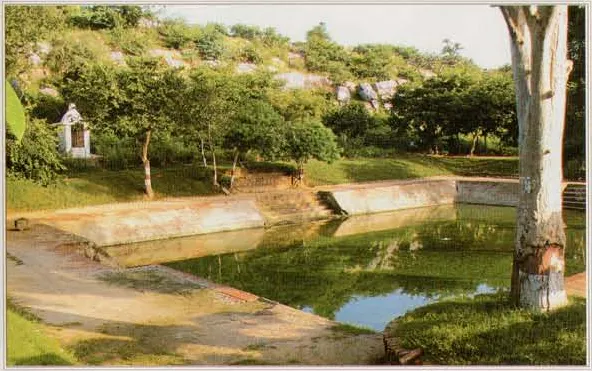
दान-निवर्तन-कुण्डDāna-nivartana-kuṇḍa is a lake (kuṇḍa) of Govardhana, some distance from Dāna-ghāṭī, where, according to the guidebook Govardhana Hill (2001), the stretch of the hill cal …
Jatīpurā
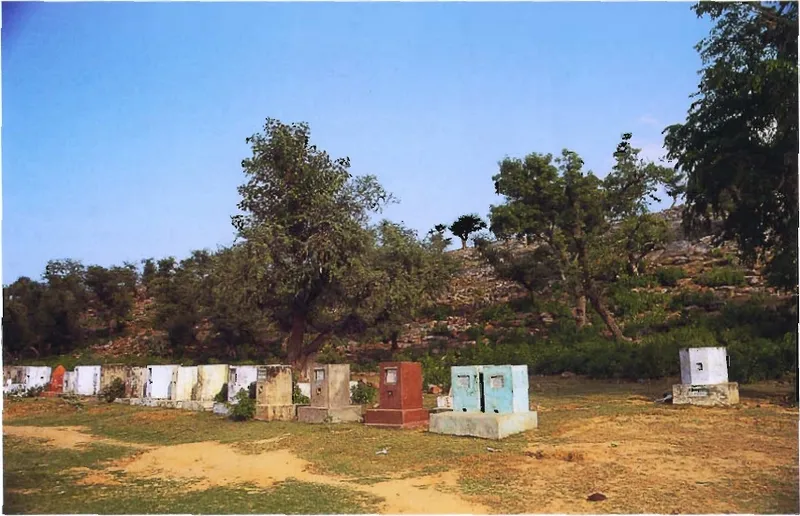
जतीपुराJatīpurā is a village on the west side of Govardhana Hill, across the hill from Aniyora; the Gopāla temple stands on the hilltop above it.
Airāvata's Foot-print
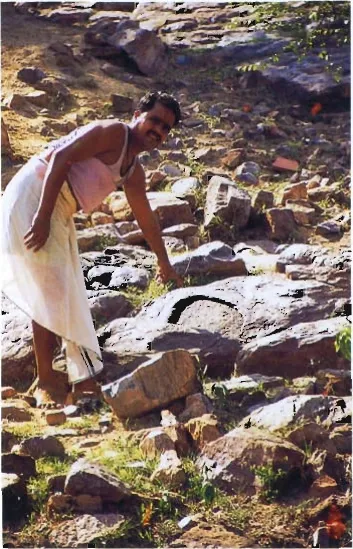
ऐरावत का चरण-चिह्नAirāvata's Foot-print is a mark in the rocks of Govardhana Hill that is shown as the footprint of Airāvata, the elephant of Indra, the king of heaven.
Mukut-śilā (Mukhāravinda Mandira)
मुकुट-शिला (मुखारविन्द मन्दिर)Questions and answers
At the first Govardhana-pūjā Kṛṣṇa took a huge form, declared that He was the hill and ate the offerings. Śrīla Prabhupāda explains that He did it to show that Govardhana Hill and He Himself are identical.[1, 12]
Śrīla Viśvanātha Cakravartī Ṭhākura calls it peacock-shaped, with Mānasī-gaṅgā as its neck and the two kuṇḍas as its eyes. The Garga-saṁhitā lists limbs, wings and a tail without naming an animal, and the guidebooks draw the hill in more than one way.[3 +5]
The guidebooks place it at the Mukhāravinda śilā in a temple on Mānasī-gaṅgā. The Garga-saṁhitā puts the mouth below Śṛṅgāra-maṇḍala, where the Annakūṭa was made, and the Vallabha sampradāya honours another Mukhāravinda at Jatīpurā.[4 +6]
In the Garga-saṁhitā the eyes are Mānasī-gaṅgā. Śrīla Viśvanātha Cakravartī Ṭhākura and Śrīla Kṛṣṇadāsa Kavirāja Gosvāmī make Rādhā-kuṇḍa and Śyāma-kuṇḍa the hill's two eyes.[2, 6, 7]
Śrīla Prabhupāda writes that Govardhana Hill is identical with Gopāla, so one should not step on it or touch it with the feet. Śrī Caitanya Mahāprabhu, Śrīla Rūpa Gosvāmī and Śrīla Sanātana Gosvāmī did not climb it.[18–23]
The Canto 10 commentators place the form that ate the offerings on or above the hill and speak of no mouth. Śrīla Sanātana Gosvāmī says only that the hill, like other deities, has the sacrificial fire for its mouth.[33, 34]
Sources
- Śrīmad-Bhāgavatam 10.24.35, GRETIL
- Garga-saṁhitā, Girirāja-khaṇḍa (3), adhyāya 8, verse 5, Sanskrit Wikisource
- Garga-saṁhitā, Girirāja-khaṇḍa (3), adhyāya 8, verse 10, Sanskrit Wikisource
- Garga-saṁhitā, Girirāja-khaṇḍa (3), adhyāya 8, verse 4, Sanskrit Wikisource
- Śrīla Viśvanātha Cakravartī Ṭhākura, Vraja-rīti-cintāmaṇi 3.23 and 3.26
- Śrīla Viśvanātha Cakravartī Ṭhākura, Vraja-rīti-cintāmaṇi 3.29
- Śrīla Kṛṣṇadāsa Kavirāja Gosvāmī, Govinda-līlāmṛta 7.109, after the editions of Haridas Das and Haridas Shastri
- Govardhana Hill: India's Most Sacred Mountain (2001), Rajasekhara dasa Brahmacari, PDF p. 80
- Śrī Vraja-maṇḍala Parikramā (2007), PDF p. 121
- Śrī Vraja-maṇḍala Parikramā (2007), PDF p. 122
- the key of the numbered Govardhana chart, ¶20
- Śrīla Prabhupāda, Kṛṣṇa, the Supreme Personality of Godhead (Kṛṣṇa book), Chapter 24, Worshiping Govardhana Hill · vedabase.io
- Śrīla Prabhupāda, Śrī Caitanya-caritāmṛta, Madhya-līlā 4.86, purport · vedabase.io
- Govardhana Hill: India's Most Sacred Mountain (2001), Rajasekhara dasa Brahmacari, PDF p. 26
- Garga-saṁhitā, Girirāja-khaṇḍa (3), adhyāya 8, verse 6, Sanskrit Wikisource
- Śrīla Viśvanātha Cakravartī Ṭhākura, Vraja-rīti-cintāmaṇi, third sarga, verse 23
- Śrīla Viśvanātha Cakravartī Ṭhākura, Vraja-rīti-cintāmaṇi, third sarga (tṛtīyaḥ sargaḥ), verse 26
- Śrīla Kṛṣṇadāsa Kavirāja Gosvāmī, Śrī Caitanya-caritāmṛta, CC Madhya-līlā 18.25, online edition · vedabase.io
- Śrīla Kṛṣṇadāsa Kavirāja Gosvāmī, Śrī Caitanya-caritāmṛta, CC Antya-līlā 13.39, online edition · vedabase.io
- Śrīla Kṛṣṇadāsa Kavirāja Gosvāmī, Śrī Caitanya-caritāmṛta, CC Madhya-līlā 18.45, online edition · vedabase.io
Show all 37 references
- Śrīla Prabhupāda, Śrī Caitanya-caritāmṛta, Madhya-līlā 18, chapter summary (from Bhaktivinoda Ṭhākura's Amṛta-pravāha-bhāṣya) · vedabase.io
- Śrīla Prabhupāda, Śrī Caitanya-caritāmṛta, Antya-līlā 13.39, purport · vedabase.io
- Govardhana Hill: India's Most Sacred Mountain (2001), Rajasekhara dasa Brahmacari, PDF p. 98
- Śrīmad-Bhāgavatam 10.24.32-33, GRETIL
- Śrīmad-Bhāgavatam 10.24.36, GRETIL
- Garga-saṁhitā, Girirāja-khaṇḍa (3), adhyāya 10, verse 14, Sanskrit Wikisource
- Śrīmad-Bhāgavatam 10.21.18, GRETIL
- Śrī Vraja-maṇḍala Parikramā (2007), PDF p. 106
- Śrīla Prabhupāda, Śrī Caitanya-caritāmṛta, Antya-līlā 6.294, purport · vedabase.io
- Garga-saṁhitā, Girirāja-khaṇḍa (3), adhyāya 8, verse 7, Sanskrit Wikisource
- Śrīla Viśvanātha Cakravartī Ṭhākura, Vraja-rīti-cintāmaṇi 3.20
- Śrīmad-Bhāgavatam 10.24.35–36, GRETIL
- Śrīla Sanātana Gosvāmī, Śrīla Jīva Gosvāmī: commentary on ŚB 10.24.35, Bhagavata Vidya Pith edition, ed. Bhagavata Rishi and Krishna Shankar Shastri, 1996
- Śrīla Sanātana Gosvāmī: commentary on ŚB 10.24.27, Bhagavata Vidya Pith edition, ed. Bhagavata Rishi and Krishna Shankar Shastri, 1996
- the undated parikramā notes Govardhana, ¶59
- Govardhana Hill: India's Most Sacred Mountain (2001), Rajasekhara dasa Brahmacari, PDF p. 142
- the undated parikramā notes Govardhana, ¶4
Further sources
- Śrīmad-Bhāgavatam 10.21.18, 10.24.27, 10.24.35–36, with the Canto 10 commentaries of Śrīla Sanātana Gosvāmī, Śrīla Jīva Gosvāmī, Śrīla Viśvanātha Cakravartī Ṭhākura and Śrīla Baladeva Vidyābhūṣaṇa (Sanskrit; summarised here, not translated).
- Śrīla Prabhupāda, Kṛṣṇa, the Supreme Personality of Godhead, chapter 24; Śrī Caitanya-caritāmṛta, Madhya 4.86 and 18.34, Antya 6.294 and 13.39, translations and purports (BBT).
- Garga-saṁhitā, Girirāja-khaṇḍa 3.7–3.8; Śrīla Viśvanātha Cakravartī Ṭhākura, Vraja-rīti-cintāmaṇi, third chapter; Śrīla Kṛṣṇadāsa Kavirāja Gosvāmī, Govinda-līlāmṛta 7.109 (Sanskrit; summarised here, not translated).
- Guidebooks: Govardhana Hill: India's Most Sacred Mountain (2001), Śrī Vraja-maṇḍala Parikramā (2007), Vṛndāvana-Dhāma Ki Jaya! (1986), Govardhana Hill (undated notes).