Śrī Jāhnavā-devī's Rādhikā for Śrī Gopīnātha
श्री जाह्नवा देवी की भेजी राधिका: गोपीनाथ जी, वृन्दावन
In short
Śrī Gopīnātha of Vṛndāvana has two Rādhikās. According to the Bhakti-ratnākara, Śrī Jāhnavā-devī, the wife of Śrī Nityānanda Prabhu, wished His Rādhikā a little taller. In a dream Gopīnātha asked her to send His beloved from Bengal. The new image was seated at His left, and the former one at His right.[1–5]
On this page
At a glance
- The temple: the Rādhā-Gopīnātha Mandira of Vṛndāvana, one of the seven original Gauḍīya temples.[6]
- The main account: the Bhakti-ratnākara of Śrīla Narahari Cakravartī Ṭhākura, Eleventh and Thirteenth Waves (chapters).[1–4]
- The image: according to the same book, the sculptor Nayana Bhāskara made Her in Bengal, and Śrī Parameśvarī dāsa took Her to Vṛndāvana.[1–4]
- The place given to Her: at Gopīnātha's left, by His order. Both of Śrīla Narahari Cakravartī Ṭhākura's books say so.[7, 8]
- Śrī Jāhnavā-devī: Śrīla Prabhupāda writes that the Gaura-gaṇoddeśa-dīpikā describes her as Anaṅga-mañjarī of Vṛndāvana.[5, 9]
- Later: according to the guidebooks, the original Gopīnātha is in Jaipur, and a representative form is served in Vṛndāvana.[10–15]
The Gaura-gaṇoddeśa-dīpikā of Śrī Kavi-karṇapūra names the two dear wives of Śrī Nityānanda Prabhu. They are Vasudhā and Jāhnavī, the daughters of Śrī Sūryadāsa.[5] Śrīla Prabhupāda writes of her in his purport (explanation) on the followers of Śrī Nityānanda Prabhu:[5, 9]
General teaching (does not name the place)“Jāhnavā-mātā is also within the list of Lord Nityānanda’s followers. She is described in the Gaura-gaṇoddeśa-dīpikā (66) as Anaṅga-mañjarī of Vṛndāvana.”
Śrīla Prabhupāda, Śrī Caitanya-caritāmṛta, Ādi-līlā 11.21, purport · vedabase.io
The Bhakti-ratnākara tells of her visits to Vṛndāvana. On one of them she went to the places of Govinda and Madana-mohana and saw Them with Śrī Rādhikā. No year is given.[16] It was on such a visit, the book says, that she stood before Gopīnātha.[1]
Why does Gopīnātha have two Rādhikās?
The Bhakti-ratnākara tells the story in its Eleventh Wave, and the account below follows it (summarised here, not translated). One day Śrī Jāhnavā-devī stood before Gopīnātha. She looked at Rādhā and Gopīnātha together. She thought that it would be good if Śrī Rādhikā were a little taller. She told no one, and went home after the evening worship.[1]
That night Gopīnātha came to her in a dream. His beloved, He said, was not as tall as He was. She should go to Gauḍa, which is Bengal, quickly make His beloved manifest and send Her. The new one would sit at His left. Śrī Rādhikā smiled and told her not to hesitate, for this was Her wish too.[1–4]
In the morning Śrī Jāhnavā-devī spoke to the sculptor Nayana Bhāskara. She told him to meditate constantly on Gopīnātha, because a beloved had to be made for Him. He understood her mind.[1]
The journey to Vṛndāvana
The Thirteenth Wave goes on in Bengal. A messenger from Khaḍadaha brought Śrīla Śrīnivāsa Ācārya a letter. Śrī Jāhnavā-devī had had the Deity of Śrī Rādhikā made, and she was overwhelmed by Her beauty. She had sent Śrī Parameśvarī dāsa and other learned devotees to take Her to Vṛndāvana by boat, with money, cloth and ornaments. She prayed that Gopīnātha would quickly draw His own beloved to Him.[2]
At Kaṇṭakanagara, on the boat, Śrī Parameśvarī dāsa uncovered Śrī Rādhikā and showed Her to Śrīla Śrīnivāsa Ācārya. He also showed him the clothes and ornaments meant for Gopīnātha and His two beloveds. He said that they would offer Śrī Rādhikā to Gopīnātha and return soon. Śrī Jāhnavā-devī herself, he said, would go to Vṛndāvana again.[2, 3]
Seated at His left
Back in Bengal, Śrī Parameśvarī dāsa told Śrīla Śrīnivāsa Ācārya what had happened. They had reached Vṛndāvana quickly and without trouble. Gopīnātha gave His order to the servant in charge. The servant seated Śrī Rādhikā, whom they had brought, at His left, and the former Ṭhākurāṇī (the former Rādhikā) gladly sat at His right.[3]
People saw Gopīnātha on the throne with His two beloveds. The book says they told one another to look at this unheard-of sight: the Rādhikā sent by Śrī Jāhnavā, at His left side.[3] So Gopīnātha now had two beloveds.[1–4]
The Narottama-vilāsa
Śrīla Narahari Cakravartī Ṭhākura tells the same story in his Narottama-vilāsa, with two differences of detail. First, in the dream Gopīnātha gives Śrī Jāhnavā-devī His own garland. He says that the new one will be at His left and the present one at His right. Second, when the new Rādhikā arrives, all the Gosvāmīs seat Her at His left, by Gopīnātha's order. There is a great festival, which two disciples of Śrīla Śrīnivāsa Ācārya report having seen.[7, 8] In the Bhakti-ratnākara it is the servant in charge who seats Her.[3, 7, 8]
Who made the first Rādhikā?
Neither book says that Gopīnātha stood alone before Śrī Jāhnavā-devī's gift. The Bhakti-ratnākara calls the earlier Deity "the former Ṭhākurāṇī".[3] Earlier in the same book, Śrīla Narahari Cakravartī Ṭhākura recalls that he has already told of the manifestation of Gopīnātha with Śrī Rādhikā near Vaṁśīvaṭa.[17]
The Sādhana-dīpikā speaks of the beloveds of three Deities: Govinda, Madana-gopāla and Gopīnātha. According to it, their three servants made them manifest: Śrī Haridāsa Gosvāmī, Śrī Kṛṣṇadāsa Brahmacārī and Śrī Madhu Paṇḍita. The book marks this as hearsay and gives no date, so it is not certain.[18] How Gopīnātha Himself appeared at Vaṁśīvaṭa is told in its own article. Read more: Gopīnātha and the banyan of Vaṁśīvaṭa →
Gopīnātha between two Rādhās: the Gopīnāthadevāṣṭaka
Śrī Jāhnavā-devī went to Vṛndāvana again. There she saw Gopīnātha in the middle, with Rādhā on His right and on His left. The Bhakti-ratnākara says that the learned described that beauty in many ways. It quotes two verses of Śrīla Viśvanātha Cakravartī Ṭhākura's Gopīnāthadevāṣṭaka (a hymn of eight verses) for the scene. Between them it adds a couplet of its own: Gopīnātha, that form of love, is subject to Śrī Jāhnavā's love.[4]
Every verse of the hymn ends with the refrain "broad-chested Gopīnātha is our refuge". Its seventh verse asks whether He is a dark tamāla tree between two golden creepers, or a rain cloud lit by lightning on both sides. Or is He a dark moon between two Rādhās (summarised here, not translated)? The hymn itself names no temple; the link with this Deity is the Bhakti-ratnākara's.[4, 19] The song book prints it without the author's name. The Stavāmṛta-laharī and the Bhakti-ratnākara give it to Śrīla Viśvanātha Cakravartī Ṭhākura.[20]
tāpiñchaḥ kiṁ hema-vallī-yugāntaḥ
pārśva-dvandvoddyoti-vidyud-ghanaḥ kim
kiṁ vā madhye rādhayoḥ śyāmalendur
gopinatha pīna-vakṣā gatir naḥ
Who is the second Deity, Rādhikā or Anaṅga-mañjarī?
The Bhakti-ratnākara and the Narottama-vilāsa call the image that Śrī Jāhnavā-devī sent a Rādhikā, Gopīnātha's beloved. They do not call this Deity Śrī Jāhnavā-devī or Anaṅga-mañjarī.[1 +5] The guidebooks and a Bengali Bhaktamāla name her differently, and their accounts are set out below.[1–4]
The name Anaṅga-mañjarī rests on the Gaura-gaṇoddeśa-dīpikā. Its verse 66 reports that some call Jāhnavī Anaṅga-mañjarī. It ends by calling both views it reports right. This is the verse Śrīla Prabhupāda cites (summarised here, not translated).[5, 9] Its verse 184 says that the one who was Anaṅga-mañjarī is now Śrīla Gopāla Bhaṭṭa Gosvāmī, and that some call him Guṇa-mañjarī.[21] The two statements differ, and they are set side by side without being joined into one view:
Accounts differ Who Anaṅga-mañjarī is in Śrī Caitanya Mahāprabhu's pastimes: Śrī Jāhnavā-devī or Śrī Gopāla Bhaṭṭa Gosvāmī (the identity on which the guidebooks' naming of the Deity beside Gopīnātha rests).
- Śrīla Prabhupāda, CC Ādi 11.21 purport (on Jāhnavā-mātā)'She is described in the Gaura-gaṇoddeśa-dīpikā (66) as Anaṅga-mañjarī of Vṛndāvana.'
- Gaura-gaṇoddeśa-dīpikā v.66Some (kecit) call Jāhnavī Anaṅga-mañjarī ('anaṅgamañjarīṁ kecij jāhnavīṁ ca pracakṣate'); the verse ends by calling both views it reports right ('ubhayaṁ tu samīcīnaṁ').
- Gaura-gaṇoddeśa-dīpikā v.184She who was Anaṅga-mañjarī is now Śrī Gopāla Bhaṭṭa Gosvāmī ('anaṅga-mañjarī yāsīt sādya gopāla-bhaṭṭakaḥ'); some call the Bhaṭṭa Gosvāmī Śrī Guṇa-mañjarī.
- Śrīla Prabhupāda, CC Ādi 10.105 purport (on Śrī Gopāla Bhaṭṭa Gosvāmī)'In the Gaura-gaṇoddeśa-dīpikā (184) it is mentioned that his previous name in the pastimes of Lord Kṛṣṇa was Anaṅga-mañjarī. Sometimes he is also said to have been an incarnation of Guṇa-mañjarī.'
Which side does she stand on?
Both of Śrīla Narahari Cakravartī Ṭhākura's books place the new image at Gopīnātha's left and the former Rādhikā at His right.[3, 7, 8]
In 1920 the Bengali book Vṛndāvana-kathā recorded how the pūjārīs (the temple priests) then presented the Deities in Vṛndāvana. The image at Gopīnātha's left was shown as Jāhnavā Ṭhākurāṇī, with the companion Viśveśvarī beside her. At His right was a small Rādhikā with the sakhī (girlfriend) Lalitā. Śrī Caitanya Mahāprabhu's image had a separate seat.[22] The guidebooks describe the present altar differently, and they do not always say whose left or right they mean:
Accounts differ On which side of Gopīnātha the Deity connected with Jāhnavā stands (the sources do not always say whose right or left is meant).
- Bhakti-ratnākara, 13th waveThe image Jāhnavā sent was seated at the left (vāme); the former Ṭhākurāṇī at the right; the Rādhikā sent by Śrī Jāhnavā at the left side.
- Śrī Vraja-maṇḍala Parikramā (2007), p. 634Jāhnavā stands on Gopīnātha's left, Rādhikā on His right; in the present temple Jāhnavā is seated on His left, Lalitā Sakhī and a small Rādhikā on His right.
- Vṛndāvana, the Playground of God (2010), p. 44Rādhārāṇī is 'on our left of the Lord', Anaṅga Mañjarī 'on our right of Him'. In Jaipur the larger Rādhārāṇī (Jāhnavā's) stands on our right of Gopīnātha and the smaller, original one on our left (p. 44), i.e. the new one at His left, as in the Bhakti-ratnākara.
- The Color Guide to Vṛndāvana (2000), p. 109'Normally in all temples Rādhārāṇī stands on the right of Krishna, but in this temple she stands on the left and Anañga Mañjari stands on the right'; the new Deity 'was than installed on the right side of Lord Gopinātha'.
The wording of these accounts is our summary of the sources, not a published translation.
Where are the Deities now?
The Vṛndāvana-kathā (1920) says that in Aurangzeb's time the original Gopīnātha and His two consorts were moved to Jaipur. It says their representatives are installed in Vṛndāvana, in the new temple built by Nandakumāra Vasu.[22] All the guidebooks agree that the original Gopīnātha is now worshipped in Jaipur, and that a pratibhū (representative) Deity stands in Vṛndāvana.[10–15] Śrīla Prabhupāda said in 1970 that the king of Jaipur took Gopīnātha, with Govinda and Madana-mohana, from Vṛndāvana when Aurangzeb was breaking temples.[23] Read more: The temples of Vṛndāvana in Mughal times →
Where the sources differ
How the second Deity came
Other books tell the coming of the second Deity in other ways. According to the guidebooks, the Deity beside Gopīnātha in connection with Śrī Jāhnavā-devī is Anaṅga-mañjarī, Śrī Rādhā's younger sister. Each guidebook tells a different story of how she came.[3 +5]
The Bengali Bhaktamāla of Kṛṣṇadāsa Bābājī (1905) tells it another way. According to it, Śrī Jāhnavā-devī manifested the image of herself and had the Deity taken to Vṛndāvana. The priests hesitated, and Gopīnātha told them that she was Anaṅga-mañjarī, His beloved, to be seated on the left. The book then tells that the two were exchanged for a time before she was seated at His left.[27–30]
According to the Prema-vilāsa, in its edition of about 1913, the image is made for Madana-mohana and seated at His left. Its editor notes, though, that an earlier printed edition read Gopīnātha.[31, 32]
Accounts differ Who the second Deity beside Gopīnātha is, and how she came.
- Bhakti-ratnākara, 11th and 13th wavesDuring a visit Jāhnavā thought Rādhikā should be taller; in a dream Gopīnātha asked her to manifest His beloved in Gauḍa and send her, to sit at His left, and Rādhikā agreed; Nayana Bhāskara made the image, Parameśvarī dāsa took it to Vṛndāvana, and it was seated at Gopīnātha's left, the former Ṭhākurāṇī at His right. Both are called Rādhikā, 'Gopīnātha's two beloveds'.
- Śrī Vraja-maṇḍala Parikramā (2007), p. 634, citing the BhaktamālaAfter the same dream Jāhnavā had a taller Rādhikā made; and, per the Bhakta-māla, at her disappearance she revealed her own deity, which Gopīnātha told the hesitating priests to place at His left as 'My beloved Anaṅga Mañjarī', with Rādhikā at His right.
- Vṛndāvana, the Playground of God (2010), pp. 44-45, citing the Bhakti-ratnākaraAfter the dream Jāhnavā arranged a larger Rādhā; both Rādhās were kept on the altar (now in Jaipur, the smaller being the original); in the new Vṛndāvana temple the Deity on our right is Anaṅga Mañjarī, Rādhārāṇī's younger sister.
- The Color Guide to Vṛndāvana (2000), p. 109; The Colour Guide to Rādhā-kuṇḍa (1999), pp. 80-81On her return to Bengal Jāhnavā had a new Rādhārāṇī carved and sent (no dream mentioned); it looked like Jāhnavā because one of her disciples carved it, and the devotees came to accept it as Anaṅga Mañjarī ('The real fact is', The Colour Guide to Rādhā-kuṇḍa (1999)).
Where Śrī Jāhnavā-devī ended her pastimes
No passage of the Bhakti-ratnākara is known to tell how Śrī Jāhnavā-devī ended her pastimes. Two guidebooks report it with the words "it is said". According to them, she went behind the closed curtain of Gopīnātha's altar and was not seen again. The Bengali Bhaktamāla instead has her image arrive at the temple after her departure. So this is not certain.[4 +3]
Accounts differ Where and how Jāhnavā Devī ended her pastimes.
- Vṛndāvana, the Playground of God (2010), p. 44 ('It is said')One day the curtains of Gopīnātha's altar were closed and she went inside; when they opened she was not to be seen: so she concluded her pastimes.
- the undated parikramā notes VṛndāvanaGopīnātha jumped off the altar, took Jāhnavā inside and closed the curtain; when it was opened she was gone.
- Śrī Vraja-maṇḍala Parikramā (2007), p. 634, citing the BhaktamālaAt her disappearance she revealed her own deity, which then 'arrived at the temple of Gopīnātha in Vṛndāvana' (so she did not disappear in that temple).
- Bhakti-ratnākara, 13th waveAfter the new Rādhikā was installed, Jāhnavā went again to Vṛndāvana and saw Gopīnātha with the two Rādhās; her journeys are told in the Anurāga-vallī and other books; no end is told here.
The wording of these accounts is our summary of the sources, not a published translation.
Places in this article
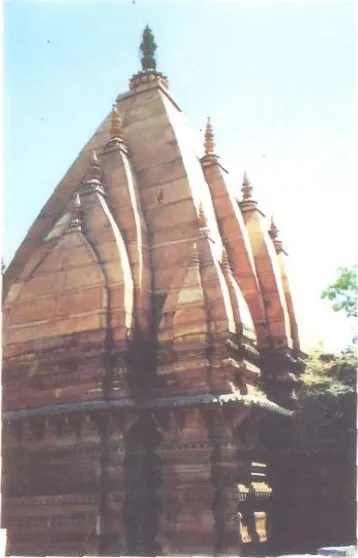
Rādhā-Gopīnātha Mandira (Vṛndāvana)
राधा-गोपीनाथ मन्दिर (वृन्दावन)The Rādhā-Gopīnātha Mandira is one of the seven original Gauḍīya Vaiṣṇava temples of Vṛndāvana.
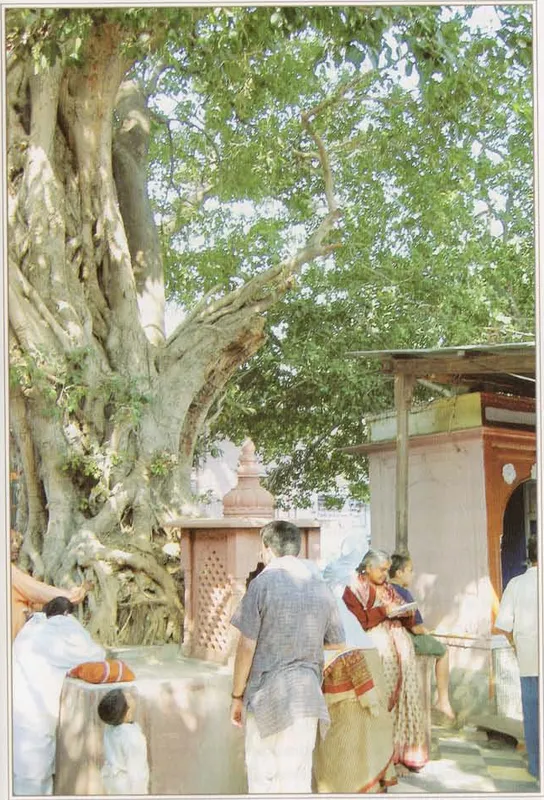
Vaṁśīvaṭa (Vṛndāvana)
वंशीवट (वृन्दावन)Vaṁśīvaṭa, "the banyan of the flute", stands on the bank of the Yamunā in Vṛndāvana, near the Gopīśvara Mahādeva temple.
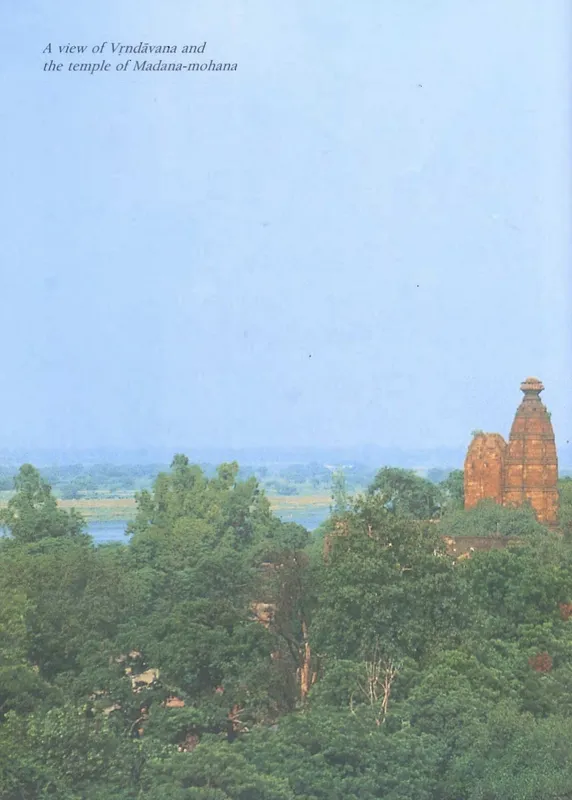
Vṛndāvana
वृन्दावनVṛndāvana is the forest on the bank of the Yamunā where Kṛṣṇa spent His childhood and youth, and the town of temples that stands in that forest today.
Rādhā-Madana-mohana Mandira (Vṛndāvana, old)
राधा-मदनमोहन मन्दिर (वृन्दावन, पुराना)The old Rādhā-Madana-mohana Mandira is the temple of Madana-mohana, also called Madana-gopāla, the Deity whose service Śrīla Sanātana Gosvāmī began in Vṛndāvana.
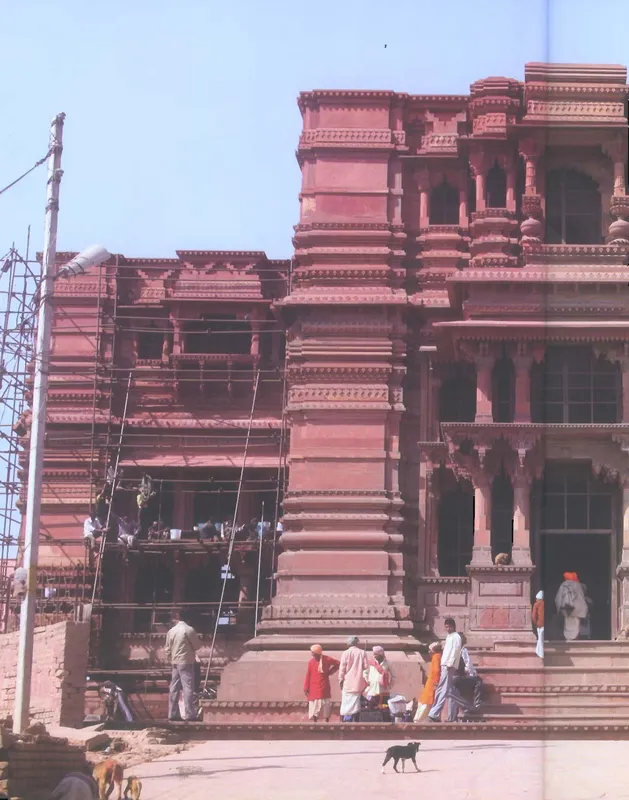
Rādhā-Govinda Mandira (Vṛndāvana, old)
राधा-गोविन्द मन्दिर (वृन्दावन, पुराना)The old Rādhā-Govinda Mandira is the great red-sandstone temple of Śrī Govindadeva in Vṛndāvana, built, as the guidebooks say, on top of Gomā-ṭīlā, a mound.
Questions and answers
According to the Bhakti-ratnākara, Śrī Jāhnavā-devī wished His Rādhikā a little taller. In a dream Gopīnātha asked her to send His beloved from Bengal. The new image was seated at His left and the former one at His right.[1–4]
She was a wife of Śrī Nityānanda Prabhu and a daughter of Śrī Sūryadāsa. Śrīla Prabhupāda writes that the Gaura-gaṇoddeśa-dīpikā describes her as Anaṅga-mañjarī of Vṛndāvana.[5, 9]
According to the Bhakti-ratnākara, the sculptor Nayana Bhāskara made Her at Śrī Jāhnavā-devī's request. Śrī Parameśvarī dāsa and other devotees then took Her by boat to Vṛndāvana.[1–4]
Both of Śrīla Narahari Cakravartī Ṭhākura's books say that she was seated at Gopīnātha's left by His order, with the former Rādhikā at His right. The guidebooks describe the present altar differently.[3, 7, 8]
The Bhakti-ratnākara and the Narottama-vilāsa call her a Rādhikā. The guidebooks and the Bengali Bhaktamāla call her Anaṅga-mañjarī. In 1920 the pūjārīs presented her as Jāhnavā Ṭhākurāṇī.[1–4, 22]
The sources differ, and the Bhakti-ratnākara does not tell it. According to the Bengali Bhaktamāla (1905), at the time of her departure she manifested an image of herself and had the Deity taken to Vṛndāvana. The guidebooks tell other accounts, which are not certain.[28]
In his purport to Caitanya-caritāmṛta Ādi 11.21, he counts Jāhnavā-mātā among Śrī Nityānanda Prabhu's followers. He says that the Gaura-gaṇoddeśa-dīpikā (66) describes her as Anaṅga-mañjarī of Vṛndāvana.[9]
Sources
- Śrīla Narahari Cakravartī, Bhakti-ratnākara, taraṅga 11, printed pp. 672-673, 2nd ed., 1912
- Śrīla Narahari Cakravartī, Bhakti-ratnākara, taraṅga 13, printed pp. 1005-1007, 2nd ed., 1912
- Śrīla Narahari Cakravartī, Bhakti-ratnākara, taraṅga 13, printed pp. 1014-1015, 2nd ed., 1912
- Śrīla Narahari Cakravartī, Bhakti-ratnākara, taraṅga 13, printed pp. 1017-1018, 2nd ed., 1912
- Gaura-gaṇoddeśa-dīpikā, vv. 65–66
- Śrīla Prabhupāda, Śrī Caitanya-caritāmṛta, Ādi-līlā 10.90, purport · vedabase.io
- Śrīla Narahari Cakravartī, Narottama-vilāsa, 9th vilāsa, vv.81-86, printed p. 80, right column, 1st ed., Baṅgābda 1314
- Śrīla Narahari Cakravartī, Narottama-vilāsa, 10th vilāsa, vv.3-7, printed pp. 90-91, 1st ed., Baṅgābda 1314
- Śrīla Prabhupāda, Śrī Caitanya-caritāmṛta, Ādi-līlā 11.21, purport · vedabase.io
- Vṛndāvana, the Playground of God (2010), Bhakti Caitanya Svāmī, PDF p. 44
- Vṛndāvana, the Playground of God (2010), Bhakti Caitanya Svāmī, PDF p. 12
- The Color Guide to Vṛndāvana (2000), Written and Photographed by Rājaśekhara dāsa Brahmacārī, PDF p. 122
- Śrī Vraja-maṇḍala Parikramā (2007), PDF p. 330
- Vṛndāvana-Dhāma Ki Jaya! (c. 1986), by Dhruva Mahārāja dāsa, PDF p. 73
- The Colour Guide to Rādhā-kuṇḍa (1999), Rājaśekhara dāsa Brahmacārī, PDF p. 167
- Śrīla Narahari Cakravartī, Bhakti-ratnākara, Thirteenth Wave (trayodaśa taraṅga), 1912 ed. p. 1018, 2nd ed., 1912
- Śrīla Narahari Cakravartī, Bhakti-ratnākara, taraṅga 6, printed p. 461, 2nd ed., 1912
- Śrīla Rādhā-kṛṣṇa Gosvāmī, Sādhana-dīpikā, first section (prathama-kakṣā), prose after v.21
- Śrīla Viśvanātha Cakravartī Ṭhākura, Stavāmṛta-laharī no. 13 (as numbered on the page), Śrī Gopīnāthadevāṣṭaka, verses 7-8 and colophon
- Sri Gopinathadevastaka (Śrī Gopīnāthadevāṣṭaka) (Viśvanātha Cakravartī Ṭhākura (as the song book credits it)) · song book
Show all 32 references
- Gaura-gaṇoddeśa-dīpikā, v.184
- Vṛndāvana-kathā, ch. 4 'Gopīnāthajī', printed p. 74
- Śrīla Prabhupāda, Lecture on the appearance day of Śrīla Baladeva Vidyābhūṣaṇa, Los Angeles, 14 June 1970 · vedabase.io
- The Color Guide to Vṛndāvana (2000), Written and Photographed by Rājaśekhara dāsa Brahmacārī, PDF p. 123
- The Colour Guide to Rādhā-kuṇḍa (1999), Rājaśekhara dāsa Brahmacārī, PDF p. 85
- the undated parikramā notes Vṛndāvana, ¶234
- Kṛṣṇadāsa, list of the identities of Śrī Caitanya's associates (begun on printed p. 26 'remembering the feet of Śrīla Kavi-karṇa(pūra)'), printed p. 27, right column, last two lines, continuing on p. 28, left column, lines 1-6
- Kṛṣṇadāsa, the account of Jāhnavā's image beside Gopīnātha, printed p. 28, left column, lines 9-20
- Kṛṣṇadāsa, the same account, continued, printed p. 28, right column, lines 1-14
- Kṛṣṇadāsa, last mālā, list of Vṛndāvana's holy places, printed p. 350, left column, lines 7-8
- Prema-vilāsa, 16th vilāsa, printed p. 125, left column, last 6 lines, and right column, lines 1-6 and 9-10, Kolkata, 1913
- Prema-vilāsa, 19th vilāsa, printed p. 201, left column, lines 1-7, and the footnotes (1) and (2), Kolkata, 1913
Further sources
- Bhakti-ratnākara, Eleventh and Thirteenth Waves (Bengali, 1912), and Narottama-vilāsa, Ninth and Tenth Vilāsas (Bengali, c. 1907), of Śrīla Narahari Cakravartī Ṭhākura: summarised, not translated.
- Gaura-gaṇoddeśa-dīpikā of Śrī Kavi-karṇapūra (Sanskrit) and Śrīla Viśvanātha Cakravartī Ṭhākura's Gopīnāthadevāṣṭaka: summarised.
- Prema-vilāsa (c. 1913) and the Bengali Bhaktamāla of Kṛṣṇadāsa Bābājī (1905): attributed traditions. Pulinbihārī Datta, Vṛndāvana-kathā (1920), for the dated observation.