Rādhā-Ramaṇa Mandira (Vṛndāvana)
राधारमण मन्दिर (वृन्दावन) Hindi name proposed
Also called Śrī Rādhā-Ramaṇa temple, Rādhā-Ramana
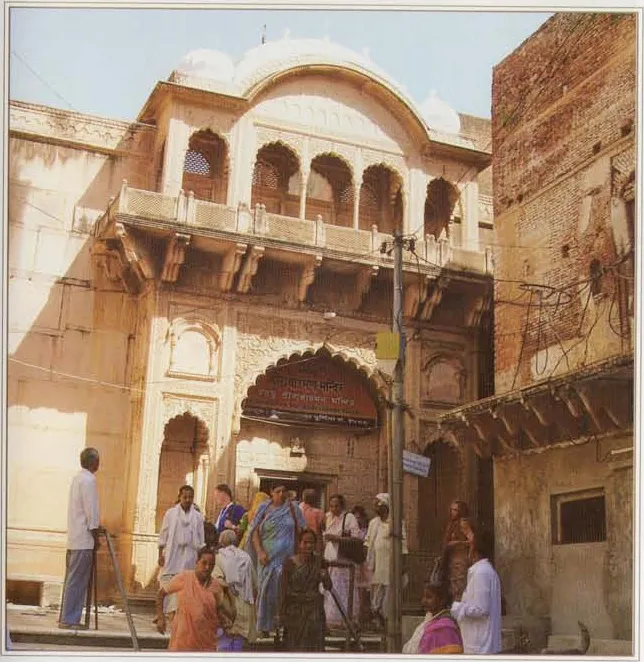
- What it is
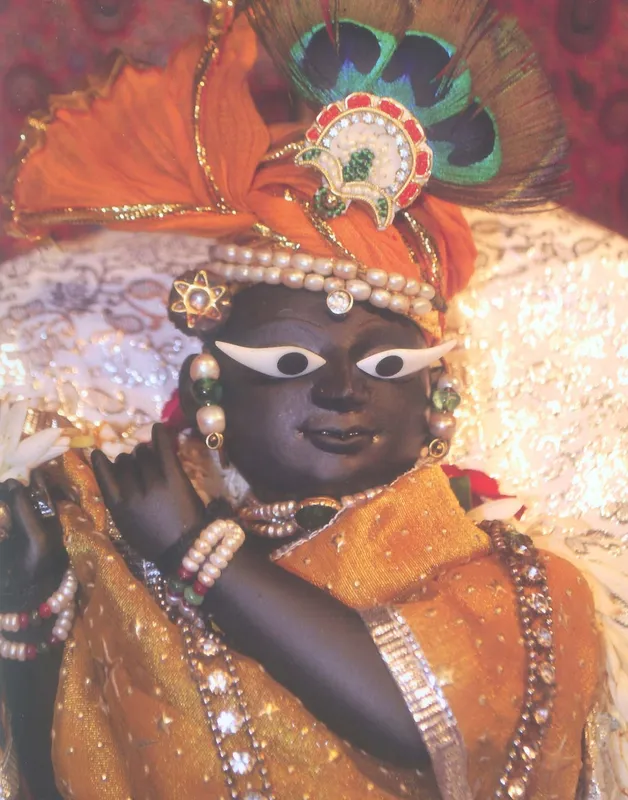
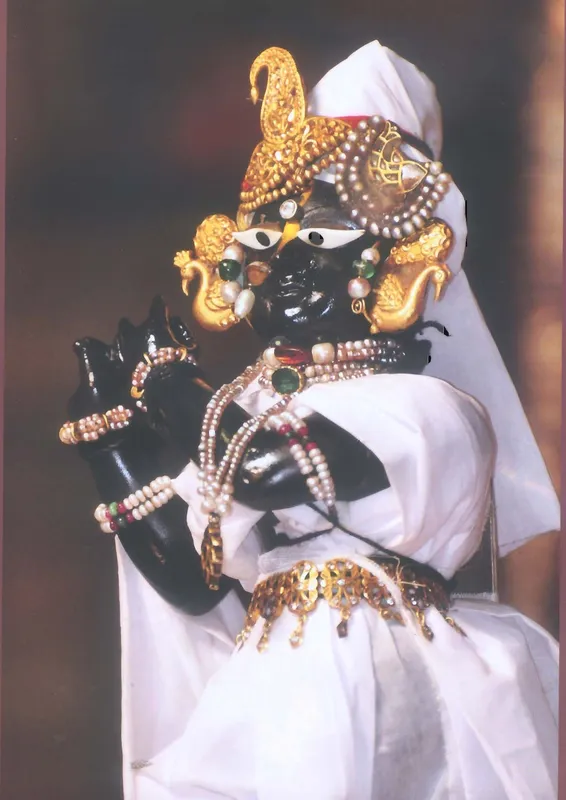
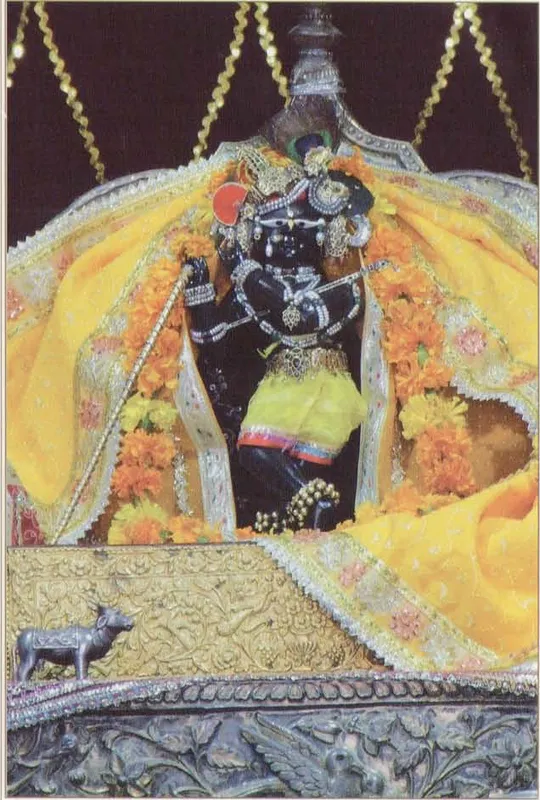
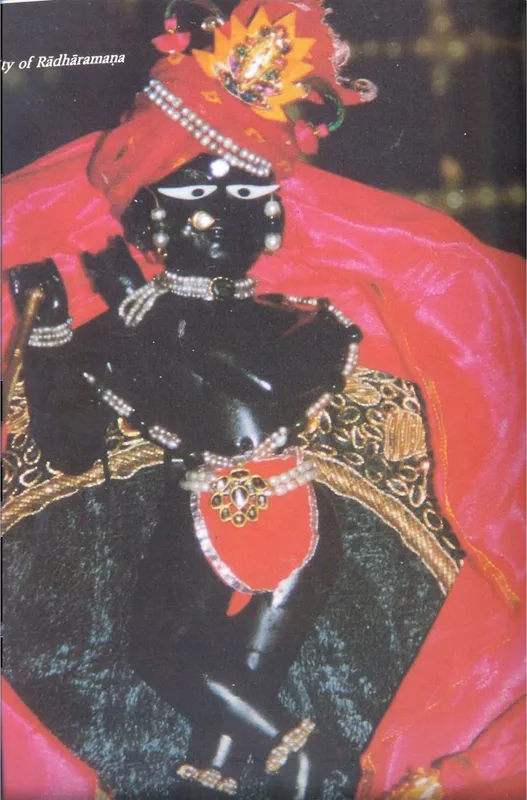
- The Rādhā-Ramaṇa Mandira in Vṛndāvana is the temple of Śrī Rādhā-Ramaṇa, the Deity of Śrī Gopāla Bhaṭṭa Gosvāmī, and one of the seven principal Gauḍīya Vaiṣṇava temples of Vṛndāvana.
- Visiting
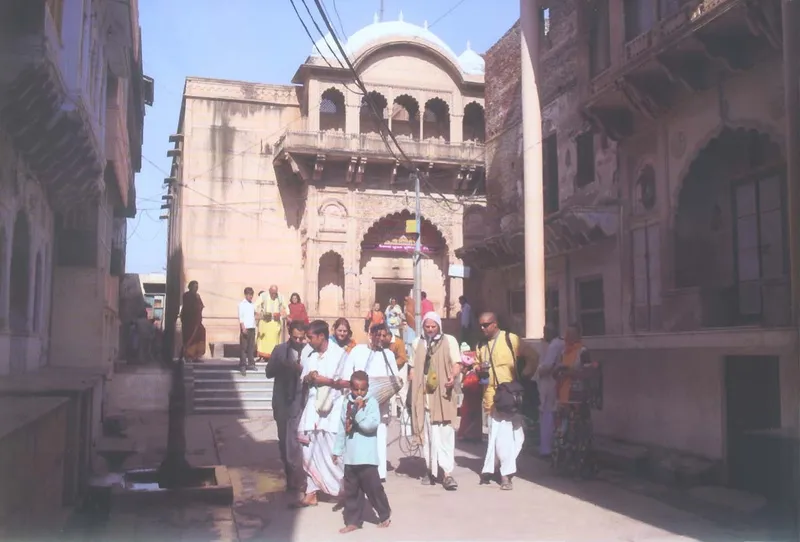
- The temple stands in the north-east of old Vṛndāvana, between the streets to the Gopīnātha and Gokulānanda temples; the Gokulānanda temple is about 200 metres to the left of its main entrance.
- Places here
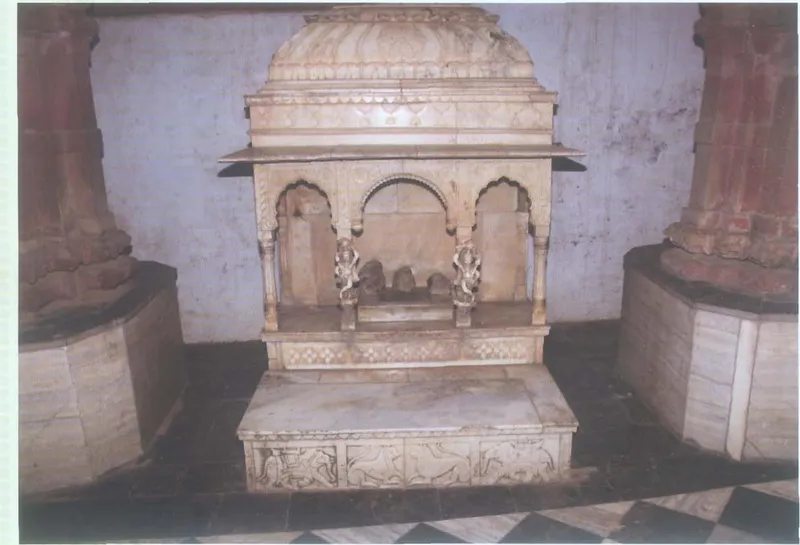
- Appearance place of Rādhā-Ramaṇa, Gopāla Bhaṭṭa Gosvāmī's samādhi
In short
The Rādhā-Ramaṇa Mandira in Vṛndāvana is the temple of Śrī Rādhā-Ramaṇa, the Deity of Śrī Gopāla Bhaṭṭa Gosvāmī, and one of the seven principal Gauḍīya Vaiṣṇava temples of Vṛndāvana.[1 +11] According to the Bhakti-ratnākara, Rādhā-Ramaṇa came forth from Śrī Gopāla Bhaṭṭa Gosvāmī's śālagrāma, a sacred stone worshipped as Kṛṣṇa, after Śrīla Rūpa Gosvāmī urged him to begin a separate service.[7 +2] Śrīla Prabhupāda writes that Śrī Gopāla Bhaṭṭa Gosvāmī installed the Deity under the instruction of Śrīla Rūpa Gosvāmī and Śrīla Sanātana Gosvāmī, and that he built the temple.[3 +11] The guidebooks say that, unlike the other chief Deities, Rādhā-Ramaṇa never left Vṛndāvana, and two historians agree.[20 +5]
Key facts
| Kind | temple |
|---|---|
| Region · area | Vṛndāvana |
| Ācāryas | Gopāla Bhaṭṭa Gosvāmī, Śrīla Rūpa Gosvāmī, Śrīla Jīva Gosvāmī, Śrīla Śrīnivāsa Ācārya, Śrīla Bhaktisiddhānta Sarasvatī Ṭhākura |
Why it is glorified
Śrīla Prabhupāda names the Rādhā-Ramaṇa temple among the seven principal temples of Vṛndāvana, more than four hundred years old …
Śrīla Prabhupāda names the Rādhā-Ramaṇa temple among the seven principal temples of Vṛndāvana, more than four hundred years old, that the Gauḍīya Vaiṣṇavas established, and he gives the Deity's beginning in a purport on Śrī Gopāla Bhaṭṭa Gosvāmī:[1 +11]
Names this place“Under the instruction of Śrīla Rūpa and Sanātana, Gopāla Bhaṭṭa Gosvāmī installed one of the seven principal Deities of Vṛndāvana, the Rādhāramaṇa Deity. The sevaits (priests) of the Rādhāramaṇa temple belong to the Gauḍīya-sampradāya.”
Śrīla Prabhupāda, Śrī Caitanya-caritāmṛta, Ādi-līlā 10.105, purport · vedabase.io
According to the Bhakti-ratnākara, Rādhā-Ramaṇa shows in one form the face of Govinda, the chest of Gopīnātha and the feet of Madana-mohana, so that one has darśana of the three Lords together; the guidebooks repeat this.[7 +3] The same book says that Rādhā-Ramaṇa was the life of Śrī Gopāla Bhaṭṭa Gosvāmī and fulfilled every desire of his heart at once (summarised here, not translated).[13 +1]
In the Hindi Bhaktamāla of Śrī Nābhā dāsa (1904), a book of the lives of devotees, Bhaṭṭa Gopāla is the devotee whose all-in-all is Rādhāravana, the Braj form of the name Rādhā-Ramaṇa, and Śrī Priyādāsa's verse commentary says that the sweet Lord who lived in his heart shines out as Rādhā-Ramaṇa's visible form.[28 +1]
Traditional accounts
How Śrī Rādhā-Ramaṇa appeared
The Bhakti-ratnākara tells it briefly. Śrī Caitanya Mahāprabhu had told Śrī Gopāla Bhaṭṭa Gosvāmī that he would see Hari from a śālagrāma. By the Lord's order he told this to Śrīla Rūpa Gosvāmī, who said that Govinda was his all-in-all but that he should still begin a separate service, as Govinda wished. Some days later the Lord Himself appeared from the śālagrāma.[7 +5]
শ্রীজীবগোস্বামী মহামনের উল্লাসে। শ্রীরাধারমণে দেখাইলা শ্রীনিবাসে ॥ শ্রীরাধারমণমূর্ত্তি অতিমনোহর। ভাগ্যবন্ত জনের সে নয়নগোচর ॥ অতিসুমধুর ভঙ্গী বিদিত ভুবনে। প্রকট-সময়ে মহানন্দ বৃন্দাবনে ॥ প্রকট-প্রসঙ্গ শুন কহিয়ে কিঞ্চিৎ। শ্রীরাধারমণ ভট্ট-গোস্বামিবিদিত ॥ শ্রীগৌরাঙ্গদেব আজ্ঞা দিল গোস্বামিরে। শালগ্রাম হৈতে তুমি দেখিবে হরিরে ॥ গৌরাঙ্গ-আদেশে ভট্ট শ্রীরূপে প্রকাশে। রূপগোস্বামিহ তবে কহে প্রেমাবেশে ॥ শ্রীগোবিন্দদেব হন সর্ব্বস্ব তোমার। তথাপি পৃথক্ সেবা কর ইচ্ছা তাঁর ॥ তবে কত দিন পর শালগ্রাম হৈতে। আপনি প্রকট হৈলা লোকের বিদিতে ॥ কে বুঝিতে পারে শ্রীগোস্বামির আশয়। হৈলা কি অপূর্ব্ব ভঙ্গী ভুবনবিজয় ॥ শ্রীগোবিন্দ গোপীনাথ মদনমোহন। ক্রমে এ তিনের মুখ বক্ষঃ শ্রীচরণ ॥ তিন প্রভু একত্র দর্শন এক ঠাঞি।
śrījībagosbāmī mahāmanera ullāse| śrīrādhāramaṇe dekhāilā śrīnibāse
śrīrādhāramaṇamūrtti atimanohara| bhāgyabanta janera se naẏanagocara
atisumadhura bhaṅgī bidita bhubane| prakaṭa-samaẏe mahānanda bṛndābane
prakaṭa-prasaṅga śuna kahiẏe kiñcit| śrīrādhāramaṇa bhaṭṭa-gosbāmibidita
śrīgaurāṅgadeba ājñā dila gosbāmire| śālagrāma haite tumi dekhibe harire
gaurāṅga-ādeśe bhaṭṭa śrīrūpe prakāśe| rūpagosbāmiha tabe kahe premābeśe
śrīgobindadeba hana sarbbasba tomāra| tathāpi pṛthak sebā kara icchā tām̐ra
tabe kata dina para śālagrāma haite| āpani prakaṭa hailā lokera bidite
ke bujhite pāre śrīgosbāmira āśaẏa| hailā ki apūrbba bhaṅgī bhubanabijaẏa
śrīgobinda gopīnātha madanamohana| krame e tinera mukha bakṣaḥ śrīcaraṇa
tina prabhu ekatra darśana eka ṭhāñi|
In another place the same work says that Govinda gave Śrīla Rūpa Gosvāmī an order in a dream, and that Śrīla Rūpa Gosvāmī then had Śrī Gopāla Bhaṭṭa Gosvāmī undertake Rādhā-Ramaṇa's service; the verses of the Sādhana-dīpikā that it quotes also tie the separate service to Śrīla Rūpa Gosvāmī's order.[7 +5] Śrīla Sanātana Gosvāmī, Śrīla Bhūgarbha Gosvāmī and the others rejoiced to see the new service, and on the full-moon day of Vaiśākha Rādhā-Ramaṇa was seated on His throne with a great festival. The book gives no year and names no spot.[8 +6]
The guidebooks tell it differently. A wealthy devotee offered clothes and ornaments that Śrī Gopāla Bhaṭṭa Gosvāmī could not use for his śālagrāmas; he longed or prayed for a Deity form on Nṛsiṁha-caturdaśī, and his Dāmodara-śilā became Rādhā-Ramaṇa that night or by the next morning.[12 +5] The oldest text found for the wealthy man's gift is the Bengali Bhaktamāla of Kṛṣṇadāsa Bābājī (1905), which tells of one śālagrāma and a night of longing, and names no day. Śrī Rūpakalā's commentary in the Hindi Bhaktamāla (1904) puts the appearance on the full moon of Vaiśākha.[37 +1] Read more: How Śrī Rādhā-Ramaṇa appeared →
Rādhā-Ramaṇa as Śrī Gaurasundara
According to the Bhakti-ratnākara, Śrī Gopāla Bhaṭṭa Gosvāmī used to dress Rādhā-Ramaṇa in flowers and would weep remembering how he had served Śrī Caitanya Mahāprabhu in his father's home. Once, controlled by his love, Rādhā-Ramaṇa showed Himself to him in the youthful form of Śrī Gaurasundara, and Śrī Gopāla Bhaṭṭa Gosvāmī fell to the ground asking what he had seen.[8 +1]
The Gosvāmīs and ācāryas
Śrīla Prabhupāda writes that the son of Veṅkaṭa Bhaṭṭa of Śrī Raṅga-kṣetra became known as Śrī Gopāla Bhaṭṭa Gosvāmī, that he …
Śrī Gopāla Bhaṭṭa Gosvāmī
Śrīla Prabhupāda writes that the son of Veṅkaṭa Bhaṭṭa of Śrī Raṅga-kṣetra became known as Śrī Gopāla Bhaṭṭa Gosvāmī, that he established the Rādhā-Ramaṇa temple, and that more about him is found in the Bhakti-ratnākara.[7 +6] In the Caitanya-caritāmṛta he is a great branch of the tree of Śrī Caitanya Mahāprabhu, always discussing love of Godhead with Śrīla Rūpa Gosvāmī and Śrīla Sanātana Gosvāmī.[50] His samādhi and the appearance place of Rādhā-Ramaṇa are in the temple's compound.[20 +5]
Śrīla Śrīnivāsa Ācārya
According to the Bhakti-ratnākara, when Śrīla Śrīnivāsa Ācārya came to Vṛndāvana, Śrīla Jīva Gosvāmī showed him Rādhā-Ramaṇa, and Śrī Gopāla Bhaṭṭa Gosvāmī initiated him in the Deity's presence and offered him to Rādhā-Ramaṇa and to Śrī Gauracandra.[7 +3] Years later, on another Vaiśākha full moon, he saw Rādhā-Ramaṇa's throne festival at Śrī Gopāla Bhaṭṭa Gosvāmī's residence, and that same day Śrīla Jīva Gosvāmī sent him back to Bengal.[14 +2]
অপূর্ব্ব বিধানে ॥ সাধন-প্রক্রিয়া অতিযত্নে জানাইল। শ্রীরাধারমণ গৌরচন্দ্রে সমর্পিল ॥ শ্রীনিবাস পড়িয়া গোসাঞিপদতলে। করিল অনেক দৈন্য ভাসি নেত্রজলে ॥ গোসাঞির নেত্রধারা নহে নিবারণ। সর্ব্বসিদ্ধি হৌক বলি কৈল আলিঙ্গন ॥ … আইলেন সবে রাধারমণ-দর্শনে। শ্রীনিবাস দর্শন করিলা সর্ব্বজনে ॥
apūrbba bidhāne
sādhana-prakriẏā atiyatne jānāila| śrīrādhāramaṇa gauracandre samarpila
śrīnibāsa paṛiẏā gosāñipadatale| karila aneka dainya bhāsi netrajale
gosāñira netradhārā nahe nibāraṇa| sarbbasiddhi hauka bali kaila āliṅgana
… āilena sabe rādhāramaṇa-darśane| śrīnibāsa darśana karilā sarbbajane ||
Śrīla Jāhnavā-devī
The same work tells that Śrīla Jāhnavā-devī, taking leave of the Deities of Vṛndāvana before she returned to Bengal, was overcome when she saw Rādhā-Ramaṇa.[55]
Śrīla Prabhupāda
Śrīla Prabhupāda spoke of the temple as Śrī Gopāla Bhaṭṭa Gosvāmī's own.
Śrīla Prabhupāda spoke of the temple as Śrī Gopāla Bhaṭṭa Gosvāmī's own. In a lecture of 1969 he reminded a disciple who had been to Vṛndāvana:[3 +5]
Names this place“These six Gosvāmīs, they have given immense literature. And all of them established one temple in Vṛndāvana. You have seen, Kīrtanānanda Mahārāja, the Rādhā-Ramaṇa temple. Rādhā-Ramaṇa temple, that is Gopāla Bhaṭṭa Gosvāmī's.”
Śrīla Prabhupāda, Lecture on Śrīmad-Bhāgavatam 1.5.8–9, New Vrindaban, 24 May 1969 · vedabase.io
His biographer tells that while Śrīla Prabhupāda lived in Vṛndāvana, before he went to the West, he visited the temple and gave copies of Back to Godhead to Viśvambhara Gosvāmī, one of its priests.[3 +2] In 1970 he wrote to a correspondent who was staying at Rādhā-Ramaṇa, asking whether the principal temples of Vṛndāvana would admit his Western disciples for darśana and kīrtana.[56]
Names this place“The next point is whether the principal temples in Vrndavana, say for example Radharamanaji's Temple where you are staying, will have any objection to admit these Europeans and Americans for darsana and kirtana.”
Śrīla Prabhupāda, Letter to Radharamana Sharanji (70-06-25), letter, 25 June 1970 · vedabase.io
Songs
The kīrtana Jaya Rādhā-Mādhava, which the song book does not credit to an author, hails Rādhā-Ramaṇa as the treasure of Śrī …
The kīrtana Jaya Rādhā-Mādhava, which the song book does not credit to an author, hails Rādhā-Ramaṇa as the treasure of Śrī Gopāla Bhaṭṭa Gosvāmī's life.[57]
Visiting today
At the temple
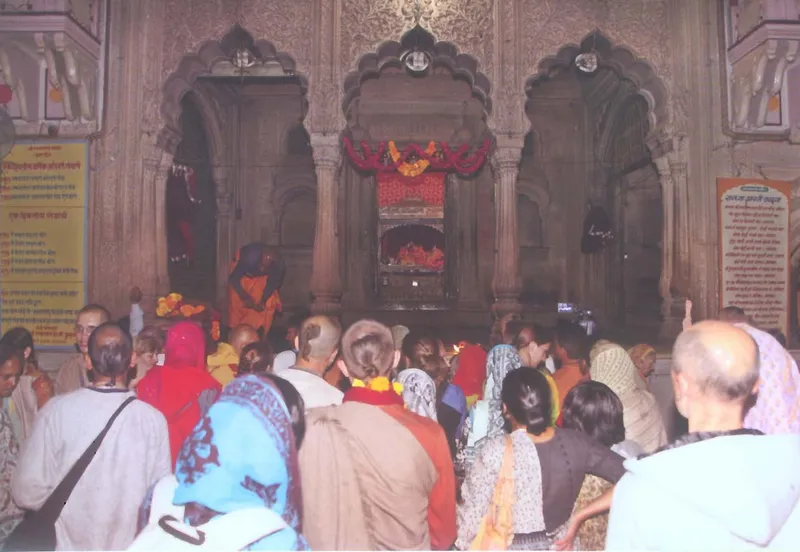
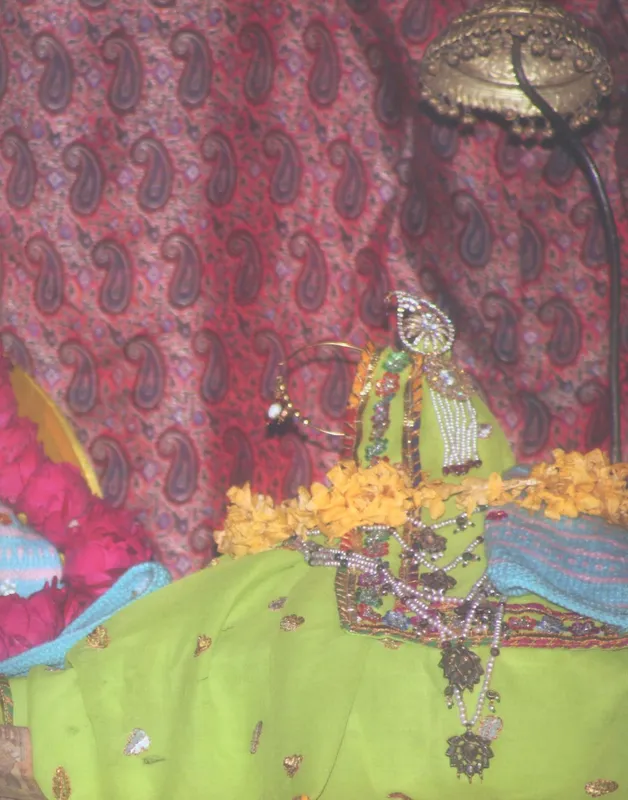
The temple stands in the north-east of old Vṛndāvana, between the streets to the Gopīnātha and Gokulānanda temples; the Gokulānanda temple is about 200 metres to the left of its main entrance.[51 +3] The guidebooks describe no Deity of Śrī Rādhā on the altar. Śrī Vraja-maṇḍala Parikramā (2007) describes a gomatī-cakra, a stone marked with a disc, worshipped on Rādhā-Ramaṇa's left, and two other guidebooks a crown, clothes and jewellery kept beside Him for Śrīmatī Rādhārāṇī.[20 +5] The Hari-bhakti-vilāsa says that a śālagrāma should always be worshipped with a stone marked with the Dvārakā disc; the 2007 guidebook cites it for the gomatī-cakra.[20 +2]
The same guidebook says that Rādhā-Ramaṇa is only twelve finger-widths tall and that His back looks like a śālagrāma-śilā.[20 +1] Vṛndāvana, the Playground of God (2010) reports that His appearance day is kept on the day after Nṛsiṁha-caturdaśī, with a bath in five hundred litres of milk mixed with other auspicious things.[33 +1] Two guidebooks say that personal belongings of Śrī Caitanya Mahāprabhu given for Śrī Gopāla Bhaṭṭa Gosvāmī are kept in the temple; they name different items (see below).[64]
Nearby
The guidebooks connect these places with the temple: Śrī Gopāla Bhaṭṭa Gosvāmī's samādhi and the appearance place in its compound, the Śāhajī temple a short distance away, the rāsa-maṇḍala outside its main entrance, a replacement Deity of Rādhā-Ramaṇa at Rādhā-kuṇḍa and Śrī Gopāla Bhaṭṭa Gosvāmī's bhajana-kuṭī there.[20 +5] According to the 2010 guidebook, a member of the temple's gosvāmī families installed the Deity Amiya Nimāi in a room by that rāsa-maṇḍala in 1936.[46]
Location
| Where it is | map key 19[67] |
|---|
Places at Rādhā-Ramaṇa Mandira (Vṛndāvana)
2 places
Nearby places
Rādhā-Gokulānanda Mandira (Vṛndāvana) · Śāhajī Mandira · Rāsa-maṇḍala (Rādhā-Ramaṇa Mandira) · Rādhā-Gopīnātha Mandira (Vṛndāvana)
Pictures
8 pictures
History
The temple and its servants
Śrīla Prabhupāda writes that Śrī Gopāla Bhaṭṭa Gosvāmī constructed the Rādhā-Ramaṇa temple, as Śrīla Jīva Gosvāmī built the Rādhā-Dāmodara temple and Śrīla Lokanātha Gosvāmī the Gokulānanda temple; no source gives the date of the first building.[3 +5]
Names this place“Similarly, their nephew Jīva Gosvāmī constructed the Rādhā-Dāmodara temple, Śrī Gopāla Bhaṭṭa Gosvāmī constructed the Rādhā-ramaṇa temple, Śrī Lokanātha Gosvāmī constructed the Gokulānanda temple, and Śyāmānanda Gosvāmī constructed the Śyāmasundara temple.”
Śrīla Prabhupāda, Śrī Caitanya-caritāmṛta, Ādi-līlā 7.164, purport · vedabase.io
The year of the Deity's appearance is given differently (see below). The Bhakti-ratnākara gives none, and most guidebooks give 1542. The Bengali Vṛndāvana-kathā (1920) reports Saṁvat 1599 (1542) from a temple manuscript, the Sevā-prākaṭya, kept in the house of a pūjārī family; that manuscript is not available today.[8 +6] Who built the present building, and when, is also told differently: two historians, A. W. Entwistle (1987) and Prabhudayāl Mītal (1966), name different members of a family of Lucknow, and neither cites an inscription.[41 +1]
According to the Prema-vilāsa, Śrī Gopāla Bhaṭṭa Gosvāmī entrusted Rādhā-Ramaṇa's service to his disciple Gopīnātha Pūjārī.[10 +1] Śrīla Prabhupāda says that Śrī Gopāla Bhaṭṭa Gosvāmī never married, that the worship of such temples passed to householder disciples, and that the priests of this temple belong to the Gauḍīya-sampradāya; today it is served by gosvāmī families.[4 +5]
A Deity who stayed in Vṛndāvana
The guidebooks say that Rādhā-Ramaṇa never left Vṛndāvana and that the temple was untouched in the Muslim invasions.[20 +5] Mītal (1966) says the same, and Entwistle (1987) judges that the Deity seems to have stayed, pointing to a devotional book of 1700, Manohardās's Rādhāramaṇ ras sāgar, which describes the Deity's service with no hint of trouble.[20 +5]
According to the local tradition recorded in Vṛndāvana, the Playground of God (2010), Kuṇḍanlāl of Lucknow, who was connected with the temple's gosvāmī families, built the Śāhajī temple for Rādhā-Ramaṇa to move into, but Rādhā-Ramaṇa refused to come, and other Deities were installed there; no other source tells this, so it is not certain.[48 +1]
Where the sources differ
How Rādhā-Ramaṇa appeared from the śālagrāma, on which day and in which year, and how Śrī Gopāla Bhaṭṭa Gosvāmī obtained his …
How Rādhā-Ramaṇa appeared from the śālagrāma, on which day and in which year, and how Śrī Gopāla Bhaṭṭa Gosvāmī obtained his śālagrāmas: the sources differ, the year is not certain, and they are set side by side on the page of the appearance place of Rādhā-Ramaṇa.[6 +8]
Accounts differ Who built the present Rādhā-Ramaṇa temple building, and when
- A. W. Entwistle (1987), a historian, citing KapurEntwistle, citing Kapur, says that the building was put up in 1826 by Śāh Bihārīlāl of Lucknow, grandfather of Kundanlāl and Phundanlāl.
- Mītal (1966), p. 137by Shah Kundanlāl of Lucknow and his brother Shah Phundanlāl; no date
- Vṛndāvana-kathā (1920), p. 91this new temple was built at the expense of Sāh Kundan of Lucknow and his brother; no date
- The Color Guide to Vṛndāvana (2000), p. 87Shah Kundan Lal 'also built the temple of Rādhāramaṇa' (no date).
The wording of these accounts is our summary of the sources, not a published translation.
Accounts differ To whom the service of Rādhāramaṇa passed after Śrī Gopāla Bhaṭṭa
- Prema-vilāsa (Nityānanda dāsa), vilāsa 18, with its 1913 editor's footnoteTo his disciple Gopīnātha Pūjārī; the editor: the sevāit Gosvāmīs are this Gopīnātha's descendants.
- Vṛndāvana-kathā (1920), p. 92, after Madhusūdana SārvabhaumaTo his mantra-disciple Gopīnātha dāsa of Devavan; Gopīnātha, who did not marry, passed it to his younger brother Dāmodara dāsa, whose three sons' line serves.
- the Bengali Bhaktamāla of Kṛṣṇadāsa Bābājī (1905)To his own disciple, a pūjārī; this disciple's descendants and his daughter's descendants serve to this day.
- A. W. Entwistle (1987), a historianEntwistle, citing P. Mītal (1968), says that after Śrī Gopāla Bhaṭṭa Gosvāmī's death in 1585 the care of the Deity was given to his younger brother Dāmodara, whose descendants have kept it ever since.
Which belongings of Śrī Caitanya Mahāprabhu are kept for Śrī Gopāla Bhaṭṭa Gosvāmī.
Accounts differ Śrī Caitanya's personal items for Śrī Gopāla Bhaṭṭa
- Vṛndāvana, the Playground of God (2010), pp. 73-74Knowing Gopāla would come, the Lord had left His personal āsana and some of His cloth for him with Rūpa and Sanātana; they are still in the temple.
- The Color Guide to Vṛndāvana (2000), p. 91The wooden sitting place (chokī) and shawl (chaddar) of Lord Chaitanya that He gave as a gift to Śrī Gopāla Bhaṭṭa are kept in the temple.
- Bhakti-ratnākara, 1st waveAfter Rūpa and Śrīla Sanātana's letter reported Śrī Gopāla Bhaṭṭa's arrival, Mahāprabhu sent a messenger with a letter and garments: His string (ḍora), kaupīna and outer cloth (bahirvāsa). Nothing on an āsana or on where they are now.
How the temple received Śrīla Bhaktisiddhānta Sarasvatī Ṭhākura's Vraja-maṇḍala parikramā of 1932.
Accounts differ The Rādhā-Ramaṇa temple and Śrīla Bhaktisiddhānta Sarasvatī's 1932 parikramā
- The Colour Guide to Rādhā-kuṇḍa (1999), p. 121Stones were thrown and all the caste gosvāmīs closed their temples; only the gosains of the Rādhāramaṇa temple kept their doors open and enthusiastically welcomed the parikramā.
- Śrīla Prabhupāda-līlāmṛta 1.4 (biography by Satsvarūpa dāsa Goswami)When the party arrived at Vṛndāvana's seven main temples it found the doors closed; shopkeepers closed their shops and some people threw stones.
Where the samādhi and the appearance place lie in relation to the temple: the guidebooks' descriptions are set side by side on the page of Śrī Gopāla Bhaṭṭa Gosvāmī's samādhi.[20 +5]
More on this place
How Śrī Rādhā-Ramaṇa appeared
References
67 references
- Śrīla Prabhupāda, Śrī Caitanya-caritāmṛta, Ādi-līlā 10.90, purport · vedabase.io
- Śrīla Prabhupāda, Śrī Caitanya-caritāmṛta, Ādi-līlā 12.82, purport · vedabase.io
- Śrīla Prabhupāda, Śrī Caitanya-caritāmṛta, Ādi-līlā 1.19, purport · vedabase.io
- Śrīla Prabhupāda, Śrī Caitanya-caritāmṛta, Madhya-līlā 4.104, purport · vedabase.io
- Śrīla Prabhupāda, Lecture on Śrī Caitanya-caritāmṛta, Ādi-līlā 1.15, Dallas, 4 March 1975 · vedabase.io
- The Color Guide to Vṛndāvana (2000), Written and Photographed by Rājaśekhara dāsa Brahmacārī, PDF p. 25
- Śrīla Narahari Cakravartī, Bhakti-ratnākara, taraṅga 4, printed p. 140, 2nd ed., 1912
- Śrīla Narahari Cakravartī, Bhakti-ratnākara, taraṅga 4, printed p. 142, 2nd ed., 1912
- Śrīla Narahari Cakravartī, Bhakti-ratnākara, taraṅga 4, printed p. 144, 2nd ed., 1912
- Śrīla Prabhupāda, Śrī Caitanya-caritāmṛta, Ādi-līlā 10.105, purport · vedabase.io
- Śrīla Prabhupāda, Śrī Caitanya-caritāmṛta, Ādi-līlā 7.164, purport · vedabase.io
- Śrī Vraja-maṇḍala Parikramā (2007), PDF p. 331
- Śrīla Narahari Cakravartī, Bhakti-ratnākara, taraṅga 1, printed p. 14, 2nd ed., 1912
- Sādhana-dīpikā, taraṅga 4, printed p. 141, 2nd ed., 1912
- Vṛndāvana, the Playground of God (2010), Bhakti Caitanya Svāmī, PDF p. 73
- Śrīla Rādhākṛṣṇa Gosvāmī, Sādhana-dīpikā, chapter (8) 'aṣṭa-kakṣā' of the text, prose after v.9.29 (text locator '(8) yāṅhāra prasāde haya abhīṣṭa-pūraṇa after v.9.29', part 2/3)
- Śrīla Prabhupāda, Śrī Caitanya-caritāmṛta, Madhya-līlā 9.82, purport · vedabase.io
- Śrīla Prabhupāda, Lecture on Śrīmad-Bhāgavatam 1.5.8–9, New Vrindaban, 24 May 1969 · vedabase.io
- Śrīla Prabhupāda, Lecture on Śrī Caitanya-caritāmṛta, Madhya-līlā 6.154, Gorakhpur, 16 February 1971 · vedabase.io
- Śrī Vraja-maṇḍala Parikramā (2007), PDF p. 332
Show all 67 references
- Vṛndāvana, the Playground of God (2010), Bhakti Caitanya Svāmī, PDF p. 71
- Vṛndāvana, the Playground of God (2010), Bhakti Caitanya Svāmī, PDF p. 12
- The Colour Guide to Rādhā-kuṇḍa (1999), Rājaśekhara dāsa Brahmacārī, PDF p. 94
- The Colour Guide to Rādhā-kuṇḍa (1999), Rājaśekhara dāsa Brahmacārī, PDF p. 95
- A. W. Entwistle, ch. 5, printed pp. 185-186, Egbert Forsten, Groningen, 1987
- the undated parikramā notes Vṛndāvana, ¶194
- Śrīla Narahari Cakravartī, Bhakti-ratnākara, taraṅga 4, printed p. 143, 2nd ed., 1912
- Śrī Bhaktamāla: Nābhā dāsa's verses, Nābhā dāsa's chappaya 94 (item 468 of the edition), lines 1-2, printed p. 893
- Śrī Bhaktamāla: Nābhā dāsa's verses, Priyādāsa's kavitta 375 (item 469 of the edition) on 'Gusāīṁ Śrī Gopālabhaṭṭa jī', line 1, printed p. 894
- Śrīla Narahari Cakravartī, Bhakti-ratnākara, taraṅga 4, printed p. 140, 2nd ed., 1912
- Śrīla Narahari Cakravartī, Bhakti-ratnākara, taraṅga 4, printed p. 136, 2nd ed., 1912
- Vṛndāvana-Dhāma Ki Jaya! (c. 1986), by Dhruva Mahārāja dāsa, PDF p. 69
- Vṛndāvana, the Playground of God (2010), Bhakti Caitanya Svāmī, PDF p. 72
- Vṛndāvana, the Playground of God (2010), Bhakti Caitanya Svāmī, PDF p. 70
- The Color Guide to Vṛndāvana (2000), Written and Photographed by Rājaśekhara dāsa Brahmacārī, PDF p. 105
- the undated parikramā notes Vṛndāvana, ¶193
- Kṛṣṇadāsa, chapter 'চরিত্র শ্রীগোপাল ভট্টের' (the life of Śrī Gopāla Bhaṭṭa), printed p. 20, right column
- Śrī Bhaktamāla: Nābhā dāsa's verses, Rūpakalā's prose (vārtika tilaka) on Priyādāsa's kavitta 375, printed p. 895
- Vṛndāvana, the Playground of God (2010), Bhakti Caitanya Svāmī, PDF p. 74
- Pulinbihārī Datta, ch. 6 (ṣaṣṭha pariccheda), printed p. 91
- A. W. Entwistle, ch. 8 §66.31 'Radharaman', printed p. 413, Egbert Forsten, Groningen, 1987
- Prabhudayāl Mītal, running heads 'वृ दाबन' and 'ब्रज-संस्कृति के उपकरण', paragraph 'श्री राधारमण जी', printed p. 137
- Prema-vilāsa, vilāsa 18 (aṣṭādaśa vilāsa), printed p. 153, right column, Kolkata, 1913
- Śrīla Prabhupāda, Room Conversation, Māyāpur, 19 February 1977 · vedabase.io
- Satsvarūpa dāsa Gosvāmī, Śrīla Prabhupāda-līlāmṛta, vol. 1, ch. 9 · vedabase.io
- Vṛndāvana, the Playground of God (2010), Bhakti Caitanya Svāmī, PDF p. 189
- The Colour Guide to Rādhā-kuṇḍa (1999), Rājaśekhara dāsa Brahmacārī, PDF p. 125
- Vṛndāvana, the Playground of God (2010), Bhakti Caitanya Svāmī, PDF p. 170
- Vṛndāvana, the Playground of God (2010), Bhakti Caitanya Svāmī, PDF p. 172
- Śrīla Kṛṣṇadāsa Kavirāja Gosvāmī, Śrī Caitanya-caritāmṛta, Ādi-līlā 10.105, online edition · vedabase.io
- Vṛndāvana, the Playground of God (2010), Bhakti Caitanya Svāmī, PDF p. 82
- Śrīla Narahari Cakravartī, Bhakti-ratnākara, taraṅga 4, printed p. 145, 2nd ed., 1912
- Śrīla Narahari Cakravartī, Bhakti-ratnākara, taraṅga 9, printed p. 577, 2nd ed., 1912
- Śrīla Narahari Cakravartī, Bhakti-ratnākara, taraṅga 4, printed p. 145, 2nd ed., 1912
- Śrīla Narahari Cakravartī, Bhakti-ratnākara, taraṅga 11, printed p. 673, 2nd ed., 1912
- Śrīla Prabhupāda, Letter to Radharamana Sharanji (70-06-25), letter, 25 June 1970 · vedabase.io
- Jaya Rādhā-Mādhava Rādhā-Mādhava Rādhe (Jaya Rādhā-Kṛṣṇa Gīti) (not credited in the song book) · song book
- The Color Guide to Vṛndāvana (2000), Written and Photographed by Rājaśekhara dāsa Brahmacārī, PDF p. 166
- Vṛndāvana-Dhāma Ki Jaya! (c. 1986), by Dhruva Mahārāja dāsa, PDF p. 100
- Śrī Vraja-maṇḍala Parikramā (2007), PDF p. 298
- The Color Guide to Vṛndāvana (2000), Written and Photographed by Rājaśekhara dāsa Brahmacārī, PDF p. 107
- Hari-bhakti-vilāsa (ascribed to Śrīla Gopāla Bhaṭṭa Gosvāmī), vilāsa 5, verses 456-457, GRETIL
- Vṛndāvana, the Playground of God (2010), Bhakti Caitanya Svāmī, PDF p. 77
- Śrīla Narahari Cakravartī, Bhakti-ratnākara, taraṅga 1, printed p. 13, 2nd ed., 1912
- The Color Guide to Vṛndāvana (2000), Written and Photographed by Rājaśekhara dāsa Brahmacārī, PDF p. 108
- The Colour Guide to Rādhā-kuṇḍa (1999), Rājaśekhara dāsa Brahmacārī, PDF p. 173
- Śrī Vraja-maṇḍala Parikramā (2007), p. 636-637