How Śrī Rādhā-Ramaṇa appeared
From the śālagrāma of Śrīla Gopāla Bhaṭṭa Gosvāmī in Vṛndāvana
In short
Śrī Rādhā-Ramaṇa, the Deity of the Radha Raman temple in Vṛndāvana, appeared from the śālagrāma-śilā (sacred stone) of Śrīla Gopāla Bhaṭṭa Gosvāmī. According to the Bhakti-ratnākara, Śrī Caitanya had told him that he would see Hari (Kṛṣṇa) from a śālagrāma. The Deity was enthroned on a Vaiśākha (April–May) full moon. No early text gives the year.[1–8]
On this page
At a glance
- The Deity: Śrī Rādhā-Ramaṇa, served by Śrīla Gopāla Bhaṭṭa Gosvāmī. Śrīla Prabhupāda writes that he installed the Deity under the instruction of Śrīla Rūpa Gosvāmī and Śrīla Sanātana Gosvāmī.[1 +5]
- The oldest account: the Bhakti-ratnākara (Fourth Wave). It says that the Lord appeared from the śālagrāma some days after Śrīla Rūpa Gosvāmī urged a separate service.[1–3]
- The enthronement: on the full-moon day of Vaiśākha (April–May), with a great festival, according to the same book.[3–8]
- Later retellings: the Bengali Bhaktamāla of 1905 and the guidebooks tell of a wealthy man's gift. The guidebooks also speak of Nṛsiṁha-caturdaśī (the appearance day of Lord Nṛsiṁha) and of a śālagrāma called the Dāmodara-śilā.[6 +6]
- The year: most accounts give 1542, or Saṁvat 1599 (a year of the Indian Vikrama calendar), from a temple manuscript. The Bhakti-ratnākara gives none.[1, 18]
- The place: the guidebooks mark a spot beside Śrīla Gopāla Bhaṭṭa Gosvāmī's samādhi (tomb) in the temple compound.[6 +4]
Who was Śrīla Gopāla Bhaṭṭa Gosvāmī?
Śrīla Gopāla Bhaṭṭa Gosvāmī was the son of Veṅkaṭa Bhaṭṭa of Śrī Raṅgam in South India. Śrīla Prabhupāda writes that he established the Rādhā-Ramaṇa temple in Vṛndāvana. He sends his readers to the Bhakti-ratnākara for more about him.[22] When Śrī Caitanya Mahāprabhu toured South India, He stayed in Veṅkaṭa Bhaṭṭa's house for four months, the rainy-season period called Cāturmāsya. With his father's permission, the boy Gopāla served Him there.[7 +4]
General teaching (does not name the place)“In the year 1433 Śakābda (A.D. 1511), when Lord Caitanya Mahāprabhu was touring South India, He stayed for four months during the period of Cāturmāsya at the house of Veṅkaṭa Bhaṭṭa, … Śrī Gopāla Bhaṭṭa Gosvāmī was later initiated by his uncle, the great sannyāsī Prabodhānanda Sarasvatī.”
Śrīla Prabhupāda, Śrī Caitanya-caritāmṛta, Ādi-līlā 10.105, purport · vedabase.io
His spiritual master was his uncle, Śrīla Prabodhānanda Sarasvatī.[7 +5] According to the Bhakti-ratnākara, Śrīla Rūpa Gosvāmī and Śrīla Sanātana Gosvāmī wrote to Śrī Caitanya that Gopāla Bhaṭṭa had reached Vṛndāvana. He was very happy and wrote back that they should treat him as their own brother, and He sent His own cloth with the letter.[9 +3]
The Caitanya-caritāmṛta names him only briefly, among the branches of Śrī Caitanya's tree:
শ্রীগোপাল ভট্ট এক শাখা সর্বোত্তম ।
রূপ–সনাতন–সঙ্গে যাঁর প্রেম–আলাপন ॥ ১০৫ ॥
śrī-gopāla bhaṭṭa eka śākhā sarvottama
rūpa-sanātana-saṅge yāṅra prema-ālāpana
Śrī Gopāla Bhaṭṭa Gosvāmī, the forty-seventh branch, was one of the great and exalted branches of the tree. He always engaged in discourses about love of Godhead in the company of Rūpa Gosvāmī and Sanātana Gosvāmī.
Translation: Śrīla A.C. Bhaktivedanta Swami PrabhupādaThat was his own wish. Śrīla Prabhupāda writes that Śrīla Gopāla Bhaṭṭa Gosvāmī blessed Śrīla Kṛṣṇadāsa Kavirāja Gosvāmī's book but asked not to be mentioned in it.[9 +4] He also says that Śrīla Sanātana Gosvāmī, out of affection, compiled the Hari-bhakti-vilāsa and published it under Gopāla Bhaṭṭa's name. Śrīla Śrīnivāsa Ācārya and Gopīnātha Pūjārī, he adds, were two of his disciples.[2 +6]
How did Rādhā-Ramaṇa appear?
The Bhakti-ratnākara of Śrīla Narahari Cakravartī Ṭhākura tells of the appearance in a scene where Śrīla Jīva Gosvāmī, full of joy, shows the Deity to Śrīla Śrīnivāsa Ācārya. Śrī Gaurāṅga (Śrī Caitanya) had told Gopāla Bhaṭṭa that he would see Hari (Kṛṣṇa) from a śālagrāma. By His order Gopāla Bhaṭṭa told this to Śrīla Rūpa Gosvāmī.[1–3] Śrīla Rūpa Gosvāmī, in loving ecstasy, told him that Śrī Govindadeva was his all in all. Yet he should do a separate service, because that was the Lord's wish. After some days the Lord Himself appeared from the śālagrāma (summarised here, not translated).[1–3]
The book tells it a second time, more briefly, in its First Wave. Gopāla Bhaṭṭa wished to serve a Deity. Śrī Govinda gave Śrīla Rūpa Gosvāmī an order in a dream, and Śrīla Rūpa Gosvāmī had him take up the service of Śrī Rādhā-Ramaṇa.[1 +5] The same First Wave says that Śrī Rādhā-Ramaṇa was Gopāla Bhaṭṭa's only life, and that he was always absorbed in His service.[2 +3]
The Sādhana-dīpikā, which the Bhakti-ratnākara quotes, links the separate service to Śrīla Rūpa Gosvāmī's order in the same way. Its verses bow to Gopāla Bhaṭṭa, whose all in all was Govinda's feet. On Śrī Rūpa's order he brought forth a separate service, the service of Śrī Rādhā-Ramaṇa-deva (paraphrased here, not translated).[3, 11] Śrīla Prabhupāda states the same order in a few words:
Names this place“Under the instruction of Śrīla Rūpa and Sanātana, Gopāla Bhaṭṭa Gosvāmī installed one of the seven principal Deities of Vṛndāvana, the Rādhāramaṇa Deity. The sevaits (priests) of the Rādhāramaṇa temple belong to the Gauḍīya-sampradāya.”
Śrīla Prabhupāda, Śrī Caitanya-caritāmṛta, Ādi-līlā 10.105, purport · vedabase.io
Three Deities in one form
The Bhakti-ratnākara adds what pilgrims are told about the Deity's form. In Śrī Rādhā-Ramaṇa one sees the face of Śrī Govinda, the chest of Śrī Gopīnātha and the feet of Śrī Madana-mohana. So one has darśana (the devoted seeing) of the three Lords of Vṛndāvana in one place.[1 +3] The guidebooks repeat this.[1 +3] Śrī Vraja-maṇḍala Parikramā (2007) adds that the Deity is only twelve finger-widths tall and that His back looks like a śālagrāma-śilā.[6, 35]
The enthronement on the Vaiśākha full moon
According to the Bhakti-ratnākara, Śrīla Sanātana Gosvāmī, Śrīla Bhūgarbha Gosvāmī and all the others rejoiced to see the service of Śrī Rādhā-Ramaṇa. On the full-moon day of Vaiśākha, at an auspicious moment, Śrī Rādhā-Ramaṇa was seated on His throne with a great festival.[3–8] In the book's own order, then, the service began while Śrīla Sanātana Gosvāmī was still present.[3]
The book next quotes lines from the Madana-rāga-vallī of Manohara-rāya. They say that a festival was held with companions and an abhiṣeka, a ceremonial bath, was performed, and that the service of Śrī Rādhā-Ramaṇa began (summarised here, not translated).[3–8]
The book tells of the throne festival again later. When Śrīla Śrīnivāsa Ācārya first came to Vṛndāvana, Gopāla Bhaṭṭa was busy preparing Rādhā-Ramaṇa's siṁhāsana-yātrā (throne festival). Years later, on a Vaiśākha full moon, Śrīla Śrīnivāsa Ācārya saw the great festival at the Bhaṭṭa Gosvāmī's home. It was the day Śrīla Jīva Gosvāmī sent him back to Gauḍa (Bengal).[3 +2] Read more: Śrīla Śrīnivāsa and Śrīla Narottama at Viśrāma-ghāṭa →
The Deity and Gopāla Bhaṭṭa
The Bhakti-ratnākara describes the bond between them. Whatever wish Gopāla Bhaṭṭa had in his mind, Śrī Rādhā-Ramaṇa fulfilled at once.[37] Once Gopāla Bhaṭṭa was remembering how he had served Śrī Caitanya in his father's house. Then Śrī Rādhā-Ramaṇa, won over by his love, showed Himself as Śrī Gaurasundara (Śrī Caitanya), and Gopāla Bhaṭṭa fell to the ground (summarised here, not translated).[4, 31]
Before this Deity, the book says, Gopāla Bhaṭṭa initiated Śrīla Śrīnivāsa Ācārya. He taught him the method of sādhana (daily spiritual practice) and offered him to Śrī Rādhā-Ramaṇa and Śrī Gauracandra.[1 +3] Śrī Jāhnavā-devī took leave of the Deities of Vṛndāvana before returning to Gauḍa. When she saw Rādhā-Ramaṇa, she was overcome.[38] Read more: Śrī Jāhnavā-devī's Rādhikā for Śrī Gopīnātha →
What later books add
The Hindi Bhaktamāla (Banaras edition of 1904) links the Deity to Gopāla Bhaṭṭa in each of its layers. Nābhā dāsa's verse names Bhaṭṭa Gopāla, whose all in all is Rādhāravana, the Braj form of the name. Priyādāsa's verse says that the sweet One in his heart shines forth as the visible form of Rādhāravana.[39, 40] Rūpakalā's prose in the same edition adds that the Lord brought forth the form from the śālagrāma on the full moon of Vaiśākha.[41]
The Bengali Bhaktamāla of Kṛṣṇadāsa Bābājī (Kolkata, 1905) tells a story that gives a reason. A wealthy man brought clothes, ornaments and foods for all the Deities of Vṛndāvana. He placed some before Gopāla Bhaṭṭa's one śālagrāma. Gopāla Bhaṭṭa longed to dress Him and spent the night in that wish. During the night the śālagrāma showed a form bent in three places, holding a flute, and he named Him Śrī Rādhā-Ramaṇa.[12] No older book telling this story is known.[12]
The modern guidebooks build on it. According to them, Gopāla Bhaṭṭa longed or prayed for a Deity form on Nṛsiṁha-caturdaśī (the appearance day of Lord Nṛsiṁha), after the wealthy devotee's gift. His Dāmodara-śilā became Rādhā-Ramaṇa that night or by the next morning. Their details differ, and no older scripture or ācārya's book mentions the wealthy man, the day or the Dāmodara-śilā.[6 +5] Some guidebooks also tell how he obtained twelve śilās from the Gaṇḍakī river. The Bhakti-ratnākara speaks of one śālagrāma and no journey.[1 +6]
On which day is the appearance celebrated?
Vṛndāvana, the Playground of God (2010) reports that Rādhā-Ramaṇa's appearance day is celebrated on the day after Nṛsiṁha-caturdaśī. It describes the Deity being bathed with five hundred litres of milk mixed with other auspicious things.[8, 42] The Bhakti-ratnākara links the Vaiśākha full moon with the throne festival.[3 +2] The Vṛndāvana-kathā (1920) reports that the Vrajavāsīs (the people of Vraja) held the throne, appearance and disappearance festivals by the dates in a manuscript. That manuscript was kept in a Gosvāmī family of the temple.[18]
Why is there no Rādhā beside Rādhā-Ramaṇa?
The guidebooks say that there is no Deity of Śrī Rādhā on the altar. Śrī Vraja-maṇḍala Parikramā (2007) describes a gomatī-cakra (a sacred stone marked with a wheel) worshipped to Rādhā-Ramaṇa's left. Two other guidebooks describe a crown, clothes and jewellery kept beside Him for Śrīmatī Rādhārāṇī.[6 +5] The guidebook gives the Hari-bhakti-vilāsa as the reason for the cakra. That book says that a śālagrāma should always be worshipped together with a stone marked with the Dvārakā cakra, though it does not use the name gomatī-cakra.[6 +2]
The guidebooks and the historian Prabhudayāl Mītal (1966) say that Rādhā-Ramaṇa, unlike the other main Deities, never left Vṛndāvana.[6 +6] The historian A. W. Entwistle (1987) judges that the Deity seems to have stayed in Braj. He cites a devotional text of 1700 that describes His service without any sign that it was hindered.[46]
The temple of Gopāla Bhaṭṭa Gosvāmī
Śrīla Prabhupāda names the Rādhā-Ramaṇa temple among the seven principal temples of Vṛndāvana, more than four hundred years old. He calls it the temple of Śrīla Gopāla Bhaṭṭa Gosvāmī.[48–53]
Names this place“many other temples have been established in Vṛndāvana, such as the temple of Rādhā-Dāmodara of Jīva Gosvāmī, … and the temple of Rādhā-ramaṇa of Gopāla Bhaṭṭa Gosvāmī. There are seven principal temples over four hundred years old that are the most important of the five thousand temples now existing in Vṛndāvana.”
Śrīla Prabhupāda, Śrī Caitanya-caritāmṛta, Ādi-līlā 1.19, purport · vedabase.io
He also says that Gopāla Bhaṭṭa, like Śrīla Jīva Gosvāmī, did not marry, and that the worship of such temples passed to disciples who were householders.[9 +5] According to the Prema-vilāsa, Gopāla Bhaṭṭa gave the service of Śrī Rādhā-Ramaṇa to his disciple Gopīnātha Pūjārī.[9, 58] The Madana-rāga-vallī lines in the Bhakti-ratnākara speak of a temple being made, without naming the builder. Who built the present building is disputed among the historians (see below).[4 +6]
Where is the appearance place?
The guidebooks mark a spot beside Śrīla Gopāla Bhaṭṭa Gosvāmī's samādhi in the temple compound as the place where Rādhā-Ramaṇa appeared from the śālagrāma. The Color Guide to Vṛndāvana (2000) adds that Gopāla Bhaṭṭa worshipped his Deity and did his bhajana (worship and prayer) there.[6 +7] The Bhakti-ratnākara tells of the appearance and the enthronement but names no spot.[1 +5]
A small shrine marks the spot. The photographs in two guidebooks probably show it at different times. In 2000 it was a stone shrine with a tiered, cone-shaped roof; in 2010, a small white marble pavilion with a domed canopy.[8, 19] A representative of the Deity is also worshipped in a Rādhā-Ramaṇa temple at Rādhā-kuṇḍa, according to the guidebooks.[6 +5]
Where the sources differ
The sources tell how the appearance came about in at least nine forms, from the Bhakti-ratnākara to the guidebooks. They are listed here side by side, not merged.[1 +8]
Accounts differ How the manifestation of Rādhā-Ramaṇa came about
- Bhakti-ratnākara, 4th waveŚrī Caitanya had told Śrī Gopāla Bhaṭṭa he would see Hari from a śālagrāma; Śrī Gopāla Bhaṭṭa told Rūpa, who urged a separate service; some days later the Lord manifested Himself from the śālagrāma.
- Bhakti-ratnākara, 1st waveGopāla wished to serve a Deity; Govinda ordered Rūpa in a dream; Rūpa had the Bhaṭṭa undertake Rādhāramaṇa's service (no śālagrāma named).
- Vṛndāvana, the Playground of God (2010), pp. 70-71A rich devotee offered clothes and ornaments; on Nṛsiṁha-caturdaśī night Śrī Gopāla Bhaṭṭa prayed to the Lord, who came out of a pillar as Nṛsiṁha, to come out of a stone; the next morning his Dāmodara-śilā had become Rādhā-Ramaṇa.
- the undated parikramā notes VṛndāvanaAfter the rich man's gift he prayed to Lord Caitanya for His bodily darśana so that he could worship Him in that form, on Nṛsiṁha's appearance day; the next morning Kṛṣṇa had manifested from the Dāmodara-śilā; Śrī Gopāla Bhaṭṭa named Him Rādhā-Raman.
The sources give the day of the appearance differently.[6 +6]
Accounts differ Day of the manifestation of Rādhā-Ramaṇa
- Vṛndāvana, the Playground of God (2010), pp. 70-72Śrī Gopāla Bhaṭṭa longed and prayed on the night of Nṛsiṁha-caturdaśī; the next morning the Dāmodara-śilā had become Rādhā-Ramaṇa; the appearance day is celebrated the day after Nṛsiṁha-caturdaśī.
- The Color Guide to Vṛndāvana (2000), pp. 91, 94The rich man's offering was on Narasiṁha's appearance day and early the next morning a śilā had become Kṛṣṇa (p. 91); 'On the appearance day of Lord Narasiṁha, in the year 1542' a śilā manifested (p. 94).
- the undated parikramā notes VṛndāvanaHe prayed on Nṛsiṁha's appearance day; the next morning Kṛṣṇa had manifested from the Dāmodara-śilā.
- Vṛndāvana-Dhāma Ki Jaya! (c. 1986), p. 51'On the Pūrṇimā day in the month of Vaiśākha in the year A.D. 1542' one of his śālagrāmas (Dāmodara) self-manifested.
No early text gives a year. Most accounts give 1542. Śrī Vraja-maṇḍala Parikramā (2007) gives Saṁvat 1599 as 1543, citing the temple manuscript. Which is right is not certain.[6 +5]
Accounts differ Year of the manifestation (and of the first sevā)
- Śrī Vraja-maṇḍala Parikramā (2007) (citing the Sevā-prākaṭya)saṁvat 1599 (1543 AD); abhiṣeka on Vaiśākha Pūrṇimā the same year
- The Color Guide to Vṛndāvana (2000) (pp. 11, 91, 94), Vṛndāvana-Dhāma Ki Jaya! (c. 1986), The Colour Guide to Rādhā-kuṇḍa (1999) chronology (p. 169), the undated parikramā notes Vṛndāvana and the undated parikramā notes Vṛndāvana1542 (Vṛndāvana-Dhāma Ki Jaya! (c. 1986): on the Pūrṇimā of Vaiśākha 1542)
- Bhakti-ratnākaraenthronement on Vaiśākha pūrṇimā; no year
- Vṛndāvana-kathā (1920), p. 91, reporting the temple manuscript 'Sevā-prākaṭya o Iṣṭalābhera dina-nirṇaya'manifested in saṁvat 1599 (1542 CE); abhiṣeka on the Vaiśākhī Pūrṇimā of that year
The sources describe differently whether the samādhi and the appearance place lie south of the temple, west of it or behind it.[6 +4]
Accounts differ Where the samādhi and the appearance place lie in relation to the temple
- Śrī Vraja-maṇḍala Parikramā (2007)'Adjacent to the temple of Śrī Rādhā-Ramaṇa, to the south, is the samādhi of Śrī Gopāla Bhaṭṭa Gosvāmī and the place where Rādhā-Ramaṇa appeared.'
- Vṛndāvana, the Playground of God (2010), p. 72The appearance place is in the grounds of Śrī Gopāla Bhaṭṭa Gosvāmī's samādhī, 'which is a few meters to the west of the main temple'.
- The Color Guide to Vṛndāvana (2000), plan p. 152Schematic plan without north arrow: temple (1) at the upper right, samādhi (3) above block 2 in the upper centre.
- Vṛndāvana-kathā (1920), p. 96Śrī Gopāla Bhaṭṭa's samādhi is at the back (paścāt bhāge) of the temple.
The wording of these accounts is our summary of the sources, not a published translation.
The historians tell differently who built the present temple building, and when; it is not certain.[18 +3]
Accounts differ Who built the present Rādhā-Ramaṇa temple building, and when
- A. W. Entwistle (1987), a historian, citing KapurEntwistle, citing Kapur, says that the building was put up in 1826 by Śāh Bihārīlāl of Lucknow, grandfather of Kundanlāl and Phundanlāl.
- Mītal (1966), p. 137by Shah Kundanlāl of Lucknow and his brother Shah Phundanlāl; no date
- Vṛndāvana-kathā (1920), p. 91this new temple was built at the expense of Sāh Kundan of Lucknow and his brother; no date
- The Color Guide to Vṛndāvana (2000), p. 87Shah Kundan Lal 'also built the temple of Rādhāramaṇa' (no date).
The wording of these accounts is our summary of the sources, not a published translation.
Places in this article
Appearance place of Rādhā-Ramaṇa
राधारमण का प्राकट्य-स्थलThe appearance place of Śrī Rādhā-Ramaṇa is a small shrine beside Śrī Gopāla Bhaṭṭa Gosvāmī's samādhi, in the compound of the Rādhā-Ramaṇa temple in Vṛndāvana.
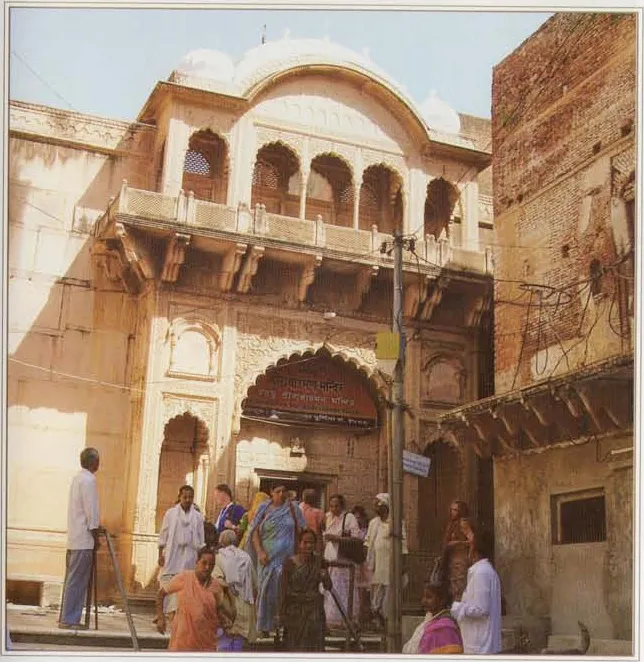
Rādhā-Ramaṇa Mandira (Vṛndāvana)
राधारमण मन्दिर (वृन्दावन)The Rādhā-Ramaṇa Mandira in Vṛndāvana is the temple of Śrī Rādhā-Ramaṇa, the Deity of Śrī Gopāla Bhaṭṭa Gosvāmī, and one of the seven principal Gauḍīya Vaiṣṇava temples o …
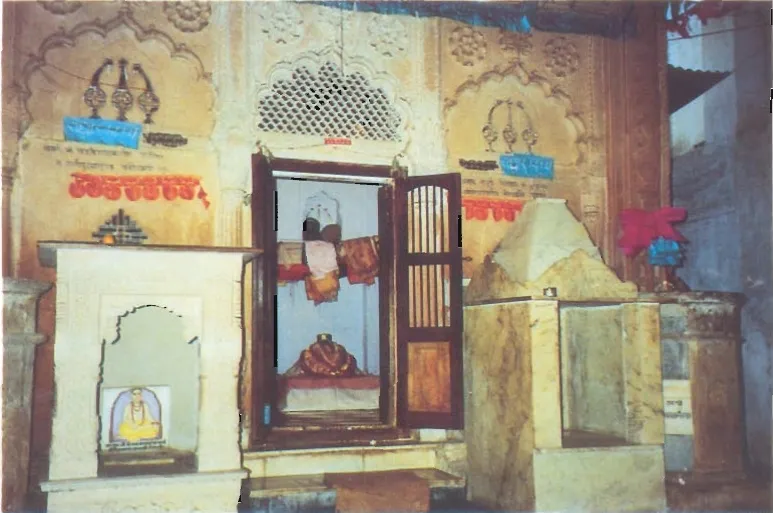
Gopāla Bhaṭṭa Gosvāmī's samādhi
गोपाल भट्ट गोस्वामी की समाधिThe samādhi (tomb) of Śrī Gopāla Bhaṭṭa Gosvāmī, one of the Six Gosvāmīs of Vṛndāvana, stands in the compound of the Rādhā-Ramaṇa temple in Vṛndāvana, next to the place w …
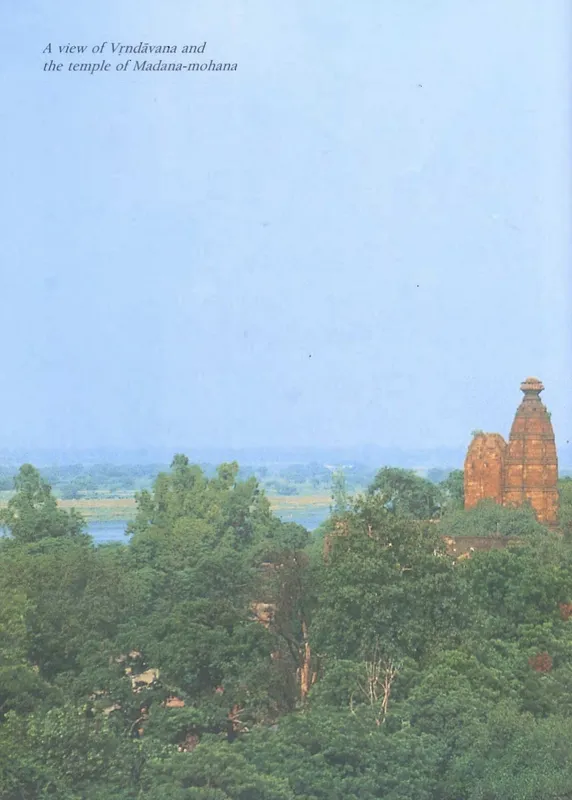
Vṛndāvana
वृन्दावनVṛndāvana is the forest on the bank of the Yamunā where Kṛṣṇa spent His childhood and youth, and the town of temples that stands in that forest today.
Rādhā-Ramaṇa Mandira (Rādhā-kuṇḍa)
राधारमण मन्दिर (राधा-कुण्ड)The Rādhā-Ramaṇa Mandira is a temple in the village of Rādhā-kuṇḍa.
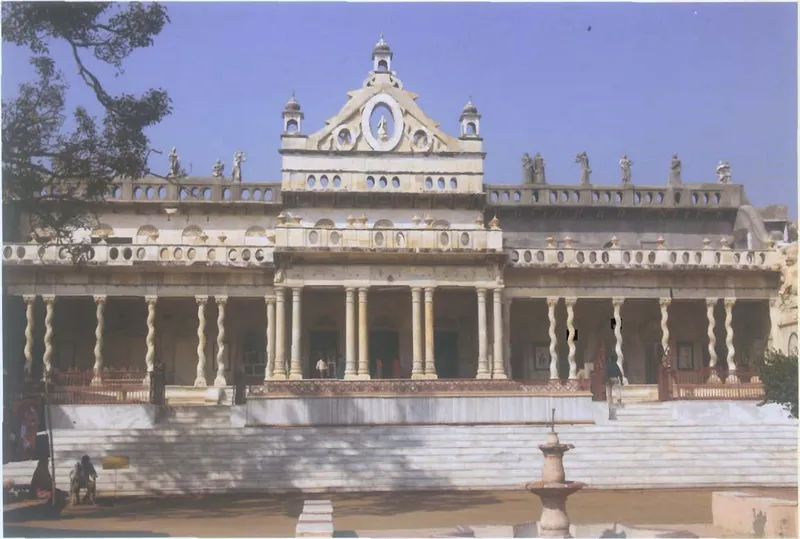
Śāhajī Mandira
शाहजी मन्दिरThe Śāhajī Mandira is a large white-marble temple in Vṛndāvana, a short distance from the Rādhā-Ramaṇa temple.
Questions and answers
According to the Bhakti-ratnākara, Śrī Caitanya had told Śrīla Gopāla Bhaṭṭa Gosvāmī that he would see Hari from a śālagrāma. Śrīla Rūpa Gosvāmī urged him to do a separate service. After some days the Lord appeared from the śālagrāma as Śrī Rādhā-Ramaṇa.[1–3]
According to the Bhakti-ratnākara and Śrīla Prabhupāda, he was the son of Veṅkaṭa Bhaṭṭa of Śrī Raṅgam, in whose house Śrī Caitanya stayed four months. He came to Vṛndāvana and served Śrī Rādhā-Ramaṇa there. His spiritual master was his uncle, Śrīla Prabodhānanda Sarasvatī.[7 +8]
According to a guidebook of 2010, on the day after Nṛsiṁha-caturdaśī, with a great milk bath. The Bhakti-ratnākara tells of the throne festival on the full moon of Vaiśākha.[3 +4]
The Bhakti-ratnākara gives no year. A temple manuscript reported in 1920 gives Saṁvat 1599, which most books give as 1542.[1, 18]
The guidebooks report that there is no Deity of Śrī Rādhā on the altar. A gomatī-cakra is worshipped at His left, and a crown and clothes are kept beside Him for Śrīmatī Rādhārāṇī.[6 +5]
The guidebooks mark a small shrine beside Śrīla Gopāla Bhaṭṭa Gosvāmī's samādhi in the Rādhā-Ramaṇa temple compound. No early text names the spot.[6 +7]
Sources
- Śrīla Narahari Cakravartī, Bhakti-ratnākara, taraṅga 4, printed p. 140, 2nd ed., 1912
- Śrīla Narahari Cakravartī, Bhakti-ratnākara, taraṅga 1, printed p. 14, 2nd ed., 1912
- Sādhana-dīpikā, taraṅga 4, printed p. 141, 2nd ed., 1912
- Śrīla Narahari Cakravartī, Bhakti-ratnākara, taraṅga 4, printed p. 142, 2nd ed., 1912
- Śrīla Narahari Cakravartī, Bhakti-ratnākara, taraṅga 4, printed p. 136, 2nd ed., 1912
- Śrī Vraja-maṇḍala Parikramā (2007), PDF p. 332
- Vṛndāvana-Dhāma Ki Jaya! (c. 1986), by Dhruva Mahārāja dāsa, PDF p. 69
- Vṛndāvana, the Playground of God (2010), Bhakti Caitanya Svāmī, PDF p. 72
- Śrīla Prabhupāda, Śrī Caitanya-caritāmṛta, Ādi-līlā 10.105, purport · vedabase.io
- Vṛndāvana, the Playground of God (2010), Bhakti Caitanya Svāmī, PDF p. 73
- Śrīla Rādhākṛṣṇa Gosvāmī, Sādhana-dīpikā, chapter (8) 'aṣṭa-kakṣā' of the text, prose after v.9.29 (text locator '(8) yāṅhāra prasāde haya abhīṣṭa-pūraṇa after v.9.29', part 2/3)
- Kṛṣṇadāsa, chapter 'চরিত্র শ্রীগোপাল ভট্টের' (the life of Śrī Gopāla Bhaṭṭa), printed p. 20, right column
- Vṛndāvana, the Playground of God (2010), Bhakti Caitanya Svāmī, PDF p. 70
- Vṛndāvana, the Playground of God (2010), Bhakti Caitanya Svāmī, PDF p. 71
- The Color Guide to Vṛndāvana (2000), Written and Photographed by Rājaśekhara dāsa Brahmacārī, PDF p. 105
- Śrī Vraja-maṇḍala Parikramā (2007), PDF p. 331
- the undated parikramā notes Vṛndāvana, ¶193
- Pulinbihārī Datta, ch. 6 (ṣaṣṭha pariccheda), printed p. 91
- The Color Guide to Vṛndāvana (2000), Written and Photographed by Rājaśekhara dāsa Brahmacārī, PDF p. 107
- the undated parikramā notes Vṛndāvana, ¶199
Show all 68 references
- The Color Guide to Vṛndāvana (2000), Written and Photographed by Rājaśekhara dāsa Brahmacārī, PDF p. 166
- Śrīla Prabhupāda, Śrī Caitanya-caritāmṛta, Madhya-līlā 9.82, purport · vedabase.io
- Śrīla Narahari Cakravartī, Bhakti-ratnākara, taraṅga 1, printed p. 13, 2nd ed., 1912
- Śrīla Gopāla Bhaṭṭa Gosvāmī, Hari-bhakti-vilāsa 1.2, GRETIL
- Śrīla Prabhupāda, Śrī Caitanya-caritāmṛta, Madhya-līlā 17.104, purport · vedabase.io
- Śrīla Prabhupāda, Deity Installation, Wedding and Initiations, Melbourne, 6 April 1972 · vedabase.io
- The Color Guide to Vṛndāvana (2000), Written and Photographed by Rājaśekhara dāsa Brahmacārī, PDF p. 108
- Śrīla Kṛṣṇadāsa Kavirāja Gosvāmī, Śrī Caitanya-caritāmṛta, Ādi-līlā 10.105, online edition
- Śrīla Narahari Cakravartī, Bhakti-ratnākara, taraṅga 1, printed p. 15, 2nd ed., 1912
- The Colour Guide to Rādhā-kuṇḍa (1999), Rājaśekhara dāsa Brahmacārī, PDF p. 99
- Vṛndāvana, the Playground of God (2010), Bhakti Caitanya Svāmī, PDF p. 74
- Śrīla Narahari Cakravartī, Bhakti-ratnākara, taraṅga 4, printed p. 144, 2nd ed., 1912
- Śrīla Narahari Cakravartī, Bhakti-ratnākara, taraṅga 4, printed p. 145, 2nd ed., 1912
- the undated parikramā notes Vṛndāvana, ¶194
- Vṛndāvana, the Playground of God (2010), Bhakti Caitanya Svāmī, PDF p. 12
- Śrīla Narahari Cakravartī, Bhakti-ratnākara, taraṅga 9, printed p. 577, 2nd ed., 1912
- Śrīla Narahari Cakravartī, Bhakti-ratnākara, taraṅga 4, printed p. 143, 2nd ed., 1912
- Śrīla Narahari Cakravartī, Bhakti-ratnākara, taraṅga 11, printed p. 673, 2nd ed., 1912
- Śrī Bhaktamāla: Nābhā dāsa's verses, Nābhā dāsa's chappaya 94 (item 468 of the edition), lines 1-2, printed p. 893
- Śrī Bhaktamāla: Nābhā dāsa's verses, Priyādāsa's kavitta 375 (item 469 of the edition) on 'Gusāīṁ Śrī Gopālabhaṭṭa jī', line 1, printed p. 894
- Śrī Bhaktamāla: Nābhā dāsa's verses, Rūpakalā's prose (vārtika tilaka) on Priyādāsa's kavitta 375, printed p. 895
- Vṛndāvana, the Playground of God (2010), Bhakti Caitanya Svāmī, PDF p. 77
- Hari-bhakti-vilāsa (ascribed to Śrīla Gopāla Bhaṭṭa Gosvāmī), vilāsa 5, verses 456-457, GRETIL
- The Colour Guide to Rādhā-kuṇḍa (1999), Rājaśekhara dāsa Brahmacārī, PDF p. 94
- The Colour Guide to Rādhā-kuṇḍa (1999), Rājaśekhara dāsa Brahmacārī, PDF p. 95
- A. W. Entwistle, ch. 5, printed pp. 185-186, Egbert Forsten, Groningen, 1987
- Prabhudayāl Mītal, running heads 'वृ दाबन' and 'ब्रज-संस्कृति के उपकरण', paragraph 'श्री राधारमण जी', printed p. 137
- Śrīla Prabhupāda, Śrī Caitanya-caritāmṛta, Ādi-līlā 1.19, purport · vedabase.io
- Śrīla Prabhupāda, Śrī Caitanya-caritāmṛta, Ādi-līlā 10.90, purport · vedabase.io
- Śrīla Prabhupāda, Śrī Caitanya-caritāmṛta, Ādi-līlā 12.82, purport · vedabase.io
- Śrīla Prabhupāda, Śrī Caitanya-caritāmṛta, Madhya-līlā 4.104, purport · vedabase.io
- Śrīla Prabhupāda, Lecture on Śrī Caitanya-caritāmṛta, Ādi-līlā 1.15, Dallas, 4 March 1975 · vedabase.io
- The Color Guide to Vṛndāvana (2000), Written and Photographed by Rājaśekhara dāsa Brahmacārī, PDF p. 25
- Śrīla Prabhupāda, Room Conversation, Māyāpur, 19 February 1977 · vedabase.io
- Satsvarūpa dāsa Gosvāmī, Śrīla Prabhupāda-līlāmṛta, vol. 1, ch. 9 · vedabase.io
- Vṛndāvana, the Playground of God (2010), Bhakti Caitanya Svāmī, PDF p. 189
- The Colour Guide to Rādhā-kuṇḍa (1999), Rājaśekhara dāsa Brahmacārī, PDF p. 125
- Prema-vilāsa, vilāsa 18 (aṣṭādaśa vilāsa), printed p. 153, right column, Kolkata, 1913
- Śrīla Prabhupāda, Śrī Caitanya-caritāmṛta, Ādi-līlā 7.164, purport · vedabase.io
- Śrīla Prabhupāda, Lecture on Śrīmad-Bhāgavatam 1.5.8–9, New Vrindaban, 24 May 1969 · vedabase.io
- Śrīla Prabhupāda, Lecture on Śrī Caitanya-caritāmṛta, Madhya-līlā 6.154, Gorakhpur, 16 February 1971 · vedabase.io
- the undated parikramā notes Vṛndāvana, ¶202
- Śrī Vraja-maṇḍala Parikramā (2007), PDF p. 345
- Vṛndāvana, the Playground of God (2010), Bhakti Caitanya Svāmī, PDF p. 82
- Vṛndāvana, the Playground of God (2010), Bhakti Caitanya Svāmī, PDF p. 170
- The Colour Guide to Rādhā-kuṇḍa (1999), Rājaśekhara dāsa Brahmacārī, PDF p. 173
- A. W. Entwistle, ch. 8 §66.31 'Radharaman', printed p. 413, Egbert Forsten, Groningen, 1987
- The Color Guide to Vṛndāvana (2000), Written and Photographed by Rājaśekhara dāsa Brahmacārī, PDF p. 101
Further sources
- Bhakti-ratnākara of Śrīla Narahari Cakravartī Ṭhākura (Bengali, 1912 edition), with the verses it quotes from the Sādhana-dīpikā and the Madana-rāga-vallī, summarised, not translated.
- Śrī Bhaktamāla (Banaras, 1904) and Kṛṣṇadāsa Bābājī's Bengali Bhaktamāla (Kolkata, 1905), summarised.
- Śrīla Prabhupāda's purports to Caitanya-caritāmṛta Ādi 1.19, 10.105 and Madhya 9.82 and 17.104 (BBT).