Rudra-kuṇḍa
रुद्र-कुण्ड Hindi name proposed
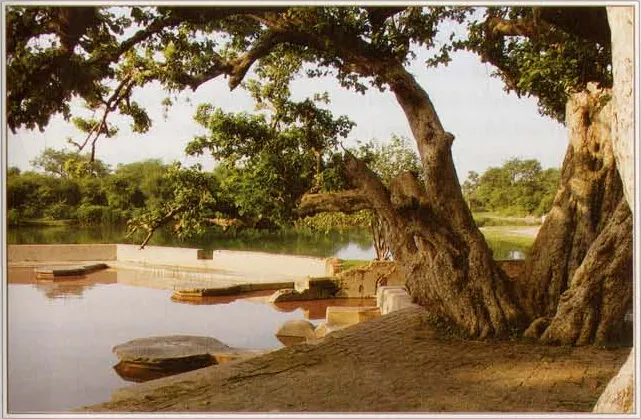
- What it is
- Rudra-kuṇḍa is a pond at Govardhana, north-west of Airāvata-kuṇḍa according to Śrī Vraja-maṇḍala Parikramā (2007).
- Visiting
- Śrī Vraja-maṇḍala Parikramā (2007) names, near Rudra-kuṇḍa, the place where Kṛṣṇa used to play ball, and in the same area Śrīmatī Rādhikā's sitting-place, the jāna-ajāna trees and a pūjanī-śilā.
- Parikramā
- Govardhana parikramā, station 36
- Places here
- Bole Bābā Mandira, Jāna-ajāna trees (Rudra-kuṇḍa), Pūjanī-śilā (Rudra-kuṇḍa), Rādhikā's sitting-place (Rudra-kuṇḍa), Place where Kṛṣṇa used to play ball (Rudra-kuṇḍa) +1 more
In short
Rudra-kuṇḍa is a pond at Govardhana, north-west of Airāvata-kuṇḍa according to Śrī Vraja-maṇḍala Parikramā (2007).[1 +2] The Garga-saṁhitā names a Rudra-kuṇḍa among the limbs of Govardhana Hill, as the hill's anger, without saying where it lies.[4] In the Bhakti-ratnākara it lies in a lonely forest, and it is the place where Mahādeva (Śiva, who is also called Rudra) became absorbed in meditation on Kṛṣṇa.[5] Two modern guidebooks add that Śiva wept here and explain by this the kuṇḍa's other name, Rudana-kuṇḍa (from rudana, weeping); no older source tells of weeping, so this is not certain.[1 +2] Govardhana Hill (2001) describes a Śiva temple, Bole Bābā Mandira, on its bank.[2 +1]
Key facts
| Kind | kuṇḍa |
|---|---|
| Region · area | Govardhana |
| On the parikramā | Govardhana parikramā, station 36 · the route |
| Ācāryas | Śrīla Raghunātha dāsa Gosvāmī, Śrīla Narahari Cakravartī Ṭhākura, Śrīla Śrīnivāsa Ācārya, Śrīla Murāri Gupta, Śrī Caitanya Mahāprabhu |
Divine pastimes
Mahādeva's meditation
According to the Bhakti-ratnākara, Śrīla Rāghava Paṇḍita showed Śrīla Śrīnivāsa Ācārya Rudra-kuṇḍa on their round of Govardhana: a kuṇḍa in a lonely forest, where Mahādeva became absorbed in meditation on Kṛṣṇa. The book speaks of his meditation, not of weeping or of tears.[5]
The guidebooks tell more. According to Śrī Vraja-maṇḍala Parikramā (2007), Mahādeva, absorbed in meditation on Kṛṣṇa's pastimes, wept here (rudana), and so the kuṇḍa is also called Rudana-kuṇḍa. According to the local tradition recorded in Govardhana Hill (2001), the kuṇḍa was formed from the tears that Śiva shed in ecstatic love for Rādhā and Kṛṣṇa. No scripture, Gosvāmī text or Bhakti-ratnākara passage found so far tells of weeping or tears here, so these stories are not certain.[1 +2]
Śrī Caitanya Mahāprabhu
Śrīla Murāri Gupta tells that a brāhmaṇa guide showed Śrī Caitanya Mahāprabhu five kuṇḍas to the south of Govardhana, of Brahmā, Rudra, Indra and Sūrya and one called Mokṣa, and that on seeing them Mahāprabhu spoke lovingly to the brāhmaṇa. It is not certain that his Rudra-kuṇḍa is this one: the verse gives no story and no exact place.[6]
Traditional accounts
The Garga-saṁhitā describes the limbs of Govardhana Hill, giving each of its kuṇḍas a part of the body or a quality.
Texts that name a Rudra-kuṇḍa
The Garga-saṁhitā describes the limbs of Govardhana Hill, giving each of its kuṇḍas a part of the body or a quality. In that list a Rudra-kuṇḍa is the hill's anger; the text tells no story of it and does not say where on the hill it lies (summarised here, not translated).[4]
Other texts name a lake of Rudra, or of Hara (another name of Śiva), among the waters of Govardhana. Śrīla Raghunātha dāsa Gosvāmī counts a lake of this name, Rudra, among the best lakes around Govardhana in his Vraja-vilāsa-stava (verse 79), and a lake of Hara in a similar list in his Govardhanāśraya-daśaka (verse 3).[1 +2] The Nārada Purāṇa names a Rudra-kuṇḍa in its list of the tīrthas of Vṛndāvana, next to names that other sources place at Govardhana.[9] None of these texts tells a story or gives a place, so it is not certain that any of them means this kuṇḍa.[4 +2]
Visiting today
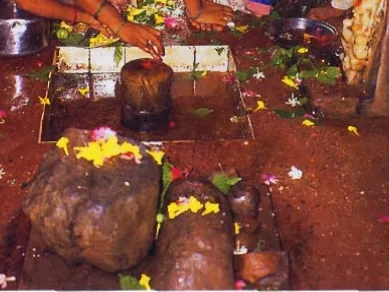
Śrī Vraja-maṇḍala Parikramā (2007) names, near Rudra-kuṇḍa, the place where Kṛṣṇa used to play ball, and in the same area Śrīmatī Rādhikā's sitting-place, the jāna-ajāna trees and a pūjanī-śilā.[1 +2] In 2001 Govardhana Hill described a temple of Śiva known as Bole Bābā Mandira on the bank of the kuṇḍa, where women worshipped Lord Śiva, and said that a larger lake filled up around the kuṇḍa in the monsoon. It gives no date or founder for the temple.[1 +2]
Location
| Where it is | Surrounded by Hariju-kuṇḍa[11] north-west of Airāvata-kuṇḍa[12] |
|---|---|
| On the numbered Govardhana chart | 58 (printed as “Rudra Kunda - Hariju Kunda”)[13] |
Places at Rudra-kuṇḍa
6 places
Nearby places
Airāvata-kuṇḍa
Pictures
1 pictures
Where the sources differ
Whether Hariju-kuṇḍa is another name of Rudra-kuṇḍa or the larger lake around it.[1 +2]
Accounts differ Hariju/Haraji-kuṇḍa: a separate lake round Rudra-kuṇḍa, or another name of Rudra-kuṇḍa?
- Govardhana Hill: India's Most Sacred Mountain (2001)'Surrounding Rudan-kuṇḍa is a large lake which becomes very full during the monsoon. This lake, named after one of Kṛṣṇa's friends, is called Hariju-kuṇḍa' (with its own photograph)
- Śrī Vraja-maṇḍala Parikramā (2007)'A third name of the kuṇḍa is Haraji-kuṇḍa' (after Rudra-kuṇḍa and Rudana-kuṇḍa)
- the key of the numbered Govardhana chart (Govardhan list)'58 Rudra Kunda - Hariju Kunda' under one number
References
13 references
- Śrī Vraja-maṇḍala Parikramā (2007), PDF p. 133
- Govardhana Hill: India's Most Sacred Mountain (2001), Rajasekhara dasa Brahmacari, PDF p. 140
- Govardhana Hill: India's Most Sacred Mountain (2001), Rajasekhara dasa Brahmacari, PDF p. 141
- Garga-saṁhitā, Girirāja-khaṇḍa (3), adhyāya 8, verse 11, Sanskrit Wikisource
- Śrīla Narahari Cakravartī, Bhakti-ratnākara, Fifth Wave, 1912 ed. p. 203, 2nd ed., 1912
- Kṛṣṇa-caitanya-caritāmṛta 4.8.16–17
- Śrīla Raghunātha dāsa Gosvāmī, Vraja-vilāsa-stava, verse 79
- Śrīla Raghunātha dāsa Gosvāmī, Govardhanāśraya-daśaka, verse 3
- Nārada Purāṇa, Uttara-bhāga, adhyāya 80, verses 72b–73
- the key of the numbered Govardhana chart, ¶61
- Govardhana Hill: India's Most Sacred Mountain (2001), Rajasekhara dasa Brahmacari, p. 126
- Śrī Vraja-maṇḍala Parikramā (2007), p. 240-241
- Numbered list of the Govardhana sites (key of the Govardhana chart)