Airāvata-kuṇḍa
ऐरावत-कुण्ड Hindi name proposed
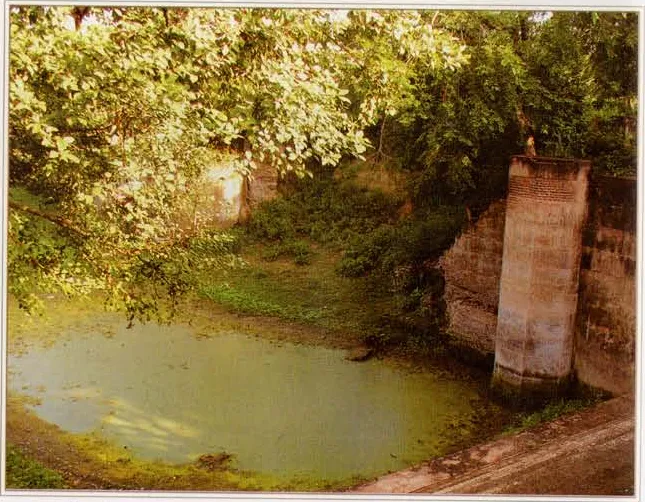
- What it is
- Airāvata-kuṇḍa is a pond that the guidebooks place in Kadamba Vana, on the western side of the walk around Govardhana Hill.
- Visiting
- The guidebooks place Airāvata-kuṇḍa in Kadamba Vana, also called Kadamba-khaṇḍī, on the western side of the parikramā (the walk around the hill), with Surabhi-kuṇḍa and Indra-kuṇḍa.
- Parikramā
- Govardhana parikramā, station 35
In short
Airāvata-kuṇḍa is a pond that the guidebooks place in Kadamba Vana, on the western side of the walk around Govardhana Hill. It bears the name of Airāvata, the elephant of Indra, the king of heaven.[1 +4] Śrīmad-Bhāgavatam tells that after Kṛṣṇa had lifted the hill, Indra bathed Him with water of the heavenly Gaṅgā drawn up by Airāvata's trunk, but none of the texts that tell of this bath names a kuṇḍa (sacred pond) of Airāvata.[6 +6] The Garga-saṁhitā says that the water of that bath became Mānasī-gaṅgā, and the commentators who explain the bath do not say that the water was kept anywhere. Two guidebooks connect this pond with the bath, but they tell it in different ways.[6 +3]
Key facts
| Kind | kuṇḍa |
|---|---|
| Region · area | Govardhana |
| Also part of | Kadamba Vana (Govardhana) |
| On the parikramā | Govardhana parikramā, station 35 · the route |
Divine pastimes
The bath after the lifting of the hill
After Kṛṣṇa had lifted Govardhana Hill and Indra had surrendered to Him, Surabhi, the mother of the cows, bathed Him with her milk, and Indra, urged by the mothers of the demigods, bathed Him with water of the heavenly Gaṅgā drawn up by Airāvata's trunk and named Him Govinda. The Bhāgavatam names no place on the hill for the bath and no kuṇḍa:[6 +3]
evaṃ kṛṣṇam upāmantrya surabhiḥ payasātmanaḥ / jalair ākāśa-gaṅgāyā airāvata-karoddhṛtaiḥ
indraḥ surarṣibhiḥ sākaṃ codito deva-mātṛbhiḥ / abhyasiñcata dāśārhaṃ govinda iti cābhyadhāt
Śukadeva Gosvāmī said: Having thus appealed to Lord Kṛṣṇa, mother Surabhi performed His bathing ceremony with her own milk, and Indra, ordered by Aditi and other mothers of the demigods, anointed the Lord with heavenly Gaṅgā water from the trunk of Indra’s elephant carrier, Airāvata. Thus, in the company of the demigods and great sages, Indra coronated Lord Kṛṣṇa, the descendant of Daśārha, and gave Him the name Govinda.
Translation: Śrīla Prabhupāda's disciples (BBT)Śrīla Sanātana Gosvāmī and Śrīla Jīva Gosvāmī explain how the trunk raised the water (summarised here, not translated): Airāvata, who had come there, brought it in jewelled pots, so that so much pure water was at hand at once. Neither says that the water was stored anywhere or that a lake formed from it.[6 +1]
The other accounts give Airāvata other parts. In the Garga-saṁhitā Airāvata himself bathes Kṛṣṇa on Govardhana from his four trunks, and in Śrīla Jīva Gosvāmī's Gopāla-campū he brings pots of heavenly Gaṅgā water with his trunk again and again.[6 +3] In the Viṣṇu Purāṇa Indra bathes Kṛṣṇa with a bell taken from Airāvata, and in the Harivaṁśa Indra leaves his elephant behind and bathes Kṛṣṇa from golden pots.[10 +2]
According to Śrīla Jīva Gosvāmī, commenting on the next verse, the bath took place in the part of Govardhana known as Śakra-kuṇḍa from the Varāha Purāṇa and as Govinda-kuṇḍa from the Skanda Purāṇa; the commentator Vaṁśīdhara says the same.[16] Read more: The lifting of Govardhana Hill, Indra's homage and the name Govinda →
The Garga-saṁhitā says that the heavenly Gaṅgā water of the bath became Mānasī-gaṅgā and that Surabhi's milk became Govinda-kuṇḍa; it names no other lake formed from that water:[13 +1]
द्युगङ्गाजलपातेन कृष्णस्नानेन मैथिल । तत्र वै मानसी गङ्गा गिरौ जाताऽघनाशिनी ॥ 15 ॥
dyugaṅgājalapātena kṛṣṇasnānena maithila
tatra vai mānasī gaṅgā girau jātā'ghanāśinī
Traditional accounts
At this point of the walk around the hill, where Śrī Vraja-maṇḍala Parikramā (2007) lists Surabhi-kuṇḍa, Airāvata-kuṇḍa and …
At this point of the walk around the hill, where Śrī Vraja-maṇḍala Parikramā (2007) lists Surabhi-kuṇḍa, Airāvata-kuṇḍa and Rudra-kuṇḍa, the Bhakti-ratnākara has Śrīla Śrīnivāsa Ācārya's guide show him Airāvata's footprint, a kuṇḍa printed as Surati-kuṇḍa, and Rudra-kuṇḍa. It names no kuṇḍa of Airāvata.[3 +2]
Śrīla Prabhupāda
Śrīla Prabhupāda's Kṛṣṇa book tells the bath without naming a place or a kuṇḍa (a general reference) …
Śrīla Prabhupāda's Kṛṣṇa book tells the bath without naming a place or a kuṇḍa (a general reference):[6 +3]
General teaching (does not name the place)“Then the surabhi cow bathed Kṛṣṇa with her milk, and Indra bathed Him with the water of the celestial Ganges through the trunk of his carrier elephant.”
Śrīla Prabhupāda, Kṛṣṇa, the Supreme Personality of Godhead (Kṛṣṇa book), Chapter 27, Prayers by Indra, the King of Heaven · vedabase.io
Songs
A verse of the Kṛṣṇa-līlā-stava, which the song book credits to Śrīla Sanātana Gosvāmī, remembers this bath: it names Kāmadhenu's …
A verse of the Kṛṣṇa-līlā-stava, which the song book credits to Śrīla Sanātana Gosvāmī, remembers this bath: it names Kāmadhenu's milk and the heavenly Gaṅgā water brought by Airāvata's trunk.[19]
Visiting today
The guidebooks place Airāvata-kuṇḍa in Kadamba Vana, also called Kadamba-khaṇḍī, on the western side of the parikramā (the walk around the hill), with Surabhi-kuṇḍa and Indra-kuṇḍa. Śrī Vraja-maṇḍala Parikramā (2007) puts Rudra-kuṇḍa to its north-west.[1 +4]
Location
| Where it is | In Kadamba Vana[20] |
|---|---|
| On the numbered Govardhana chart | 59 (printed as “Airavata Kunda”)[21] |
Nearby places
Airāvata's Foot-print · Govardhana
Pictures
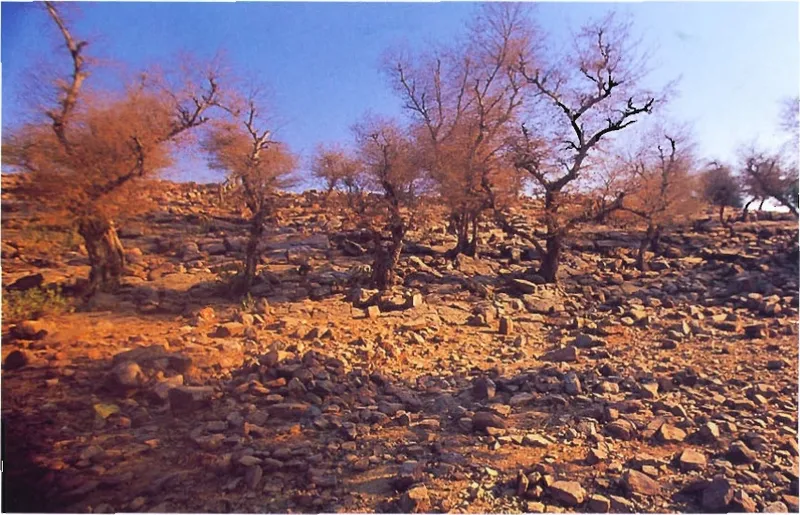
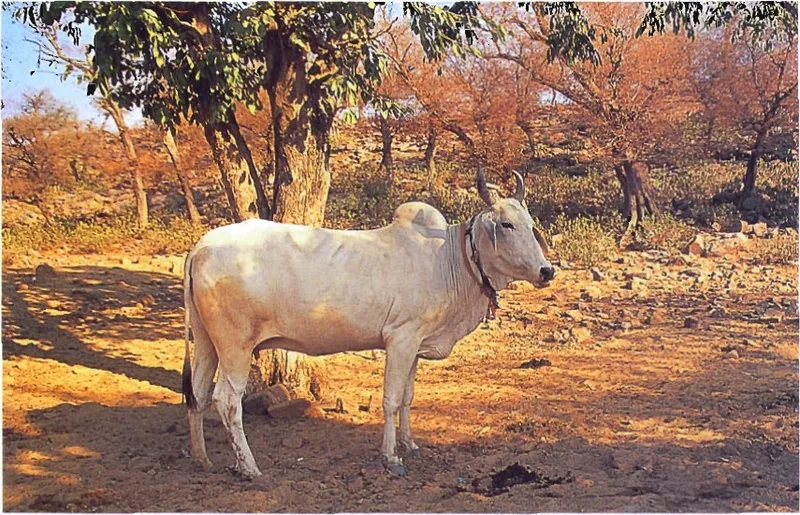
2 pictures
Where the sources differ
Accounts differ What Airāvata did with the heavenly Gaṅgā water, and what that water became
- Govardhana Hill: India's Most Sacred Mountain (2001), Airāvata-kuṇḍaAirāvata brought the Gaṅgā water from heaven and stored it here for the bathing ceremony at Govinda-kuṇḍa; this formed Airāvata-kuṇḍa
- Śrī Vraja-maṇḍala Parikramā (2007), Airāvata-kuṇḍaon Indra's order Airāvata used his trunk to bathe Śrī Kṛṣṇa with the water of the heavenly Gaṅgā (place of the bath not stated in the entry)
- Garga-saṁhitā 3.4.9, 3.4.15Airāvata bathed Kṛṣṇa with his four trunks filled with heavenly Gaṅgā water; that water became Mānasī-gaṅgā
- Śrīmad-Bhāgavatam 10.27.22-23Indra bathed Kṛṣṇa with heavenly Gaṅgā water raised by Airāvata's trunk; no lake named
Whether Airāvata's footprint is near this kuṇḍa.
Accounts differ Where Airāvata's footprint is in relation to Airāvata-kuṇḍa
- Śrī Vraja-maṇḍala Parikramā (2007)'Near the kuṇḍa on top of the hill are the impressions of Airāvata's feet' (entry Airāvata-kuṇḍa, no. 33)
- Govardhana Hill: India's Most Sacred Mountain (2001)Airāvata's footprint (no. 46) is on a rock on the side of the hill near Indra Pūjā (no. 47), listed before Indra-kuṇḍa (48), Kadamba Vana (49), Surabhi-kuṇḍa (50) and Airāvata-kuṇḍa (51); no footprint is mentioned at Airāvata-kuṇḍa
- the key of the numbered Govardhana chart (list)54 Airavata's Footprint, 55 Indra Puja, 56 Indra Kunda, 57 Surabhi Kunda, 58 Rudra Kunda, 59 Airavata Kunda
- Bhakti-ratnākara, 1912 ed. p. 203Airāvata's footprint, then a kuṇḍa printed সুরতিকুণ্ড, then Rudra-kuṇḍa and Kadamba-khaṇḍī; no Airāvata-kuṇḍa
Where Indra met Kṛṣṇa and where the bath took place: the commentators and one guidebook name different spots, and their accounts are set side by side on the page of Indra Tila.[16]
More on this place
The lifting of Govardhana Hill, Indra's homage and the name Govinda
References
21 references
- Govardhana Hill: India's Most Sacred Mountain (2001), Rajasekhara dasa Brahmacari, PDF p. 131
- Govardhana Hill: India's Most Sacred Mountain (2001), Rajasekhara dasa Brahmacari, PDF p. 134
- Śrī Vraja-maṇḍala Parikramā (2007), PDF p. 133
- the undated parikramā notes Govardhana, ¶142
- the key of the numbered Govardhana chart, ¶62
- Śrīmad-Bhāgavatam 10.27.22-23, GRETIL
- Garga-saṁhitā, Girirāja-khaṇḍa (3), adhyāya 4, verse 9, Sanskrit Wikisource
- Śrīla Jīva Gosvāmī, Gopāla-campū, Pūrva-campū 19, prose [48], GRETIL
- Śrīla Prabhupāda, Kṛṣṇa, the Supreme Personality of Godhead (Kṛṣṇa book), Chapter 27, Prayers by Indra, the King of Heaven · vedabase.io
- Viṣṇu Purāṇa, 5.12.13-14, GRETIL
- Harivaṁśa, HV 62.42, GRETIL
- Harivaṁśa, HV 62.8, GRETIL
- Garga-saṁhitā, Girirāja-khaṇḍa (3), adhyāya 4, verse 15, Sanskrit Wikisource
- Garga-saṁhitā, Girirāja-khaṇḍa (3), adhyāya 4, verse 16, Sanskrit Wikisource
- Śrīla Sanātana Gosvāmī: commentary on ŚB 10.27.22–23, Bhagavata Vidya Pith edition, ed. Bhagavata Rishi and Krishna Shankar Shastri, 1996
- Śrīla Jīva Gosvāmī: commentary on ŚB 10.27.24, Bhagavata Vidya Pith edition, ed. Bhagavata Rishi and Krishna Shankar Shastri, 1996
- Śrīla Narahari Cakravartī, Bhakti-ratnākara, Fifth Wave, 1912 ed. p. 203, 2nd ed., 1912
- Śrī Vraja-maṇḍala Parikramā (2007), PDF p. 132
- Obeisance 61 (Kṛṣṇa-līlā-stava) (Sanātana Gosvāmī (as the song book credits it)) · song book
- Govardhana Hill: India's Most Sacred Mountain (2001), Rajasekhara dasa Brahmacari, p. 120
- Numbered list of the Govardhana sites (key of the Govardhana chart)