Tapovana (near Gopī-ghāṭa)
तपोवन (गोपी-घाट के पास) Hindi name proposed
Also called TAPOVANA
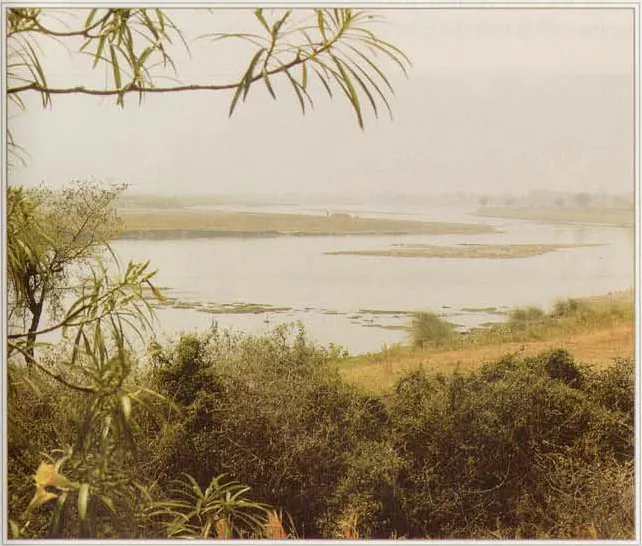
- What it is
- Tapovana, "the forest of austerity", is a place of the cowherd girls' vow near the Yamunā.
- Visiting
- The undated parikramā notes Tapovana name one place to visit here, the temple of Śrī Rādhā Guñja-bihārī, but describe neither the temple nor its Deities; no other source read mentions it, so the …
- Places here
- Gopī-ghāṭa (Tapovana)
In short
Tapovana, "the forest of austerity", is a place of the cowherd girls' vow near the Yamunā. According to the Bhakti-ratnākara, the young cowherd girls performed austerities here, and the guidebooks say that they worshipped here to have Kṛṣṇa as their husband, during the month-long vow to the goddess Kātyāyanī that Śrīmad-Bhāgavatam describes.[1 +5] The Bhāgavatam tells the vow without naming any place.[7 +5] The Bhakti-ratnākara names Gopī-ghāṭa, where the girls bathed in the river, and Cīra-ghāṭa, where they worshipped Kātyāyanī, right after Tapovana.[1 +5]
Key facts
| Kind | forest |
|---|---|
| Region · area | Jāvaṭa |
| Also part of | Yamunā |
| Ācāryas | Śrīla Narahari Cakravartī Ṭhākura, Śrīla Rāghava Paṇḍita Gosvāmī of Govardhana, Śrīla Śrīnivāsa Ācārya, Śrīla Viśvanātha Cakravartī Ṭhākura |
Divine pastimes
The Kātyāyanī vow
Śrīmad-Bhāgavatam (10.22) tells that in the first month of the winter season the unmarried girls of Nanda's Vraja kept a vow for a whole month. They ate only simple food, rose at dawn, went hand in hand singing of Kṛṣṇa to bathe in the Kālindī, the Yamunā, and on the bank worshipped an image of the goddess made of sand. Each prayed to Kātyāyanī that Nanda's son might become her husband. The Bhāgavatam names no place for the vow.[7 +5]
evaṃ māsaṃ vrataṃ ceruḥ kumāryaḥ kṛṣṇa-cetasaḥ / bhadrakālīṃ samānarcur bhūyān nanda-sutaḥ patiḥ
Thus for an entire month the girls carried out their vow and properly worshiped the goddess Bhadrakālī, fully absorbing their minds in Kṛṣṇa and meditating upon the following thought: “May the son of King Nanda become my husband.”
Translation: Śrīla Prabhupāda's disciples (BBT)Śrīla Prabhupāda retells the vow in his Kṛṣṇa book (chapter 22), also without naming a place:[7 +5]
General teaching (does not name the place)“All the unmarried gopīs in Vṛndāvana used to daily worship Goddess Kātyāyanī early in the morning after taking a bath in the river Yamunā. Kātyāyanī is another name for Goddess Durgā. The goddess is worshiped by preparing a doll made of sand from the bank of the Yamunā.”
Śrīla Prabhupāda, Kṛṣṇa, the Supreme Personality of Godhead (Kṛṣṇa book), Chapter 22, 'Stealing the Garments of the Unmarried Gopī Girls' · vedabase.io
Traditional accounts
In the Bhakti-ratnākara's account of the tour of Vraja, Śrīla Rāghava Paṇḍita shows Śrīla Śrīnivāsa Ācārya three places in a row …
Where the girls performed their austerities
In the Bhakti-ratnākara's account of the tour of Vraja, Śrīla Rāghava Paṇḍita shows Śrīla Śrīnivāsa Ācārya three places in a row: Tapovana, where the cowherd maidens performed their austerities; Gopī-ghāṭa, where they came and bathed in the Yamunā with great joy; and Cīra-ghāṭa, where they worshipped Kātyāyanī (summarised here, not translated).[1 +5] Read more: The Kātyāyanī vow and the gopīs' clothes: the pastime and its places →
অহে শ্রীনিবাস এই দেখ তপোবন । এইখানে কৈল তপ গোপকন্যাগণ ॥ দেখ গোপীঘাট এথা গোপীগণ আইলা । যমুনা স্নানেতে অতি উল্লসিত হৈলা ॥ এই চীরঘাট এথা গোপকন্যাগণ । কাত্যায়নী পূজিয়া সবার হর্ষ মন ॥
ahe śrīnibāsa ei dekha tapobana
eikhāne kaila tapa gopakanyāgaṇa
dekha gopīghāṭa ethā gopīgaṇa āilā
yamunā snānete ati ullasita hailā
ei cīraghāṭa ethā gopakanyāgaṇa
kātyāẏanī pūjiẏā sabāra harṣa mana ||
The late Bengali Bhaktamāla of Kṛṣṇadāsa Bābājī (1905) calls Tapovana the place where the maiden gopīs worshipped Kātyāyanī and received the boon they asked for. The guidebook Śrī Vraja-maṇḍala Parikramā (2007) and the undated parikramā notes Tapovana say that the young gopīs worshipped here to have Kṛṣṇa as their husband, and the notes explain the name from tapa, austerity, and vana, forest.[1 +5]
Who the girls of the vow were
The Bhāgavatam calls them simply the unmarried girls of Nanda's Vraja.[7 +5] Other works tell of gopīs born from earlier devotees of Śrī Rāma, without naming Tapovana. The Padma Purāṇa, quoted by Śrīla Rūpa Gosvāmī, says that the sages of the Daṇḍaka forest, who saw Śrī Rāma there and longed for Him, were born as women in Gokula. The Garga-saṁhitā tells that those sages, born as daughters of a cowherd named Maṅgala, worshipped the Yamunā every day to win Kṛṣṇa, and that the women of Mithilā, who had wanted Śrī Rāma as their husband, were born in the homes of the cowherd chiefs and kept the Kātyāyanī vow (summarised here, not translated).[13 +5]
Śrīla Prabhupāda tells the Padma Purāṇa's account of the sages in The Nectar of Devotion; this is a general teaching and does not mention Tapovana or the vow:[13 +5]
General teaching (does not name the place)“As a result of this benediction, they all took birth as women in the wombs of gopīs at Gokula, and as they had desired in their previous lives, they enjoyed the company of Lord Kṛṣṇa, who was present at that time in Gokula Vṛndāvana.”
Śrīla Prabhupāda, The Nectar of Devotion, Chapter 16 · vedabase.io
The guidebooks and the ācāryas' commentaries describe the girls of the vow in different ways; the accounts are set side by side below.[13 +5]
Visiting today
The undated parikramā notes Tapovana name one place to visit here, the temple of Śrī Rādhā Guñja-bihārī, but describe neither the temple nor its Deities; no other source read mentions it, so the report may be out of date.[6 +1]
Location
| Where it is | on the Yamunā bank 1 mile east of Akṣayavaṭa[25] situated on the bank of the Yamunā one mile east of Akṣayavaṭa[23] |
|---|
Places at Tapovana (near Gopī-ghāṭa)
2 places
Also listed here
- Rādhā-Guñja-bihārī Mandira (Tapovana) temple
Nearby places
Akṣayavaṭa (near Rāma-ghāṭa) · Yamunā
Where the sources differ
Who the girls of the Kātyāyanī vow were. Śrīla Viśvanātha Cakravartī Ṭhākura calls them Kṛṣṇa's eternally perfect beloveds who kept the vow following worldly custom, and Śrīla Jīva Gosvāmī says that they worshipped Kātyāyanī as a messenger to Kṛṣṇa; the guidebooks call them former sages and princesses born as gopīs.[3 +5]
Accounts differ Who the girls of the Kātyāyanī vow were (the gopīs whose worship is set at Tapovana).
- Śrīmad-Bhāgavatam 10.22.1'the unmarried girls of Nanda's Vraja'; no former birth stated
- Padma Purāṇa, Uttara 245.164-165; Bhakti-rasāmṛta-sindhu 1.2.301-302; The Nectar of Devotion ch. 16the sages of Daṇḍakāraṇya were born as gopīs in Gokula (no vow, no place named)
- Garga-saṁhitā 1.4.36-39 and 4.3.2-4the women of Mithilā, born in the homes of the nine Nandas by Rāma's boon, kept the Kātyāyanī vow
- Garga-saṁhitā 4.2.5-17the former sages of Daṇḍakāraṇya, born as Maṅgala's daughters, worshipped the Yamunā (not Kātyāyanī) and got their boon from her
Where Tapovana is: the guidebooks place it on the bank of the Yamunā east of Akṣayavaṭa, but differ slightly on the distance.[2 +3]
Accounts differ Distance between Tapovana and Akṣayavaṭa.
- Śrī Vraja-maṇḍala Parikramā (2007); the undated parikramā notes Tapovanaone mile east of Akṣayavaṭa
- the undated parikramā notes AkṣayavaṭaAkṣayavaṭa is 'about a km from Tapovana'
More on this place
The Kātyāyanī vow and the gopīs' clothes: the pastime and its places
References
25 references
- Śrīla Narahari Cakravartī, Bhakti-ratnākara, Fifth Wave (pañcama taraṅga), printed p. 269 (1912 edition), 2nd ed., 1912
- Śrī Śrī Bhaktamāla grantha, Vraja-parikramā section, printed p. 338, right column, foot
- Śrī Vraja-maṇḍala Parikramā (2007), PDF p. 242
- the undated parikramā notes Tapovana, ¶4
- the undated parikramā notes Tapovana, ¶11
- the undated parikramā notes Tapovana, ¶12
- Śrīmad-Bhāgavatam 10.22.1, Bhagavata Vidya Pith edition, ed. Bhagavata Rishi and Krishna Shankar Shastri, 1996
- Śrīmad-Bhāgavatam 10.22.2, GRETIL
- Śrīmad-Bhāgavatam 10.22.4, Bhagavata Vidya Pith edition, ed. Bhagavata Rishi and Krishna Shankar Shastri, 1996
- Śrīmad-Bhāgavatam 10.22.5, GRETIL
- Śrīmad-Bhāgavatam 10.22.6, GRETIL
- Śrīla Prabhupāda, Kṛṣṇa, the Supreme Personality of Godhead (Kṛṣṇa book), Chapter 22, 'Stealing the Garments of the Unmarried Gopī Girls' · vedabase.io
- Padma Purāṇa, Uttara-khaṇḍa (6), adhyāya 245, verses 164-165, Sanskrit Wikisource
- Rūpa Gosvāmī, Bhakti-rasāmṛta-sindhu 1.2.300-302, GRETIL
- Śrīla Prabhupāda, The Nectar of Devotion, Chapter 16 · vedabase.io
- Garga-saṁhitā, Mādhurya-khaṇḍa (4), adhyāya 2 ('ṛṣi-rūpa-gopī-gaṇānām utpattiḥ'), verse 5, Sanskrit Wikisource
- Garga-saṁhitā, Mādhurya-khaṇḍa (4), adhyāya 2, verse 14, Sanskrit Wikisource
- Garga-saṁhitā, Goloka-khaṇḍa (1), adhyāya 4, verses 36-38, Sanskrit Wikisource
- the undated parikramā notes Tapovana, ¶8
- Śrī Vraja-maṇḍala Parikramā (2007), PDF p. 243
Show all 25 references
- Garga-saṁhitā, Mādhurya-khaṇḍa (4), adhyāya 3 ('maithilī-gopī-gaṇānām upākhyānam'), verses 2-4, Sanskrit Wikisource
- Śrīla Viśvanātha Cakravartī: commentary on ŚB 10.22.1-2, Bhagavata Vidya Pith edition, ed. Bhagavata Rishi and Krishna Shankar Shastri, 1996
- the undated parikramā notes Tapovana, ¶6
- the undated parikramā notes Akṣayavaṭa, ¶5
- Śrī Vraja-maṇḍala Parikramā (2007), p. 458-459