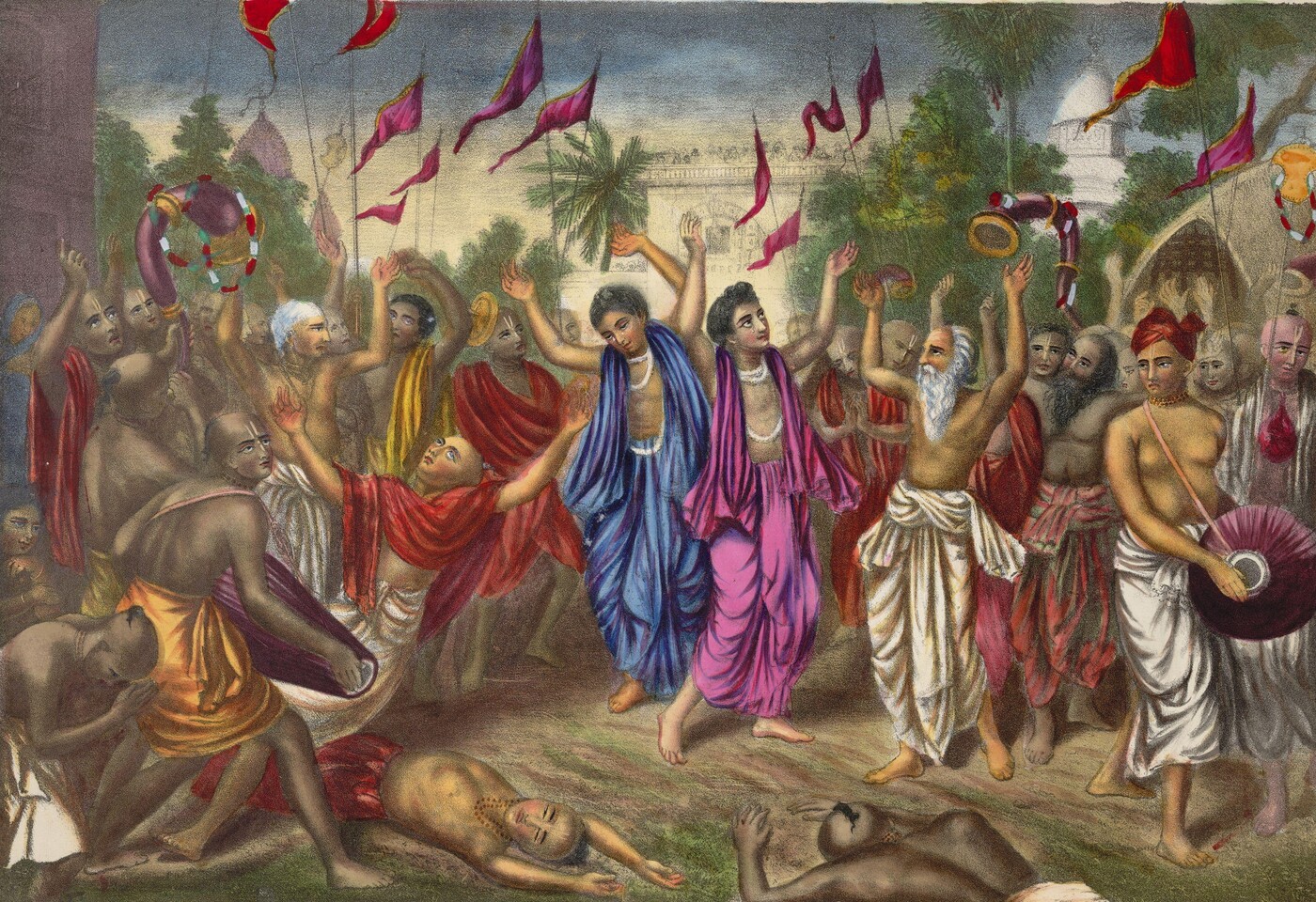
नवद्वीप में श्री चैतन्य महाप्रभु के गृहस्थ जीवन के वर्ष, यानी 1510 में सन्न्यास लेने से पहले के वर्ष, उनके सबसे गहरे और सबसे सार्वजनिक सङ्कीर्तन के वर्ष थे। रात-प्रतिरात वे नित्यानन्द प्रभु, अद्वैत आचार्य, श्रीवास ठाकुर और दर्जनों अन्य भक्तों के साथ एकत्र होते थे। प्रायः यह सभा श्रीवास के ही आँगन में होती थी। वे सब मिलकर तब तक कीर्तन और नृत्य करते थे, जब तक महाप्रभु पर ऐसे भाव न छा जाते, जिन्हें सामान्य भक्ति नहीं कहा जा सकता था। कृष्णदास कविराज गोस्वामी ने दशकों बाद श्री चैतन्य-चरितामृत लिखी। उसमें वे इस मण्डली के भक्तों को एक ही वृक्ष की शाखाओं और उपशाखाओं के रूप में गिनाते हैं। यह चित्र यह बताने का एक ढंग है कि इनमें से हर एक का भाग चाहे कितना भी छोटा हो, वह किसी ऐसी बात से जुड़ा था, जो इनमें से किसी एक से कहीं बड़ी थी। श्रीमान् पण्डित को इसी वृक्ष की पन्द्रहवीं शाखा बताया गया है। कृष्णदास कविराज गोस्वामी ने उनके बारे में जो एकमात्र विवरण लिखा है, वह इस काल में महाप्रभु के सबसे अद्भुत भावों में से एक से जुड़ा है।
निकट रखा गया एक सेवक #
श्रीमान् पण्डित का वर्णन करने वाला पद्य बहुत छोटा है। यह उस सूची के हिसाब से भी छोटा है, जो कुछ ही दर्जन पंक्तियों में दर्जनों लोगों के नाम देती है। पद्य उन्हें "प्रभुर निज भृत्य" कहता है, अर्थात् भगवान का अपना निजी सेवक। यह केवल इतना बताता है कि जब महाप्रभु नृत्य करते थे, तब वे मशाल लेकर चलते थे। इसमें न कोई पारिवारिक इतिहास है, न गृह-नगर, और न यह बात कि वे भक्तों की मण्डली में कब आए। फिर भी इन थोड़े-से शब्दों में पद्य एक प्रकार का विश्वास दिखाता है। वह उन्हें "निजी" सेवक कहता है, केवल एक सामान्य सेवक नहीं। ऐसे सेवक को इतने निकट रखा जाता है कि उसे कोई सामान्य काम नहीं, बल्कि एक विशेष काम सौंपा जाता है, जिसे वह बार-बार करता है।
लक्ष्मी के भाव में नृत्य #
यह नृत्य कीर्तन की साधारण गति नहीं था। इस पद्य पर श्रील प्रभुपाद का भाष्य एक ऐसी रात की याद दिलाता है, जब महाप्रभु देवी लक्ष्मी से जुड़े भाव में लीन थे। उस रात वे किसी आँगन में ही नहीं रुके, बल्कि नृत्य करते हुए नवद्वीप की गलियों में निकल पड़े। यह घटना महाप्रभु के नवद्वीप-काल की लीलाओं के एक समूह का भाग है। इन लीलाओं में बताया गया है कि वे किसी विशेष दिव्य भाव को इतनी पूर्णता से प्रकट करते थे कि देखने वाले उनके अगले कार्य से ही पहचान पाते थे कि वे किसकी भूमिका निभा रहे हैं। इससे मिलती-जुलती बात, एक अलग रूप में, चैतन्य-भागवत में भी दर्ज है। वहाँ श्रील वृन्दावन दास ठाकुर उनके भावविभोर नृत्य का और विस्तार से वर्णन करते हैं।
मशाल का महत्त्व क्यों था #
सोलहवीं शताब्दी के नवद्वीप में सड़कों पर रोशनी की कोई व्यवस्था नहीं थी। अंधेरा होने के बाद जब कीर्तन-मण्डली किसी आँगन से निकलकर खुली गलियों में जाती थी, तब किसी को दीपक लेकर साथ चलना ही पड़ता था। दीपक की रोशनी से ऊबड़-खाबड़ भूमि पर शोभायात्रा के पैर नहीं डगमगाते थे। इससे नृत्य उस भीड़ को भी दिखाई देता रहता था, जिसे आकर्षित करने के लिए यह कीर्तन होता था। यह विवरण आसानी से छूट सकता है। लेकिन यह श्रीमान् पण्डित को दृश्य के किनारे पर नहीं, बल्कि उसके केन्द्र में दिखाता है। वे महाप्रभु के इतने निकट थे कि रात-प्रतिरात भगवान पर रोशनी बनाए रखने का काम भरोसे के साथ उन्हें सौंपा गया। वे यह सेवा तब करते थे, जब भगवान ऐसे भाव में नृत्य कर रहे होते थे, जिसे देख पाना भी वहाँ उपस्थित अधिकांश भक्तों के लिए कठिन था।
सूची में साथी #
कृष्णदास कविराज गोस्वामी की सूची श्रीमान् पण्डित का वर्णन तो करती ही है, साथ ही यह भी दिखाती है कि उनके आस-पास किन भक्तों के नाम आते हैं। उनसे ठीक पहले चौदहवीं शाखा के रूप में नारायण पण्डित का नाम आता है। उनका वर्णन ऐसे भक्त के रूप में किया गया है, जो "भगवान चैतन्य के चरण-कमलों के अतिरिक्त अन्य कोई शरण नहीं जानते थे"। उनके ठीक बाद सोलहवीं शाखा के रूप में शुक्लाम्बर ब्रह्मचारी का नाम आता है। महाप्रभु कभी-कभी हँसी-हँसी में उनसे भोजन छीन लेते थे। इन तीनों पद्यों को साथ पढ़ने से पता चलता है कि ग्रन्थ में श्रीमान् पण्डित किन भक्तों के साथ आते हैं। ये आपस में असम्बद्ध व्यक्ति थे, और अकेले देखें तो हर एक की भूमिका छोटी थी। फिर भी इन्हें एक के बाद एक लिखा गया, क्योंकि हर एक का उसी एक भगवान की सेवा करने का अपना विशेष ढंग था।
स्मरण किए जाने हेतु चुने गए #
कृष्णदास कविराज गोस्वामी ने चैतन्य-चरितामृत इन घटनाओं के कई दशकों बाद लिखी। उन्होंने मुरारि गुप्त, स्वरूप दामोदर गोस्वामी और अन्य भक्तों के पहले के विवरणों का सहारा लिया। जिन लोगों को ये घटनाएँ अब भी याद थीं, उनसे जो कुछ वे पक्का कर सके, उसका भी उन्होंने उपयोग किया। उन्होंने श्रीमान् पण्डित के बारे में वह एक पंक्ति भी सुरक्षित रखी। उन्होंने एक छोटे सेवक के भाग को बड़ी भीड़ में खो जाने नहीं दिया। इससे पता चलता है कि यह परम्परा अपने इतिहास को कैसे देखती थी। ग्रन्थ लिखने वाले आचार्य और जिन सहयोगियों को पूरे-पूरे अध्याय दिए गए, वे तो नाम से लिखे जाने योग्य थे ही। लेकिन जिन भक्तों ने भगवान के निकट छोटे-छोटे शारीरिक कार्य किए, वे भी नाम से लिखे जाने योग्य समझे गए। इसी ग्रन्थ में आगे श्रीमान् पण्डित का नाम तीन बार और आता है। ये प्रसंग उस समय के हैं, जब महाप्रभु जगन्नाथ पुरी जा चुके थे। इनका वर्णन पुरी में सहयोगियों के मध्य नामोल्लेख में दिया गया है।
