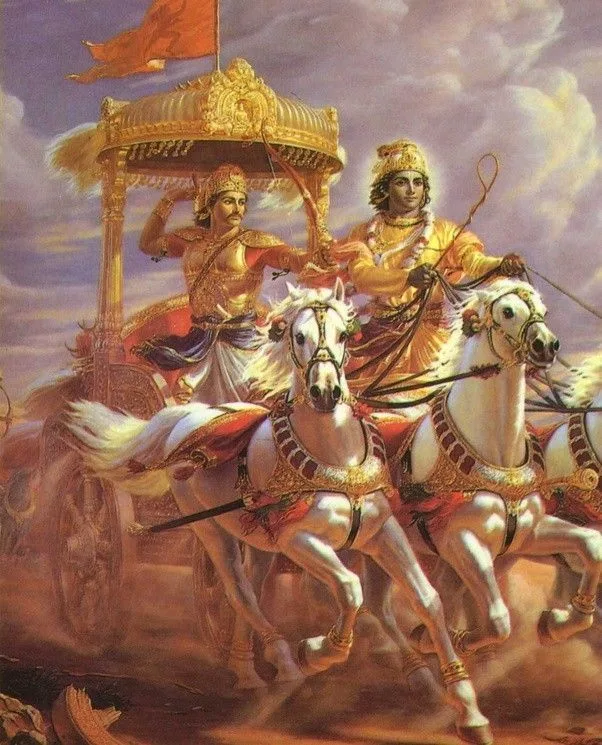
वेदों को चार भागों में बाँट देने के बाद भी अधिकांश लोग उन तक नहीं पहुँच सकते थे। विधिवत वैदिक अध्ययन के लिए दीक्षा, कई वर्षों का प्रशिक्षण और समाज में एक विशेष स्थान आवश्यक था। उस समय के नियमों के अनुसार समाज के कई पूरे वर्गों को यह स्थान मिल ही नहीं सकता था। श्रीमद्भागवतम् बताता है कि व्यासदेव ने इस कमी को देखा और इसका सीधा उपाय किया। ग्रन्थ उनके विचार का वर्णन इस प्रकार करता है: "करुणावश उस महर्षि ने यह उचित समझा कि इससे मनुष्य जीवन के परम लक्ष्य को प्राप्त कर सकेंगे। इस प्रकार उन्होंने स्त्रियों, श्रमिकों तथा द्विजबन्धुओं के लिए महाभारत नामक महान ऐतिहासिक आख्यान की रचना की" (श्रीमद्भागवतम् 1.4.25)। इतिहास, अर्थात् कथा के रूप में सुनाया गया इतिहास, सुनने के लिए किसी दीक्षा की आवश्यकता नहीं थी। इसमें वेदों के वही निष्कर्ष एक वास्तविक राजवंश के युद्ध की कथा के भीतर रखे गए थे। इस प्रकार यह उन लोगों तक भी पहुँच सकता था, जिनके लिए वेदों के द्वार बन्द थे।
पाँचवाँ वेद और अठारह पुराण #
ठीक इसी कारण परम्परा महाभारत को पाँचवाँ वेद कहती है। यह चारों वेदों में जोड़ी गई कोई अतिरिक्त पुस्तक नहीं है। यह उनका अर्थ उन लोगों तक पहुँचाता है, जिन तक मूल चारों वेद नहीं पहुँच सकते थे। परम्परा अठारह प्रमुख पुराणों के संकलन का श्रेय भी व्यासदेव को देती है, जैसे विष्णु पुराण, भागवत पुराण, पद्म पुराण, वायु पुराण आदि। प्रत्येक पुराण कथाओं का एक विशाल ग्रन्थ है। उसमें किसी विशेष देवता या विषय को केन्द्र में रखकर ब्रह्माण्ड की रचना, वंशों का विवरण और भक्ति की शिक्षा एक साथ पिरोई गई है। पुराण आज के अर्थ वाला, लिखित अभिलेखों पर आधारित इतिहास नहीं हैं। परम्परा की अपनी समझ के अनुसार ये ऐसा साहित्य हैं, जो वैदिक निष्कर्षों को कथा के रूप में लोगों तक पहुँचाने के लिए रचा गया। इनकी उपयोगिता इसी में है कि कथा को कोई भी सुन और याद रख सकता है। वह व्यक्ति भी, जो किसी वैदिक मन्त्र के व्याकरण का गहरा अध्ययन कभी नहीं कर पाता।
गणेश की लेखनी की कथा #
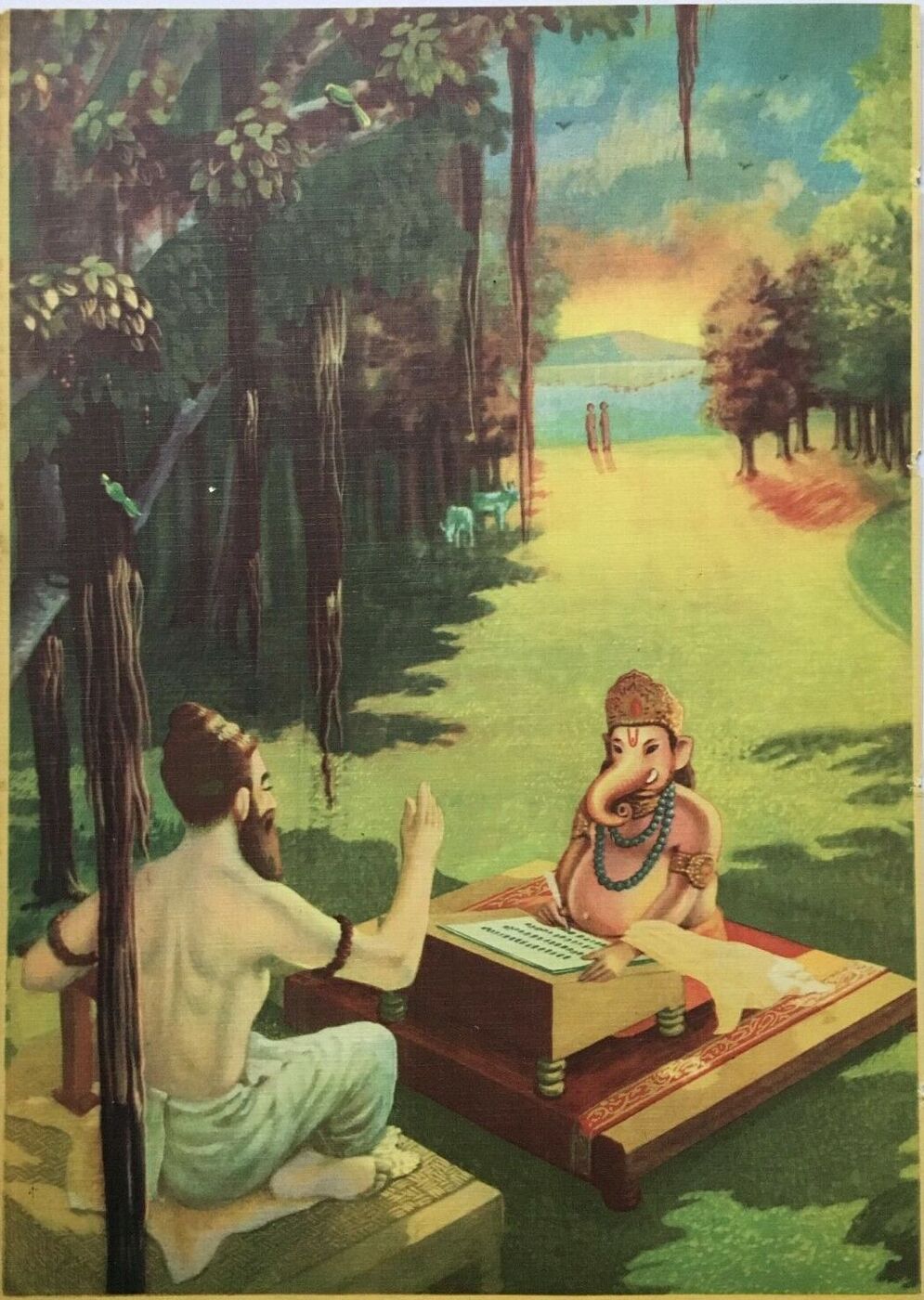
एक बहुत प्रिय कथा है, जो प्रमाणित इतिहास से अधिक भक्ति की किंवदन्ती है। इसके अनुसार जब व्यासदेव महाभारत को लिखवाने के लिए तैयार हुए, तो उन्होंने भगवान गणेश से अपना लेखक बनने की प्रार्थना की। गणेश एक शर्त पर मान गए: व्यासदेव बिना रुके लगातार बोलते रहेंगे, नहीं तो वे उसी क्षण लिखना बन्द कर देंगे। व्यासदेव ने यह शर्त मान ली, लेकिन अपनी ओर से भी एक शर्त रखी: गणेश हर श्लोक को लिखने से पहले उसे पूरी तरह समझेंगे। इसलिए जब भी ऋषि बहुत गहरे दार्शनिक अर्थ वाला कोई श्लोक बोलते, तो गणेश को भी उसे समझने में कुछ क्षण लगते। इससे व्यासदेव को अगली पंक्तियाँ रचने के लिए थोड़ा समय मिल जाता। इस कथा को यहाँ एक श्रद्धेय परम्परा के रूप में बताया गया है, प्रमाणित इतिहास के रूप में नहीं। फिर भी यह ग्रन्थ के बारे में एक सच्ची बात दिखाती है। महाभारत में सचमुच ऐसे अंश हैं, जिनमें थोड़े शब्दों में बहुत गहरा दर्शन भरा है। ये अंश सरल कथा के लम्बे भागों के बीच आते हैं। इनमें भगवद्गीता सबसे प्रमुख है।
अपनी ही कथा के भीतर व्यास #
एक लेखक के लिए यह असामान्य बात है कि व्यासदेव अपने ही रचे महाकाव्य में एक पात्र भी हैं, और वह भी कोई छोटा पात्र नहीं। जब उत्तराधिकारी न होने के कारण कुरुवंश समाप्त होने वाला था, तब उनकी माता सत्यवती ने उनसे अनुरोध किया कि वे अपने दिवंगत सौतेले भाई विचित्रवीर्य की ओर से सन्तान उत्पन्न करें। यह प्राचीन नियोग-प्रथा के अनुसार किया गया। इससे धृतराष्ट्र का जन्म हुआ, जो जन्म से अन्धे थे; पाण्डु का, जिनका रंग जन्म से ही पीला था; और विदुर का, जो एक दासी से उत्पन्न हुए। महाकाव्य में विदुर की बुद्धिमत्ता और वैराग्य की बहुत प्रशंसा की गई है। पाण्डु के जीवनकाल में ही गान्धारी कौरवों के कठिन गर्भ के कारण बहुत पीड़ा में थीं। तब व्यासदेव ने ही उनका मार्गदर्शन किया। बाद में पाण्डु की मृत्यु के बाद उन्होंने विधवा कुन्ती और उनके छोटे पुत्रों, पाण्डवों, को सान्त्वना दी। उन्हीं ऋषि ने अपने शिष्य संजय को एक प्रकार की दिव्य दृष्टि भी दी। इस दृष्टि से संजय हस्तिनापुर के राजमहल में रहते हुए ही पूरा कुरुक्षेत्र युद्ध देख सके और उसे क्षण-क्षण अन्धे राजा धृतराष्ट्र को सुना सके। इसी वर्णन के माध्यम से भगवद्गीता हम तक पहुँची है। गीता के अन्त में संजय स्वयं यही कहते हैं: "व्यास की कृपा से, मैंने योगेश्वर कृष्ण के मुख से, जो स्वयं अर्जुन को सम्बोधित कर रहे थे, इन अत्यन्त गोपनीय वार्ताओं को प्रत्यक्ष रूप से सुना है" (भगवद्गीता 18.75)। श्रील प्रभुपाद अपने तात्पर्य में स्पष्ट रूप से पुष्टि करते हैं कि "व्यास संजय के गुरु थे"।
फिर भी पर्याप्त नहीं #
जब यह सब पूरा हुआ, तब तक व्यासदेव इतना साहित्य रच चुके थे, जितना किसी भी परम्परा में बहुत कम लोगों ने रचा है: चार व्यवस्थित वेद, एक विशाल इतिहास और अठारह पुराण। फिर भी, श्रीमद्भागवतम् बताता है कि उनके मन में कुछ अशान्ति बनी रही। यह आश्चर्यजनक असन्तोष और अन्त में उससे जो उत्पन्न हुआ, उसका वर्णन व्यासदेव का विषाद में है। वेदान्त का उनका दार्शनिक सार, वेदान्त-सूत्र, अलग से वेदान्त-सूत्र की रचना में बताया गया है।
