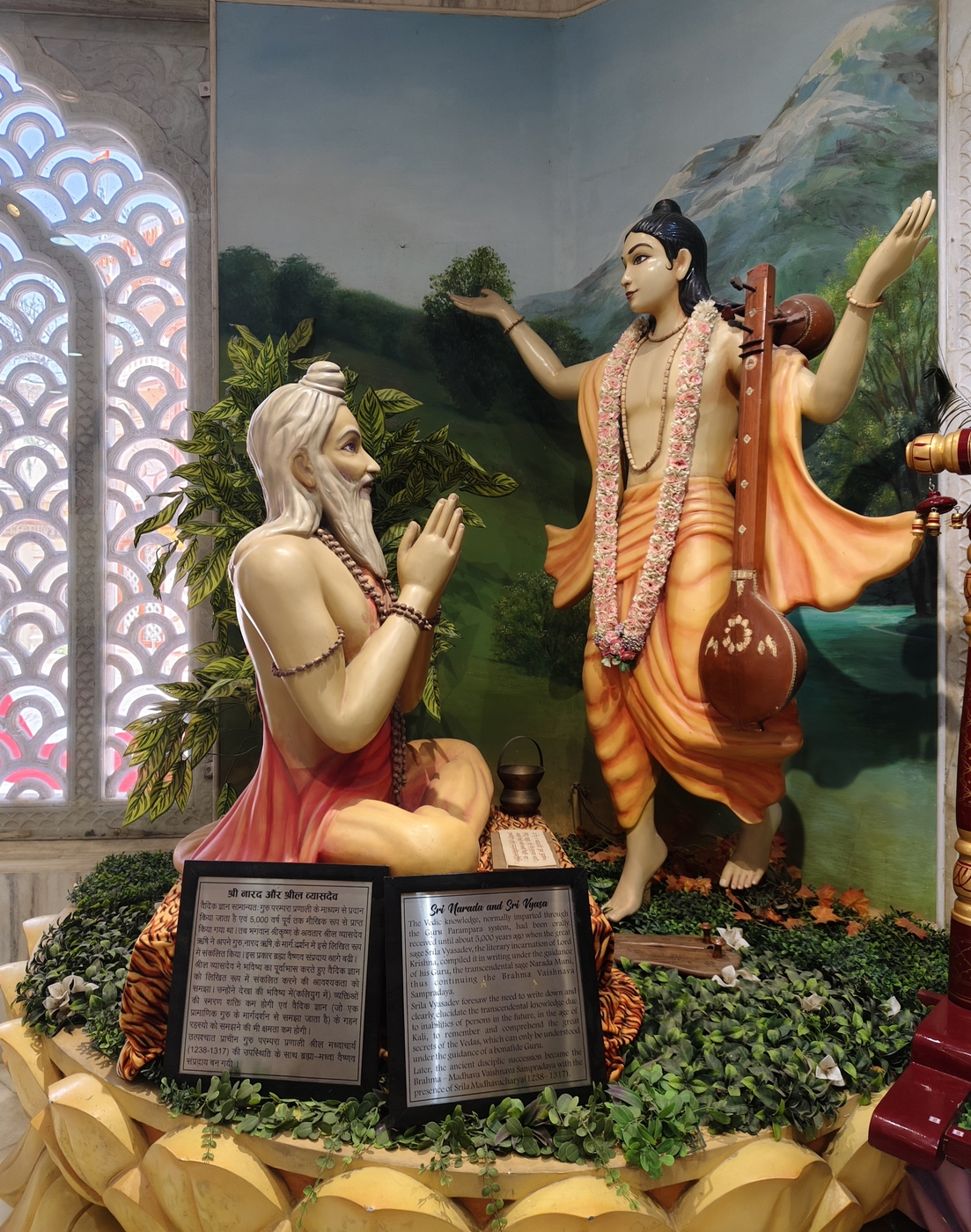
श्रीमद्भागवतम् अपनी उत्पत्ति की कथा एक प्रश्न से आरम्भ करता है। नैमिषारण्य में एकत्रित ऋषियों ने सूत गोस्वामी से सीधे पूछा: कृष्ण-द्वैपायन व्यास, "महर्षि", पहले ही वेदों, महाभारत और पुराणों की रचना कर चुके थे। तब उन्हें श्रीमद्भागवतम् के संकलन की प्रेरणा कहाँ से मिली? सूत जो उत्तर देते हैं, उसमें किसी पूरे हुए जीवन-कार्य के अन्त में गर्व से पाई गई अन्तिम सफलता का वर्णन नहीं है। उसमें एक संकट का वर्णन है।
नदी तट पर एक प्रातःकाल #
एक प्रातःकाल व्यासदेव ने शम्याप्रास में अपने आश्रम पर सरस्वती के जल में स्नान किया। इसके बाद वे अपने प्रतिदिन के नियम के अनुसार मन को एकाग्र करने के लिए अकेले बैठ गए। श्रीमद्भागवतम् कहता है कि अपनी अन्तर्दृष्टि से वे संसार पर छा रहे नए युग के वास्तविक दोष देखने लगे। फिर उन्होंने उसी प्रकार अपने पूरे हुए जीवन-कार्य को भी देखा। जो उन्होंने पाया, उससे वे व्यथित हो गए। ग्रन्थ के अपने शब्दों में: "इस प्रकार अज्ञानी जनसमूह के प्रति अत्यन्त दयालु महर्षि व्यासदेव ने वेदों का सम्पादन इस प्रकार किया कि उन्हें कम बुद्धि वाले मनुष्य भी आत्मसात् कर सकें... हे द्विजोत्तम ब्राह्मणो, तथापि उनका मन सन्तुष्ट नहीं था, यद्यपि उन्होंने सम्पूर्ण जनकल्याण हेतु कार्य करने में स्वयं को संलग्न किया था" (श्रीमद्भागवतम् 1.4.24-26)। उन्होंने अपने ही कथन के अनुसार "कठोर अनुशासनात्मक व्रतों के अन्तर्गत, निष्कपट भाव से वेदों, गुरु तथा यज्ञ-वेदी की पूजा की थी"। महाभारत के माध्यम से उन्होंने उन लोगों को भी धर्म का मार्ग दिखाया था, जिन तक स्वयं वेद नहीं पहुँच सकते थे। फिर भी वे कहते हैं: "मैं स्वयं को अपूर्ण अनुभव कर रहा हूँ, यद्यपि वेदों द्वारा अपेक्षित समस्त सामग्री से मैं पूर्णतः सुसज्जित हूँ। सम्भवतः इसका कारण यह है कि मैंने भगवान की उस भक्ति का विशेष रूप से निरूपण नहीं किया, जो सिद्ध पुरुषों तथा अच्युत भगवान दोनों को ही प्रिय है" (श्रीमद्भागवतम् 1.4.30-31)। वे बड़ी ईमानदारी से पहचान सके कि उनके मन को क्या बात खटक रही है। लेकिन अभी वे इसका उपाय नहीं जान पाए थे।
नारद मुनि का आगमन #
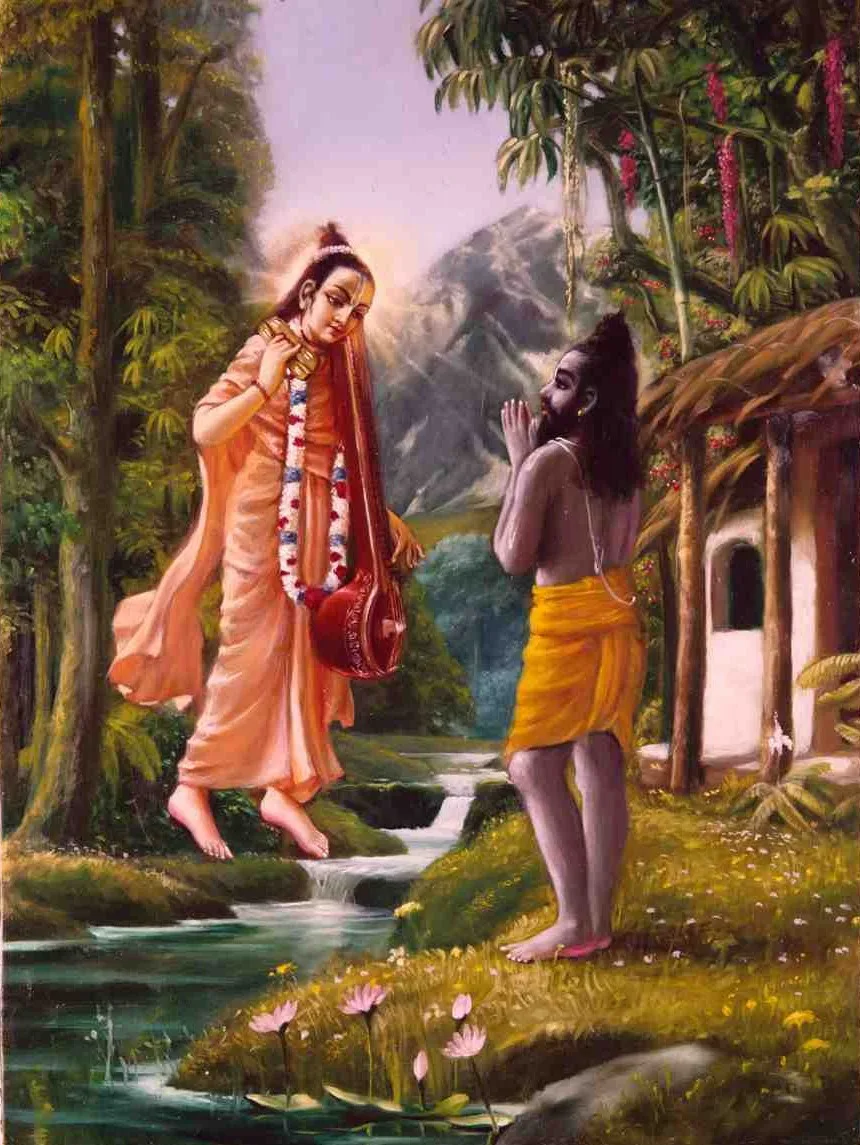
श्रीमद्भागवतम् के अनुसार ठीक इसी समय नारद मुनि सरस्वती के तट पर व्यासदेव की कुटिया में पहुँचे। गौड़ीय वैष्णव परम्परा नारद को व्यासदेव का अपना गुरु मानती है। ग्रन्थ में उनके स्वागत का जो वर्णन है, उससे भी यही दिखाई देता है: "श्री नारद के शुभ आगमन पर, श्री व्यासदेव आदरपूर्वक उठ खड़े हुए और उनकी पूजा की, उन्हें उतना ही सम्मान देते हुए जितना सृष्टिकर्ता ब्रह्माजी को दिया जाता है।" नारद कौन हैं, इसका पूरा वर्णन उनके अपने पृष्ठ पर है। वहाँ उनके अपने जीवन के उस पहले के मोड़ का भी वर्णन है, जिसने उस उपदेश को आकार दिया, जो वे अब देने वाले थे। यहाँ हम देखते हैं कि इसके बाद क्या हुआ।
नारद द्वारा समस्या का निदान #
नारद ने स्वयं व्यासदेव की उपलब्धियाँ गिनाईं: महाभारत, निराकार ब्रह्म की व्याख्या, और वैदिक ज्ञान का पूरा ढाँचा, जिसे उन्होंने व्यवस्थित और सुरक्षित किया था। फिर नारद ने वह प्रश्न पूछा, जो इस पूरे प्रसंग के केन्द्र में है: इतना सब करने पर भी व्यासदेव अभी तक इतने दुखी क्यों थे? व्यासदेव ने सीधा उत्तर दिया। नारद ने जो कुछ कहा था, वह सब सत्य था। फिर भी उनके मन को शान्ति नहीं थी, और वे नहीं जानते थे कि ऐसा क्यों है। तब नारद ने समस्या का कारण बताया। गौड़ीय वैष्णव-धर्म तब से आज तक उनके इन शब्दों को दोहराता आया है: "तुमने वस्तुतः भगवान की उदात्त एवं निष्कलंक महिमा का प्रचार नहीं किया है। वह दर्शन, जो भगवान की दिव्य इन्द्रियों को तृप्त नहीं करता, निरर्थक माना जाता है" (श्रीमद्भागवतम् 1.5.8)। नारद ने समझाया कि व्यासदेव की रचनाओं में धर्म, अर्थ, काम और मोक्ष, अर्थात् धार्मिक कर्तव्य, आर्थिक विकास, इन्द्रिय-तृप्ति और मुक्ति, का पूरा वर्णन हुआ था। ये मानव जीवन के चार मान्य लक्ष्य हैं। लेकिन इनमें से किसी भी रचना ने, चाहे वह कितने ही विस्तार और कुशलता से लिखी गई हो, भगवान की अपनी लीलाओं का वर्णन स्वयं उन लीलाओं के लिए नहीं किया था, अर्थात् किसी दूसरे लक्ष्य के साधन के रूप में नहीं, बल्कि स्वयं लक्ष्य के रूप में।
नारद ने उन्हें क्या करने को कहा #
नारद ने केवल यह नहीं बताया कि क्या कमी थी। उन्होंने व्यासदेव को नाम लेकर एक विशेष आदेश भी दिया: "हे व्यासदेव, तुम्हारी दृष्टि पूर्णतः निर्दोष है। तुम्हारा सुयश निष्कलंक है। तुम व्रत में दृढ़ तथा सत्यनिष्ठा में स्थित हो। और इस प्रकार तुम सामान्य जनों को समस्त भौतिक बन्धन से मुक्त करने हेतु समाधि में भगवान की लीलाओं का चिन्तन कर सकते हो" (श्रीमद्भागवतम् 1.5.13)। यह कोई नया दार्शनिक ग्रन्थ नहीं होना था। न ही यह मानव राजाओं और युद्धों पर आधारित कोई और इतिहास होना था। यह भगवान के अपने दिव्य कार्यों का सीधा, ध्यानमय वर्णन होना था, जो तर्क से नहीं, बल्कि समाधि में रचा जाए। इस आदेश से वास्तव में क्या उत्पन्न हुआ, और व्यासदेव ने इसका पालन कैसे किया, इसका वर्णन आगे नारद का उपदेश और श्रीमद्भागवतम् की रचना में किया गया है।
