Srila Kamalakara Pippalai
One of Nityananda Prabhu's Twelve Gopalas, Founder of Deity Worship at Mahesha
Also known as Kamalakar Pipilai, Kamalakara Pippalayi, Mahabala (Vraja identity)
“Kamalakara Pippalai is said to have been the third gopala. His behavior and love of Godhead were uncommon, and thus he is celebrated all over the world.”
Sri Chaitanya-charitamrita, Adi-lila 11.24, describing Kamalakara Pippalai among the branches of Sri Nityananda Prabhu
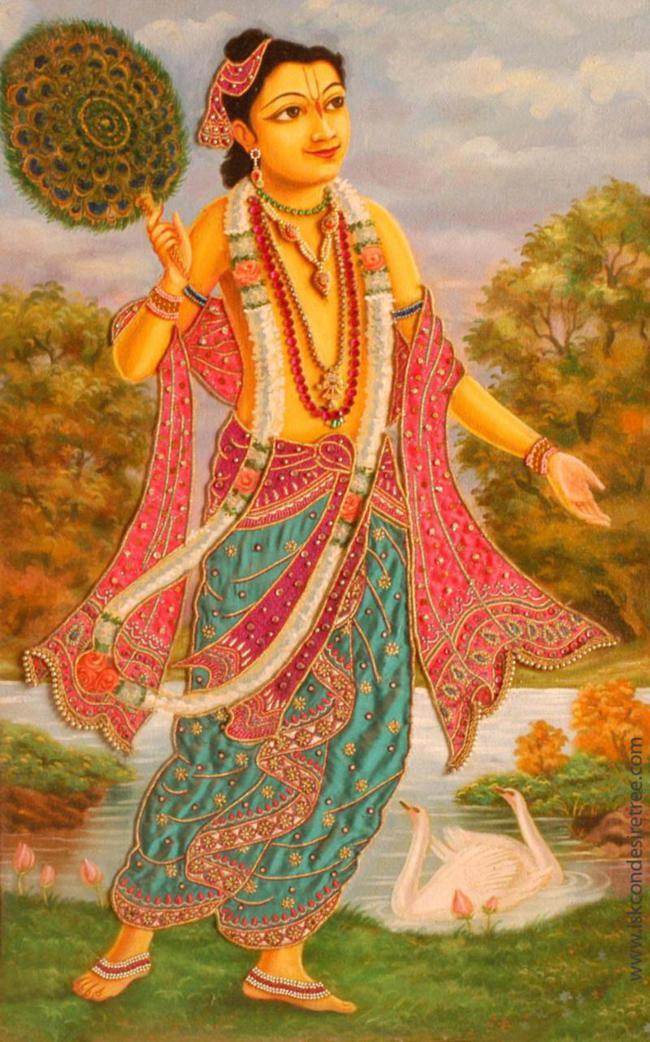
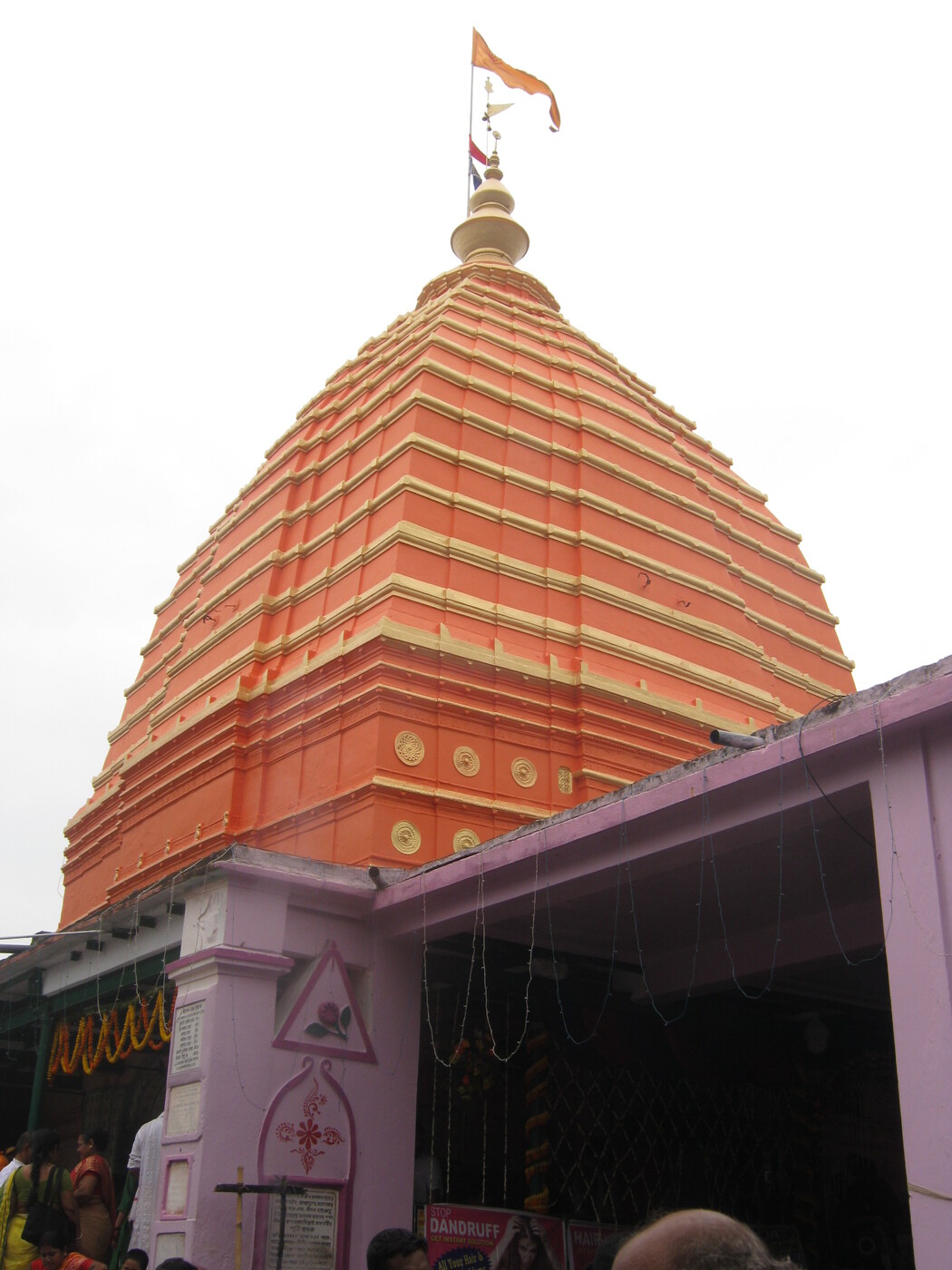
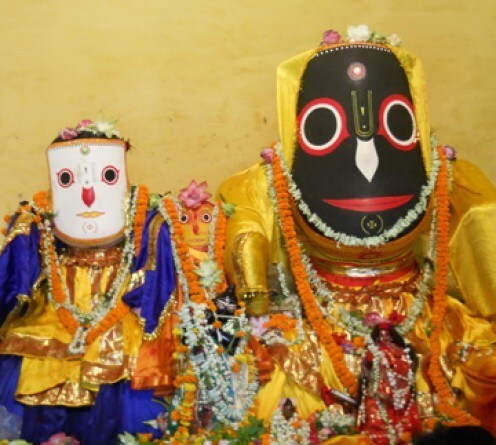
Srila Kamalakara Pippalai was one of Sri Nityananda Prabhu's own close associates in sixteenth-century Bengal. He is remembered as one of the twelve gopalas who formed Nityananda's innermost circle of preachers. Sri Chaitanya-charitamrita names him directly and says of him: "His behavior and love of Godhead were uncommon, and thus he is celebrated all over the world." He earned that reputation through one lifelong act of service, not through writing or preaching. He took over the worship of the Jagannatha, Baladeva and Subhadra deities at Mahesha, a village on the Ganges near present-day Serampore in West Bengal. He did this on what he understood to be the Lord's own instruction, given to him in a dream. The temple he built up there still stands. Its Rath Yatra, among the oldest in Bengal, still draws hundreds of thousands of pilgrims every year.
| Detail | Description |
|---|---|
| Traditional birth year | 1492 (Gaudiya Vaishnava Abhidhana); Sri Chaitanya-charitamrita itself gives no date |
| Birthplace | Khalijhuli village, Sundarban region of Bengal |
| Family | Rarha Brahmin family; younger brother Shrinidhipati (Nidhipati) Pippalai |
| Identity | The cowherd boy Mahabala of Vraja, counted the third of the twelve gopalas (Gaura-ganoddesha-dipika 128; Chaitanya-charitamrita Adi 11.24 and purport) |
| Chief service | Took over worship of the Jagannatha, Baladeva and Subhadra deities at Mahesha, Serampore |
| Title | Adhikari, later adopted as the family's surname |
| Disappearance | Chaitra Shukla Trayodashi, 1563, at Vrindavana (family tradition; not independently confirmed) |
The Third Gopala #
Chaitanya-charitamrita's author, Krishnadasa Kaviraja Goswami, groups Kamalakara Pippalai among the "great branches" of the tree of Nityananda Prabhu. These devotees were so close to Nityananda that later Vaishnava literature counts them almost as extensions of him. The verse itself is short: "Kamalakara Pippalai is said to have been the third gopala. His behavior and love of Godhead were uncommon, and thus he is celebrated all over the world." Srila Bhaktisiddhanta Sarasvati Thakura's Anubhashya, quoted at length in Srila Prabhupada's own purport on this verse, adds more to that short line. Bhaktisiddhanta Sarasvati cites the Gaura-ganoddesha-dipika, a work that matches Chaitanya Mahaprabhu's Bengali associates with who they are in Krishna's eternal pastimes in Vraja. On that basis he identifies Kamalakara Pippalai as the third of the twelve gopalas, and says that his earlier name, in that Vraja identity, was Mahabala. A separate later verse in the Antya-lila lists a "Kamalakara" among a small group of devotees: Ramadasa, Sundarananda, Gadadhara Dasa, Murari, Kamalakara, Sadashiva and Purandara. Several of them, Sundarananda Thakura among them, are themselves counted as Nityananda's own associates. The verse does not repeat his Pippalai surname. But for this Kamalakara, Srila Prabhupada's purport to Antya-lila 6.63, following the Anubhashya, directs the reader to Adi-lila 11.24, the verse on Kamalakara Pippalai. The fuller story of his birth in Khalijhuli, his family, and this double identity as gopala and Bengali brahmana is told on Mahabala and the Third Gopala.
The verse of the Gaura-ganoddesha-dipika that Bhaktisiddhanta Sarasvati Thakura cites is verse 128. Its first line is about Gauridasa Pandit; its second line is about Kamalakara Pippalai:
subalo yaḥ priya-śreṣṭhaḥ sa gaurīdāsa-paṇḍitaḥ
kamalākara-pippalāi-nāmnāsīd yo mahābalaḥ
"Lord Krsna's dearest friend Subala appeared in Lord Caitanya's pastimes as Gauridasa Pandita. The cowherd boy Mahabala appeared in Lord Caitanya's pastimes as Kamalakara Pippalai." (Gaura-ganoddesha-dipika 128)
Called by a Dream to Mahesha #
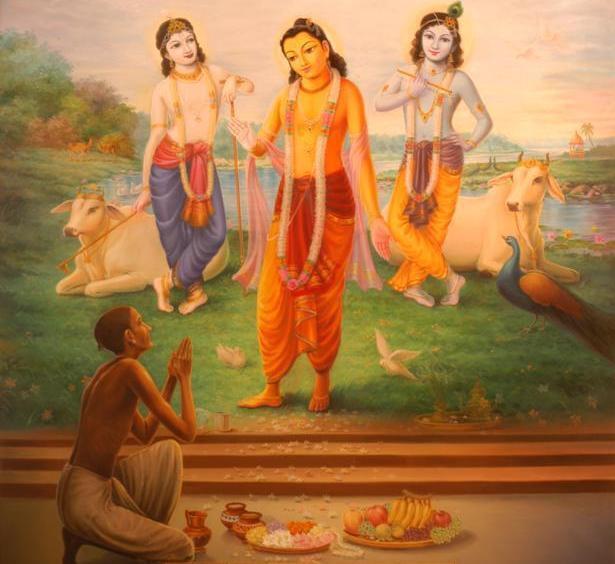
Kamalakara Pippalai was born into a landed Rarha Brahmin family in Khalijhuli, a village in the Sundarban region of southern Bengal. He had a younger brother, Shrinidhipati Pippalai. At some point in his youth he left that home and family behind, drawn toward a wandering, devotional life. His sources describe this choice as the usual way a Vaishnava renounces the world, not as one sudden, dramatic break. The turning point in his life came at Mahesha, a village on the Ganges. Years earlier, an elderly renunciate named Dhruvananda had found three Deities floating in the river there: Jagannatha, Balarama and Subhadra. He had been worshiping them alone ever since. As Dhruvananda neared death, he had no one to whom he could hand over that worship. He is said to have received a dream telling him that a great Vaishnava named Kamalakara Pippalai would arrive the next morning to take charge of the Deities. Kamalakara had received a matching dream of his own, and he arrived as expected. Dhruvananda handed him the service of Jagannatha on the spot. From that day Kamalakara Pippalai's family carried the title Adhikari, "one empowered to worship the Lord," a name his descendants still hold. The fuller story, including the model village Kamalakara built up around the temple where there had once been jungle, is told on Called to Serve at Mahesh.
Among the Vaishnavas #
Kamalakara Pippalai's life was not limited to Mahesha alone. Vaishnava histories place him at several of the major gatherings of Sri Chaitanya Mahaprabhu's followers. One was the Danda-mahotsava at Panihati, the festival at which Raghunatha Dasa Goswami was ordered by Nityananda Prabhu to distribute chipped rice and yogurt to the assembled devotees. In the generation after the Lord's own disappearance, they also place him at the great festival organized at Kheturi by Narottama Dasa Thakura, and at a gathering at Katwa honoring a disappearance day. He is also named, in the Bhakti-ratnakara, among devotees connected to Jahnava Mata, Nityananda Prabhu's wife. By this period she had become a figure who brought Vaishnavas across Bengal together. Kamalakara Pippalai's own family also became directly connected to Nityananda's household. His daughter Vidyunmala married into a Brahmin family. Sources differ on the exact chain of family links, but they agree that a granddaughter of this line was given in marriage to Viracandra Prabhu, Nityananda Prabhu's own son. These festivals, the family's marriage into Nityananda's own line, and the generations of Adhikaris who followed are told more fully on Festivals, Family, and the Adhikari Legacy.
Descendants, and a Return to Vrindavana #
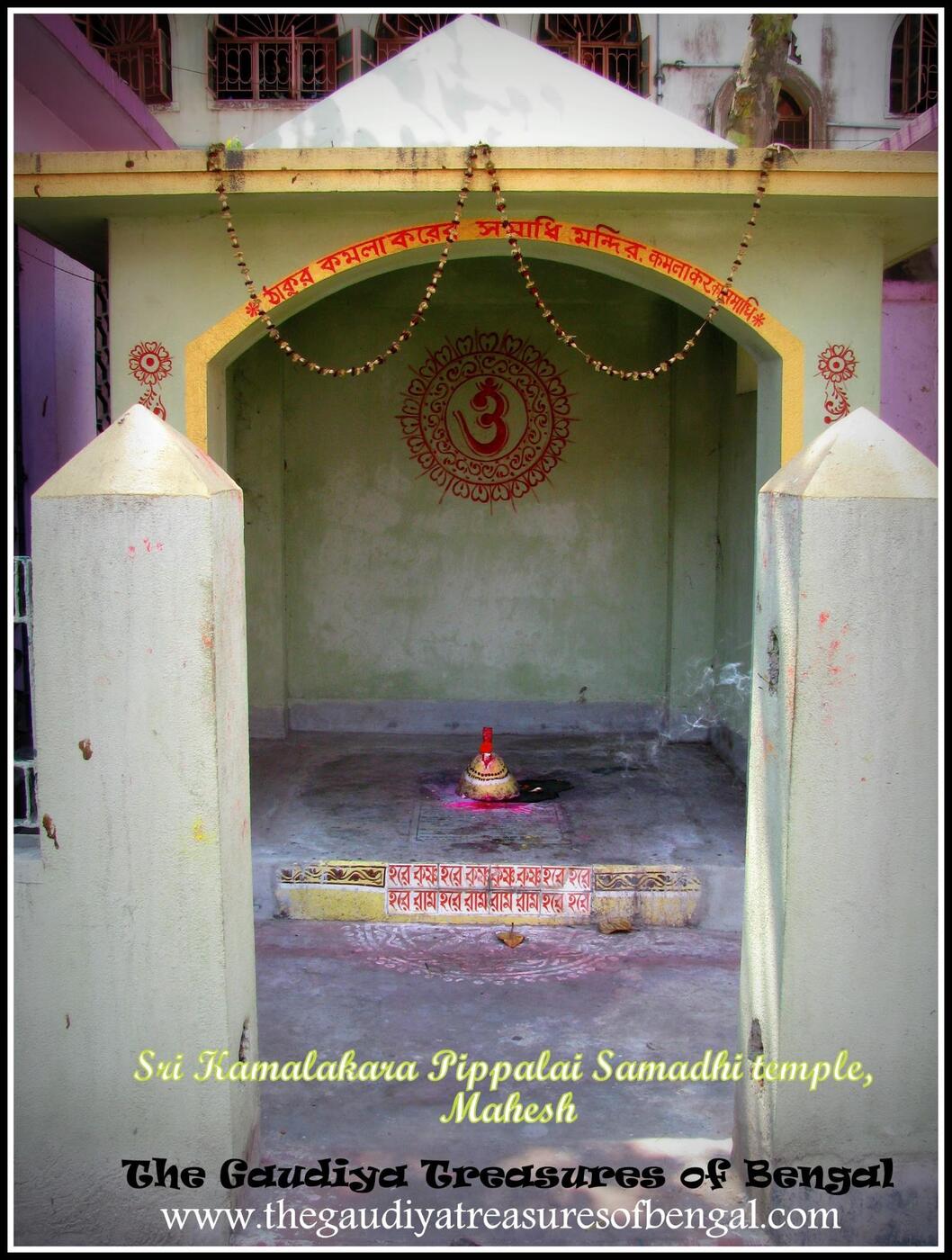
Kamalakara Pippalai's descendants at Mahesha are recorded across several generations: a son, Chaturbhuja; grandsons Narayana and Jagannatha; and, several generations later, a great-great-grandson, Rajivalochana. In Rajivalochana's time the Nawab of Dacca donated over a thousand bighas of land to support the temple's worship. This land is still known today as Jagannathpura. According to the family's own tradition, Kamalakara Pippalai himself left Mahesha after arranging his daughter's marriage, spent his final years at Vrindavana, and disappeared there on Chaitra Shukla Trayodashi in 1563. No independent source confirms that date. It is best understood as family tradition, not as established fact. But one thing is not in doubt. The service he took up from a dying renunciate, trusting in a dream, has continued through his descendants for more than four centuries. The Adhikari family still conducts worship at Mahesha today, and the temple's Rath Yatra remains one of the best-attended festivals in Bengal.
At a Glance
- Counted as the third of Nityananda Prabhu's twelve gopalas, and identified with the cowherd boy Mahabala from Krishna's Vraja pastimes.
- Took over worship of Jagannatha, Baladeva and Subhadra at Mahesha from the aging Dhruvananda, after both men received matching dreams.
- Adopted the title Adhikari, still carried by his descendants, who continue to serve the Mahesha Deities.
- Present at Panihati's Danda-mahotsava, the Kheturi festival, and a gathering at Katwa; his family later married into Nityananda Prabhu's own household.
- Family tradition holds that he spent his final years at Vrindavana, disappearing there in 1563.
Scriptural evidence
Quoted in the text above:
- Sri Chaitanya-charitamrita, Adi-lila 11.24, purport
- Sri Chaitanya-charitamrita, Antya-lila 6.61
- Kamalakara Pippalai - Biography | Gaudiya History
- Dwadash Gopal - Twelve Cowherd Boys, Associates of Lord Nityananda | The Gaudiya Treasures of Bengal
- Sri Jagannatha Temple, Mahesh, Serampore | The Gaudiya Treasures of Bengal
Frequently asked
When was Srila Kamalakara Pippalai born?
Srila Kamalakara Pippalai appeared c. 1492 (Gaudiya Vaishnava Abhidhana; not stated in Sri Chaitanya-charitamrita itself) in Khalijhuli village, Sundarban region, Bengal.
Who was the guru of Srila Kamalakara Pippalai?
The spiritual master of Srila Kamalakara Pippalai was Sri Nityananda Prabhu.
When and where did Srila Kamalakara Pippalai disappear?
Srila Kamalakara Pippalai disappeared Chaitra Shukla Trayodashi, 1563 (family tradition; not independently confirmed) at Vrindavana (per family tradition).
What are the main pastimes of Srila Kamalakara Pippalai?
The pastimes covered here include: Mahabala and the Third Gopala, Called to Serve at Mahesh, Festivals, Family, and the Adhikari Legacy.