Srila Raghunandana Thakura
The Child Who Fed Sri Gopinatha
The complete life, on one page: The main biography and every pastime page, in order, in one place
Introduction
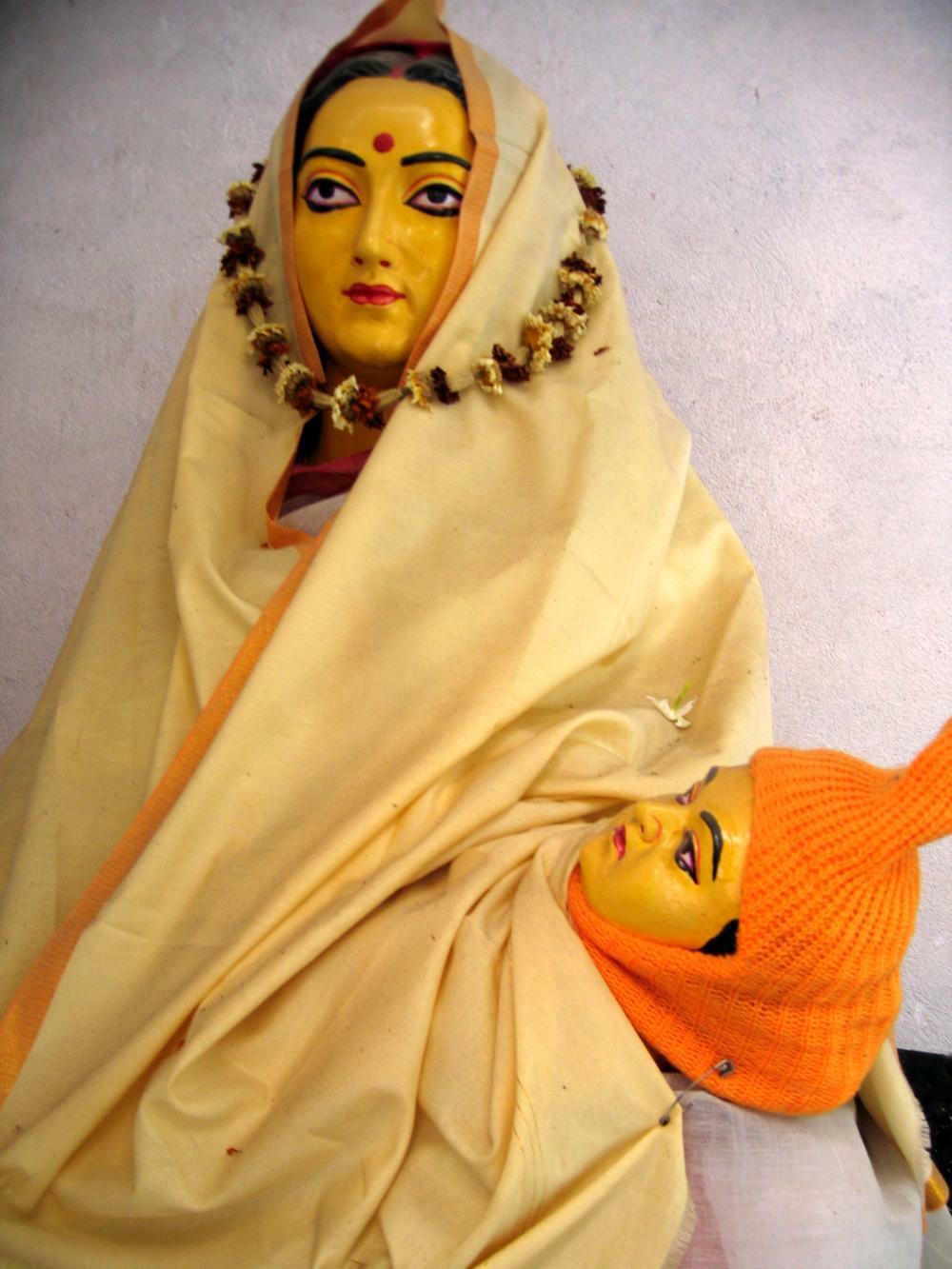
Srila Raghunandana Thakura belonged to a devotional family at Srikhanda, a village near Katwa in Bengal. In Sri Chaitanya-charitamrita, Krishnadasa Kaviraja Goswami names the devotees of Srikhanda among the great branches of Sri Chaitanya Mahaprabhu's own tree of mercy. His father was Mukunda Dasa, a royal physician whose deep devotion was kept hidden. His uncle was Narahari Sarakara Thakura, the guru of Lochana Dasa Thakura. Raghunandana himself is remembered above all for one simple thing. As a small child, he fed the family Deity of Gopinatha with such open-hearted insistence that the Lord ate the offering before his eyes. His devotion was so pure that Mahaprabhu declared the son to be, in truth, the father.
| Detail | Description |
|---|---|
| Birth | c. 1510 AD (Shaka 1432), Srikhanda, Bengal (traditional dating) |
| Father | Mukunda Dasa, royal physician, elder brother of Narahari Sarakara Thakura |
| Uncle | Narahari Sarakara Thakura, guru of Lochana Dasa Thakura |
| Named in scripture | Sri Chaitanya-charitamrita, Adi 10.78-79 and Madhya 11.92, among the "branches" of Chaitanya Mahaprabhu's tree |
| Chief devotional service | Personal worship of the family Deities, Sri Gopinatha and Gaura-Gopala, at Srikhanda |
| Identity | Pradyumna of the chatur-vyuha, a priya-narma-sakha who helped the pastimes of Radha-Madhava in Vraja (Gaura-ganoddesha-dipika 70) |
| Son and successor in Deity seva | Kanai Thakura |
At a Glance
- Born into a Srikhanda family already famous in Sri Chaitanya-charitamrita: his father Mukunda Dasa, his uncle Narahari Sarakara Thakura, and his own household Deity worship are all named directly by Krishnadasa Kaviraja Goswami.
- As a small child, fed the Gopinatha Deity with such simple and complete devotion that his own father, Mukunda Dasa, came to call him his father. Sri Chaitanya Mahaprabhu confirmed that whoever awakens devotion to Krishna in another is that person's true guru.
- Traveled with the Srikhanda party to Jagannatha Puri for chaturmasya nearly every year, danced at the Ratha-yatra festival beside his uncle Narahari, and attended the Kheturi festival organized by Narottama Dasa Thakura.
- Before his own disappearance, comforted Shrinivasa Acharya with a promise that devotion would survive every difficult age.
- Left his Deity service to his son, Kanai Thakura, whose descendants still live at Srikhanda today.
Scriptural evidence for the introduction (2)
khandavasi mukunda-dasa, sri-raghunandana
narahari-dasa, ciranjiva, sulocana
ei saba maha-sakha - caitanya-krpa-dhama
prema-phala-phula kare yahan tahan dana
Word for word
khanda-vasi mukunda-dasa: Mukunda dasa, a resident of Srikhanda; sri-raghunandana: Raghunandana; narahari-dasa: Narahari dasa; ciranjiva: Ciranjiva; sulocana: Sulocana; ei saba: all of them; maha-sakha: great branches; caitanya-krpa-dhama: of Lord Sri Caitanya Mahaprabhu, the reservoir of mercy; prema: love of God; phala phula: fruit and flower; kare dana: does distribution.
Sri Khandavasi Mukunda and his son Raghunandana were the thirty-ninth branch of the tree, Narahari was the fortieth, Ciranjiva the forty-first and Sulocana the forty-second. They were all big branches of the all-merciful tree of Caitanya Mahaprabhu.
From the purport: Purport excerpt: "Sri Mukunda dasa was the son of Narayana dasa and eldest brother of Narahari Sarakara... his son was named Raghunandana dasa."
The primary scriptural basis for Raghunandana's parentage, correcting a later confusion with a different, unrelated Yadunandana Acharya.
व्यूहस्तृतीयः प्रद्युम्नः प्रियनर्मसखोऽभवत् ।
चक्रे लीलासहायं यो राधा माधवयोर्व्रजे ।
श्री चैतन्याद्वैत तनुः स एव रघुनन्दनः ॥
vyūhas tṛtīyaḥ pradyumnaḥ priya-narma-sakho'bhavat
cakre līlā-sahāyaṁ yo rādhā mādhavayor vraje
śrī caitanyādvaita tanuḥ sa eva raghu-nandanaḥ
Lord Pradyumna, the third member of the Catur-vyuha, had formerly appeared in Vrajabhumi as a close (priya-narma-sakha) friend of Sri Sri Radha-Madhava, where he helped in Their transcendental pastimes. That same Lord Pradyumna appeared in Lord Caitanya's pastimes as Sri Raghunananda Thakura, who was non-different from both Lord Caitanya and Lord Advaita.
Kavi Karnapura names Pradyumna, the third of the catur-vyuha, who served Radha-Madhava in Vraja as a priya-narma-sakha, as Raghunandana Thakura. Sanskrit: diacritic edition of the Gaura-ganoddesha-dipika; English translation as published at bvmlu.org.
Chapter 1
Birth and Family at Srikhanda
A Bengal village whose devotees Sri Chaitanya Mahaprabhu knew and named one by one.
Srikhanda lay a few miles west of Katwa on the Bengal side of the Ganges. By the time Raghunandana was born there, it was already one of the villages with the most devotees in the whole of Sri Chaitanya Mahaprabhu's Bengal. Srila Prabhupada's purport to Sri Chaitanya-charitamrita, Adi-lila 10.78-79, describes the family in a few clear lines. A man named Narayana Dasa had (at least) three sons. The eldest, Mukunda Dasa, became a royal physician. The second son was named Madhava Dasa. The third, Narahari Sarakara Thakura, later became famous as the guru of Lochana Dasa Thakura. Mukunda Dasa's own son was Raghunandana. Traditional Gaudiya sources place his birth around 1510 AD, in the Shaka year 1432, on Vasanta Panchami.
| Detail | Description |
|---|---|
| Grandfather | Narayana Dasa |
| Father | Mukunda Dasa, eldest son, royal physician |
| Uncle | Narahari Sarakara Thakura, youngest of the three brothers named in the purport |
| Traditional birth date | Vasanta Panchami, Shaka 1432 (c. 1510 AD) |
| Neighboring Srikhanda family | Chiranjiva, father of Ramachandra Kaviraja and Govinda Dasa Kaviraja |
Three Brothers, One Household of Devotion #
Sri Chaitanya-charitamrita says little about the ordinary details of this family. It speaks more about what could not be seen from outside. Mukunda Dasa held a position at the Muslim court, and Srila Prabhupada's purport says that he served as physician to the king. So, on the surface, Mukunda Dasa seemed to live entirely within worldly life. But Krishnadasa Kaviraja Goswami says of him directly that although he appeared to be an ordinary government physician, inside he was filled with a love for Krishna that even other Vaishnavas found hard to understand (Chaitanya-charitamrita, Madhya 15.120). Narahari, on the other hand, is remembered mainly for staying close to the association of devotees. Lochana Dasa Thakura later took shelter in Narahari's ashram, and there he received the order to write Sri Chaitanya-mangala. This story is told from Lochana's own side on Discipleship Under Narahari Sarkara Thakura. Raghunandana, the youngest of the three, was given yet a third role. His service was the Deity worship itself, told in full on The Boy Who Fed Sri Gopinatha.
A few doors away in the same village lived Chiranjiva. His two sons became well known in later Gaudiya Vaishnava history. The elder was Ramachandra Kaviraja, and the younger was the poet Govinda Dasa Kaviraja. Ramachandra Kaviraja's own biography names this same circle of Srikhanda householders (Mukunda, Narahari Sarakara, Raghunandana, and Chiranjiva himself) exactly as Sri Chaitanya-charitamrita lists them (Chaitanya-charitamrita, Madhya 11.92). Raghunandana grew up among physicians, poets, and singers who had each, in their own way, given their whole inner life to Krishna. So he learned not from one teaching alone, but from the example of a whole village.
A Name Sometimes Confused With Another #
These two names are easy to mix up, so one correction should be made clearly here. Some later, second-hand summaries describe Raghunandana's father as "Yadunandana Acharya" rather than Mukunda Dasa. But Sri Chaitanya-charitamrita itself settles the question. Raghunandana's father was Mukunda Dasa, and he is named as such at Adi-lila 10.78-79, Madhya-lila 10.90, 11.92, 13.46 and across the longer episode at Madhya-lila 15.108-135. The Yadunandana Acharya of Gaudiya history is someone else entirely. The biography of Raghunatha Dasa Goswami says that he was Raghunatha Dasa Goswami's family priest. He formally initiated Raghunatha Dasa Goswami, and later arranged his escape from home to go to Sri Chaitanya Mahaprabhu at Jagannatha Puri. Sri Chaitanya-charitamrita itself even lists a "Sri Yadunandana" as a separate branch of the tree of devotees, distinct from Raghunandana of Srikhanda (Chaitanya-charitamrita, Adi-lila 10.119). This confirms that these are two different Vaishnavas with similar-sounding names, not one person described in two ways. None of the available sources connects Raghunandana of Srikhanda to Yadunandana Acharya in any way.
What the Sources Do Not Say #
There is also a gap in the sources here. None of the available sources records a formal diksha-guru for Raghunandana Thakura. His uncle Narahari Sarakara Thakura is remembered as having taken deep personal interest in raising him. Raghunandana also grew up inside his own father's household worship of the family Deities. But neither Sri Chaitanya-charitamrita nor the Gaudiya History biographies used here clearly states who, if anyone, formally initiated him. Instead, the sources agree on something even more remarkable. Sri Chaitanya Mahaprabhu Himself recognized that this child's devotion was complete before any formal teaching could have shaped it, and He said so aloud. This is the subject of The Boy Who Fed Sri Gopinatha.
Scriptural evidence for this chapter (1)
bhagavatacarya, ciranjiva, sri-raghunandana
madhavacarya, kamalakanta, sri-yadunandana
Bhagavata Acarya, Ciranjiva, Sri Raghunandana, Madhavacarya, Kamalakanta and Sri Yadunandana were all among the branches of the Caitanya tree.
Shows Sri Yadunandana listed as a separate branch/person from Raghunandana of Srikhanda in the same chapter - direct textual evidence the two are not the same person and Raghunandana's father was not Yadunandana Acharya.
Chapter 2
The Boy Who Fed Sri Gopinatha
A child's simple, trusting devotion, and what Sri Chaitanya Mahaprabhu Himself said about it.
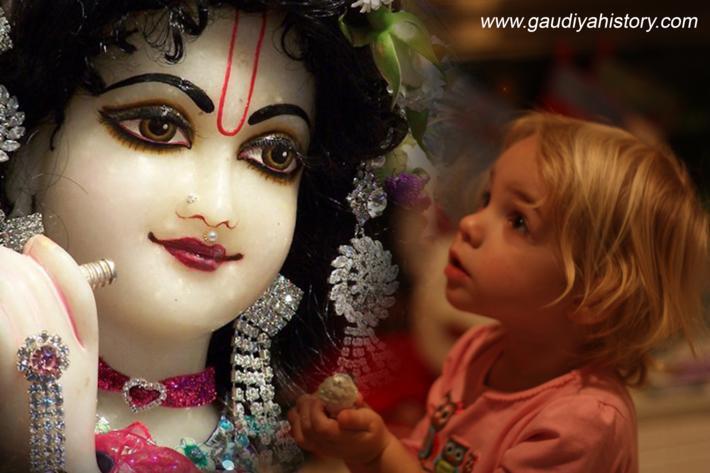
The household of Mukunda Dasa at Srikhanda worshiped a family Deity of Gopinatha. By tradition, this Deity had already been served across several generations. One day Mukunda was called away on his duties as a physician. He left the day's worship in the hands of his young son. He told him only to be sure the Deity was fed, the same way, he said, that Raghunandana's own mother fed the household every day. By most accounts Raghunandana was still very small, barely five years old. He prepared the offering with total sincerity, but he grew anxious when the food appeared untouched on the plate. In his simple way, he did the only thing he could think of. He told Gopinatha directly, through tears, to eat. According to the Bhakti-ratnakara, and to a song that the poet Uddhava Dasa composed to celebrate the pastime, Krishna could not resist such open and simple devotion, and He ate the entire offering before the boy's eyes.
| Detail | Description |
|---|---|
| Deity | Sri Gopinatha, worshiped by Mukunda Dasa's family for generations |
| Age of Raghunandana | Traditionally said to be about five years old |
| Primary source for the pastime | Bhakti-ratnakara 9.525, and Uddhava Dasa's devotional song |
| Confirmed in scripture | Sri Chaitanya-charitamrita, Madhya-lila 15.108-135 |
| Mahaprabhu's declaration | "One who awakens devotion to Krishna is certainly the spiritual master" (Madhya 15.117) |
Two Servings and a Father's Astonishment #
When Mukunda Dasa returned and asked for the Deity's prasadam, Raghunandana answered plainly that there was none left, because Gopinatha had eaten everything. Mukunda could not quite believe it. He asked his son to make the offering again on another day, and then slipped back into the house by a side door to watch unseen. This time Raghunandana offered a single laddu and again urged the Deity to eat. He watched Gopinatha take exactly half of it. Then Gopinatha caught sight of Mukunda hidden in the doorway, and He stopped there, with the other half still in His hand. Mukunda, overcome, swept his son into his arms in tears. Devotees who visit Srikhanda are still shown, to this day, the half-eaten laddu said to remain in Gopinatha's hand.
"Is He Your Father, or Are You His?" #
Sri Chaitanya-charitamrita itself directly confirms the heart of this pastime. It gives Mahaprabhu's own words to the three Srikhanda devotees at Jagannatha Puri. Mahaprabhu asked Mukunda Dasa directly: "Are you Raghunandana's father and he your son? Or is he your father and you his son? Tell me, so that My doubts may be settled" (Chaitanya-charitamrita, Madhya 15.113-114). Mukunda answered without hesitation: "Raghunandana is my father, and I am his son. All of us have attained devotion to Krishna because of him; therefore in my mind he is my father" (Madhya 15.115-116). Sri Chaitanya Mahaprabhu at once confirmed this judgment. He gave the principle that has been quoted ever since: "One who awakens devotion to Krishna is certainly the spiritual master" (Madhya 15.117). Krishnadasa Kaviraja Goswami adds that Mahaprabhu spoke of His devotees' glories so happily in that moment that, to anyone watching, He seemed to have five faces at once (Madhya 15.118).
Mahaprabhu was not finished. He went on to describe Mukunda's own hidden love of Godhead as being like the purest gold beneath the ordinary appearance of a royal physician (Madhya 15.119-120). The same passage illustrates this with an episode. Once, at court, Mukunda fainted merely from the sight of a peacock feather, because it brought Krishna's own form so fully to his mind (Madhya 15.121-127). Then, in the presence of all three, Mahaprabhu assigned each of them a distinct role. Mukunda was to earn wealth honestly while keeping religious principles, Narahari was to remain always in the company of devotees, and Raghunandana (already doing exactly this) was simply to continue serving Krishna in the temple, with no other interest at all (Madhya 15.130-131). "Furthermore, it is the duty of Raghunandana to always engage in Lord Krishna's service. He has no other intention but the service of Lord Krishna," Mahaprabhu said (Madhya 15.131). Then He added that these three services looked entirely different from outside, but with Krishna at the center, they were one and the same thing (Madhya 15.132, purport).
A Kadamba Tree That Never Stopped Flowering #
Sri Chaitanya-charitamrita closes this episode with one more detail about Raghunandana's own temple, almost as an aside: "Raghunandana is constantly engaged in serving Lord Krishna in the temple. Beside the entrance of the temple is a lake, and on its banks is a kadamba tree, which daily delivers two flowers to be used for Krishna's service" (Madhya 15.128-129). Later Gaudiya tradition remembers this pond as the Madhu Pushkarini. Narahari Sarakara Thakura is separately said to have once served honey there to Nityananda Prabhu and Mahaprabhu. The same tradition says that the kadamba tree flowered without fail, even out of season, directly because of Raghunandana's own devotional power. In a small and natural way, this recalls the same boy who once made a Deity of stone and wood answer a child's simple request to eat.
Scriptural evidence for this chapter (2)
Quoted in the text above:
- Madhya 15.128-132 Sri Chaitanya-charitamrita
Further verses:
mukunda dasere puche sacira nandana: 'tumi - pita, putra tomara - sri-raghunandana?' ... mukunda kahe - raghunandana mora 'pita' haya, ami tara 'putra' - ei amara niscaya ... suni' harse kahe prabhu - 'kahile niscaya, yanha haite krishna-bhakti sei guru haya.'
"Or is Sri Raghunandana your father and you are his son? Please let Me know the facts so that My doubts will go away." Mukunda replied, "Raghunandana is my father, and I am his son. This is my decision... All of us have attained devotion to Krishna due to Raghunandana. Therefore in my mind he is my father." Hearing this, Sri Chaitanya Mahaprabhu confirmed it, saying, "Yes, it is correct. One who awakens devotion to Krishna is certainly the spiritual master."
The central episode of Raghunandana's life: Mahaprabhu Himself confirming that a child's pure devotion made him, in effect, his own father's spiritual guide.
Chapter 3
The Srikhanda Circle and Kheturi
Puri chaturmasya, Ratha-yatra kirtana, and a place among the guests at Kheturi.
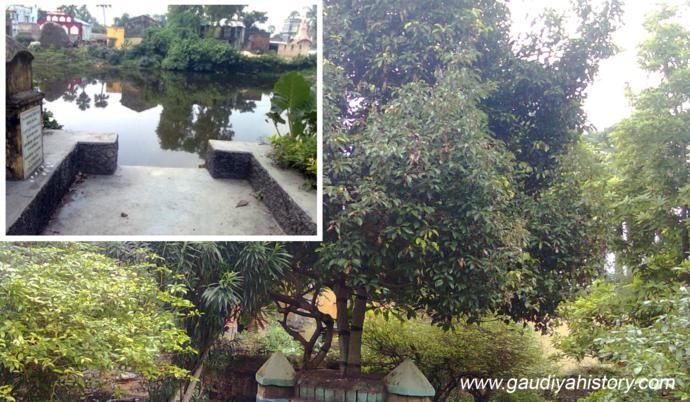
Raghunandana Thakura's life was never lived apart from the wider circle of Bengali Vaishnavas gathered around Sri Chaitanya Mahaprabhu. Sri Chaitanya-charitamrita records him moving with that circle at more than one of its best-known gatherings. Sri Chaitanya-charitamrita says that nearly every year Mukunda, Narahari and Raghunandana traveled from Srikhanda to Advaita Acharya's own home at Shantipura. There they joined a much larger gathering before setting out together for Jagannatha Puri (Chaitanya-charitamrita, Madhya 10.90). Devotees from Kulina-grama and other parts of Bengal came to the same house. All present offered obeisances to Advaita Acharya, and He embraced them in turn. Advaita Acharya then held a festival lasting two or three days. After that, the whole group met once more at Navadvipa and left for Puri with Sacimata's own blessing (Madhya 10.85-89). This was one part of a journey the Srikhanda party made together nearly every year of Raghunandana's life. When the pilgrims reached Puri, the group from Khanda formed their own singing party at the Ratha-yatra festival. It was one of the many groups performing sankirtana before Lord Jagannatha's chariot. In that party, Narahari Prabhu and Raghunandana, uncle and nephew, are described dancing together side by side (Madhya 13.46). It was one of the largest devotional gatherings of Chaitanya Mahaprabhu's own lifetime.
| Detail | Description |
|---|---|
| Annual journey | Srikhanda to Advaita Acharya's home, then on to Jagannatha Puri for chaturmasya |
| At Ratha-yatra | Danced with his uncle Narahari in the Srikhanda sankirtana party |
| Also attended | Kheturi festival organized by Narottama Dasa Thakura |
| Later crossed paths with | Jahnava Mata, whose return journey from Vraja passed through Srikhanda |
Guest at the Kheturi Mahotsava #
Decades later, Narottama Dasa Thakura organized the great festival remembered as the Kheturi Mahotsava. Raghunandana was among the honored guests who traveled from across Bengal to attend. The account of that festival records the moment directly: "Narahari Sarkara and Raghunandana from Shri Khanda" arrived along with Shyamananda Prabhu from Odisha, Acyutananda from Shantipura, and dozens of other named Vaishnavas. They all gathered under the leadership of Jahnava Devi for the installation of six Deities and days of sankirtana (see The Kheturi Festival). Ramachandra Kaviraja, Raghunandana's fellow villager from Srikhanda, was also present at the same festival. The gaudiyahistory account of Raghunandana's own life places him at Kheturi in exactly the same terms.
The Village Jahnava Devi Remembered by His Name #
Some time after Kheturi, Jahnava Mata made a long pilgrimage from Bengal to Vraja and back. On her return journey she passed again through many of the devotional places of Gaudiya Bengal. The account of that journey lists the villages she passed through in order: Kheturi again, then Budhuri, home of Ramachandra Kaviraja, then Ekachakra, then Katwa, then Jajigrama, Shrinivasa Acharya's own village, and then, in the same sentence, "Shrikhanda, home of Raghunandana Thakura" (see Journeys to Vrindavana and Jahnava Radhika). A generation later, the whole village could still be known simply by Raghunandana's name. This itself shows how completely his devotion had come to define the place where he lived out his life. His final years and disappearance are told on Disappearance and Legacy.
A Circle Bound by More Than Geography #
The devotees of Srikhanda were never simply neighbors. Narahari Sarakara Thakura's own most famous disciple, Lochana Dasa Thakura, grew up within sight of Raghunandana's household worship. Later he wrote of his guru's ashram at Srikhanda as the place that shaped his entire life's purpose. This picture of the same village, seen from the next generation, is told on Discipleship Under Narahari Sarkara Thakura. Srikhanda had Raghunandana's quiet Deity worship, his uncle Narahari's kirtana and instruction, and the devotional poetry of their neighbors Ramachandra and Govinda Dasa Kaviraja. In this way, from one small circle of related households, Srikhanda produced several of the best-remembered names in later Gaudiya Vaishnava memory.
Scriptural evidence for this chapter (2)
mukunda, narahari, raghunandana ara yata
khanda haite aila advaitera sange yata
Mukunda, Narahari, Raghunandana and all the others came from Khanda to Advaita Acarya's home to accompany Him to Jagannatha Puri.
Places Raghunandana among the annual pilgrims who joined Advaita Acharya's own household on the yearly journey to Jagannatha Puri.
khanda-vasi eka dala kaila sankirtana
ara dale nace narahari, raghunandana
Another party was formed by the people of Khanda. These people were singing in a different place. In that group, Narahari Prabhu and Raghunandana were dancing.
Direct scriptural record of Raghunandana dancing in sankirtana with his uncle Narahari at the Ratha-yatra festival in Jagannatha Puri.
Chapter 4
Disappearance and Legacy
A final blessing to Shrinivasa Acharya, a Deity handed to a son, and a name still spoken at Srikhanda.
As his own end approached, Raghunandana Thakura is remembered turning his attention to the generation of Vaishnavas who would carry the movement forward after him. According to the Bhakti-ratnakara, he spoke words of comfort and confidence to Shrinivasa Acharya, for whom he had great personal affection. He warned him plainly that a difficult time was coming. In that time, even sincere Vaishnavas would be troubled by doubt from day to day. To support this warning, he quoted directly from his own uncle Narahari Sarakara Thakura's Sri Krishna-bhajanamrita: "krishna-caitanya-candrena nityanandena samhrite, avatare kalav asmin vaishnavah sarva eva hi, bhavishyanti sadodvignah kale kale dine dine, prayah sandigdha-hridaya uttametara-madhyamah". He said that once Krishna Chaitanya and Nityananda Prabhu had ended Their own visible pastimes, Vaishnavas of every level, advanced or beginner, would find their hearts nearly always troubled by doubt (Bhakti-ratnakara 13.174-179). But Raghunandana did not leave Shrinivasa with only a warning. "Don't let this worry you," he continued. "Lord Gauranga will accomplish many great works through you. I bless you that you remain long on this earth, and that you and your followers protect our Lord's religion."
| Detail | Description |
|---|---|
| Final blessing given to | Shrinivasa Acharya |
| Disappearance date | Shukla Chaturthi (fourth day of the waxing moon), month of Shravana |
| Year of disappearance | Not given in the available sources |
| Deity service inherited by | Kanai Thakura, his son |
| Spiritual identity (Gaura-ganoddesha-dipika 70) | Pradyumna of the chatur-vyuha (sources differ on the vraja-lila identity beneath that; see below) |
A Final Departure Marked by the Holy Name #
According to the Bhakti-ratnakara, Raghunandana Thakura left this world on Shukla Chaturthi, the fourth day of the waxing moon, in the month of Shravana. To the last, he was absorbed in repeating the names of Sri Krishna Chaitanya. The text records that his own son, Kanai Thakura, offered a feast to mark the occasion. It closes the episode with a verse of its own praise: "Raghunandan slowly became hidden to mortal eyes while repeating again and again the names of Shri Krishna Chaitanya. How glorious is that day of Shravan shukla chaturthi! Who will not sing the glories of Raghunandan Thakur?" (Bhakti-ratnakara 13.183-184). None of the available sources gives a specific year for this disappearance. They give only the date within the lunar calendar. This gap is reported here as it is, not filled in with an invented figure.
The Deity That Stayed in the Family #
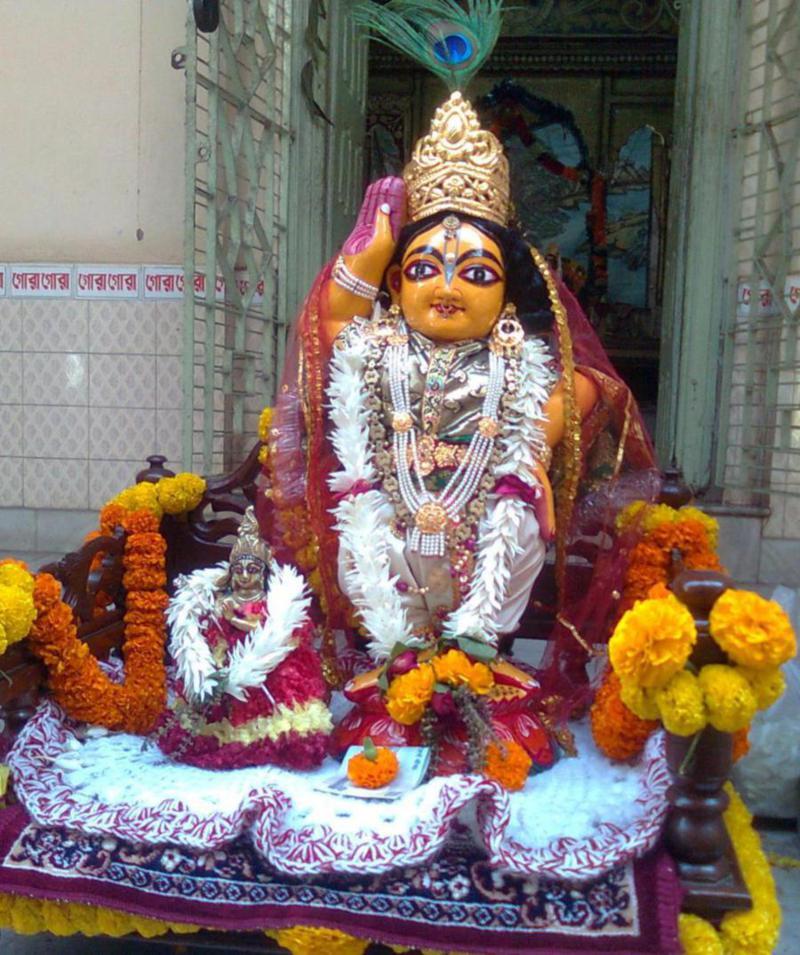
Before his disappearance, Raghunandana passed on the personal service of his Gaura-Gopala Deity to his own son, Kanai Thakura. In this way the family's household Deity worship continued. By the time of Srila Prabhupada's own purport to Sri Chaitanya-charitamrita, the family had grown to an estimated four hundred descendants, living in Srikhanda across several further generations. Their names are still recorded in the village itself. Kanai Thakura in turn had two sons, Madana Raya (a disciple of Narahari Sarakara Thakura) and Vamshivadana, who carried the same family line one generation further. By tradition, the Gopinatha and Gaura-Gopala Deities that a five-year-old Raghunandana once fed with such determination are still worshiped at Srikhanda today. This worship is a living continuation of the pastime told on The Boy Who Fed Sri Gopinatha.
Place in the Parampara's Memory #
The Gaura-ganoddesha-dipika identifies Raghunandana as Pradyumna, third among the four original expansions of Krishna in the chatur-vyuha. But the available sources do not agree on the more specific identity beneath that. One verse of the Gaura-ganoddesha-dipika, as quoted on Gaudiya History, describes this same Pradyumna appearing in Krishna's vraja-lila as Radha-Madhava's intimate friend, a priya-narma-sakha. The verse also says that his body is not different from Chaitanya Mahaprabhu's own. A separate traditional account, drawing on the Gaudiya Vaishnava Abhidhana and also recorded on Gaudiya History, instead calls him Kandarpa-manjari in Krishna's own vraja-lila. In Dvaraka-lila, this account calls him Krishna's actual son named Kandarpa. Both versions agree that Raghunandana's eternal identity is linked with Pradyumna/Kandarpa. But they differ on the exact form that identity takes in Vraja. This is a real point on which the sources simply disagree, and it is reported here, not resolved. Later Gaudiya Vaishnava writers, including the poet Uddhava Dasa, called Raghunandana "non-different from Madana," Cupid himself. They said this in praise of the same powerful, heart-winning love that once moved a stone Deity to eat before a crying child. Sri Chaitanya-charitamrita itself, though, gives a simpler and perhaps more lasting judgment. It tells us that Raghunandana Thakura's whole life had one interest in it, the service of Krishna. It also tells us that this single-minded service was itself enough for Sri Chaitanya Mahaprabhu to confirm, without any reservation, that Raghunandana was his own father's spiritual master.
Scriptural evidence for this chapter (2)
Quoted in the text above:
- 13.174-184 Bhakti-ratnakara
Further verses:
vyuhas tritiyah pradyumnah priya-narma-sakho 'bhavat
cakre lila-sahayam yo radha-madhavayor vraje
shri-caitanyadvaita-tanuh sa eva raghunandanah
The third member of the chatur-vyuha, Pradyumna, took part in Radha-Madhava's lila in Vraja as Krishna's intimate friend (priya-narma-sakha). He has now appeared as Raghunandana, whose body is not different from that of Chaitanya.
Traditional identification of Raghunandana's eternal spiritual position; a separate secondary source cited on the same page gives a different specific vraja-lila identity, a genuine disagreement reported here rather than resolved.
- Sri Chaitanya-charitamrita, Adi-lila 10.78-79 (text and purport)
- Sri Chaitanya-charitamrita, Adi-lila 10.119
- Sri Chaitanya-charitamrita, Madhya-lila 10.90
- Sri Chaitanya-charitamrita, Madhya-lila 11.92
- Sri Chaitanya-charitamrita, Madhya-lila 13.46
- Sri Chaitanya-charitamrita, Madhya-lila 15.108-135 (text and purports)
- Raghunandana Thakura - Gaudiya History
- Raghunandana Thakura - Biography - Gaudiya History
- Raghunandana Thakura - Biography (2) - Gaudiya History
- Raghunandana Dasa - Official Blog of ISKCON Bangalore
- The Sacred Legacy of Srikhanda: Narahari Sarakara Thakura - ISKCON Bangalore
