The lifting of Govardhana Hill, Indra's homage and the name Govinda
गोवर्धन-धारण, इन्द्र की स्तुति और गोविन्द नाम
In short
Kṛṣṇa lifted Govardhana Hill when Indra, angry that the cowherds had worshipped the hill instead of him, sent a devastating storm against Vraja. Holding the hill with one hand for seven days, He sheltered all the people and cows. Then Indra begged forgiveness, bathed Him with Surabhi, the mother of the cows, and named Him Govinda (ŚB 10.25–27).[1–12]
On this page
At a glance
- The text: Śrīmad-Bhāgavatam, Tenth Canto, chapters 25 to 27, retold by Śrīla Prabhupāda in the Kṛṣṇa book chapters 25 to 27.[3 +11]
- The hold: with one hand, as a child holds a mushroom; the commentators say the left hand, and the Kṛṣṇa book the little finger of the left hand.[3 +3]
- How long: seven days, while Kṛṣṇa forgot hunger and thirst and the people of Vraja gazed at Him.[4]
- His age: seven years, as Śrīla Prabhupāda's translation of ŚB 2.7.32 says.[20]
- The end: Surabhi bathed Kṛṣṇa with her milk, Indra with water of the heavenly Gaṅgā from the trunk of Airāvata, Indra's elephant, and they named Him Govinda.[9–12]
- The place of the bath: Govinda-kuṇḍa, a sacred pond, according to the commentators, the Garga-saṁhitā, the Gosvāmīs (Śrī Caitanya's leading followers) and the Bhakti-ratnākara.[21–27]
Why did Kṛṣṇa lift Govardhana Hill?
When Kṛṣṇa turned the cowherds of Vraja from Indra's sacrifice to the worship of Govardhana, Indra answered with a storm. What followed is told in the Tenth Canto, chapters 25 to 27. Kṛṣṇa lifted the hill, the people lived seven days under it, and the hill was set back in its place. Then Indra came to beg forgiveness, which ended with the bathing of Kṛṣṇa and the name Govinda.[3 +11] Śrīla Prabhupāda's own translation of a verse of the Second Canto sums it up.[20]
Names this place“Lord Kṛṣṇa, out of His causeless mercy upon the inhabitants of Vraja, held up the hill known as Govardhana with one hand only, although He was only seven years old.”
Śrīla Prabhupāda, Śrīmad-Bhāgavatam, 2.7.32, translation · vedabase.io
Angry at losing his sacrifice, Indra sent the Sāṁvartaka clouds, the clouds that destroy the world at its end, against Vraja. He said he would follow them on his elephant Airāvata, with the wind-gods (10.25.2, 10.25.7).[1, 2] Kṛṣṇa's answer was the lifting of the hill.[3]
ity uktvaikena hastena kṛtvā govardhanācalam / dadhāra līlayā viṣṇuś chatrākam iva bālakaḥ
Having said this, Lord Kṛṣṇa, who is Viṣṇu Himself, picked up Govardhana Hill with one hand and held it aloft just as easily as a child holds up a mushroom.
Translation: Śrīla Prabhupāda's disciples (BBT)He called the people of Vraja, His mother and father first, into the hollow under the hill. He told them not to fear that it would fall, or that the wind and rain would reach them. They went in with their cows, wagons, servants and priests, and found room (10.25.20–22).[3 +3] The festival that began it all is told in “The first Govardhana-pūjā and the Annakūṭa”.[31–33]
How did Kṛṣṇa hold the hill?
The sources describe the hold in several ways, and each is given here with its source.[3 +7]
- With one hand: the Bhāgavatam (10.25.19), the Garga-saṁhitā (3.3.15) and the Viṣṇu Purāṇa (5.11.16), an old scripture.[3, 5, 7]
- With the left hand: the Harivaṁśa (61.30), followed by Śrīla Sanātana Gosvāmī, Śrīla Jīva Gosvāmī and Śrīla Viśvanātha Cakravartī Ṭhākura on 10.25.19; Śrīla Sanātana Gosvāmī adds that the sacred images show it so.[8 +2]
- By one part of the base: Śrīla Sanātana Gosvāmī explains that Kṛṣṇa held one part of the base, and so the whole hill, as a child holds a mushroom by its stem. Sometimes He held it with one finger (summarised here, not translated).[17, 18]
- With the little finger of the left hand: Śrīla Prabhupāda's Kṛṣṇa book, chapter 25.[19]
- With help: the Padma Purāṇa speaks of the hill that Kṛṣṇa and Balarāma lifted with Their hands. Śrīla Sanātana Gosvāmī gives as one explanation that Nanda and Balarāma propped it with their heads, as the sacred images show. He also says that Balarāma left so sweet a pastime to Kṛṣṇa alone (on 10.25.30, summarised here, not translated).[34, 35]
Names this place“They were simply astonished to see how Kṛṣṇa was holding up the mountain with the little finger of His left hand.”
Śrīla Prabhupāda, Kṛṣṇa, the Supreme Personality of Godhead (Kṛṣṇa book), Chapter 25, Devastating Rainfall in Vṛndāvana · vedabase.io
Śrī Caitanya Mahāprabhu recited a verse on that left arm when He saw the Deity (sacred form) Gopāla at Gāṅṭholī. It is Śrīla Rūpa Gosvāmī's, from the Bhakti-rasāmṛta-sindhu, and Śrīla Prabhupāda translates it in Caitanya-caritāmṛta Madhya 18.38.[36]
yathā vā-- vāmas tāmarasākṣasya bhuja-daṇḍaḥ sa pātu vaḥ
krīḍā-kandukatāṃ yena nīto govardhano giriḥ ||
Śrī Caitanya Mahāprabhu said, “ ‘May the left arm of Śrī Kṛṣṇa, whose eyes are like the petals of a lotus flower, always protect you. With His left arm He raised Govardhana Hill as if it were a toy.’ ”
Translation: Śrīla A.C. Bhaktivedanta Swami PrabhupādaHow did the shelter under the hill stay dry?
The Bhāgavatam says only that the people's protection from wind and rain had already been arranged, and names no means (10.25.21).[29] The Garga-saṁhitā gives one. The Sudarśana disc, Kṛṣṇa's weapon, stays above the hill drinking the rain. The serpent Śeṣa coils around its base to hold back the flood (3.3.20–22, summarised here, not translated).[3 +2]
The commentators explain it by the Lord's own energies (summarised here, not translated). Śrīla Viśvanātha Cakravartī Ṭhākura says an energy, part of Yogamāyā, the Lord's internal energy, held the rain back in the sky. So Kṛṣṇa's turban was hardly wet when He ran out to lift the hill. Śrīla Jīva Gosvāmī names the līlā-śakti, the energy that arranges the Lord's pastimes, and Śrīla Sanātana Gosvāmī a special power of the Lord.[17 +2]
How all Vraja fitted under the hill is a question the commentators also answer, each in his own way; their answers are given in “How Govardhana came to Vraja: the accounts of the hill's origin”.[18]
How long did Kṛṣṇa hold Govardhana?
For seven days He stood holding it, forgetting hunger and thirst, without moving from the spot, while the people gazed at Him (10.25.23).[4] The Garga-saṁhitā also gives seven days.[6] Śrīla Jīva Gosvāmī and Śrīla Viśvanātha Cakravartī Ṭhākura count the days. The lifting began on the third day of the bright half of the month Kārttika (October–November), and the bathing of Govinda came on the eleventh (summarised here, not translated).[31–33]
Then the wind and rain stopped and the sun came out. Kṛṣṇa, the holder of Govardhana, told the cowherds to come out from under the hill with their wives, children and wealth (10.25.25–26).[39–41] Then He put the hill back in its own place, as it had stood before, while all beings watched (10.25.28).[40] Śrīla Prabhupāda tells it this way in the Kṛṣṇa book.[41]
Names this place“After they had cleared out everything, Lord Kṛṣṇa very slowly replaced Govardhana Hill in exactly the same position it had been in before.”
Śrīla Prabhupāda, Kṛṣṇa, the Supreme Personality of Godhead (Kṛṣṇa book), Chapter 25, 'Devastating Rainfall in Vṛndāvana' · vedabase.io
Śrīla Sanātana Gosvāmī adds that Kṛṣṇa set it down playfully, without throwing it and without moving its rocks. Śrīla Jīva Gosvāmī explains that in its own place and as before mean the same spot and the same way up (summarised here, not translated). So the Bhāgavatam itself says that Govardhana stands where it stood before the lifting.[42]
Later the cowherd men came to Nanda. They could not understand how a boy of seven could hold up the great hill. Nanda answered with what Garga Muni had once said about his son (10.26).[43–45] In Śrīla Prabhupāda's words:[45]
Names this place“Just imagine! He is now only seven years old! How is it possible for Him to lift Govardhana Hill in one hand and hold it up just as the king of elephants holds a lotus flower?”
Śrīla Prabhupāda, Kṛṣṇa, the Supreme Personality of Godhead (Kṛṣṇa book), Chapter 26, 'Wonderful Kṛṣṇa' · vedabase.io
How did Indra pray to Kṛṣṇa?
After the lifting, Surabhi, the mother of the cows, came from Goloka to see Kṛṣṇa, and Indra came with her (10.27.1). Ashamed of his offence, Indra approached Kṛṣṇa in a solitary place and touched His feet with his sun-bright crown (10.27.2).[13 +3] Śrīla Prabhupāda writes that he came stealthily, conscious of his offence, and fell down at Kṛṣṇa's lotus feet.[12]
Indra prayed. He admitted that he had tried to destroy the cowherd village with rain and wind when his sacrifice was stopped, and he took shelter of Kṛṣṇa. Kṛṣṇa replied that He had stopped the sacrifice out of mercy, so that Indra would always remember Him.[9 +5] Kṛṣṇa's reply, in Śrīla Prabhupāda's words:[48]
General teaching (does not name the place)Thus praised by Indra, Lord Kṛṣṇa, the Supreme Personality of Godhead, smiled beautifully and then replied in a grave voice like a rumbling cloud: “My dear Indra, I stopped your sacrifice just to show you My causeless mercy and to remind you that I am your eternal master.”
Śrīla Prabhupāda, Kṛṣṇa, the Supreme Personality of Godhead (Kṛṣṇa book), Chapter 27, 'Prayers by Indra, the King of Heaven' · vedabase.io
The commentators explain how Surabhi came to be with Indra (summarised here, not translated). Śrīla Jīva Gosvāmī says that Indra went to Brahmā out of fear, and on Brahmā's order brought Surabhi. Śrīla Viśvanātha Cakravartī Ṭhākura and Śrīla Baladeva Vidyābhūṣaṇa say that Brahmā sent Surabhi so that Indra's offence would be forgiven. She was also to bathe Kṛṣṇa as the Indra, the king, of the cows.[49, 50] In Surabhi's own words in the Bhāgavatam, Kṛṣṇa is the cows' master and worshipable Deity. She asks Him to become their Indra for the welfare of the cows, brāhmaṇas (priests), demigods and saintly persons.[12 +3]
Why is Kṛṣṇa called Govinda?
The bath that followed gave Kṛṣṇa the name. Surabhi bathed Him with her own milk. Then Indra bathed Him with water of the heavenly Gaṅgā raised by Airāvata's trunk. Aditi and the other mothers of the demigods urged him, and the demigods and sages joined him. They named Him Govinda, after Surabhi had asked Him to be the Indra of the cows (10.27.22–23).[9 +5] Śrīla Prabhupāda tells it in the Kṛṣṇa book.[12]
Names this place“Then the surabhi cow bathed Kṛṣṇa with her milk, and Indra bathed Him with the water of the celestial Ganges through the trunk of his carrier elephant.”
Śrīla Prabhupāda, Kṛṣṇa, the Supreme Personality of Godhead (Kṛṣṇa book), Chapter 27, Prayers by Indra, the King of Heaven · vedabase.io
Then Tumburu, Nārada and the singers of heaven came and sang, and the wives of the demigods danced. The chief demigods praised Kṛṣṇa and covered Him with showers of flowers (10.27.24–25).[9 +4] Śrīla Prabhupāda adds that the surabhi cows, all the demigods and their mothers joined Indra in bathing Kṛṣṇa with Ganges water and the milk of the surabhis.[48]
In the Garga-saṁhitā the bath takes place on Govardhana (3.4.8–18, summarised here, not translated). Airāvata bathes Kṛṣṇa from four trunks. The heavenly water becomes Mānasī-gaṅgā, and Surabhi's milk becomes Govinda-kuṇḍa. The hill melts with joy and keeps Kṛṣṇa's handprint, which, the text says, is seen even today.[10 +3]
Where did Indra meet Kṛṣṇa, and where was He bathed?
The Bhāgavatam says only in a solitary place, and Śrīla Prabhupāda writes that Indra appeared before Him in a secluded place. Other texts and the pilgrims' tradition name places on and around the hill.[47 +5]
The Purāṇas and the commentators
The Harivaṁśa (62.2–8) says that Indra came on Airāvata, saw Kṛṣṇa seated on a rock of Govardhana, left the elephant and approached Him alone. The Viṣṇu Purāṇa (5.12.2–5) says he found Kṛṣṇa on Govardhana herding cows among the boys. The Garga-saṁhitā says he bowed down in a secluded place on the hill (3.4.1).[58 +3]
The commentators on the Tenth Canto follow the Harivaṁśa's rock, and say that Indra came alone, without his elephant.[49, 65] As for why Kṛṣṇa was alone, Śrīla Jīva Gosvāmī says He had sent His friends to gather flowers. Śrīla Viśvanātha Cakravartī Ṭhākura says He had gone out alone one morning to see how Indra's thunderbolts had battered the back of His Govardhana (both summarised here, not translated).[49, 65]
Śrīla Jīva Gosvāmī's Gopāla-campū (Pūrva 19) sets the meeting on a jewel-like rock of Govardhana on the ekādaśī, the eleventh day. Indra fell before Kṛṣṇa flat like a rod, and Surabhi said that the streams of tears from his eyes were announcing Kṛṣṇa's abhiṣeka, His sacred bath.[66–68]
For the bath, Śrīla Jīva Gosvāmī and Vaṁśīdhara (on 10.27.24) name a place on Govardhana. It is known as Śakra-kuṇḍa from the Varāha Purāṇa and as Govinda-kuṇḍa from the Skanda Purāṇa.[21, 54] Śrīla Sanātana Gosvāmī's text reads Śatru-kuṇḍa there, probably a misprint for Śakra-kuṇḍa.[21]
The Varāha Purāṇa (164.23–26) speaks of a tīrtha, a holy bathing place, made by Indra near Annakūṭa, where Kṛṣṇa stopped Indra's sacrifice and spoke with him.[69] The Nārada Purāṇa (Uttara-bhāga 80.60–61) calls Govinda-kuṇḍa the place where Indra, having understood the truth, meditated on Govinda. All the passages in this section are summarised here, not translated.[70]
The Gosvāmīs and the Bhakti-ratnākara
Śrīla Rūpa Gosvāmī's Mathurā-māhātmya, under the heading of Govinda-kuṇḍa, quotes a verse that the kuṇḍa arose where Indra bathed the Lord.[69, 71] Śrīla Raghunātha dāsa Gosvāmī prays to Govinda-kuṇḍa in his Vraja-vilāsa-stava, in words that Śrīla Prabhupāda translates in his purport (explanation) to Caitanya-caritāmṛta Madhya 18.37.[24]
With humility caused by great fear, Indra took hold of the lotus feet of Lord Kṛṣṇa and, in the company of a surabhi cow, performed His coronation festival by bathing Him with the waters of the heavenly Ganges River. Thus Lord Kṛṣṇa’s kingship over the cows became splendidly manifest. I pray that Govinda-kuṇḍa, the lake created by that ceremonial bath, may eternally appear before my eyes.
Translation: Śrīla A.C. Bhaktivedanta Swami PrabhupādaIn his Govardhanāśraya-daśaka (verse 2) Śrīla Raghunātha dāsa Gosvāmī says that the bath was done in private and that Govinda-kuṇḍa arose on the slope of the hill (summarised here, not translated).[73]
The Bhakti-ratnākara of Śrīla Narahari Cakravartī Ṭhākura names three places in its Govardhana tour. At Govinda-kuṇḍa, it says, Indra bathed Govinda and praised Him in many ways, and there is Śakra-tīrtha. Śrīla Prabhupāda quotes and translates the line.[25 +4]
General teaching (does not name the place)“It was here that Indra, defeated by Lord Govinda, offered prayers to Him and bathed Him.”
Śrīla Prabhupāda, Śrī Caitanya-caritāmṛta, Madhya-līlā 18.37, purport (his translation of a Bhakti-ratnākara couplet) · vedabase.io
Further on the circuit, according to the book, is Airāvata's footprint, where Indra spoke of Kṛṣṇa's wonderful mercy.[76] And beyond Gāṭhuli is a village the book calls Reheja, where Indra, thinking himself very low, came before Kṛṣṇa with Surabhi's help. Which village this is, is not known.[77]
Of all the places named, Govinda-kuṇḍa is named by the most sources. The commentators, the Garga-saṁhitā, Śrīla Rūpa Gosvāmī, Śrīla Raghunātha dāsa Gosvāmī, the Bhakti-ratnākara and Śrīla Prabhupāda's purport all connect Indra's bath of Kṛṣṇa with it.[21 +8]
Where the sources differ
The hold itself is told in different ways, as set out above: one hand, the left hand, the little finger, or with Balarāma's and Nanda's help. Each source keeps its own detail, and none is set aside.[17 +2]
Accounts differ How, and by whom, the hill was held up
- Śrīmad-Bhāgavatam 10.25.19; Garga-saṁhitā 3.3.15; Viṣṇu Purāṇa 5.11.16Kṛṣṇa, with one hand
- Harivaṁśa 61.30; Bhakti-rasāmṛta-sindhu 2.1.62, 3.3.18, 4.2.8, 4.8.31; Brahma-vaivarta 4.94.51; Bhakti-ratnākara (Fifth Wave)with the left hand or arm: Harivaṁśa savyena pāṇinā; BRS 2.1.62 vāmaḥ… bhuja-daṇḍaḥ; in BRS 3.3.18 His friends ask Him to put the hill on Śrīdāmā's hand, or to shift it for a moment to His right hand and let them massage His left arm (doṣṇas te … savyasya saṃvāhanam); BRS 4.2.8 'savya-kara-kandūkitācalendraḥ'; BRS 4.8.31 'tuṅgite savye doṣṇi'; Brahma-vaivarta 'vāma-hastena'; Bhakti-ratnākara: kṛṣṇa bāma kare dhari (held with His left hand)
- Kṛṣṇa book ch. 25; Teachings of Lord Kapila 17; Śrī Vraja-maṇḍala Parikramā (2007); Vṛndāvana-Dhāma Ki Jaya! (c. 1986)on the little finger of His left hand
- Padma Purāṇa, Pātāla-khaṇḍa 73.21The verse calls it the hill that Kṛṣṇa and Balarāma lifted with their hands (kṛṣṇa-rāma-karoddhṛtam).
The wording of these accounts is our summary of the sources, not a published translation.
How the shelter stayed dry is told by Sudarśana and Śeṣa in the Garga-saṁhitā and by the Lord's potencies in the commentaries. The Bhāgavatam names no means.[3 +5]
Accounts differ How the people under the hill were kept from the rain
- Śrīmad-Bhāgavatam 10.25.21their protection from wind and rain 'has been arranged'; no means named
- Garga-saṁhitā 3.3.20-22the Sudarśana disc above the hill drank the rain; Śeṣa, coiled around the hill, held back the flood
- Śrīla Viśvanātha Cakravartī (on ŚB 10.25.19)a withdrawing potency, part of Yogamāyā, held the rain back in the sky
- Śrīla Jīva Gosvāmī (on ŚB 10.25.19)the arrangements that kept the water out were the work of the līlā-śakti
The local tradition recorded in the guidebooks adds more places, and the books differ. According to Govardhana Hill: India's Most Sacred Mountain (2001), Indra Pūjā near Airāvata's footprint is believed to be the spot where Indra bowed to Kṛṣṇa as He walked on the hill inspecting the damage. This is close to Śrīla Viśvanātha Cakravartī Ṭhākura's comment. The same book says that Indra Ṭīlā beside Govinda-kuṇḍa is where Indra and the demigods stood during the bath.[65 +5] It makes Surabhi-kuṇḍa the place where Surabhi prayed for Indra. The 2007 guidebook puts Airāvata's footprints near Airāvata-kuṇḍa on top of the hill and a Śakra-kuṇḍa at Sauṅkarāī, two miles west of Govardhana.[82–87]
Accounts differ Where Indra met Kṛṣṇa and bowed down after the lifting of Govardhana
- Śrīmad-Bhāgavatam 10.27.2in a solitary place (no location given)
- Garga-saṁhitā 3.4.1in a secluded place on the hill (girau)
- Varāha Purāṇa 164.23-26near Annakūṭa is a tīrtha made by Śakra, where Kṛṣṇa stopped Indra's sacrifice and spoke with Indra
- Govardhana Hill: India's Most Sacred Mountain (2001), p. 116'Indra Pūjā', believed to be the spot near Airāvata's foot-print, while Kṛṣṇa was walking on the hill inspecting the damage
Two questions stay open. One is whether Śakra-kuṇḍa is another name of Govinda-kuṇḍa, as Śrīla Jīva Gosvāmī has it, or a separate water, as the 2007 guidebook lists it. The other is Airāvata's footprint. The scriptures and commentators give the elephant a part in the pastime but mention no footprint. Of the texts named here, the Bhakti-ratnākara is the first to name one.[9 +7]
Accounts differ Śakra-kuṇḍa: another name of Govinda-kuṇḍa, or a separate water?
- Śrīla Jīva Gosvāmī, Laghu-vaiṣṇava-toṣaṇī on ŚB 10.27.24the festival took place at one spot of Govardhana, known as Śakra-kuṇḍa from the Varāha and as Govinda-kuṇḍa from the Skanda
- Śrīla Rūpa Gosvāmī, Mathurā-māhātmya vv.416–417under the heading of Śrī Govinda-kuṇḍa: the Mathurā-khaṇḍa verse, then the Ādi-vārāha verse on the tīrtha made by Śakra near Annakūṭa
- Vaṁśīdhara, Bhāvārtha-dīpikā-prakāśa on ŚB 10.27.24the place of the bath in the region of Govardhana, known in the Varāha as Śakra-kuṇḍa and as Govinda-kuṇḍa
- Śrīla Sanātana Gosvāmī, Bṛhad-vaiṣṇava-toṣaṇī on ŚB 10.27.24the place on Śrī Govardhana known from the Skanda as Śatru-kuṇḍa (as printed)
The wording of these accounts is our summary of the sources, not a published translation.
The sources also differ on whether Brahmā came to the bath. The Bhāgavatam names him only as the one who urged the cows to come (10.27.21). Śrīla Sanātana Gosvāmī, Śrīla Jīva Gosvāmī and Śrīla Baladeva Vidyābhūṣaṇa say that he did not come; in Śrīla Jīva Gosvāmī's Gopāla-campū he is present, cheering the bath. The 2001 guidebook has Brahmā crown Kṛṣṇa with a golden crown, which no older text cited here says. Śrīla Prabhupāda's Kṛṣṇa book does not mention Brahmā at the bath.[9 +6]
Accounts differ Was Lord Brahmā present at Kṛṣṇa's coronation-bath, and did he bathe or crown Him?
- Śrīmad-Bhāgavatam 10.27.21–23Surabhi says that she and her company will bathe Kṛṣṇa as their Indra 'as ordered by Lord Brahmā'; Surabhi bathes Him with her milk, and Indra, with the demigods and great sages and urged by Aditi and the other mothers of the demigods, bathes Him with Gaṅgā water and names Him Govinda; Brahmā is not said to be there
- Kṛṣṇa book, chapter 27 (Śrīla Prabhupāda)the surabhi cow and Indra bathe Kṛṣṇa, then the surabhi cows and all the demigods and their mothers join Indra in bathing Him; Brahmā is not mentioned
- Śrīla Sanātana Gosvāmī, Śrīla Jīva Gosvāmī (Laghu-vaiṣṇava-toṣaṇī) and Śrīla Baladeva Vidyābhūṣaṇa on ŚB 10.27.21; Śrīla Viśvanātha Cakravartī on the same verseBrahmā did not come ('brahmā nāgamat'), fearing to offend as before; Viśvanātha: Brahmā, afraid on remembering his own earlier offence, sent Surabhi
- Śrīla Jīva Gosvāmī, Gopāla-campū, Pūrva 19Brahmā, held back by his own earlier offence, does not seek Indra's forgiveness himself but sends Indra to Surabhi and Surabhi to Kṛṣṇa; at the bath Indra with the guardians of the directions bathes Kṛṣṇa amid the cries of 'jaya' of Brahmā, Rudra and others (v.28); Brahmā gives Kṛṣṇa a lotus to play with (v.33); in Madhumaṅgala's report a five-faced and a four-faced person sing His praises and they and others bathe Him (v.42); no crowning by Brahmā
The wording of these accounts is our summary of the sources, not a published translation.
Places in this article
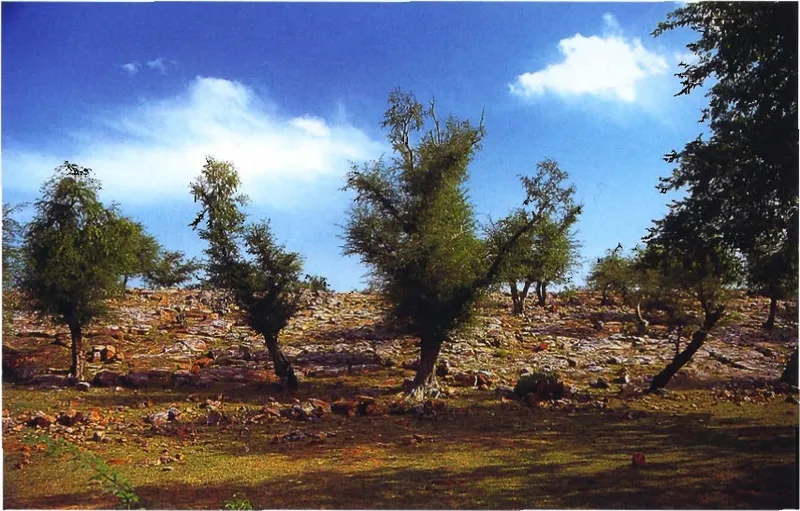
Govardhana
गोवर्धनGovardhana is the hill that Kṛṣṇa lifted with one hand and held up for seven days, so that the people and cows of Vraja could shelter under it from Indra's rain.
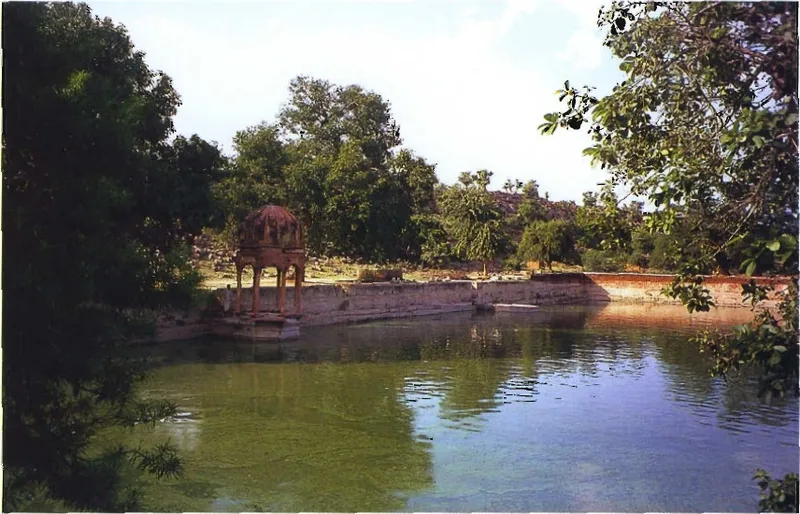
Govinda-kuṇḍa (Govardhana)
गोविन्द-कुण्ड (गोवर्धन)Govinda-kuṇḍa is a kuṇḍa (sacred pond) near the village of Aniyora on Govardhana Hill.
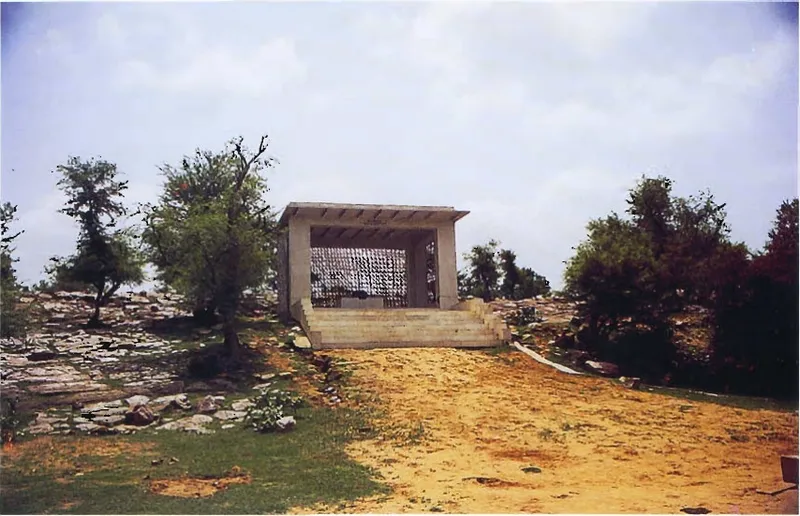
Indra Pūjā
इन्द्र पूजाIndra Pūjā is a spot on Govardhana Hill near Airāvata's footprint.
Indra Tila
इन्द्र टीलाIndra Tila is a small mound at the side of Govinda-kuṇḍa on Govardhana.
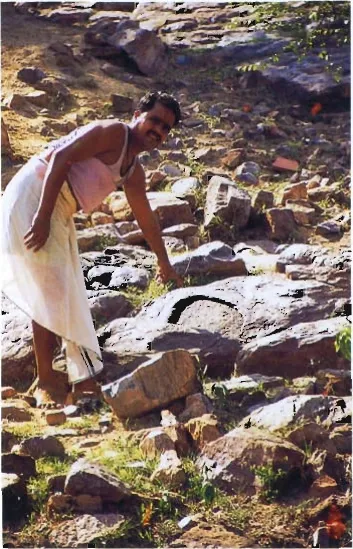
Airāvata's Foot-print
ऐरावत का चरण-चिह्नAirāvata's Foot-print is a mark in the rocks of Govardhana Hill that is shown as the footprint of Airāvata, the elephant of Indra, the king of heaven.
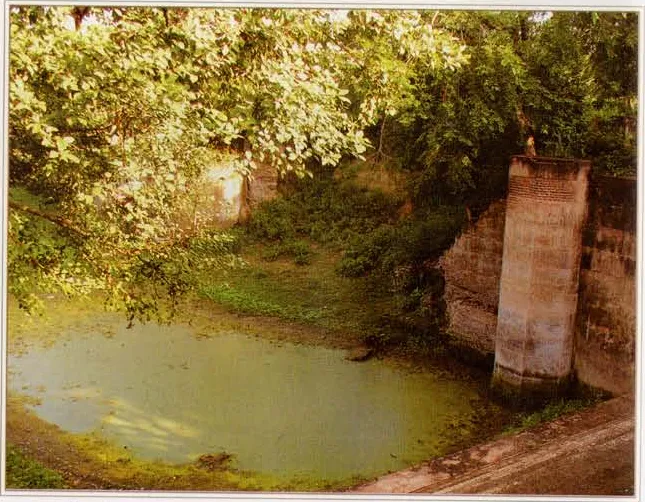
Airāvata-kuṇḍa
ऐरावत-कुण्डAirāvata-kuṇḍa is a pond that the guidebooks place in Kadamba Vana, on the western side of the walk around Govardhana Hill.
Śakra-kuṇḍa
शक्र-कुण्ड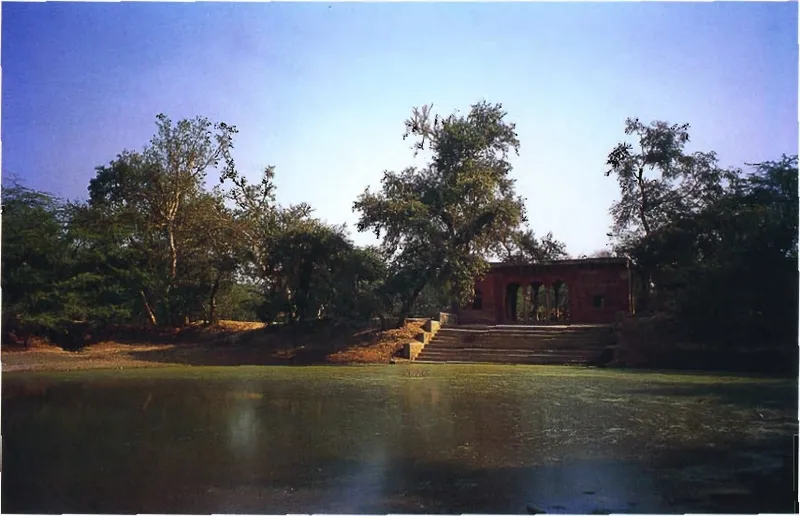
Surabhi-kuṇḍa (Govardhana)
सुरभि-कुण्ड (गोवर्धन)Surabhi-kuṇḍa is a pond on the western side of the Govardhana circuit, in Kadamba-vana, and bears the name of Surabhi, the mother of the cows.
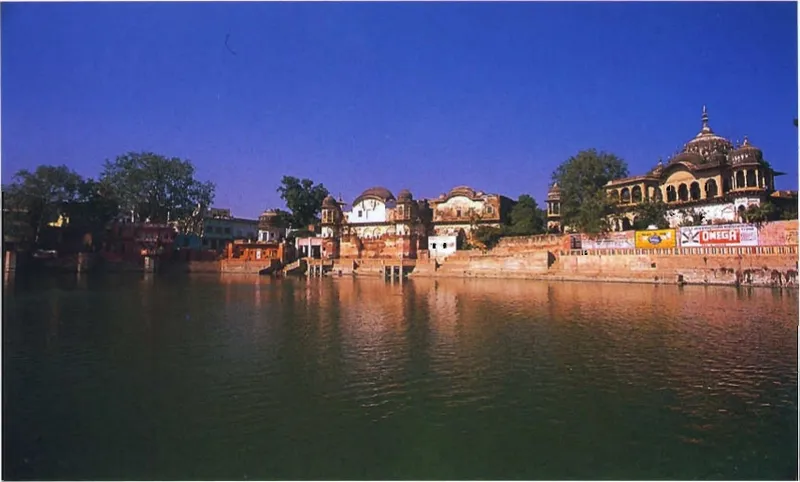
Mānasī-gaṅgā
मानसी-गंगाMānasī-gaṅgā is the large lake in the middle of Govardhana town, on Govardhana Hill.
Gāṅṭholī
गाँठोलीGāṅṭholī is a village west of Govardhana Hill, on the road from Govardhana to Ḍīg.
Sauṅkarāī
सौंकराईSauṅkarāī is a village two miles west of Govardhana.
Questions and answers
To protect the people and cows of Vraja from the storm Indra sent when the cowherds worshipped Govardhana instead of him. Kṛṣṇa later told Indra that He had stopped the sacrifice out of mercy, so that Indra would remember Him.[1 +7]
Seven days, according to the Bhāgavatam (10.25.23) and the Garga-saṁhitā, forgetting hunger and thirst while the people of Vraja gazed at Him.[4, 6]
The Bhāgavatam says with one hand, and the commentators the left hand. Śrīla Prabhupāda's Kṛṣṇa book says the people were astonished to see Him hold the mountain with the little finger of His left hand.[3 +3]
Seven years old, as Śrīla Prabhupāda's translation of ŚB 2.7.32 says, and as the cowherd men say in the Bhāgavatam when they wonder at the feat.[20, 43]
Ashamed, he approached Kṛṣṇa in a solitary place, touched His feet with his crown, admitted his offence and took shelter of Him.[9 +8]
After Indra's prayers, Surabhi bathed Kṛṣṇa with her milk and Indra with water of the heavenly Gaṅgā. They named Him Govinda (ŚB 10.27.22–23), the Indra of the cows that Surabhi had asked Him to be.[9 +5]
At Govardhana. Śrīla Jīva Gosvāmī places Kṛṣṇa's bath there, the Garga-saṁhitā says the kuṇḍa arose from Surabhi's milk, and Śrīla Raghunātha dāsa Gosvāmī says it arose on the slope of the hill.[21 +3]
Sources
- Śrīmad-Bhāgavatam 10.25.2, GRETIL
- Śrīmad-Bhāgavatam 10.25.7, GRETIL
- Śrīmad-Bhāgavatam 10.25.19, GRETIL
- Śrīmad-Bhāgavatam 10.25.23, GRETIL
- Garga-saṁhitā, Girirāja-khaṇḍa (3), adhyāya 3, verse 15, Sanskrit Wikisource
- Garga-saṁhitā, Girirāja-khaṇḍa (3), adhyāya 3, verse 23, Sanskrit Wikisource
- Viṣṇu Purāṇa, 5.11.16, GRETIL
- Harivaṁśa, HV 61.30, GRETIL
- Śrīmad-Bhāgavatam 10.27.22-23, GRETIL
- Garga-saṁhitā, Girirāja-khaṇḍa (3), adhyāya 4, verse 9, Sanskrit Wikisource
- Viṣṇu Purāṇa, 5.12.2, GRETIL
- Śrīla Prabhupāda, Kṛṣṇa, the Supreme Personality of Godhead (Kṛṣṇa book), Chapter 27, Prayers by Indra, the King of Heaven · vedabase.io
- Śrīmad-Bhāgavatam 10.27.1-2, GRETIL
- Śrīmad-Bhāgavatam 10.27.12, GRETIL
- Śrīmad-Bhāgavatam 10.27.13, GRETIL
- Śrīmad-Bhāgavatam 10.27.15, GRETIL
- Śrīla Sanātana Gosvāmī, Śrīla Jīva Gosvāmī, Śrīla Viśvanātha Cakravartī Ṭhākura: commentary on ŚB 10.25.19, Bhagavata Vidya Pith edition, ed. Bhagavata Rishi and Krishna Shankar Shastri, 1996
- Śrīla Sanātana Gosvāmī: commentary on ŚB 10.25.22, Bhagavata Vidya Pith edition, ed. Bhagavata Rishi and Krishna Shankar Shastri, 1996
- Śrīla Prabhupāda, Kṛṣṇa, the Supreme Personality of Godhead (Kṛṣṇa book), Chapter 25, Devastating Rainfall in Vṛndāvana · vedabase.io
- Śrīla Prabhupāda, Śrīmad-Bhāgavatam, 2.7.32, translation · vedabase.io
Show all 90 references
- Śrīla Jīva Gosvāmī: commentary on ŚB 10.27.24, Bhagavata Vidya Pith edition, ed. Bhagavata Rishi and Krishna Shankar Shastri, 1996
- Garga-saṁhitā, Girirāja-khaṇḍa (3), adhyāya 4, verse 16, Sanskrit Wikisource
- Garga-saṁhitā, Girirāja-khaṇḍa (3), adhyāya 4, verse 8, Sanskrit Wikisource
- Śrīla Raghunātha dāsa Gosvāmī, Vraja-vilāsa-stava, (9) Vraja-vilāsa-stava v.74
- Śrīla Narahari Cakravartī, Bhakti-ratnākara, Fifth Wave, 1912 ed. p. 201, last couplet, 2nd ed., 1912
- Śrīla Prabhupāda, Śrī Caitanya-caritāmṛta, Madhya-līlā 18.37, purport (his translation of a Bhakti-ratnākara couplet) · vedabase.io
- Śrīla Narahari Cakravartī, Bhakti-ratnākara, Fifth Wave, 1912 ed. p. 202, at Govinda-kuṇḍa, after Vraja-vilāsa-stava 74 and the 'Mathurā-khaṇḍa' verse, 2nd ed., 1912
- Śrīmad-Bhāgavatam 10.25.20, GRETIL
- Śrīmad-Bhāgavatam 10.25.21, GRETIL
- Śrīmad-Bhāgavatam 10.25.22, GRETIL
- Śrīla Sanātana Gosvāmī, Śrīla Jīva Gosvāmī: commentary on ŚB 10.24.1, Bhagavata Vidya Pith edition, ed. Bhagavata Rishi and Krishna Shankar Shastri, 1996
- Śrīla Viśvanātha Cakravartī Ṭhākura: commentary on ŚB 10.29.1
- Śrīla Jīva Gosvāmī: commentary on ŚB 10.45.3, Bhagavata Vidya Pith edition, ed. Bhagavata Rishi and Krishna Shankar Shastri, 1996
- Padma Purāṇa, 5.73.21, Sanskrit Wikisource
- Śrīla Sanātana Gosvāmī: commentary on ŚB 10.25.30, Bhagavata Vidya Pith edition, ed. Bhagavata Rishi and Krishna Shankar Shastri, 1996
- Śrīla Rūpa Gosvāmī, Bhakti-rasāmṛta-sindhu, 2.1.62, GRETIL
- Garga-saṁhitā, Girirāja-khaṇḍa (3), adhyāya 3, verses 20-22, Sanskrit Wikisource
- Vaṁśīdhara: commentary on ŚB 10.25.26, Bhagavata Vidya Pith edition, ed. Bhagavata Rishi and Krishna Shankar Shastri, 1996
- Śrīmad-Bhāgavatam 10.25.25, GRETIL
- Śrīmad-Bhāgavatam 10.25.28, GRETIL
- Śrīla Prabhupāda, Kṛṣṇa, the Supreme Personality of Godhead (Kṛṣṇa book), Chapter 25, 'Devastating Rainfall in Vṛndāvana' · vedabase.io
- Śrīla Sanātana Gosvāmī, Śrīla Jīva Gosvāmī: commentary on ŚB 10.25.28, Bhagavata Vidya Pith edition, ed. Bhagavata Rishi and Krishna Shankar Shastri, 1996
- Śrīmad-Bhāgavatam 10.26.14, GRETIL
- Śrīmad-Bhāgavatam 10.26.15, GRETIL
- Śrīla Prabhupāda, Kṛṣṇa, the Supreme Personality of Godhead (Kṛṣṇa book), Chapter 26, 'Wonderful Kṛṣṇa' · vedabase.io
- Śrīmad-Bhāgavatam 10.27.1, GRETIL
- Śrīmad-Bhāgavatam 10.27.2, GRETIL
- Śrīla Prabhupāda, Kṛṣṇa, the Supreme Personality of Godhead (Kṛṣṇa book), Chapter 27, 'Prayers by Indra, the King of Heaven' · vedabase.io
- Śrīla Jīva Gosvāmī: commentary on ŚB 10.27.1, Bhagavata Vidya Pith edition, ed. Bhagavata Rishi and Krishna Shankar Shastri, 1996
- Śrīla Viśvanātha Cakravartī Ṭhākura: commentary on ŚB 10.27.21, Bhagavata Vidya Pith edition, ed. Bhagavata Rishi and Krishna Shankar Shastri, 1996
- Śrīmad-Bhāgavatam 10.27.19, GRETIL
- Śrīmad-Bhāgavatam 10.27.20, GRETIL
- Śrīmad-Bhāgavatam 10.27.21, GRETIL
- Śrīmad-Bhāgavatam 10.27.24, GRETIL
- Śrīmad-Bhāgavatam 10.27.25, GRETIL
- Garga-saṁhitā, Girirāja-khaṇḍa (3), adhyāya 4, verse 15, Sanskrit Wikisource
- Garga-saṁhitā, Girirāja-khaṇḍa (3), adhyāya 4, verse 12, Sanskrit Wikisource
- Garga-saṁhitā, Girirāja-khaṇḍa (3), adhyāya 4, verse 1, Sanskrit Wikisource
- Harivaṁśa, HV 62.3, GRETIL
- Harivaṁśa, HV 62.8, GRETIL
- Śrīla Jīva Gosvāmī, Gopāla-campū, Pūrva-campū 19, prose 44 (para 44 of the chapter), GRETIL
- Harivaṁśa, HV 62.2–3 (critical edition), GRETIL
- Harivaṁśa, HV 62.6–8 (critical edition), GRETIL
- Viṣṇu Purāṇa, 5.12.2–5, GRETIL
- Śrīla Jīva Gosvāmī, Śrīla Viśvanātha Cakravartī Ṭhākura, Baladeva Vidyābhūṣaṇa: commentary on ŚB 10.27.2, Bhagavata Vidya Pith edition, ed. Bhagavata Rishi and Krishna Shankar Shastri, 1996
- Śrīla Jīva Gosvāmī, Gopāla-campū, Pūrva-campū 19, verses 19.7–8 and prose § 30, GRETIL
- Śrīla Jīva Gosvāmī, Gopāla-campū, Pūrva-campū 19, prose §§ 32–34 and verse 19.11, GRETIL
- Śrīla Jīva Gosvāmī, Gopāla-campū, Pūrva-campū 19, verse 19.27, GRETIL
- Varāha Purāṇa, adhyāya 164, verses 23-26, Sanskrit Wikisource
- Nārada Purāṇa, Uttara-bhāga, adhyāya 80, verses 60–61a
- Śrīla Rūpa Gosvāmī, Mathurā-māhātmya part 1 v.416–417
- Śrīla Raghunātha dāsa Gosvāmī, Vraja-vilāsa-stava, (9) Vraja-vilāsa-stava v.74
- Śrīla Raghunātha dāsa Gosvāmī, Govardhanāśraya-daśaka, (5) Śrī-govardhanāśraya-daśaka v.2
- Śrīla Narahari Cakravartī, Bhakti-ratnākara, Fifth Wave, 1912 ed. p. 202, 2nd ed., 1912
- Śrīla Prabhupāda, Śrī Caitanya-caritāmṛta, Madhya-līlā 18.37, purport · vedabase.io
- Śrīla Narahari Cakravartī, Bhakti-ratnākara, Fifth Wave, 1912 ed. p. 203, 2nd ed., 1912
- Śrīla Narahari Cakravartī, Bhakti-ratnākara, Fifth Wave, 1912 ed. p. 214, 2nd ed., 1912
- Govardhana Hill: India's Most Sacred Mountain (2001), Rajasekhara dasa Brahmacari, PDF p. 130
- the key of the numbered Govardhana chart, ¶58
- Govardhana Hill: India's Most Sacred Mountain (2001), Rajasekhara dasa Brahmacari, PDF p. 114
- the undated parikramā notes Govardhana, ¶112
- Govardhana Hill: India's Most Sacred Mountain (2001), Rajasekhara dasa Brahmacari, PDF p. 133
- Govardhana Hill: India's Most Sacred Mountain (2001), Rajasekhara dasa Brahmacari, PDF p. 134
- the undated parikramā notes Govardhana, ¶145
- Śrī Vraja-maṇḍala Parikramā (2007), PDF p. 133
- the undated parikramā notes Govardhana, ¶151
- Śrī Vraja-maṇḍala Parikramā (2007), PDF p. 134
- Govardhana Hill: India's Most Sacred Mountain (2001), Rajasekhara dasa Brahmacari, PDF p. 113
- Śrīla Jīva Gosvāmī, Gopāla-campū, Pūrva-campū, pūraṇa 19, prose [22]–[24], GRETIL
- Śrīla Jīva Gosvāmī, Gopāla-campū, Pūrva-campū 19, prose [48], GRETIL
Further sources
- Śrīmad-Bhāgavatam 2.7.32 (translation by Śrīla Prabhupāda) and 10.25–27 (BBT), with the Canto 10 commentaries of Śrīla Sanātana Gosvāmī, Śrīla Jīva Gosvāmī, Śrīla Viśvanātha Cakravartī Ṭhākura, Śrīla Baladeva Vidyābhūṣaṇa and Vaṁśīdhara (Sanskrit; summarised here, not translated).
- Śrīla Prabhupāda, Kṛṣṇa, the Supreme Personality of Godhead, chapters 25–27; Śrī Caitanya-caritāmṛta, Madhya 18.37–38 with purports (BBT).
- Garga-saṁhitā, Girirāja-khaṇḍa 3.3–3.4; Harivaṁśa 61–62; Viṣṇu, Padma, Varāha and Nārada Purāṇas; Śrīla Jīva Gosvāmī, Gopāla-campū, Pūrva 19; Śrīla Rūpa Gosvāmī, Mathurā-māhātmya; Śrīla Raghunātha dāsa Gosvāmī, Govardhanāśraya-daśaka (summarised here, not translated).
- Bhakti-ratnākara, Fifth Wave (Bengali, 1912 edition); guidebooks Govardhana Hill: India's Most Sacred Mountain (2001) and Śrī Vraja-maṇḍala Parikramā (2007).