Tālavana
तालवन Hindi name proposed
Also called Tarsi, Tarasi
- What it is
- Tālavana, the forest of tāla (palm) trees, is one of the twelve forests of Vraja and one of the seven on the western side of the Yamunā.
- Visiting
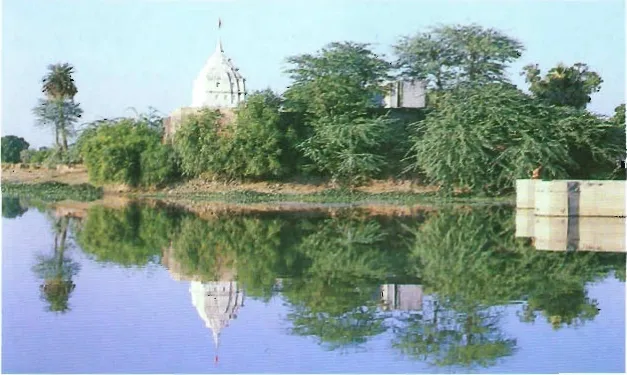
- The guidebooks describe Tālavana as the village of Tarsi, with only a few palm trees, a large kuṇḍa called Saṅkarṣaṇa-, Baladeva- or Balabhadra-kuṇḍa and a temple of Baladeva, the Dāūjī Mandira, with …
- Places here
- Balabhadra-kuṇḍa (Tālavana), Baladeva Mandira (Tālavana)
In short
Tālavana, the forest of tāla (palm) trees, is one of the twelve forests of Vraja and one of the seven on the western side of the Yamunā.[1 +5] Śrīmad-Bhāgavatam names it as the place where Balarāma killed the ass-demon Dhenuka, who had kept everyone from the palm fruits, and where Kṛṣṇa and Balarāma together killed his companions.[7 +5] Śrī Caitanya Mahāprabhu visited Tālavana and bathed there in ecstatic love, and Śrīla Prabhupāda tells its pastime in his Kṛṣṇa book.[13 +8] The sources place the forest in different ways; the guidebooks describe it today as the village of Tarsi, with a large kuṇḍa and a temple of Baladeva.[22 +6]
Key facts
| Kind | forest |
|---|---|
| Region · area | Madhuvana |
| Ācāryas | Śrī Caitanya Mahāprabhu, Śrīla Rāghava Paṇḍita Gosvāmī of Govardhana, Śrīla Narottama dāsa Ṭhākura, Śrīla Śrīnivāsa Ācārya, Śrīla Narahari Cakravartī Ṭhākura |
Why it is glorified
The Padma Purāṇa describes the land of Mathurā as a lotus and names Tālavana as its eighth outer petal, where the killing of …
The Padma Purāṇa describes the land of Mathurā as a lotus and names Tālavana as its eighth outer petal, where the killing of Dhenuka is remembered.[29] In the Ādi-varāha verses that Śrīla Rūpa Gosvāmī quotes in his Mathurā-māhātmya, Tālavana is the second of the twelve forests, an excellent forest where one who bathes becomes fulfilled; its kuṇḍa of clear water, adorned with blue lotuses, gives the desired result to those who bathe and give charity there, as the Varāha Purāṇa also says (summarised here, not translated).[2 +4]
Śrīla Rūpa Gosvāmī and the Bhakti-ratnākara also quote a verse that they ascribe to the Mathurā-khaṇḍa of the Skanda Purāṇa: Tālavana is holy, for there the demon was killed by means of the palm trees, for the good of the Yādavas and for the Lord's own play. Śrīla Rūpa Gosvāmī adds the next verse, which promises the sight of the Lord at death to one who bathes there (summarised here, not translated). The printed Skanda Purāṇa has no Mathurā-khaṇḍa, so the verse is known only as these two works quote it.[23 +3]
তালবনে প্রভু তাল রক্ষক অসুরে। বধিল কৌতুকে সুখ সবার অন্তরে ॥ স্কান্দে মথুরাখণ্ডে ॥ অহো তালবনং পুণ্যং যত্র তালৈর্হতোঽসুরঃ। হিতায় যাদবানাঞ্চ আত্মক্রীড়নকায় চ ॥
tālabane prabhu tāla rakṣaka asure| badhila kautuke sukha sabāra antare
skānde mathurākhaṇḍe
aho tālabanaṁ puṇyaṁ yatra tālairhato'suraḥ| hitāẏa yādabānāñca ātmakrīṛanakāẏa ca ||
Śrīla Prabhupāda names Tālavana with Madhuvana and Bahulāvana as forests known for the Lord's pastimes, which make the interior forests of Vṛndāvana superior even to Mathurā:[14 +5]
Names this place“The interior forests of Vṛndāvana are considered superior to Mathurā because of the presence of the twelve forests (dvādaśa-vana), such as Tālavana, Madhuvana and Bahulāvana, which are famous for the various pastimes of the Lord. Thus the interior Vṛndāvana forest is considered superior to Mathurā”
Śrīla Prabhupāda, The Nectar of Instruction, Text 9, purport · vedabase.io
The lists of the twelve forests differ in their names and order; they are compared on the page of Bahulāvana. An overview of all the lists is on the Vraja-maṇḍala page.[1 +5] Read more: The twelve forests of Vraja: the lists side by side →
Divine pastimes
The killing of Dhenuka
Śrīmad-Bhāgavatam (10.15) tells that one day the cowherd boys said to Rāma and Kṛṣṇa that not far away there was a great forest full of rows of palm trees. Its ripe fruits lay on the ground, but the ass-demon Dhenuka guarded them, and since he had eaten men, no one, not even the birds, dared to go there.[7 +5]
rāma rāma mahā-bāho kṛṣṇa duṣṭa-nibarhaṇa / ito 'vidūre su-mahad vanaṃ tālāli-saṅkulam
[The cowherd boys said:] O Rāma, Rāma, mighty-armed one! O Kṛṣṇa, destroyer of the miscreants! Not far from here is a very great forest filled with rows of palm trees.
Translation: Śrīla Prabhupāda's disciples (BBT)Laughing, the two brothers went with the boys to the Tālavana. Balarāma entered first and shook the palm trees with the strength of an elephant, so that the fruits fell. When Dhenuka attacked, Balarāma seized him by his hooves, whirled him round with one hand and threw him into the top of a palm tree, and the whirling killed him. When Dhenuka's kinsmen attacked, Kṛṣṇa and Balarāma seized them one after another and threw them into the palm trees. Afterwards people came to eat the fruits without fear, and the cows grazed freely in the forest.[7 +5]
sa taṃ gṛhītvā prapador bhrāmayitvaika-pāṇinā / cikṣepa tṛṇa-rājāgre bhrāmaṇa-tyakta-jīvitam
Lord Balarāma seized Dhenuka by his hooves, whirled him about with one hand and threw him into the top of a palm tree. The violent wheeling motion killed the demon.
Translation: Śrīla Prabhupāda's disciples (BBT)Śrīla Prabhupāda retells the chapter in his Kṛṣṇa book:[17]
Names this place“Will You kindly note that just near this place there is a big forest of the name Tālavana? This forest is full of palm trees, and all the trees are filled with fruits. … Immediately upon entering the Tālavana, Balarāma began to yank the trees with His arms, exhibiting the strength of an elephant.”
Śrīla Prabhupāda, Kṛṣṇa, the Supreme Personality of Godhead (Kṛṣṇa book), Chapter 15, 'The Killing of Dhenukāsura' · vedabase.io
Later in the Bhāgavatam (10.26.10) the cowherd men, recounting Kṛṣṇa's deeds, say that together with Balarāma He killed the ass-demon and his companions and made the Tālavana, full of ripe fruit, safe.[18 +1] In a purport Śrīla Prabhupāda writes that Baladeva specifically killed Dhenukāsura at Tālavana. In The Nectar of Devotion, which summarises Śrīla Rūpa Gosvāmī's teachings, he tells that the boys asked Kṛṣṇa to go to the Tālavana and kill the ass-demon, and that Kṛṣṇa did so.[17 +4] Read more: The killing of Dhenuka at Tālavana →
Other tellings
The Harivaṁśa and the Viṣṇu Purāṇa also have Balarāma kill Dhenuka, and the Harivaṁśa sets the palm forest north of Govardhana, on the bank of the Yamunā.[42 +1] The Garga-saṁhitā (Vṛndāvana-khaṇḍa, chapter 11; chapter 8 in another edition) tells the pastime differently: at first only Balarāma entered the forest, while the boys, afraid of Dhenuka, and Kṛṣṇa too stayed outside; in the long fight that followed, the boys also struck the demon and Kṛṣṇa threw him onto Govardhana, and at last Balarāma killed Dhenuka with a blow of His fist, and Dhenuka attained a divine form. It also tells that Dhenuka had been Sāhasika, a son of Bali, whom the sage Durvāsā cursed to become an ass and to be freed by Balarāma's hand in the holy forest of Tālavana (summarised here, not translated).[44 +2] The sources differ on who killed Dhenuka and how (see below).
The Gosvāmīs' tellings
In his Gopāla-campū Śrīla Jīva Gosvāmī sets the day in the rainy season, when the palm fruits ripen: Kṛṣṇa, Balarāma and the boys were grazing the cows south-east of Govardhana Hill when the east wind brought the fragrance of the fruits from far away. Śrīla Rūpa Gosvāmī praises Balarāma in his play Lalita-mādhava as the protector of the cows who killed Dhenuka and broke the tall palms, and gives a verse on Kṛṣṇa's deeds at Tālavana in his Stava-mālā (summarised here, not translated).[22 +4] Śrīla Raghunātha dāsa Gosvāmī praises Balarāma as the enemy of Dhenuka, who out of love never leaves Kṛṣṇa alone in the forest, though his verse does not name Tālavana; and in Śrīla Kavi-karṇapūra's Ānanda-vṛndāvana-campū the hungry boys ask Rāma and Kṛṣṇa for the fruits of the nearby Tālavana, whose fragrance has reached them.[48 +2]
The Garga-saṁhitā also sets part of Kṛṣṇa's journey of the rāsa dance in Tālavana.[51]
Traditional accounts
The Bhāgavatam says only that the forest was "not far" from where the boys were grazing the cows.
Where Tālavana lies
The Bhāgavatam says only that the forest was "not far" from where the boys were grazing the cows. Its commentators place it near Govardhana: Śrīla Sanātana Gosvāmī, followed by Śrīla Jīva Gosvāmī, within four krośas east of Govardhana; Śrīla Viśvanātha Cakravartī Ṭhākura within four krośas of Govardhana, in the place known as Tārapharā or Tālasī; and Śrīla Baladeva Vidyābhūṣaṇa within a yojana of it. Quoting the Varāha Purāṇa, they also put the forest one yojana west of Mathurā, which Śrīla Viśvanātha Cakravartī Ṭhākura and Śrīla Baladeva Vidyābhūṣaṇa read as south-west (summarised here, not translated).[22 +1] The available text of the Varāha Purāṇa itself says half a yojana.[2 +2] The undated parikramā notes Tālavana give the present village's name as Tarsi or Tarasi; no source says whether this is Śrīla Viśvanātha Cakravartī Ṭhākura's Tālasī.[22 +1]
The Bhakti-ratnākara
In the Bhakti-ratnākara's account of the tour of Vraja, Śrīla Rāghava Paṇḍita brings Śrīla Śrīnivāsa Ācārya and Śrīla Narottama dāsa Ṭhākura to Tālavana and tells them that here the Lord playfully killed the asura who guarded the palms, to everyone's joy; then he recites the Skanda verse in its praise (summarised here, not translated).[34 +1] The same book tells that Śrīla Jāhnavā-devī later toured the twelve forests, Tālavana among them, with her companions.[53 +2]
The pilgrimage
According to Śrīla Nārāyaṇa Bhaṭṭa Gosvāmī's Vraja-bhakti-vilāsa, citing the Ādi-purāṇa, the pilgrim comes to Tālavana on the Ekādaśī of the dark fortnight of the month of Bhādrapada, prays to the forest as the giver of liberation with ten obeisances, bathes in Saṅkarṣaṇa-kuṇḍa and walks around the forest, a circuit of three-quarters of a krośa. The book names Dāmodara as the Lord who presides over Tālavana. The verse it cites was not found in the available text of the Ādi-purāṇa.[56 +3] The days of the pilgrimage to Tālavana and its neighbouring forests differ between the texts; they are compared on the page of Madhuvana.[56 +1]
According to Śrī Vraja-maṇḍala Parikramā (2007) and the undated notes Tālavana, Kaṁsa had set Dhenuka to guard the forest so that its fruits were for Kaṁsa and his followers alone. The Garga-saṁhitā calls Dhenuka a friend of Kaṁsa, but no scripture was found that says Kaṁsa appointed him.[8 +3]
The Gosvāmīs and ācāryas
The Caitanya-caritāmṛta tells that Śrī Caitanya Mahāprabhu visited Madhuvana, Tālavana, Kumudavana and Bahulāvana, and bathed at …
The Caitanya-caritāmṛta tells that Śrī Caitanya Mahāprabhu visited Madhuvana, Tālavana, Kumudavana and Bahulāvana, and bathed at each place in great ecstatic love.[13 +3]
madhu-vana, tāla, kumuda, bahulā-vana gelā
tāhāṅ tāhāṅ snāna kari’ premāviṣṭa hailā
Śrī Caitanya Mahāprabhu visited the different forests, including Madhuvana, Tālavana, Kumudavana and Bahulāvana. Wherever He went, He took His bath with great ecstatic love.
Translation: Śrīla A.C. Bhaktivedanta Swami PrabhupādaSongs
A Bengali song that the song book credits to Śrīla Gaura-kiśora dāsa Bābājī pictures a Gosvāmī calling "Rādhe, Rādhe" in Tālavana …
A Bengali song that the song book credits to Śrīla Gaura-kiśora dāsa Bābājī pictures a Gosvāmī calling "Rādhe, Rādhe" in Tālavana and Tamālavana; the song book's English of it is still a draft, so no card is shown.[65]
Visiting today
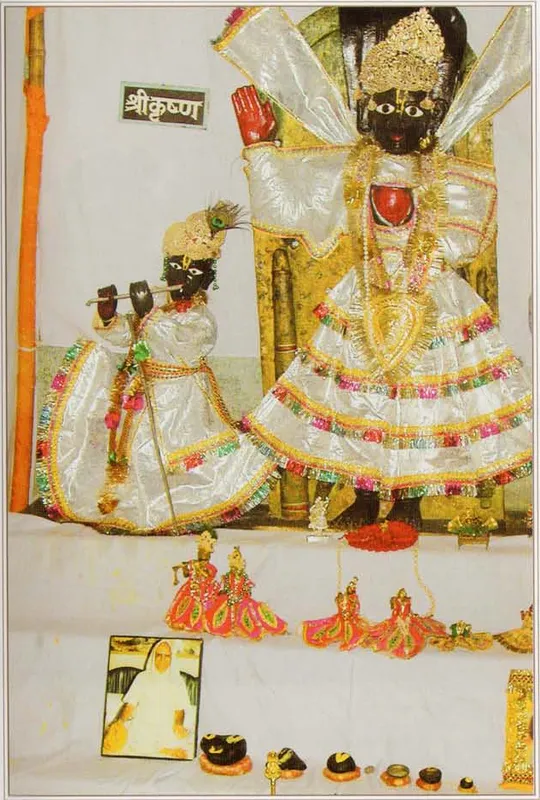
The guidebooks describe Tālavana as the village of Tarsi, with only a few palm trees, a large kuṇḍa called Saṅkarṣaṇa-, Baladeva- or Balabhadra-kuṇḍa and a temple of Baladeva, the Dāūjī Mandira, with Balarāma and Revatī. Śrī Vraja-maṇḍala Parikramā (2007) places it about six miles south of Mathurā and two and a half miles south-west of Madhuvana. The undated notes Tālavana mention a festival of Dhenuka's killing in the bright half of Bhādra, a date that has not been verified. These are guidebook reports, not checked on the ground.[23 +5]
Growse (1883) recorded a special pilgrimage to Madhuvana, Tālavana and Kumudavana on the eleventh day of the bright fortnight of Bhādon, and Mītal (1966) the local circuit of Tālavana, three-quarters of a kos, on the eleventh of the dark fortnight, the day and circuit of the Vraja-bhakti-vilāsa. These are records of their time and may not describe the present.[58 +5]
Location
Places at Tālavana
2 places
Nearby places
Mathurā · Madhuvana · Govardhana
Pictures
1 pictures
History
According to the historian A. W. Entwistle (1987), the earliest dated mention of the twelve forests of Mathurā, Tālavana among them, is in the Jain Vividha-tīrtha-kalpa of Jinaprabha Sūri, completed in 1332.[61]
F. S. Growse (1883) recorded that the village of Tarsi was founded in fairly modern times by Tārā Cand, a Kachhwāhā Ṭhākur who moved there from Satohā; Prabhudayāl Mītal (1966) and Entwistle (1987) repeat this from him, and Mītal adds that the forest had been ruined long before. In 1987 Entwistle reported that the large pond west of Tarsi, named after Balarāma, was also called Bent Ganga.[62 +2] The Bengali Vṛndāvana-kathā (1920) remarks that by its time not a single palm tree was left at Tālavana.[23 +5]
Where the sources differ
Where Tālavana lies: the Bhāgavatam's commentators, the Purāṇas, the biographies of Śrī Caitanya and the guidebooks place it in …
Where Tālavana lies: the Bhāgavatam's commentators, the Purāṇas, the biographies of Śrī Caitanya and the guidebooks place it in different ways.[2 +3]
Accounts differ Where the Tālavana lies.
- Śrīmad-Bhāgavatam 10.15.21'not far from here' (where the boys were grazing the cows)
- Śrīla Sanātana, Śrīla Jīva, Śrīla Viśvanātha and Baladeva on ŚB 10.15.21within four krośas (east, Sanātana/Jīva) or a yojana of Govardhana; 'Tārapharā'/'Tālasī' (Viśvanātha); one yojana west, read as south-west, of Mathurā
- Varāha Purāṇa 157.39half a yojana west of Mathurā
- Harivaṁśa 57.3north of Govardhana, on the bank of the Yamunā
Who killed Dhenuka, and how: according to the Bhāgavatam and most other works Balarāma, according to some Kṛṣṇa.[7 +10]
Accounts differ Who killed Dhenuka (and how), as the sources tell it.
- Śrīmad-Bhāgavatam 10.15.32 and 10.15.37Balarāma killed Dhenuka; Kṛṣṇa and Balarāma together killed his kinsmen
- Śrīmad-Bhāgavatam 10.26.10Kṛṣṇa, together with Balarāma, killed the ass-demon and his kinsmen
- Garga-saṁhitā, Vṛndāvana-khaṇḍa 11Balarāma's punch killed him after a long fight in which Kṛṣṇa and the boys also fought; Śrī Kṛṣṇa killed him by Bala's hand (11.40)
- Brahma-vaivarta Purāṇa 4.22.93-95Kṛṣṇa cut off his head with the Sudarśana disc
How the water at Tālavana came to be, according to the Garga-saṁhitā, the undated notes Tālavana and the Vraja-bhakti-vilāsa. The kuṇḍa itself, and which Purāṇa verse belongs to it, are discussed on the page of the Balabhadra-kuṇḍa.[51 +3]
Accounts differ How the water (kuṇḍa or stream) at Tālavana came to be.
- Garga-saṁhitā, Vṛndāvana-khaṇḍa 20.26-27Kṛṣṇa struck the ground with His cane in the rāsa and the Vetra-gaṅgā stream sprang up for the thirsty gopīs
- the undated parikramā notes Tālavana ('It is said')Kṛṣṇa made Saṅkarṣaṇa-kuṇḍa by striking His cow-herding stick into the ground for the cowherd boys and cows
- Vraja-bhakti-vilāsa ch.9 v.71 and its HindiSaṅkarṣaṇa-kuṇḍa is the tīrtha of (made by) Saṅkarṣaṇa
More on this place
The killing of Dhenuka at Tālavana · The twelve forests of Vraja: the lists side by side
References
70 references
- Padma Purāṇa, Vṛndāvana-māhātmya (1) vv.16-17 (= Padma Pātāla-khaṇḍa 69.16-17)
- Varāha Purāṇa, adhyāya 161, verses 6-10, Sanskrit Wikisource
- Śrīla Rūpa Gosvāmī, Mathurā-māhātmya v.330 with its introductory line, and the heading 'atha dvādaśa-vanānāṁ māhātmyam'
- Śrīla Narahari Cakravartī, Bhakti-ratnākara, Fifth Wave, printed p.185 (1912 ed.), the list of the twelve forests with the Padma and Skanda verses, 2nd ed., 1912
- Ādi-purāṇa, chapter (9) 'navamo'dhyāyaḥ', vv.17-20 (v.21 summarised in notes), Śrī Veṅkaṭeśvara Press, Mumbai, 1929
- Śrīla Nārāyaṇa Bhaṭṭa, Vraja-bhakti-vilāsa, printed p.12: 'the two divisions of the twelve forests, north and south of the Yamunā', 1st ed., publ. Bābā Kṛṣṇadāsa, Kusuma-sarovara, Saṁvat 2008
- Śrīmad-Bhāgavatam 10.15.21, GRETIL
- Śrīmad-Bhāgavatam 10.15.22, GRETIL
- Śrīmad-Bhāgavatam 10.15.24, GRETIL
- Śrīmad-Bhāgavatam 10.15.27, GRETIL
- Śrīmad-Bhāgavatam 10.15.28, GRETIL
- Śrīmad-Bhāgavatam 10.15.32, GRETIL
- Śrīla Kṛṣṇadāsa Kavirāja Gosvāmī, Śrī Caitanya-caritāmṛta, CC Madhya-līlā 17.193, online edition · vedabase.io
- Śrīla Prabhupāda, Śrī Caitanya-caritāmṛta, Madhya-līlā 17.193, purport · vedabase.io
- Śrī Vraja-maṇḍala Parikramā (2007), PDF p. 63
- the undated parikramā notes Kumudavana, ¶3
- Śrīla Prabhupāda, Kṛṣṇa, the Supreme Personality of Godhead (Kṛṣṇa book), Chapter 15, 'The Killing of Dhenukāsura' · vedabase.io
- Śrīla Prabhupāda, Kṛṣṇa, the Supreme Personality of Godhead (Kṛṣṇa book), Chapter 26, 'Wonderful Kṛṣṇa' · vedabase.io
- Śrīla Prabhupāda, Śrīmad-Bhāgavatam, 1.11.16-17, purport · vedabase.io
- Śrīla Prabhupāda, Śrī Caitanya-caritāmṛta, Ādi-līlā 6.64, purport · vedabase.io
Show all 70 references
- Śrīla Prabhupāda, The Nectar of Devotion, Chapter 47, 'Compassion and Anger' (section on anger) · vedabase.io
- Śrīla Sanātana Gosvāmī: commentary on ŚB 10.15.21, Bhagavata Vidya Pith edition, ed. Bhagavata Rishi and Krishna Shankar Shastri, 1996
- Śrī Vraja-maṇḍala Parikramā (2007), PDF p. 66
- Śrī Vraja-maṇḍala Parikramā (2007), PDF p. 67
- Vṛndāvana-Dhāma Ki Jaya! (c. 1986), by Dhruva Mahārāja dāsa, PDF p. 28
- the undated parikramā notes Tālavana, ¶3
- the undated parikramā notes Tālavana, ¶15-¶19
- Vṛndāvana-kathā, chapter 8 (aṣṭama pariccheda), the twelve forests: Tālavana, printed p.120
- Padma Purāṇa, Vṛndāvana-māhātmya (1) vv.44-45 (= Padma Pātāla-khaṇḍa 69.44-45)
- Varāha Purāṇa, adhyāya 157, verses 39-40, Sanskrit Wikisource
- Śrīla Rūpa Gosvāmī, Mathurā-māhātmya vv.332-335
- Śrīla Rūpa Gosvāmī, Lalita-mādhava, Grantha Mandira text, act (9) 'mukha-kamalāni ca khedayann akhaṇḍaḥ', lines 115-116 and v.34
- Śrīla Rūpa Gosvāmī, Stava-mālā, part 26 (Chando-'ṣṭādaśaka) v.14, 'tālavana-caritam', after the edition of Bhakti Saranga Goswami and Purushottam Das, Vrindavan, 1959
- Śrīla Narahari Cakravartī, Bhakti-ratnākara, Fifth Wave, printed pp.185-186 (1912 ed.), Tālavana, 2nd ed., 1912
- the undated parikramā notes Tālavana, ¶39-¶42
- Śrīla Prabhupāda, Śrīmad-Bhāgavatam, 4.8.42, purport · vedabase.io
- Śrīla Prabhupāda, Śrī Caitanya-caritāmṛta, Madhya-līlā 5.12, purport · vedabase.io
- Śrīla Prabhupāda, The Nectar of Instruction, Text 9, purport · vedabase.io
- Śrīla Prabhupāda, Śrī Caitanya-caritāmṛta, Madhya-līlā 1.239, purport · vedabase.io
- Śrīla Prabhupāda, Śrīmad-Bhāgavatam 4.8.42, purport (the list, as reprinted with numbers)
- Śrīmad-Bhāgavatam 10.26.10, GRETIL
- Harivaṁśa, 57.3-4, GRETIL
- Viṣṇu Purāṇa, 5.8.1-2, GRETIL
- Garga-saṁhitā, Vṛndāvana-khaṇḍa (2) 11.1-2 ('dhenukāsura-mokṣa'), Sanskrit Wikisource
- Garga-saṁhitā, Vṛndāvana-khaṇḍa (2) 11.38-40, Sanskrit Wikisource
- the undated parikramā notes Tālavana, ¶23
- Gopāla-campū, Pūrva-campū 14 ('caturdaśaṁ pūraṇam')
- Śrīla Raghunātha dāsa Gosvāmī, Stavāvalī: Vraja-vilāsa-stava, Vraja-vilāsa-stava v.12 (Stavāvalī hymn (9) in the Grantha Mandira text)
- Vṛndāvana-Dhāma Ki Jaya! (c. 1986), by Dhruva Mahārāja dāsa, PDF p. 29
- Ānanda-vṛndāvana-campū, part 8, v.73
- Garga-saṁhitā, Vṛndāvana-khaṇḍa (2) 20.22-23 (chapter 'rāsa-krīḍā'), Sanskrit Wikisource
- Śrīla Narahari Cakravartī, Bhakti-ratnākara, Fifth Wave, printed p.189 (1912 ed.): Bahulāvana and Śrī Caitanya's visit, 2nd ed., 1912
- Śrīla Narahari Cakravartī, Bhakti-ratnākara, Eleventh Wave, printed p.670 (1912 ed.): Jāhnavā Īśvarī's tour of the twelve forests, 2nd ed., 1912
- Vṛndāvana-Dhāma Ki Jaya! (c. 1986), by Dhruva Mahārāja dāsa, PDF p. 30
- the undated parikramā notes Bahulāvana, ¶34
- Śrīla Nārāyaṇa Bhaṭṭa, Vraja-bhakti-vilāsa, chapter 9, vv.70-71, printed p.203: 'tālavana-mahātmya-pūrva-pradakṣiṇā', 1st ed., publ. Bābā Kṛṣṇadāsa, Kusuma-sarovara, Saṁvat 2008
- Śrīla Nārāyaṇa Bhaṭṭa, Vraja-bhakti-vilāsa, printed p.5, the presiding deities of the twelve forests, 1st ed., publ. Bābā Kṛṣṇadāsa, Kusuma-sarovara, Saṁvat 2008
- Śrīla Nārāyaṇa Bhaṭṭa, Vraja-bhakti-vilāsa, printed p.178, within the verse the print numbers 6 (finding aid Vraja-bhakti-vilāsa chapter (7) v.7): the pilgrimage of the dark Ekādaśī and Dvādaśī of Bhādrapada, 1st ed., publ. Bābā Kṛṣṇadāsa, Kusuma-sarovara, Saṁvat 2008
- Śrīla Nārāyaṇa Bhaṭṭa, Vraja-bhakti-vilāsa, first chapter, v.93 (the print closes the passage '॥ ९३ ॥'): Vraja-maṇḍala and its forests as the limbs of the Lord, quoted under the label 'viṣṇu-rahasye'; printed p. 14, 1st ed., publ. Bābā Kṛṣṇadāsa, Kusuma-sarovara, Saṁvat 2008
- the undated parikramā notes Tālavana, ¶22
- A. W. Entwistle, ch. 6 §3 'Jinaprabha Suri (VTK)', printed p.231, Egbert Forsten, Groningen, 1987
- Mathurá (1883), F. S. Growse, B.C.S., M.A. Oxon., C.I.E. (as the title page gives him, p. 82
- A. W. Entwistle, ch. 8 §3 'Talban (Tarsi)', printed p.333, Egbert Forsten, Groningen, 1987
- Prabhudayāl Mītal, 'Braj-yātrā', Tālavana (visited from the first halt), printed p.102
- Kothaya Go Premamayi Radhe Radhe (Śrīla Gaura Kiśora dāsa Bābājī (as the song book credits it)) · song book
- Mathurá (1883), F. S. Growse, B.C.S., M.A. Oxon., C.I.E. (as the title page gives him, p. 181
- Prabhudayāl Mītal, 'Braj-yātrā', 1 Madhuvana (the first halt, Bhādrapada śukla 13), printed pp.101-102
- Prabhudayāl Mītal, 'Braj-yātrā', Kumudavana (visited from the first halt), printed p.102
- Garga-saṁhitā, Vṛndāvana-khaṇḍa (2) 20.26-28, Sanskrit Wikisource
- the undated parikramā notes Tālavana, ¶16