Kumudavana
कुमुदवन Hindi name proposed
Also called Kudaravana
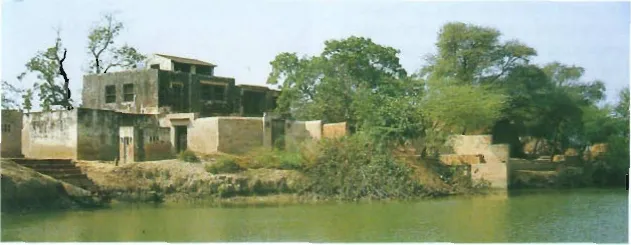
- What it is
- Kumudavana, the forest of the kumuda, the white water lily, is one of the twelve forests of Vraja and one of the seven on the western side of the Yamunā.
- Visiting
- Vṛndāvana-Dhāma Ki Jaya! (c. 1986) and the undated parikramā notes Kumudavana call Kumudavana the smallest of the twelve forests and say that the water lilies that gave it its name once grew here in …
- Places here
- Kumudinī-kuṇḍa, Padma-kuṇḍa, Kapiladeva Mandira (Kumudavana)
In short
Kumudavana, the forest of the kumuda, the white water lily, is one of the twelve forests of Vraja and one of the seven on the western side of the Yamunā.[1 +5] The Varāha Purāṇa and the Ādi-varāha verse that Śrīla Rūpa Gosvāmī quotes call it the third forest, and the Nārada Purāṇa promises the fulfilment of desires to one who bathes there.[2 +5] The Garga-saṁhitā tells that Kṛṣṇa danced the rāsa here, and the Caitanya-caritāmṛta that Śrī Caitanya Mahāprabhu visited the forest and bathed here in ecstatic love.[12 +6] The guidebooks call it the smallest of the twelve forests and give its present village as Kudaravana, two miles west of Tālavana.[19 +4]
Key facts
| Kind | forest |
|---|---|
| Region · area | Madhuvana |
| Ācāryas | Śrī Caitanya Mahāprabhu, Śrīla Rāghava Paṇḍita Gosvāmī of Govardhana, Śrīla Narottama dāsa Ṭhākura, Śrīla Śrīnivāsa Ācārya, Śrīla Narahari Cakravartī Ṭhākura |
Why it is glorified
Quoting the Ādi-varāha, Śrīla Rūpa Gosvāmī's Mathurā-māhātmya (v.336) calls the forest named Kumud-vana the third, excellent and …
Quoting the Ādi-varāha, Śrīla Rūpa Gosvāmī's Mathurā-māhātmya (v.336) calls the forest named Kumud-vana the third, excellent and supreme, and says that a person who goes there becomes fulfilled. The Varāha Purāṇa has the same verse, spelt Kundavana in its available text, and adds that bathing there on the Ekādaśī of the dark fortnight of Bhādrapada brings honour in Rudra's world. In the Bhakti-ratnākara's reading of the verse, one who goes there is honoured in the Lord's world (summarised here, not translated).[2 +4] The readings differ in the name and in the promised result:
Accounts differ What the Ādi-vārāha verse on Kumudavana promises, and how it names the forest.
- Varāha Purāṇa 153.35'Kundavana', the third; going there one becomes fulfilled
- Śrīla Rūpa Gosvāmī, Mathurā-māhātmya v.336'Kumud-vana', the third; going there one becomes fulfilled
- Bhakti-ratnākara (printed p.186)'Kamudvana' (print), the third; going there one is honoured in the Lord's world; Rāghava: honoured in Viṣṇuloka
The Nārada Purāṇa (Uttara-bhāga 79.8) also names Kumuda the third of the twelve forests: one who bathes there obtains the desires he wishes for and rejoices in this world and the next.[11] The Padma Purāṇa, describing the land of Mathurā as a lotus, makes the charming Kumuda forest the ninth petal of its outer whorl.[2 +4]
All the lists of the twelve forests include Kumudavana, but they differ in the other names, their order and their numbering; they are set out side by side on the page of Bahulāvana. An overview of all the lists is on the Vraja-maṇḍala page.[1 +5] Read more: The twelve forests of Vraja: the lists side by side →
Divine pastimes
Kṛṣṇa in Kumudavana
Śrīmad-Bhāgavatam names no forest for the rāsa dance. The Garga-saṁhitā tells that on His journey of the rāsa, after the water pastimes at Tālavana, Kṛṣṇa came to Kumudvana, alive with the humming of bees, and again danced the rāsa there with the gopīs, and that Rādhā decorated Him with flowers. It also names Kumudvana among the forests where He herded the cows.[12 +2]
The guidebooks set further pastimes at the forest's kuṇḍa, the calling of the cows and Kṛṣṇa's water play, which no scripture checked names at this place; they are told on the page of Kumudinī-kuṇḍa.[19 +5]
Śrī Caitanya Mahāprabhu
The Caitanya-caritāmṛta tells that Śrī Caitanya Mahāprabhu visited Madhuvana, Tālavana, Kumudavana and Bahulāvana, and bathed at each place in great ecstatic love.[15 +5]
madhu-vana, tāla, kumuda, bahulā-vana gelā
tāhāṅ tāhāṅ snāna kari’ premāviṣṭa hailā
Śrī Caitanya Mahāprabhu visited the different forests, including Madhuvana, Tālavana, Kumudavana and Bahulāvana. Wherever He went, He took His bath with great ecstatic love.
Translation: Śrīla A.C. Bhaktivedanta Swami PrabhupādaTwo other biographies of Śrī Caitanya, Śrīla Murāri Gupta's Kṛṣṇa-caitanya-caritāmṛta and Śrīla Locana dāsa Ṭhākura's Caitanya-maṅgala, tell that His guide, the Mathurā brāhmaṇa Kṛṣṇadāsa, showed Him Kumudavana as the forest where Kṛṣṇa (in Śrīla Murāri Gupta's words Kṛṣṇa and Balarāma) played with Śrīdāmā, Subala and the other cowherd boys. Śrīla Locana dāsa Ṭhākura adds that a quarrel arose among the boys at their play and that the place is therefore named Kondaliya (summarised here, not translated; both works are read in editions still to be checked).[29 +5] Before the tour Kṛṣṇadāsa places the forest south-west of the Yamunā in Śrīla Murāri Gupta's account, as the edition's English reads it, and in Śrīla Locana dāsa Ṭhākura's south-west of Vṛndāvana, one and a quarter yojanas from Mathurā.[32 +1]
Traditional accounts
According to the Bhakti-ratnākara (Fifth Wave), Śrīla Rāghava Paṇḍita Gosvāmī showed Kumudavana to Śrīla Śrīnivāsa Ācārya and …
According to the Bhakti-ratnākara (Fifth Wave), Śrīla Rāghava Paṇḍita Gosvāmī showed Kumudavana to Śrīla Śrīnivāsa Ācārya and Śrīla Narottama dāsa Ṭhākura as the third forest, most wonderful, merely by coming to which one is honoured in Viṣṇuloka.[9 +1] The same book tells that Śrīla Jāhnavā Mātā later toured the twelve forests with her companions, Kumudavana among them.[36 +2]
Śrīla Nārāyaṇa Bhaṭṭa Gosvāmī's Vraja-bhakti-vilāsa sets the visit to Kumudavana on the Ekādaśī of the dark fortnight of Bhādrapada, citing the "Pādma". Its prayer bows to the forest as charming, the giver of many joys, whose form is many kumuda and kahlāra lilies; the pilgrim then bathes in Padma-kuṇḍa and walks half a krośa round the forest. It names Keśava as the Lord who presides over Kumudavana, and its day plan visits Madhuvana, Tālavana and Kumudavana on the one Ekādaśī (summarised here, not translated).[23 +4]
The Bengali Vṛndāvana-kathā (1920) says that Śrī Kṛṣṇa played in the water of the clear Kumuda-sarovara here, and that Dantavakra was killed here, so that Kumudavana's other name is Datihā. The Bhakti-ratnākara and the 2007 guidebook keep Datihā apart as another place, and Śrīmad-Bhāgavatam tells the killing of Dantavakra without naming a place; the sources differ.[43 +1]
Accounts differ Whether Kumudavana and Datihā, the place of Dantavakra's killing, are one place.
- Vṛndāvana-kathā (1920), printed p.120Dantavakra was killed at Kumudavana; therefore Kumudavana's other name is Datihā
- Bhakti-ratnākara, Fifth Wave, printed p.186after Kumudavana, Rāghava Paṇḍita shows an upavana west of Mathurā where Kṛṣṇa killed Dantavakra and which Vajranābha named Datihā
- Śrī Vraja-maṇḍala Parikramā (2007)Datihā is a separate place, about six miles west of Mathurā and two miles from Śāntanu-kuṇḍa
Śrīla Prabhupāda
In his purport to the verse on Śrī Caitanya Mahāprabhu's visit, Śrīla Prabhupāda lists the twelve forests, Kumudavana among the …
In his purport to the verse on Śrī Caitanya Mahāprabhu's visit, Śrīla Prabhupāda lists the twelve forests, Kumudavana among the seven on the western side of the Yamunā:[16 +5]
Names this place“There are twelve such vanas in Vṛndāvana. Some are located on the western side of the Yamunā, and others are on the eastern side. The forests situated on the eastern side are Bhadravana, Bilvavana, Lauhavana, Bhāṇḍīravana and Mahāvana. On the western side are Madhuvana, Tālavana, Kumudavana, Bahulāvana, Kāmyavana, Khadiravana and Vṛndāvana. These are the twelve forests of the Vṛndāvana area.”
Śrīla Prabhupāda, Śrī Caitanya-caritāmṛta, Madhya-līlā 17.193, purport · vedabase.io
He also names Kumudavana among the twelve forests that those who visit the Vṛndāvana area "today" generally see.[53]
Visiting today
Vṛndāvana-Dhāma Ki Jaya! (c. 1986) and the undated parikramā notes Kumudavana call Kumudavana the smallest of the twelve forests and say that the water lilies that gave it its name once grew here in abundance. Śrī Vraja-maṇḍala Parikramā (2007) gives Kudaravana as its present name, two miles west of Tālavana, and the notes give the walk round it as about one and a half kilometres.[19 +4]
The notes also say that a shrine with Śrī Caitanya Mahāprabhu's footprints remembers His visit, and give the year 1515 for it, which the Caitanya-caritāmṛta does not give; the Vṛndāvana-kathā (1920) knows a seat of His, not footprints.[15 +3]
Caitanya Caraṇa-cinha
Caitanya Caraṇa-cinha, "the footprints of Śrī Caitanya", is a small shrine near the banks of a kuṇḍa of Kumudavana. According to the undated parikramā notes Kumudavana, impressions of Śrī Caitanya Mahāprabhu's lotus feet are worshipped here in memory of His visit to Kumudavana on His tour of Vraja.[55 +1] The Caitanya-caritāmṛta confirms that Mahāprabhu visited Kumudavana and bathed there in ecstatic love (above), but it does not say in which kuṇḍa He bathed and mentions no footprints or shrine.[15 +3] The shrine is known only from the notes, which do not name the kuṇḍa beside it or say who set it up or when.[55 +1] The earliest dated mention of a memorial of Śrī Caitanya at Kumudavana is in the Bengali Vṛndāvana-kathā (1920): under a dark tamāla tree there, it says, are the seat where Caitanyadeva sat and an image of Kapila Muni. It speaks of a seat, not of footprints, and does not say who established it.[58]
Kudaravana
Kudaravana is the village that stands today where the forest of Kumudavana once was, according to the undated parikramā notes Kumudavana, which say that the forest itself has completely disappeared and list the village among the places to visit; their description has not been checked on the spot.[59 +1] Śrī Vraja-maṇḍala Parikramā (2007) gives Kudaravana as the present name of Kumudavana, two miles west of Tālavana, and the historian A. W. Entwistle (1987) gives Kudarban as the present village of the forest, as he gives Maholī for Madhuvana and Tarsi for Tālavana. No scripture or Vaiṣṇava text found so far names Kudaravana.[19 +1]
The Muttra gazetteer of 1911 names a place Kudarban on the Kudarban drain, a drainage cut made in 1896 that runs from Madhuri Kund through Jinsuthi, Sonsa, Kudarban, Usphar, Chhoti Kosi and Sirsa. It does not connect this Kudarban with Kumudavana; it may be the same village, but no source says so.[62]
Smaller places described here
Śrī Vraja-maṇḍala Parikramā (2007) names Ompār, Mānako-nagara and Lagāyo as pastime places in the neighbourhood, in its chapter on Kumudavana, and tells nothing more about them: no pastime, Deity, direction or distance.[63] Its own list of the parikramā route leaves them out, and the places named with them lie miles apart, so where they are is not known.[19 +6]
Location
| Where it is | 'On the western side of the bank' [of the Yamunā] (forest no. 8 of the twelve)[54] |
|---|
Places at Kumudavana
8 places
Also described on this page
- Kudaravana village
- Caitanya Caraṇa-cinha (Kumudavana) footprint
Also listed here
- Lagāyo pastime site
- Mānako-nagara pastime site
- Ompār pastime site
Nearby places
Tālavana
History
According to the historian A. W. Entwistle (1987), the Jain Vividha-tīrtha-kalpa of Jinaprabha Sūri, completed in 1332, already lists Kumudavana, in its Prakrit form, among twelve forests at Mathurā; he calls it the only source of the twelfth to sixteenth centuries that can be dated with certainty.[45]
The Vṛndāvana-kathā (1920) records a seat where Śrī Caitanya sat and an image of Kapila Muni under a dark tamāla tree here; the shrine of Kapila is described on the page of the Kapiladeva temple.[43] F. S. Growse (1883) recorded a special pilgrimage to Madhuvana, Tālavana and Kumudavana on the eleventh day of the bright fortnight of Bhādon, and Prabhudayāl Mītal (1966) the local walk of half a kos round Kumudavana on the eleventh day of the dark fortnight of Bhādrapada, the day and circuit of the Vraja-bhakti-vilāsa.[23 +5]
Where the sources differ
Whether 'Padma-kuṇḍa' is another name of Kumudavana or a kuṇḍa in it.
Accounts differ Whether 'Padma-kuṇḍa' is another name of Kumudavana or a kuṇḍa in it.
- the undated parikramā notes KumudavanaKumudavana 'is also known as Padma-kunda'
- the undated parikramā notes Kumudavana and Vṛndāvana-Dhāma Ki Jaya! (c. 1986)Padma-kuṇḍa is a kuṇḍa in the forest (with the Kapila temple)
- Vraja-bhakti-vilāsa (printed pp.50, 204)Padma-kuṇḍa is the kuṇḍa of Kumudavana
Accounts differ What memorial of Śrī Caitanya Mahāprabhu is at Kumudavana.
- the undated parikramā notes KumudavanaA small shrine called charana-chinha near the banks of the kuṇḍa, where impressions of His lotus feet are worshipped.
- Vṛndāvana-kathā (1920), printed p. 120Under a dark tamāla tree, the seat (āsana) where Caitanyadeva sat, with an image of Kapila Muni.
- Mītal (1966), printed p. 102; Entwistle (1987), printed p. 333They describe the tank, Vallabhācārya's baiṭhaka on its bank and the Kapila shrine, and mention no memorial of Śrī Caitanya.
In which year He visited Kumudavana: the notes give two different years, a 1932 announcement gives another, and the Caitanya-caritāmṛta gives none.[18 +2]
Accounts differ The year of Śrī Caitanya Mahāprabhu's visit to Kumudavana (Vraja-maṇḍala parikramā), which the shrine is said to commemorate.
- the undated parikramā notes KumudavanaHe visited Kumudavana during His Vraja-maṇḍala parikramā 'in the year 1515'.
- the undated parikramā notes KumudavanaThe shrine commemorates His visit 'in the year 1915'.
- 1932 announcement of Śrīla Bhaktisiddhānta Sarasvatī's Vraja-maṇḍala parikramā, quoted in Śrīla Prabhupāda-līlāmṛta 1.4 (Satsvarūpa dāsa Goswami; vedabase)Śrī Kṛṣṇa Caitanya 'exhibited the leela of performing the circumambulation of Shri Braja Mandal during the winter of 1514 A.D.'
- Śrī Caitanya-caritāmṛta, Madhya-līlā 17.193Tells the visit to Kumudavana; gives no year in the verse.
More on this place
The twelve forests of Vraja: the lists side by side
References
69 references
- Padma Purāṇa, Vṛndāvana-māhātmya (1) vv.16-17 (= Padma Pātāla-khaṇḍa 69.16-17)
- Varāha Purāṇa, adhyāya 161, verses 6-10, Sanskrit Wikisource
- Śrīla Rūpa Gosvāmī, Mathurā-māhātmya v.330 with its introductory line, and the heading 'atha dvādaśa-vanānāṁ māhātmyam'
- Śrīla Narahari Cakravartī, Bhakti-ratnākara, Fifth Wave, printed p.185 (1912 ed.), the list of the twelve forests with the Padma and Skanda verses, 2nd ed., 1912
- Ādi-purāṇa, chapter (9) 'navamo'dhyāyaḥ', vv.17-20 (v.21 summarised in notes), Śrī Veṅkaṭeśvara Press, Mumbai, 1929
- Śrīla Nārāyaṇa Bhaṭṭa, Vraja-bhakti-vilāsa, printed p.12: 'the two divisions of the twelve forests, north and south of the Yamunā', 1st ed., publ. Bābā Kṛṣṇadāsa, Kusuma-sarovara, Saṁvat 2008
- Varāha Purāṇa, adhyāya 153, vv.35-36, Sanskrit Wikisource
- Śrīla Rūpa Gosvāmī, Mathurā-māhātmya v.336
- Śrīla Narahari Cakravartī, Bhakti-ratnākara, Fifth Wave, printed p.186 (1912 ed.): 'the third' forest, Kumudavana, 2nd ed., 1912
- Padma Purāṇa, Vṛndāvana-māhātmya (1) vv.44-45 (= Padma Pātāla-khaṇḍa 69.44-45)
- Nārada Purāṇa, Uttara-bhāga 79.8
- Garga-saṁhitā, Vṛndāvana-khaṇḍa (2) 20.29-30 (chapter 'rāsa-krīḍā'), Sanskrit Wikisource
- Garga-saṁhitā, Vṛndāvana-khaṇḍa (2) 10.18, Sanskrit Wikisource
- Śrīmad-Bhāgavatam 10.29.1, GRETIL
- Śrīla Kṛṣṇadāsa Kavirāja Gosvāmī, Śrī Caitanya-caritāmṛta, CC Madhya-līlā 17.193, online edition · vedabase.io
- Śrīla Prabhupāda, Śrī Caitanya-caritāmṛta, Madhya-līlā 17.193, purport · vedabase.io
- Śrī Vraja-maṇḍala Parikramā (2007), PDF p. 63
- the undated parikramā notes Kumudavana, ¶3
- Śrī Vraja-maṇḍala Parikramā (2007), PDF p. 70
- Vṛndāvana-Dhāma Ki Jaya! (c. 1986), by Dhruva Mahārāja dāsa, PDF p. 29
Show all 69 references
- the undated parikramā notes Kumudavana, ¶3-¶5
- the undated parikramā notes Kumudavana, ¶19
- Prabhudayāl Mītal, 'Braj-yātrā', Kumudavana (visited from the first halt), printed p.102
- the undated parikramā notes Kumudavana, ¶19-¶21
- Śrīmad-Bhāgavatam 10.15.12, GRETIL
- Śrīmad-Bhāgavatam 10.33.23
- Śrīla Prabhupāda, Kṛṣṇa, the Supreme Personality of Godhead (Kṛṣṇa book), Chapter 33, 'Description of the Rāsa Dance' · vedabase.io
- Śrīla Prabhupāda, Kṛṣṇa, the Supreme Personality of Godhead (Kṛṣṇa book), Chapter 15, 'The Killing of Dhenukāsura' · vedabase.io
- Kṛṣṇa-caitanya-caritāmṛta of Śrī Murāri Gupta, prakrama 4, sarga 10, v.7
- Śrī Locana dāsa Ṭhākura, Caitanya-maṅgala, Śeṣa-khaṇḍa, printed p. 177, left column, lines 16-17 (lines 18-22 summarised)
- Kṛṣṇa-caitanya-caritāmṛta of Śrī Murāri Gupta, prakrama 4, sarga 3, vv.5-8
- Kṛṣṇa-caitanya-caritāmṛta of Śrī Murāri Gupta, prakrama 4, sarga 3, v.10
- Śrī Locana dāsa Ṭhākura, Caitanya-maṅgala, Śeṣa-khaṇḍa, printed p. 170, left column, line 7 (line 8 summarised)
- Śrī Locana dāsa Ṭhākura, Caitanya-maṅgala, Śeṣa-khaṇḍa, printed p. 170, left column, lines 25-26 and 35-36
- Śrīla Narahari Cakravartī, Bhakti-ratnākara, Fifth Wave, printed p.189 (1912 ed.): Bahulāvana and Śrī Caitanya's visit, 2nd ed., 1912
- Śrīla Narahari Cakravartī, Bhakti-ratnākara, Eleventh Wave, printed p.670 (1912 ed.): Jāhnavā Īśvarī's tour of the twelve forests, 2nd ed., 1912
- Vṛndāvana-Dhāma Ki Jaya! (c. 1986), by Dhruva Mahārāja dāsa, PDF p. 30
- the undated parikramā notes Bahulāvana, ¶34
- Śrīla Nārāyaṇa Bhaṭṭa, Vraja-bhakti-vilāsa, chapter 9, vv.72-73: 'kumudavana-mahātmya-pradakṣiṇā', 1st ed., publ. Bābā Kṛṣṇadāsa, Kusuma-sarovara, Saṁvat 2008
- Śrīla Nārāyaṇa Bhaṭṭa, Vraja-bhakti-vilāsa, printed p.5, the presiding deities of the twelve forests, 1st ed., publ. Bābā Kṛṣṇadāsa, Kusuma-sarovara, Saṁvat 2008
- Śrīla Nārāyaṇa Bhaṭṭa, Vraja-bhakti-vilāsa, printed p.178, within the verse the print numbers 6 (finding aid Vraja-bhakti-vilāsa chapter (7) v.7): the pilgrimage of the dark Ekādaśī and Dvādaśī of Bhādrapada, 1st ed., publ. Bābā Kṛṣṇadāsa, Kusuma-sarovara, Saṁvat 2008
- Śrīla Nārāyaṇa Bhaṭṭa, Vraja-bhakti-vilāsa, first chapter, v.93 (the print closes the passage '॥ ९३ ॥'): Vraja-maṇḍala and its forests as the limbs of the Lord, quoted under the label 'viṣṇu-rahasye'; printed p. 14, 1st ed., publ. Bābā Kṛṣṇadāsa, Kusuma-sarovara, Saṁvat 2008
- Vṛndāvana-kathā, chapter 8 (aṣṭama pariccheda), the twelve forests: Kumudavana, printed p.120
- Śrīmad-Bhāgavatam 10.78.8, GRETIL
- A. W. Entwistle, ch. 6 §3 'Jinaprabha Suri (VTK)', printed p.231, Egbert Forsten, Groningen, 1987
- Mathurá (1883), F. S. Growse, B.C.S., M.A. Oxon., C.I.E. (as the title page gives him, p. 82
- Mathurá (1883), F. S. Growse, B.C.S., M.A. Oxon., C.I.E. (as the title page gives him, p. 181
- Prabhudayāl Mītal, 'Braj-yātrā', 1 Madhuvana (the first halt, Bhādrapada śukla 13), printed pp.101-102
- Prabhudayāl Mītal, 'Braj-yātrā', Tālavana (visited from the first halt), printed p.102
- Śrīla Prabhupāda, Śrīmad-Bhāgavatam, 4.8.42, purport · vedabase.io
- Śrīla Prabhupāda, Śrī Caitanya-caritāmṛta, Madhya-līlā 5.12, purport · vedabase.io
- Śrīla Prabhupāda, The Nectar of Instruction, Text 9, purport · vedabase.io
- Śrīla Prabhupāda, Śrī Caitanya-caritāmṛta, Madhya-līlā 1.239, purport · vedabase.io
- Śrīla Prabhupāda, Śrīmad-Bhāgavatam 4.8.42, purport (the list, as reprinted with numbers)
- the undated parikramā notes Kumudavana, ¶24
- the undated parikramā notes Kumudavana, ¶8
- Śrīla Prabhupāda, Śrī Caitanya-caritāmṛta, Madhya-līlā 17.193, translation · vedabase.io
- Vṛndāvana-kathā, chapter 8, the twelve forests: Kumudavana, printed p. 120
- the undated parikramā notes Kumudavana, ¶10
- the undated parikramā notes Kumudavana, ¶39
- A. W. Entwistle, ch. 8 §4 'Kumudban (Kudarban)', printed p. 333, Egbert Forsten, Groningen, 1987
- Muttra (1911), D. L. Drake-Brockman, I.C.S. (edited and compiled)
- Śrī Vraja-maṇḍala Parikramā (2007), PDF p. 71
- Śrī Vraja-maṇḍala Parikramā (2007), PDF p. 24
- Śrī Vraja-maṇḍala Parikramā (2007), PDF p. 25
- Śrī Vraja-maṇḍala Parikramā (2007), PDF p. 66
- Śrī Vraja-maṇḍala Parikramā (2007), PDF p. 50
- Śrī Vraja-maṇḍala Parikramā (2007), PDF p. 72
- Śrīla Prabhupāda-līlāmṛta · vedabase.io