Balabhadra-kuṇḍa (Tālavana)
बलभद्र-कुण्ड (तालवन) Hindi name proposed
Also called Sankarṣana kunda, Balabhadra kunda, Tālavana kunda, Tarasi kunda
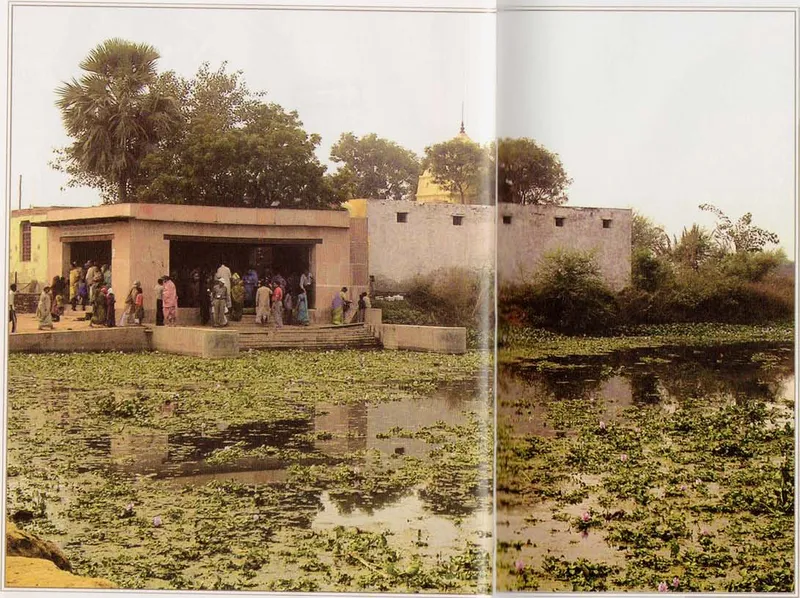
- What it is
- Balabhadra-kuṇḍa is the large lake of Tālavana, the palm forest where Balarāma killed the ass-demon Dhenuka.
- Visiting
- According to the undated parikramā notes Tālavana, the lake is very large and is known locally as Tālavana-kuṇḍa or Tarasi-kuṇḍa.
In short
Balabhadra-kuṇḍa is the large lake of Tālavana, the palm forest where Balarāma killed the ass-demon Dhenuka. According to the undated parikramā notes Tālavana, it is also called Saṅkarṣaṇa-kuṇḍa or Baladeva-kuṇḍa after Balarāma, and locally Tālavana-kuṇḍa or Tarasi-kuṇḍa.[1 +4] Śrīmad-Bhāgavatam tells the killing of Dhenuka in Tālavana but names no kuṇḍa.[6 +4] The Varāha Purāṇa places an unnamed kuṇḍa of clear water in Tālavana, and Śrīla Nārāyaṇa Bhaṭṭa Gosvāmī's Vraja-bhakti-vilāsa gives Saṅkarṣaṇa-kuṇḍa as the holy water of the forest.[11 +3] A temple of Baladeva stands beside the lake.[3 +4]
Key facts
| Kind | kuṇḍa |
|---|---|
| Region · area | Madhuvana · Tālavana |
| Ācāryas | Śrīla Nārāyaṇa Bhaṭṭa Gosvāmī, Śrīla Rūpa Gosvāmī |
Why it is glorified
The Varāha Purāṇa describes Tālavana, guarded by the demon Dhenuka, west of Mathurā, and says that there is a kuṇḍa there with …
The Varāha Purāṇa describes Tālavana, guarded by the demon Dhenuka, west of Mathurā, and says that there is a kuṇḍa there with clear water and blue lotuses, where bathing and giving in charity bring the result one desires.[11 +1]
अस्ति तालवनं नाम धेनुकासुररक्षितम् ।। मथुरापश्चिमे भागे अदूरादर्द्धयोजनम् … तत्र कुण्डं स्वच्छजलं नीलोत्पलविभूषितम् ।। तत्र स्नानेन दानेन वाञ्छितं फलमाप्नुयात्
asti tālavanaṁ nāma dhenukāsura-rakṣitam
mathurā-paścime bhāge adūrād arddha-yojanam … tatra kuṇḍaṁ svaccha-jalaṁ nīlotpala-vibhūṣitam
tatra snānena dānena vāñchitaṁ phalam āpnuyāt
Śrīla Rūpa Gosvāmī's Mathurā-māhātmya quotes the same couplet from the Ādi-varāha under the heading of Tālavana. Neither text names the kuṇḍa, so it is likely but not certain that they mean this lake.[11 +1]
Śrīla Rūpa Gosvāmī also quotes a verse that he ascribes to the Mathurā-khaṇḍa of the Skanda Purāṇa: Tālavana is holy, for there the demon was killed among the palm trees, and whoever bathes there, in whatever water, attains the state of a Yādava and sees the Lord at the end of life (summarised here, not translated). The 2007 guidebook Śrī Vraja-maṇḍala Parikramā and the undated notes Tālavana print the first line of this verse for Tālavana.[18 +4]
Śrīla Nārāyaṇa Bhaṭṭa Gosvāmī's Vraja-bhakti-vilāsa names Saṅkarṣaṇa-kuṇḍa as the holy water of Tālavana and gives the prayer for bathing in it during the circuit of the forest on the Ekādaśī of the dark fortnight of Bhādra (August–September), citing an "Ādi-purāṇa". The edition's Hindi translation renders the prayer's address to the kuṇḍa as "made by Saṅkarṣaṇa", that is, by Balarāma (summarised here, not translated).[13 +1]
अथ तालबनमहात्म्यपूर्वप्रदक्षिणा । आदिपुराणे—
भाद्रे मास्यसिते पक्षे ह्येकादश्यां गतो बनं । तालनाम्नाऽसुरेणापि रचितं निर्मलं स्थलं ॥
…
ततो संकर्षणकुण्डस्नानाचमनप्रार्थनमन्त्रः—
संकर्षणकृतार्थाय तीर्थराज नमोऽस्तु ते । क्षीरपूर्णाय रम्याय कलाकान्तसुखाय ते ॥
इति मन्त्रं षडावृत्या मज्जनाचमनैर्नमन् । वाञ्छितं फलमाप्नोति मन्दभागी भवेन्नरः ॥
atha tālabanamahātmyapūrvapradakṣiṇā
ādipurāṇe— / bhādre māsyasite pakṣe hyekādaśyāṁ gato banaṁ
tālanāmnā'sureṇāpi racitaṁ nirmalaṁ sthalaṁ
/ … / tato saṁkarṣaṇakuṇḍasnānācamanaprārthanamantraḥ— / saṁkarṣaṇakṛtārthāya tīrtharāja namo'stu te
kṣīrapūrṇāya ramyāya kalākāntasukhāya te
/ iti mantraṁ ṣaḍāvṛtyā majjanācamanairnaman
vāñchitaṁ phalamāpnoti mandabhāgī bhavennaraḥ ||
Divine pastimes
The killing of Dhenuka
Śrīmad-Bhāgavatam (10.15.20–40) tells that the cowherd boys asked Kṛṣṇa and Balarāma for the palm fruits of a forest guarded by Dhenuka. Laughing, the brothers went there with the boys; Balarāma seized the demon by his hooves and whirled him into the top of a palm tree, and the whirling killed him. Afterwards people ate the palm fruits without fear and the cows grazed there freely. The Bhāgavatam names Tālavana but not the kuṇḍa.[6 +4]
sa taṃ gṛhītvā prapador bhrāmayitvaika-pāṇinā / cikṣepa tṛṇa-rājāgre bhrāmaṇa-tyakta-jīvitam
Lord Balarāma seized Dhenuka by his hooves, whirled him about with one hand and threw him into the top of a palm tree. The violent wheeling motion killed the demon.
Translation: Śrīla Prabhupāda's disciples (BBT)The Garga-saṁhitā tells the killing differently; the accounts are set side by side on the page of the temple of Baladeva.[24 +2] Read more: The killing of Dhenuka at Tālavana →
Where Tālavana lies
Commenting on ŚB 10.15.21, Śrīla Sanātana Gosvāmī and Śrīla Jīva Gosvāmī place Tālavana within four krośas east of Govardhana, where the cows were then mostly grazed, and say that the forest stretched over two krośas.[27] Śrīla Viśvanātha Cakravartī Ṭhākura places it within four krośas of Govardhana, in the region known as Tārapharā or Tālasī, south-west of Mathurā (summarised here, not translated).[28] The name Tālasī is close to Tarsi or Tarasi, the present name of the village and a local name of the lake, but Śrīla Viśvanātha Cakravartī Ṭhākura does not mention the lake.[1 +5]
The Vetra-gaṅgā
The Garga-saṁhitā (Vṛndāvana-khaṇḍa 20) tells that during a rāsa in Tālavana the gopīs were thirsty and the Yamunā was far away. Kṛṣṇa struck the ground with His stick, and a stream called the Vetra-gaṅgā sprang up, in which He played in the water with Śrī Rādhā and the gopīs. The Garga-saṁhitā calls it a stream, not a kuṇḍa, and no source read says that the Vetra-gaṅgā is this lake.[29 +1]
तदैव निर्गतः स्रोतो वेत्रगंगेति कथ्यते । यज्जलस्पर्शमात्रेण ब्रह्महत्या प्रमुच्यते … तत्र स्नात्वा नरः कोऽपि गोलोकं याति मैथिल । गोपीभी राधया सार्धं श्रीकृष्णो भगवान् हरिः … वारां विहारं कृतवान् देवो मदनमोहनः
tadaiva nirgataḥ sroto vetra-gaṅgeti kathyate
yaj-jala-sparśa-mātreṇa brahma-hatyā pramucyate … tatra snātvā naraḥ ko ’pi golokaṁ yāti maithila
gopībhī rādhayā sārdhaṁ śrī-kṛṣṇo bhagavān hariḥ … vārāṁ vihāraṁ kṛtavān devo madana-mohanaḥ
Śrī Caitanya Mahāprabhu
The Caitanya-caritāmṛta tells that Śrī Caitanya Mahāprabhu visited Madhuvana, Tālavana, Kumudavana and Bahulāvana and bathed wherever He went; it does not name the kuṇḍas.[32 +1] Read more: Śrī Caitanya Mahāprabhu in the forests of Vraja →
মধুবন, তাল, কুমুদ, বহুলা-বন গেলা ।
তাহাঁ তাহাঁ স্নান করি’ প্রেমাবিষ্ট হৈলা ॥ ১৯৩ ॥
madhu-vana, tāla, kumuda, bahulā-vana gelā
tāhāṅ tāhāṅ snāna kari’ premāviṣṭa hailā
Śrī Caitanya Mahāprabhu visited the different forests, including Madhuvana, Tālavana, Kumudavana and Bahulāvana. Wherever He went, He took His bath with great ecstatic love.
Translation: Śrīla A.C. Bhaktivedanta Swami PrabhupādaŚrīla Prabhupāda
In his purport to this verse Śrīla Prabhupāda explains the twelve forests of the Vṛndāvana area.
In his purport to this verse Śrīla Prabhupāda explains the twelve forests of the Vṛndāvana area. He does not name the kuṇḍa:[33]
General teaching (does not name the place)“On the western side are Madhuvana, Tālavana, Kumudavana, Bahulāvana, Kāmyavana, Khadiravana and Vṛndāvana. These are the twelve forests of the Vṛndāvana area.”
Śrīla Prabhupāda, Śrī Caitanya-caritāmṛta, Madhya-līlā 17.193, purport · vedabase.io
Visiting today
According to the undated parikramā notes Tālavana, the lake is very large and is known locally as Tālavana-kuṇḍa or Tarasi-kuṇḍa. Śrī Vraja-maṇḍala Parikramā (2007) calls it Balabhadra-kuṇḍa and Vṛndāvana-Dhāma Ki Jaya! (c. 1986) calls it Saṅkarṣaṇa-kuṇḍa.[1 +4]
Where the sources differ
Whether the kuṇḍa of clear water belongs to Tālavana or, as the Bhakti-ratnākara places the couplet, to Madhuvana.[11 +2]
Accounts differ Whether the kuṇḍa 'of clear water, adorned with blue lotuses' belongs to Tālavana or to Madhuvana.
- Varāha Purāṇa 157.39-40After there is a forest named Tālavana, guarded by Dhenukāsura: there is a kuṇḍa there with clear water … (Tālavana).
- Śrīla Rūpa Gosvāmī, Mathurā-māhātmya vv.332-333, quoting the Ādi-varāhaThe couplet follows the verse on Tālavana, the second excellent forest (Tālavana).
- Bhakti-ratnākara 5.401-402 (printed p. 185), quoting the Ādi-varāhaThe couplet follows the verse on Madhuvana, before the Tālavana section begins (Madhuvana).
The wording of these accounts is our summary of the sources, not a published translation.
Who made the kuṇḍa. The undated notes Tālavana report, as something that is said, that Kṛṣṇa made it by striking His cowherding stick into the ground so that the boys and the cows could drink; the Vraja-bhakti-vilāsa's prayer, as its Hindi translation reads it, calls it made by Saṅkarṣaṇa.[1 +6]
Accounts differ Who made Tālavana's kuṇḍa (Saṅkarṣaṇa-/Balabhadra-kuṇḍa).
- the undated parikramā notes Tālavana'It is said' Kṛṣṇa created it by striking His cowherding stick into the ground; its names refer to Balarāma.
- Vraja-bhakti-vilāsa ch. 9 v.71 (with the edition's Hindi, printed p. 203)The prayer addresses it as saṅkarṣaṇa-kṛtārtha; the Hindi translation renders this made by Saṅkarṣaṇa.
- Garga-saṁhitā, Vṛndāvana-khaṇḍa 20.22-29 (English 2.20.22-28, Danavir Goswami)In Tālavana, during a rāsa, Kṛṣṇa struck the ground with His stick for the thirsty gopīs and a stream, the Vetra-gaṅgā, sprang up: a stream made for the gopīs, not a kuṇḍa for the boys and cows, and not identified with Saṅkarṣaṇa-kuṇḍa.
The wording of these accounts is our summary of the sources, not a published translation.
More on this place
The killing of Dhenuka at Tālavana · Śrī Caitanya Mahāprabhu in the forests of Vraja
References
36 references
- the undated parikramā notes Tālavana, ¶15
- the undated parikramā notes Tālavana, ¶16
- Śrī Vraja-maṇḍala Parikramā (2007), PDF p. 67
- Śrī Vraja-maṇḍala Parikramā (2007), PDF p. 68
- Vṛndāvana-Dhāma Ki Jaya! (c. 1986), by Dhruva Mahārāja dāsa, PDF p. 28
- Śrīmad-Bhāgavatam 10.15.21, GRETIL
- Śrīmad-Bhāgavatam 10.15.27, GRETIL
- Śrīmad-Bhāgavatam 10.15.32, GRETIL
- Śrīmad-Bhāgavatam 10.15.40, GRETIL
- Śrīla Prabhupāda, Kṛṣṇa, the Supreme Personality of Godhead, Chapter 15, 'The Killing of Dhenukāsura' · vedabase.io
- Varāha Purāṇa, 157.39-40, Sanskrit Wikisource
- Śrīla Rūpa Gosvāmī, Mathurā-māhātmya vv.332-335
- Śrīla Nārāyaṇa Bhaṭṭa, Vraja-bhakti-vilāsa, ch. 2 v.54, printed p. 50, 1st ed., publ. Bābā Kṛṣṇadāsa, Kusuma-sarovara, Saṁvat 2008
- Śrīla Nārāyaṇa Bhaṭṭa, Vraja-bhakti-vilāsa, ch. 9 vv. 70-71, printed p. 203, 1st ed., publ. Bābā Kṛṣṇadāsa, Kusuma-sarovara, Saṁvat 2008
- the undated parikramā notes Tālavana, ¶18
- the undated parikramā notes Tālavana, ¶19
- Varāha Purāṇa, 157.39-40, Sanskrit Wikisource
- Śrīla Rūpa Gosvāmī, Mathurā-māhātmya vv. 334-335
- Śrī Vraja-maṇḍala Parikramā (2007), PDF p. 66
- the undated parikramā notes Tālavana, ¶39
Show all 36 references
- the undated parikramā notes Tālavana, ¶40
- the undated parikramā notes Tālavana, ¶41
- Śrīla Nārāyaṇa Bhaṭṭa, Vraja-bhakti-vilāsa, ch. 9 vv. 70-71, printed p. 203, 1st ed., publ. Bābā Kṛṣṇadāsa, Kusuma-sarovara, Saṁvat 2008
- Garga-saṁhitā, Vṛndāvana-khaṇḍa (2) 8.2, Sanskrit Wikisource
- Garga-saṁhitā, Vṛndāvana-khaṇḍa (2) 8.25-26, Sanskrit Wikisource
- Garga-saṁhitā, Vṛndāvana-khaṇḍa (2) 8.38-39, Sanskrit Wikisource
- Śrīmad-Bhāgavatam canto 10 with commentaries: Śrīla Sanātana Gosvāmī's Bṛhad-vaiṣṇava-toṣaṇī: commentary on 10.15.22 (Grantha Mandira numbering; vedabase 10.15.21), Bhagavata Vidya Pith edition, ed. Bhagavata Rishi and Krishna Shankar Shastri, 1996
- Śrīla Viśvanātha Cakravartī Ṭhākura, Baladeva Vidyābhūṣaṇa: commentary on ŚB 10.15.21, Bhagavata Vidya Pith edition, ed. Bhagavata Rishi and Krishna Shankar Shastri, 1996
- Garga-saṁhitā, Vṛndāvana-khaṇḍa (2) 20.22-26, Sanskrit Wikisource
- Garga-saṁhitā, Vṛndāvana-khaṇḍa (2) 20.27-29, Sanskrit Wikisource
- Garga-saṁhitā, Vṛndāvana-khaṇḍa (2) 20.27-29, Sanskrit Wikisource
- Śrīla Kṛṣṇadāsa Kavirāja Gosvāmī, Śrī Caitanya-caritāmṛta, CC Madhya-līlā 17.193, online edition · vedabase.io
- Śrīla Prabhupāda, Śrī Caitanya-caritāmṛta, Madhya-līlā 17.193, purport · vedabase.io
- Śrīla Narahari Cakravartī, Bhakti-ratnākara, Fifth Wave (pañcama taraṅga) vv. 401-403, printed p. 185, 2nd ed., 1912
- Śrī Vraja-maṇḍala Parikramā (2007), p. 108-109
- Vṛndāvana-Dhāma Ki Jaya! (c. 1986), by Dhruva Mahārāja dāsa, p. 10