The twelve forests of Vraja: the lists side by side
व्रज के बारह वन: सूचियाँ साथ-साथ
In short
The twelve forests, or dvādaśa-vana, are the main forests of Vraja in which Kṛṣṇa performed His pastimes. Śrīla Prabhupāda lists seven west of the Yamunā: Madhuvana, Tālavana, Kumudavana, Bahulāvana, Kāmyavana, Khadiravana and Vṛndāvana. Five lie east of it: Bhadravana, Bilvavana, Lauhavana, Bhāṇḍīravana and Mahāvana. This website follows his list, from the Padma Purāṇa tradition; other lists differ.[1–7]
On this page
At a glance
- Śrīla Prabhupāda gives the twelve forests in three purports, always in the same division of five and seven.[1, 8–12]
- The Purāṇas, the old scriptures, give them in order. The Varāha Purāṇa counts Madhuvana first and Vṛndāvana twelfth.[3]
- The Padma Purāṇa also puts seven west of the Kālindī, that is the Yamunā, and five east of it.[2]
- Śrīla Nārāyaṇa Bhaṭṭa Gosvāmī's Vraja-bhakti-vilāsa counts forty-eight forests in all: twelve vanas (forests) and twelve each of three kinds of smaller forests, the upavanas, prativanas and adhivanas.[13]
- This website presents Kokilāvana as a sub-forest (upavana), following Śrīla Viśvanātha Cakravartī Ṭhākura; the Vraja-bhakti-vilāsa's lists count it among the twelve.[14, 15]
- According to the historian A. W. Entwistle, the earliest list with a certain date is a Jain text completed in 1332.[16]
What are the twelve forests of Vraja?
Śrīla Prabhupāda names the twelve in a purport (his explanation of a verse). It is on the verse in which Nārada sends Dhruva to Madhuvana. There he says that pilgrims from all parts of India gather to visit all twelve of them.[8]
Names this place“There are twelve forests in the area of Vṛndāvana, and Madhuvana is one of them. Pilgrims from all parts of India assemble together and visit all twelve of these forests. … On the western side of the bank there are seven: Madhuvana, Tālavana, Kumudavana, Bahulāvana, Kāmyavana, Khadiravana and Vṛndāvana.”
Śrīla Prabhupāda, Śrīmad-Bhāgavatam, 4.8.42, purport · vedabase.io
He gives the same list in two more purports: on Śrī Caitanya Mahāprabhu's visit to the forests, and on the story of the two brāhmaṇas who walked to Vṛndāvana. Each time there are five on the eastern side of the Yamunā and seven on the western.[1, 9] His purport on the Bhāgavatam's Madhuvana adds that this forest still exists in the district of Mathurā.[8]
Here are the forests of his list, with what other texts say of each:[1]
- Madhuvana: the first forest in the Varāha Purāṇa and the Ādi-purāṇa. The Vraja-bhakti-vilāsa counts it instead as a resting place outside the twelve.[3, 6, 7] Read more: Madhuvana, Dhruva and the founding of Mathurā →
- Tālavana: the second in the same lists, the forest where the killing of Dhenuka is remembered.[3, 17] Read more: The killing of Dhenuka at Tālavana →
- Kumudavana: the third. It is written Kundavana in the Varāha Purāṇa's text and Kumud-vana in Śrīla Rūpa Gosvāmī's quotation.[3 +4]
- Bahulāvana: the fifth in the Varāha Purāṇa and the Nārada Purāṇa, and the fourth in the Ādi-purāṇa.[6, 21]
- Kāmyavana: one of the seven western forests in Śrīla Prabhupāda's list, and the fourth in the Varāha Purāṇa's order.[3, 8]
- Khadiravana: one of the western seven in Śrīla Prabhupāda's list and in the Padma Purāṇa's.[1, 2]
- Vṛndāvana: the twelfth in the Varāha Purāṇa. The Ādi-purāṇa calls it the original forest.[3, 6]
- Bhadravana, Bilvavana, Lauhavana, Bhāṇḍīravana and Mahāvana: the five forests east of the Yamunā in Śrīla Prabhupāda's purports.[1]
Which forests lie east and which west of the Yamunā?
The division by the river is found in the Purāṇas. The Padma Purāṇa, in the first chapter of its Vṛndāvana-māhātmya (its section on Vṛndāvana's glory), names twelve main forests of the Māthura-maṇḍala, the land around Mathurā. It says that seven lie west of the Kālindī and five east of it (summarised here, not translated).[2] In another part, a pilgrim's account of Mathurā, it says only that twelve splendid forests lie on both banks of the Yamunā.[22]
In the Bhakti-ratnākara, Śrīla Rāghava Paṇḍita Gosvāmī tells Śrīla Śrīnivāsa Ācārya the twelve in the same two groups. Madhu, Tāla, Kumuda, Bahulā, Kāmya, Khadira and Śrī Vṛndāvana are on this side of the Yamunā, and the other five are across it. The book quotes the Padma list. It also quotes a Skanda verse with the five beginning with Bhadra in the east and the seven beginning with Tāla in the west (summarised here, not translated).[5]
The Vraja-bhakti-vilāsa divides them differently, in a verse it credits to the Ādi-vārāha. Five stand on the northern bank: Mahāvana, Bhāṇḍīra, Lohajaṅgha, Bilva and Bhadra. Seven stand on the southern: Tāla, Bahulā, Kumuda, Chatra, Khadira, Kokilā and Kāmya. Madhuvana in the south and Mṛdvana in the north are added as the two resting places (summarised here, not translated).[7]
Śrīla Murāri Gupta also tells of Śrī Caitanya's tour. In his account, the guide Kṛṣṇadāsa describes the forests west and east of the Yamunā before they set out (summarised here, not translated).[23–25]
Why do the Purāṇa lists differ?
The Purāṇas agree on the number twelve, but not on the order or on every name. The Varāha Purāṇa counts Madhuvana first, Tāla second, Kunda third, Kāmyaka fourth, Bahu fifth and Bhadra sixth. Then come Khādira, Mahāvana, Lohārgala, Bilva, Bhāṇḍīra and Vṛndāvana. It says that those who see them do not suffer hell (summarised here, not translated).[3]
The Padma Purāṇa's list runs Bhadra, Śrī, Loha, Bhāṇḍīra, Mahā, Tāla, Khadira, Bakula, Kumuda, Kāmya, Madhu and Vṛndāvana. Where the Purāṇa's text reads Bakula, the Bhakti-ratnākara's quotation reads Bahulā.[2] The Ādi-purāṇa gives Madhuvana first, Tāla second, Kumuda third and Bahulā fourth, and it has Chatravana among the twelve.[6] The Nārada Purāṇa counts Kumuda third and Bahulā fifth.[21, 26]
In his Mathurā-māhātmya, Śrīla Rūpa Gosvāmī gathers verses that he gives as from the Ādi-vārāha, one for each forest. Madhuvana is first, Tālavana second, Kumudavana third and Bahulāvana fifth (summarised here, not translated).[4] Vaṁśīdhara comments on Śrīdhara Svāmī's plan of the Tenth Canto. He counts Madhu, Tāla, Kumuda, Bahulā, Kāmya, Khadira, Vṛndā, Bhadra, Bhāṇḍīra, Bilva, Loha and Mahāvana.[27]
Is Kokilāvana one of the twelve?
The answer depends on the list. This website presents Kokilāvana as a sub-forest, following Śrīla Viśvanātha Cakravartī Ṭhākura. In his Vraja-rīti-cintāmaṇi he names Kokilā-kānana as one of the twenty-four sub-forests of Hari (Kṛṣṇa) known in scripture. There the call of the cuckoo (kokila) served as a signal.[14] The Nārada Purāṇa names a Kokila forest among the places of Vṛndāvana, without counting it among its twelve.[28] Pulinbihārī Datta's Vṛndāvana-kathā (1920) lists Kokilavana, with Lāṭhāvana and Chatravana, among the many upavanas besides the twelve. It says that these forests are only villages.[29]
The Vraja-bhakti-vilāsa classifies it differently. It counts Kokilāvana among the twelve twice. It is third in a list the book quotes as from the Padma, and it is among the seven southern forests in its Ādi-vārāha division (summarised here, not translated).[15, 30]
The lists that include it and those that leave it out are set side by side here:
Accounts differ Whether Kokilāvana is one of the twelve forests of Vraja, or a sub-forest (upavana).
- Vraja-bhakti-vilāsa, list quoted 'pādme' (printed p. 2)Yes: the one called Kokilā is the third of the twelve forests.
- Vraja-bhakti-vilāsa, division of the twelve forests quoted 'ādivārāhe' (printed p. 12)Yes: the forest called Kokilā is one of the seven of the twelve forests on the southern bank of the Yamunā.
- Padma Purāṇa text, Pātāla-khaṇḍa 69.16-17Not in its list of twelve.
- Varāha Purāṇa 161.6-10Not in its list of twelve.
The wording of these accounts is our summary of the sources, not a published translation.
What are the upavanas?
Besides the twelve main forests, the texts know many smaller ones, the upavanas or sub-forests. The Vraja-bhakti-vilāsa announces forty-eight forests of Vraja: the vanas, upavanas, prativanas and adhivanas. It gives four lists of twelve under the names of the Padma, Varāha, Bhaviṣya and Viṣṇu Purāṇas.[13] Its upavanas include Apsarāvana, Vihvalavana and Premavana, each with a presiding Deity (the form of the Lord worshipped there) and a day for walking round it.[31–41]
Śrīla Viśvanātha Cakravartī Ṭhākura counts twenty-four upavanas beside the twelve. The Garga-saṁhitā gives the land of Vraja twenty-four forests in all (summarised here, not translated).[14 +6]
Who presides over the forests?
The Vraja-bhakti-vilāsa, citing the Bṛhan-nāradīya, names a Lord who presides over each forest. Among them are Dāmodara over Tālavana, Keśava over Kumudavana and Padmanābha over Bahulāvana (summarised here, not translated).[48] Quoting a Viṣṇu-rahasya, the same book describes the whole land as the Lord's body. Mathurā is the heart and Madhuvana the navel. Kumuda and Tāla are the two breasts, Bahulā and Mahāvana the two arms, and Vṛndāvana the forehead.[49]
The Padma Purāṇa uses another image: the Māthura-maṇḍala as a lotus. In its outer ring of sixteen petals, Bakula is the seventh petal and Tālavana the eighth, where the killing of Dhenuka is remembered. Kumuda is the ninth and Kāmyavana the tenth (summarised here, not translated).[17]
How old are the lists?
The Purāṇas cannot be given a date, but one outside source can. According to A. W. Entwistle (1987), the Jain Vividha-tīrtha-kalpa of Jinaprabha Sūri was completed in 1332. It lists twelve forests at Mathurā, and eleven of them are Prakrit forms of the names in Hindu sources. He calls it the only source of the twelfth to sixteenth centuries that can be dated with certainty.[16]
Can pilgrims visit all twelve?
Śrīla Prabhupāda writes that pilgrims from all parts of India gather and visit all twelve forests.[8] In his purport on Śrī Caitanya's love for Vṛndāvana, he gives the twelve places that pilgrims generally visited in his day, starting from Mathurā:
Names this place“Those who visit the Vṛndāvana area today also generally visit twelve places, known as the twelve forests. They start at Mathurā, where there is Kāmyavana. From there they go to Tālavana, Tamālavana, Madhuvana, Kusumavana, Bhāṇḍīravana, Bilvavana, Bhadravana, Khadiravana, Lohavana, Kumudavana and Gokulamahāvana.”
Śrīla Prabhupāda, Śrī Caitanya-caritāmṛta, Madhya-līlā 1.239, purport · vedabase.io
The Varāha Purāṇa promises Indra's world to those who go round the forests in order with their senses controlled (summarised here, not translated).[3] The Vraja-bhakti-vilāsa gives a day for each. Madhuvana, Tālavana and Kumudavana are walked round on one Ekādaśī (eleventh day) of the dark fortnight of Bhādrapada (August–September). Their circuits are one and a half, three-quarters and half a krośa (an old measure of distance). Bahulāvana follows on the next morning.[50]
According to the Caitanya-caritāmṛta, Śrī Caitanya Mahāprabhu walked through the twelve forests. The Bhakti-ratnākara tells that Śrī Jāhnavā-devī later toured them with her companions.[51–54]
Where the sources differ
The lists differ in their names, their order, their numbering and the side of the river they give to each forest. This website follows Śrīla Prabhupāda's list, from the Padma Purāṇa tradition, for its structure, and the other lists are set out here each with its source. The Varāha Purāṇa and Śrīla Rūpa Gosvāmī count Bahulāvana fifth and the Ādi-purāṇa fourth. The Vraja-bhakti-vilāsa counts it eleventh and leaves Madhuvana out.[3 +5]
Accounts differ Which forests make up the twelve forests of Vraja, in what order, and how the four forests are named and numbered.
- Padma Purāṇa, Pātāla 69.16-17Bhadra, Śrī, Loha, Bhāṇḍīra, Mahā, Tāla, Khadira, Bakula, Kumuda, Kāmya, Madhu, Vṛndāvana; seven west, five east of the Yamunā
- Bhakti-ratnākara (Śrīla Narahari Cakravartī Ṭhākura), Fifth Wave, printed p. 185, quoting the Padma Purāṇa and the SkandaThe Bengali list of the twelve forests told to Śrīla Śrīnivāsa Ācārya: Madhu, Tāla, Kumuda, Bahulā, Kāmya, Khadira and Śrī-Vṛndāvana on this side of the Yamunā; Śrī-Bhadra, Bhāṇḍīra, Bilva, Loha and Mahāvana on the other. Then the Padma list with 'Bahulā' where the Padma texts read 'Bakula' (Bhadra, Śrī, Loha, Bhāṇḍīra, Mahā, Tāla, Khadiraka, Bahulā, Kumuda, Kāmya, Madhu and Vṛndāvana; seven west of the Kālindī, five east), and a Skanda verse: the five beginning with Bhadra in the east, the seven beginning with Tāla in the west, after the half-line 'mahāvanaṁ gokulākhyaṁ madhu vṛndāvanaṁ tathā'. …
- Varāha Purāṇa 161.6-10Madhuvana first, Tāla second, Kundavana third, Kāmyaka, Bahuvana fifth, Bhadra, Khādira, Mahāvana, Lohārgala, Bilva, Bhāṇḍīra, Vṛndaka twelfth
- Vraja-bhakti-vilāsa (printed p.2), quoting a 'Pādma' listMahāvana, Kāmyavana, Kokilāvana, Tālavana, Kumudavana, Bhāṇḍīra, Chatravana, Khadira, Lohaja (the verse's 'lohajaṁ', v.15; the edition's Hindi: Lohajaṅghavana), Bhadra, Bahulāvana, Bilvavana; Madhuvana and Vṛndāvana are not counted (Madhuvana is a resting place)
Places in this article
Vraja-maṇḍala
व्रज-मण्डलVraja-maṇḍala, the land of Vraja, is the country around Mathurā, on both banks of the Yamunā, where Kṛṣṇa spent His childhood in the cowherd settlement of Nanda Mahārāja.
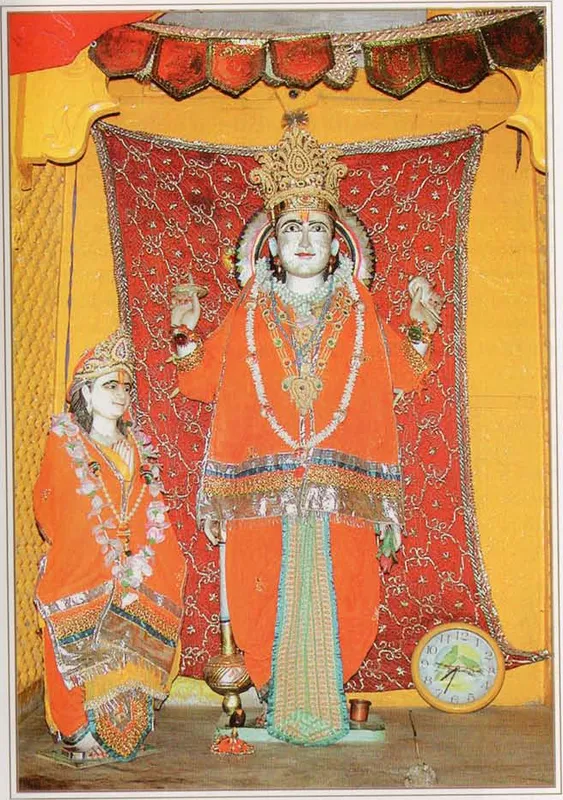
Madhuvana
मधुवनMadhuvana, the forest of the demon Madhu, is one of the twelve forests of Vraja.
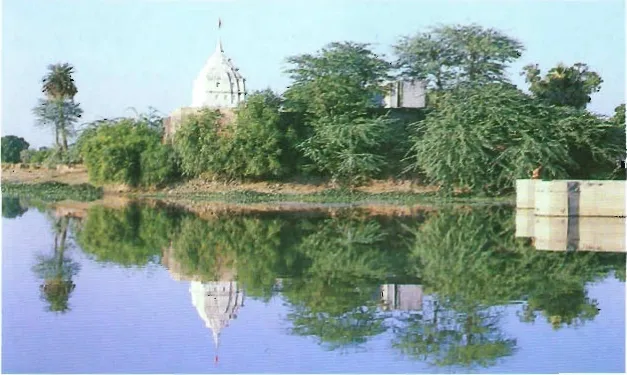
Tālavana
तालवनTālavana, the forest of tāla (palm) trees, is one of the twelve forests of Vraja and one of the seven on the western side of the Yamunā.
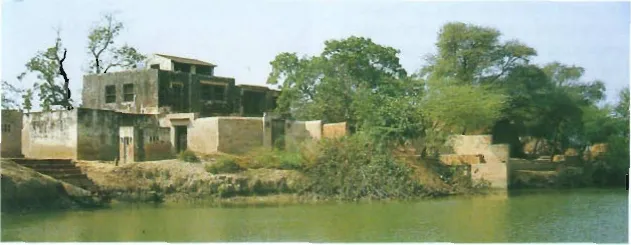
Kumudavana
कुमुदवनKumudavana, the forest of the kumuda, the white water lily, is one of the twelve forests of Vraja and one of the seven on the western side of the Yamunā.
Bahulāvana
बहुलावनBahulāvana is one of the twelve forests of Vraja and one of the seven on the western side of the Yamunā.
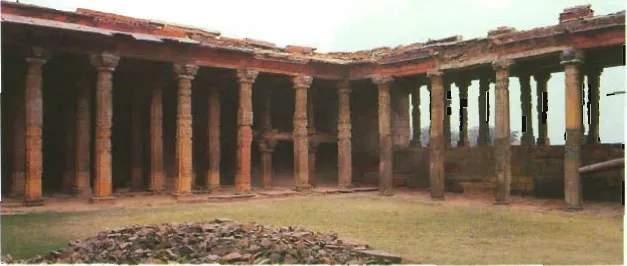
Kāmyavana
काम्यवनKāmyavana, also called Kāmavana, is one of the twelve forests of Vraja, around the town of Kāmā (Kāman).
Khadiravana
खदिरवनKhadiravana, the forest of khadira trees, is one of the twelve forests of Vraja in every list found, on the western side of the Yamunā.
Vṛndāvana (forest)
वृन्दावन (वन)Bhadravana
भद्रवनBhadravana is one of the twelve forests of Vraja, and one of the five that lie across the Yamunā from Vṛndāvana, on its eastern bank.
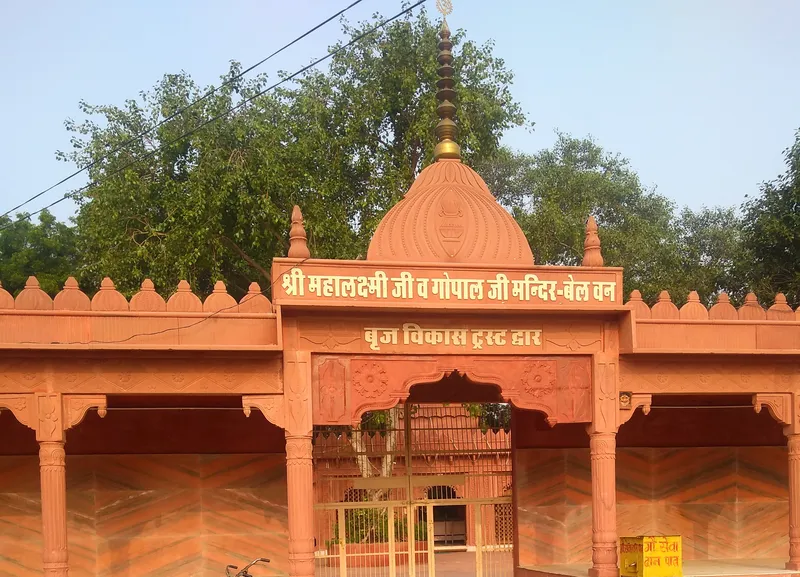
Bilvavana
बेलवनBaelvana, in Sanskrit Bilvavana, "the forest of bilva (bael) trees", is one of the twelve forests of Vraja.
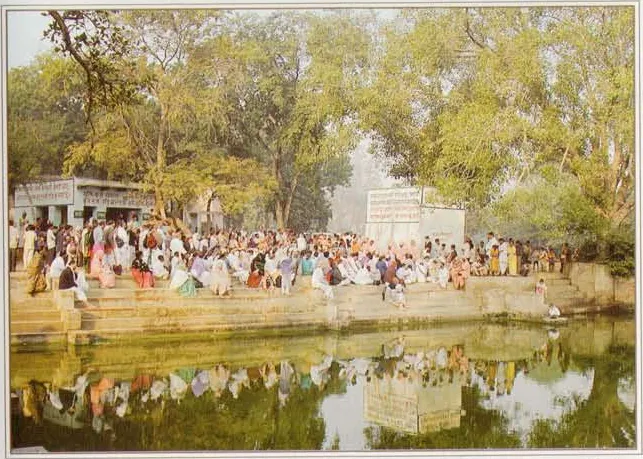
Lohavana
लोहवनLohavana is one of the twelve forests of Vraja, across the Yamunā from Mathurā.
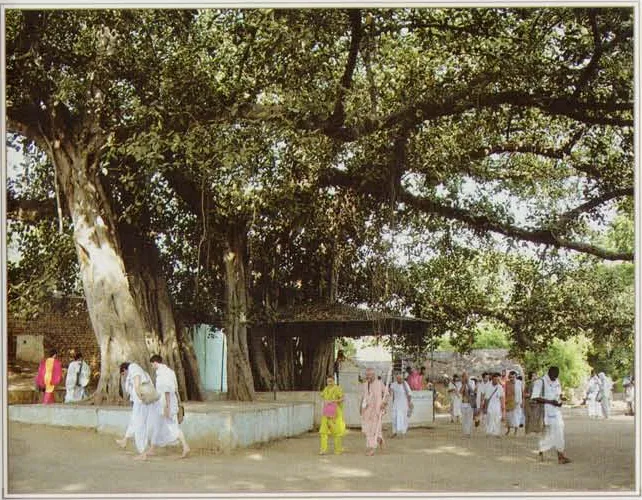
Bhāṇḍīravana
भाण्डीरवनBhāṇḍīravana, the forest of the Bhāṇḍīra banyan, is one of the twelve forests of Vraja, and Śrīla Prabhupāda counts it among the five forests on the eastern bank of the Y …
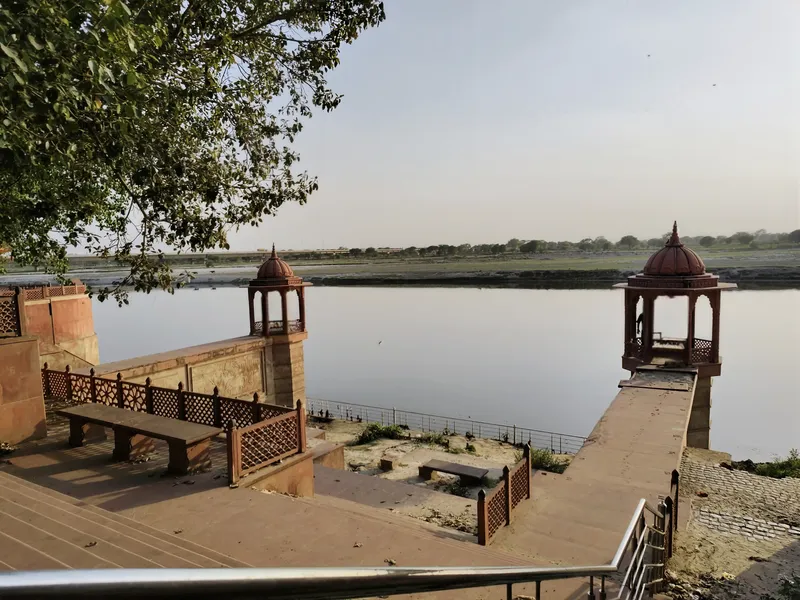
Mahāvana
महावनMahāvana, "the great forest", also called Bṛhadvana, is the forest on the eastern bank of the Yamunā where Kṛṣṇa spent His infancy.
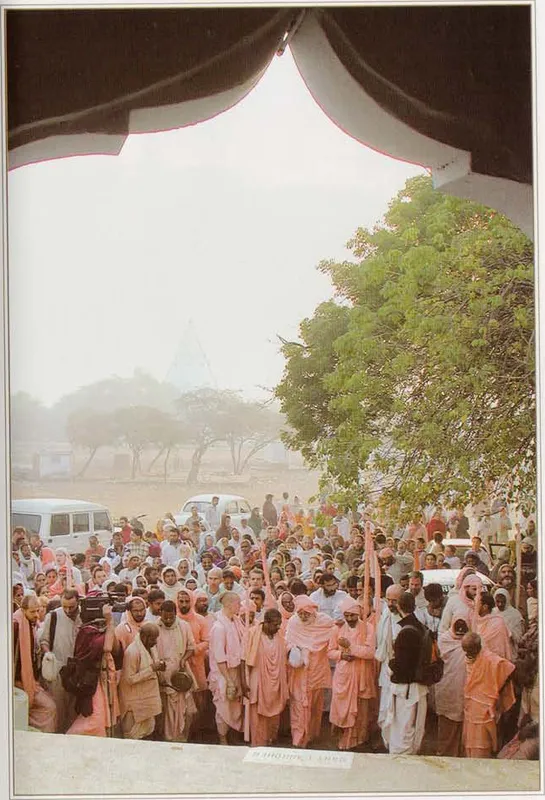
Kokilāvana
कोकिलावनKokilāvana, the forest of the cuckoo (kokila), lies west of Jāvaṭa.
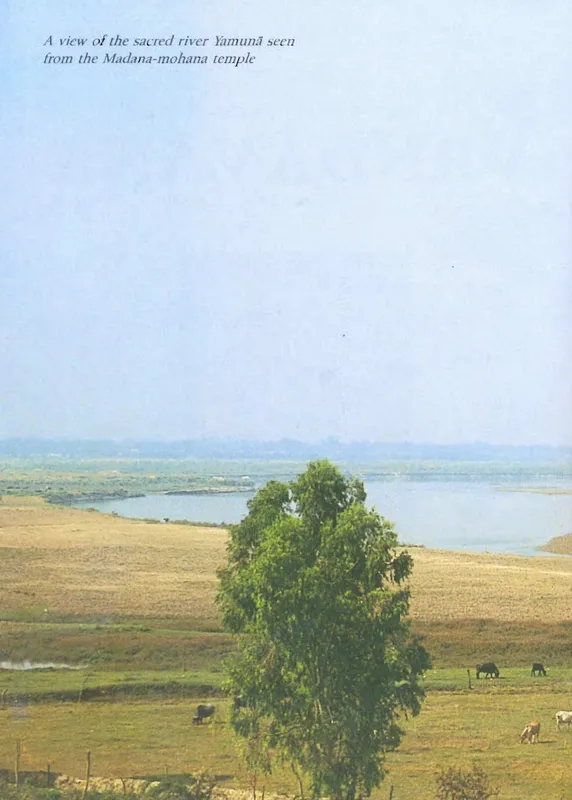
Yamunā
यमुनाThe Yamunā, also called the Kālindī, is the river that runs through Vraja-maṇḍala.
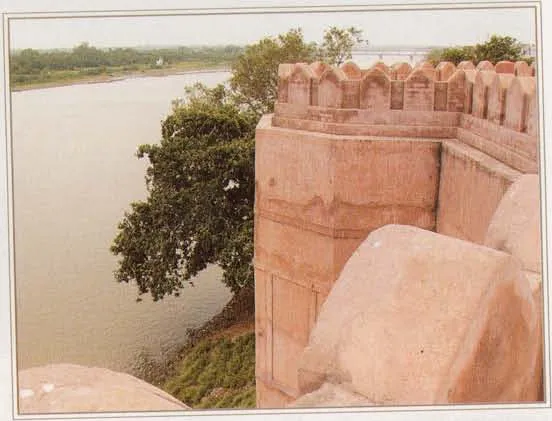
Mathurā
मथुराMathurā is the city on the Yamunā where Śrī Kṛṣṇa appeared from Devakī in the prison of King Kaṁsa.
Questions and answers
In Śrīla Prabhupāda's list, Madhuvana, Tālavana, Kumudavana, Bahulāvana, Kāmyavana, Khadiravana and Vṛndāvana lie west of the Yamunā. Bhadravana, Bilvavana, Lauhavana, Bhāṇḍīravana and Mahāvana lie east of it.[1]
Śrīla Prabhupāda, the Padma Purāṇa and the Bhakti-ratnākara put seven forests west of the river and five east of it. The Vraja-bhakti-vilāsa divides them into five north and seven south, with different names.[2, 5, 7]
Each Purāṇa and each later book gives its own order and some different names, such as Bakula for Bahulā, or Kokilā and Chatra in place of Madhuvana and Vṛndāvana. This article sets them side by side.[2 +2]
This website follows Śrīla Viśvanātha Cakravartī Ṭhākura, who counts it among the twenty-four sub-forests, and the other lists of twelve leave it out. The Vraja-bhakti-vilāsa counts it among the twelve.[14, 15]
They are the smaller, secondary forests. The Vraja-bhakti-vilāsa names twelve upavanas among its forty-eight forests, and Śrīla Viśvanātha Cakravartī Ṭhākura speaks of twenty-four.[13, 14]
Yes. Śrīla Prabhupāda writes that pilgrims from all parts of India visit all twelve forests. The Vraja-bhakti-vilāsa gives a day and a circuit for each.[8, 50]
Sources
- Śrīla Prabhupāda, Śrī Caitanya-caritāmṛta, Madhya-līlā 17.193, purport · vedabase.io
- Padma Purāṇa, Vṛndāvana-māhātmya (1) vv.16-17 (= Padma Pātāla-khaṇḍa 69.16-17)
- Varāha Purāṇa, adhyāya 161, verses 6-10, Sanskrit Wikisource
- Śrīla Rūpa Gosvāmī, Mathurā-māhātmya v.330 with its introductory line, and the heading 'atha dvādaśa-vanānāṁ māhātmyam'
- Śrīla Narahari Cakravartī, Bhakti-ratnākara, Fifth Wave, printed p.185 (1912 ed.), the list of the twelve forests with the Padma and Skanda verses, 2nd ed., 1912
- Ādi-purāṇa, chapter (9) 'navamo'dhyāyaḥ', vv.17-20 (v.21 summarised in notes), Śrī Veṅkaṭeśvara Press, Mumbai, 1929
- Śrīla Nārāyaṇa Bhaṭṭa, Vraja-bhakti-vilāsa, printed p.12: 'the two divisions of the twelve forests, north and south of the Yamunā', 1st ed., publ. Bābā Kṛṣṇadāsa, Kusuma-sarovara, Saṁvat 2008
- Śrīla Prabhupāda, Śrīmad-Bhāgavatam, 4.8.42, purport · vedabase.io
- Śrīla Prabhupāda, Śrī Caitanya-caritāmṛta, Madhya-līlā 5.12, purport · vedabase.io
- Śrīla Prabhupāda, The Nectar of Instruction, Text 9, purport · vedabase.io
- Śrīla Prabhupāda, Śrī Caitanya-caritāmṛta, Madhya-līlā 1.239, purport · vedabase.io
- Śrīla Prabhupāda, Śrīmad-Bhāgavatam 4.8.42, purport (the list, as reprinted with numbers)
- Śrīla Nārāyaṇa Bhaṭṭa Gosvāmī, Vraja-bhakti-vilāsa, chapter 1, the prose line that opens the forest lists (before v.13) and the headings of the first three lists of twelve (pādme v.13, vārāhe v.18, bhaviṣye v.23), printed p. 2, 1st ed., publ. Bābā Kṛṣṇadāsa, Kusuma-sarovara, Saṁvat 2008
- Śrīla Viśvanātha Cakravartī Ṭhākura, Vraja-rīti-cintāmaṇi, tṛtīyaḥ sargaḥ v.59
- Śrīla Nārāyaṇa Bhaṭṭa Gosvāmī, Vraja-bhakti-vilāsa, chapter 1, list of the twelve forests quoted 'pādme', vv.13-14, printed p. 2, 1st ed., publ. Bābā Kṛṣṇadāsa, Kusuma-sarovara, Saṁvat 2008
- A. W. Entwistle, ch. 6 §3 'Jinaprabha Suri (VTK)', printed p.231, Egbert Forsten, Groningen, 1987
- Padma Purāṇa, Vṛndāvana-māhātmya (1) vv.44-45 (= Padma Pātāla-khaṇḍa 69.44-45)
- Varāha Purāṇa, adhyāya 153, vv.35-36, Sanskrit Wikisource
- Śrīla Rūpa Gosvāmī, Mathurā-māhātmya v.336
- Śrīla Narahari Cakravartī, Bhakti-ratnākara, Fifth Wave, printed p.186 (1912 ed.): 'the third' forest, Kumudavana, 2nd ed., 1912
Show all 56 references
- Nārada Purāṇa, Uttara-bhāga 79.11
- Padma Purāṇa, Uttara-khaṇḍa (6), adhyāya 208, vv. 40-43, Sanskrit Wikisource
- Kṛṣṇa-caitanya-caritāmṛta of Śrī Murāri Gupta, prakrama 4, sarga 3, vv.2-4
- Kṛṣṇa-caitanya-caritāmṛta of Śrī Murāri Gupta, prakrama 4, sarga 3, vv.5-8
- Kṛṣṇa-caitanya-caritāmṛta of Śrī Murāri Gupta, prakrama 4, sarga 3, v.20
- Nārada Purāṇa, Uttara-bhāga 79.8
- Vaṁśīdhara: commentary on ŚB 10.1.1, Bhagavata Vidya Pith edition, ed. Bhagavata Rishi and Krishna Shankar Shastri, 1996
- Nārada Purāṇa, उत्तरार्धः/अध्यायः 80 vv.80-75 to 80-77
- Vṛndāvana-kathā, ch. 1 ('প্রথম পরিচ্ছেদ'), printed p. ১৭ (17)
- Śrīla Nārāyaṇa Bhaṭṭa Gosvāmī, Vraja-bhakti-vilāsa, chapter 1, the two divisions of the twelve forests by the Yamunā's banks, quoted 'ādivārāhe', printed p. 12, 1st ed., publ. Bābā Kṛṣṇadāsa, Kusuma-sarovara, Saṁvat 2008
- Śrīla Nārāyaṇa Bhaṭṭa, Vraja-bhakti-vilāsa, printed p. 2, verse 18, 1st ed., publ. Bābā Kṛṣṇadāsa, Kusuma-sarovara, Saṁvat 2008
- Śrīla Nārāyaṇa Bhaṭṭa, Vraja-bhakti-vilāsa, printed p. 218, sections 34-35, 1st ed., publ. Bābā Kṛṣṇadāsa, Kusuma-sarovara, Saṁvat 2008
- Śrīla Nārāyaṇa Bhaṭṭa, Vraja-bhakti-vilāsa, the twelve upavanas, vv.18 and 20, printed p. 2, 1st ed., publ. Bābā Kṛṣṇadāsa, Kusuma-sarovara, Saṁvat 2008
- Śrīla Nārāyaṇa Bhaṭṭa, Vraja-bhakti-vilāsa, mantra of the presiding deity of Vihvala-upavana, end (v.102), printed p. 18, 1st ed., publ. Bābā Kṛṣṇadāsa, Kusuma-sarovara, Saṁvat 2008
- Śrīla Nārāyaṇa Bhaṭṭa, Vraja-bhakti-vilāsa, ch. 10 vv.41 (end)–44, printed p. 220, 1st ed., publ. Bābā Kṛṣṇadāsa, Kusuma-sarovara, Saṁvat 2008
- Śrīla Nārāyaṇa Bhaṭṭa, Vraja-bhakti-vilāsa, ch. 10 v.45 (end), printed p. 221, 1st ed., publ. Bābā Kṛṣṇadāsa, Kusuma-sarovara, Saṁvat 2008
- Śrīla Nārāyaṇa Bhaṭṭa, Vraja-bhakti-vilāsa, ch. 2 v.54 (Grantha Mandira (2) part 13 v.54), printed p. 51, 1st ed., publ. Bābā Kṛṣṇadāsa, Kusuma-sarovara, Saṁvat 2008
- Śrīla Nārāyaṇa Bhaṭṭa, Vraja-bhakti-vilāsa, mantra of the presiding deity of Prema-upavana (v.106), printed p. 19, 1st ed., publ. Bābā Kṛṣṇadāsa, Kusuma-sarovara, Saṁvat 2008
- Śrīla Nārāyaṇa Bhaṭṭa, Vraja-bhakti-vilāsa, ch. 10 vv.55–56, printed p. 223, 1st ed., publ. Bābā Kṛṣṇadāsa, Kusuma-sarovara, Saṁvat 2008
- Śrīla Nārāyaṇa Bhaṭṭa, Vraja-bhakti-vilāsa, ch. 10 vv.57–59, printed p. 224, 1st ed., publ. Bābā Kṛṣṇadāsa, Kusuma-sarovara, Saṁvat 2008
- Śrī Vraja-maṇḍala Parikramā (2007), PDF p. 183
- Garga-saṁhitā, 1.3.32 (Goloka-khaṇḍa, adhyāya 3, v.32), Sanskrit Wikisource
- Garga-saṁhitā, 1.3.33 (Goloka-khaṇḍa, adhyāya 3, v.33), Sanskrit Wikisource
- Garga-saṁhitā, Vṛndāvana-khaṇḍa (2), adhyāya 2, verse 7, Sanskrit Wikisource
- Garga-saṁhitā, 2.2.8 (Vṛndāvana-khaṇḍa, adhyāya 2, v.8), Sanskrit Wikisource
- Garga-saṁhitā, 2.2.9 (Vṛndāvana-khaṇḍa, adhyāya 2, v.9), Sanskrit Wikisource
- Govardhana Hill: India's Most Sacred Mountain (2001), Rajasekhara dasa Brahmacari, PDF p. 30
- Śrīla Nārāyaṇa Bhaṭṭa, Vraja-bhakti-vilāsa, printed p.5, the presiding deities of the twelve forests, 1st ed., publ. Bābā Kṛṣṇadāsa, Kusuma-sarovara, Saṁvat 2008
- Śrīla Nārāyaṇa Bhaṭṭa, Vraja-bhakti-vilāsa, first chapter, v.93 (the print closes the passage '॥ ९३ ॥'): Vraja-maṇḍala and its forests as the limbs of the Lord, quoted under the label 'viṣṇu-rahasye'; printed p. 14, 1st ed., publ. Bābā Kṛṣṇadāsa, Kusuma-sarovara, Saṁvat 2008
- Śrīla Nārāyaṇa Bhaṭṭa, Vraja-bhakti-vilāsa, printed p.178, within the verse the print numbers 6 (finding aid Vraja-bhakti-vilāsa chapter (7) v.7): the pilgrimage of the dark Ekādaśī and Dvādaśī of Bhādrapada, 1st ed., publ. Bābā Kṛṣṇadāsa, Kusuma-sarovara, Saṁvat 2008
- Śrīla Kṛṣṇadāsa Kavirāja Gosvāmī, Śrī Caitanya-caritāmṛta, CC Madhya-līlā 17.230, online edition · vedabase.io
- Śrīla Narahari Cakravartī, Bhakti-ratnākara, Eleventh Wave, printed p.670 (1912 ed.): Jāhnavā Īśvarī's tour of the twelve forests, 2nd ed., 1912
- Vṛndāvana-Dhāma Ki Jaya! (c. 1986), by Dhruva Mahārāja dāsa, PDF p. 30
- the undated parikramā notes Bahulāvana, ¶34
- Śrīla Narahari Cakravartī, Bhakti-ratnākara, Fifth Wave, printed p.189 (1912 ed.): Bahulāvana's kuṇḍas and the Ādi-vārāha and Skanda verses, 2nd ed., 1912
- Śrīla Nārāyaṇa Bhaṭṭa, Vraja-bhakti-vilāsa, printed p.2, list of the twelve forests ('pādme', vv.13-17), 1st ed., publ. Bābā Kṛṣṇadāsa, Kusuma-sarovara, Saṁvat 2008
Further sources
- Śrīla Prabhupāda's purports to Śrīmad-Bhāgavatam 4.8.42 and Śrī Caitanya-caritāmṛta Madhya-līlā 1.239, 5.12 and 17.193.
- Varāha Purāṇa (Mathurā-māhātmya 153 and 161), Padma Purāṇa (Pātāla-khaṇḍa 69, Uttara-khaṇḍa 208), Nārada Purāṇa, Ādi-purāṇa and Garga-saṁhitā: summarised from the Sanskrit.
- Śrīla Rūpa Gosvāmī, Mathurā-māhātmya; Śrīla Viśvanātha Cakravartī Ṭhākura, Vraja-rīti-cintāmaṇi; Vaṁśīdhara on ŚB 10.1.1; Bhakti-ratnākara; Vraja-bhakti-vilāsa; Śrīla Murāri Gupta: summarised.
- A. W. Entwistle, Braj (1987), for the dated Jain list only; Pulinbihārī Datta, Vṛndāvana-kathā (1920).