Nandīśvara Mahādeva
नन्दीश्वर महादेव Hindi name proposed
In short
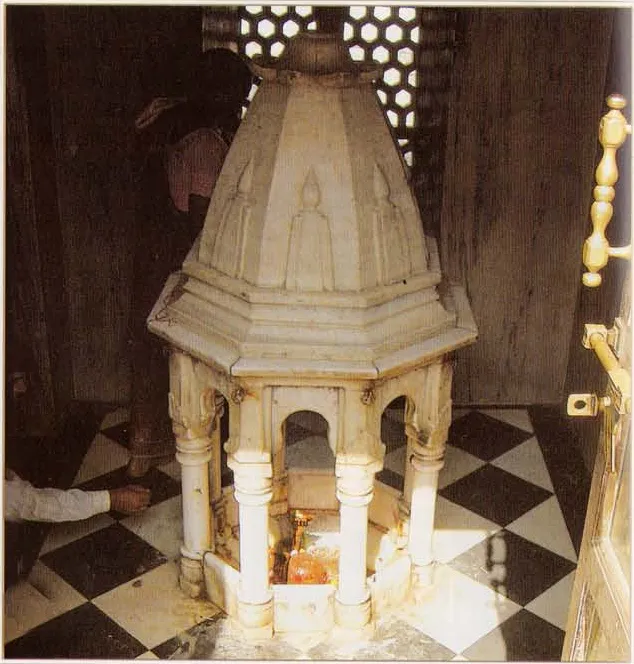
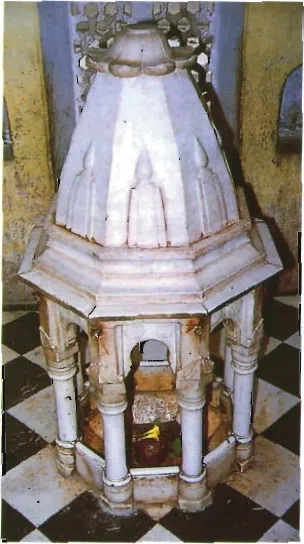
Nandīśvara Mahādeva is Lord Śiva as worshipped at Nandagrāma. Śrīla Nārāyaṇa Bhaṭṭa Gosvāmī's Vraja-bhakti-vilāsa says that Yaśodā installed a Rudra (Śiva) named Nandīśvara for the welfare of her family, and that he asked her for a boon: where he becomes a hill, she and Nanda should shine on top of him.[1 +2] The same book places his image inside the village, beside the place where Yaśodā churned curd.[3] The Bengali Vṛndāvana-kathā (1920) records a Śiva-liṅga named Nandīśvara at Nandagrāma.[4] Which shrine bears the name today, and who installed it, the sources tell differently.
Key facts
| Kind | shrine |
|---|---|
| Region · area | Nandagrāma · Nanda-bhavan Mandira (Nandagrāma) |
| Ācāryas | Śrīla Nārāyaṇa Bhaṭṭa Gosvāmī |
Traditional accounts
Yaśodā's Rudra
In his order of the forest pilgrimage, Śrīla Nārāyaṇa Bhaṭṭa Gosvāmī says that Nanda's wife, Yaśodā, installed a Rudra by the name Nandīśvara, for auspiciousness, for the happiness of her family and for the growth of the cowherd clan. He then gives a prayer, which he ascribes to the Skanda Purāṇa, where it has not been found. It bows to the god Nandīśvara, kind to the cowherds, who gives Yaśodā happiness; said fourteen times with fourteen bows, it gives long life, wealth, grain and happiness (summarised here, not translated).[1 +2]
ततो नन्दीश्वरं रुद्रं नाम्ना संस्थापयेत्प्रिया । नन्दीश्वरं नन्दपत्नी स्थापितं मंगलार्थये ॥ परिवारसुखार्थाय कुलाभीर संवृद्धये । ततो नन्दीश्वरप्रार्थनमन्त्रः । स्कान्दे— नन्दीश्वराय देवायाभीरोत्पत्तिहिताय च । यशोदासुखदायैव महादेवाय ते नमः ॥ शक्रावृत्यापठन्मन्त्रं नमस्कुर्याच्चतुर्दशैः । चिरायुर्भवति लोको धनधान्यसुखं लभेत् ॥२५॥
tato nandīśvaraṁ rudraṁ nāmnā saṁsthāpayetpriyā
nandīśvaraṁ nandapatnī sthāpitaṁ maṁgalārthaye
parivārasukhārthāya kulābhīra saṁvṛddhaye
tato nandīśvaraprārthanamantraḥ
skānde— nandīśvarāya devāyābhīrotpattihitāya ca
yaśodāsukhadāyaiva mahādevāya te namaḥ
śakrāvṛtyāpaṭhanmantraṁ namaskuryāccaturdaśaiḥ
cirāyurbhavati loko dhanadhānyasukhaṁ labhet ||25||
Pleased, Rudra gave Yaśodā a boon and then asked one for himself: where he becomes a hill, she should shine on top of him together with Nanda. In this account the Śiva whom Yaśodā installed is the Śiva who becomes Nandīśvara Hill, on which Nanda's family lives.[1 +1]
इति प्रासादितो रुद्रा यशोदायै वरं ददौ । स्वकीयाय कृतार्थाय वरं प्रार्थयते हरः ॥ यत्राहं पर्वतो भूये बलकृष्णसुते नमः । नन्दधातृसमेतस्त्वं ममोपरि विराजते ॥
iti prāsādito rudrā yaśodāyai varaṁ dadau
svakīyāya kṛtārthāya varaṁ prārthayate haraḥ
yatrāhaṁ parvato bhūye balakṛṣṇasute namaḥ
nandadhātṛsametastvaṁ mamopari virājate ||
In his list of the holy places of Nandagrāma, the same author puts the great image of Rudra called Nandīśvara inside the village, beside the place where Yaśodā churned curd, and the temple of Nanda-rāya on top of "Rudra's hill".[1 +2]
One of the Śivas who guard Vraja
According to three guidebooks, Govardhana Hill (2001), The Colour Guide to Rādhā-kuṇḍa (1999) and The Color Guide to Vṛndāvana (2000), Nandīśvara of Nandagrāma is one of the five Śiva Deities who protect Vraja, with Gopīśvara of Vṛndāvana, Bhūteśvara of Mathurā, Kāmeśvara of Kāmyavana and Cakaleśvara of Govardhana. The Colour Guide to Rādhā-kuṇḍa adds that Kṛṣṇa Himself appointed Śiva as the protector of the holy land.[7 +2]
The story of Śiva's visit
The historian A. W. Entwistle (1987) records a local story, enacted in the rāsa-līlā, the sacred drama performed at Nandagrāma when the great pilgrimage of Vraja comes, that Śiva came to Nanda's house to see the infant Kṛṣṇa. This story has not been found in any scripture or Gosvāmī work; the accounts that tell it are shown below.[10]
Śrīla Viśvanātha Cakravartī Ṭhākura's reckoning of Kṛṣṇa's ages, in his commentary on Śrīmad-Bhāgavatam 10.45.3, puts His first three years and four months at Mahāvana and the residence at Nandīśvara later. The undated parikramā notes Nandagrāma themselves observe that the story does not fit Kṛṣṇa's coming to Nandagrāma at about six, and explain it by a different kalpa, another cycle of creation.[11 +1]
Location
| Where it is | 'The Nandisvara Mahadeva temple is in the palace courtyard'[14] |
|---|
Pictures
1 pictures
History
The historian A. W. Entwistle (1987) notes that the idea of four main Śiva deities of Braj, Nandīśvara at Nandagrāma among them, is not found in older written sources, while two later Braj writers, Jagatanand and Brajnāth, name eight principal Śiva deities, Nandīśvara included.[13]
Where the sources differ
Whether Śiva's visit to see the baby Kṛṣṇa, the story told at the Nandīśvara shrine, can have taken place at Nandagrāma.
Accounts differ Whether Śiva's visit to see the baby Kṛṣṇa, the story told at the Nandīśvara shrine, can have taken place at Nandagrāma.
- the undated parikramā notes NandagrāmaŚiva came to Nanda's palace to see baby Kṛṣṇa, was turned away, called back when Kṛṣṇa would not stop crying, and asked for darśana and Kṛṣṇa's remnants; the note itself observes that Viśvanātha says Kṛṣṇa moved to Nandagrāma only at about six and explains the story by a different kalpa.
- Vṛndāvana-Dhāma Ki Jaya! (c. 1986)Śiva came to the door of Nanda and Yaśodā's house asking to see child Kṛṣṇa; the liṅga at the temple entrance receives Kṛṣṇa's remnants today.
- Prabhudayāl Mītal (1966), a historianMītal reports a Purāṇic tradition that Śiva came to Nanda-bhavana to see the child Kṛṣṇa, and that the small liṅga called Būḍhe Bābū at the temple entrance was installed in memory of it.
- A. W. Entwistle (1987), a historianEntwistle says that the rāsa-līlā performed at Nandagrāma when the great pilgrimage arrives tells how Śiva came to see the new-born Kṛṣṇa; he names no text for the story.
The wording of these accounts is our summary of the sources, not a published translation.
Accounts differ Who installed the Nandīśvara Śiva of Nandagrāma, where it stands, and whether the small liṅga at the temple entrance is Nandīśvara or 'Būḍhe Bābū'.
- Vraja-bhakti-vilāsa 4.25Yaśodā installed a Rudra named Nandīśvara for auspiciousness and her family's welfare.
- Vraja-bhakti-vilāsa 2.44The great Rudra image called Nandīśvara stands inside the village beside the place where Yaśodā churned curd; Nanda-rāya's temple is on top of Rudra's hill.
- the undated parikramā notes NandagrāmaThe Nandīśvara Mahādeva temple is in the palace courtyard; its liṅga is said to have been installed by Vajranābha.
- Vṛndāvana-Dhāma Ki Jaya! (c. 1986)The Nandīśvara liṅga at the entrance to the hill temple was installed by Vajranābha.
References
14 references
- Śrīla Nārāyaṇa Bhaṭṭa, Vraja-bhakti-vilāsa, ch. 4 v.25; printed p. 91, 1st ed., publ. Bābā Kṛṣṇadāsa, Kusuma-sarovara, Saṁvat 2008
- Śrīla Nārāyaṇa Bhaṭṭa, Vraja-bhakti-vilāsa, ch. 4 v.26; printed p. 91, 1st ed., publ. Bābā Kṛṣṇadāsa, Kusuma-sarovara, Saṁvat 2008
- Śrīla Nārāyaṇa Bhaṭṭa, Vraja-bhakti-vilāsa, ch. 2 v.44; printed p. 45, 1st ed., publ. Bābā Kṛṣṇadāsa, Kusuma-sarovara, Saṁvat 2008
- Pulinbihārī Datta, eighth chapter, entry 'নন্দীশ্বর বা নন্দগ্রাম', printed pp. 124–125
- Śrīla Nārāyaṇa Bhaṭṭa, Vraja-bhakti-vilāsa, ch. 4 v.25; printed p. 91, 1st ed., publ. Bābā Kṛṣṇadāsa, Kusuma-sarovara, Saṁvat 2008
- Śrīla Nārāyaṇa Bhaṭṭa, Vraja-bhakti-vilāsa, ch. 4 v.26; printed p. 91, 1st ed., publ. Bābā Kṛṣṇadāsa, Kusuma-sarovara, Saṁvat 2008
- Govardhana Hill: India's Most Sacred Mountain (2001), Rajasekhara dasa Brahmacari, PDF p. 82
- The Colour Guide to Rādhā-kuṇḍa (1999), Rājaśekhara dāsa Brahmacārī, PDF p. 65
- The Color Guide to Vṛndāvana (2000), Written and Photographed by Rājaśekhara dāsa Brahmacārī, PDF p. 100
- A. W. Entwistle, §40 'Nandgaon', introduction, printed p. 378, Egbert Forsten, Groningen, 1987
- Śrīla Viśvanātha Cakravartī Ṭhākura: commentary on ŚB 10.45.3, Bhagavata Vidya Pith edition, ed. Bhagavata Rishi and Krishna Shankar Shastri, 1996
- the undated parikramā notes Nandagrāma, ¶22
- A. W. Entwistle, §7.14 (Śiva shrines), printed p. 304, Egbert Forsten, Groningen, 1987
- the undated parikramā notes Nandagrāma, ¶16