Kāmeśvara Mahādeva (Kāmyavana)
कामेश्वर महादेव (काम्यवन)
Also called Kameśvara Mahādeva, Kāmeśvara
In short
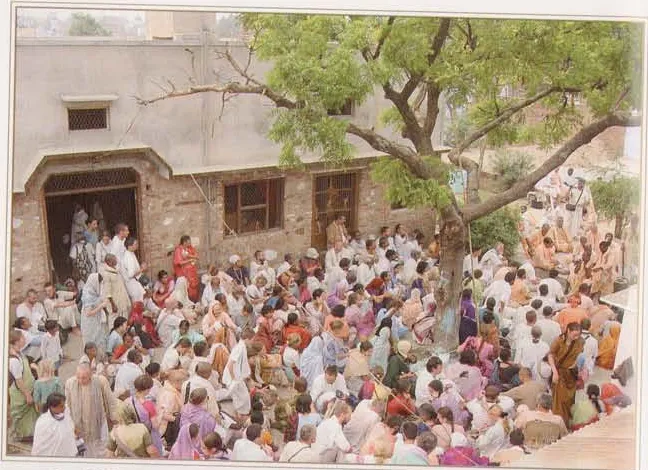
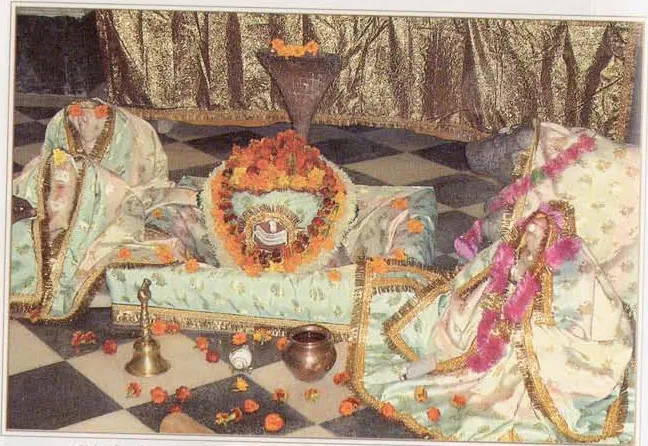
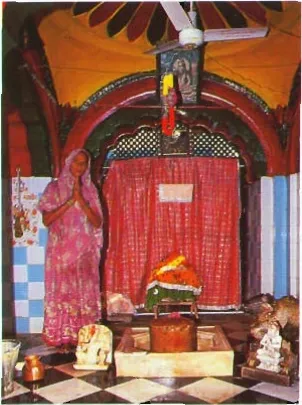
Kāmeśvara Mahādeva is a temple of Lord Śiva in Kāmyavana, at Kuśa-sthalī. The Bhakti-ratnākara shows Śiva Kāmeśvara, whom it calls greatly effulgent, near the start of its round of Kāmyavana.[1] Śrīla Nārāyaṇa Bhaṭṭa Gosvāmī's Vraja-bhakti-vilāsa lists his image at Kuśa-sthalī and gives a prayer at the temple, which says that without Kāmeśvara the circumambulation is not complete.[2 +2] Guidebooks say that Vajranābha installed the liṅga and count Kāmeśvara among the Śiva Deities who protect Vraja; no scripture found so far names him in either role.[5 +5]
Key facts
| Kind | temple |
|---|---|
| Region · area | Kāmyavana · Kuśa-sthalī (Kāmyavana) |
| Ācāryas | Śrīla Narahari Cakravartī Ṭhākura, Śrīla Rāghava Paṇḍita Gosvāmī of Govardhana, Śrīla Nārāyaṇa Bhaṭṭa Gosvāmī |
Traditional accounts
In the Bhakti-ratnākara and the Vraja-bhakti-vilāsa
According to the Bhakti-ratnākara (Fifth Wave), Śrīla Rāghava Paṇḍita Gosvāmī, leading Śrīla Śrīnivāsa Ācārya and Śrīla Narottama dāsa Ṭhākura round Kāmyavana, showed them Śiva Kāmeśvara and the charming place of Garuḍa's seat. In the book's order this comes after the Viṣṇu-siṁhāsana and Caraṇa-kuṇḍa and before Dharma-kuṇḍa (summarised here, not translated).[1]
The Vraja-bhakti-vilāsa lists at Kuśa-sthalī the place where Śaṅkhacūḍa was killed, the image of the Mahādeva called Kāmeśvara, the Mahādeva Candraśekhara to the north, Vimaleśvara, a form of Varāha, and the darśana of the five Pāṇḍavas with Draupadī. Śrī Vraja-maṇḍala Parikramā (2007) names the same items in nearly the same order.[2 +2] In its round of Kāmyavana the book gives a prayer at Kāmeśvara Mahādeva, which it ascribes to the Liṅga Purāṇa; it ends by saying that without Kāmeśvara the circumambulation is not complete (summarised here, not translated). The Liṅga Purāṇa was not available to check the ascription.[4]
Vajranābha and the guardians of Vraja
The Bhāgavata-māhātmya of the Skanda Purāṇa says that Vajranābha, after finding the places of Kṛṣṇa's pastimes, built kuṇḍas and wells and installed Śiva and other Deities, and so spread devotion to Kṛṣṇa in Vraja. It names no particular Śiva and does not mention Kāmyavana.[11] According to Vṛndāvana-Dhāma Ki Jaya! (c. 1986) and the Bengali Vṛndāvana-kathā (1920), Vajranābha installed the Kāmeśvara liṅga. The Vṛndāvana-kathā reports that paṇḍitas told its author of a Bhāgavata-māhātmya list of four śiva-liṅgas installed by Vajranābha, Kāmeśvara among them, but adds that the printed Skanda Purāṇa he saw names only Govinda and Hari.[5 +2]
According to three guidebooks, Govardhana Hill (2001), The Colour Guide to Rādhā-kuṇḍa (1999) and The Color Guide to Vṛndāvana (2000), Kāmeśvara of Kāmyavana is one of the five Śiva Deities who protect Vraja, with Gopīśvara of Vṛndāvana, Bhūteśvara of Mathurā, Nandīśvara of Nandagrāma and Cakaleśvara of Govardhana. The Colour Guide to Rādhā-kuṇḍa adds that Kṛṣṇa Himself appointed Śiva as the protector of the dhāma. No primary source for this list has been found.[8 +2]
Śrī Vraja-maṇḍala Parikramā (2007) and the undated parikramā notes Kāmyavana name Kāmeśvara Mahādeva, with Vimala-kuṇḍa and other places, as signs that Kāmyavana is a forest separate from Vṛndāvana.[12 +1]
Śrīla Prabhupāda
Śrīla Prabhupāda does not name Kāmeśvara.
Śrīla Prabhupāda does not name Kāmeśvara. As a general teaching, he explains how a devotee of Kṛṣṇa approaches Lord Śiva: not with disrespect, but worshipping him as Kṛṣṇa's most exalted devotee.[16]
General teaching (does not name the place)“It is said, vaiṣṇavānāṁ yathā śambhuḥ: Lord Śiva is the best of all devotees. Therefore all devotees of Lord Kṛṣṇa are also devotees of Lord Śiva. … A devotee of Lord Kṛṣṇa does not disrespect Lord Śiva, but worships Lord Śiva as the most exalted devotee of Lord Kṛṣṇa.”
Śrīla Prabhupāda, Śrīmad-Bhāgavatam, 4.24.30, purport · vedabase.io
Location
| Where it is | Kuśa-sthalī; 'nearby' Pañca Tīrtha-sarovara[21] Kāmya-vana[22] |
|---|
Nearby places
Pañca Tīrtha-sarovara · Pāṇḍava Mandira (Kāmyavana)
Pictures
4 pictures
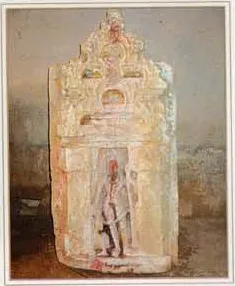
History
The historian Prabhudayāl Mītal (1966) described a large image of Śiva in the temple and finely carved images of Sūrya, Balarāma, Kārttikeya, Gaṇeśa and other gods, whose making, he said, is considered to date from the sixth to the tenth centuries; he did not state the era of these centuries and named no source for that dating.[14] In 1987 A. W. Entwistle found the temple on a small mound just inside the Mathurā Gate of the town, with old sculptures set into the walls of its courtyard; the finest of them, Viṣṇu lying on Śeṣa, had been removed a few years before. These are their observations of that time, and no date of building has been found.[15]
Where the sources differ
The sources differ on where the Pāṇḍava and Draupadī images of Kāmyavana stood, which figures they are, and how old they are.
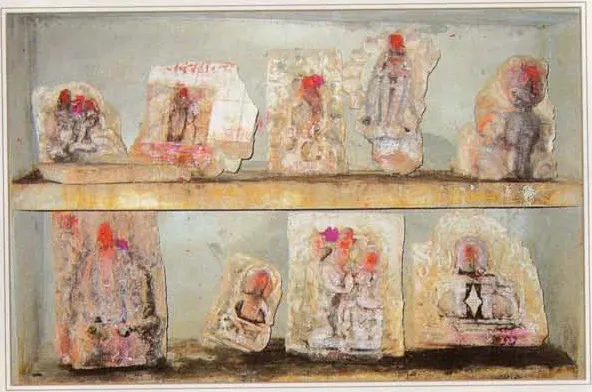
The sources differ on where the Pāṇḍava and Draupadī images of Kāmyavana stood, which figures they are, and how old they are. Śrī Vraja-maṇḍala Parikramā (2007) says that those that remain from Pañca Tīrtha-sarovara are now kept in this temple, while the historians saw such images in a shrine on a mound nearby.[17 +3]
Accounts differ Where the Pāṇḍava and Draupadī images of Kāmyavana stood, which figures they are, and how old they are.
- Vraja-bhakti-vilāsa ch. 2 (printed p.50) and ch. 9 v.55Lists the darśana of the five Pāṇḍavas together with Draupadī at Kuśasthalī, right after Kāmeśvara, Vimaleśvara and Varāha, with its own prayer (ascribed to the Vāyu Purāṇa); it does not place them at the Pāṇḍavas' five lakes.
- Prabhudayāl Mītal (1966), a historianMītal places images of all five Pāṇḍavas, with Kṛṣṇa, Kuntī and Draupadī, in an old temple on a high mound near the Kāmeśvara temple. He dates them to the late Gupta age and says they survived the Muslim invasions because they were buried.
- A. W. Entwistle (1987), a historianEntwistle describes images of Draupadī and three of the five Pāṇḍavas in a shrine on a hillock near the path from the Mathurā Darwāzā to the Dig Darwāzā. To him they look late medieval or early modern; they had been kept elsewhere and were placed there only recently, and he is not sure whether the shrine stands where they were first installed.
- Śrī Vraja-maṇḍala Parikramā (2007)The Pāṇḍava and Draupadī deities were at the uninhabited Pañca Tīrtha-sarovara; a thief stole a few 'some time ago', others were broken, and the rest are kept, neglected, in the Kāmeśvara Mahādeva temple.
The wording of these accounts is our summary of the sources, not a published translation.
References
22 references
- Śrīla Narahari Cakravartī, Bhakti-ratnākara, Fifth Wave, printed p.215: v.841 of the Kāmyavana tour, 2nd ed., 1912
- Śrīla Nārāyaṇa Bhaṭṭa Gosvāmī, Vraja-bhakti-vilāsa, ch. 2, list of the marks of Kāmavana, the items after Kuśasthalī (Grantha Mandira finding aid: '(2) [part 13] v.53'), printed p.50, 1st ed., publ. Bābā Kṛṣṇadāsa, Kusuma-sarovara, Saṁvat 2008
- Śrī Vraja-maṇḍala Parikramā (2007), PDF p. 145
- Śrīla Nārāyaṇa Bhaṭṭa Gosvāmī, Vraja-bhakti-vilāsa, ch. 9 v.52 (the print's number), printed p.199: the prayer at Kāmeśvara Mahādeva in the Kāmyavana circuit, 1st ed., publ. Bābā Kṛṣṇadāsa, Kusuma-sarovara, Saṁvat 2008
- Vṛndāvana-Dhāma Ki Jaya! (c. 1986), by Dhruva Mahārāja dāsa, PDF p. 45
- Vṛndāvana-kathā, Kāmyavana paragraph (ch. 8 by the running head of p.125), printed p.124
- Vṛndāvana-kathā, ch. 1, printed p.3: the deities installed by Vajranābha
- Govardhana Hill: India's Most Sacred Mountain (2001), Rajasekhara dasa Brahmacari, PDF p. 82
- The Colour Guide to Rādhā-kuṇḍa (1999), Rājaśekhara dāsa Brahmacārī, PDF p. 65
- The Color Guide to Vṛndāvana (2000), Written and Photographed by Rājaśekhara dāsa Brahmacārī, PDF p. 100
- Śrīmad-Bhāgavata-māhātmya, Skanda version, adhyāya 2, verses 4-6, Sanskrit Wikisource
- Śrī Vraja-maṇḍala Parikramā (2007), PDF p. 148
- the undated parikramā notes Kāmyavana, ¶9
- Prabhudayāl Mītal, 'Kāmavana', entry 'कामेश्वर मंदिर', printed p.117
- A. W. Entwistle, § 'Kaman', item 3 'Kameshwar', printed p.365, Egbert Forsten, Groningen, 1987
- Śrīla Prabhupāda, Śrīmad-Bhāgavatam, 4.24.30, purport · vedabase.io
- Śrī Vraja-maṇḍala Parikramā (2007), PDF p. 152
- Śrī Vraja-maṇḍala Parikramā (2007), PDF p. 153
- Prabhudayāl Mītal, 'Kāmavana', entry 'पंच पांडव', printed p.117
- A. W. Entwistle, § 'Kaman', item 2 'Dharm Kund and other places near Mathura Darwaza', printed p.364, Egbert Forsten, Groningen, 1987
- Śrī Vraja-maṇḍala Parikramā (2007), p. 278-279
- Vṛndāvana-Dhāma Ki Jaya! (c. 1986), by Dhruva Mahārāja dāsa, p. 27