Cakaleśvara Mahādeva Mandira
चकलेश्वर महादेव मन्दिर Hindi name proposed
Also called Cakaleśvara Mahādeva, Cakaleśvara, Chakreshwara Mahadev
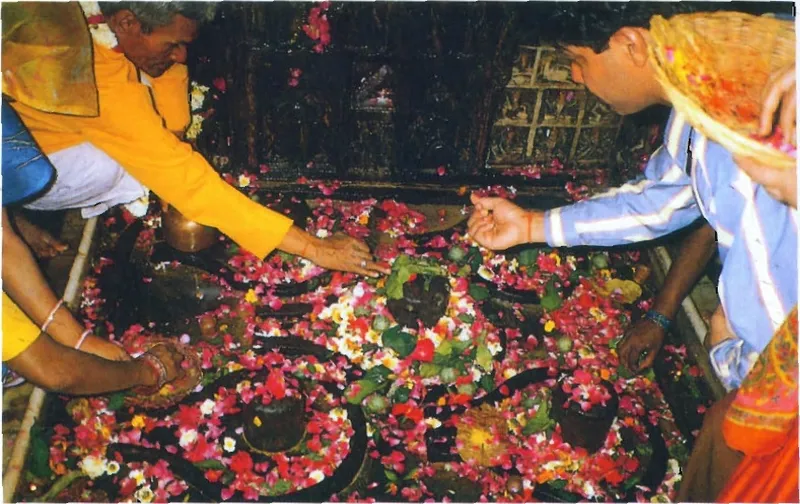
- What it is
- The Cakaleśvara Mahādeva Mandira is a temple of Lord Śiva at Cakra-tīrtha, on the northern bank of Mānasī-gaṅgā in Govardhana town.
- Visiting
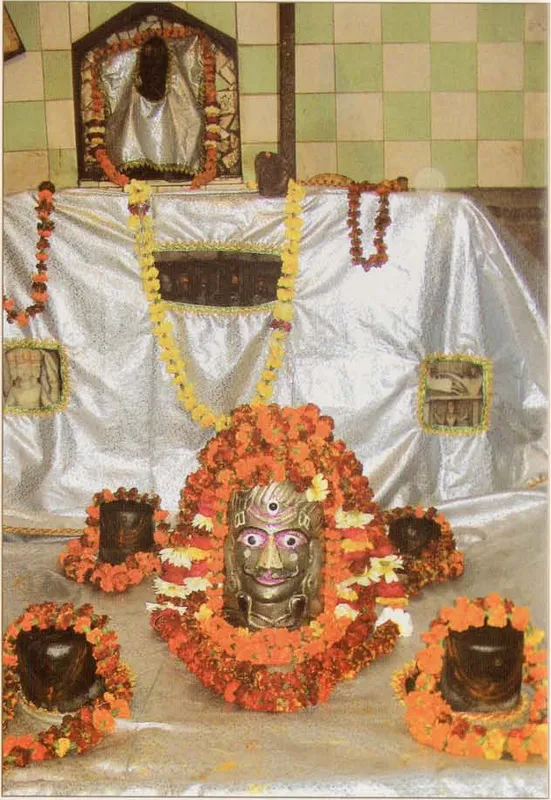
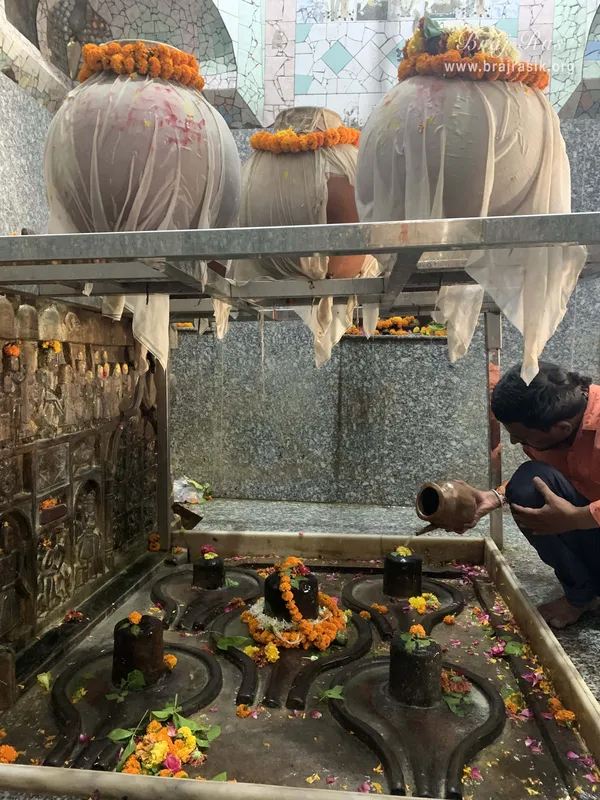
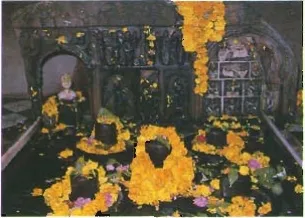
- The temple stands at Cakra-tīrtha on the northern bank of Mānasī-gaṅgā and holds a śiva-liṅga.
In short
The Cakaleśvara Mahādeva Mandira is a temple of Lord Śiva at Cakra-tīrtha, on the northern bank of Mānasī-gaṅgā in Govardhana town. It holds a śiva-liṅga, the Deity whom the books call Cakaleśvara or Cakreśvara.[1 +5] Śrīla Nārāyaṇa Bhaṭṭa Gosvāmī's Vraja-bhakti-vilāsa says that the demigods installed Cakreśvara here, and it gives a prayer that calls him the protector of Vraja-maṇḍala.[7 +1] The guidebooks count him among the five Śivas who protect Vraja, and they tell how he asked Śrīla Sanātana Gosvāmī, who lived in a hut next to the temple, to stay.[1 +7]
Key facts
| Kind | temple |
|---|---|
| Region · area | Govardhana · Cakra-tīrtha (Govardhana) |
| Ācāryas | Śrīla Sanātana Gosvāmī, Śrī Nityānanda Prabhu, Śrī Caitanya Mahāprabhu, Śrīla Nārāyaṇa Bhaṭṭa Gosvāmī |
Why it is glorified
According to the Vraja-bhakti-vilāsa, all the demigods installed Cakreśvara Sadāśiva here for the fulfilment of the mind's …
According to the Vraja-bhakti-vilāsa, all the demigods installed Cakreśvara Sadāśiva here for the fulfilment of the mind's desires. Its prayer to him, which it ascribes to the Rudra-yāmala, bows to Cakreśvara Rudra, the five-faced form of Śiva, for the protection of Vraja-maṇḍala, and the book says that one who recites it eleven times with obeisances gains every desire and liberation (summarised here, not translated).[7 +1] In its list of the sites of Govardhana the same book names the image of Cakreśvara Mahādeva right after Cakra-tīrtha.[8]
Divine pastimes
Śrīmad-Bhāgavatam (10.25) tells that when Indra sent his storm against Vraja, Kṛṣṇa resolved to protect its people by His own potency. He lifted Govardhana with one hand, as easily as a child holds up a mushroom, and held it for seven days, until Indra, seeing His mystic power, called back his clouds. The chapter names no Sudarśana cakra, no Śeṣa and no Śiva, and it does not name Cakra-tīrtha or Cakreśvara.[14 +5]
ity uktvaikena hastena kṛtvā govardhanācalam / dadhāra līlayā viṣṇuś chatrākam iva bālakaḥ
Having said this, Lord Kṛṣṇa, who is Viṣṇu Himself, picked up Govardhana Hill with one hand and held it aloft just as easily as a child holds up a mushroom.
Translation: Śrīla Prabhupāda's disciples (BBT)The commentators on these verses give the keeping off of the rain to Kṛṣṇa's own potencies (summarised here, not translated). Śrīla Viśvanātha Cakravartī Ṭhākura says that the water was dried up at once by the Lord's potency, Śrīla Jīva Gosvāmī that the falling rain mostly vanished in the heat of His power, and Śrīla Sanātana Gosvāmī that it was the work of a special potency of the Lord.[20 +4] Only the commentator Vaṁśīdhara brings in the Garga-saṁhitā's Sudarśana cakra, which he says dried up the wind and rain, and its Śeṣa; he does not say where the cakra went afterwards, and he gives Śiva no part in protecting Vraja.[23 +1] Read more: The lifting of Govardhana Hill, Indra's homage and the name Govinda →
The guidebooks connect the name of Cakra-tīrtha with this pastime in different ways, through the Sudarśana cakra or through Mahādeva, while the Bhāgavatam names neither; their accounts are set side by side on the page of Cakra-tīrtha.[14 +5]
Traditional accounts
Three guidebooks, Govardhana Hill (2001), The Colour Guide to Rādhā-kuṇḍa (1999) and The Color Guide to Vṛndāvana (2000), count …
Three guidebooks, Govardhana Hill (2001), The Colour Guide to Rādhā-kuṇḍa (1999) and The Color Guide to Vṛndāvana (2000), count Cakaleśvara of Govardhana among the five Śiva Deities who protect Vraja, with Gopīśvara of Vṛndāvana, Bhūteśvara of Mathurā, Nandīśvara of Nandagrāma and Kāmeśvara of Kāmyavana. The Colour Guide adds that Kṛṣṇa Himself appointed Śiva as the protector of the dhāma, and the undated parikramā notes Govardhana call Cakaleśvara one of the dig-pālas, the guardians of the directions, who protect it. No scripture or Gosvāmī text found so far says this.[1 +3]
Who installed Cakreśvara is told in two ways: the demigods, according to the Vraja-bhakti-vilāsa, or Vajranābha, Kṛṣṇa's great-grandson, according to two guidebooks and a Bengali book of 1920.
Accounts differ Who established the Cakaleśvara (Cakreśvara) Deity
- Vraja-bhakti-vilāsaAll the gods installed Cakreśvara Sadāśiva here for the fulfilment of the mind's desires.
- Vṛndāvana-Dhāma Ki Jaya! (c. 1986)'another of the śiva-liṅgas installed by Kṛṣṇa's great-grandson Vajranābha'.
- the undated parikramā notes GovardhanaOne of the dig-pāla Deities established by Vajranābha Mahārāja that protect the dhāma.
- The Colour Guide to Rādhā-kuṇḍa (1999)Śrī Kṛṣṇa Himself appointed Śiva as protector of the dhāma, and so there are five important Śiva Deities in Vraja (Cakaleśvara at Govardhana among them); no installer named.
The Skanda Purāṇa's Bhāgavata-māhātmya says only, in general, that Vajranābha, helped by Parīkṣit and by the sage Śāṇḍilya's grace, found the places of Kṛṣṇa's pastimes, settled villages, made kuṇḍas and wells, and installed Śiva and other deities in Vraja. It does not name Cakaleśvara.[26]
The Gosvāmīs and ācāryas
According to the guidebooks, when mosquitoes made Śrīla Sanātana Gosvāmī think of leaving his place of bhajana (chanting and …
Śrīla Sanātana Gosvāmī
According to the guidebooks, when mosquitoes made Śrīla Sanātana Gosvāmī think of leaving his place of bhajana (chanting and prayer) next to the temple, Cakaleśvara Mahādeva came in the guise of a brāhmaṇa, asked him to stay and promised that the mosquitoes would no longer disturb him. Govardhana Hill (2001) adds that they troubled him while he was writing his books.[1 +5] The Bhakti-ratnākara, the older Vaiṣṇava source, tells it differently: there he is told to stay at Cakra-tīrtha, or, as the line can also be read, Cakra-tīrtha itself tells him to stay, and no Śiva or mosquito appears.[1 +5] The accounts are set side by side on the page of his bhajana-kuṭī.
The Color Guide to Vṛndāvana (2000) says that Śrīla Sanātana Gosvāmī came to see Cakaleśvara every day until, in his old age, the Deity told him in a dream that the Deity was now manifest in Vṛndāvana as Ban-khaṇḍī Mahādeva. Only this book tells it, so it is not certain.[5]
Śrī Nityānanda Prabhu and Śrī Caitanya Mahāprabhu
The Bhakti-ratnākara tells that Śrī Nityānanda Prabhu, on His pilgrimage, came to Govardhana for the sake of a brāhmaṇa devotee and stayed some days at a solitary spot that the guide shows just before Cakra-tīrtha; it names neither the spot nor Cakaleśvara.[28] The Caitanya-bhāgavata says only that He wandered happily on Govardhana Hill.[29] The Caitanya-caritāmṛta tells that Śrī Caitanya Mahāprabhu bathed and took His meal at Brahma-kuṇḍa and spent the night in the temple of Harideva; it does not mention Cakaleśvara.[30 +1] Where the two rested at Govardhana is told differently in the sources (see the accounts below).
Śrīla Prabhupāda
Śrīla Prabhupāda does not speak of Cakaleśvara by name.
Śrīla Prabhupāda does not speak of Cakaleśvara by name. Telling the lifting of Govardhana in his Kṛṣṇa book, he has Kṛṣṇa call the lifted hill itself the arrangement for the people's protection (a general reference):[32]
General teaching (does not name the place)“You have been too much afflicted from the heavy rain and strong wind; therefore I have lifted this hill, which will protect you exactly like a huge umbrella. I think this is a proper arrangement to relieve you of your immediate distress.”
Śrīla Prabhupāda, Kṛṣṇa, the Supreme Personality of Godhead (Kṛṣṇa book), Chapter 25, 'Devastating Rainfall in Vṛndāvana' · vedabase.io
Visiting today
The temple stands at Cakra-tīrtha on the northern bank of Mānasī-gaṅgā and holds a śiva-liṅga. The name is printed Cakreśvara in the Vraja-bhakti-vilāsa and in Śrī Vraja-maṇḍala Parikramā (2007), which says that he is now known as Cakaleśvara; Cakaleśvara in Govardhana Hill (2001) and Vṛndāvana-Dhāma Ki Jaya! (c. 1986); and Chakaliśvara in The Color Guide to Vṛndāvana (2000). According to Śrī Vraja-maṇḍala Parikramā, a temple of Śrī Gaura-Nityānanda stands opposite.[1 +5]
Śrī Vraja-maṇḍala Parikramā also says that pilgrims who enter Govardhana town near the end of their walk around the hill go around Mānasī-gaṅgā and Cakreśvara once more.[33]
Nearby places
Sanātana Gosvāmī's bhajana-kuṭī (Govardhana) · Gaura-Nityānanda Prabhu Mandira (Govardhana)
Pictures
3 pictures
Where the sources differ
Where Śrī Nityānanda Prabhu and Śrī Caitanya Mahāprabhu had darśana and rested at Govardhana: Śrī Vraja-maṇḍala Parikramā (2007) says here, and the other sources name other places or none.
Accounts differ Where Śrī Nityānanda Prabhu and Śrī Caitanya Mahāprabhu rested at Govardhana
- Śrī Vraja-maṇḍala Parikramā (2007)Both had darśana of Cakaleśvara and Pāraṅga-ghāṭa at Mānasī-gaṅgā and rested here.
- Śrī Caitanya-caritāmṛta, Madhya-līlā 18.17-22, 18.32Mahāprabhu saw Harideva, bathed and ate at Brahma-kuṇḍa, spent the night in Harideva's temple and bathed in Mānasa-gaṅgā next morning; Cakaleśvara is not mentioned.
- Govardhana Hill: India's Most Sacred Mountain (2001)After Mānasī-gaṅgā and Harideva, Mahāprabhu rested at Brahma-kuṇḍa; Nityānanda also rested at Brahma-kuṇḍa.
- the undated parikramā notes GovardhanaBoth visited Brahma-kuṇḍa.
More on this place
The lifting of Govardhana Hill, Indra's homage and the name Govinda
References
35 references
- Govardhana Hill: India's Most Sacred Mountain (2001), Rajasekhara dasa Brahmacari, PDF p. 82
- Śrī Vraja-maṇḍala Parikramā (2007), PDF p. 119
- Śrī Vraja-maṇḍala Parikramā (2007), PDF p. 121
- Vṛndāvana-Dhāma Ki Jaya! (c. 1986), by Dhruva Mahārāja dāsa, PDF p. 39
- The Color Guide to Vṛndāvana (2000), Written and Photographed by Rājaśekhara dāsa Brahmacārī, PDF p. 100
- the undated parikramā notes Govardhana, ¶67
- Śrī Nārāyaṇa Bhaṭṭa Gosvāmī, Vraja-bhakti-vilāsa, Govardhana section, Cakreśvara (§ 8), printed p. 114, 1st ed., publ. Bābā Kṛṣṇadāsa, Kusuma-sarovara, Saṁvat 2008
- Śrī Nārāyaṇa Bhaṭṭa Gosvāmī, Vraja-bhakti-vilāsa, Govardhana-liṅga (list of Govardhana's sites), printed p. 47, 1st ed., publ. Bābā Kṛṣṇadāsa, Kusuma-sarovara, Saṁvat 2008
- The Colour Guide to Rādhā-kuṇḍa (1999), Rājaśekhara dāsa Brahmacārī, PDF p. 65
- the undated parikramā notes Govardhana, ¶68
- Śrī Vraja-maṇḍala Parikramā (2007), PDF p. 120
- Vṛndāvana-Dhāma Ki Jaya! (c. 1986), by Dhruva Mahārāja dāsa, PDF p. 40
- the undated parikramā notes Govardhana, ¶65
- Śrīmad-Bhāgavatam 10.25.19, GRETIL
- Śrīmad-Bhāgavatam 10.25.21, GRETIL
- Śrīmad-Bhāgavatam 10.25.24, GRETIL
- Śrīmad-Bhāgavatam 10.25.26, GRETIL
- Śrīmad-Bhāgavatam 10.25.18, GRETIL
- Śrīmad-Bhāgavatam 10.25.23, GRETIL
- Śrīla Jīva Gosvāmī, Śrīla Viśvanātha Cakravartī Ṭhākura: commentary on ŚB 10.25.19, Bhagavata Vidya Pith edition, ed. Bhagavata Rishi and Krishna Shankar Shastri, 1996
Show all 35 references
- Śrīla Sanātana Gosvāmī: commentary on ŚB 10.25.22, Bhagavata Vidya Pith edition, ed. Bhagavata Rishi and Krishna Shankar Shastri, 1996
- Śrīla Viśvanātha Cakravartī Ṭhākura: commentary on ŚB 10.25.23, Bhagavata Vidya Pith edition, ed. Bhagavata Rishi and Krishna Shankar Shastri, 1996
- Śrīla Jīva Gosvāmī: commentary on ŚB 10.25.26, Bhagavata Vidya Pith edition, ed. Bhagavata Rishi and Krishna Shankar Shastri, 1996
- Vaṁśīdhara, Śrīla Sanātana Gosvāmī, Śrīla Jīva Gosvāmī: commentary on ŚB 10.25.24, Bhagavata Vidya Pith edition, ed. Bhagavata Rishi and Krishna Shankar Shastri, 1996
- Vaṁśīdhara: commentary on ŚB 10.25.21, Bhagavata Vidya Pith edition, ed. Bhagavata Rishi and Krishna Shankar Shastri, 1996
- Skanda Purāṇa, Skanda version (śrīskānde māhātmyam), adhyāya 2, verses 4-5, Sanskrit Wikisource
- Śrīla Narahari Cakravartī, Bhakti-ratnākara, Fifth Wave, 1912 ed. p. 208, 2nd ed., 1912
- Śrīla Narahari Cakravartī, Bhakti-ratnākara, Fifth Wave, 1912 ed. p. 206 and p. 208, 2nd ed., 1912
- Śrīla Vṛndāvana dāsa Ṭhākura, Śrī Caitanya-bhāgavata, Ādi-khaṇḍa, chapter 8 of this edition (Nityānanda's childhood and pilgrimage), ed. Rādhānātha Kābāsī 1931, printed p. 54
- Śrīla Kṛṣṇadāsa Kavirāja Gosvāmī, Śrī Caitanya-caritāmṛta, CC Madhya-līlā 18.21, online edition · vedabase.io
- Śrīla Kṛṣṇadāsa Kavirāja Gosvāmī, Śrī Caitanya-caritāmṛta, CC Madhya-līlā 18.22, online edition · vedabase.io
- Śrīla Prabhupāda, Kṛṣṇa, the Supreme Personality of Godhead (Kṛṣṇa book), Chapter 25, 'Devastating Rainfall in Vṛndāvana' · vedabase.io
- Śrī Vraja-maṇḍala Parikramā (2007), PDF p. 134
- Govardhana Hill: India's Most Sacred Mountain (2001), Rajasekhara dasa Brahmacari, p. 68
- Śrī Vraja-maṇḍala Parikramā (2007), p. 212-213