Sanātana Gosvāmī's samādhi
सनातन गोस्वामी की समाधि Hindi name proposed
- What it is
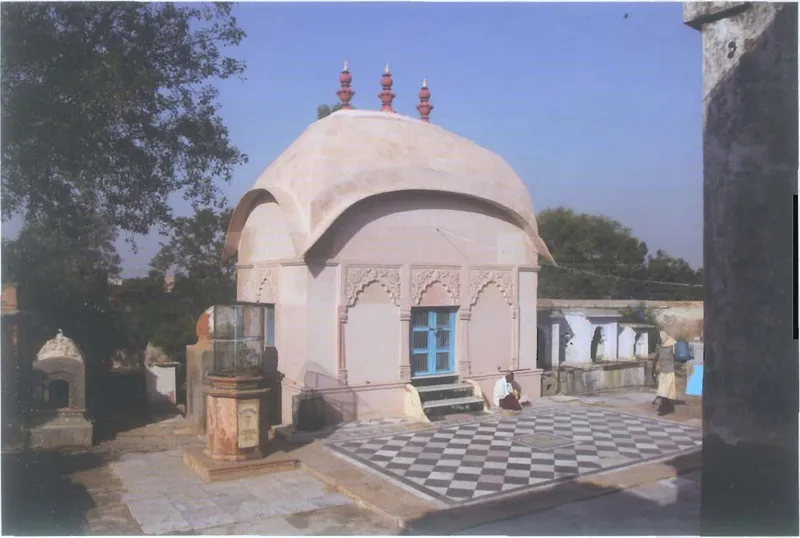
- The samādhi, the tomb, of Śrīla Sanātana Gosvāmī stands beside the old Madana-mohana temple on the slope of Dvādaśāditya-ṭīlā in Vṛndāvana.
- Visiting
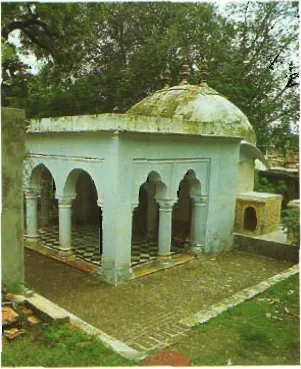
- The guidebook photographs show the samādhi as a small whitewashed shrine with a dome crowned by three finials, with a flat-roofed pavilion of cusped arches in front; The Color Guide to Vṛndāvana …
- Places here
- Grantha-samādhi, Puṣpa-samādhis of Tapana Miśra and Candraśekhara Ācārya
In short
The samādhi, the tomb, of Śrīla Sanātana Gosvāmī stands beside the old Madana-mohana temple on the slope of Dvādaśāditya-ṭīlā in Vṛndāvana.[1 +9] The Bhakti-ratnākara tells how Śrīla Śrīnivāsa Ācārya and Śrīla Rāmacandra Kavirāja came to it after the darśana of Madana-mohana, and the Narottama-vilāsa that Śrīla Jīva Gosvāmī himself showed it to Śrīla Narottama dāsa Ṭhākura.[1 +3] In the same grounds are a grantha-samādhi, which according to the guidebooks holds books of the Gosvāmīs, and the flower memorials of Śrīla Tapana Miśra and Śrī Candraśekhara.[4 +5]
Key facts
| Kind | samādhi |
|---|---|
| Region · area | Vṛndāvana · Rādhā-Madana-mohana Mandira (Vṛndāvana, old) |
| Also part of | Dvādaśāditya-ṭīlā |
| Ācāryas | Śrīla Sanātana Gosvāmī, Śrīla Śrīnivāsa Ācārya, Śrīla Rāmacandra Kavirāja, Śrīla Jīva Gosvāmī, Śrīla Narottama dāsa Ṭhākura |
Traditional accounts
The first pilgrims
According to the Bhakti-ratnākara, when Śrīla Śrīnivāsa Ācārya first came to Vṛndāvana, Śrīla Jīva Gosvāmī brought him for the darśana of Madana-mohana and introduced him to the devotees, and then they all took him to see Śrīla Sanātana Gosvāmī's samādhi, where he fell to the ground (summarised here, not translated).[1 +3]
শ্রীনিবাস মদনমোহনে নিরখিয়া । না ধরে ধৈরয প্রেমে উথলয়ে হিয়া ॥ মদনগোপালে প্রণময়ে বার বার । মুখ বুক বহিয়া পড়য়ে অশ্রুধার ॥ শ্রীনিবাস স্থির হইলেন কতক্ষণে । শ্রীজীবগোস্বামী মিলাইলা সবা' সনে ॥ কৃষ্ণদাস-ব্রহ্মচারী আদি যত জন । সবে প্রেমাবেশে কৈল দৃঢ় আলিঙ্গন ॥ শ্রীনিবাস সবার চরণে প্রণমিল । সবে শ্রীনিবাসে মহা অনুগ্রহ কৈল ॥ সনাতনগোস্বামির সমাধি দর্শনে । শ্রীনিবাসে লইয়া চলিলা সর্ব্বজনে ॥ সনাতনগোস্বামির সমাধি দেখিয়া । শ্রীনিবাস পড়িলেন ভূমে লোটাইয়া ॥
śrīnibāsa madanamohane nirakhiẏā
nā dhare dhairaya preme uthalaẏe hiẏā
madanagopāle praṇamaẏe bāra bāra
mukha buka bahiẏā paṛaẏe aśrudhāra
śrīnibāsa sthira hailena katakṣaṇe
śrījībagosbāmī milāilā sabā' sane
kṛṣṇadāsa-brahmacārī ādi yata jana
sabe premābeśe kaila dṛṛha āliṅgana
śrīnibāsa sabāra caraṇe praṇamila
sabe śrīnibāse mahā anugraha kaila
sanātanagosbāmira samādhi darśane
śrīnibāse laiẏā calilā sarbbajane
sanātanagosbāmira samādhi dekhiẏā
śrīnibāsa paṛilena bhūme loṭāiẏā ||
Years later, before he left Vṛndāvana with the Gosvāmīs' books, he came again: at the samādhi he could not hold himself and rolled in the dust, calling on Sanātana as one who is pained by the pain of others.[1 +2] The same book tells that Śrīla Rāmacandra Kavirāja, after the darśana of the Deities of Vṛndāvana, saw the samādhi and was overcome.[1 +2]
The Narottama-vilāsa says that soon after Śrīla Narottama dāsa Ṭhākura reached Vṛndāvana, Śrīla Jīva Gosvāmī took him for the darśana of Madana-mohana and then himself showed him where Śrīla Sanātana Gosvāmī's samādhi is.[1 +1] These are the earliest mentions of the samādhi found; none of them says on which side of the temple it lies.[1 +3]
His departure
The guidebooks say that Śrīla Sanātana Gosvāmī left this world in 1558, on Guru-pūrṇimā, while living at Govardhana, and that the devotees brought his body to Vṛndāvana and laid it in samādhi beside the Madana-mohana temple. Govardhana Hill (2001) places his passing at his bhajana-kuṭī at Cakra-tīrtha by Govardhana, and Vṛndāvana, the Playground of God (2010) at Mānasī-gaṅgā. No older text found gives the place of his passing or tells of his body being brought here.[1 +9]
The Gosvāmīs and ācāryas
Citing Śrīla Kavi-karṇapūra's Gaura-gaṇoddeśa-dīpikā (181), Śrīla Prabhupāda writes that in the eternal pastimes Śrīla Sanātana …
Citing Śrīla Kavi-karṇapūra's Gaura-gaṇoddeśa-dīpikā (181), Śrīla Prabhupāda writes that in the eternal pastimes Śrīla Sanātana Gosvāmī was formerly Rati-mañjarī, or sometimes Lavaṅga-mañjarī.[4 +3]
General teaching (does not name the place)“Śrī Sanātana Gosvāmī is described in the Gaura-gaṇoddeśa-dīpikā (181). He was formerly known as Rati-mañjarī or sometimes Lavaṅga-mañjarī.”
Śrīla Prabhupāda, Śrī Caitanya-caritāmṛta, Ādi-līlā 10.84, purport · vedabase.io
Śrīla Prabhupāda
In general, without speaking of the tomb, Śrīla Prabhupāda calls Śrīla Sanātana Gosvāmī the ideal spiritual master, who gives the …
In general, without speaking of the tomb, Śrīla Prabhupāda calls Śrīla Sanātana Gosvāmī the ideal spiritual master, who gives the shelter of Madana-mohana's lotus feet, and says that by his mercy one can stay in Vṛndāvana.[1 +5]
General teaching (does not name the place)“Śrīla Sanātana Gosvāmī is the ideal spiritual master, for he delivers one the shelter of the lotus feet of Madana-mohana. … he can get an adequate opportunity to stay in Vṛndāvana and derive all spiritual benefits by the mercy of Sanātana Gosvāmī.”
Śrīla Prabhupāda, Śrī Caitanya-caritāmṛta, Ādi-līlā 1.47, purport · vedabase.io
Visiting today
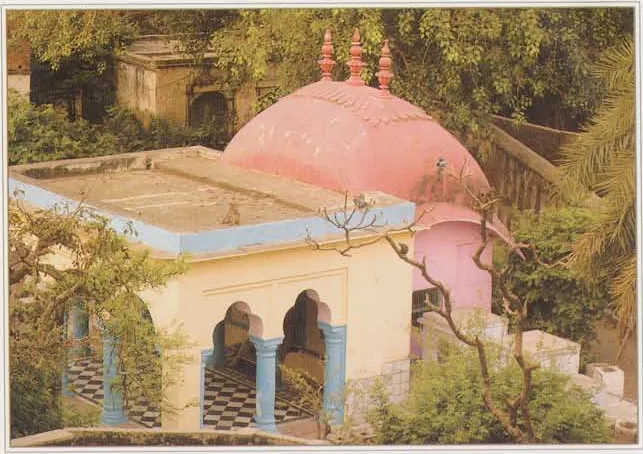
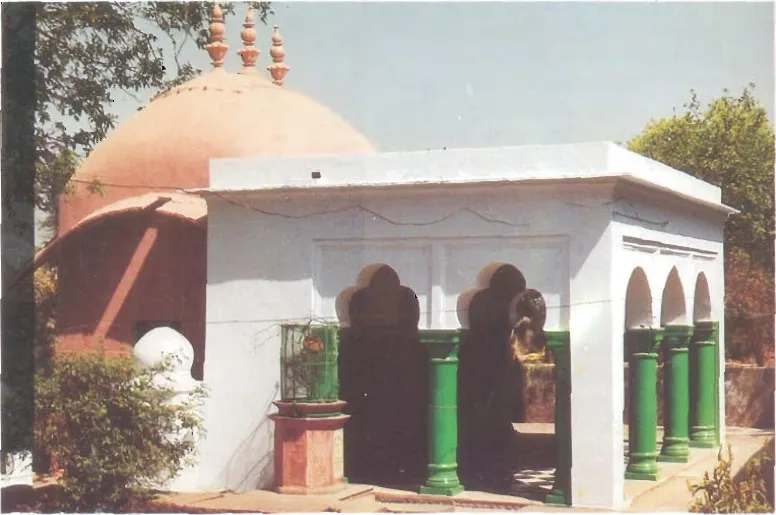
The guidebook photographs show the samādhi as a small whitewashed shrine with a dome crowned by three finials, with a flat-roofed pavilion of cusped arches in front; The Color Guide to Vṛndāvana (2000) also shows a cloth-wrapped conical "Samādhi Mūrti".[4 +4]
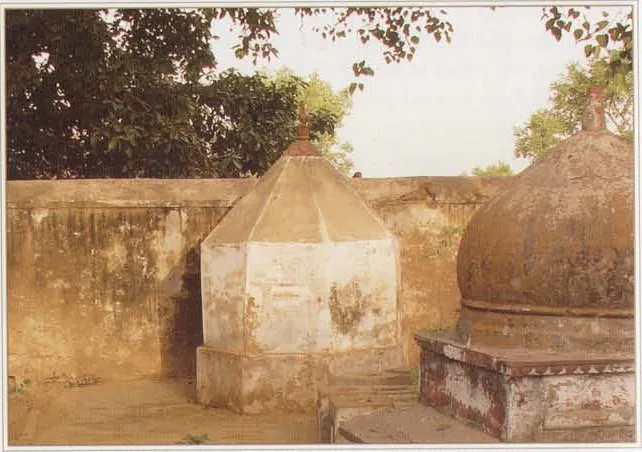
- Grantha-samādhi. The guidebooks report a grantha-samādhi, a "samādhi of the Gosvāmī literatures", in the grounds of the samādhi; the 2007 guidebook's photograph shows two weathered structures, one octagonal with a pyramid top, one with a large dome.[4 +5] According to the local tradition recorded in Vṛndāvana, the Playground of God (2010), Śrīla Jīva Gosvāmī buried works of the six Gosvāmīs there, which is not certain; no older text names him in connection with it, and the books differ on what it holds (see below).[4] It is not the Grantha-ghar, the book room that the guidebooks place at the Rādhā-Dāmodara temple.[20 +1]
- Flower memorials. The puṣpa-samādhis of Śrīla Tapana Miśra and Śrī Candraśekhara stand in the same grounds, according to the 2010 guidebook and the undated parikramā notes Vṛndāvana.[4 +3]
Location
| Where it is | near the old Madana-mohana temple; map key 2[24] near Āditya-ṭīlā, in the southern part of the old Śrī Madana-mohanajī Temple[25] |
|---|
Places at Sanātana Gosvāmī's samādhi
2 places
Nearby places
Dvādaśāditya-ṭīlā · Rādhā-Madana-mohana Mandira (Vṛndāvana, old)
Pictures
4 pictures
History
The oldest source found for the year is the Bengali Vṛndāvana-kathā (1920). It reports that a temple manuscript, the Sevā-prākaṭya, gives Śrīla Sanātana Gosvāmī's birth as Saṁvat 1545 (1488 CE) and his passing as Saṁvat 1615 (1558 CE), and that his disappearance festival is held every year on the full moon of Āṣāḍha. The manuscript itself could not be checked.[6 +1] The same book describes the samādhi in 1920 as standing inside a small house of red stone behind the old temple, on lower ground, with a well of sweet water called the Sanātana-kūpa nearby.[1 +6] No record of when the present shrine was built has been found.[4 +4]
Where the sources differ
On which side of the old Madana-mohana temple the samādhi lies: the guidebooks give the south, the west or behind it, and the …
On which side of the old Madana-mohana temple the samādhi lies: the guidebooks give the south, the west or behind it, and the 1920 book behind it, on lower ground.[3 +5]
Accounts differ On which side of the old Madana-mohana temple the samādhi lies.
- Śrī Vraja-maṇḍala Parikramā (2007)Near Āditya-ṭīlā, 'in the southern part of the old Śrī Madana-mohanajī Temple'.
- Vṛndāvana, the Playground of God (2010)'immediately on the western side of the Madana-mohana temple'.
- Vṛndāvana-Dhāma Ki Jaya! (c. 1986)'behind the Rādhā-Madanamohana Mandira'.
- The Color Guide to Vṛndāvana (2000) and the undated parikramā notes VṛndāvanaIn a small garden on the side of Dvādaśāditya Teela just behind the Madana-mohana temple.
What the grantha-samādhi holds: some works of the six Gosvāmīs, all their original manuscripts, or their most confidential writings; one guidebook itself reports that people say different things, so it is not certain.[4 +3]
Accounts differ What the grantha-samādhi contains.
- Vṛndāvana, the Playground of God (2010)Śrīla Jīva Gosvāmī 'is said to have buried some works of the six Gosvāmīs'; 'some say all the original handwritten texts', 'others say' the most esoteric writings, which Jīva felt were not suitable for publication.
- Vṛndāvana-Dhāma Ki Jaya! (c. 1986)It 'contains some of the original manuscripts of the Gosvāmīs'.
- the undated parikramā notes Vṛndāvana'the grantha-samādhi containing sacred books of the Six Gosvamis'.
- Śrī Vraja-maṇḍala Parikramā (2007)'the grantha-samādhi, or samādhi of the Gosvāmī literatures' (no detail).
Where the grantha-samādhi stands in the grounds: in the far left corner, or just behind Śrīla Sanātana Gosvāmī's samādhi.[4 +5]
Accounts differ Where the grantha-samādhi stands within the samādhi grounds.
- Vṛndāvana, the Playground of God (2010)In the far left corner of the samādhi grounds.
- Vṛndāvana-Dhāma Ki Jaya! (c. 1986)Just behind Śrīla Sanātana Gosvāmī's samādhi.
- Śrī Vraja-maṇḍala Parikramā (2007) and the undated parikramā notes Vṛndāvana'Also here' with Śrīla Sanātana's samādhi / in the same garden (no closer position).
References
25 references
- Śrīla Narahari Cakravartī, Bhakti-ratnākara, Fourth Wave (caturtha taraṅga), 1912 ed. p. 144, 2nd ed., 1912
- Śrīla Narahari Cakravartī, Bhakti-ratnākara, Ninth Wave (navama taraṅga), 1912 ed. p. 576, 2nd ed., 1912
- Govardhana Hill: India's Most Sacred Mountain (2001), Rajasekhara dasa Brahmacari, PDF p. 84
- Vṛndāvana, the Playground of God (2010), Bhakti Caitanya Svāmī, PDF p. 25
- Śrīla Narahari Cakravartī, Narottama-vilāsa, Second vilāsa (dvitīya vilāsa), vv. 292–297, 1st ed. p. 17, 1st ed., Baṅgābda 1314
- Vṛndāvana-kathā, ch. 3, printed p. 65
- Vṛndāvana-Dhāma Ki Jaya! (c. 1986), by Dhruva Mahārāja dāsa, PDF p. 65
- The Color Guide to Vṛndāvana (2000), Written and Photographed by Rājaśekhara dāsa Brahmacārī, PDF p. 61
- the undated parikramā notes Vṛndāvana, ¶83
- the undated parikramā notes Govardhana, ¶65
- Śrīla Narahari Cakravartī, Bhakti-ratnākara, Sixth Wave, 1912 ed. p. 470, 2nd ed., 1912
- Śrī Vraja-maṇḍala Parikramā (2007), PDF p. 328
- Śrī Vraja-maṇḍala Parikramā (2007), PDF p. 329
- Śrī Vraja-maṇḍala Parikramā (2007), PDF p. 345
- Śrīla Narahari Cakravartī, Bhakti-ratnākara, Fourth Wave (caturtha taraṅga), 1912 ed. p. 144, 2nd ed., 1912
- Vṛndāvana-kathā, ch. 3, printed pp. 68–69
- The Color Guide to Vṛndāvana (2000), Written and Photographed by Rājaśekhara dāsa Brahmacārī, PDF p. 62
- Śrīla Prabhupāda, Śrī Caitanya-caritāmṛta, Ādi-līlā 10.84, purport · vedabase.io
- Gaura-gaṇoddeśa-dīpikā, vv.181–183
- the undated parikramā notes Vṛndāvana, ¶9
Show all 25 references
- the undated parikramā notes Vṛndāvana, ¶9
- The Color Guide to Vṛndāvana (2000), Written and Photographed by Rājaśekhara dāsa Brahmacārī, PDF p. 165
- The Color Guide to Vṛndāvana (2000), Written and Photographed by Rājaśekhara dāsa Brahmacārī, PDF p. 11
- Śrī Vraja-maṇḍala Parikramā (2007), p. 630-631
- Śrī Vraja-maṇḍala Parikramā (2007), p. 664-665