Soma-tīrtha
सोम-तीर्थ
Also called Gaū-ghāṭa
- What it is
- Soma-tīrtha is a bathing place on the Yamunā at Mathurā, one of the twelve tīrthas (holy bathing places) that the Bhakti-ratnākara counts on the northern side of Viśrāma-ghāṭa.
- Visiting
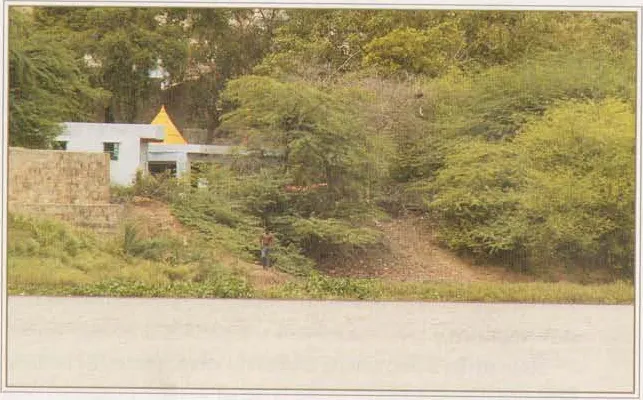
- The guidebook Śrī Vraja-maṇḍala Parikramā (2007) calls the ghāṭa Gau-ghāṭa and shows it in a photograph.
In short
Soma-tīrtha is a bathing place on the Yamunā at Mathurā, one of the twelve tīrthas (holy bathing places) that the Bhakti-ratnākara counts on the northern side of Viśrāma-ghāṭa.[1 +5] The Varāha Purāṇa says that Soma, the moon-god, sees the Lord here in the Dvāpara age, that one who bathes here rejoices in Somaloka, the world of the moon, and that one who gives up his life here goes to the Lord's world.[7] In the Purāṇa's walk round Mathurā the pilgrim bathes here and sees the Śiva called Someśvara.[8 +1]
Key facts
| Kind | ghāṭa |
|---|---|
| Region · area | Mathurā |
| Also part of | Yamunā |
| Ācāryas | Śrī Caitanya Mahāprabhu, Śrīla Rūpa Gosvāmī, Śrīla Narahari Cakravartī Ṭhākura, Śrīla Rāghava Paṇḍita Gosvāmī of Govardhana, Śrīla Śrīnivāsa Ācārya |
Why it is glorified
The Varāha Purāṇa describes Soma-tīrtha in the pure water of the Yamunā, where Soma sees the Lord in the Dvāpara age.
The Varāha Purāṇa describes Soma-tīrtha in the pure water of the Yamunā, where Soma sees the Lord in the Dvāpara age. A person devoted to his duties should take the sacred bath here; he rejoices in Somaloka, and one who dies here goes to the Lord's world (summarised here, not translated).[7]
सोमतीर्थे तु वसुधे पवित्रे यमुनाम्भसि ।। यत्र पश्यति मां सोमो द्वापरे युगसंस्थिते ॥ 154.20 ॥ तत्राभिषेकं कुर्वीत स्वकर्मपरिनिष्ठितः ।। मोदते सोमलोके तु एवमेव न संशयः ॥ 21 ॥ अथात्र मुंचते प्राणान्मम लोकं स गच्छति ।।
somatīrthe tu vasudhe pavitre yamunāmbhasi
yatra paśyati māṁ somo dvāpare yugasaṁsthite
tatrābhiṣekaṁ kurvīta svakarmapariniṣṭhitaḥ
modate somaloke tu evameva na saṁśayaḥ
athātra muṁcate prāṇānmama lokaṁ sa gacchati ||
Śrīla Rūpa Gosvāmī quotes the verse from the Ādi-varāha in his Mathurā-māhātmya, but without the line on Soma seeing the Lord, and the old texts give its promise in different words (see below).[2 +2] The Nārada Purāṇa has a verse of its own: north of Ghaṇṭā-bharaṇaka is the supreme tīrtha called Soma, and the best of men who bathes there is freed from sin and reaches Somaloka (summarised here, not translated).[12]
The Varāha Purāṇa also names Soma-tīrtha among the tīrthas of Mathurā that are a hundred times greater than Kurukṣetra; Śrīla Rūpa Gosvāmī quotes these verses for bathing at an eclipse and at like times.[11 +1]
Someśvara
In the Varāha Purāṇa's order for walking round Mathurā, the pilgrim goes on from the great tīrtha of Bhadreśvara to Soma-tīrtha, bathes there and sees the god Someśvara, and so gains the fruit of the pilgrimage. Śrīla Nārāyaṇa Bhaṭṭa Gosvāmī's Vraja-bhakti-vilāsa lists a Soma-kuṇḍa-tīrtha within the Yamunā, with an image of Mahādeva (Śiva) called Someśvara, between the Vighna-rāja kuṇḍa and the Sarasvatī-saṅgama.[8 +1]
ततो विघ्नराजं कुण्डतीर्थम् । तत्र द्वयोरभ्यन्तरे मार्गे भद्रेश्वराख्यमहादेवमूर्त्तिः । ततः सोमकुण्डतीर्थं यमुनाभ्यन्तरस्थम् । तत्र सोमेश्वराख्य महादेवमूर्त्तिः । ततो सरस्वतीसंगमाख्यतीर्थमस्ति ।
tato vighnarājaṁ kuṇḍatīrtham
tatra dvayorabhyantare mārge bhadreśvarākhyamahādevamūrttiḥ
tataḥ somakuṇḍatīrthaṁ yamunābhyantarastham
tatra someśvarākhya mahādevamūrttiḥ
tato sarasvatīsaṁgamākhyatīrthamasti |
The Gosvāmīs and ācāryas
According to the Bhakti-ratnākara of Śrīla Narahari Cakravartī Ṭhākura, Śrīla Rāghava Paṇḍita Gosvāmī of Govardhana took Śrīla Śrīnivāsa Ācārya and Śrīla Narottama dāsa Ṭhākura round Mathurā and showed them the twenty-four Yamunā tīrthas. At Soma-tīrtha he told Śrīla Śrīnivāsa Ācārya to see how purely the Yamunā flows here, and said that one who takes the sacred bath here gains all perfection and is happy in Somaloka; then he recited the Ādi-varāha verse (summarised here, not translated).[1 +3]
অহে শ্রীনিবাস এই সোমতীর্থ স্থল। দেখহ যমুনাবারি বহয়ে নির্ম্মল ॥ এথা অভিষিক্ত কৈলে সর্ব্বসিদ্ধি হয়। সোমলোকে সুখী ইথে নাহিক সংশয় ॥ তথাহি আদিবারাহে ॥ সোমতীর্থেতু বসুধে পরিত্রে যমুনাম্ভসি। তত্রাভিষেকং কুর্ব্বীত স্বস্বকর্ম্মপ্রতিষ্ঠিতঃ ॥ মোদতে সোমলোকেতু এবমেব ন সংশয়ঃ ॥
ahe śrīnibāsa ei somatīrtha sthala| dekhaha yamunābāri bahaẏe nirmmala
ethā abhiṣikta kaile sarbbasiddhi haẏa| somaloke sukhī ithe nāhika saṁśaẏa
tathāhi ādibārāhe
somatīrthetu basudhe paritre yamunāmbhasi| tatrābhiṣekaṁ kurbbīta sbasbakarmmapratiṣṭhitaḥ
modate somaloketu ebameba na saṁśaẏaḥ ||
The Caitanya-caritāmṛta (Madhya 17.190) says that Śrī Caitanya Mahāprabhu bathed in the twenty-four ghāṭas of the Yamunā at Mathurā, without naming them. The Bhakti-ratnākara's list of the twenty-four includes Soma-tīrtha and ends with Mahāprabhu's bathing in all of them; Śrīla Prabhupāda's list does not include it.[6 +1] Read more: The twenty-four ghāṭas of Mathurā →
Visiting today
The guidebook Śrī Vraja-maṇḍala Parikramā (2007) calls the ghāṭa Gau-ghāṭa and shows it in a photograph. It says that those who sprinkle themselves with the Yamunā's water here have all their wishes fulfilled, that Sarasvatī-patana-tīrtha lies near it, and that the walk round Mathurā then comes to Kaṁsa-kilā, the fort of Kaṁsa. Older lists give the ghāṭa other present names (see below).[1 +4]
Location
| Where it is | northern side; near Sarasvatī-patana-tīrtha[21] |
|---|
Nearby places
Sarasvatī-patana-tīrtha
Where the sources differ
The sources differ on which bathing places make up Mathurā's twelve northern ghāṭas and on which side of Viśrāma-ghāṭa they lie; their accounts are set out on the page of Viśrāma-ghāṭa.[1 +6]
Accounts differ The wording of the Purāṇa verse on Soma-tīrtha and what it promises.
- Varāha Purāṇa 154.20-22Includes the line 'yatra paśyati māṁ somo dvāpare yugasaṁsthite' (where Soma sees the Lord in the Dvāpara age) and reads 'svakarmapariniṣṭhitaḥ'; the bather rejoices in Somaloka; one who dies there goes to the Lord's world.
- Śrīla Rūpa Gosvāmī, Mathurā-māhātmya v.268 (Ādi-varāha)Has no line on Soma seeing the Lord.
- Bhakti-ratnākara, printed p. 177As Śrīla Rūpa Gosvāmī (with 'পরিত্রে', probably a misprint for pavitre); its Bengali says one who is sprinkled there gains all perfection and is happy in Somaloka.
- Śrī Vraja-maṇḍala Parikramā (2007), endnote 39 and printed p. 55Endnote: 'sarvva-karma-pratiṣṭhitaḥ … idameva na saṁśayaḥ'; English: those who sprinkle themselves with the Yamunā's water here 'will have all their cherished desires fulfilled'.
Accounts differ The other (present-day) name of Soma-tīrtha.
- Śrī Vraja-maṇḍala Parikramā (2007) ('Soma-tīrtha (Gaū-ghāṭa)')Soma-tīrtha is Gau-ghāṭa; the same book names a separate Vasudeva-ghāṭa 'near Svāmī-ghāṭa'.
- F. S. Growse, Mathurá (1883), a historian, and the Muttra gazetteer (1911)Both call Soma-tīrtha-ghāṭa by its more common names, Vasudeva-ghāṭa or Shaikh-ghāṭa.
More on this place
The twenty-four ghāṭas of Mathurā
References
21 references
- Śrīla Narahari Cakravartī, Bhakti-ratnākara, Fifth Wave, printed pp. 176-177 (1912 ed.), 2nd ed., 1912
- Śrīla Rūpa Gosvāmī, Mathurā-māhātmya v.239
- Śrīla Rūpa Gosvāmī, Mathurā-māhātmya, v.274 (Rūpa Gosvāmī's note on the Mathurā-khaṇḍa's count)
- Śrīla Narahari Cakravartī, Bhakti-ratnākara, Fifth Wave (pañcama taraṅga), 1912 ed. p. 171, 2nd ed., 1912
- Śrīla Narahari Cakravartī, Bhakti-ratnākara, Fifth Wave, printed p. 175 (1912 ed.), 2nd ed., 1912
- Śrīla Narahari Cakravartī, Bhakti-ratnākara, Fifth Wave (pañcama taraṅga), 1912 ed. p. 178, 2nd ed., 1912
- Varāha Purāṇa, adhyāya 154 (opening 'atha yamunā-tīrtha-prabhāvaḥ'), vv. 20-22 (first half of v. 22), Sanskrit Wikisource
- Varāha Purāṇa, adhyāya 160 (colophon 'mathurā-parikrama-prādurbhāva'), vv. 56-58 (first half of v. 58), Sanskrit Wikisource
- Śrīla Nārāyaṇa Bhaṭṭa, Vraja-bhakti-vilāsa, list of Mathurā's tīrtha-deities, northern sector (uttara-koṭi), printed p. 44, 1st ed., publ. Bābā Kṛṣṇadāsa, Kusuma-sarovara, Saṁvat 2008
- Śrīla Rūpa Gosvāmī, Mathurā-māhātmya v.268, quoting the Ādi-varāha (the label 'ādi-vārāhe' stands before v.259)
- Śrīla Rūpa Gosvāmī, Mathurā-māhātmya vv.437-439, quoting the Ādi-varāha
- Nārada Purāṇa, उत्तरार्धः/अध्यायः 79 v.79-41
- Varāha Purāṇa, adhyāya 168, vv. 14-18, Sanskrit Wikisource
- Śrī Vraja-maṇḍala Parikramā (2007), PDF p. 40
- Śrīla Kṛṣṇadāsa Kavirāja Gosvāmī, Śrī Caitanya-caritāmṛta, Madhya-līlā 17.190, online edition · vedabase.io
- Śrī Vraja-maṇḍala Parikramā (2007), PDF p. 41
- Śrī Vraja-maṇḍala Parikramā (2007), PDF p. 53
- Śrīla Narahari Cakravartī, Bhakti-ratnākara, Fifth Wave, printed p. 178 (1912 ed.), 2nd ed., 1912
- Śrīla Prabhupāda, Śrī Caitanya-caritāmṛta, Madhya-līlā 17.190, purport · vedabase.io
- Śrī Vraja-maṇḍala Parikramā (2007), PDF p. 37
- Śrī Vraja-maṇḍala Parikramā (2007), p. 54-55