Vimala-kuṇḍa
विमल-कुण्ड Hindi name proposed
- What it is
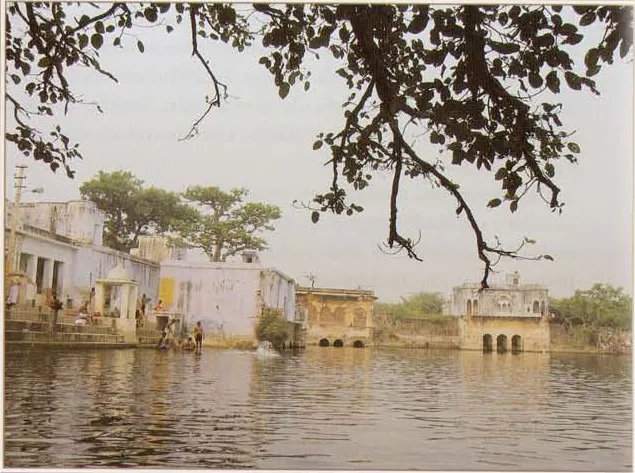
- Vimala-kuṇḍa is the best-known pond of Kāmyavana.
- Visiting
- Śrī Vraja-maṇḍala Parikramā (2007) names the deities around the kuṇḍa: Dāūjī, Sūryadeva, Śrī Nīlakaṇṭheśvara Mahādeva, Śrī Govardhana-nātha, Śrī Madana-mohana and Kāmyavana-bihārī, Śrī Vimala-bihārī …
In short
Vimala-kuṇḍa is the best-known pond of Kāmyavana. The guidebook Śrī Vraja-maṇḍala Parikramā (2007) places it about four hundred metres south-west of the village of Kāma and says that every group on the Vraja-maṇḍala parikramā stays here and begins the round of Kāmyavana from here.[1 +1] The Varāha Purāṇa says that at the kuṇḍa of Vimala one is freed from all sins, and the Nārada Purāṇa calls it the best of all tīrthas, holy places.[3 +3] The Garga-saṁhitā tells that it came to be in Kṛṣṇa's rāsa dance with the daughters of King Vimala; other books tell its origin differently.[7 +3]
Key facts
Why it is glorified
The Varāha Purāṇa speaks of Kāmyavana as the fourth and best of the forests, and then says that at the kuṇḍa of Vimala one is …
The Varāha Purāṇa speaks of Kāmyavana as the fourth and best of the forests, and then says that at the kuṇḍa of Vimala one is freed from all sins, and that one who gives up his life there goes to the Lord's own world. Śrīla Rūpa Gosvāmī collects this verse under the heading "of Kāmyavana" in his Mathurā-māhātmya, and the Bhakti-ratnākara quotes it too (summarised here, not translated).[3 +2]
विमलस्य च कुण्डे तु सर्वपापैः प्रमुच्यते ।। यस्तत्र मुंचते प्राणान्मम लोकं स गच्छति ॥ 38 ॥
vimalasya ca kuṇḍe tu sarvapāpaiḥ pramucyate
yastatra muṁcate prāṇānmama lokaṁ sa gacchati
The Nārada Purāṇa, in its list of Vraja's twelve forests, says that the Vimala-kuṇḍa in Kāmyavana is the best of all the best tīrthas, and that one who bathes there attains the abode of Viṣṇu (summarised here, not translated).[6] The Garga-saṁhitā says that by seeing it, drinking its water, bathing in it or worshipping it, a person destroys sins as great as Mount Meru and goes to Goloka.[12]
According to the Bhakti-ratnākara, Śrīla Rāghava Paṇḍita Gosvāmī told Śrīla Śrīnivāsa Ācārya that the glory of Vimala-kuṇḍa cannot be told and that Śrī Vimalā-devī always resides here. The Bengali Bhaktamāla of Kṛṣṇadāsa Bābājī (1905) calls its beauty supremely enchanting and its glory boundless.[13 +1]
Divine pastimes
King Vimala's daughters
The Garga-saṁhitā tells the story over three chapters (summarised here, not translated). King Vimala of Campakā in the land of Sindhu had six thousand wives and no child. The sage Yājñavalkya told him that he would have no son in this life, but daughters beyond counting.[15 +1] These daughters were the women of Ayodhyā who had received a blessing from Śrī Rāma. When the king's messenger could not find the Lord in Mathurā, Bhīṣma told King Vimala that Hari was living hidden in Vṛndāvana as a cowherd, and that the daughters should be given to Him.[17 +1]
Kṛṣṇa gave the king liberation and brought his daughters to Kāmavana in Vraja. There He took as many forms as there were girls and danced the rāsa with them, and from the drops of the water of their bliss Vimala-kuṇḍa came to be, the best of tīrthas.[7 +1] The guidebooks retell the story with small differences, shown below. Read more: Kāmyavana parikramā: Vimala-kuṇḍa and the eighty-four tīrthas →
Kṛṣṇa with the cows
Śrīmad-Bhāgavatam tells how Kṛṣṇa and Balarāma began to tend the cows with Their friends, and how They played among the rivers, hills, groves and lakes of Vṛndāvana. It names no kuṇḍa.[19 +2] The guidebook Vṛndāvana-Dhāma Ki Jaya! (c. 1986) and the undated parikramā notes Kāmyavana say that Kṛṣṇa grazed and watered the cows here and played with His friends; the notes add Balarāma.[19 +3]
Traditional accounts
Śrīla Nārāyaṇa Bhaṭṭa Gosvāmī's Vraja-bhakti-vilāsa names Vimala-kuṇḍa first among the places of Kāmyavana.
Śrīla Nārāyaṇa Bhaṭṭa Gosvāmī's Vraja-bhakti-vilāsa names Vimala-kuṇḍa first among the places of Kāmyavana. It tells another origin: the great kuṇḍa named Vimala came to be in Kāmyavana when the demigods, men and others performed the "Vimala" bath at dawn on the second day of the bright fortnight of Bhādra. It then gives a prayer for bathing here, ascribed to the Bṛhad-gautamīya, which bows to Keśava, whose form is purity (summarised here, not translated). This prayer has not been found in any available text.[9 +1]
According to the local tradition recorded in Śrī Vraja-maṇḍala Parikramā (2007) and the undated parikramā notes Kāmyavana, the kuṇḍa appeared when Tīrtharāja Puṣkara, the king of holy places, did not come to Vraja during the four months of the rainy season. A pure young girl appeared from a stream that Kṛṣṇa made spring from the earth and served Him, and He named her Vimalā-devī and the kuṇḍa after her; the books add that one bath here equals seven baths at Puṣkara. The 2007 book introduces the story as what "is generally said", and no Purāṇa or ācārya's work with it was found, so it is not certain.[1 +2]
The 2007 guidebook and the notes also set three episodes of the Pāṇḍavas' exile at this kuṇḍa. Śrīmad-Bhāgavatam (1.15) and Śrīla Prabhupāda's purports tell two of them without naming the kuṇḍa, and the Mahābhārata tells them at other spots or without naming any water; the accounts are shown below.[25 +4] Read more: The Pāṇḍavas in Kāmyavana: the Yakṣa's questions and the Pāṇḍava sites →
The Gosvāmīs and ācāryas
According to the Bhakti-ratnākara of Śrīla Narahari Cakravartī Ṭhākura, Śrīla Rāghava Paṇḍita Gosvāmī showed Vimala-kuṇḍa to …
According to the Bhakti-ratnākara of Śrīla Narahari Cakravartī Ṭhākura, Śrīla Rāghava Paṇḍita Gosvāmī showed Vimala-kuṇḍa to Śrīla Śrīnivāsa Ācārya and Śrīla Narottama dāsa Ṭhākura on their round of Kāmyavana and spoke of its glory.[5 +1] Śrīla Rūpa Gosvāmī collects the Varāha verse on the kuṇḍa, and Śrīla Nārāyaṇa Bhaṭṭa Gosvāmī gives its origin and its prayer, as told above.[4 +2]
Śrīla Prabhupāda
Śrīla Prabhupāda does not name Vimala-kuṇḍa.
Śrīla Prabhupāda does not name Vimala-kuṇḍa. In his purport to Caitanya-caritāmṛta Madhya 18.55 he quotes the Varāha verse that calls Kāmyavana the fourth forest, the verse that comes just before the one on this kuṇḍa, and translates the Bhakti-ratnākara's opening couplet on the ponds of Kāmyavana.[3 +3] The Caitanya-caritāmṛta says that Śrī Caitanya Mahāprabhu visited the places of Kṛṣṇa's pastimes at Kāmyavana.[32]
Visiting today
Śrī Vraja-maṇḍala Parikramā (2007) names the deities around the kuṇḍa: Dāūjī, Sūryadeva, Śrī Nīlakaṇṭheśvara Mahādeva, Śrī Govardhana-nātha, Śrī Madana-mohana and Kāmyavana-bihārī, Śrī Vimala-bihārī, Vimalā-devī, Śrī Muralī-manohara, Bhagavatī Gaṅgā and Śrī Gopālajī. The book says that pilgrims stay here and start the Kāmyavana parikramā from this kuṇḍa; the Vraja-bhakti-vilāsa also begins the circuit of Kāmyavana with a bath here.[1 +1]
Location
| Where it is | about 400 metres south-west of the village of Kāma[33] within the town of Kāmya-vana[34] |
|---|
Nearby places
Kāma (village) · Manokāmanā-kuṇḍa
Pictures
1 pictures
History
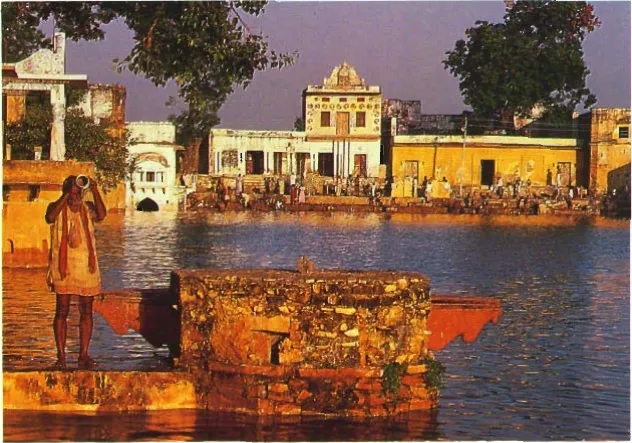
In 1966 the historian Prabhudayāl Mītal recorded masonry ghāṭas (bathing steps) on all four sides of the kuṇḍa, with old chhatrīs, built as memorials of the town's well-known people, and temples on its banks. He names no builder and gives no date.[30]
Where the sources differ
How Vimala-kuṇḍa came into being (four different accounts).
Accounts differ How Vimala-kuṇḍa came into being (four different accounts).
- Garga-saṁhitā, Mādhurya-khaṇḍa 4.7.26-29It came to be in Kāmavana from the drops of the water of bliss (ānanda-jala-bindubhiḥ) that fell from King Vimala's daughters in the rāsa with Kṛṣṇa.
- Śrī Vraja-maṇḍala Parikramā (2007) ('It is generally said'), and the undated parikramā notes Kāmyavana ('a story related in the Puranas')When Tīrtharāja Puṣkara did not come to Vraja during Cāturmāsya, Kṛṣṇa made a strong current of water shoot from the earth; a pure kiśorī appeared from it, served Him, and He named her Vimalā-devī and the kuṇḍa after her; one bath here equals seven baths in Puṣkara. (Both books also tell the Garga story.)
- Vraja-bhakti-vilāsa (Śrīla Nārāyaṇa Bhaṭṭa), chapter 6 v.3The great kuṇḍa named Vimala came to be in Kāmyavana when the demigods, men and others performed the 'Vimala' bath at dawn on the second day of the bright fortnight of Bhādra.
- 'S. P. Mital', as reported by Entwistle (1987), p.364The tank was constructed by Vimal Shah of Sind.
Accounts differ Details of King Vimala's story, as the Garga-saṁhitā tells it and as Śrī Vraja-maṇḍala Parikramā (2007) and the undated parikramā notes Kāmyavana report it.
- Garga-saṁhitā, Mādhurya-khaṇḍa 4.5-4.7King Vimala of Campakā in Sindhu had six thousand barren wives (4.5.4); Yājñavalkya promised daughters 'by crores' (koṭiśaḥ; English 'ten million', 4.5.12); they were the women of Ayodhyā blessed by Śrī Rāma (4.6.2); the messenger returned from Mathurā, and Bhīṣma, coming to conquer Sindhu, told the king to give them to Kṛṣṇa (4.6.18-30); the kuṇḍa formed from 'drops of the water of bliss' (4.7.29; the English: perspiration).
- Śrī Vraja-maṇḍala Parikramā (2007), citing the Garga-saṁhitāSix thousand queens; 'many beautiful girls' who had been the women of Janakapurī wishing to have Śrī Rāma as husband; the emissary met Bhīṣma on his way to Mathurā and was sent to Vṛndāvana; their tears of happiness filled the pond.
- the undated parikramā notes Kāmyavana, citing 'the Bhavisya Purana as well as the Ganga Samhita'Many wives; sixteen thousand daughters who had lived in Ayodhyā; their tears of happiness created the kuṇḍa.
- Entwistle (1987), p.364, citing the Garga-saṁhitāCreated from drops of perspiration that fell from the daughters of King Vimal when they danced the rās with Krishna.
Whether the Pāṇḍava episodes took place here.
Accounts differ Whether the Pāṇḍava episodes happened at Vimala-kuṇḍa, and their details.
- Śrī Vraja-maṇḍala Parikramā (2007); the undated parikramā notes KāmyavanaJayadratha seized Draupadī while she bathed alone in Vimala-kuṇḍa; Durvāsā and his sixty thousand disciples went to bathe in Vimala-kuṇḍa and felt full there; Duryodhana camped on its bank and was arrested by Citrasena. 'It is well known that Maharṣi Durvāsā and the Pāṇḍavas resided here.'
- Śrīmad-Bhāgavatam 1.15.11 (Śrīla Prabhupāda's translation)Durvāsā, 'who eats with his ten thousand disciples'; the assembly of munis felt fed 'while bathing in the river' (Sanskrit: in the water); no place named.
- Śrīla Prabhupāda, ŚB 1.15.11 and 1.15.16 purportsDurvāsā had about ten thousand disciples and went to bathe 'in the river'; Jayadratha saw Draupadī 'on the way to Kāmyavana' and forced her onto his chariot; no kuṇḍa and no bath are mentioned.
- Mahābhārata, Āraṇyakaparvan 3.248.5-8 (BORI critical edition, constituted text)The Pāṇḍavas, living in the Kāmyaka forest, go hunting and leave Draupadī in the hermitage; Jayadratha, on his way to the Śālveyas to marry, comes to Kāmyaka and sees her standing at the door of the hermitage in the lonely forest; no bath and no kuṇḍa.
The wording of these accounts is our summary of the sources, not a published translation.
More on this place
Kāmyavana parikramā: Vimala-kuṇḍa and the eighty-four tīrthas · The Pāṇḍavas in Kāmyavana: the Yakṣa's questions and the Pāṇḍava sites
References
34 references
- Śrī Vraja-maṇḍala Parikramā (2007), PDF p. 146
- Śrī Vraja-maṇḍala Parikramā (2007), PDF p. 147
- Varāha Purāṇa, adhyāya 153, verse 38, Sanskrit Wikisource
- Śrīla Rūpa Gosvāmī, Mathurā-māhātmya v.338 (section on the twelve forests, under 'kāmya-vanasya')
- Śrīla Narahari Cakravartī, Bhakti-ratnākara, Fifth Wave vv.845-846, printed p.215, 2nd ed., 1912
- Nārada Purāṇa, उत्तरार्धः/अध्यायः 79 v.79-9 to 79-10: Uttara-bhāga, chapter 79, verses 9-10
- Garga-saṁhitā, Mādhurya-khaṇḍa (4) 5.2, Sanskrit Wikisource
- Garga-saṁhitā, Mādhurya-khaṇḍa (4) 7.26-29, Sanskrit Wikisource
- Śrīla Nārāyaṇa Bhaṭṭa Gosvāmī, Vraja-bhakti-vilāsa, chapter 6 v.3, printed p.151: the bath at Vimala-kuṇḍa on Bhādra śukla 2 and its prayer, 1st ed., publ. Bābā Kṛṣṇadāsa, Kusuma-sarovara, Saṁvat 2008
- Śrīla Nārāyaṇa Bhaṭṭa Gosvāmī, Vraja-bhakti-vilāsa, chapter 2 part 13 vv.1, 11-12 and 14-15, printed p.48: the list of the marks (liṅgāni) of Kāmyavana, 1st ed., publ. Bābā Kṛṣṇadāsa, Kusuma-sarovara, Saṁvat 2008
- Varāha Purāṇa, adhyāya 153, verse 38, Sanskrit Wikisource
- Garga-saṁhitā, Mādhurya-khaṇḍa (4) 7.30, Sanskrit Wikisource
- Śrīla Narahari Cakravartī, Bhakti-ratnākara, Fifth Wave v.847, printed p.216, 2nd ed., 1912
- Śrī Śrī Bhaktamāla grantha, printed p.336, left and right columns: Kāmyavana
- Garga-saṁhitā, Mādhurya-khaṇḍa (4) 5.4, Sanskrit Wikisource
- Garga-saṁhitā, Mādhurya-khaṇḍa (4) 5.12, Sanskrit Wikisource
- Garga-saṁhitā, Mādhurya-khaṇḍa (4) 6.2, Sanskrit Wikisource
- Garga-saṁhitā, Mādhurya-khaṇḍa (4) 6.18, Sanskrit Wikisource
- Śrīmad-Bhāgavatam 10.15.1, GRETIL
- Śrīmad-Bhāgavatam 10.18.16, GRETIL
Show all 34 references
- Śrīla Prabhupāda, Kṛṣṇa, the Supreme Personality of Godhead, ch. 15 'Killing of Dhenukāsura' · vedabase.io
- the undated parikramā notes Kāmyavana, ¶27
- Vṛndāvana-Dhāma Ki Jaya! (c. 1986), by Dhruva Mahārāja dāsa, PDF p. 45
- the undated parikramā notes Kāmyavana, ¶28
- Śrīmad-Bhāgavatam 1.15.11, GRETIL
- Śrīla Prabhupāda, Śrīmad-Bhāgavatam, 1.15.11, purport · vedabase.io
- Śrīla Prabhupāda, Śrīmad-Bhāgavatam, 1.15.16, purport · vedabase.io
- Mahābhārata, 3.248.5-8 (constituted text), BORI critical edition, electronic text, 1999
- Mahābhārata, 3.229.17-19 (constituted text), BORI critical edition, electronic text, 1999
- Prabhudayāl Mītal, Kāmavana section, 'Vimalā kuṇḍa', printed p.118
- Śrīla Prabhupāda, Śrī Caitanya-caritāmṛta, Madhya-līlā 18.55, purport (translation of a Bhakti-ratnākara couplet) · vedabase.io
- Śrīla Prabhupāda, Śrī Caitanya-caritāmṛta, Madhya-līlā 18.57, translation · vedabase.io
- Śrī Vraja-maṇḍala Parikramā (2007), p. 266-267
- Vṛndāvana-Dhāma Ki Jaya! (c. 1986), by Dhruva Mahārāja dāsa, p. 27