Kāmyavana parikramā: Vimala-kuṇḍa and the eighty-four tīrthas
काम्यवन परिक्रमा: विमल-कुण्ड और चौरासी तीर्थ
In short
Kāmyavana (Kaman, in Rājasthān) is one of the twelve forests of Vraja. The Vraja-bhakti-vilāsa sets its parikramā, the walk around it, on the first two days of the bright half of Bhādra (August–September). It begins with a bath at dawn in Vimala-kuṇḍa. Then comes a walk of seven krośas past its eighty-four tīrthas (holy bathing places), deities and pillars.[1–11]
On this page
At a glance
- Scripture: the Varāha Purāṇa, an old scripture, calls Kāmyaka the fourth forest and the best of forests. Śrīla Prabhupāda translates the verse in his purport to Caitanya-caritāmṛta Madhya 18.55.[7–11]
- Śrī Caitanya Mahāprabhu went to Kāmyavana after seeing the Gopāla Deity. From there He went on to Nandīśvara.[11–14]
- The days: according to the Vraja-bhakti-vilāsa, the pilgrims arrive on the first day of the bright half of Bhādrapada (Bhādra, a month around August–September). They walk the round on the second.[1–6]
- The length: the Vraja-bhakti-vilāsa gives seven krośas (an old measure of distance); the 2007 guidebook Śrī Vraja-maṇḍala Parikramā gives fourteen miles.[1 +10]
- Vimala-kuṇḍa: the Garga-saṁhitā tells that this kuṇḍa (sacred pond) came to be in the rāsa dance of King Vimala's daughters with Kṛṣṇa.[20, 21]
- The number eighty-four: the Vraja-bhakti-vilāsa quotes a verse it gives from the Viṣṇu Purāṇa. The verse credits Kāmasena with eighty-four tīrthas (holy bathing places), temples and pillars.[1 +3]
Kāmyavana in scripture and in Śrīla Prabhupāda's words
The Varāha Purāṇa's Mathurā-māhātmya counts the forests of Vraja. It calls Kāmyaka the fourth and the best of them. The next verse adds that at the kuṇḍa of Vimala one is freed from all sin. Śrīla Rūpa Gosvāmī, the Bhakti-ratnākara and Śrīla Prabhupāda all quote the verse as from the Ādi-varāha.[7–11] This is Śrīla Prabhupāda's translation:
चतुर्थं काम्यकवनं वनानां वनमुत्तमम्।। तत्र गत्वा नरो देवि मम लोके महीयते ॥ 37 ॥ विमलस्य च कुण्डे तु सर्वपापैः प्रमुच्यते ।। यस्तत्र मुंचते प्राणान्मम लोकं स गच्छति ॥ 38 ॥
caturthaṁ kāmyakavanaṁ vanānāṁ vanamuttamam|| tatra gatvā naro devi mama loke mahīyate
37
vimalasya ca kuṇḍe tu sarvapāpaiḥ pramucyate
yastatra muṁcate prāṇānmama lokaṁ sa gacchati || 38 ||
Lord Śiva said, “The best of all forests is the fourth of these, named Kāmyaka. O goddess Devī, any person who goes there is eligible to enjoy the glories of my abode.
Translation: Śrīla A.C. Bhaktivedanta Swami PrabhupādaŚrī Caitanya Mahāprabhu came here on His tour of Vraja. After seeing the Gopāla Deity, He went to Kāmyavana and visited the places of Kṛṣṇa's pastimes. Then He went on to Nandīśvara.[11–14]
prastāve kahiluṅ gopāla-kṛpāra ākhyāna
tabe mahāprabhu gelā ‘śrī-kāmyavana’
In the course of this story, I have given a description of Lord Gopāla’s mercy. After seeing the Gopāla Deity, Śrī Caitanya Mahāprabhu went to Śrī Kāmyavana.
Translation: Śrīla A.C. Bhaktivedanta Swami PrabhupādaIn his purport to that verse, Śrīla Prabhupāda adds three lines of the Bhakti-ratnākara in his own translation.[11]
Names this placeKāmyavana is mentioned in the Ādi-varāha Purāṇa: … “In this Kāmyavana, Kṛṣṇa performed enchanting pastimes. Here you will be able to take darśana of many ponds and other transcendental spots. I cannot even describe in writing all the sacred tīrthas found at Kāmyavana.”
Śrīla Prabhupāda, Śrī Caitanya-caritāmṛta, Madhya-līlā 18.55, purport · vedabase.io
Elsewhere he counts Kāmyavana among the seven of the twelve forests on the western side of the Yamunā. He also counts it among the forests of the pilgrims' circuit.[24–26] The Padma Purāṇa too names Kāmya among the twelve main forests of Mathurā-maṇḍala. It calls Kāmāraṇya a petal of the lotus of Mathurā and a place of Kṛṣṇa's sports.[27, 28]
The Canto 10 commentators bring Kṛṣṇa here too. Śrīla Jīva Gosvāmī counts Kāmyaka-vana among the groves of Vṛndāvana where Kṛṣṇa and Balarāma played. Śrīla Sanātana Gosvāmī names it among the forests decorated by Kṛṣṇa's feet that Nanda remembers. Both are summarised here, not translated.[29–32] Śrīla Jīva Gosvāmī also speaks of the day Kṛṣṇa went far from Vṛndāvana with the cowherd boys, before He blessed the wives of the brāhmaṇas (priests). He says Kṛṣṇa went first to the hilly Kāmyaka-vana.[33–38]
Why it is called Kāmyavana
Two old books explain the name. The Vraja-bhakti-vilāsa of Śrīla Nārāyaṇa Bhaṭṭa Gosvāmī quotes a verse it gives as from the Ādi-vārāha. The verse says the forest is Kāmyavana because there the desires of demigods, sages, men and ascetics are fulfilled. It is not known from the Varāha Purāṇa itself.[1 +7] Śrīla Viśvanātha Cakravartī Ṭhākura gives another reason in his Vraja-rīti-cintāmaṇi. He says it is called Kāmyavana because many kuṇḍas and bowers shine there and its forests are dear to Kṛṣṇa. He places it south-west of Nandīśvara.[41]
The 2007 guidebook places the forest six miles west of Varṣāṇā, in Rājasthān. The town is Kāma, called Kaman, with seven old gates.[5 +5]
How Vimala-kuṇḍa came to be
The parikramā begins with a bath in Vimala-kuṇḍa. The Garga-saṁhitā tells the kuṇḍa's story over three chapters of its Mādhurya-khaṇḍa. We quote only the translations of the Bhaktivedanta Book Trust (BBT), so it is summarised here from the Sanskrit.[20, 21]
In the land of Sindhu, in the city of Campakā, there lived a king named Vimala. He was devoted to dharma, the path of duty.[20] His six thousand wives had no children.[42] The sage Yājñavalkya told him that in this birth he would have no son, but daughters beyond counting.[43] These daughters were the women of Ayodhyā who had received a blessing from Śrī Rāmacandra. Now they were born again in Vimala's palace.[44]
The king sent a messenger to Mathurā. He wanted to find the son of Vasudeva, to whom he could give his daughters, but the messenger did not find Him there. Then Bhīṣma, who was setting out to conquer the land of Sindhu, came to the king. He told the king that Hari (Kṛṣṇa) was living hidden in Vṛndāvana as a cowherd boy, and that the daughters should be given to Him.[45]
At the end of the story, Kṛṣṇa granted liberation to King Vimala and brought his daughters to Kāmavana in Vraja. There, in the rāsa dance, He took as many forms as there were girls. Drops of the water of bliss fell from them, and from these drops Vimala-kuṇḍa came to be, the best of tīrthas.[20, 21] The Garga-saṁhitā adds its glory. A person who sees the kuṇḍa, drinks its water, bathes in it or worships it cuts away sins as heavy as Mount Meru and reaches Goloka, Kṛṣṇa's own world.[46]
What the other books say of the kuṇḍa
The Vraja-bhakti-vilāsa tells the origin in its own way. It says the great kuṇḍa named Vimala came to be in Kāmyavana from the Vimala bath of the demigods, men and others. They took it at dawn on the second day of the bright half of Bhādra. It gives a prayer for bathing there, from a work it calls the Bṛhad-gautamīya. It also puts Vimala-kuṇḍa first in its list of the forest's holy places.[47, 48]
The Purāṇas praise the kuṇḍa without telling how it arose. The Varāha Purāṇa says that at the kuṇḍa of Vimala one is freed from all sin. One who gives up the body there goes to the Lord's world. Śrīla Rūpa Gosvāmī collects the verse in his Mathurā-māhātmya.[49–51] The Nārada Purāṇa calls the Vimala-kuṇḍa of Kāmyavana the best of all tīrthas, by which a person reaches the Vaiṣṇava abode.[52] In the Bhakti-ratnākara, Śrīla Rāghava Paṇḍita tells Śrīla Śrīnivāsa Ācārya that the glory of the kuṇḍa cannot be told. He adds that Śrī Vimalā-devī always lives there.[51 +2]
The round as the Vraja-bhakti-vilāsa sets it
Śrīla Nārāyaṇa Bhaṭṭa Gosvāmī gives the round in three parts of his book: a list of the forest's sites, a prayer for each place, and the days. On the first day of the bright half of Bhādrapada, one goes to Kāmyavana and stays the night. On the second, after bathing at dawn in Vimala-tīrtha, one walks the circuit of seven krośas and feeds brāhmaṇas.[1–6]
… काम्यवनं तस्मात्कामसेनिविनिर्मितं । उषित्वा प्रतिपद्रात्रौ तत्र काम्ये वने शुभे ॥ भाद्रशुक्लद्वितीयायां प्रभातसमये यदि । वैमलाख्ये महातीर्थे स्नात्वा कुर्यात्प्रदक्षिणां ॥ सप्तक्रोशमयीं …
… kāmyavanaṁ tasmātkāmasenivinirmitaṁ
uṣitvā pratipadrātrau tatra kāmye vane śubhe
bhādraśukladvitīyāyāṁ prabhātasamaye yadi
vaimalākhye mahātīrthe snātvā kuryātpradakṣiṇāṁ
saptakrośamayīṁ …
He says the forest was built by Kāmaseni. He quotes a verse, as from the Viṣṇu Purāṇa, on eighty-four tīrthas, eighty-four temples and eighty-four pillars made by Kāmasena. The verse is not known from the Viṣṇu Purāṇa itself, and the sources do not say who Kāmasena was.[1 +3] Seeing the eighty-four deities, he says, gives the fruit of bathing in the eighty-four tīrthas. The pilgrimage is complete with the eighty-four pillars.[4]
The list follows a fixed order. Here are some of its stops, in that order:[1 +5]
- Vimala-kuṇḍa first, then Gopikā-kuṇḍa. The book says Gopikā-kuṇḍa came to be when the gopīs (the cowherd girls) bathed there, wishing for their desires to be fulfilled.[5 +2]
- Suvarṇapura, Gayā-kuṇḍa and Dharma-kuṇḍa, with the five ponds of the Pāṇḍavas after them. Then come Paramokṣa-kuṇḍa, Maṇikarṇikā-kuṇḍa and Nivāsa-kuṇḍa beside it.[22, 56]
- Setubandha-sarovara (Setubandha), the kuṇḍa of the bridge over the ocean, fifteenth in the list. The Bhāgavatam says that as children Kṛṣṇa and Balarāma played at building a bridge on the ocean. It does not name a place.[22 +3]
- The place of hide-and-seek, Govinda-kuṇḍa, the place of closing the eyes, the sliding stone and the place of Vyomāsura's cave. The Bhāgavatam also counts hide-and-seek among the brothers' childhood games.[59–61] Read more: Where and when Kṛṣṇa killed Vyomāsura →
- Kapila-tīrtha, Rāma's place on the hill, and Kṛṣṇa-kūpa (Kṛṣṇa's well) in the middle of the forest.[62, 63]
- Śyāma-kuṇḍa. The book's prayer calls it the great place among Kāmyavana's tīrthas. It warns that disrespect of it makes the pilgrimage fruitless.[64, 65]
- The wedding place of Sumanā Sakhī, a sakhī (a girl friend of Śrī Rādhā). The book's prayer says that one who bows down here has the joy of weddings and a long, happy life. It tells nothing more of it.[66]
- At the end, the book names the darśana (respectful viewing) of the deities: Govinda with Vṛndā, Rādhā-vallabha, Gopīnātha, Navanīta-rāya, Gokuleśvara and Rāmacandra, each with a prayer.[67–70]
The book says that the next morning the pilgrim stands half a krośa outside the forest, facing west. With a verse it gives from the Skanda Purāṇa, the pilgrim prays to Kāmyavana, born from the Lord's body, and asks to come back.[2]
Śrīla Rāghava Paṇḍita's round in the Bhakti-ratnākara
The Bhakti-ratnākara of Śrīla Narahari Cakravartī Ṭhākura gives a second round, as a guided walk. In its Fifth Wave (chapter), Śrīla Rāghava Paṇḍita Gosvāmī shows Kāmyavana to Śrīla Śrīnivāsa Ācārya and Śrīla Narottama dāsa Ṭhākura. He calls it the best of forests, which grants all desires. Bathing anywhere in it, he says, ends all sorrow.[10 +4]
এই দেখ সর্ব্ববনোত্তম কাম্যবন। বিষ্ণুলোকে পূজ্য এথা করিলে গমন ॥ তথাহি আদিবারাহে ॥ চতুর্থং কাম্যকবনং বনানাং বনমুত্তমং। তত্র গত্বা নরো দেবি মম লোকে মহীয়তে ॥ সর্ব্বকাম ফলপ্রদ কাম্যবন হয়! যথা তথা কৈলে স্নান সর্ব্বদুঃখ ক্ষয় ॥ তথাহি স্কান্দে মথুরাখণ্ডে ॥ ততঃ কাম্যবনং রাজন্ যত্র বাল্যে স্থিতো ভবান্। স্নানমাত্রেণ সর্ব্বেষাং সর্ব্বকামফলপ্রদং ॥ এই কাম্যবনে কৃষ্ণলীলা মনোহর। করিবে দর্শন স্থান কুণ্ড বহুতর ॥
ei dekha sarbbabanottama kāmyabana| biṣṇuloke pūjya ethā karile gamana
tathāhi ādibārāhe
caturthaṁ kāmyakabanaṁ banānāṁ banamuttamaṁ| tatra gatbā naro debi mama loke mahīẏate
sarbbakāma phalaprada kāmyabana haẏa! yathā tathā kaile snāna sarbbaduḥkha kṣaẏa
tathāhi skānde mathurākhaṇḍe
tataḥ kāmyabanaṁ rājan yatra bālye sthito bhabān| snānamātreṇa sarbbeṣāṁ sarbbakāmaphalapradaṁ
ei kāmyabane kṛṣṇalīlā manohara| karibe darśana sthāna kuṇḍa bahutara ||
In this Kāmyavana, Kṛṣṇa performed enchanting pastimes. Here you will be able to take darśana of many ponds and other transcendental spots.
Translation: Śrīla A.C. Bhaktivedanta Swami PrabhupādaHis order differs from Śrīla Nārāyaṇa Bhaṭṭa Gosvāmī's. He begins at the Viṣṇu-siṁhāsana (Viṣṇu's throne) and the Caraṇa-kuṇḍa, where the feet were washed. He says even Brahmā finds no end to their glory.[74] Next he shows Kāmeśvara, the Śiva of Kāmyavana. Then comes Dharma-kuṇḍa, where Nārāyaṇa sports as Dharma, with the Viśokā platform and the kuṇḍa of the five Pāṇḍavas beside it. Only then does he show Vimala-kuṇḍa.[4 +6] The Pāṇḍava sites are told in their own article.[72] Read more: The Pāṇḍavas in Kāmyavana: the Yakṣa's questions and the Pāṇḍava sites →
Further on he names ponds that the other book names or explains in other ways. Beside Dhyāna-kuṇḍa he shows a Tapa-kuṇḍa, the place of the sages' austerities. At the same spot the Vraja-bhakti-vilāsa has a Tapta-kuṇḍa that removes distress.[79–81] His Dohanī-kuṇḍa is the place of milking the cows. The other book calls it a tīrtha made by Nanda and the cowherds, always full of milk.[82–84] At Śyāma-kuṇḍa, he says, Kṛṣṇa stays gazing at the path by which Śrī Rādhā comes.[85]
Near the end he shows the place of the game of thieves. There Kṛṣṇa killed Vyomāsura at the mouth of a cave on the hill. Then he admits that the tīrthas of Kāmyavana cannot all be written down.[71]
Where the sources differ
The books do not agree on how Vimala-kuṇḍa came to be. In the Garga-saṁhitā it arises in the rāsa of King Vimala's daughters. In the Vraja-bhakti-vilāsa it comes from the Vimala bath of the demigods and men. The guidebooks add a story that they call generally told. In it Kṛṣṇa calls forth a stream when Puṣkara failed to come to Vraja, and Vimalā-devī appears from it. No older text is known to tell it.[20 +6]
Accounts differ How Vimala-kuṇḍa came into being (four different accounts).
- Garga-saṁhitā, Mādhurya-khaṇḍa 4.7.26-29It came to be in Kāmavana from the drops of the water of bliss (ānanda-jala-bindubhiḥ) that fell from King Vimala's daughters in the rāsa with Kṛṣṇa.
- Śrī Vraja-maṇḍala Parikramā (2007) ('It is generally said'), and the undated parikramā notes Kāmyavana ('a story related in the Puranas')When Tīrtharāja Puṣkara did not come to Vraja during Cāturmāsya, Kṛṣṇa made a strong current of water shoot from the earth; a pure kiśorī appeared from it, served Him, and He named her Vimalā-devī and the kuṇḍa after her; one bath here equals seven baths in Puṣkara. (Both books also tell the Garga story.)
- Vraja-bhakti-vilāsa (Śrīla Nārāyaṇa Bhaṭṭa), chapter 6 v.3The great kuṇḍa named Vimala came to be in Kāmyavana when the demigods, men and others performed the 'Vimala' bath at dawn on the second day of the bright fortnight of Bhādra.
- 'S. P. Mital', as reported by Entwistle (1987), p.364The tank was constructed by Vimal Shah of Sind.
The guidebooks also retell King Vimala's story with details of their own. For example, they have the women of Janakapurī in place of those of Ayodhyā, and sixteen thousand daughters. These are recorded here beside the Garga-saṁhitā, not corrected.[42 +5]
Accounts differ Details of King Vimala's story, as the Garga-saṁhitā tells it and as Śrī Vraja-maṇḍala Parikramā (2007) and the undated parikramā notes Kāmyavana report it.
- Garga-saṁhitā, Mādhurya-khaṇḍa 4.5-4.7King Vimala of Campakā in Sindhu had six thousand barren wives (4.5.4); Yājñavalkya promised daughters 'by crores' (koṭiśaḥ; English 'ten million', 4.5.12); they were the women of Ayodhyā blessed by Śrī Rāma (4.6.2); the messenger returned from Mathurā, and Bhīṣma, coming to conquer Sindhu, told the king to give them to Kṛṣṇa (4.6.18-30); the kuṇḍa formed from 'drops of the water of bliss' (4.7.29; the English: perspiration).
- Śrī Vraja-maṇḍala Parikramā (2007), citing the Garga-saṁhitāSix thousand queens; 'many beautiful girls' who had been the women of Janakapurī wishing to have Śrī Rāma as husband; the emissary met Bhīṣma on his way to Mathurā and was sent to Vṛndāvana; their tears of happiness filled the pond.
- the undated parikramā notes Kāmyavana, citing 'the Bhavisya Purana as well as the Ganga Samhita'Many wives; sixteen thousand daughters who had lived in Ayodhyā; their tears of happiness created the kuṇḍa.
- Entwistle (1987), p.364, citing the Garga-saṁhitāCreated from drops of perspiration that fell from the daughters of King Vimal when they danced the rās with Krishna.
Two smaller differences touch the round itself. The platform beside Dharma-kuṇḍa is Viśokā in the Bhakti-ratnākara and Viśākhā-vedī in the 2007 guidebook.[72, 89] In Śrīla Prabhupāda's translation, the Varāha verse on Kāmyaka is spoken by Lord Śiva to the goddess. The printed Purāṇa gives the chapter to Lord Varāha speaking to the Earth. The Bhakti-ratnākara reads the Lord's world as Viṣṇu's. These readings are given side by side with his translation, not as corrections of it.[7–11]
Accounts differ Who speaks the Ādi-vārāha verse on Kāmyaka-vana ('mama loke mahīyate').
- Śrīla Prabhupāda, CC Madhya 18.55 purport (translation of the verse 'in the Ādi-varāha Purāṇa')'Lord Śiva said, … O goddess Devī, any person who goes there is eligible to enjoy the glories of my abode'
- Varāha Purāṇa (Wikisource text), chapter 153The chapter opens with the words 'Śrī Varāha said', and the Lord speaks to the goddess Earth; read in this text, the world the verse promises is Lord Varāha's, that is, Viṣṇu's.
- Bhakti-ratnākara, Fifth Wave, 1912 Bengali edition, printed p. 214Śrīla Rāghava Paṇḍita Gosvāmī, introducing the verse, says that one who goes here is worshipped in Viṣṇuloka, so the book reads the verse's 'my world' as Viṣṇu's world.
Places in this article
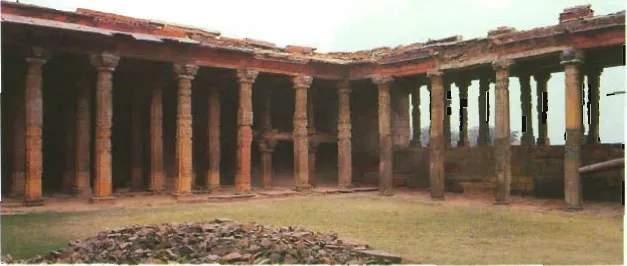
Kāmyavana
काम्यवनKāmyavana, also called Kāmavana, is one of the twelve forests of Vraja, around the town of Kāmā (Kāman).
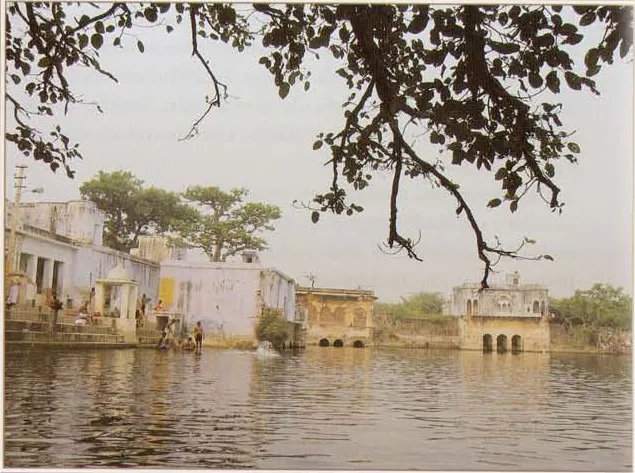
Vimala-kuṇḍa
विमल-कुण्डVimala-kuṇḍa is the best-known pond of Kāmyavana.
Gopikā-kuṇḍa
गोपिका-कुण्डViṣṇu-siṁhāsana
विष्णु-सिंहासनCaraṇa-kuṇḍa (Kāmyavana)
चरण-कुण्ड (काम्यवन)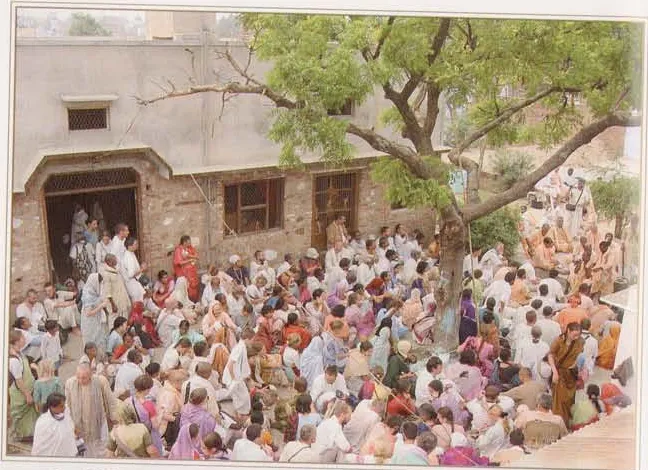
Kāmeśvara Mahādeva (Kāmyavana)
कामेश्वर महादेव (काम्यवन)Kāmeśvara Mahādeva is a temple of Lord Śiva in Kāmyavana, at Kuśa-sthalī.
Pañca Pāṇḍava-kuṇḍa
पंच पाण्डव-कुण्डViśākhā-vedī
विशाखा-वेदीSetubandha-sarovara
सेतुबन्ध-सरोवरSetubandha-sarovara, the lake of the bridge, is a lake of Kāmyavana; the guidebook Śrī Vraja-maṇḍala Parikramā (2007) also calls it Laṅkā-kuṇḍa and reaches it by the road …
Tapta-kuṇḍa (Kāmyavana)
तप्त-कुण्ड (काम्यवन)Dohanī-kuṇḍa (Kāmyavana)
दोहनी-कुण्ड (काम्यवन)Mohinī-kuṇḍa (Kāmyavana)
मोहिनी-कुण्ड (काम्यवन)Śyāma-kuṇḍa (Kāmyavana)
श्याम-कुण्ड (काम्यवन)Marriage-place of Sumanā Sakhī
सुमना सखी का विवाह-स्थलVṛndā-devī with Govindajī and other deities (Kāmyavana list)
गोविन्दजी सहित वृन्दा देवी तथा अन्य विग्रह (काम्यवन की सूची)Kāma (village)
कामाँ (गाँव)Kāma, also called Kāman, is the town inside the forest of Kāmyavana.
Questions and answers
It is one of the twelve forests of Vraja, today the town of Kaman in Rājasthān. The Varāha Purāṇa calls it the fourth and best of the forests. Śrī Caitanya Mahāprabhu visited the places of Kṛṣṇa's pastimes there.[5, 7–19]
According to the Vraja-bhakti-vilāsa it is seven krośas, and its Hindi gloss says it holds sixty-eight tīrthas. The 2007 guidebook gives fourteen miles.[1 +10]
It is the kuṇḍa where the round begins. The Garga-saṁhitā says it arose in Kṛṣṇa's rāsa dance with the daughters of King Vimala of Sindhu. The Vraja-bhakti-vilāsa gives a different origin: the Vimala bath of the demigods and men.[20 +3]
The Vraja-bhakti-vilāsa quotes a verse on eighty-four tīrthas, eighty-four temples and eighty-four pillars made by Kāmasena. It lists the forest's kuṇḍas and deities in order, with a prayer for each.[1 +6]
The Vraja-bhakti-vilāsa sets it on the first and second days of the bright half of Bhādrapada. The bath in Vimala-kuṇḍa is at dawn on the second day.[1–6]
One is the platform beside Dharma-kuṇḍa: the Bhakti-ratnākara calls it Viśokā and the 2007 guidebook Viśākhā-vedī. Another is the kuṇḍa beside Dhyāna-kuṇḍa: Tapa-kuṇḍa in the Bhakti-ratnākara and Tapta-kuṇḍa in the Vraja-bhakti-vilāsa.[72 +3]
Sources
- Śrīla Nārāyaṇa Bhaṭṭa Gosvāmī, Vraja-bhakti-vilāsa, chapter 7 v.7, printed p.178: the forest-pilgrimage days; Kāmyavana on Bhādra śukla 1-2, 1st ed., publ. Bābā Kṛṣṇadāsa, Kusuma-sarovara, Saṁvat 2008
- Śrīla Nārāyaṇa Bhaṭṭa Gosvāmī, Vraja-bhakti-vilāsa, chapter 9 vv.65-66, printed p.202: end of the Kāmyavana circuit, 1st ed., publ. Bābā Kṛṣṇadāsa, Kusuma-sarovara, Saṁvat 2008
- Śrīla Nārāyaṇa Bhaṭṭa Gosvāmī, Vraja-bhakti-vilāsa, part 2 vv.1-2, printed p.5: the presiding Lords of the twelve forests, 1st ed., publ. Bābā Kṛṣṇadāsa, Kusuma-sarovara, Saṁvat 2008
- Śrīla Nārāyaṇa Bhaṭṭa Gosvāmī, Vraja-bhakti-vilāsa, chapter 2 part 13 v.53, printed p.50: end of the list of Kāmyavana's sites, 1st ed., publ. Bābā Kṛṣṇadāsa, Kusuma-sarovara, Saṁvat 2008
- Śrī Vraja-maṇḍala Parikramā (2007), PDF p. 145
- the undated parikramā notes Kāmyavana, ¶4
- Varāha Purāṇa, adhyāya 153, verses 37-38, Sanskrit Wikisource
- Varāha Purāṇa, adhyāya 161, verses 6-7, Sanskrit Wikisource
- Śrīla Rūpa Gosvāmī, Mathurā-māhātmya vv.337-340 (section on the twelve forests), quoting the Ādi-vārāha and the Skanda Purāṇa's Mathurā-khaṇḍa
- Śrīla Narahari Cakravartī, Bhakti-ratnākara, Fifth Wave, printed pp.214-215: Rāghava Paṇḍita shows Kāmyavana to Śrīnivāsa and Narottama, 2nd ed., 1912
- Śrīla Prabhupāda, Śrī Caitanya-caritāmṛta, Madhya-līlā 18.55, purport · vedabase.io
- Śrīla Kṛṣṇadāsa Kavirāja Gosvāmī, Śrī Caitanya-caritāmṛta, CC Madhya-līlā 18.55, online edition · vedabase.io
- Śrīla Kṛṣṇadāsa Kavirāja Gosvāmī, Śrī Caitanya-caritāmṛta, CC Madhya-līlā 18.57, online edition · vedabase.io
- Śrīla Prabhupāda, Śrīmad-Bhāgavatam, Canto 1, Introduction, Introduction (life of Śrī Caitanya Mahāprabhu) · vedabase.io
- Śrī Vraja-maṇḍala Parikramā (2007), PDF p. 21
- Śrī Vraja-maṇḍala Parikramā (2007), PDF p. 170
- Śrī Vraja-maṇḍala Parikramā (2007), PDF p. 142
- Śrī Vraja-maṇḍala Parikramā (2007), PDF p. 160
- the undated parikramā notes Kāmyavana, ¶1
- Garga-saṁhitā, Mādhurya-khaṇḍa (4) 5.2, Sanskrit Wikisource
Show all 89 references
- Garga-saṁhitā, Mādhurya-khaṇḍa (4) 7.26-29, Sanskrit Wikisource
- Śrīla Nārāyaṇa Bhaṭṭa Gosvāmī, Vraja-bhakti-vilāsa, chapter 2 part 13 v.1, printed p.48: the marks (liṅgāni) of Kāmyavana, 1st ed., publ. Bābā Kṛṣṇadāsa, Kusuma-sarovara, Saṁvat 2008
- Varāha Purāṇa, adhyāya 153, verses 37-38, Sanskrit Wikisource
- Śrīla Prabhupāda, Śrīmad-Bhāgavatam, 4.8.42, purport · vedabase.io
- Śrīla Prabhupāda, Śrī Caitanya-caritāmṛta, Madhya-līlā 1.239, purport · vedabase.io
- Śrīla Prabhupāda, Śrī Caitanya-caritāmṛta, Madhya-līlā 17.193, purport · vedabase.io
- Padma Purāṇa, Vṛndāvana-māhātmya (1) vv.16-17 (= Padma Pātāla-khaṇḍa 69.16-17)
- Padma Purāṇa, Vṛndāvana-māhātmya (1) vv.45-46 (= Padma Pātāla-khaṇḍa 69.45-46)
- Śrīmad-Bhāgavatam 10.18.16, GRETIL
- Śrīla Jīva Gosvāmī: commentary on ŚB 10.18.16, Bhagavata Vidya Pith edition, ed. Bhagavata Rishi and Krishna Shankar Shastri, 1996
- Śrīmad-Bhāgavatam 10.46.22, GRETIL
- Śrīla Sanātana Gosvāmī: commentary on ŚB 10.46.22, Bhagavata Vidya Pith edition, ed. Bhagavata Rishi and Krishna Shankar Shastri, 1996
- Śrīmad-Bhāgavatam 10.22.29, GRETIL
- Śrīla Jīva Gosvāmī: commentary on ŚB 10.22.29, Bhagavata Vidya Pith edition, ed. Bhagavata Rishi and Krishna Shankar Shastri, 1996
- Śrīmad-Bhāgavatam 10.23.22, Bhagavata Vidya Pith edition, ed. Bhagavata Rishi and Krishna Shankar Shastri, 1996
- Śrīla Jīva Gosvāmī: commentary on ŚB 10.23.22, Bhagavata Vidya Pith edition, ed. Bhagavata Rishi and Krishna Shankar Shastri, 1996
- Śrīla Prabhupāda, Kṛṣṇa, the Supreme Personality of Godhead (Kṛṣṇa book), Chapter 23, 'Delivering the Wives of the Brāhmaṇas Who Performed Sacrifices' · vedabase.io
- Śrīla Jīva Gosvāmī, Gopāla-campū, Pūrva-campū, twenty-second pūraṇa, ¶[2] v.1
- Śrīla Nārāyaṇa Bhaṭṭa Gosvāmī, Vraja-bhakti-vilāsa, chapter 6 v.2, printed p.150: the origin of Kāmyavana's name, 1st ed., publ. Bābā Kṛṣṇadāsa, Kusuma-sarovara, Saṁvat 2008
- Vṛndāvana-Dhāma Ki Jaya! (c. 1986), by Dhruva Mahārāja dāsa, PDF p. 44
- Śrīla Viśvanātha Cakravartī Ṭhākura, Vraja-rīti-cintāmaṇi, Third sarga, vv.47-51
- Garga-saṁhitā, Mādhurya-khaṇḍa (4) 5.4, Sanskrit Wikisource
- Garga-saṁhitā, Mādhurya-khaṇḍa (4) 5.12, Sanskrit Wikisource
- Garga-saṁhitā, Mādhurya-khaṇḍa (4) 6.2, Sanskrit Wikisource
- Garga-saṁhitā, Mādhurya-khaṇḍa (4) 6.18, Sanskrit Wikisource
- Garga-saṁhitā, Mādhurya-khaṇḍa (4) 7.30, Sanskrit Wikisource
- Śrīla Nārāyaṇa Bhaṭṭa Gosvāmī, Vraja-bhakti-vilāsa, chapter 6 v.3, printed p.151: the bath at Vimala-kuṇḍa on Bhādra śukla 2 and its prayer, 1st ed., publ. Bābā Kṛṣṇadāsa, Kusuma-sarovara, Saṁvat 2008
- Śrīla Nārāyaṇa Bhaṭṭa Gosvāmī, Vraja-bhakti-vilāsa, chapter 2 part 13 vv.1, 11-12 and 14-15, printed p.48: the list of the marks (liṅgāni) of Kāmyavana, 1st ed., publ. Bābā Kṛṣṇadāsa, Kusuma-sarovara, Saṁvat 2008
- Varāha Purāṇa, adhyāya 153, verse 38, Sanskrit Wikisource
- Śrīla Rūpa Gosvāmī, Mathurā-māhātmya v.338 (section on the twelve forests, under 'kāmya-vanasya')
- Śrīla Narahari Cakravartī, Bhakti-ratnākara, Fifth Wave vv.845-846, printed p.215, 2nd ed., 1912
- Nārada Purāṇa, उत्तरार्धः/अध्यायः 79 v.79-9 to 79-10: Uttara-bhāga, chapter 79, verses 9-10
- Śrīla Narahari Cakravartī, Bhakti-ratnākara, Fifth Wave v.847, printed p.216, 2nd ed., 1912
- Śrī Śrī Bhaktamāla grantha, printed p.336, left and right columns: Kāmyavana
- Śrīla Nārāyaṇa Bhaṭṭa Gosvāmī, Vraja-bhakti-vilāsa, chapter 7 v.7, printed p.178: the forest-pilgrimage days; Kāmyavana on Bhādra śukla 1-2, 1st ed., publ. Bābā Kṛṣṇadāsa, Kusuma-sarovara, Saṁvat 2008
- Śrīla Nārāyaṇa Bhaṭṭa Gosvāmī, Vraja-bhakti-vilāsa, chapter 2 part 13, items 2, 9-11, 15 and 18 of the list of Kāmavana, printed p.48, 1st ed., publ. Bābā Kṛṣṇadāsa, Kusuma-sarovara, Saṁvat 2008
- Śrīla Nārāyaṇa Bhaṭṭa Gosvāmī, Vraja-bhakti-vilāsa, chapter 6 vv.3-4: the origin of Gopikā-kuṇḍa and its bathing prayer (from the 'Nāradīya'), printed p.151, 1st ed., publ. Bābā Kṛṣṇadāsa, Kusuma-sarovara, Saṁvat 2008
- Śrīla Narahari Cakravartī, Bhakti-ratnākara, Fifth Wave, printed p.216, v.851 of the Kāmyavana tour: the Setubandha-kuṇḍa, 2nd ed., 1912
- Śrīmad-Bhāgavatam 10.11.59, GRETIL
- Śrīla Prabhupāda, Kṛṣṇa, the Supreme Personality of Godhead (Kṛṣṇa book), Chapter 11, 'Killing the Demons Vatsāsura and Bakāsura' · vedabase.io
- Śrīla Nārāyaṇa Bhaṭṭa Gosvāmī, Vraja-bhakti-vilāsa, chapter 2 part 13, items 44-46 of the list of Kāmavana, printed p.49, 1st ed., publ. Bābā Kṛṣṇadāsa, Kusuma-sarovara, Saṁvat 2008
- Śrīla Nārāyaṇa Bhaṭṭa Gosvāmī, Vraja-bhakti-vilāsa, chapter 2 part 13, items 48-49 of the list of Kāmavana, printed p.49, 1st ed., publ. Bābā Kṛṣṇadāsa, Kusuma-sarovara, Saṁvat 2008
- Śrīla Nārāyaṇa Bhaṭṭa Gosvāmī, Vraja-bhakti-vilāsa, chapter 2 part 13, item 49 of the list of Kāmavana (end), printed p.49, 1st ed., publ. Bābā Kṛṣṇadāsa, Kusuma-sarovara, Saṁvat 2008
- Śrīla Nārāyaṇa Bhaṭṭa Gosvāmī, Vraja-bhakti-vilāsa, ch. 2, list of the marks of Kāmavana, vv.32-33 and 36-37, printed p. 49; Grantha Mandira text (2) [part 13] vv.32-37, 1st ed., publ. Bābā Kṛṣṇadāsa, Kusuma-sarovara, Saṁvat 2008
- Śrīla Nārāyaṇa Bhaṭṭa Gosvāmī, Vraja-bhakti-vilāsa, ch. 6 v.29, printed p. 157; Grantha Mandira text (6) v.29, 1st ed., publ. Bābā Kṛṣṇadāsa, Kusuma-sarovara, Saṁvat 2008
- Śrīla Nārāyaṇa Bhaṭṭa Gosvāmī, Vraja-bhakti-vilāsa, chapter 9 v.18: the prayer at the wedding place of Sumanā Sakhī (from the 'Bṛhad-gautamīya'), printed p.193, 1st ed., publ. Bābā Kṛṣṇadāsa, Kusuma-sarovara, Saṁvat 2008
- Śrīla Nārāyaṇa Bhaṭṭa Gosvāmī, Vraja-bhakti-vilāsa, ch. 2, list of the marks of Kāmavana, the items after Kuśasthalī (finding aid '(2) [part 13] v.53', after v.69), printed p. 50, 1st ed., publ. Bābā Kṛṣṇadāsa, Kusuma-sarovara, Saṁvat 2008
- Śrīla Nārāyaṇa Bhaṭṭa Gosvāmī, Vraja-bhakti-vilāsa, ch. 9 vv.59, 60, 62 and 63 (beginning), printed p. 201; Grantha Mandira text (9) vv.59-63, 1st ed., publ. Bābā Kṛṣṇadāsa, Kusuma-sarovara, Saṁvat 2008
- Śrīla Nārāyaṇa Bhaṭṭa Gosvāmī, Vraja-bhakti-vilāsa, ch. 9 v.64, printed p. 202; Grantha Mandira text (9) v.64, 1st ed., publ. Bābā Kṛṣṇadāsa, Kusuma-sarovara, Saṁvat 2008
- Śrīla Nārāyaṇa Bhaṭṭa Gosvāmī, Vraja-bhakti-vilāsa, chapter 9 v.59, printed p.201: Kāmyavana circuit, darśana of Govinda with Vṛndā, 1st ed., publ. Bābā Kṛṣṇadāsa, Kusuma-sarovara, Saṁvat 2008
- Śrīla Narahari Cakravartī, Bhakti-ratnākara, Fifth Wave, printed p.217, vv.881-882 of the Kāmyavana tour, 2nd ed., 1912
- Śrīla Narahari Cakravartī, Bhakti-ratnākara, Fifth Wave, printed p.215, v.843 of the Kāmyavana tour: the kuṇḍa of the five Pāṇḍavas, 2nd ed., 1912
- Śrīla Narahari Cakravartī, Bhakti-ratnākara, Fifth Wave, printed pp.214-215: Rāghava Paṇḍita shows Kāmyavana to Śrīnivāsa and Narottama, 2nd ed., 1912
- Śrīla Narahari Cakravartī, Bhakti-ratnākara, Fifth Wave vv.838-840, printed p.215, 2nd ed., 1912
- Vṛndāvana-Dhāma Ki Jaya! (c. 1986), by Dhruva Mahārāja dāsa, PDF p. 45
- Govardhana Hill: India's Most Sacred Mountain (2001), Rajasekhara dasa Brahmacari, PDF p. 82
- The Colour Guide to Rādhā-kuṇḍa (1999), Rājaśekhara dāsa Brahmacārī, PDF p. 65
- The Color Guide to Vṛndāvana (2000), Written and Photographed by Rājaśekhara dāsa Brahmacārī, PDF p. 100
- Śrīla Narahari Cakravartī, Bhakti-ratnākara, Fifth Wave, 1912 ed. p. 216; Grantha Mandira text v.856, 2nd ed., 1912
- Śrīla Nārāyaṇa Bhaṭṭa Gosvāmī, Vraja-bhakti-vilāsa, ch. 2, list of the marks of Kāmavana, vv.16-18, printed p. 48; Grantha Mandira text (2) [part 13] vv.16-18, 1st ed., publ. Bābā Kṛṣṇadāsa, Kusuma-sarovara, Saṁvat 2008
- Śrīla Nārāyaṇa Bhaṭṭa Gosvāmī, Vraja-bhakti-vilāsa, ch. 6 v.19, printed p. 155; Grantha Mandira text (6) v.19, 1st ed., publ. Bābā Kṛṣṇadāsa, Kusuma-sarovara, Saṁvat 2008
- Śrīla Narahari Cakravartī, Bhakti-ratnākara, Fifth Wave, 1912 ed. printed p. 216; Grantha Mandira text v.865 (first line), 2nd ed., 1912
- Śrīla Nārāyaṇa Bhaṭṭa Gosvāmī, Vraja-bhakti-vilāsa, ch. 2, Kāmavana list v.38, printed p. 49; Grantha Mandira text (2) [part 13] v.38, 1st ed., publ. Bābā Kṛṣṇadāsa, Kusuma-sarovara, Saṁvat 2008
- Śrīla Nārāyaṇa Bhaṭṭa Gosvāmī, Vraja-bhakti-vilāsa, ch. 9 v.6, printed p. 190; Grantha Mandira text (9) v.6, 1st ed., publ. Bābā Kṛṣṇadāsa, Kusuma-sarovara, Saṁvat 2008
- Śrīla Narahari Cakravartī, Bhakti-ratnākara, Fifth Wave v.861, printed p. 216, 2nd ed., 1912
- Śrī Vraja-maṇḍala Parikramā (2007), PDF p. 146
- Śrī Vraja-maṇḍala Parikramā (2007), PDF p. 147
- the undated parikramā notes Kāmyavana, ¶28
- Śrī Vraja-maṇḍala Parikramā (2007), PDF p. 148
Further sources
- Śrī Caitanya-caritāmṛta, Madhya-līlā 18.55–57, translation and purports by Śrīla Prabhupāda (BBT).
- Varāha, Padma and Nārada Purāṇas; Garga-saṁhitā, Mādhurya-khaṇḍa 5–7: summarised from the Sanskrit unless Śrīla Prabhupāda's translation is shown.
- Vraja-bhakti-vilāsa (Sanskrit with Hindi) and Bhakti-ratnākara, Fifth Wave (Bengali, 1912 edition): summarised here, not translated.