Srila Gangamata Goswamini
Renunciate Founder of the Ganga-mata Math, Jagannatha Puri
The complete life, on one page: The main biography and every pastime page, in order, in one place
Introduction
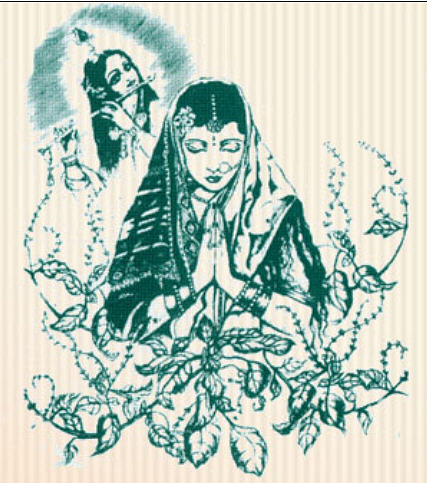
Srila Gangamata Goswamini is one of the most striking women in Gaudiya Vaishnava history. Born to a Bengali landholding family, she refused marriage, briefly ruled her father's estate, then gave it up entirely to look for a guru. She ended her long life as an initiating spiritual master to a king of Puri, and the building she restored there is still known today, more than three centuries later, as the Ganga-mata Math.
| Detail | Description |
|---|---|
| Birth name | Sachi Devi, also spelled Saci Devi (a different woman from Srimati Sachi Devi, the mother of Sri Chaitanya Mahaprabhu, who shares only the name) |
| Birthplace | Puntiya, also transliterated Puthia or Puntaya, in the Rajshahi district of Bengal (present-day Bangladesh) |
| Family | Daughter of the zamindar-raja Naresha Narayana, said to have taken up Vaishnava dharma through the preaching of Shrinivasa Acharya |
| Guru | Sri Haridasa Pandit Goswami, chief worshipper of Sri Sri Radha-Govindaji in Vrindavana |
| Guru-lineage | Gadadhara Pandit Goswami, through his disciple Ananta Acharya Goswami, to Haridasa Pandit Goswami, the one lineage among the great Gaudiya Vaishnavis that Chaitanya-charitamrita names directly (Adi 8.60) |
| Renunciate vow | Kshetra-sannyasa: a vow never to leave the sacred territory of Jagannatha Puri |
| Traditional dates | Born c. 1601, entered the eternal pastimes c. 1721, by the Ganga-mata Math's own record |
Scriptural evidence for the introduction (1)
ananta acarya, kavidatta, misra-nayana
gangamantri mamu thakura, kanthabharana
Word for word
ananta acarya: Ananta Acarya; kavi-datta: Kavi Datta; misra-nayana: Nayana Misra; gangamantri: Gangamantri; mamu thakura: Mamu Thakura; kanthabharana: Kanthabharana
The fifth branch was Ananta Acarya; the sixth, Kavi Datta; the seventh, Nayana Misra; the eighth, Gangamantri; the ninth, Mamu Thakura; and the tenth, Kanthabharana.
Confirms, in Krishnadasa Kaviraja Goswami's own words, that Ananta Acharya, the guru of Gangamata's guru, Haridasa Pandit, belonged to Gadadhara Pandit's branch of the Chaitanya tree.
Chapter 1
Birth and Renunciation
A Bengali zamindar's daughter refuses marriage, briefly rules an estate, and gives it all up to look for a guru.
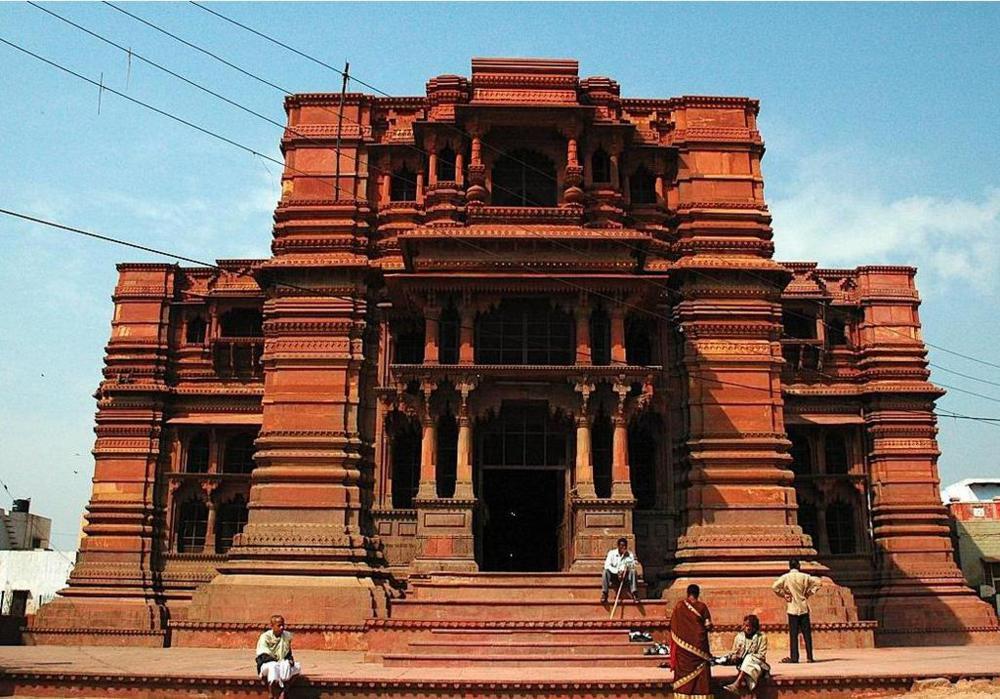
Every biography of Gangamata Goswamini begins in the same place, with a wealthy Bengali household that could not keep her. She was born Sachi Devi, also spelled Saci Devi. She had the same name as Srimati Sachi Devi, the mother of Sri Chaitanya Mahaprabhu, but she was a different woman. She was the only child of Naresha Narayana, the zamindar-raja of Puntiya (also spelled Puthia or Puntaya) in the Rajshahi district of Bengal, in territory now part of Bangladesh. Some later, popular accounts describe Gangamata as a "Rajput princess." The sources that actually name her family do not use that phrase, and there is no recorded connection between the Puntiya zamindari and any Rajput clan of Rajasthan. The recorded account is clear that hers was a Bengali landholding family, not a Rajasthani one.
A Household Turned Toward Krishna #
Naresha Narayana is said to have taken up Vaishnava dharma himself under the influence of Shrinivasa Acharya, one of the three young preachers the Goswamis of Vrindavana sent home to carry Gaudiya Vaishnavism into Bengal and Odisha. If that detail is correct, Sachi Devi's devotion did not go against her father's household. It grew out of it. She grew up inside a family that had already turned toward Chaitanya Mahaprabhu's movement, even if her own devotion soon went far beyond anything her parents expected.
From early childhood Sachi Devi showed little interest in the ordinary business of a zamindar's daughter. By the accounts that survive, she was educated in grammar, poetry and scripture, and she was known for her beauty. But she treated both her education and her looks as less important than the one thing she cared about, which was Krishna. Her parents raised the subject of marriage, as any Bengali landholding family of the time would. She refused outright. She told them she would accept no husband who was subject to death, since she had already given her heart to Krishna alone.
Ruling, Then Renouncing, a Kingdom #
Her parents died without persuading her to change course. As their only heir, Sachi Devi briefly took charge of the family estate herself. She did this only for a short time. The sources do not say exactly how long it lasted or what kind of ruler she was, only that she did it. Once she had completed her immediate family duties, she gave up the zamindari altogether and left home on pilgrimage. She travelled first to Jagannatha Puri and then on to Vrindavana, in search of a guru who could really teach her what she wanted to know.
Meeting Haridasa Pandit at Govindaji #
In Vrindavana, Sachi Devi's pilgrimage led her to Sri Haridasa Pandit Goswami, the chief worshipper of the Radha-Govindaji Deity. This Haridasa Pandit is a different person from the more famous Srila Haridasa Thakura, the namacharya of Puri, and the two should not be confused. Haridasa Pandit did not accept her immediately. As a guru, he had to think about the discipline of his own ashram. Sachi Devi had wealth, a striking appearance and a royal upbringing. From every outward sign, she looked like exactly the kind of person that renunciate life is meant to test. So he had good reason to hesitate before taking her on as a disciple.
By every account, what changed his mind was seeing her really live as a renunciate, not merely talk about wanting to. She gave up her fine clothes for tattered cloth and gave up her ornaments. She lived on madhukari, begging just enough food from more than one house to get through the day, in the traditional way of Vraja's own renunciates. Once Haridasa Pandit was satisfied that her vairagya was not a passing mood, he initiated her at the Govindaji temple itself, on the day of Chaitra Shukla Ekadashi, giving her the eighteen-syllable Radha-Krishna mantra.
A Guru's Own Guru-Lineage #
Haridasa Pandit's own guru was Ananta Acharya Goswami. According to Chaitanya-charitamrita Adi 12.81, Ananta Acharya was the fifth listed branch of Gadadhara Pandit's own disciples. So Sachi Devi's guru-lineage rests on what Krishnadasa Kaviraja Goswami himself wrote down. According to the Gaura-ganoddesha-dipika, as her own Math's tradition remembers it, Ananta Acharya's identity in Krishna's eternal pastimes was Sudevi, one of the eight principal gopis of Vraja. He is also recorded there under a second name, Vinoda-manjari. Haridasa Pandit himself is remembered as Raghu-gopala, or Rasa-manjari.
A year of austerity followed for the newly initiated Sachi Devi. Then her guru decided to send her to live at Radha-kunda. Her life there shows what kind of renunciate life was open to a woman in seventeenth-century Vraja. This part of her story is the subject of A Woman's Place Among the Vaishnava Renunciates.
Chapter 2
A Woman's Place Among the Vaishnava Renunciates
Years of austerity at Radha-kunda lead to kshetra-sannyasa, a rare and specific renunciate vow for a woman of her era.
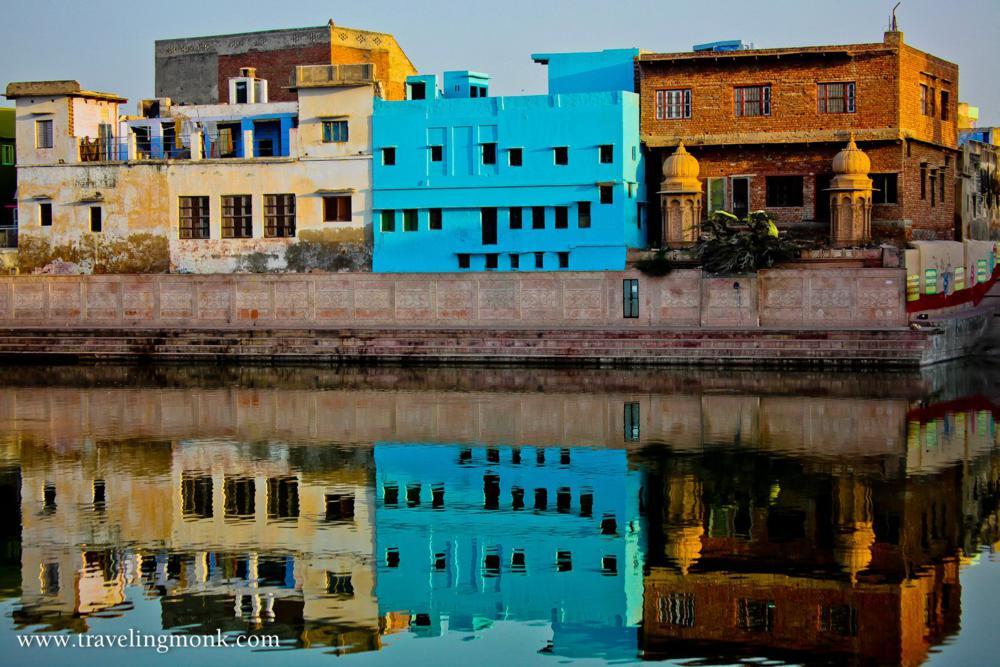
Initiation was not the end of Sachi Devi's testing. In fact, it was the beginning of the part of her life that the sources describe in the most detail. Consider what she did in the years that followed, and the unusual renunciate position she was later given in Jagannatha Puri. Together these make her one of the clearest recorded cases in Gaudiya Vaishnava history of a woman given open, formal recognition as a renunciate. She was initiated by a named guru, Sri Haridasa Pandit Goswami. She was recognized because of her own sadhana, not through a husband's standing, since she never married at all.
Madhukari, Rags and the Bank of the Yamuna #
After receiving initiation from Haridasa Pandit at the Govindaji temple, Sachi Devi spent roughly a year in Vrindavana living the plainest renunciate life possible. She begged her food a little at a time from door to door. She wore worn and patched cloth. She slept on the sandy bank of the Yamuna, not under a roof. Nothing in the sources suggests she did this to be seen by anyone. Every source that mentions it describes private sadhana, not a public show. This is part of the reason why her guru's later decision to send her onward means so much.
Radha-Kunda with Lakshmipriya #
After that first year, Haridasa Pandit sent Sachi Devi to Radha-kunda to live with her aunt and god-sister, Lakshmipriya Devi. Lakshmipriya was a renunciate remembered for chanting the holy names three hundred thousand times every single day. Even among the dedicated bhajananandis of Vraja, so much japa set her apart. The two women lived and practiced together, walking around Govardhana Hill daily as part of their shared sadhana. We should see clearly what this arrangement means. A young, wealthy, unmarried woman was placed by her own diksha-guru in the direct care and company of another woman renunciate. No source suggests that this needed any special explanation. Within this guru-lineage, at least, a woman's vairagya was taken seriously enough to be trained in the same way as a man's.
Kshetra-Sannyasa: The Vow That Followed Her to Puri #
The renunciate status Sachi Devi is most specifically remembered for did not come until later, after her guru sent her on to Jagannatha Puri (the fuller story of that move is told on Mission and Service in Odisha). Several independent sources agree that there she took what is called kshetra-sannyasa. The name means literally "renunciation of a sacred field," and it was a vow never again to leave the territory of Jagannatha Puri Dhama for the rest of her life. It is a real and unusual kind of vow. It is different from the ekadandi or tridandi sannyasa orders that are better known in brahminical and Vaishnava monastic tradition, and both of those are usually kept only for men. Kshetra-sannyasa does not use the formal rites and staff (danda) of those orders. Instead, it ties a devotee to one holy place. Even so, in her case it is recorded and named as a sannyasa, a renunciate order. That is the unusual part. A woman was publicly recognized, by that exact term, as having taken sannyasa at all.
Not every source describes it quite this way. At least one modern retelling states that she never formally received sannyasa in the fullest technical sense. It says that the honorific "Goswami," meaning roughly "controller of the senses," was given to her afterward in recognition of her conduct, not through a specific rite. Both accounts agree on the main point. Whatever her exact ceremonial status, Gangamata was treated fully as a realized renunciate authority, so much so that she gave diksha to a reigning king. There are few clear examples like this so early in Gaudiya Vaishnava history. She was a woman, unmarried, given a vow that was clearly named and close to sannyasa, and then permitted to initiate others. Jahnava Mata, the wife of Nityananda Prabhu, is sometimes cited as an earlier example of a woman who held similar spiritual authority in a different branch of the same movement. But no source connects the two women's lines directly. Gangamata's own guru-lineage, as covered on Birth and Renunciation, runs through Gadadhara Pandit, not through Nityananda Prabhu's family. In both cases the same principle is at work. Chaitanya Mahaprabhu Himself taught that birth has nothing to do with the qualification for guru: "Whether one is a brāhmaṇa, a sannyāsī or a śūdra — regardless of what he is — he can become a spiritual master if he knows the science of Kṛṣṇa." (Chaitanya-charitamrita, Madhya-lila 8.128). Srila Prabhupada applied this same teaching directly to women too, naming Jahnava Devi as his proof that a woman who knows Krishna can become guru. Gangamata's own recognition as guru to a king rests on that same ground.
The story of what she did with that authority once she reached Puri is told in full on Mission and Service in Odisha. It includes the discourses that drew a king, and the extraordinary event that gave her the name by which she is remembered today.
Chapter 3
Mission and Service in Odisha
Restoring Sarvabhauma Bhattacharya's ruined house in Puri, she becomes a renowned Bhagavata speaker and, after a miraculous night, guru to a king.
Sachi Devi's guru sent her from Radha-kunda to Jagannatha Puri with a specific task. She was to restore the ruined house of Sarvabhauma Bhattacharya. He was the great Nyaya scholar and Sanskrit logician whose surrender to Chaitanya Mahaprabhu had been one of the turning points of the Lord's own Puri pastimes. There Sachi Devi took kshetra-sannyasa, the vow never to leave the sacred territory of Puri again. This vow is described in full on A Woman's Place Among the Vaishnava Renunciates. She settled into the broken-down building to begin the work her guru had given her.
A Bhagavata Speaker Who Drew a King #
Once she had settled there, she took up worship of a Damodara shalagrama-shila and began giving discourses on Srimad-Bhagavatam. Several sources agree that her explanations of the text made such a strong impression that people began traveling specially to hear her speak. In time her audience grew to include King Mukunda Deva of Puri himself, along with a number of the Jagannatha temple's own priests. This detail is striking on its own. It means that a woman renunciate living in a half-ruined house was already recognized in Puri as a trusted teacher of scripture, even before anything miraculous happened to her.
The Night the Ganges Came to Her #
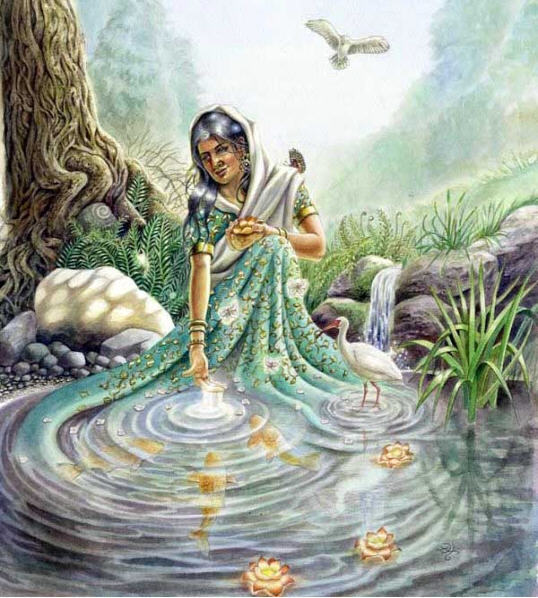
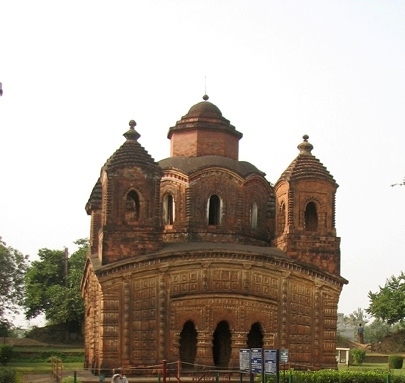
The episode that gave Sachi Devi her permanent name took place during a major bathing festival connected with the Ganges, on Krishna-trayodashi. The sources describe it as either the Ganga Sagara Mela or the Maha-Varuni bathing day. Lord Jagannatha appeared to her in a dream and told her to bathe that night in the Shveta-ganga, the White Ganges tank inside the temple grounds, even though her own vow did not allow her to wander. She followed the instruction. By every telling of the story, the moment she entered the water she had a vision of Ganga-devi herself. She was carried away by a current that had no ordinary source. At dawn she found herself standing inside the temple's own inner shrine, at the feet of Jagannatha.
The temple's gatekeepers and priests found an unknown woman inside the inner shrine, with no explanation for how she had got there. They assumed she was a thief and had her imprisoned. According to the traditional account, trouble followed for everyone involved except her. The king and the priests are described as falling into distress and illness. Then Jagannatha appeared again, this time to King Mukunda Deva and the head priest together, and explained what had really happened. He said that He Himself had caused the Ganges to flow out from His own feet as caranamrita, to bathe Sachi Devi directly. The king and priests owed her an apology and initiation, not a prison sentence.
Becoming Gangamata #
The king had her released at once and, along with the temple's priests, begged her forgiveness. From that day, Sachi Devi became known as Gangamata, "mother of the Ganges," and Sarvabhauma's restored house took on the name it still carries, the Ganga-mata Math. Srila Prabhupada wrote his purport to Chaitanya-charitamrita Madhya 6.8 centuries later, and he had no reason to add to a local story. That purport confirms the simple fact that can still be seen today: Sarvabhauma Bhattacharya's old residence, he notes, "at present... is used as the monastery of Gangamata."
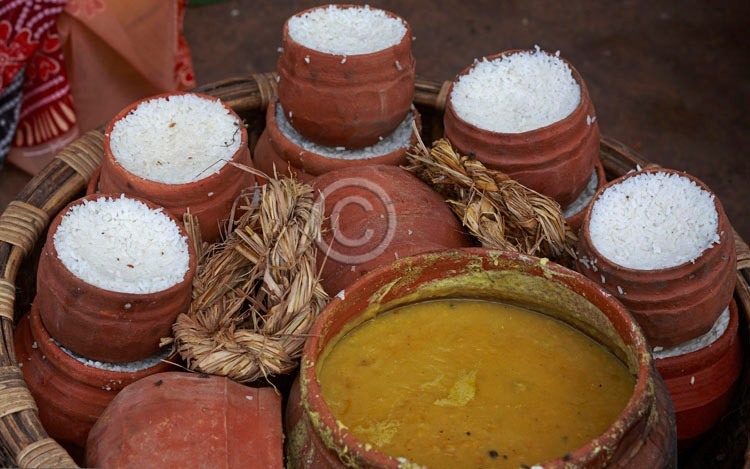
King Mukunda Deva asked to become her disciple, and she accepted him, giving him the eighteen-syllable Radha-Krishna mantra. A Smarta brahmana scholar named Mahiratha Sharma, from Dhaninjayapura, is also named among her initiated disciples, along with a number of the temple's own priests. The king pressed her to accept land as guru-dakshina, but she refused it. Instead she asked for something far more modest, to be sent daily for the service of the Vaishnavas at her Math: two containers of mahaprasada rice and one of vegetables, a cloth, and a hundred and sixty paisa. Tradition holds that this same daily offering continues from the Jagannatha temple kitchen to the present day.
The Deity of Rasika Raya #
Sometime after this, a Vaishnava brahmana in Jaipur, named Chandra Sharma in one account and Krishna Mishra in Srila Prabhupada's purport to Chaitanya-charitamrita Adi 8.60, received an instruction in a dream from a Deity he had long worshipped. The Deity told him to carry Him to Puri and present Him to Gangamata. The brahmana feared he had committed an offense in his service (seva-aparadha), and doing this would free him from it. He did as instructed. Accounts differ on the Deity's exact name. Most call Him Radha-Rasika Raya, the same name as the Deity still worshipped at the Math today, while one source calls Him Shyama Raya. But they agree on the outcome. King Mukunda Deva renovated Sarvabhauma's house further to receive the new Deity, and worship of Radha-Rasika Raya has continued at the Ganga-mata Math from that day forward.
A Separate Mission from Gopiballabhpur #
We should be clear about what Gangamata's Puri mission was not. Shyamananda Pandit and his disciple Rasikananda Prabhu were building their own Gaudiya Vaishnava mission in Odisha in overlapping decades. It was centered at Gopiballabhpur, near the Mayurbhanj border, and it reached kings, zamindars and even hostile officials across the region. Gangamata's own mission was run from inside Jagannatha Puri itself. It followed a completely separate guru-lineage, through Gadadhara Pandit. It appears nowhere in either of their biographies, and neither of them appears in hers. The two missions worked at the same time, but not together. This is worth saying plainly and not simply assuming, because two famous Odisha missions from the same century could easily be mixed up.
What happened to the Ganga-mata Math after Gangamata's own long life, and how honestly the sources speak about her last years, is told on Disappearance and Legacy.
Scriptural evidence for this chapter (1)
sisya padicha-dvara prabhu nila vahana
ghare ani' pavitra sthane rakhila soyana
Word for word
sisya: disciples; padicha: and watchman; dvara: by means of; prabhu: Lord Sri Caitanya Mahaprabhu; nila: brought; vahana: carrying; ghare: at home; ani': bringing; pavitra: purified; sthane: in a place; rakhila: kept; soyana: lying down
While Lord Caitanya Mahaprabhu was unconscious, Sarvabhauma Bhattacharya, with the help of the watchman and some disciples, carried Him to his home and laid Him down in a very sanctified room.
From the purport: Purport excerpt: "At present it is used as the monastery of Gangamata."
Srila Prabhupada's own purport confirms that Sarvabhauma Bhattacharya's Puri residence, which Gangamata restored, is the building known today as the Ganga-mata Math.
Chapter 4
Disappearance and Legacy
What is recorded, and what is not recorded, about her final years, and the Math that still carries her name.
The Ganga-mata Math's own records give Gangamata Goswamini a very long life. They say she was born around 1601. By the same tradition, she was still active when she "entered the eternal pastimes" around 1721, roughly one hundred and twenty years later. This number should be stated plainly, not passed over. It is far beyond the ordinary human lifespan. It comes from only one source, the Math she herself founded. No other independent source confirms it or gives a different account of her age. This gap is reported honestly here, not resolved. The dates are the tradition's own, and they have not been independently checked.
A Disappearance With No Story Attached #
We must be just as honest about how she died, or rather about how little is recorded about it. Compare this with Rasikananda Prabhu, who lived at roughly the same time. His disappearance at the Kshira-chora Gopinatha temple in Remuna is remembered in exact detail. The accounts tell of the walk from the village of Santa, the entry into the Deity's own body, and the disciples who are said to have left their bodies at the same spot. Nothing like this survives for Gangamata. Neither the Ganga-mata Math's own tradition as recorded by Gaudiya History, nor Stephen Knapp's summary, nor the Shyam Das Baba biography, describes where she was, what she said, or what happened in her final days. What is recorded is only the year, and the fact that her Math and its worship continued unbroken afterward.
Disciples and What They Received #
Gangamata's most notable disciple was King Mukunda Deva of Puri, who received the eighteen-syllable Radha-Krishna mantra from her directly, after the episode that gave her the name Gangamata. A Smarta brahmana scholar, Mahiratha Sharma of Dhaninjayapura, is also named among her initiates. So are a number of the Jagannatha temple's own priests. They are said to have taken initiation from her because Lord Jagannatha Himself made it a condition, after they had wrongly arrested her. No independent record has been found of any further disciples, or of any disciplic succession she may have established beyond the Math itself.
The Math and Its Deities Today #
The Ganga-mata Math, built on the site of Sarvabhauma Bhattacharya's old house, continues to worship five pairs of Deities: Radha-Rasika Raya, Radha-Shyamasundara, Radha-Madanamohana, Radha-Vinoda and Radharamana, together with Sarvabhauma Bhattacharya's own Damodara shalagrama-shila, a dancing figure of Gauranga, and a Gopala Deity. Branches carrying her name include the Haveli Math and another Gopal Math in Puri itself, and one more Gopal Math in the village of Tangi, in Cuttack district. This shows that her institution did not simply survive after her lifetime. It grew, even though the sources we found do not record the names of the gurus who came after her.
No song, bhajan or written composition attributed to Gangamata appears in the available records. The devotional songs of Narottama Dasa Thakura and Bhaktivinoda Thakura are still sung today. Gangamata is different. Her legacy rests entirely on her life and her institution, not on any surviving verse written by her.
Why She Still Matters #
Gangamata Goswamini's importance does not depend only on the stories told about her. Her guru-lineage, at least as far back as her guru's guru Ananta Acharya, is confirmed in Krishnadasa Kaviraja Goswami's own Chaitanya-charitamrita. Few women in the early history of this tradition have such firm support in a written text. She took a specifically named renunciate vow, kshetra-sannyasa. She was recognized, without apparent controversy, as guru to a reigning king and to brahmana scholars. And the building she restored from a ruined state is still, more than three centuries later, a working center of worship that bears her name. Much about her final years remains unrecorded. But three things together remain: a recorded lineage in a sacred text, an unusual and specific renunciate vow, and an institution that has simply kept going. These are the clearest evidence of who she was and what she accomplished.
Closing
Finding a Guru in Vrindavana #
Sachi Devi's search for a spiritual master took her first to Jagannatha Puri and then on to Vrindavana, where she met Sri Haridasa Pandit Goswami, the chief priest of the Radha-Govindaji temple. Haridasa hesitated at first: her wealth, beauty and royal upbringing gave him reason for caution. But her genuine austerity persuaded him, and he initiated her at the Govindaji temple on Chaitra Shukla Ekadashi with the eighteen-syllable Radha-Krishna mantra.
A Guru-Lineage Confirmed in Chaitanya-charitamrita #
Among the great women of the Gaudiya line, Gangamata is the one whose own guru the sources actually name. They name him even inside Chaitanya-charitamrita itself. Adi-lila 8.60 reads: *tanhara ananta guna ke karu prakasha / tanra priya shishya inha — pandita haridasa*, "Ananta Acharya was a reservoir of all good qualities. No one can estimate how great he was. Pandita Haridasa was his beloved disciple." That Haridasa Pandita is the same Haridasa who initiated Gangamata. Adi-lila 12.80–81 places Ananta Acharya among the branches of Gadadhara Pandit's own line, naming him there as the fifth. Her descent therefore runs: Gadadhara Pandit → Ananta Acharya → Haridasa Pandit Goswami → Gangamata. This is important. The claim of her guruship does not depend only on what her own math remembers. The link above her is written in the tradition's central biography, by Krishnadasa Kaviraja Goswami.
Srila Bhaktisiddhanta Sarasvati Thakura gives more details in his Anubhasya on that same verse, quoted in full in Srila Prabhupada's purport. Ananta Acharya was Sudevi-gopi in Krishna's pastimes (Gaura-ganoddesha-dipika 165). In the Ganga-mata Math's own succession he is known as Vinoda-manjari. Haridasa Pandit Goswami is known there as Sri Raghu Gopala, or Sri Rasa-manjari. The same purport says that Lakshmipriya, Gangamata's maternal aunt and her god-sister at Radha-kunda, was Haridasa Pandit's disciple. It also records that Gangamata "brought a Deity of the name Sri Rasika-raya from Krishna Mishra of Jaipur and installed Him in the house of Sarvabhauma in Jagannatha Puri." One line of that purport does not fully match the Math's own account, and it is left here as it is, not smoothed over. The Anubhasya says the Ganga-mata Math "was established by Ananta Acharya," but the Math's own tradition says Gangamata herself restored Sarvabhauma's ruined house. Most likely it is the lineage, not the building, that goes back to Ananta Acharya.
Her own disciples are also recorded separately. King Mukunda Deva of Puri and a number of Lord Jagannatha's sevaits took diksha from her, as recorded in Haridasa Dasa's Gaudiya-vaishnava-abhidhana. But no eternal identity in Krishna's pastimes, like those given above for Ananta Acharya and Haridasa Pandit Goswami, has come down in the sources for Gangamata herself. This is an honest gap, not a claim filled in by guesswork.
Not the Shyamananda-Rasikananda Line #
Because Shyamananda Pandit and Rasikananda Prabhu are the best-known Gaudiya missionaries connected with Odisha, it would be easy to assume Gangamata belonged to their community. Nothing in the sources supports that. Her guru-lineage runs through Gadadhara Pandit and Ananta Acharya, not through Jiva Goswami and Hridaya Chaitanya. Her center, the Ganga-mata Math inside Jagannatha Puri itself, is also separate from the Shyamanandi parivar, which is centered at Gopiballabhpur, on the Mayurbhanj border. Gangamata and the Shyamanandis carried out their missions in Odisha side by side, in roughly overlapping generations. But they worked through two different lines of guru and two different institutions.
- Gangamata Goswamini - Gaudiya History (ISKCON Desire Tree)
- Gangamata Goswamini - Biography, part 2 - Gaudiya History
- Gangamata Goswamini - Pastimes - Gaudiya History
- Sri Ganga Mata Goswamini - Shyam Das Baba
- Gangamata Goswamini - Stephen Knapp
- Sri Gangamata Gosvamini - Visuddha Caitanya Vani
- Srimati Gangamata Gosvamini - ISKCON Desire Tree (page)
- Great Vaishnava Women, by Satyaraja Dasa - ISKCON Desire Tree
- Sri Caitanya-caritamrta, Adi-lila 12.81 - Vedabase
- Sri Caitanya-caritamrta, Madhya-lila 6.8 - Vedabase
- Gangamata Goswamini (Sachi Devi) - Princess of Puthia - The Gaudiya Treasures of Bengal (reference only)
- Sri Chaitanya-charitamrita, Adi-lila 8.60 and purport (Haridasa Pandita as Ananta Acharya's disciple; the Ganga-mata Math succession)
- Female Diksa Guru — ISKCON GBC (Gangamata Gosvamini, disciple of Haridasa Pandita Gosvami)
